Bringing the Past to Life

We have settled into our “summer home” on the outskirts of our nation’s capitol. Volunteering as camp hosts at Greenbelt Park, a park under the auspices of the National Park Service, it is our small way of giving back, as we know many of our national parks are at risk without the help of volunteers, and it also puts us in the middle of a metropolitan area that begs to be explored.  Our biggest challenge this summer will be remaining tick-free. 😦

Our new-found friends John and Pam, of “Oh, the Places They Go” were headed in the same direction up the east coast as we and they offered to play tour guide in DC…perfect!  What began as the seeds of a grand biking adventure resulted in two days of horrendous rainstorms and flood warnings around the area.  What appeared to be a “wash-out” ended in a day spent getting to know each other better over coffee, and continuing over lunch.  Although our original plans had been washed away, we walked away feeling once again as if we had rekindled an old friendship instead of shaping a new one.
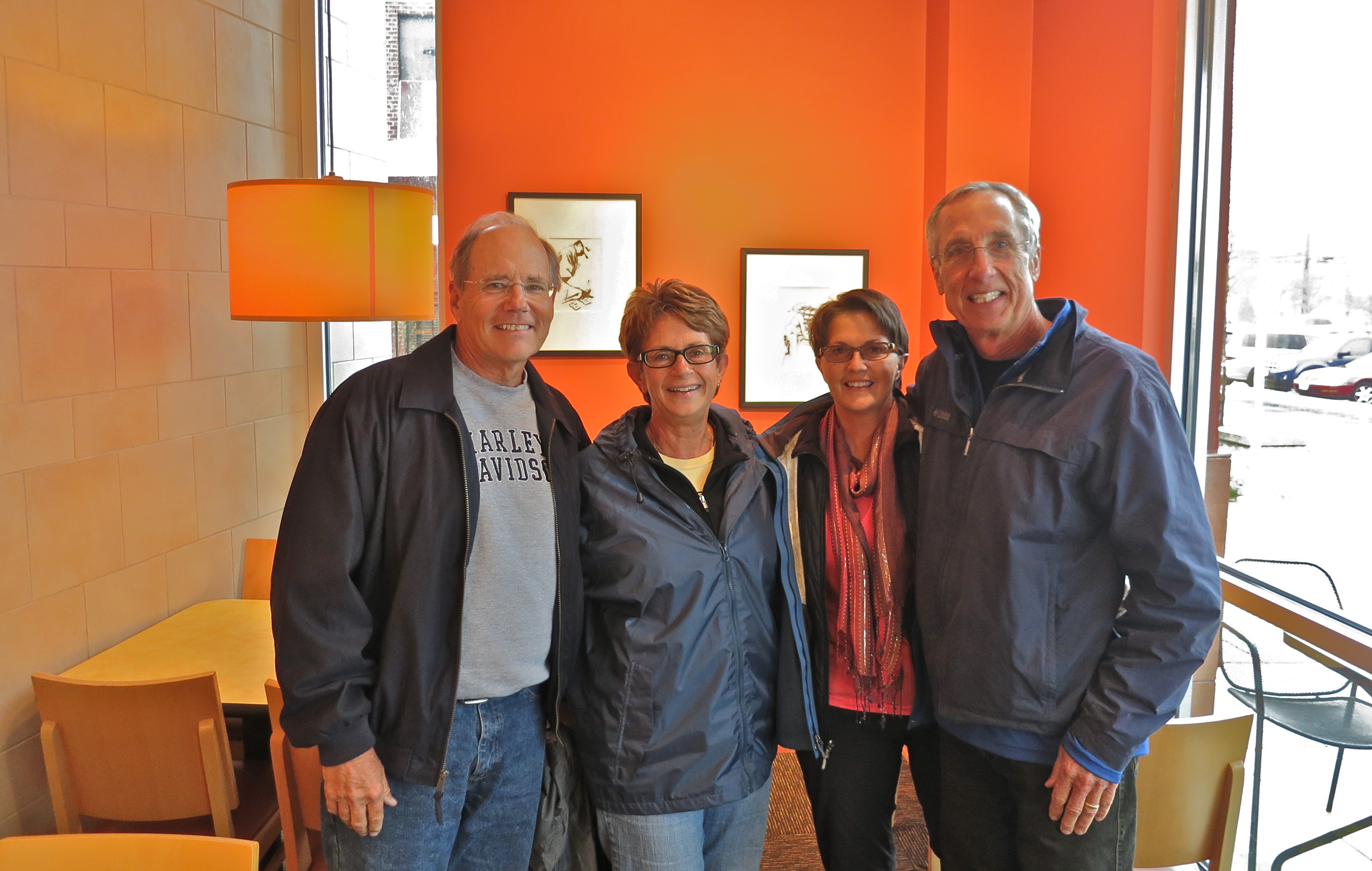
Fast forward several days and we find ourselves headed to a place that had a resounding impact on our nation, Gettysburg, PA, once again looking forward to our guide John giving us a tour of one of the bloodiest skirmishes of the American Civil War, the Battle of Gettysburg.  Lest you think I am going to bore you with facts and figures, fear not.  I would not attempt to claim much retention of elementary-school knowledge of the Battle of Gettysburg beyond the most rudimentary information.  This post is meant to speak to the generosity of a couple and the passion clearly felt in the stories John shared with us, a man who clearly has a love for the history of this wonderful country.  He brought the landscape alive for us, bringing the past into the present.  His eyes danced as he shared stories at various stops along the battlefield grounds.

I must admit that as we approached the town of Gettysburg, I felt a hush descend over the landscape as I looked out over the myriad statues, monuments, and markers dotting the countryside, symbolizing the events that felled so many those three days. Since this day was all about our nation’s history, please allow me to throw out a few facts, to bring the full import of Gettysburg to light and to let John know that the hours of sharing his love of history were not spent in vain. 😉

For those who may not remember, the Battle of Gettysburg, fought between Union and Confederate soldiers during the Civil Way, continued over a three-day period, from July 1-July 3, 1863.  After the fighting ended, it would be known as the battle carrying the largest number of casualties of the entire war, estimates ranging from 46,000 to 51,000 on both sides.  Although the Civil War continued for another two years after this fight ended, the Battle of Gettysburg is often described as the “turning point of the war”.  Given that this battle took place in the streets of Gettysburg and surrounding hillsides, it is rather remarkable that there is only one documented civilian casualty, Ginnie Wade, a 20-year old hit by a stray bullet while making bread in her kitchen. Bullet-riddled brick walls can still be seen today outside the Farnsworth House restaurant in town, where we lunched.

Not unlike our last meeting with John and Pam, rain and grey skies followed us, although not even the weather could put a damper on the day.  We parted with the hope of beautiful hikes together out west later this year.  Given the drought conditions in the southwest, certainly with our track record we could bring some much-needed precipitation to the area! 🙂

We can’t thank you enough John and Pam for the incredible day.  Your generosity will not be forgotten and we will come back for more before we leave DC.
Back to the Wilderness ~ Everglades National Park

Walking along shadowed paths, the sun not yet quite ready to greet the day, contentment settles over me.  I feel as if I am floating upon the fog that is blanketing the grasses, alert to the callings on the wind and the chirping of insects underfoot.  I think this is how it feels to be in the moment.

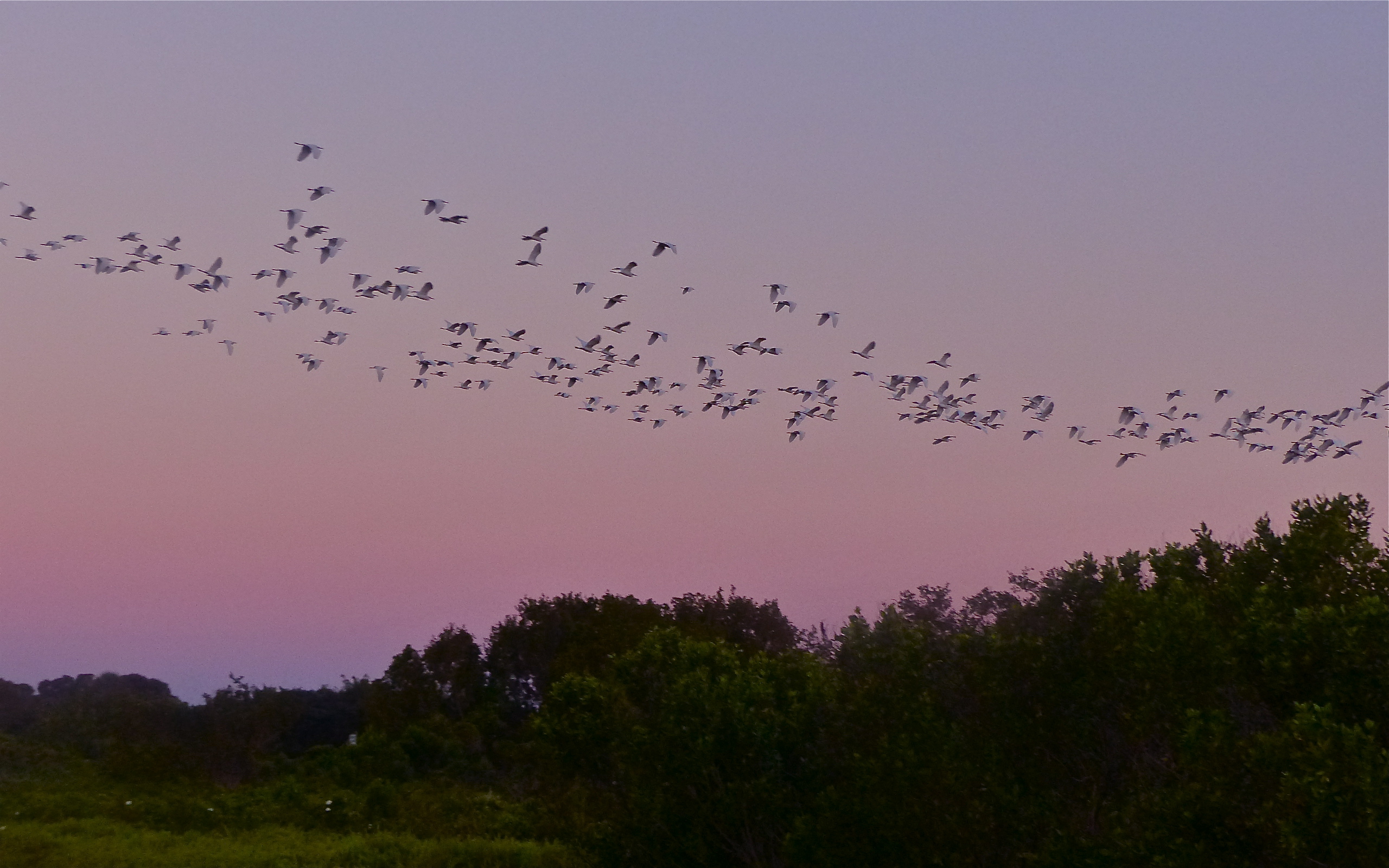
I marvel as egret wings caress the pastel sky above me but I am keenly aware that I am only seeing a small percentage of the birds as those seen back in the 1940’s when this land was slated for protection under the National Park system.

We are back in the Everglades, and after the exhilaration of the Keys, this has been quite an abrupt change.  A bit of sadness washed over me as we left to start our trek north, but strolling this campground my spirit is buoyed by the calm, ready for a week devoid of cell phone and internet connectivity, free of the trappings of modern existence.

Our travels have taken us to the southern tip of the Everglades, the Flamingo campground, our home for five days.  This is America’s Crocodile Capital, where saltwater melds into fresh, the only place in this country I have read where alligators and crocodiles co-exist.  We had already visited the western part of the park so I was wondering if we would find enough to occupy ourselves for this length of time.  I need not have worried.

Here are our top 6 favorite activities while visiting Flamingo (in no particular order):

1)  Eco Pond

A trip to Eco Pond, about 0.5 miles from the Flamingo campground, particularly at sunrise, is a birder’s delight.  Bug repellant is a must as these pesky insects seem to like first light as much as we do.

Hundreds of egrets with a splash of pink coloring the landscape.

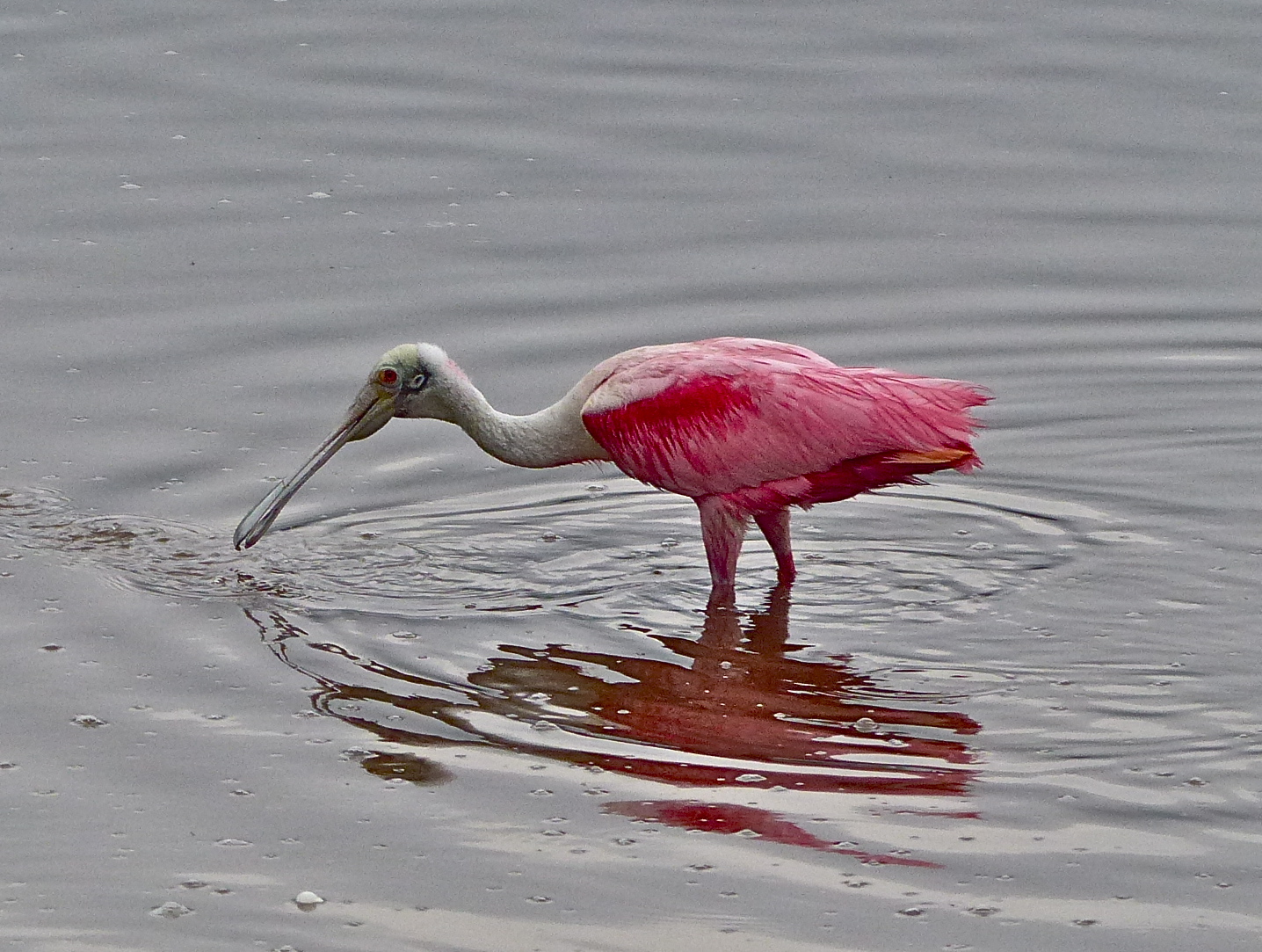
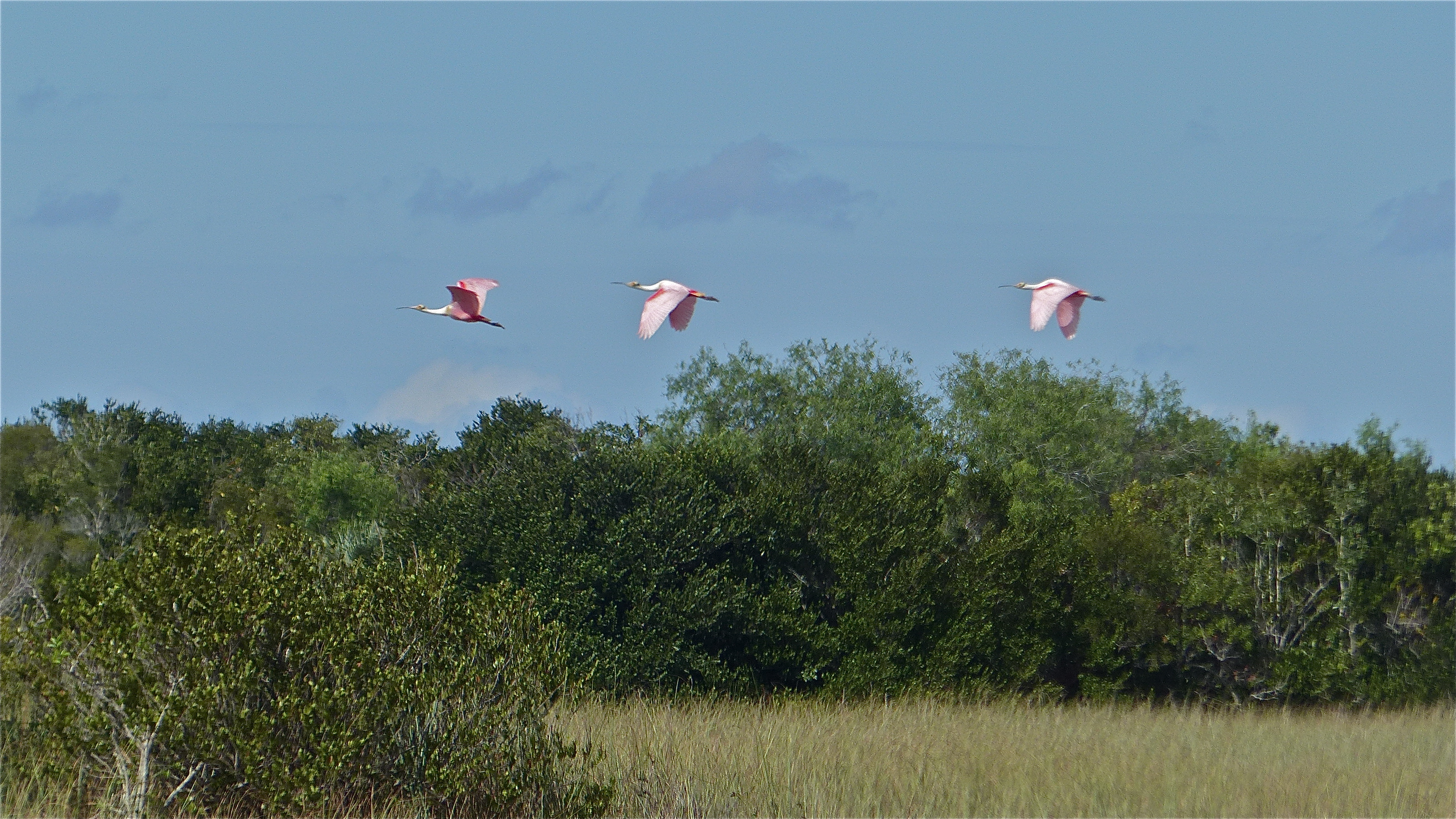
The roseate spoonbills’ captivating pink plumage comes from a red pigment found in some crustaceans they feast upon.

The ravishing roseate spoonbill
The ravishing roseate

2)  Anhinga Trail

We were lucky to be in the park for the ‘Big Day Birding Adventure’, led by Ranger Christi, conducted only twice monthly.  We started at the Anhinga Trail, spending a couple of hours there, and headed back south, making several stops until we arrived back at the Flamingo Visitor Center.

Ranger Christi (center) pointing out anhingas nesting in the surrounding trees

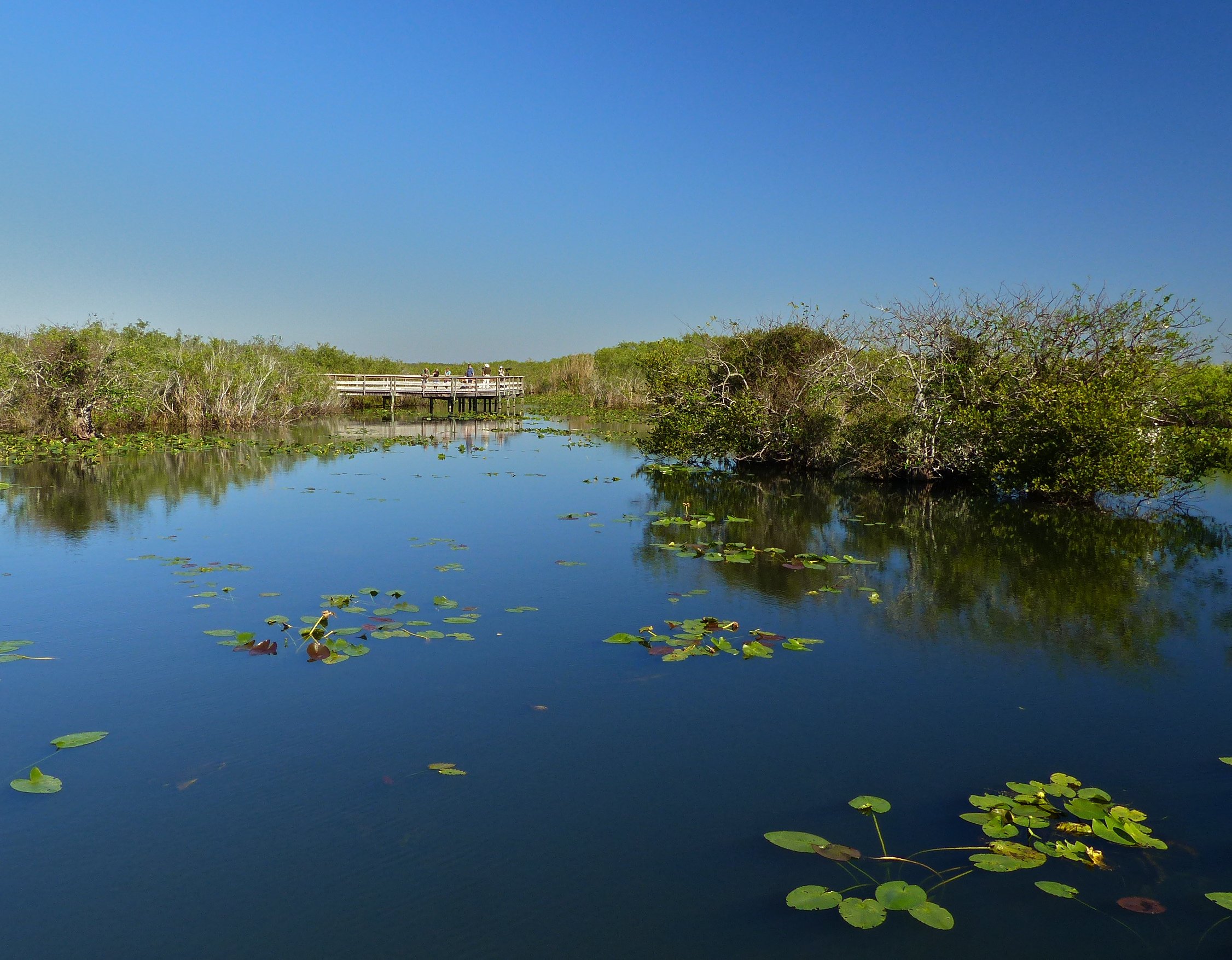
Lots of boardwalks cross over lily pad laden waterways, with countless wading birds on the shores contemplating a delicious breakfast.

Long lengths of boardwalk traverse the watery depths.

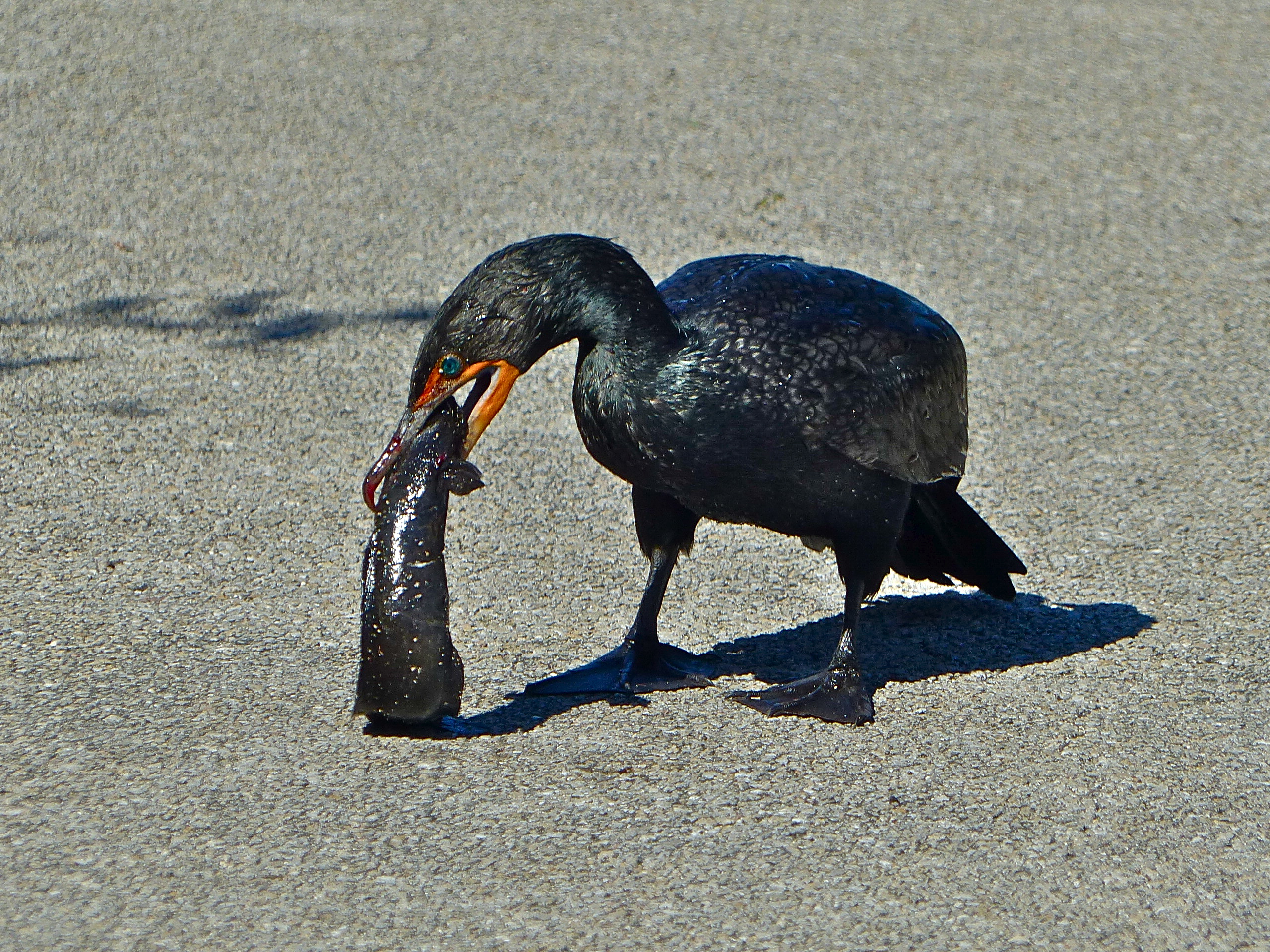
We entertained ourselves watching a cormorant try to gulp down a rather large walking catfish before a waiting wood stork swooped in.  He swallowed it just in the nick of time. 🙂

A cormorant desperate to enjoy a big breakfast before having it stolen away.

3)  Bike Rides

We spent many a day biking the campground and roadways, stopping off at various ponds or boardwalks to enjoy the wildlife.

Mottled duck at Mrazek Pond

4)  Pinelands Trail in Search of Tree Snails

As you walk this 0.5 mile trail, keep your eyes trained up into the canopies of the smooth-barked Jamaican dogwood and gumbo limbo trees, and you just might spot some of the colorful Liguus tree snails.

5)  Hang out at the Marina

This time of year, spending time at the marina will reward you with some pretty spectacular views of osprey nesting, and if you’re lucky, you might be there for feeding time.

A very intense stare
A tender moment captured as an osprey feeds her chicks

Many also come to the marina to spot the crocodiles lying on the banks or taking up residence in the boat slips.  Early in our stay this is where we saw the crocs from a safe distance.  Much to our surprise, the very next day a 9-footer decided to visit us at the campground, causing a bit of excitement.

An unexpected campground visitor

6)  Kayak to your Heart’s Content

We spent many a day paddling the waterways in the park.  It is one of the best ways to see roosting birds, pelicans feeding, dolphins frolicking, and alligators and crocodiles sunning themselves on the banks.

The water level in the Florida Bay rarely exceeds a depth of six feet so watching the tides is important if you don’t want to get grounded in the seagrass.  Low tide is the best time to check out the variety of birds on the mudflats.   We paddled Florida Bay one blustery day at low tide, which made for a nice shoulder work-out.  We also experienced it at early morning high tide, paddling from the marina to Snake Bight, a 5-mile round trip that rewarded us with dolphin sightings and a variety of roosting birds in the mangroves.

If you want a bit more excitement, venture out into the Buttonwood Canal and paddle among the crocodiles and alligators.  I didn’t let my mind linger too long on what would happen if our inflatable decided to spring a leak.

Traversing the Buttonwood Canal - a much different feel from the open Florida Bay
Traversing the Buttonwood Canal – a much different feel from the open Florida Bay

Nature’s many voices can be heard in this pristine wilderness.  Hopefully the future health of the Everglades can survive the many demands being placed on her water supplies so future generations can enjoy her wild beauty.

Our journey north and back to civilization officially begins.

What? No Sharks! ~ Shark Valley, Everglades National Park

On what was to be our first glimpse into this intriguing land known as the Everglades, we loaded up our bikes before the light of day and were on our way to Shark Valley, an interesting name for a valley whose watery depths average 3-4 feet, with not a shark to be seen.  The Shark Valley Slough runs through this terrain, supplying much of the water to the Everglades, and feeding into the Shark River.  It was at this river where early settlers saw the fins of bull sharks, hence the name.

Shark Valley can be experienced in several ways, a two-hour tram ride, on bikes, or a leisurely stroll.  We opted to bike, allowing us to traverse the 15-mile loop at our leisure, making plenty of stops to see yet another bird species or an alligator lazing upon the canal bank.

An observation tower at mile seven provides a 360º view of nothing but Glades.

Observation tower
Observation tower

Visiting Shark Valley at first light gave us the chance to share its quiet beauty with just a few avid birding photographers (at least for a short time).   As the sun welcomed the day, the mist rose off the marshlands, the air refreshingly cool.  The bellows of unseen alligators mingled with the calls of wading birds, a lyrical yet eerie chorus.

Don't get any closer!
Don’t get any closer!

Nicknamed the “River of Grass” for the sawgrass prairies that tower six feet above the land, the Everglades stretch 100 miles from Lake Okeechobee to the Gulf of Mexico.  Woven throughout her vast watery plains lies a symbiotic mosaic of nine distinct ecosystems.  It is home to 36 protected animal species, has the largest mangrove ecosystem in the western hemisphere and boasts the most meaningful breeding ground for tropical wading birds in North America.  Shark Valley is a beautiful embodiment of this montage.

Prior to visiting the Glades, my mind conjured up images of swampy bug and reptile-infested waters but the Everglades is ever so much more.   This National Park was created, not for its unique topographical features, but rather to protect a fragile ecosystem, one that has suffered greatly by human hands in our never-ending quest for development.  This region’s only source of water is the rain that falls on it and the extensive canal systems that have been put into place to support the explosive population growth in South Florida have redirected these crucial life-giving waters away from the Everglades.  The natural habitats of many species are being threatened to the point of extinction. We can only hope that the 30-year Comprehensive Everglades Restoration Plan (CERP) put into plan in 2000 will revive a dying ecosystem and allow this natural wonder to heal.

We have just scratched the surface of the Everglades and have a future stop planned later this month in Flamingo, at the southern end of the park, where we hear the mosquitoes are as large as some of the wading birds and quite the voracious little eaters too!

Just a few pics from a pole-boat tour taken in Big Cypress National Preserve:

Reflecting Back on 2012

This year is quickly coming to an end and what a whirlwind of a year it has been for us!  We were blessed with a myriad of new adventures, visits with family and friends, and had a few setbacks along the way, just to keep things real.  Our year has been chock-full of travel (just what we nomads need to feed our souls) and our landscape has been painted in broad brushstrokes of colors and textures, by way of deserts, mountains, a nice mix of big cities and cool little towns and jaw-droppingly gorgeous coastline.  Biking, hiking, kayaking and long strolls on the beach have filled our days and allowed spirits to take flight.

Our wandering took us through the western part of the US, where we feel the most fulfilled and the flames of our passions were brightly fanned.  A medical concern for Terry early in the year diverted us away from plans to re-visit Yellowstone National Park but we were able to hike through several other national parks in lieu of the granddaddy of them all.  A trip back to the midwest to visit family rounded out the mix for us, making for a most rewarding year.

We began our year in Arizona, where we spent many of our working years, then continued on to Southern California, camphosting at San Elijo State Beach for several months, into Northern California, then lazily making our way up the Oregon coast, which was beyond breathtaking.  We crossed over into the state of Washington to take a peek at Mount St. Helens, and on the way back down south spent a few days in Nevada.  As we continued south we drove highway 395 in California (amazing), stopping to revel in the beauty of the Eastern Sierras, searching for ghost towns and Methuselah.  We met up with friends who introduced us to boondocking and when the fiery reds and golden glow of fall moved into the pronounced chill of winter, we came full-circle and returned to San Elijo State Beach, where we will stay until the end of January.  It was so good to hook up with friends we had previously met on the road and wonderful to meet a few new folks.

I’ve had my camera by my side almost every step of the way so I thought I would provide a glimpse of some of the beauty we have seen along the way.  If you have never been, hopefully you will be inspired to check out the breathtaking vistas of the Wild West.  Enjoy!

If you liked this blog post, why not scroll up to ‘Follow Us’ and enter your email address?  You just might find something that interests you.

Sparkling Sapphire Gem ~ Crater Lake National Park

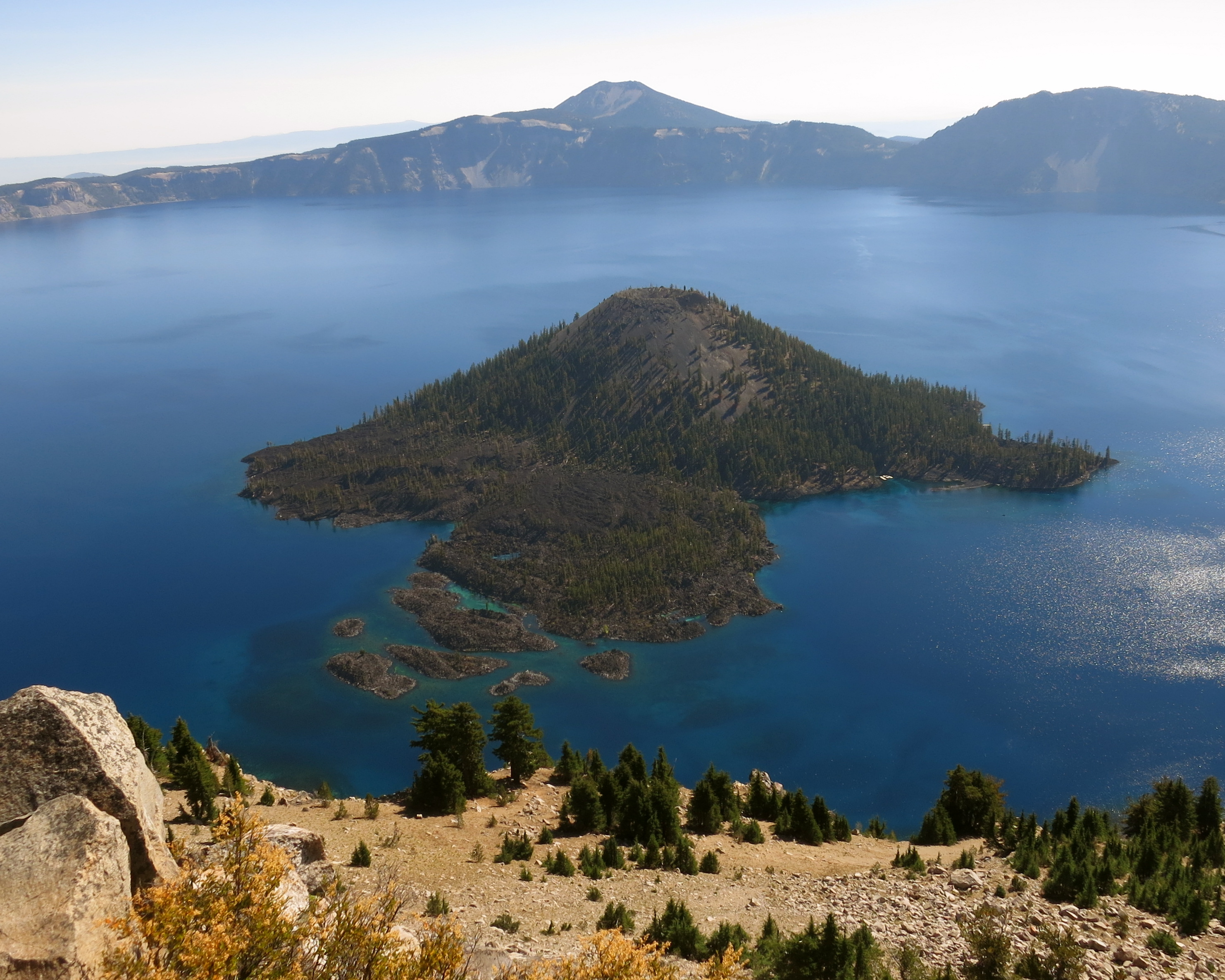
Phantom Rock moored in Crater Lake

After a week at our “service bay” home, we were on the road once again to continue our exploration of Oregon.  Thankfully before leaving Junction City we were able to enjoy an evening with friends John and Janie.  We are heading inland for a time, with our first stop being Crater Lake National Park, where we met up with friends Paul and Nina and their RV buddies Alex and Ellen, a delightful couple.  This is one of the true beauties of the RV lifestyle, slow-paced, with opportunities to meet new folks and reconnect with others.

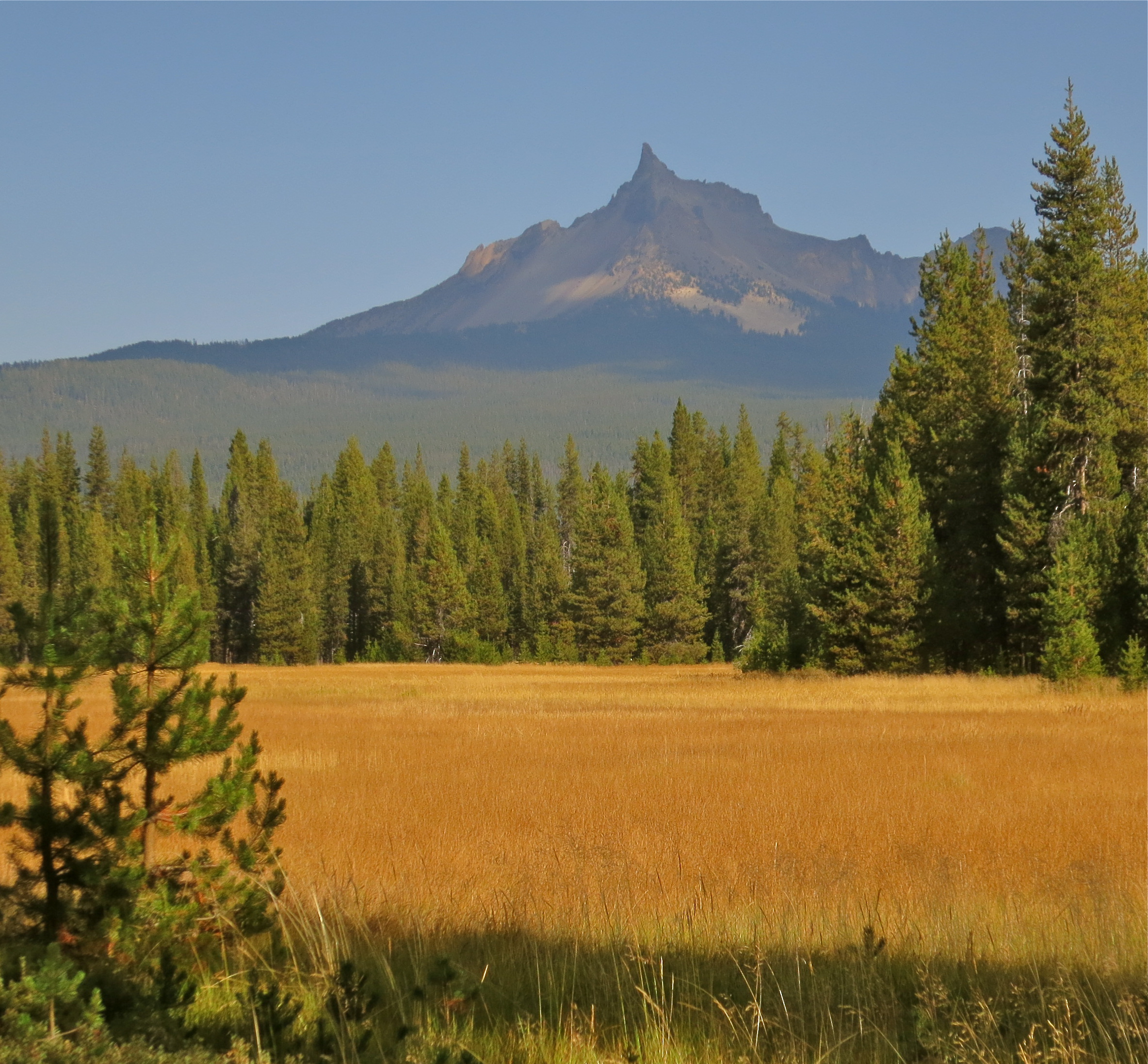
Golden meadows and Mt. Thielsen from bike path

We have settled in the Umpqua National Forest, Diamond Lake Campground and are having one of our first experiences with “boondocking”, goin’ naked, no hookups.  We’re not nearly as well equipped as our friends, who both have solar panels on their rigs, Paul and Nina sporting 600 watts and Alex and Ellen a whopping 1000 watts.  Paul jokes of suffering from “watt envy” when Alex speaks of his solar power (lol).

Besides a visit to Crater Lake NP, which is a definite must, there is much to do here.  An 11-mile paved bike path encircles Diamond Lake, providing fantastic views of the lake, the meadows, and dramatic Mt. Thielsen with her horn-shaped peak.  Although we have not done, kayaking would be a great way to explore the lake itself.

Me – first views of Crater lake
Terry overlooking Diamond Lake and Mt. Thielsen, from Mt. Bailey trail
Cleetwood Cove on Crater Lake

The six of us, plus pooch Polly, set out to tackle Mt. Bailey, a strenuous 10-miler to the peak.  Mt. Bailey often gets overlooked standing so close to Mt. Thielsen, but she deserved some love too, all 8368 feet of her.

Although we did not summit, 7 miles for me was not bad, and the views were spectacular.  I am discovering that months lived at sea level have taken their toll on my hiking at 7000 feet.

Pumice Castle

Fire season has come to Oregon, along with many other western states so our first views of Crater Lake were rather hazy, with smoke collecting in the caldera.  We went back on a clearer day and hiked up to Watchman Tower for some better photos.

While a detailed post of Crater Lake National Park is definitely warranted, I will let one who has written before me speak more on her virtues instead.  Our friend Nina has written an excellent piece, which you should check out here.

I will leave you with my initial thoughts as I stood looking down into this magnificent deep blue lake for the first time.

Crater Lake

Long before your birth

a violent volcano stood.

So angry her nature

a catastrophic eruption occurred.

~

When dust and ash settled

You emerged in her wake.

A timeless vision of pure beauty

Sun, snow or rain.

~

Your penetrating sapphire depths

the most intriguing of all.

A refreshing drink of your waters

an elixir for the gods.

~

Ancient winds whisper your secrets

‘tho you hold some in reserve.

Beckoning us closer

with your hypnotic allure.

                 © LuAnn Oburn 2012

The formation of Crater Lake began roughly 7700 years ago, after the cataclysmic eruption of 12,000-foot Mt. Mazama, perhaps the most massive volcanic explosion in the past 640,000 years.  This breathtaking lake and its deep sapphire color is the cleanest body of water in the world, cleaner than over 80% of all water flowing from our taps, I have read.  With depths reaching 1943 feet and widths ranging from 4.5 to 6 miles, she is an impressive sight, not to be missed.

If you liked this blog post, why noscroll up to ‘Follow Us’ and enter your email address?  You just might find something that interests you.