Day Trippin’ on Two Wheels ~ Yosemite National Park (Part 3)

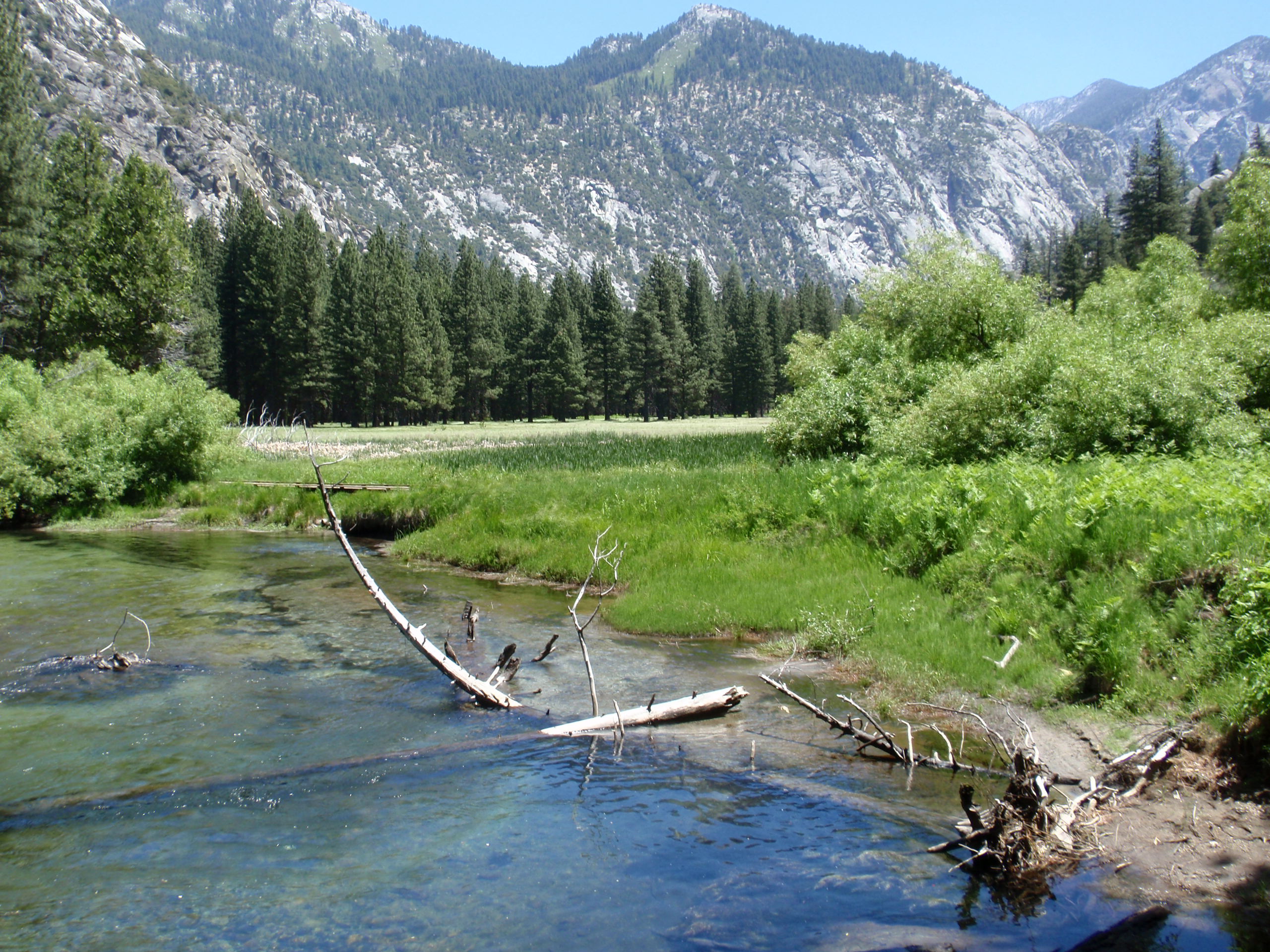
View of the meadow as we pedaled along Tenaya Creek

One last journey into Yosemite before we push further north so we thought we would day trip it on two wheels, as in bike around Yosemite Valley.  The weather was perfect, temperature ~75°, blue skies, and no haze, probably due to the nice breeze blowing through the valley.  As Terry pulled our bikes from the truck I felt like a kid.  It may have had something to do with Terry saying, “I  don’t think I will wear my helmet but you probably should”.  He knows me well and I’m not complaining, mind you, as I have not done much biking in the past 20 years and not sure why, because I was an avid biker before that (mental note to change that).

Although there’s lots of traffic in Yosemite Valley (almost all visitors hang out here), there are still plenty of bike paths and roads less traveled for 2-wheeling adventures.  Being on a bike in a place like Yosemite reminded me of what riding a motorcycle used to feel like in the higher country, no roof over your head to obstruct your views.  After taking the circuit to get different perspectives of Yosemite Falls, Bridalveil Falls and Half Dome, we opted to head to Mirror Lake, taking the road less traveled.
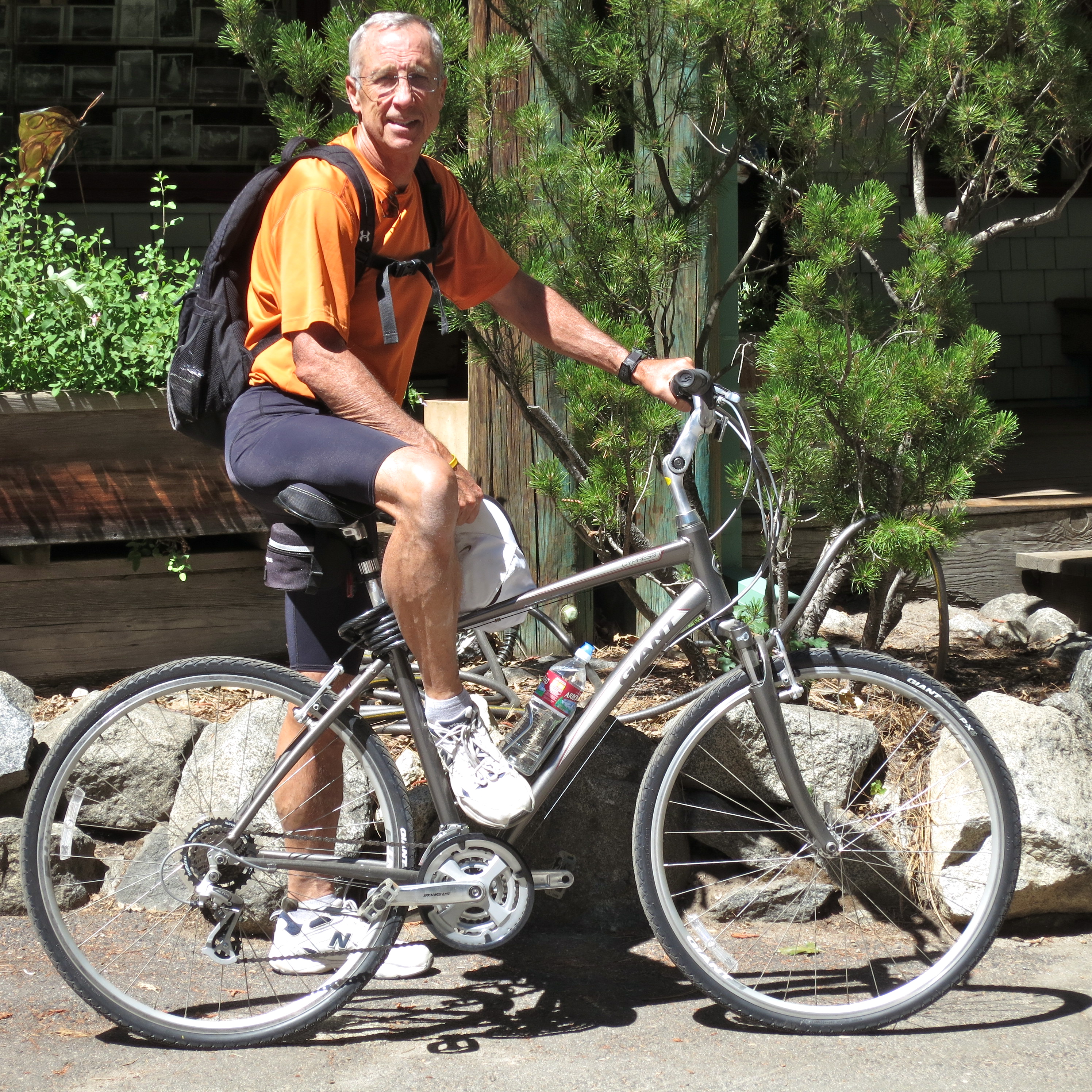
Terry enjoying the picture perfect day!

Mirror Lake is a small seasonal lake on Tenaya Creek.  It is a stretch to call it a lake, more like a big pool.  What it is is the last dregs of a large glacial lake that once consumed most of Yosemite Valley and today is on the verge of becoming extinct.  You don’t come here for the lake, although many do for the swimming, as it is the biggest swimming hole in the park.  What you do get, however, are some stunning views of the mountains above reflected down into the waters, most notably Mt. Watkins sitting at 8500 feet.  We had to admit that these were some of the best views we had seen in Yosemite so far, and we had seen some beauties!
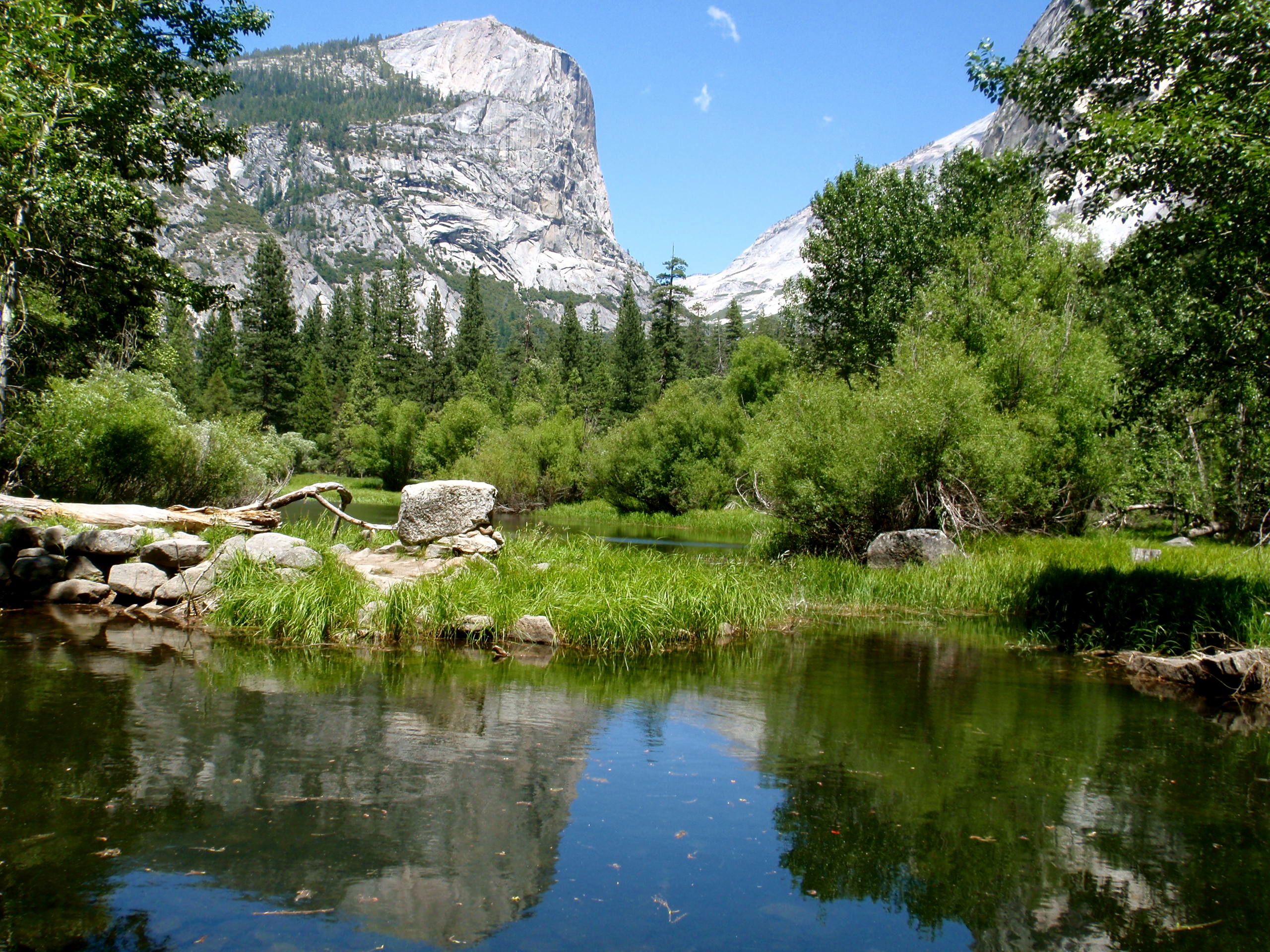
Mirror Lake with Mt. Watkins reflected in her waters

While checking out the great views, I stumbled upon a little cache of stacked rocks.  It looked mystical to me, with the sun warming them and the mountains looming overhead.  I learned that those visiting the area will add a few to the collection if the mood strikes and will continue to do this throughout the season. The snows begin to fly and the rocks come tumbling down, and the process begins anew when the warmer weather moves in.  These cairns, or what looked like a small temple of hoodoos, was a great little treasure to find along the way.

Stacked rock formations at Mirror Lake

After living in Yellowstone for a couple of years, hiking puts you on high alert for some predatory animals, like grizzly, bison, moose, elk with their young,  etc. You don’t find that here but what we did see on this hike was rather unusual – a squirrel minus a tail!

That’s right, lost my tail in a fight. You shoulda seen the other guy!
Laugh all you will! I’m outta here!

The last part of our trip on two wheels took us back to Yosemite Village and to the Ansel Adams Gallery.  It was a great way to spend a little time and there are some stunning pieces of his work, as well as those of other artists.

Ansel Adams Gallery in Yosemite Village

As we headed back out of the park, we both agreed that our trip would not feel complete unless we saw climbers on El Capitan.  We proceeded to pull over, got out the binoculars, and what did we see but four climbers inching their way up the smooth granite face.  SCORE – a perfect ending to a glorious day!

If you liked this blog post, why nosubscribe to my blog via feed reader or e-mail?

She Walks Her Talk

Earlier this week we had the good fortune to reconnect with someone I had worked with during our time at Yellowstone National Park.  I believe she is someone who, in the purest sense, holds fast to her convictions.  She most definitely walks her talk.  

Beth and me

At the time we met, Beth was the Environmental Director for Xanterra Parks and Resorts at Yellowstone and I was quickly drawn to her as I too had a strong interest in the environment and wanted to learn more about ways to reduce our carbon footprint.  She was just the person to teach me and many others just how to do that and so much more.  She worked on sustainability and climate change projects while there and under her leadership, Yellowstone’s environmental programs thrived, receiving awards from the National Park Service all three years she was there.  I was blessed to be able to help her at one of the Yellowstone Park Foundation events.

Her heart held fast in California, where she maintained a home and had worked as a conservation leader for Yosemite prior to her time with Yellowstone.  She has returned here as the California Director for the National Wildlife Federation, a lofty job that we are certain she is up to, given her 20 year involvement with environmental issues.  Her focus is on conservation challenges for the state of California and how to best educate the public.

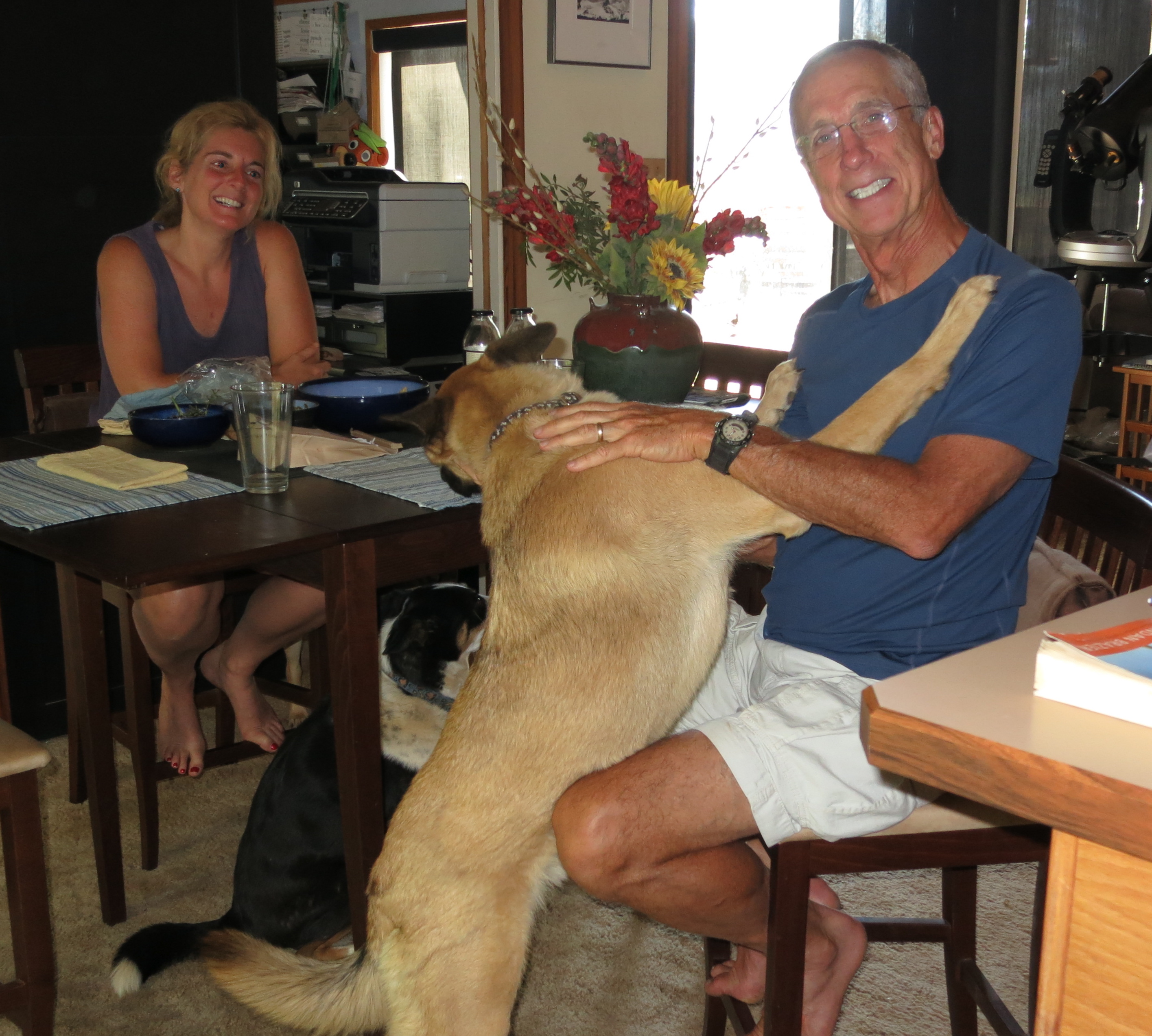
Beth kindly opened her home to us and we enjoyed a 3 hour visit over lunch. Even in her personal life, she embodies that of which she speaks.  Her menagerie of rescue animals includes 3 dogs, 2 cats, 3 toads, and I believe even her fish may have been rescued.  We are still talking about the wonderful visit we had, what great doggies she’s got, and are looking forward to seeing her again this fall.

Beth, Terry, and the star Dante (with Tioga under the table)

If you liked this blog post, why nosubscribe to my blog via feed reader or e-mail?
The Hiking is Fine ~ Yosemite National Park (Part 2)

The temperature is soaring, mid-90’s most days, but hope is on the horizon with 80’s now showing up on the radar for this weekend.  Even with the hotter weather, the hiking is fine if you head up into the higher elevations, which is definitely not tough to do in this park, given the 800 miles of hiking trails.

Way down in the valley from Taft Point.

We have not been as aggressive about our hikes in Yosemite, which is ok with both of us as we are taking more time to wrap ourselves in the heart-stirring views along the way.  A hiker whom we crossed paths with in Kings Canyon NP told us a must was Yosemite’s Glacier Point at sunset, to watch the changing hues reflected from Half Dome.  This was to be our destination, with a couple of short side hikes along the way.

At the trailhead, which splits off left to Taft Point and right to Sentinel Dome, we veered to the left, to the “Glacier Point without the guard rails”. Unlike Glacier Point, which can be driven to, this overlook must be hiked so you have to earn the view.

That’s one big fissure!

As you approach Taft Point, you will see five fissures, giving the appearance of some mythical monster having attempted to claw his way to the top from the valley 3000 feet below.  Be careful here as one false move and you can kick your butt goodbye!

Once you gingerly hop around the gaping holes in the ground and make it to the lookout point (which does have a guard rail thankfully), you are rewarded with the more prominent views of the Yosemite Valley, El Capitan, and Yosemite Falls. We arrived early afternoon, not the best time to take photos of the valley, as it was a little washed out and hazy.  Even with haze this hike proved to offer some of the more spellbinding views we had seen yet.

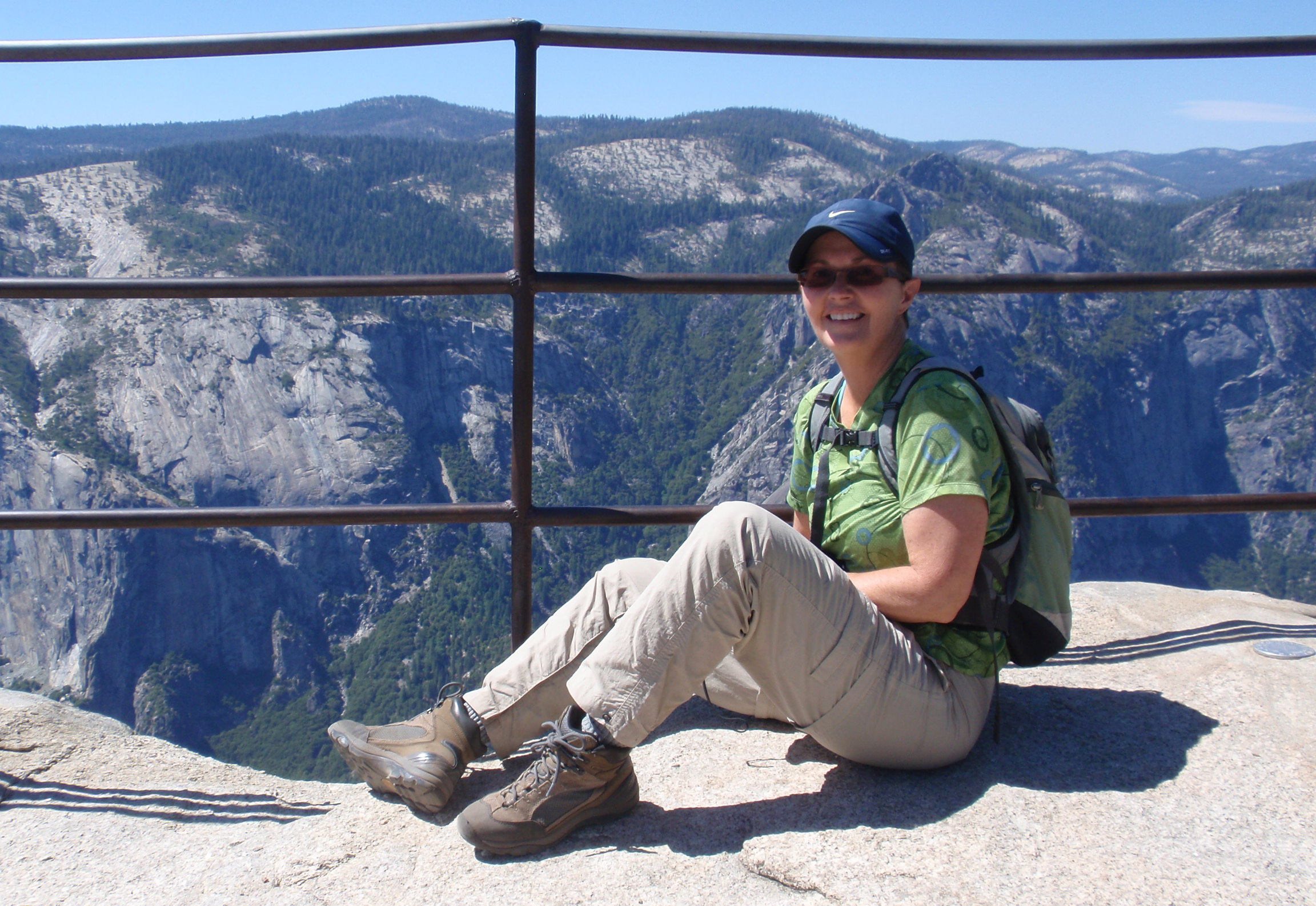
Hey Gaga, I’m on the edge!
My big strong he-man tryin’ to impress his woman!

When you tire of all the raw beauty, you can connect up with the Sentinel Dome trail or the Pohono Trail, the latter of which we opted for to add a couple more miles and some uphill to our day (thank you honey!).  If you are really feeling great or just plain crazed, you can tackle all 13 miles of the Pohono Trail, for an elevation gain of ~3700 feet!

Enroute to Sentinel Dome (Yosemite Falls in background)
Sentinel Dome

Spectacular views of the valley awaited us as we wandered along the bluffs and into the forests.  As we continued to switchback up and the forest opened, Sentinel Dome made her appearance, as promised.  From here, we head back to the trailhead; hop in the car; and drive to Glacier Point for a picnic dinner and a cool sunset.  Our total hike for the day was roughly 6  yummy miles of views, views and more views.

Half Dome and surrounding peaks nearing sunset

Just a mere 1/4 mile hike will bless you with panoramic views of Yosemite Valley and all her surrounding peaks, including Mt. Lyell, highest peak in the park, standin’ tall at 13,120 feet, proudly sporting a small glacier.  Half Dome stands in the forefront ready to dazzle you with her changing lights.  She taunts extreme hikers with her sheer cliffs, as well she should, as she can claim the bragging rights for the toughest hike in the park.  On a scale of 1 – 10, I have read she is an extreme 11.  A 4800 foot elevation gain should speak for itself!  The last 400 feet of this sheer vertical granite wall must be done with cables, pulling yourself along as you contemplate your mortality!  Without these it would be impossible and is not permitted when there is any sign of precipitation.

Mariposa Grove Museum, sitting among the giants.

Another area for exploring is that of the Mariposa Grove, the forest of giant sequoia.  To walk among the giants here is pretty special but once you have been to Sequoia and Kings Canyon, we had to agree that these at Yosemite may have to take a back seat.  We decided to make this an exercise hike, opting to traipse through the forest to Wawona Point, a moderate 6-mile hike. Probably the most charming character we met at Wawona was a raven, who was determined to befriend Terry.  He just was not taking no for an answer, coming back time and again, each time alighting just a little closer, showing us he had no fear.  We both suspect he was desperate for a handout!

Terry’s buddy

In this magical place where the hiking is fine, it is time to call it a day.  As we head out of the park, darkness envelopes the mountains and creeps down into the valley.

Nighttime blankets Yosemite

If you liked this blog post, why nosubscribe to my blog via feed reader or e-mail?

“The Incomparable Valley” ~ Yosemite National Park (Part 1)

“I have seen persons of emotional temperament stand with tearful eyes, spellbound and dumb with awe, as they got their first view of the Valley from Inspiration Point, overwhelmed in the sudden presence of the unspeakable, stupendous grandeur.”  ~  Galen Clark, guardian of the Yosemite Grant

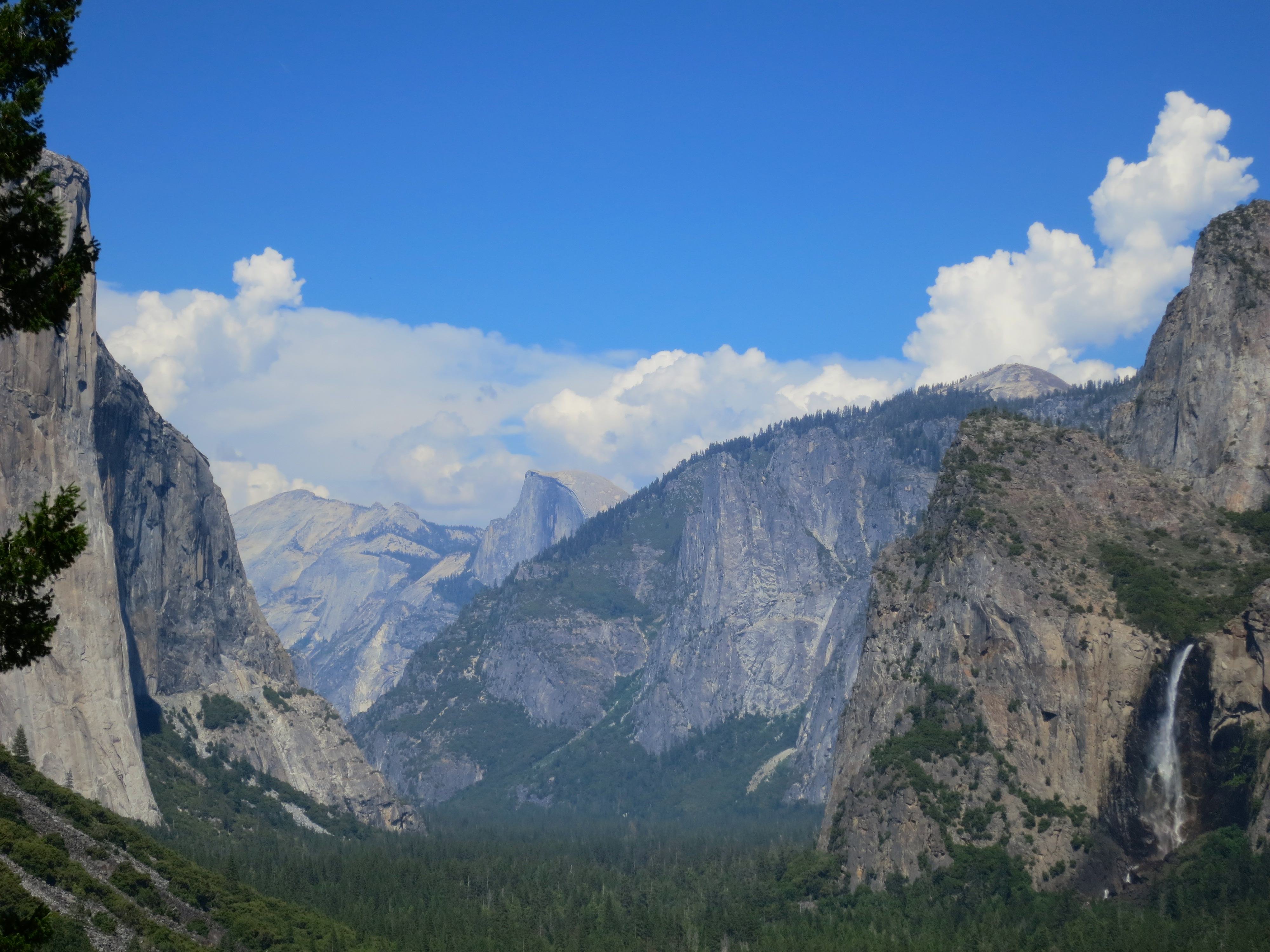
Stunning vista from Tunnel View (Bridalveil Falls to the right).

Yosemite National Park, referred to as “the incomparable valley”, is probably best known for its grand waterfalls and distinctive granite cliffs.  It offers so much more, as John Muir so beautifully told us in his poems and letters written so long ago.

Reaching across the western slopes of the Sierra Nevada mountain range, Yosemite encompasses 761,268 acres (1200 square miles), roughly the size of Rhode Island.  It has such amazing gifts to offer up, deep valleys, soaring granite cliffs, spectacular waterfalls, clear rushing streams and rivers, stunning meadows, giant sequoia, vast wilderness areas, and biological diversity – the stuff a nature lover’s dreams are made of.  If not for the efforts of renown conservationist and naturalist John Muir and others, 3.5 million annual visitors to this national park today would not be able to enjoy her wonders.

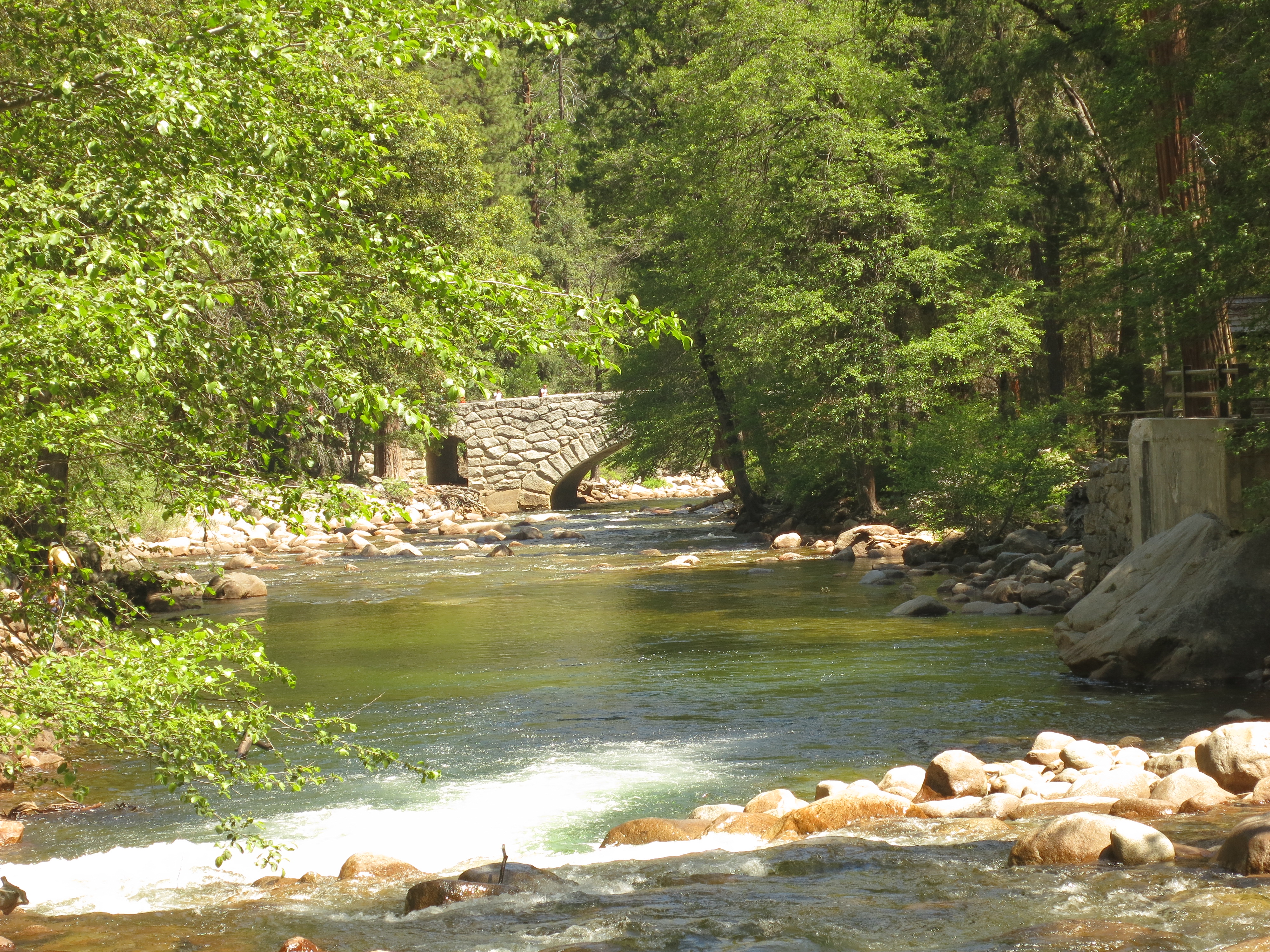
Bridge over Merced River (from Happy Isles Nature Center)

In 1889 John Muir, becoming evermore concerned about the damage being caused by sheep grazing in the High Sierras, launched a campaign with the help of Robert Underwood Johnson, editor of Century Magazine, to persuade Congress to preserve these lands.  Their persistence paid off and on October 1, 1890, Yosemite National Park was established.

Earlier still, in 1855, homesteader Galen Clark wandered upon the Mariposa Grove of Giant Sequoia.  So mesmerized was he by these giants, his personal fight to preserve them from logging soon extended to include Yosemite Valley.  His efforts gained support and the Yosemite Grant was drafted and submitted to Congress.  In 1864 President Abraham Lincoln signed the bill and Yosemite became the first territory ever set aside by Congress for preservation and public use.  Today Galen Clark has a mountain range, the Clark Range, named after him, which can be seen from Glacier Point.

Some of the original inhabitants of the Yosemite Valley were the Miwok Indians. Looking out over the valley, they named it Ahwahnee, “place of the gaping mouth” and later called themselves the Ahwahneechee.  They were followed by Europeans in the mid-1800’s, who quickly set out to displace these native tribes.

Of the 3.5 million who visit here yearly, most do not travel further than the 7 square miles of Yosemite Valley.  If you do nothing but this, there is still much to see.  Some of the more prominent features (but certainly not all-inclusive) that can be seen from Yosemite Valley are:

  • El Capitan (very popular with the rock-climbing set)
El Capitan
  • Half-Dome (can be climbed by permit only from ~ May through October – better views from Glacier Point)
Half Dome
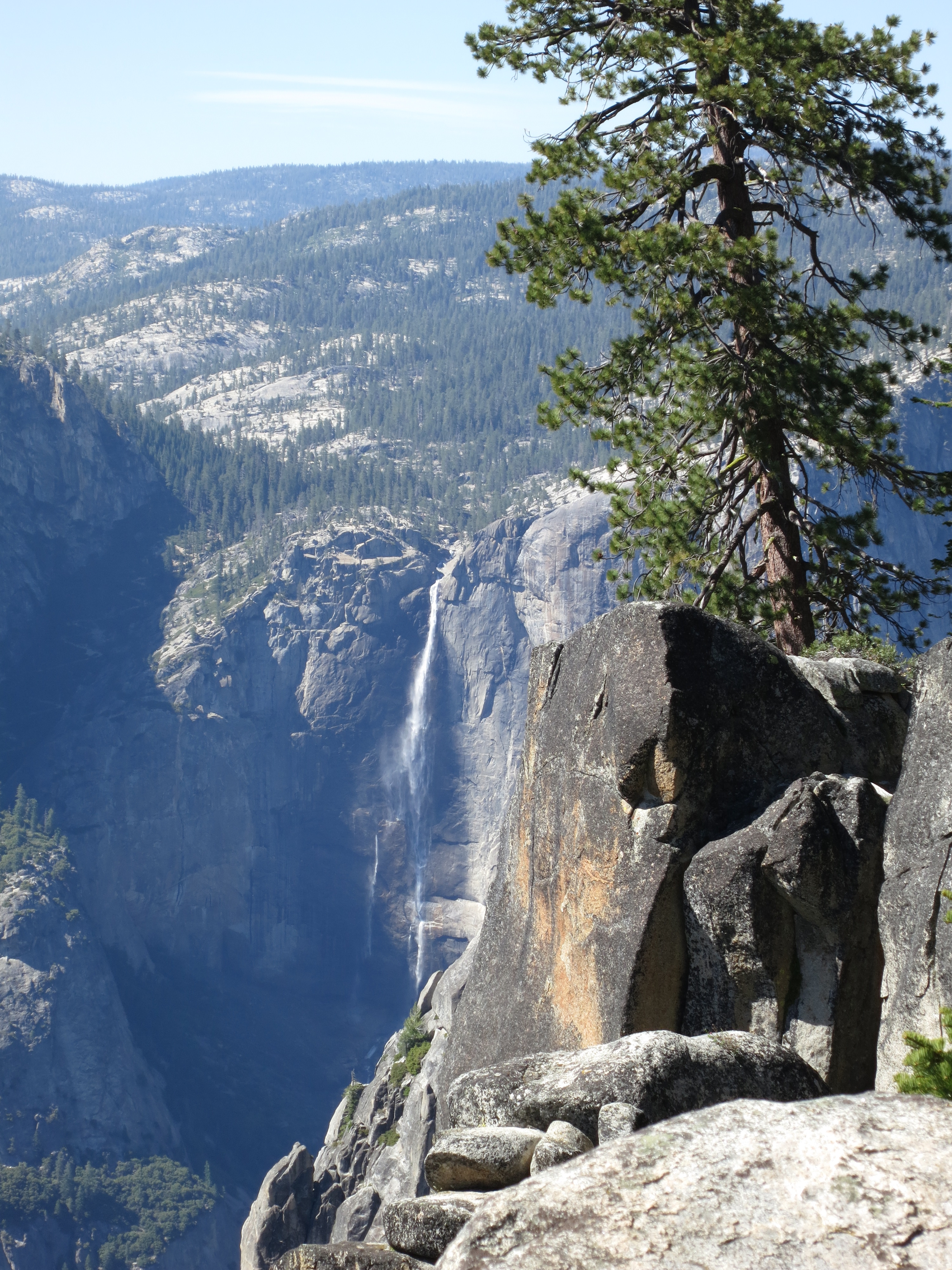
Yosemite Falls (not all is captured in this photo)
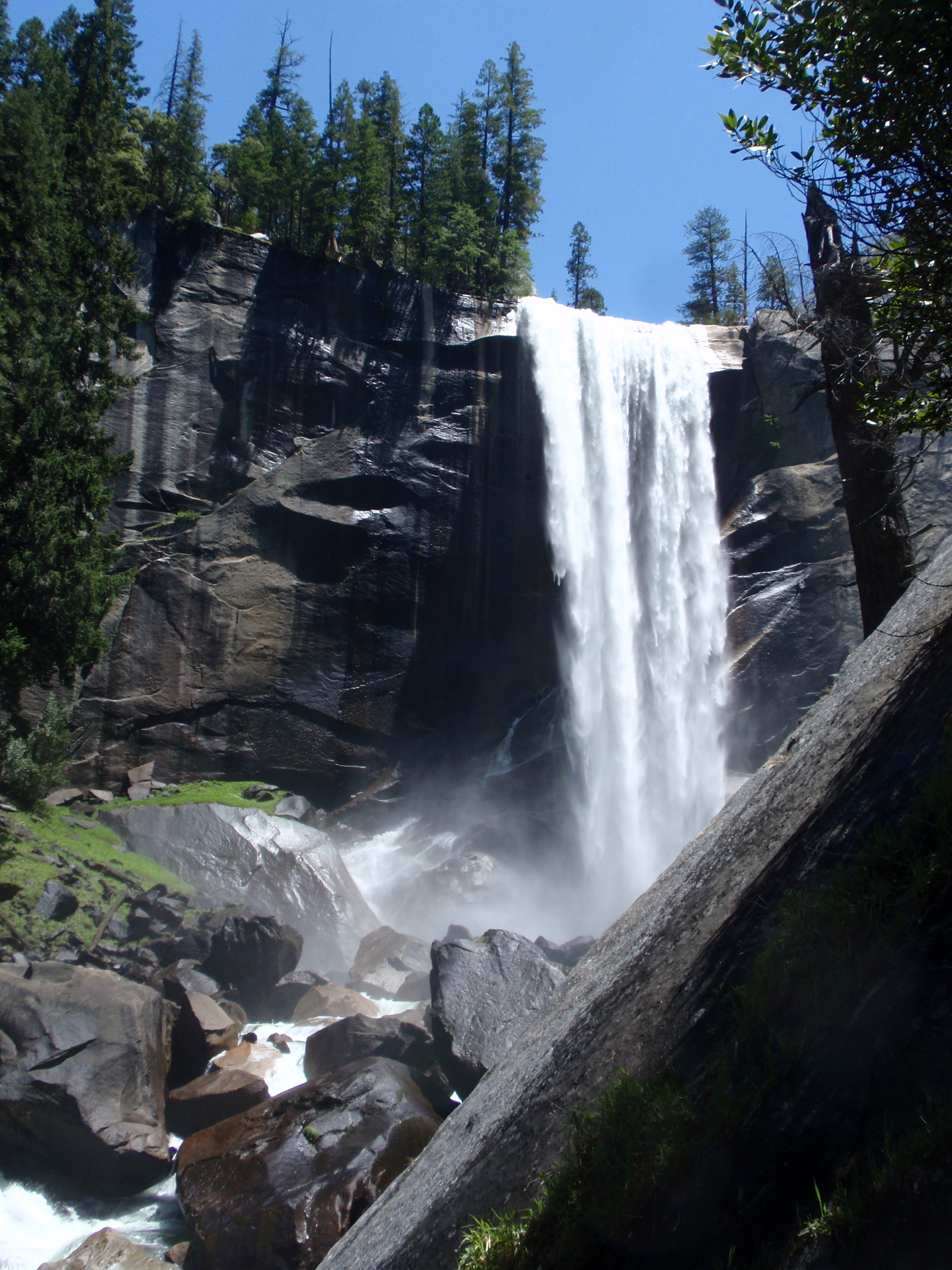
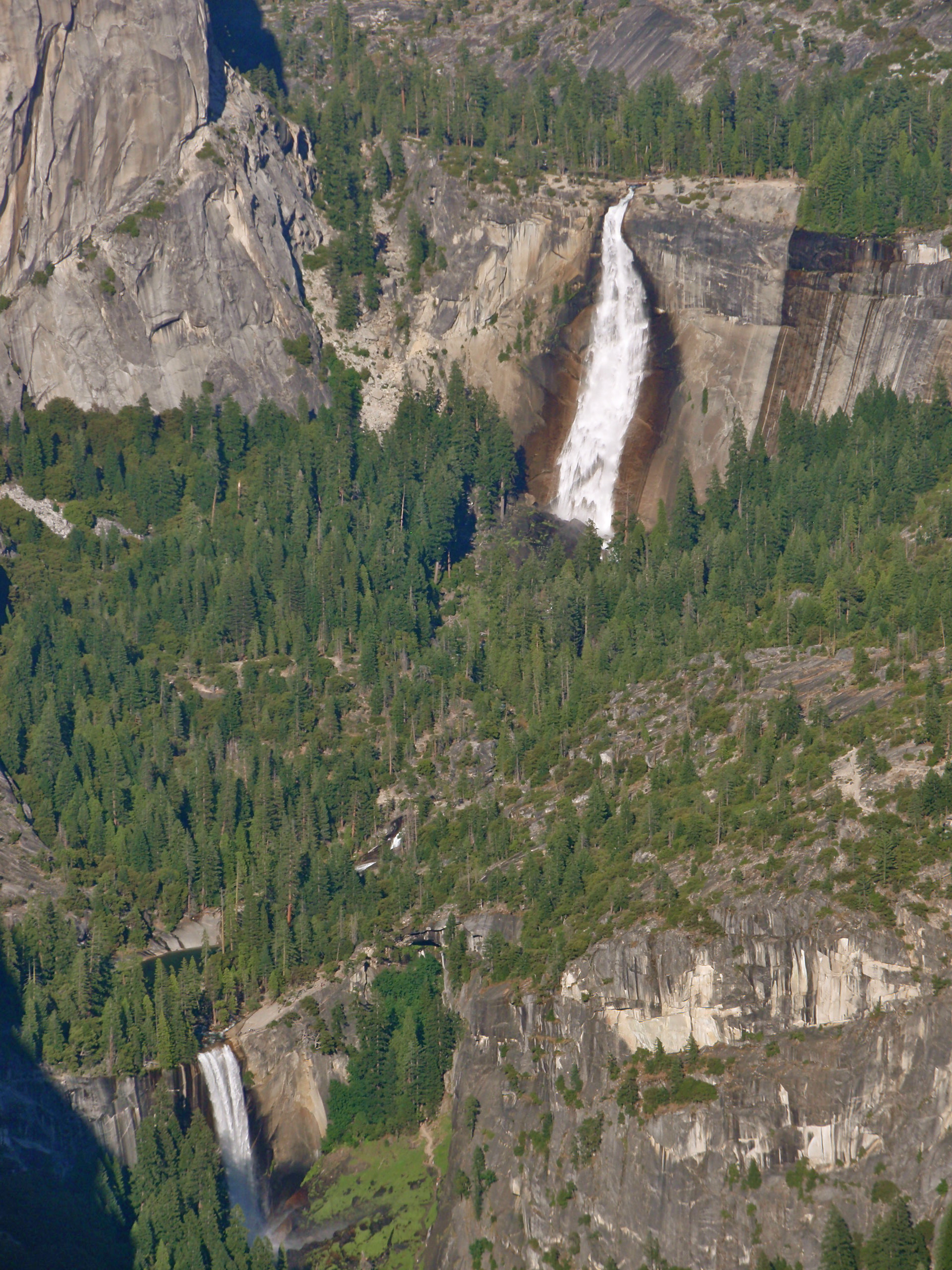
Vernal Falls
Nevada Falls (upper right)
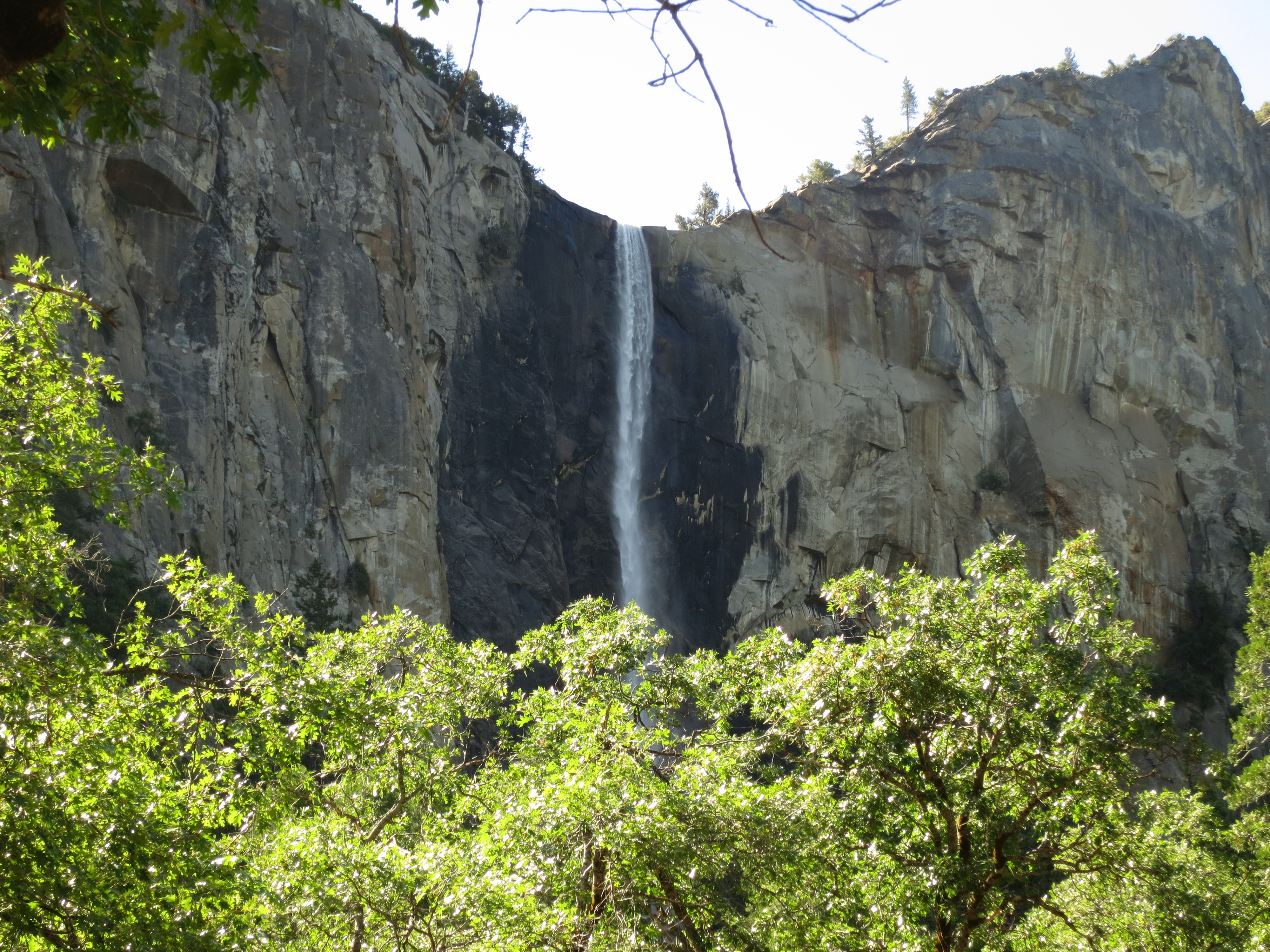
Bridalveil Falls
Ahwahnee Hotel
  • Ansel Adams Museum
Except for the Ansel Adams Museum, which we plan to explore later this week, we were able to see all these stunning sights.  Even with our two weeks here, we would never be able to take in all of Yosemite, so we have already decided we will save the eastern part of the park, Tuolumne Meadows, for a later date.
The elegant Ahwahnee Hotel
The Ahwahnee Hotel is a definite must-see, its stunning architecture set against a backdrop of towering granite cliffs.  It was originally built for the wealthy traveling to the park who were looking for more comfort and opulence than that provided by other lodging.  Since 1927, the Ahwahnee Yosemite tradition is the reenactment of Renaissance finery at the famous Bracebridge Dinner.  At this seven-course Yuletide feast you are taken back in time to the 17th century, with jesters, musicians and a court of over 100 players to entertain you for four hours.  I have read that this night of frolicking and festivities will only set you back about $425 (certainly not in our budget).
Terry just down from Vernal Falls

A hike up to Vernal Falls was in our budget (cause it’s free) and provided some quick exercise.  Only about a 1.5 mile hike but with an elevation gain of ~1000 feet and no guard rails to the top, it made for some heart-pounding moments.  It brought back memories of our time touring ruin sites in Mexico, climbing down from the pyramids.  In the past decade more than a dozen people have lost their lives foolishly swimming above the falls.  We watched nervously as many elderly folks with canes tried to make the crowded journey to the top – yikes!

Stay tuned for more photos and stories of this incomparable valley as we hike some of her trails.

“Thousands of tired, nerve-shaken, over-civilized people are beginning to find out that going to the mountains is going home; that wildness is a necessity; and that mountain parks and reservations are useful not only as fountains of timber and irrigating rivers, but as fountains of life.”  ~ John Muir

If you liked this blog post, why nosubscribe to my blog via feed reader or e-mail?


Oft Forgotten Sister ~ Kings Canyon National Park

Keep close to Nature’s heart… and break clear away, once in a while, and climb a mountain or spend a week in the woods. Wash your spirit clean. ~ John Muir

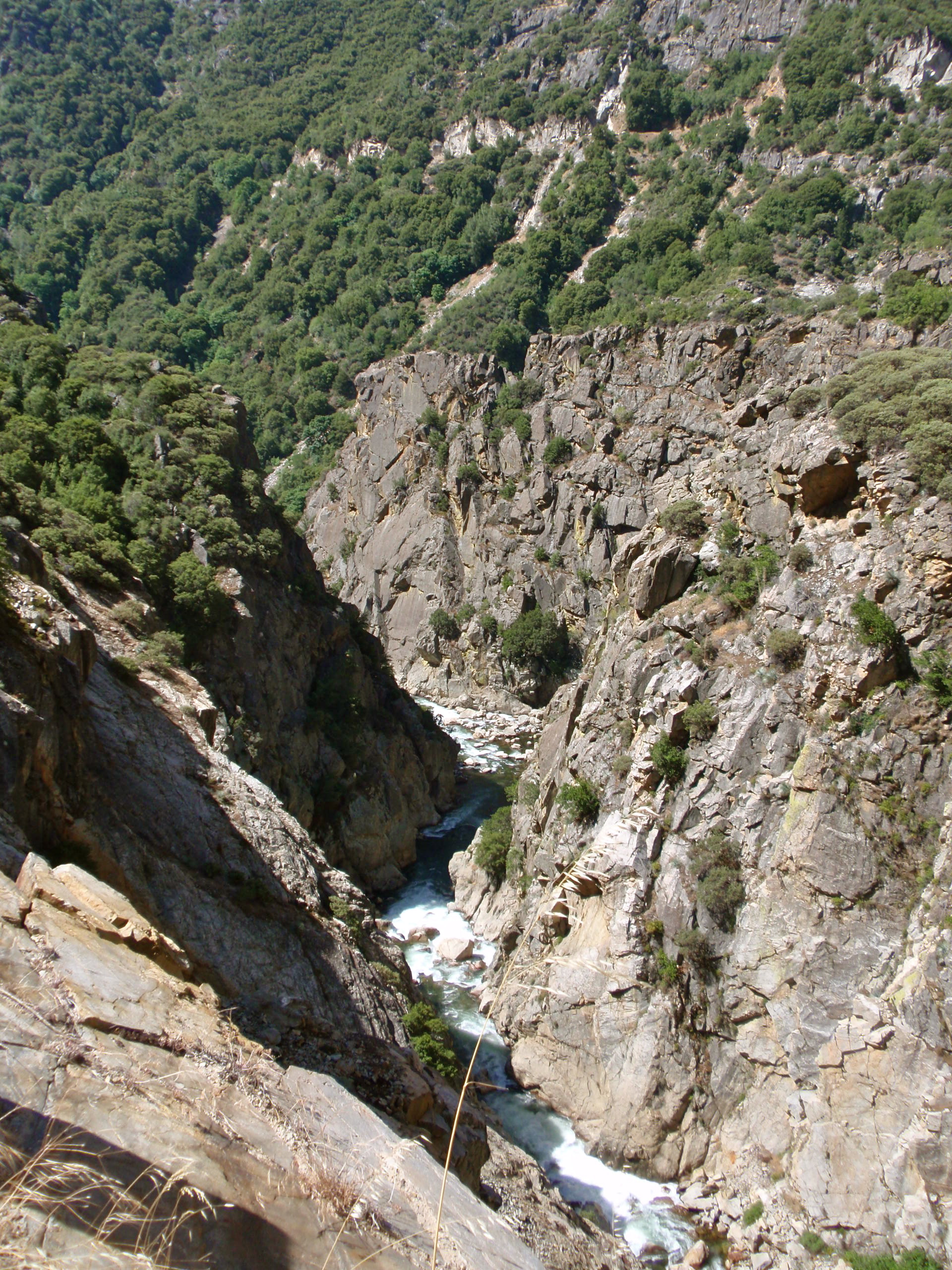
Rushing, roaring, majestic Kings River

One day and a kick-back (rest day) before we head north to yet another national landmark so time to see the oft forgotten sister, Kings Canyon National Park.  Even the volunteers at the visitor center recognize that this National Park seems to take “back seat” to its southern sister, Sequoia, but are proud of the fact that it boasts one of the deepest canyons in North America (maximum depth 8200 feet), at places deeper than the Grand Canyon, although lacking in spectacular topography.  John Muir first visited in 1873 and the canyon began to receive attention.  His theory that the valley was carved from massive glaciers during the last Ice Age proved to be correct.

deepest point in Kings Canyon

I am currently reading Angels in the Wilderness, by Amy Racina, which takes place in Kings Canyon.  A most compelling true story, Ms. Racina takes us along on her solo-backpacking journey into the rugged, very lightly traveled section of this canyon known as Tehipite Valley, when tragedy strikes.  Her survival against all odds and the spiritual journey she takes us on is truly moving.  This is a read I would highly recommend.

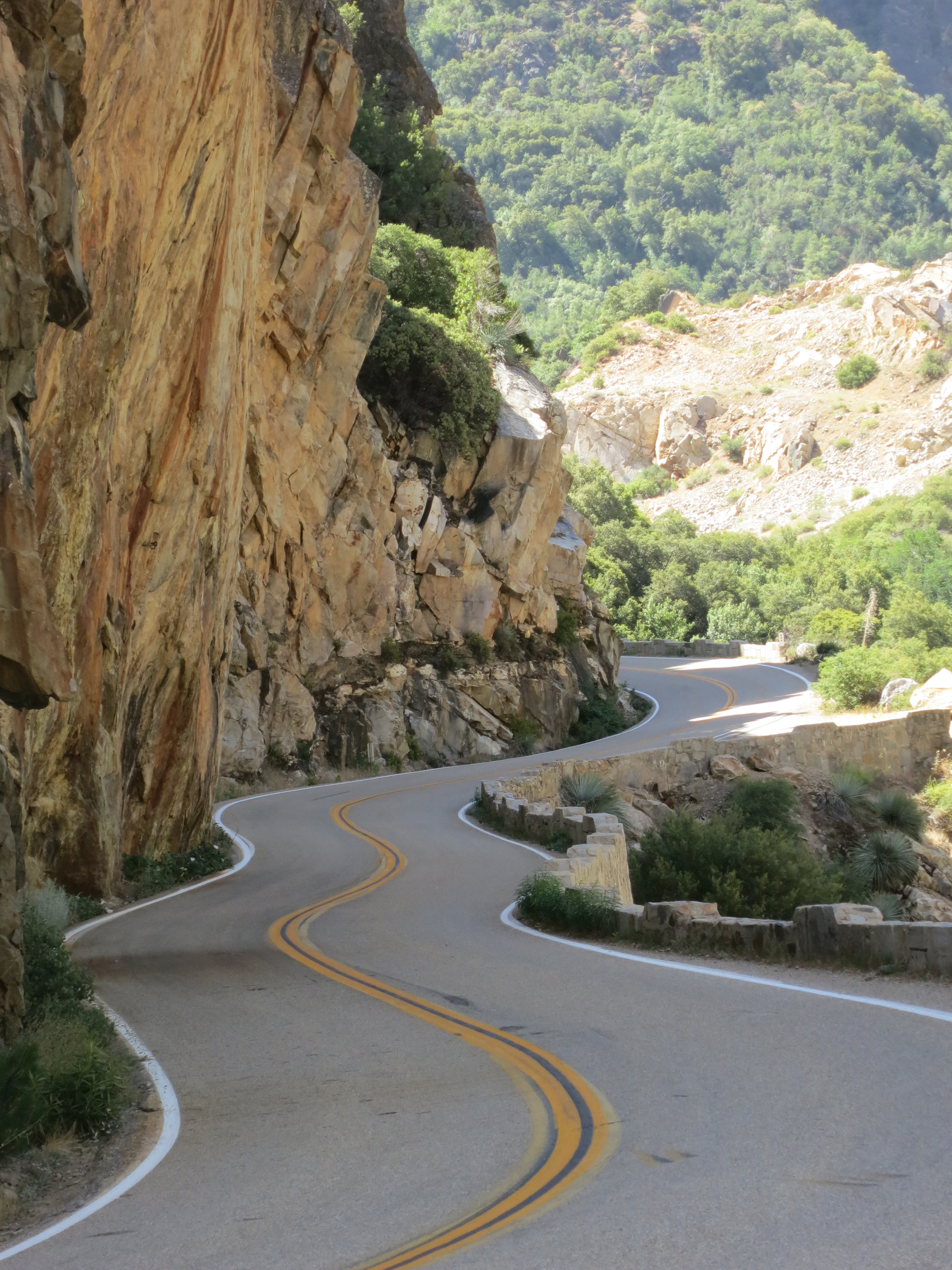
winding roads of Kings Canyon

Kings Canyon National Park consists of two distinct sections.  The much smaller Grant Grove section, lying to the west, was named General Grant National Park in 1890 but was incorporated into the remaining eastern 90% of Kings Canyon on March 4, 1940 to protect the large grove of giant sequoia there.  The eastern section of the park forms the headwaters of the south and middle forks of the Kings River and the south fork of the San Joaquin River.  Covering roughly 462,000 acres, ~84% of the park’s wilderness is accessible only on foot or by horseback.

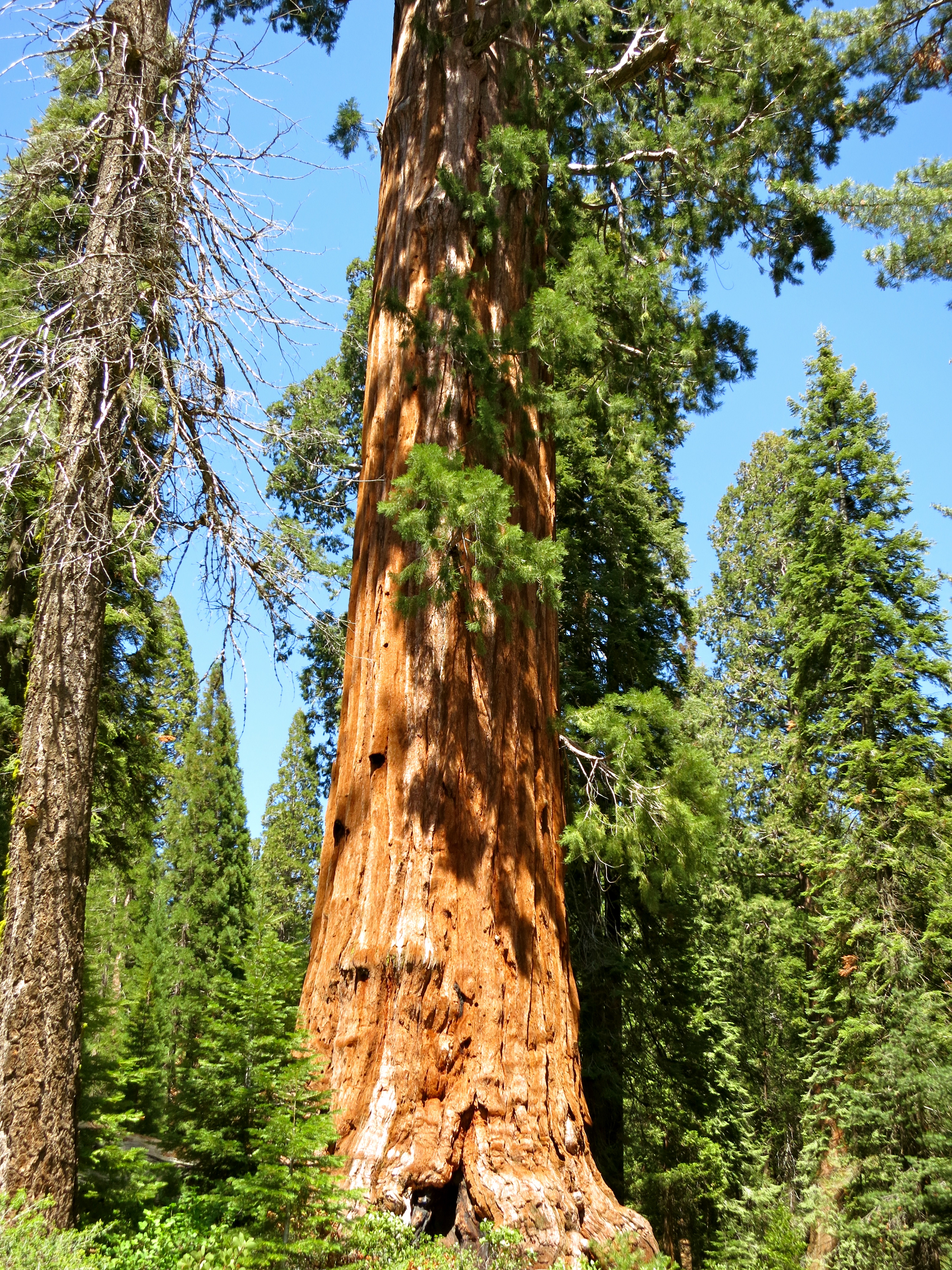
In Grant Grove Village stands General Grant Tree, a living memorial to the men and women of the armed services.  As your gaze travels towards the skies, you realize how difficult it is to capture the true size of these giants in a photo.

General Grant Tree

General Grant Tree is the third largest of the giant sequoia, standing over 267 feet tall, 40 feet across its base, and over 107 feet around.  The average estimate of its age is between 1500-2000 years.  It was designated the Nation’s Christmas tree by then President Calvin Coolidge on April 28, 1926.  Still today the marking of Christmas is held here under General Grant’s snow-laden branches.

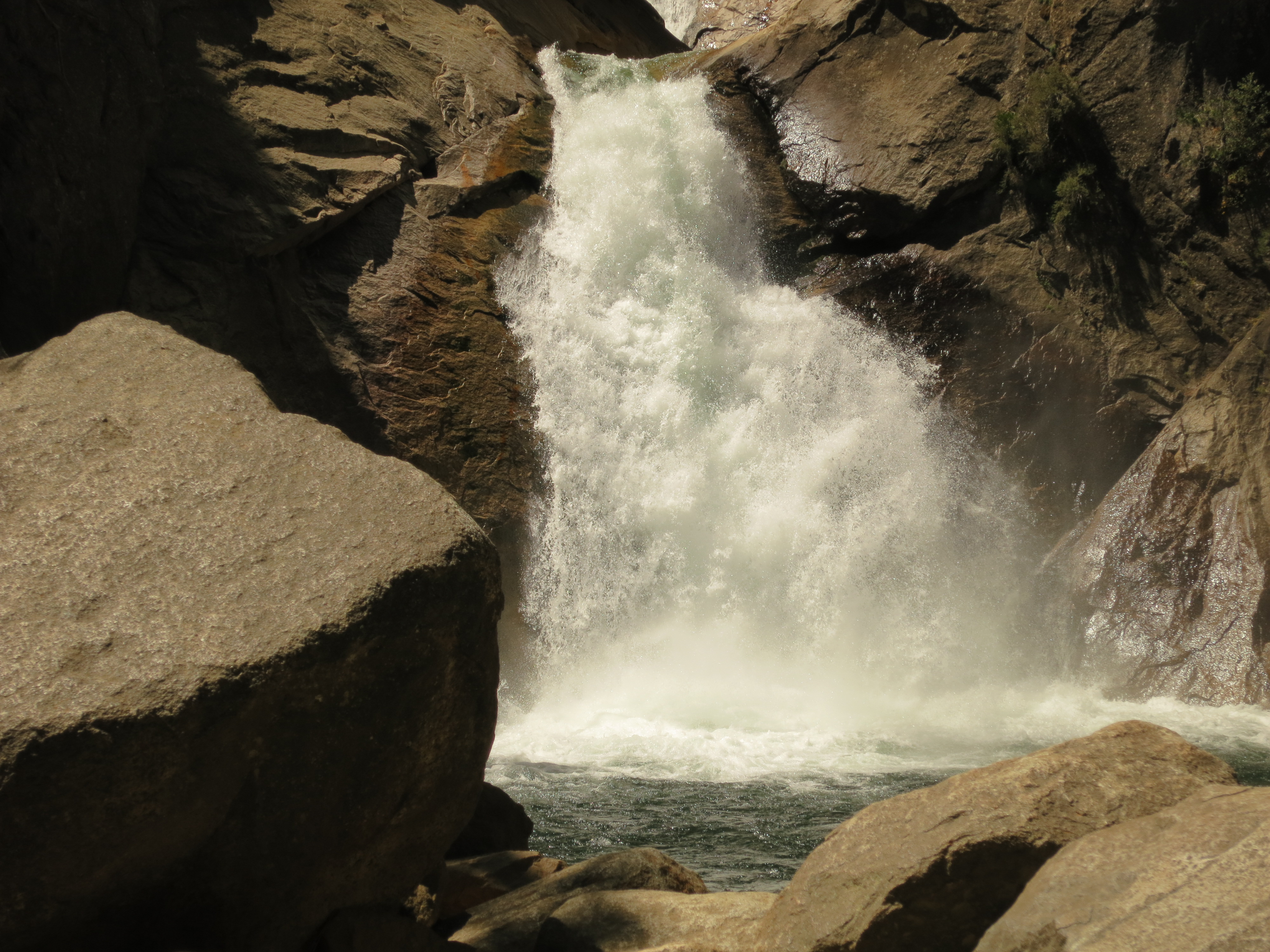
On our way out to the Cedar Grove area, a quick stop at the Roaring River Falls was a must.  This thundering waterfall descends from the south wall of the canyon, flowing into the Kings River.  A sort paved walk from the parking lot leads to it.

Roaring River Falls
lunch view

Cedar Grove, one of the flattest sections of the park and pretty darn near road’s end, is where we decided to lunch and the views could not be beat!  The waters of the Kings River were sparkling clear in the foreground of soaring granite cliffs.

As we were looking forward to our short hike into Zumwalt Meadow and enjoying our final bites, look who slithered in to join our dining experience!

tiny but deadly rattlesnake
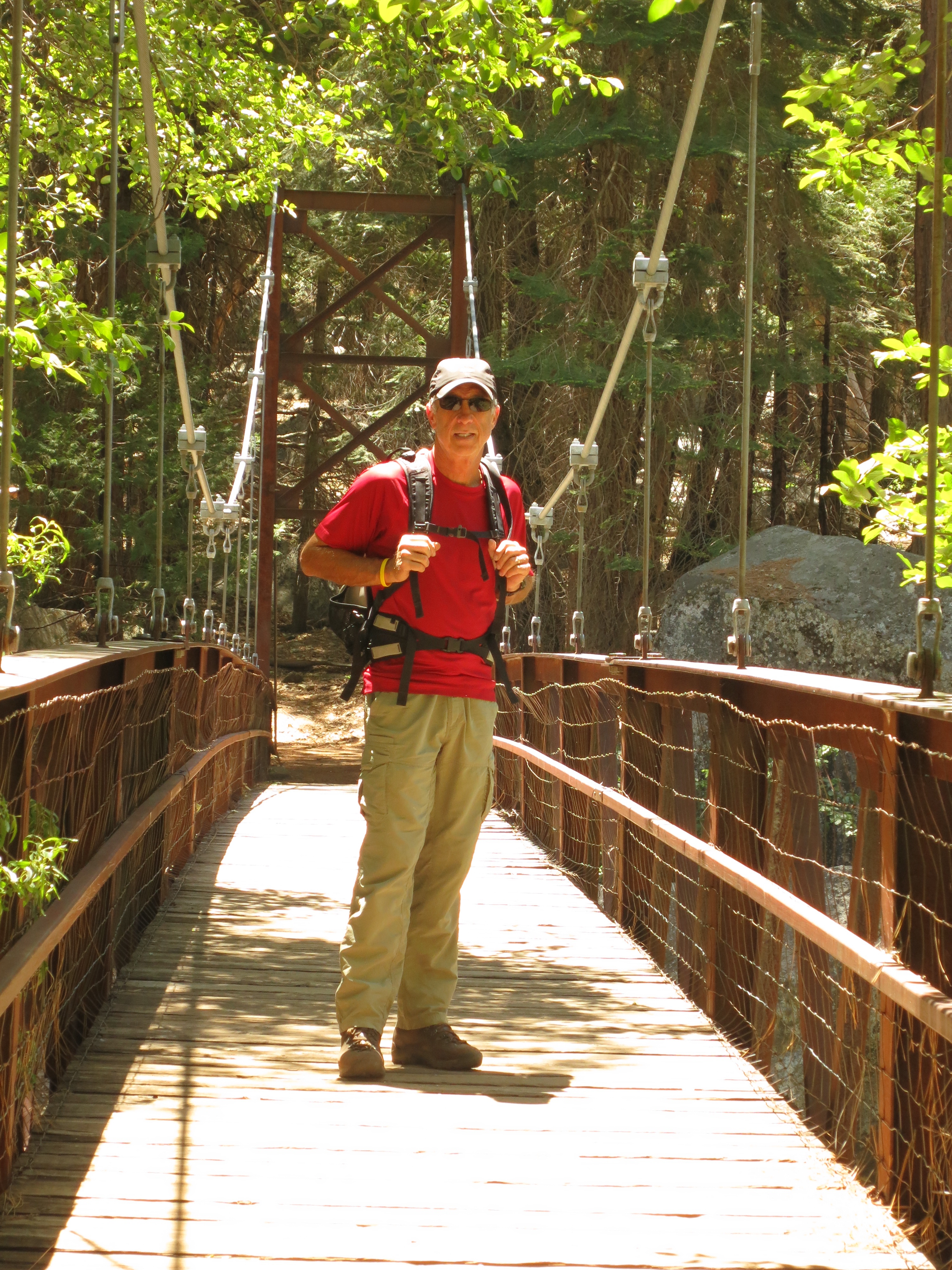
Terry on suspension bridge at Zumwalt Meadow

Zumwalt Meadow is one of the loveliest 1.5 miles in the park and is purported to be one of the finest meadows in all the national parks.  Formed by glaciers, it features deep-green meadows lined with trees, wildflowers, ferns, views of the Kings River, and the granite cliffs of Grand Sentinel in the distance.  Walk gingerly along the path as small slithering creatures could be awaiting you!  Of course, it is always good to practice caution when hiking in the wilderness.

Zumwalt Meadow

If quiet, solitude and space are your thing, they are easy to come by in this  oft forgotten sister, Kings Canyon National Park, another American treasure.

If you liked this blog post, why nosubscribe to my blog via feed reader or e-mail?