Oft Forgotten Sister ~ Kings Canyon National Park

Keep close to Nature’s heart… and break clear away, once in a while, and climb a mountain or spend a week in the woods. Wash your spirit clean. ~ John Muir

Rushing, roaring, majestic Kings River

One day and a kick-back (rest day) before we head north to yet another national landmark so time to see the oft forgotten sister, Kings Canyon National Park.  Even the volunteers at the visitor center recognize that this National Park seems to take “back seat” to its southern sister, Sequoia, but are proud of the fact that it boasts one of the deepest canyons in North America (maximum depth 8200 feet), at places deeper than the Grand Canyon, although lacking in spectacular topography.  John Muir first visited in 1873 and the canyon began to receive attention.  His theory that the valley was carved from massive glaciers during the last Ice Age proved to be correct.
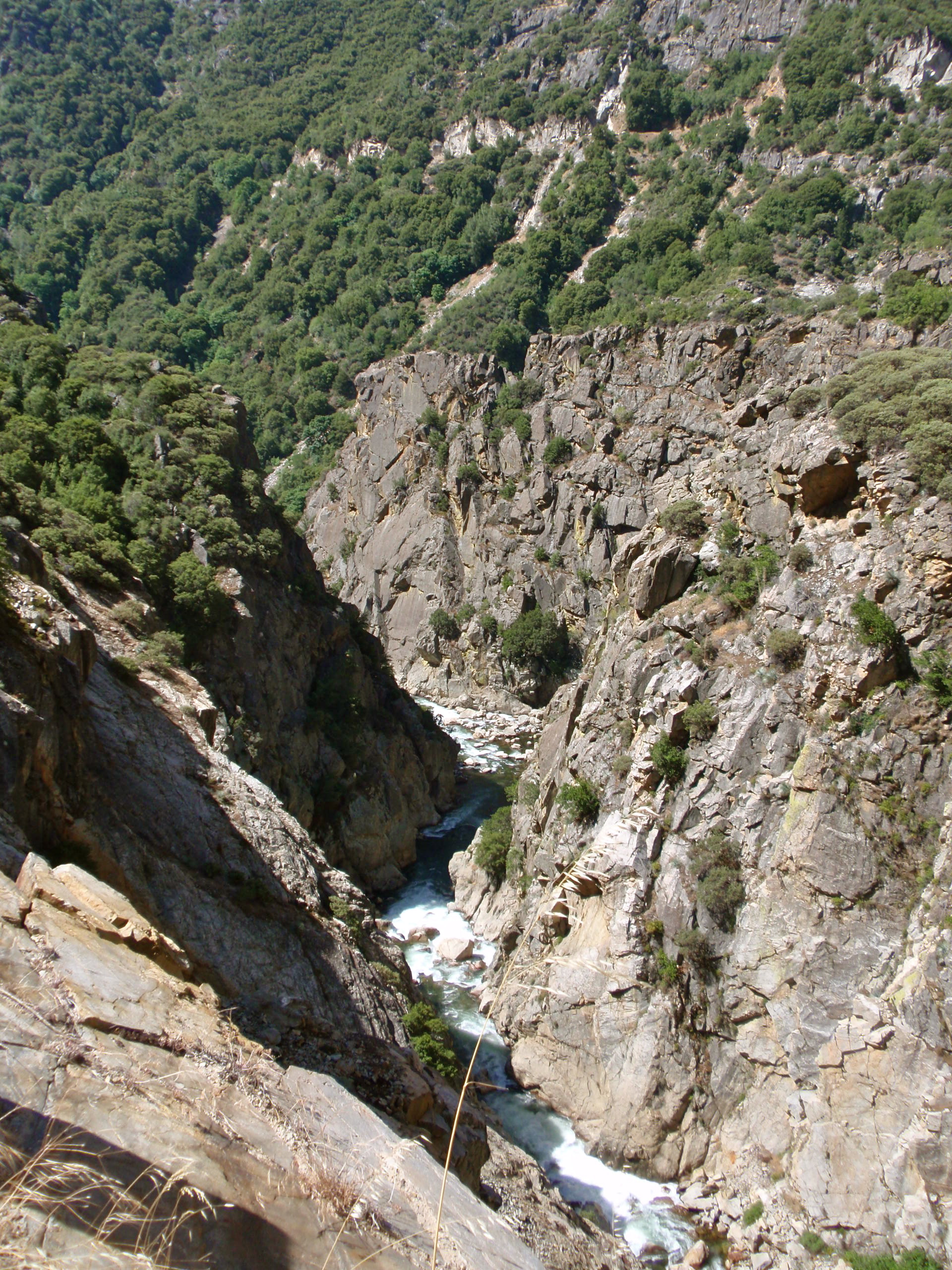
deepest point in Kings Canyon

I am currently reading Angels in the Wilderness, by Amy Racina, which takes place in Kings Canyon.  A most compelling true story, Ms. Racina takes us along on her solo-backpacking journey into the rugged, very lightly traveled section of this canyon known as Tehipite Valley, when tragedy strikes.  Her survival against all odds and the spiritual journey she takes us on is truly moving.  This is a read I would highly recommend.
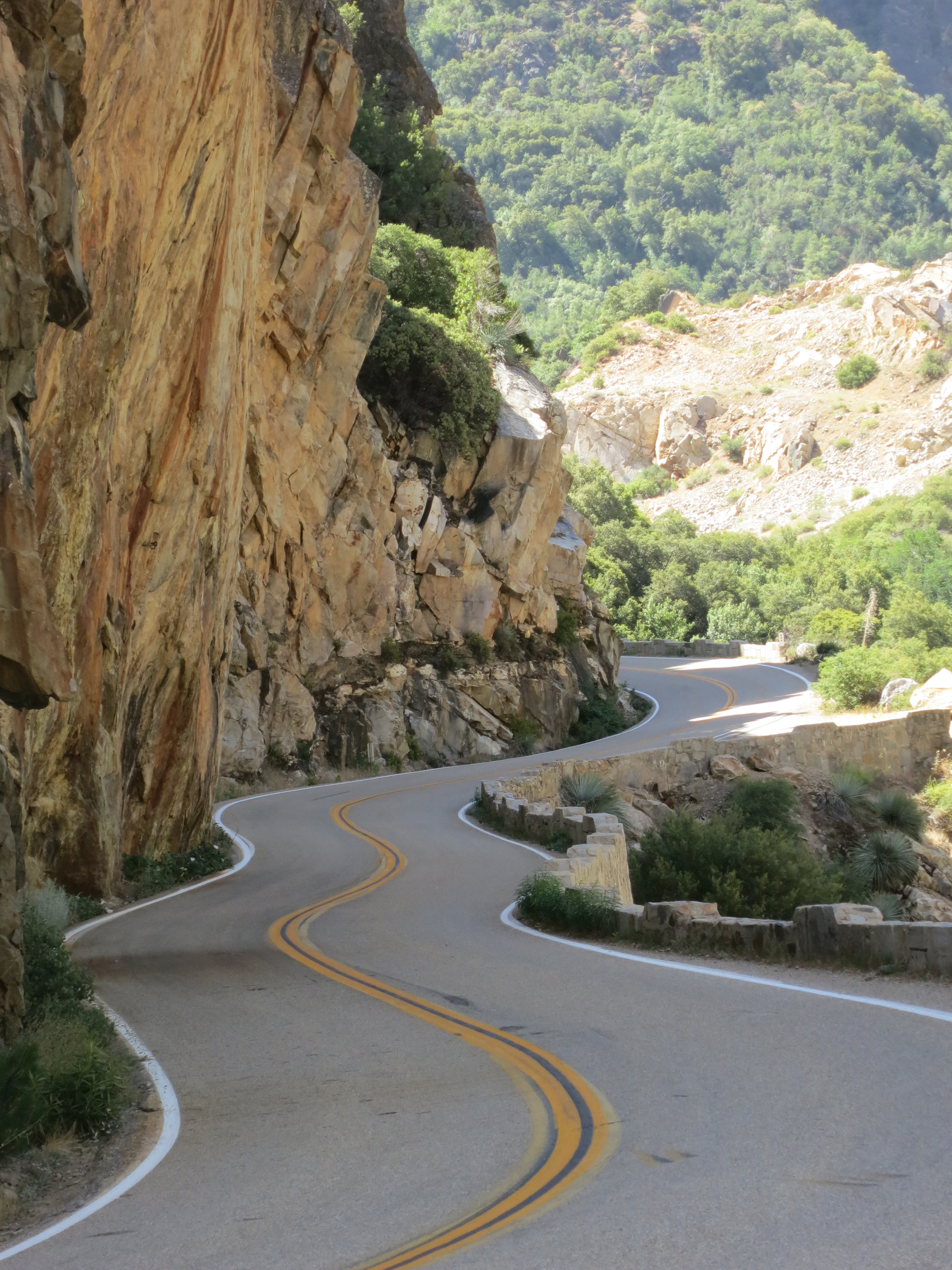
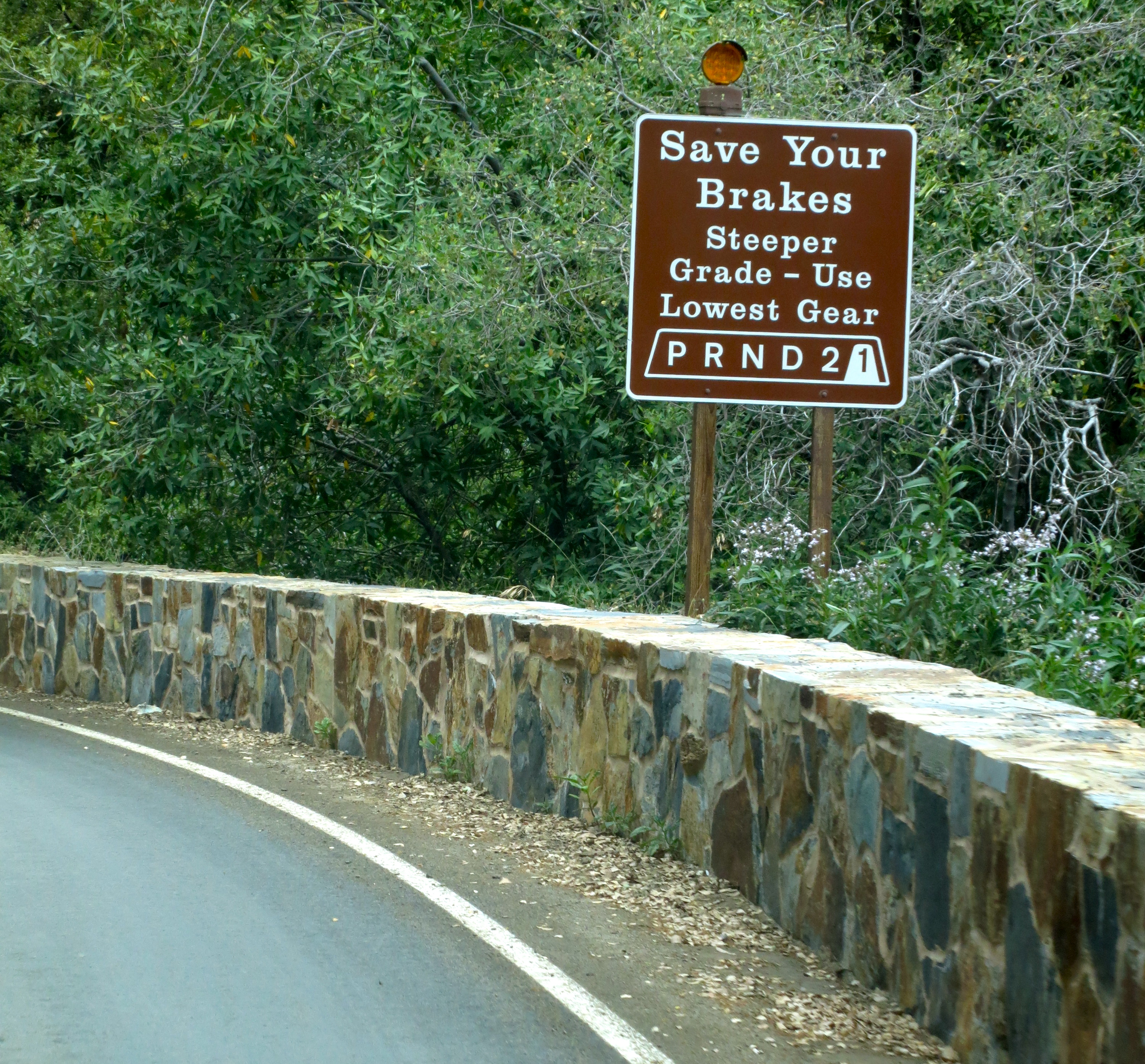
winding roads of Kings Canyon

Kings Canyon National Park consists of two distinct sections.  The much smaller Grant Grove section, lying to the west, was named General Grant National Park in 1890 but was incorporated into the remaining eastern 90% of Kings Canyon on March 4, 1940 to protect the large grove of giant sequoia there.  The eastern section of the park forms the headwaters of the south and middle forks of the Kings River and the south fork of the San Joaquin River.  Covering roughly 462,000 acres, ~84% of the park’s wilderness is accessible only on foot or by horseback.

In Grant Grove Village stands General Grant Tree, a living memorial to the men and women of the armed services.  As your gaze travels towards the skies, you realize how difficult it is to capture the true size of these giants in a photo.
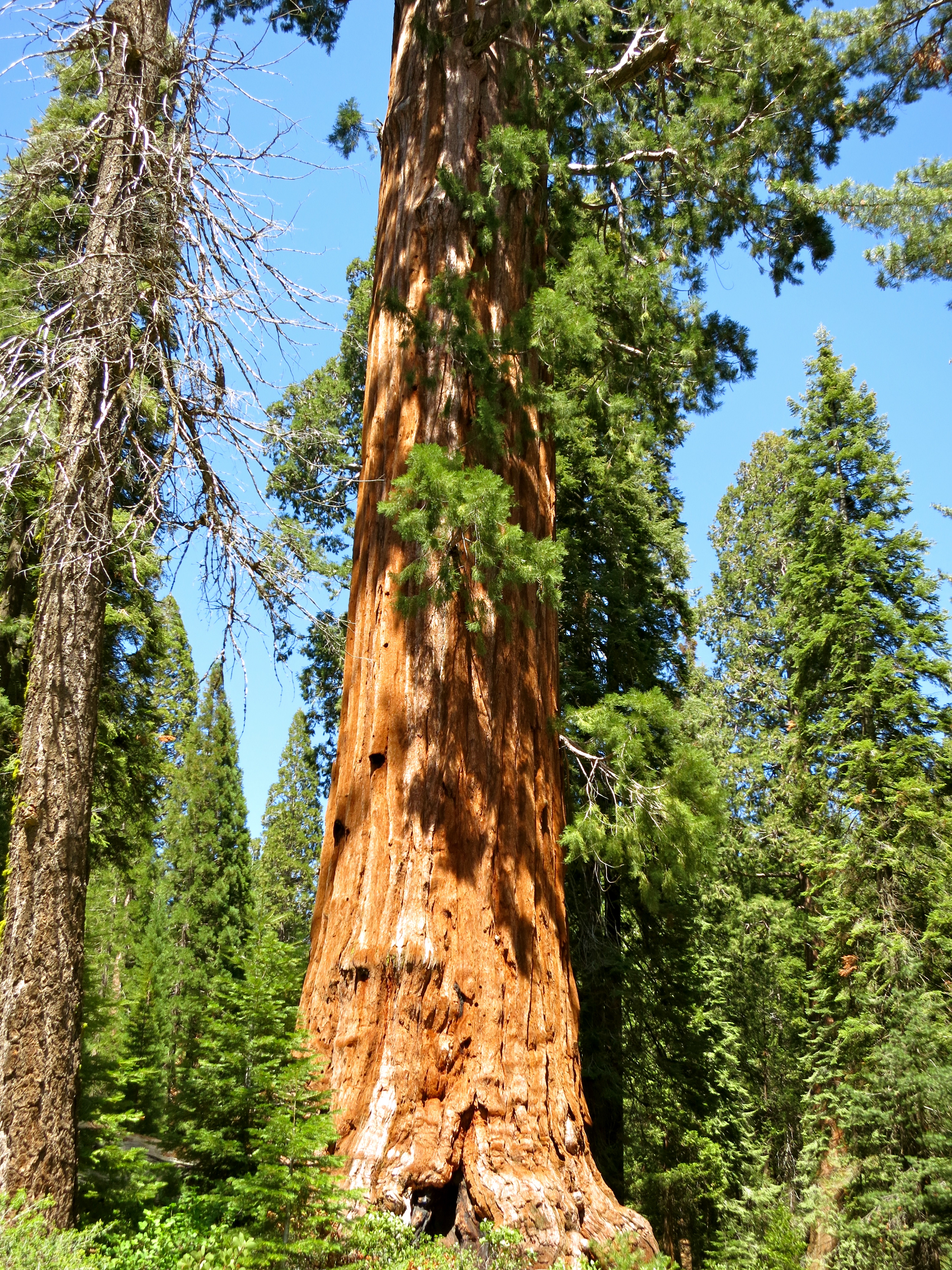
General Grant Tree

General Grant Tree is the third largest of the giant sequoia, standing over 267 feet tall, 40 feet across its base, and over 107 feet around.  The average estimate of its age is between 1500-2000 years.  It was designated the Nation’s Christmas tree by then President Calvin Coolidge on April 28, 1926.  Still today the marking of Christmas is held here under General Grant’s snow-laden branches.

On our way out to the Cedar Grove area, a quick stop at the Roaring River Falls was a must.  This thundering waterfall descends from the south wall of the canyon, flowing into the Kings River.  A sort paved walk from the parking lot leads to it.
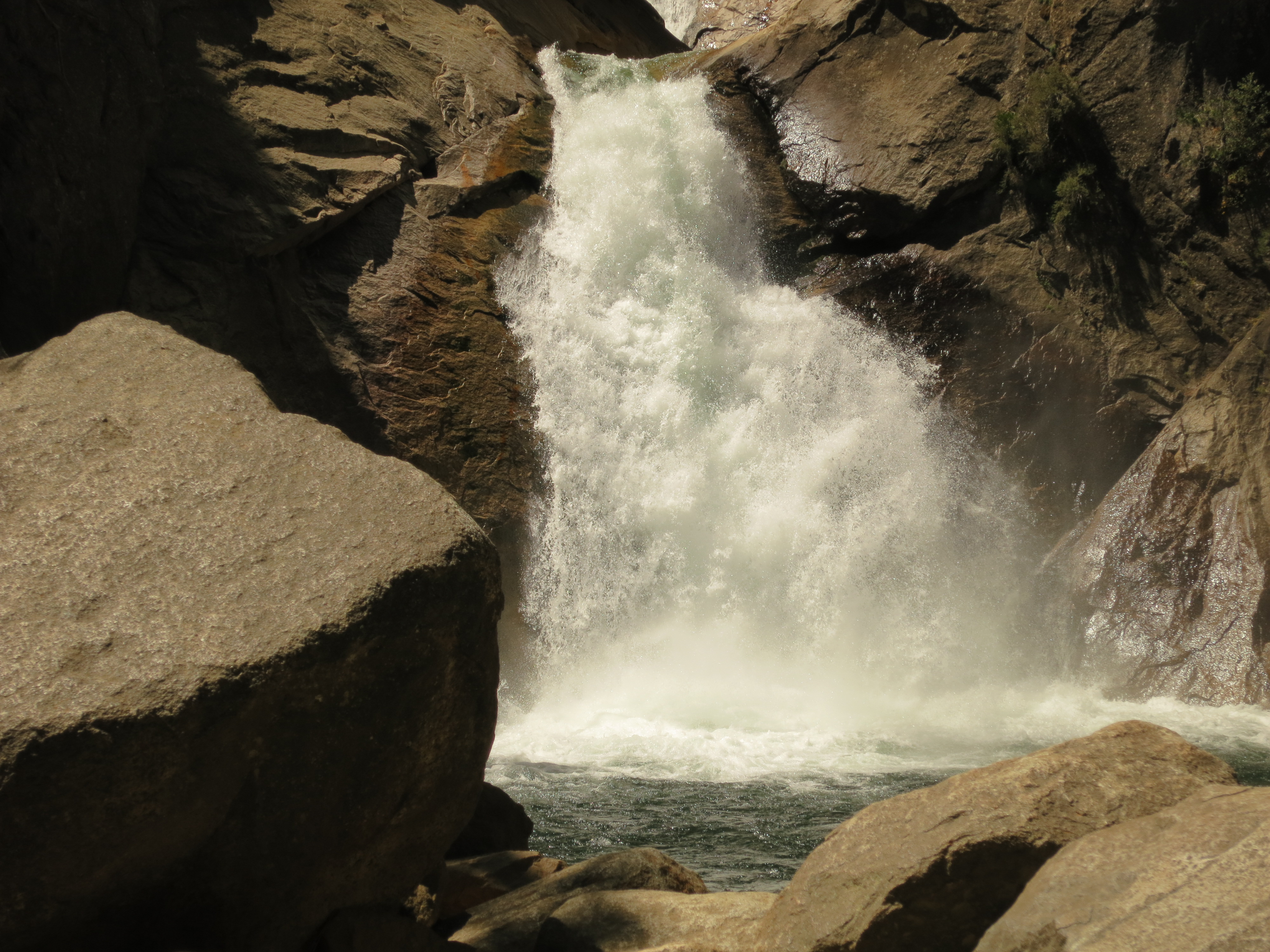
Roaring River Falls
lunch view

Cedar Grove, one of the flattest sections of the park and pretty darn near road’s end, is where we decided to lunch and the views could not be beat!  The waters of the Kings River were sparkling clear in the foreground of soaring granite cliffs.

As we were looking forward to our short hike into Zumwalt Meadow and enjoying our final bites, look who slithered in to join our dining experience!

tiny but deadly rattlesnake
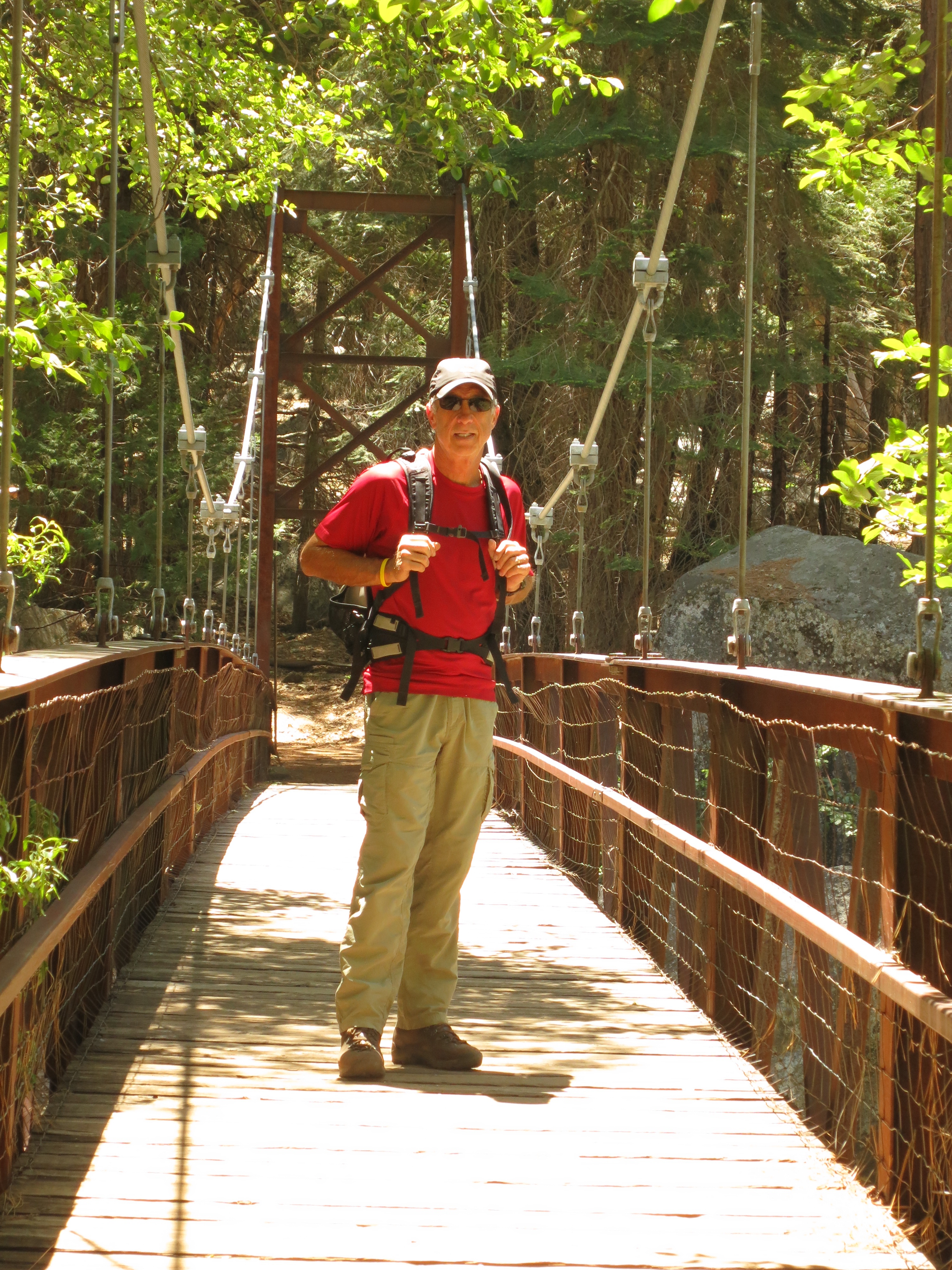
Terry on suspension bridge at Zumwalt Meadow

Zumwalt Meadow is one of the loveliest 1.5 miles in the park and is purported to be one of the finest meadows in all the national parks.  Formed by glaciers, it features deep-green meadows lined with trees, wildflowers, ferns, views of the Kings River, and the granite cliffs of Grand Sentinel in the distance.  Walk gingerly along the path as small slithering creatures could be awaiting you!  Of course, it is always good to practice caution when hiking in the wilderness.
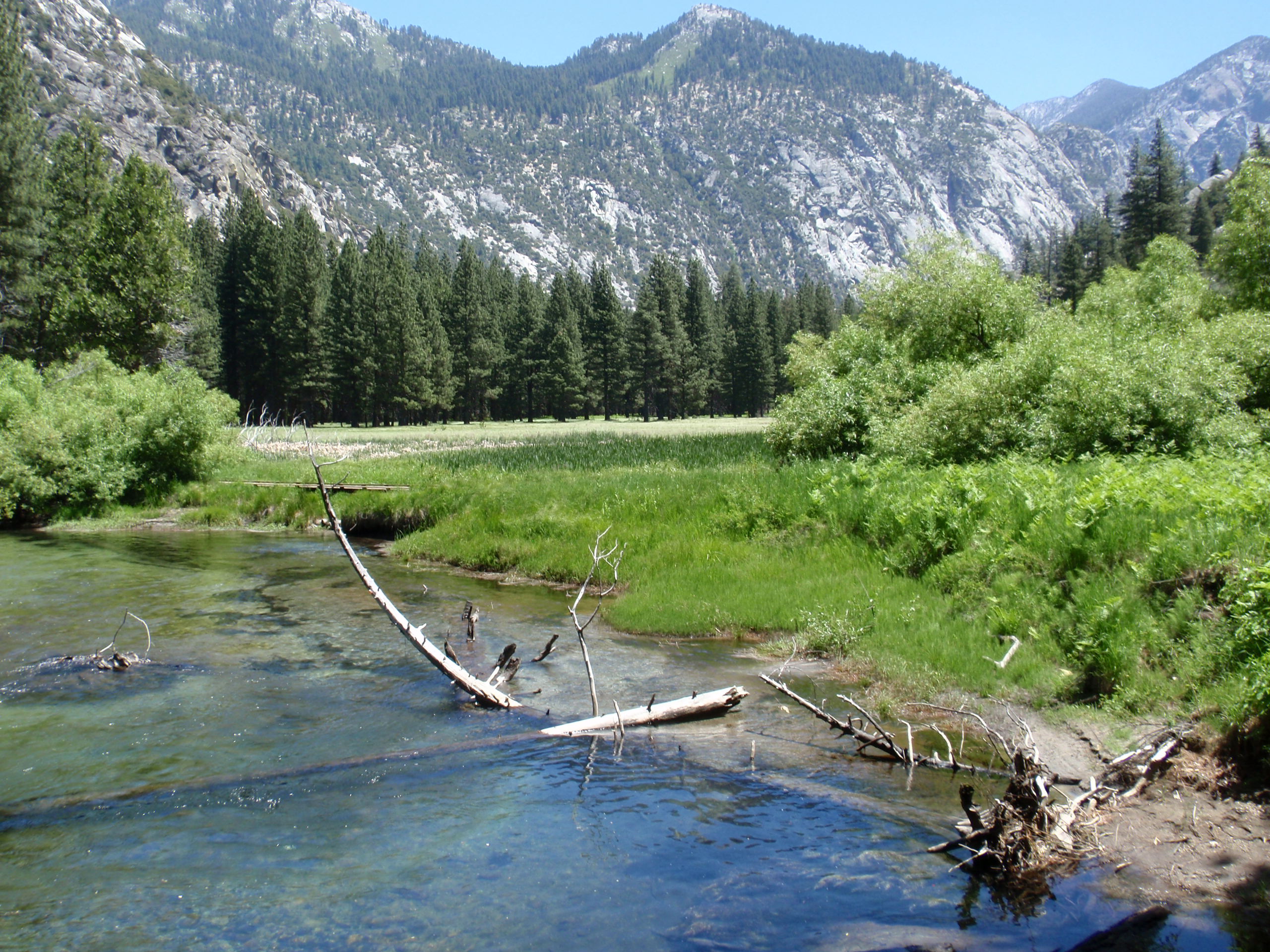
Zumwalt Meadow

If quiet, solitude and space are your thing, they are easy to come by in this  oft forgotten sister, Kings Canyon National Park, another American treasure.

If you liked this blog post, why nosubscribe to my blog via feed reader or e-mail?
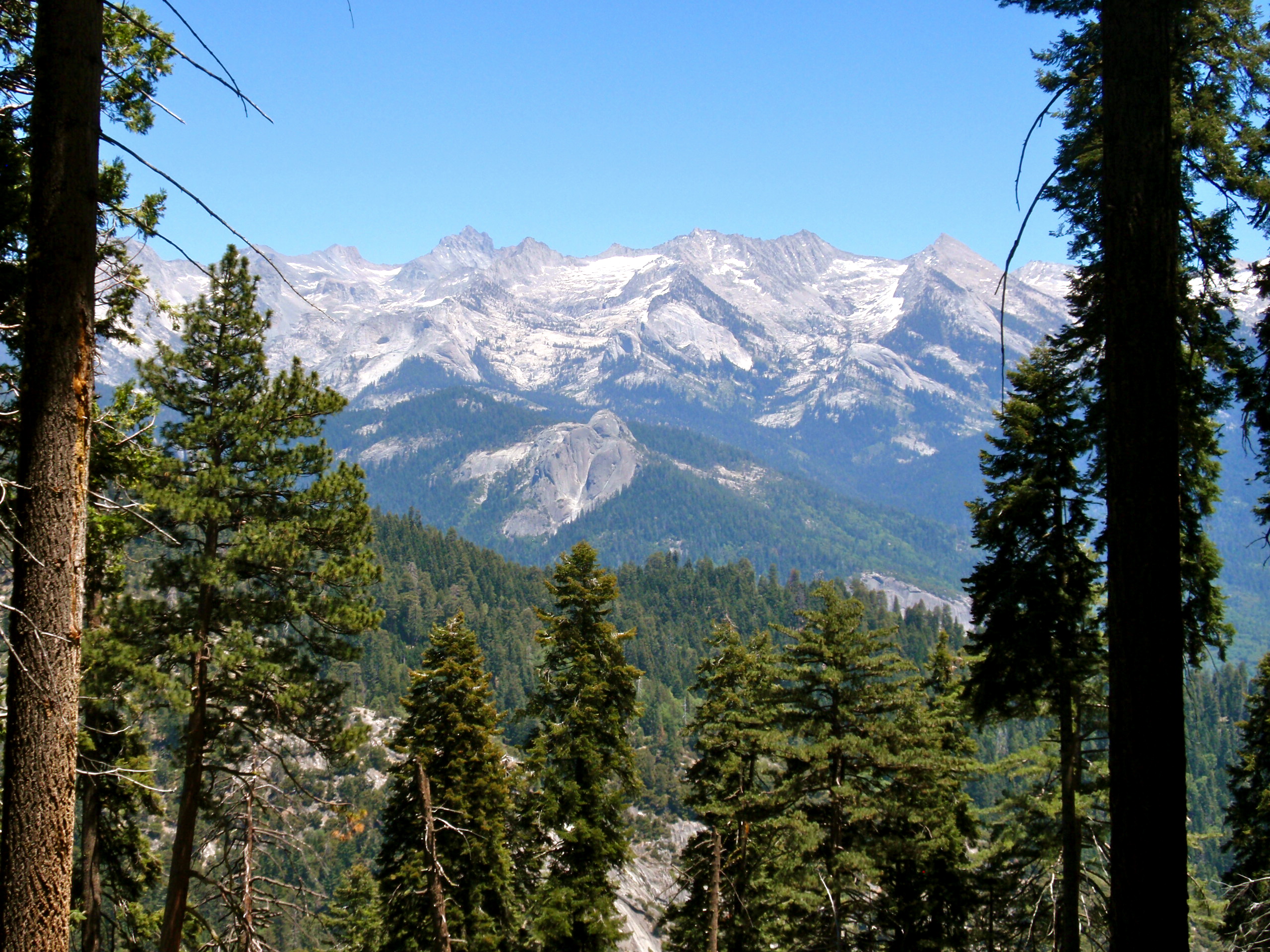
Get High ~ Sequoia National Park (Part 2)

“When I entered this sublime wilderness the day was nearly done, the trees with rosy, glowing countenances seemed to be hushed and thoughtful… and one naturally walked softly and awestricken among them.”  ~  John Muir

Time to get high, as in “natural high” or elevation gain, not like some of you are thinking.  Temps are starting to creep up so hiking in the higher elevations just makes more sense.  For our first high- elevation hike in Sequoia National Park, we opted for part of the High Sierra Trail.  I say part because you could traipse all the way to Mt. Whitney if you were so inclined.  Our trek for the day was to be 11 miles, versus 60 to the highest point in the lower 48.

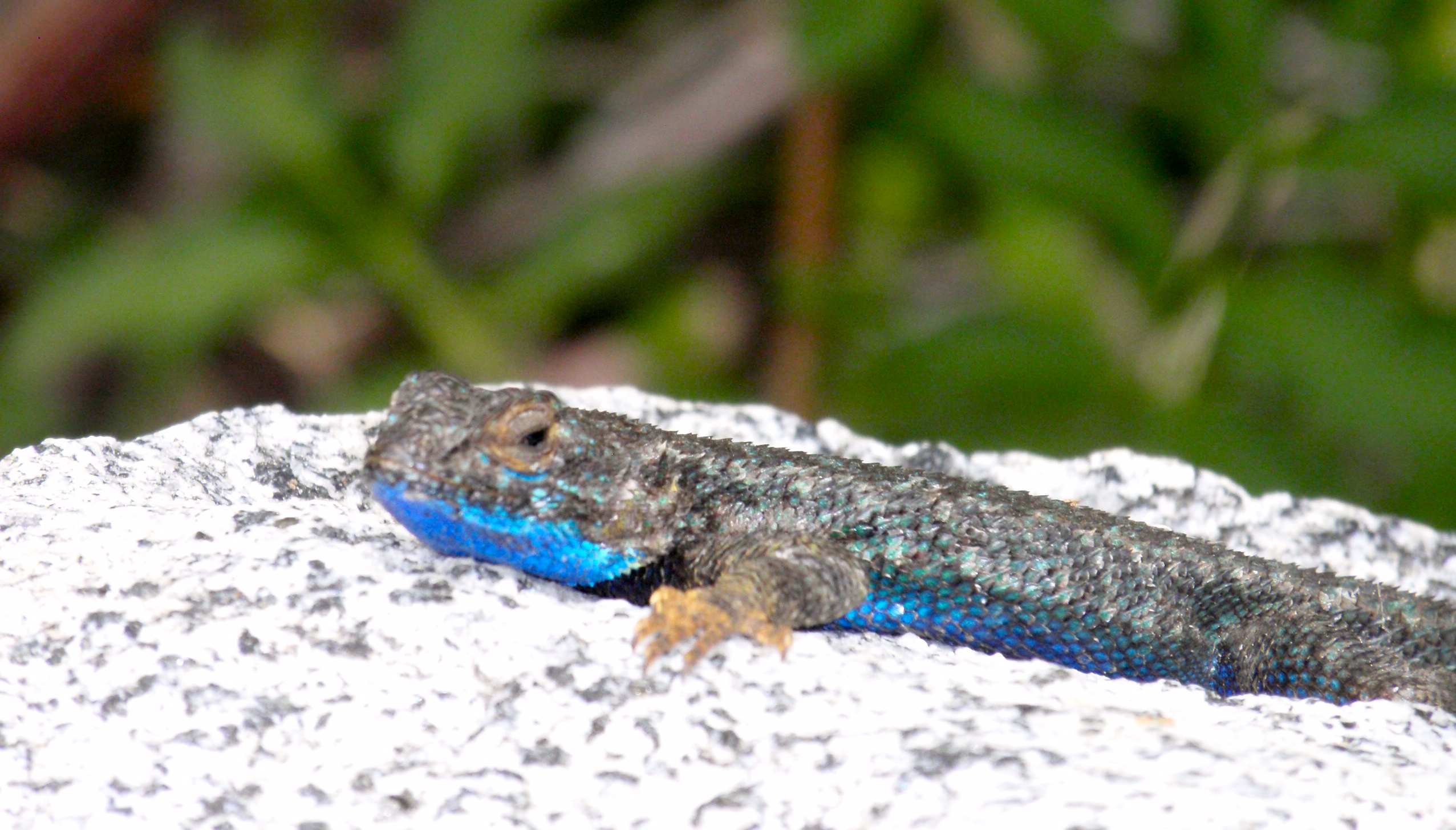
I’m quite the flashy little guy, don’t you think?

This is rated as a moderate hike, with some longish steady uphill slogs.  Probably rated more this because of the distance versus the uphill exertion.  On our way out to the trailhead, which began in the Giant Forest, a black bear sow and cinnamon yearling sprinted across the road, both evading our camera.  We had heard there were bears in the area, but this was to be our first sighting.

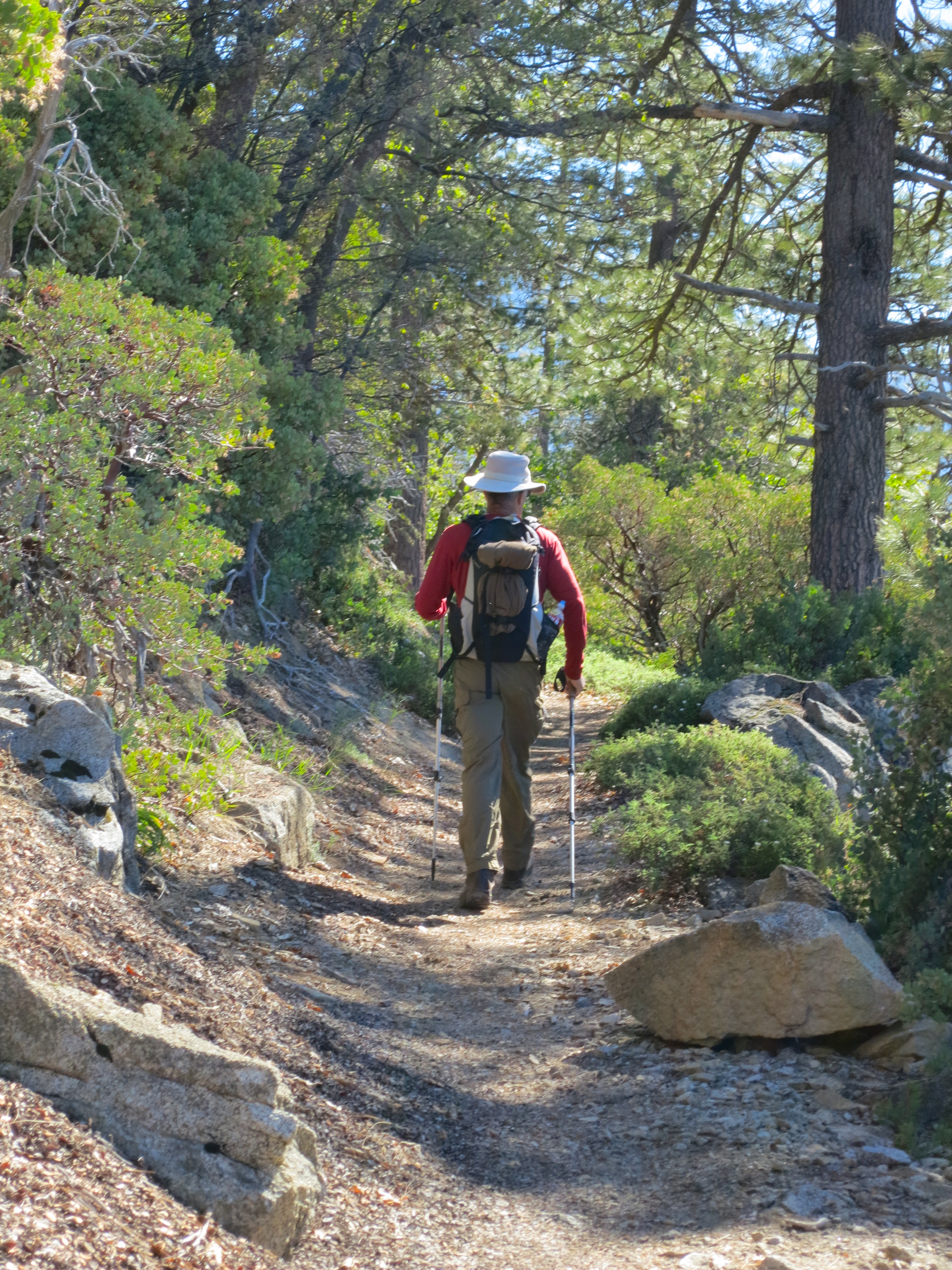
Terry headin’ on down the trail.

Beginning at an elevation of ~7000 feet, which I was still acclimatizing to since we lived at sea level for the past four months, the air was crisp and fresh, fresh, fresh.  Part of the trail winds through the quiet, lush green forests, with the trilling of many songbirds, the sweet scents of unknown plants (did recognize sage and what I thought smelled like grape hyacinth) and the deep, rich fragrance of pine wafted up as we hiked across the spongy carpet of needles.

pretty in pink

Where the forest opened up, many varieties of wildflowers were beginning to pop along the trail, adding to the sensual pleasure.

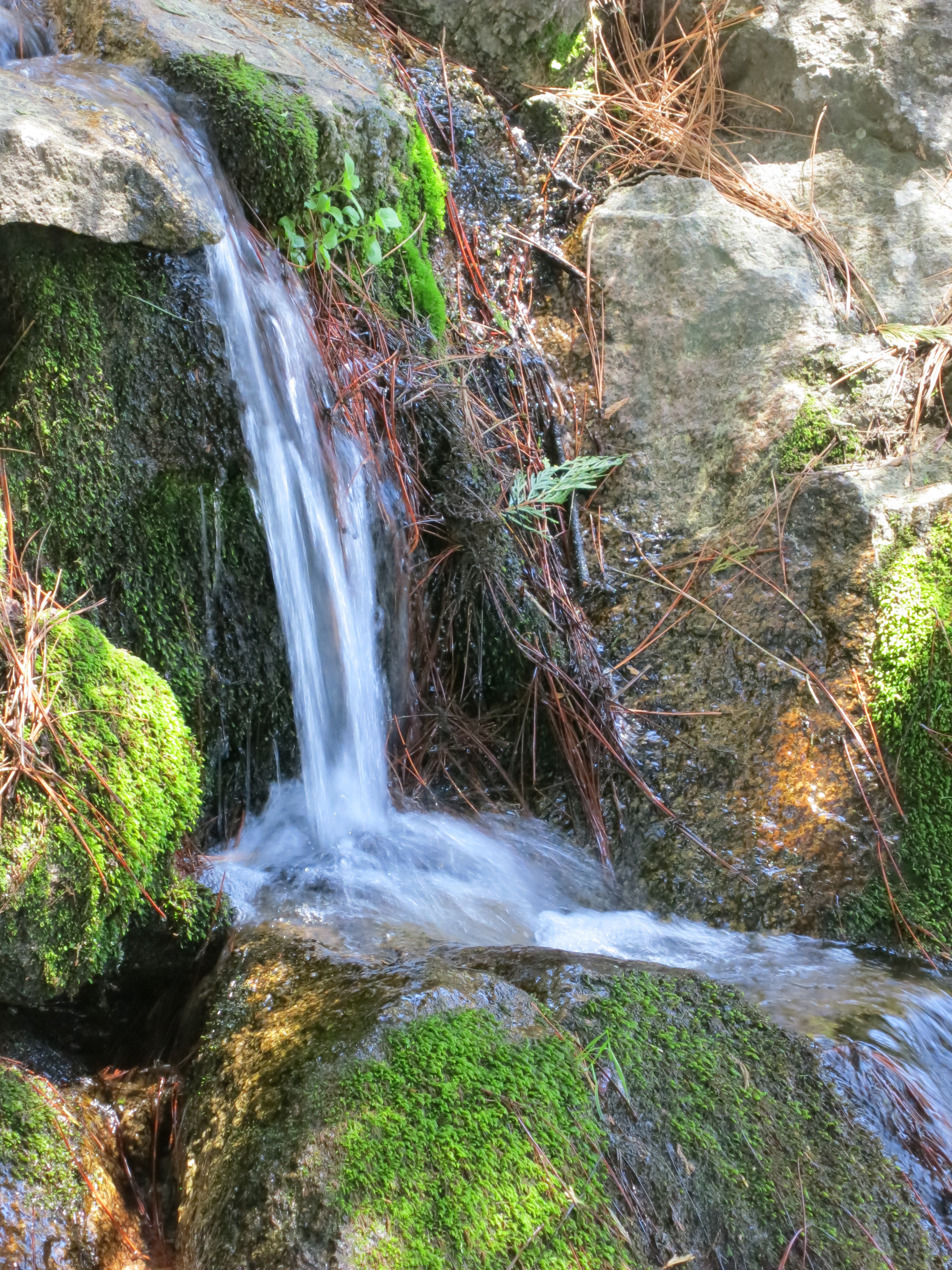
Besides the quiet beauty of the forest and the wildflowers that greeted us along the path, gurgling brooks and waterfalls appeared around many bends.

waterfall where we enjoyed lunch

We enjoyed our lunch next to a small cascading waterfall, created from the snow-melt above. Vistas opened through the forest to remind us of how high we were and how much further our feet could carry us.

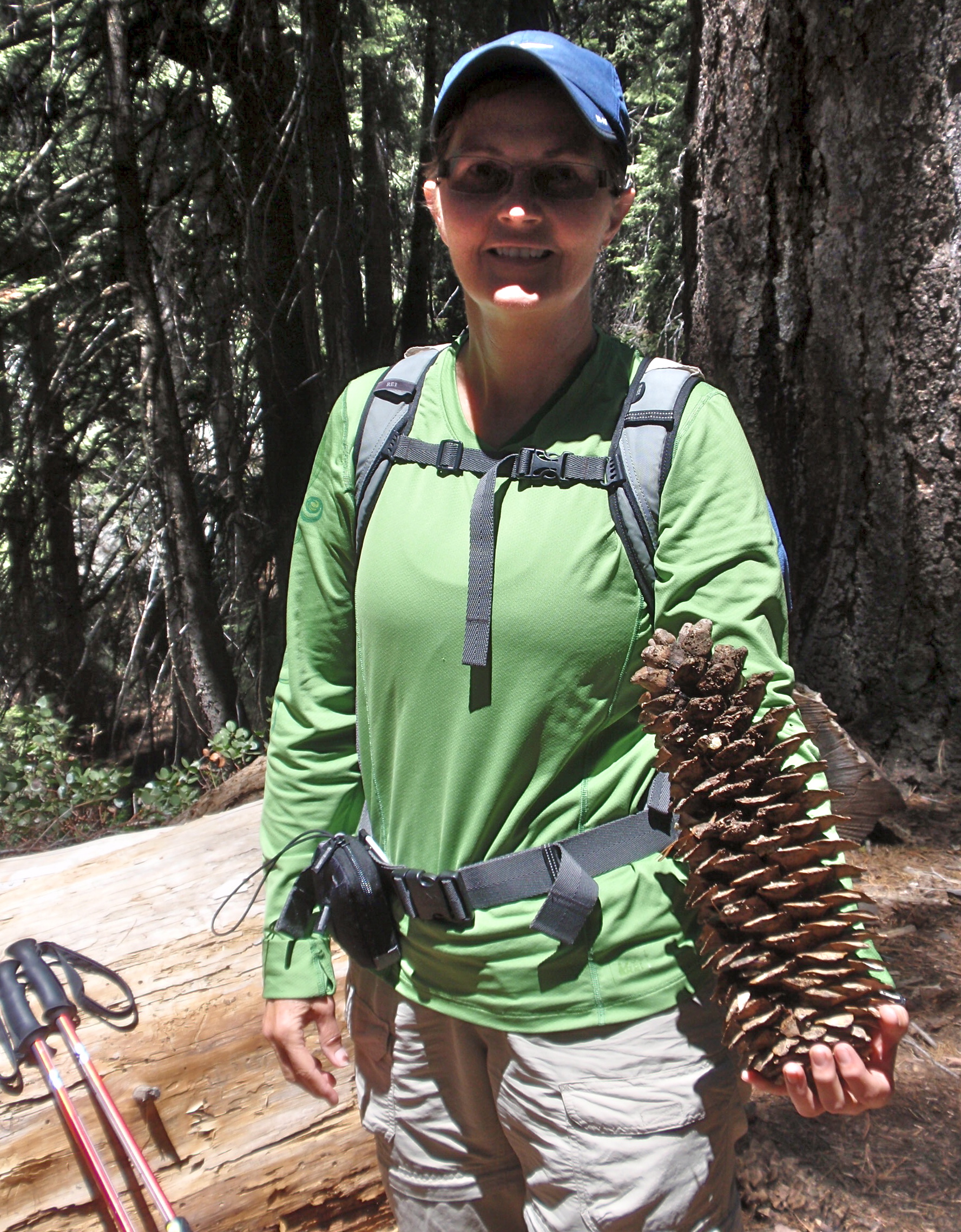
We were continually amazed at the size of the trees on this trail, sending out cones almost the length of my arm in some cases.

One big pine cone, and nope, not from a sequoia.

This is definitely a hike worth taking if you like high elevations and grand vistas (and don’t mind a little uphill trekking).

Our next hike (and with a day’s rest between the two, thank you) was to Eagle Lake, out the Mineral King road.  The drive out is 25 miles on an old  logging road, narrow and not terribly well-maintained.  There are 698 twists and turns to get to Mineral King, the teeny town near the trailhead (yes, someone actually counted them) so it becomes a 90-minute drive at an average speed of 15-20 mph.

Historic 1923 Kaweah River Bridge on drive out to Mineral King.

Given the views, I would say it is worth the time, even if winding roads make you a little “green around the gills” as they can me. Elevations at the trailheads out in these parts are the highest anywhere in the park.

We stopped at the Ranger Station a couple of miles from the trails to get some information and check out which trail seemed most to our liking.  Both were rated as strenuous and Eagle Lake was a little longer, but with the lake as our destination, that did it for us.

fat marmot with a voracious hunger

We had heard that the marmots here liked to munch on wiring and cables in vehicles (something about lacking needed minerals when they crawled out of their den with their babes) so thought we would confirm this with the Ranger.  He assured us that no marmots had bothered vehicles parked across from the Ranger Station but an unfortunate hiker who had parked at the trailhead had to have his car towed earlier in the week.  Ok, decision made, even though it added another 4.5 miles to our hike for the day.

Anise swallowtail right at my feet!

The Eagle Lake Trail is an 8-mile hike (websites say a little less but I’m goin’ with our GPS reading) at a starting elevation of 7400 feet and an elevation gain of 2500 feet (the part that gave me pause).  With what promised to be a beautiful lake at the end, I pushed aside my doubt of ever seeing it and off we headed.

view out to the trailhead

The views along the way were spectacular so if this is what we had to look forward to once on the trail, bring it on!

Gurgling snow-fed streams, lofty waterfalls, beautiful butterflies and gorgeous vistas almost made me forget about the relentless uphill climb (almost).  Just when I thought we had hit a little smooth sailing (as in level terrain), around the next bend what should appear but a rather extensive boulder field that needed to be traversed.

Seriously?! We’ve gotta cross this thing?

By now I’m thinking maybe I don’t need to see another lake after all!  With a little cajoling from Terry and a wee bit of whining and sniveling on my part, we crossed over and prepared for the last leg of our journey up to the lake (sounds like I’m trekking Mt Everest, doesn’t it?).

Man, was it worth it!  Eagle Lake is a cirque  granite lake, crystal clear and looked so inviting. All we had time for was a quick lunch and a few photos, then back down the trail we went.  I would have been so disappointed had I not gutted it out.

the prize at the end of the trail
two tired but very happy hikers

The hike out took less than half the time to get up to the lake.  We both agreed it was one of the toughest hikes either of us had done but one of the most rewarding.  Actually, once off the trail, the hike back to our truck seemed like the longest but it assured us that we wouldn’t have furry little hitchhikers on the way back, right?  Well, what should we find when we approached our truck but a fat marmot scurrying under it.  Terry yelled and raised the hood and who should be sitting on the engine staring back at him but our fat, furry friend wanting a lift back into town!  He decided to scurry off instead and no damage done.  We noticed as we passed through the parking lot at the trailhead that many cars had been encased in chicken wire and one ingenious hiker had laid down a large tarp, drove onto it, and wrapped it up like a Christmas present!  Didn’t even think to take a photo, darn it.

It’s a great time of year to come up to Sequoia National Park and get high, as in a high elevation hike.  You don’t know what you’re missing!

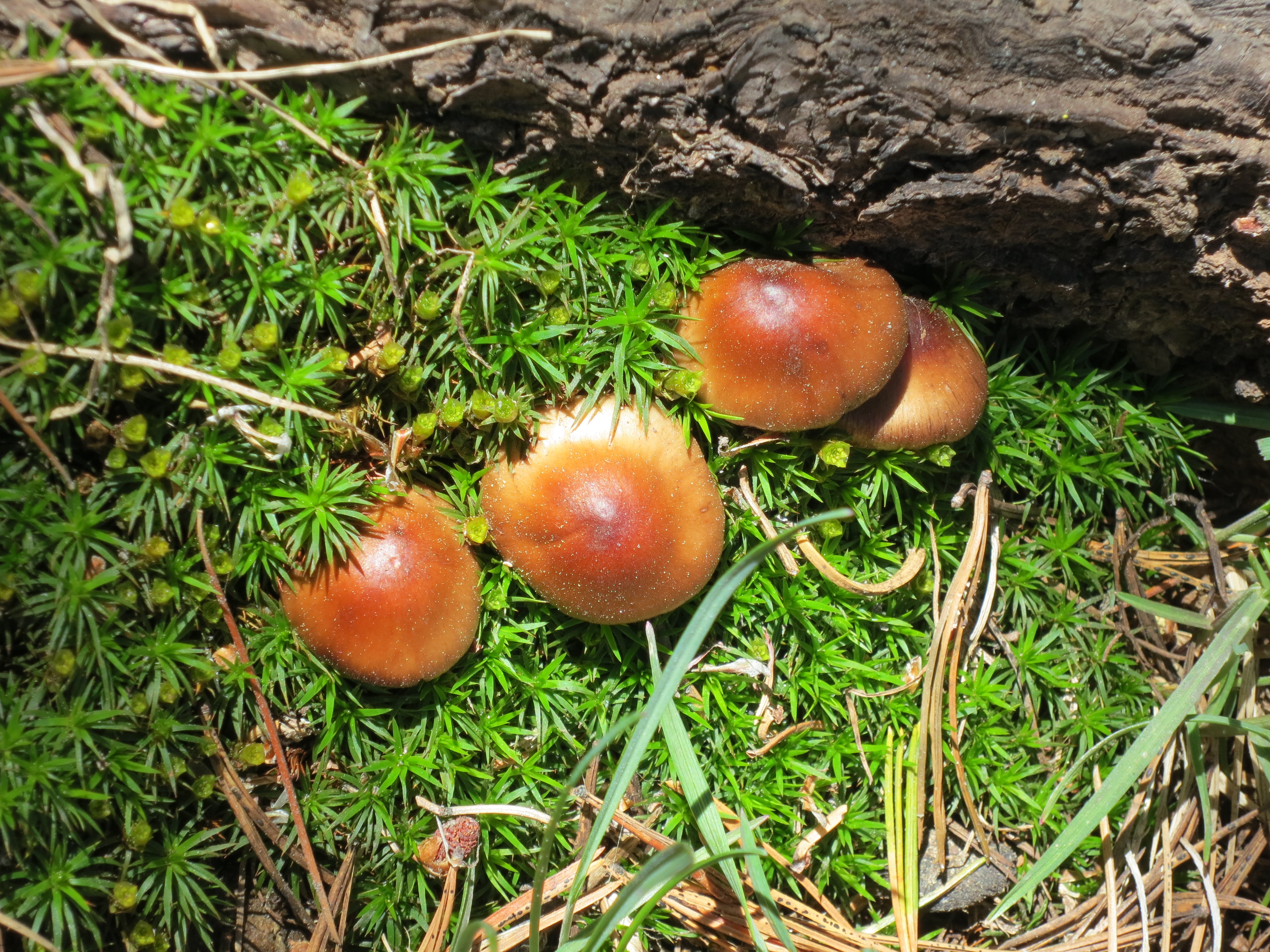
Magic mushrooms anyone?

If you liked this blog post, why nosubscribe to my blog via feed reader or e-mail?
John Muir’s Grand Valley ~ Sequoia National Park (Part 1)

“In the vast Sierra wilderness far to the southward of the famous Yosemite Valley, there is a yet grander valley of the same kind.”  ~  John Muir (1891)

John Muir, famous naturalist, wrote this about the ground we trod on today, Sequoia National Park.  Second only to Yellowstone National Park, relative to age, Sequoia was established on September 25, 1890. This grand valley spans 404,063 acres and is one of California’s more special and least visited treasures, most likely because it is a wee bit off the beaten path. That seems to be the only logical explanation because with what it has to offer, no one should miss this gem.

Surrounded by a valley laden with fruit orchards, olive groves, and small farms, we are getting our fill of fresh fruits and vegetables and by the end of our stay, we’ll be saying the same about hiking.  What a beautiful setting to get out into nature and the weather is darn near perfect, especially when you head up about 7000 feet into the park.

Some fun facts about Sequoia National Park:

  1. It has the largest tree in the world within its boundaries – General Sherman Tree.
  2. On the eastern border of the park rises the tallest mountain in the lower 48 states – Mt. Whitney at 14,505 feet.
  3. It has the second largest “road-free” wilderness area in the U.S. (84% of the park can only be accessed on foot or by horseback).
  4. It is home to over 240 known caves, including California’s longest at over 20 miles.
If you are heading up to Sequoia be advised that there is a huge construction project underway which impacts the road leading into the park, so timing is everything.  They seem to have their act together tho so visitors can time their arrival to the construction site and pretty much know how long the wait will be.  This is a 27-year project which is about half-finished and it is going to be beautiful when complete.  Progress moves along at about 3 miles per year.  Wish Yellowstone could get this kind of project approved.
Beautiful stone walls are part of the project.
We entered the park at about 900 feet above sea level and arrived at the Lodgepole Visitor Center at ~7000 feet elevation.  We decided to hike out the Tokopah Valley Trail, a 3.5 mile round-trip out to Tokopah Falls, a grand cascading sheet of water.  The hike out was through a pine forest, which occasionally opened up to reveal craggy granite peaks.
tokopah falls
Tokopah Falls
Today was a day of sightseeing as well and  here are a few of what we consider “must see”:
General Sherman Tree
general sherman tree
General Sherman Tree
Considered the largest tree on Earth, it tops out at 275 feet tall; its trunk weighs 1385 tons; and its circumference at the ground is nearly 103 feet! With arms outstretched, it would take 21 of me to give it a big bear hug!  Each year it adds another 60 feet to its girth and the largest branch on this stately giant is almost 7 feet in diameter.  It is estimated to be between 2300 – 2700 years old, the granddaddy of all living sequoia.  The oldest known sequoia lived more than 3200 years.
Sequoia are very hardy trees, resistant to most insects and fungi, due to tannins in the bark and leaves, and the thickness of that hard outer shell –  nearly two feet.  Their main cause of death is due to toppling, as they have a shallow root system and no tap root.  They are very particular where they lay down roots, growing naturally only on the west slope of the Sierra Nevada, most often between 5000 – 7000 feet.
As gigantic as they are, mature female cones on a sequoia are only about the size of a chicken egg, each holding about 200 seeds.  Trees are best propagated by way of fire (not unlike the lodgepole pine) when the heat causes the cone to pop open, spreading its oat flake-sized seeds.  They heal very quickly from fire and we learned that all sequoia within the Giant Forest have been through several fires.
Moro Rock
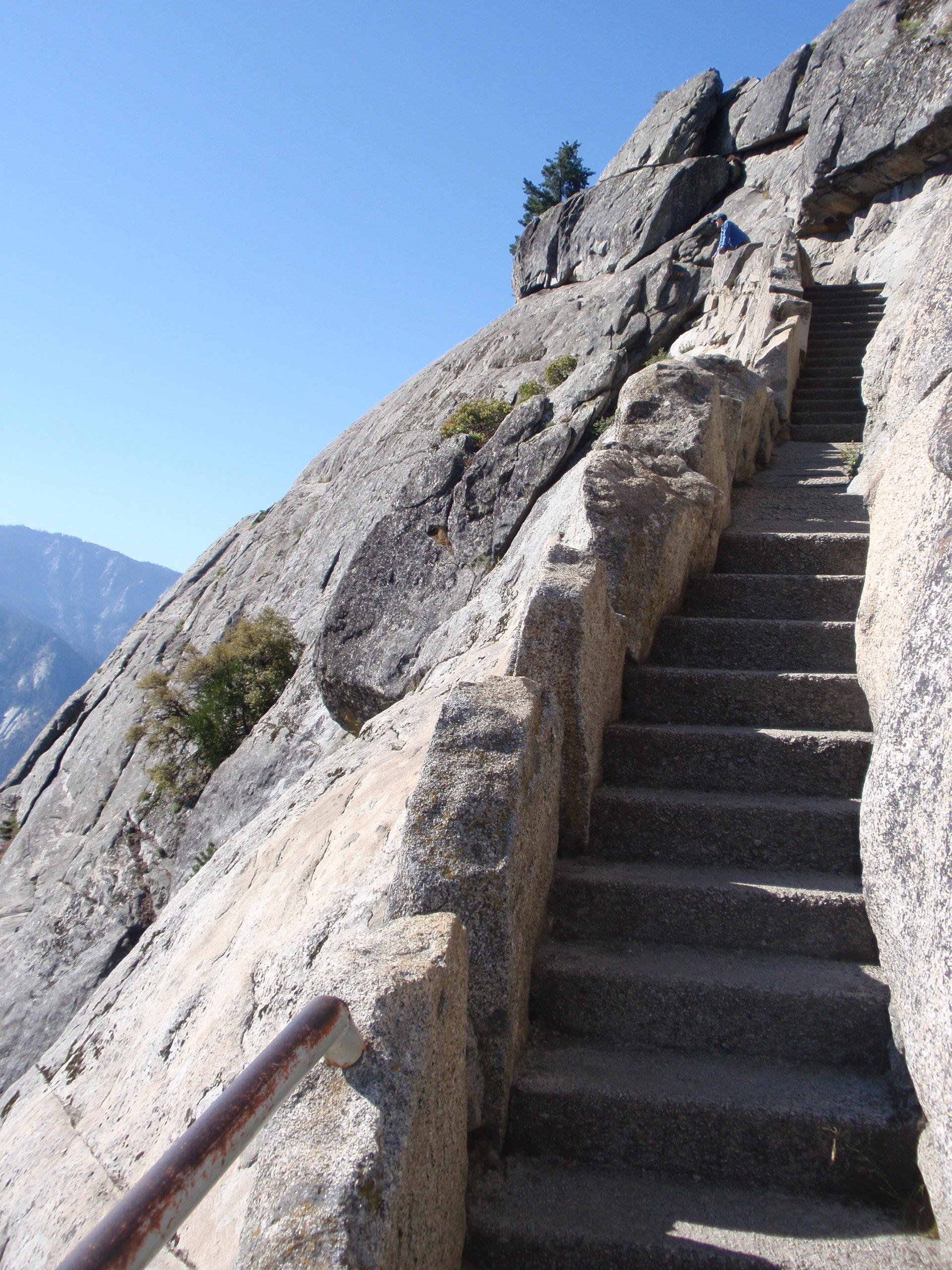
Counting the steps up Moro Rock

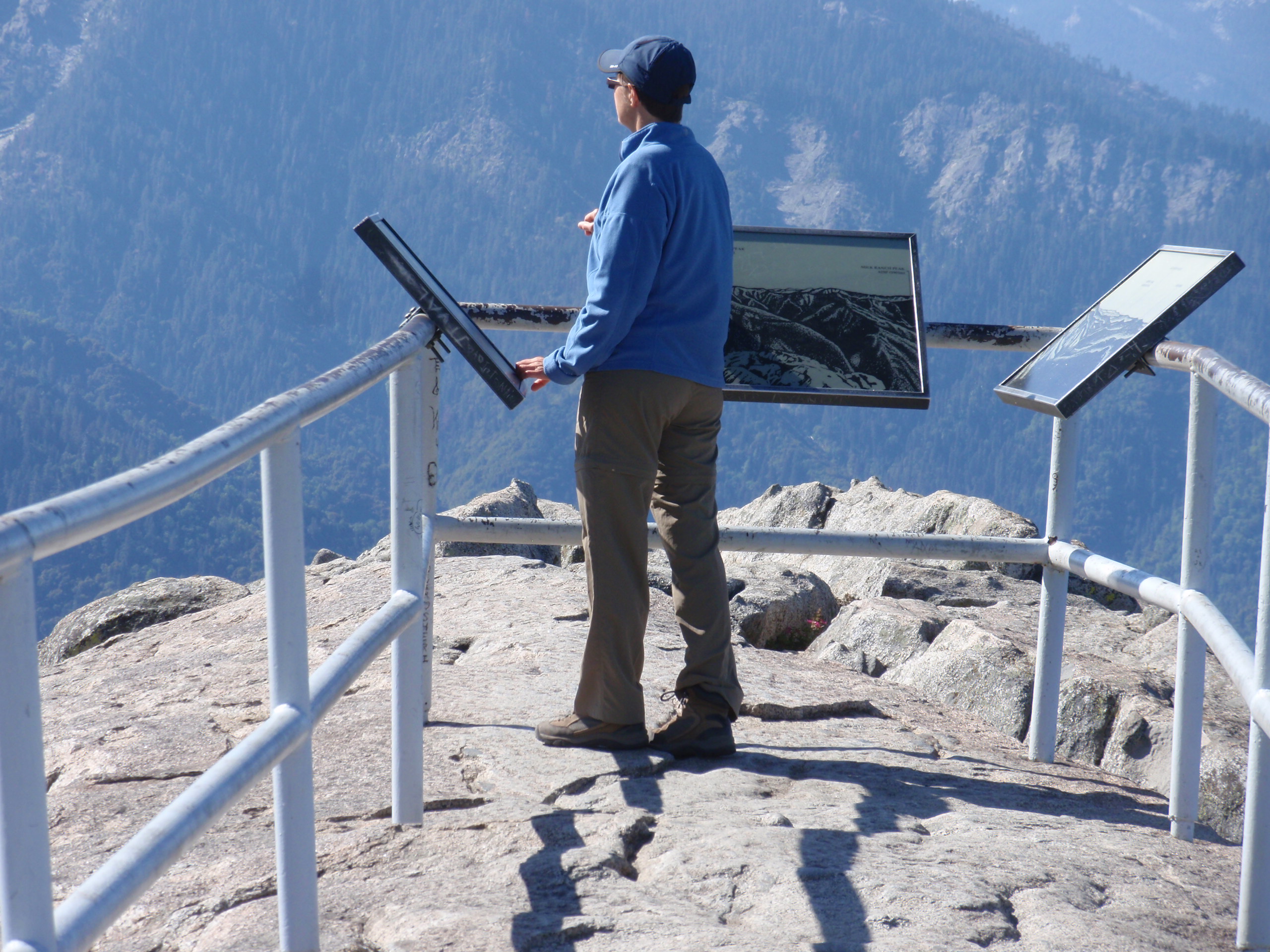
Follow the signs to the parking lot and take the 350ish stairs to the top of this granite dome, which tops out at 6725 feet.  It’s the ‘ish‘ that could be a problem for those who don’t like heights or a steady uphill climb.  The first 350 steps are a breeze!

Made it to the top!

Giant Forest

Take a walk through this mystical land of stately giants, where General Sherman tree resides and a host of sentinels stand guard over him.  Five of the ten largest sequoia live in the Giant Forest.  Washington Tree, second largest of these magnificent specimen, also lives here.

Tunnel Log

Drive your vehicle through this fallen sequoia for a little perspective.  This sequoia fell on December 4, 1937.  The diameter of its base was 21 feet and it was the height of General Sherman Tree, 275 feet.  The tunnel that can be driven through is 8 feet high and 17 feet across.

tunnel log
Traveling through Tunnel Log

Crescent Meadow

Take a stroll through this pristine meadow on your way to Tharp’s Log.  We were hoping for a bear in the meadow but all we got were two deer (not in this photo).

crescent meadow
Crescent Meadow

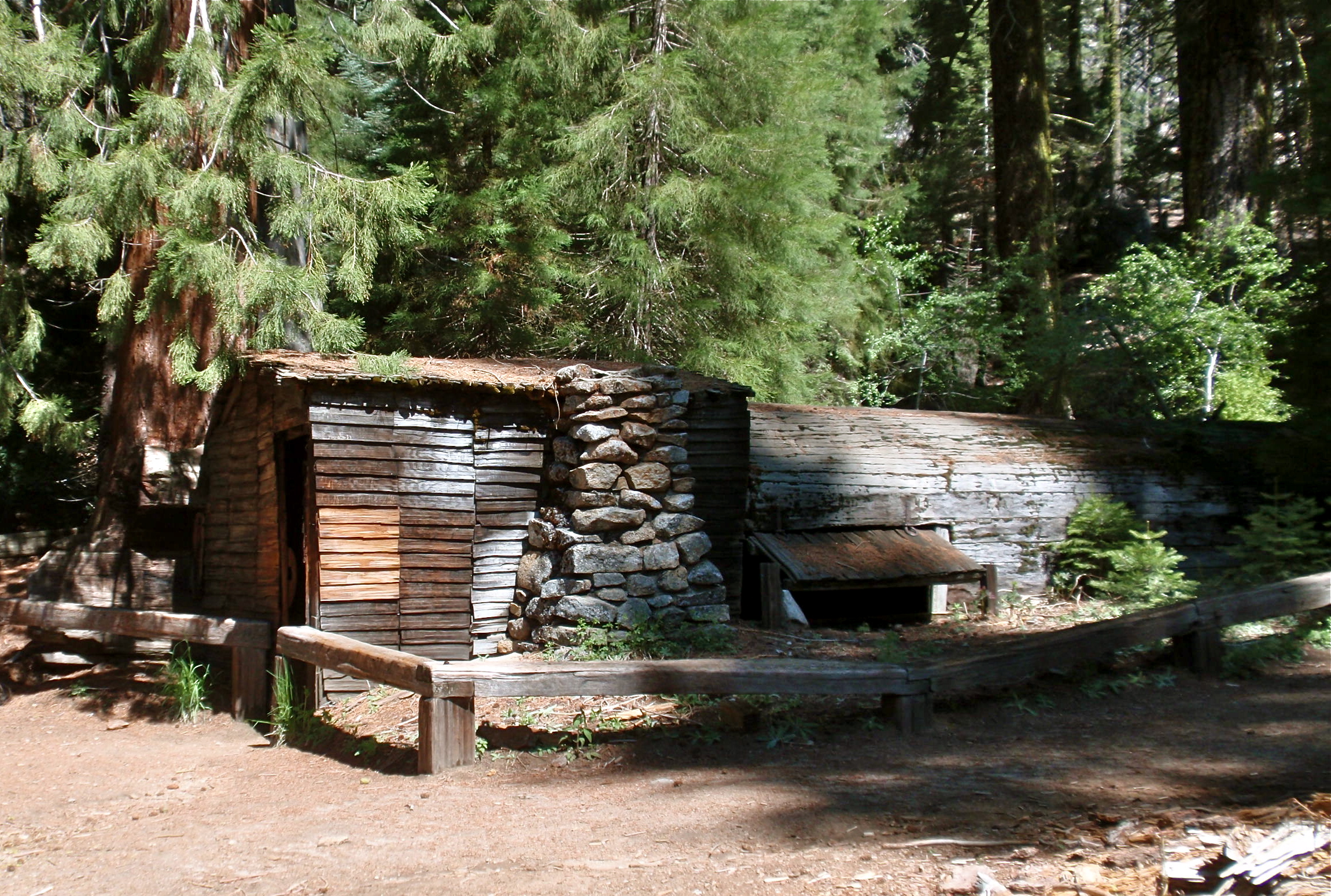
Tharp’s Log

Hale Tharp, pioneer resident of Three Rivers, first visited Giant Forest (which is where Tharp’s Log was built) in 1858.  He built this rustic cabin at the end of a giant sequoia and lived here from 1861 until the National Park was established in 1890.  He used Crescent Meadows for his livestock.

tharp's log
Tharp’s Log

Giant, cinnamon-colored sequoia, granite domes rising from the valley floor, roaring rivers and waterfalls, alpine meadows, and 800 miles of hiking trails in this grand valley are certainly enough to tantalize any nature lover.  We look forward to hiking some of her trails in the upcoming days.

If you liked this blog post, why nosubscribe to my blog via feed reader or e-mail?
The Yellowstone Experience

“Everyone needs beauty as well as bread, places to play in and pray in, where nature may heal and cheer and give strength to body and soul alike.”  ~John Muir~

The Yellowstone Experience – something everyone should know.  My husband Terry and I were recently marveling that it took us so long to find our way to this land of magic and mystery.  After spending over two years in a place of such raw, wild beauty, it is time for us to move on and gain new insights and explore new corners of the world.  But before we leave this paradise, it is important to touch on a few of the wonderful experiences we shared here, together and with special friends.

Hiking was by far our favorite pastime, where we could leave the worries of the day and immerse ourselves in God’s splendor, the backcountry of Yellowstone, where we knew for certain that we were not on the top of the food chain, but sharing this wilderness with those who were here before us – grizzly, black bear, bison, and elk, to name a few.  Terry always felt that being amongst the wild ones kept all his senses on high alert, which was the best way to view nature.

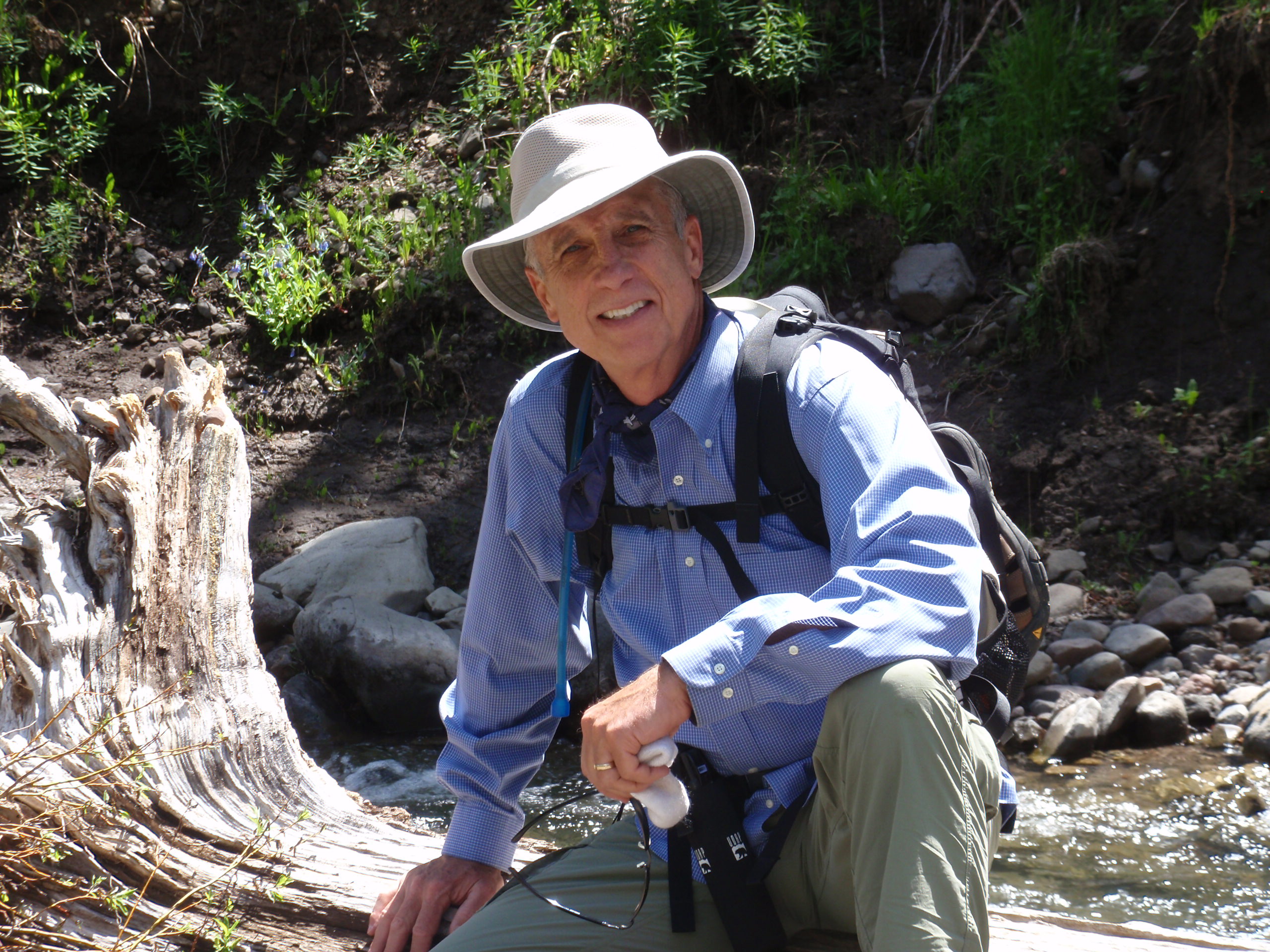
Some of our hikes were shared with two of our most favorite people, Rosie and Jim Johnson, who we know from Sedona and who summer in Yellowstone.  At times Jim’s alter ego Jimmy would come along for the ride.

Rosie Relaxing on Rescue Creek Trail
Jim, Our Photographer
Terry Enjoying Pebble Creek Trail
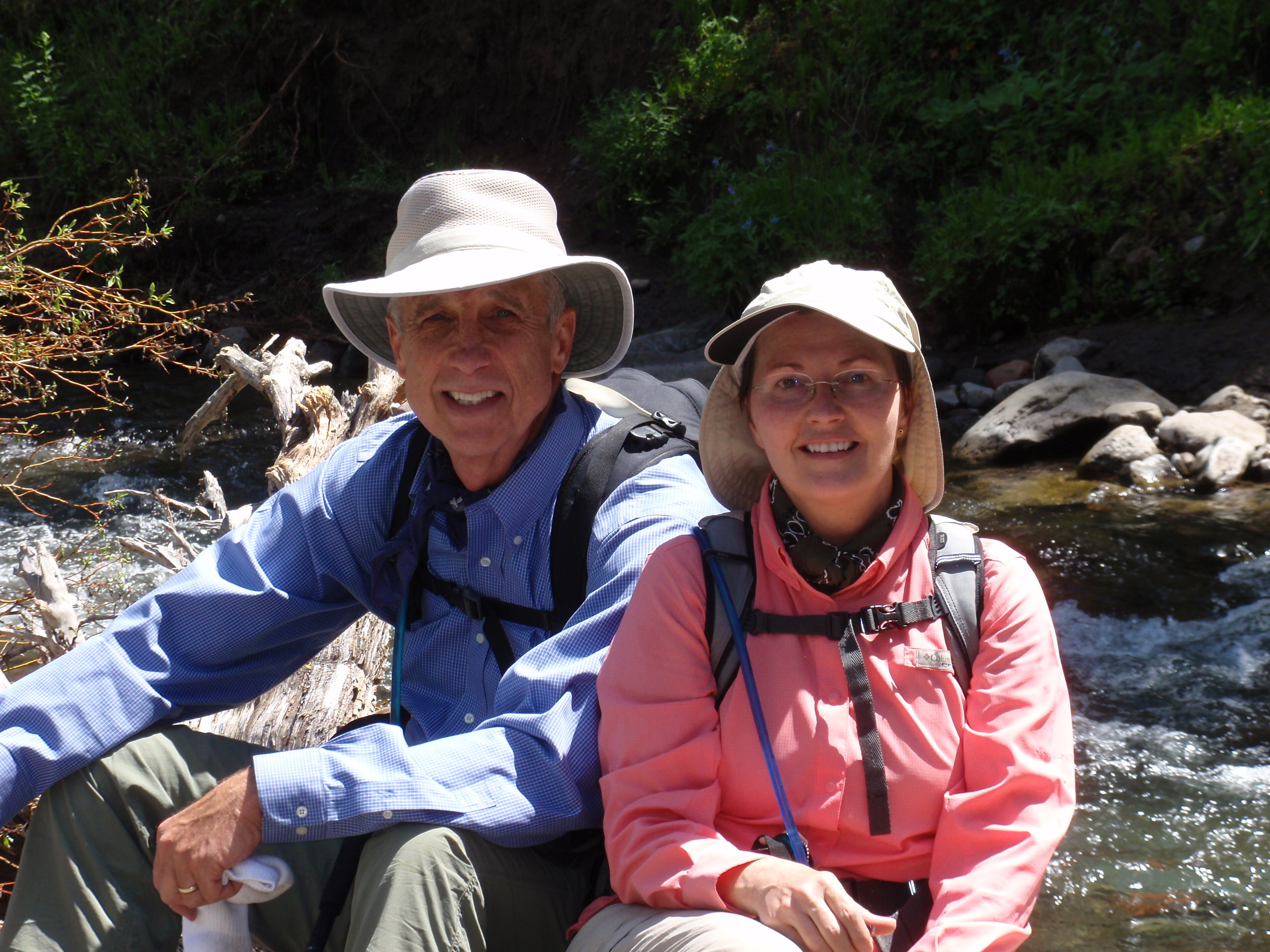
Terry & Lu - Pebble Creek Trail
"Jimmy" on Elephant Back Trail

Friday, September 3rd ~ Moving Day

This was a bittersweet day for us, leaving the grandeur of Yellowstone, the people we have come to know and love and our apartment that faced Mt. Everts and allowed us the opportunity to look out our window and view wildlife at its finest, newborn elk and bison calves with their moms.  Some days walking to work was an interesting  journey of dodging the elk, who can be more aggressive with their babes in tow.

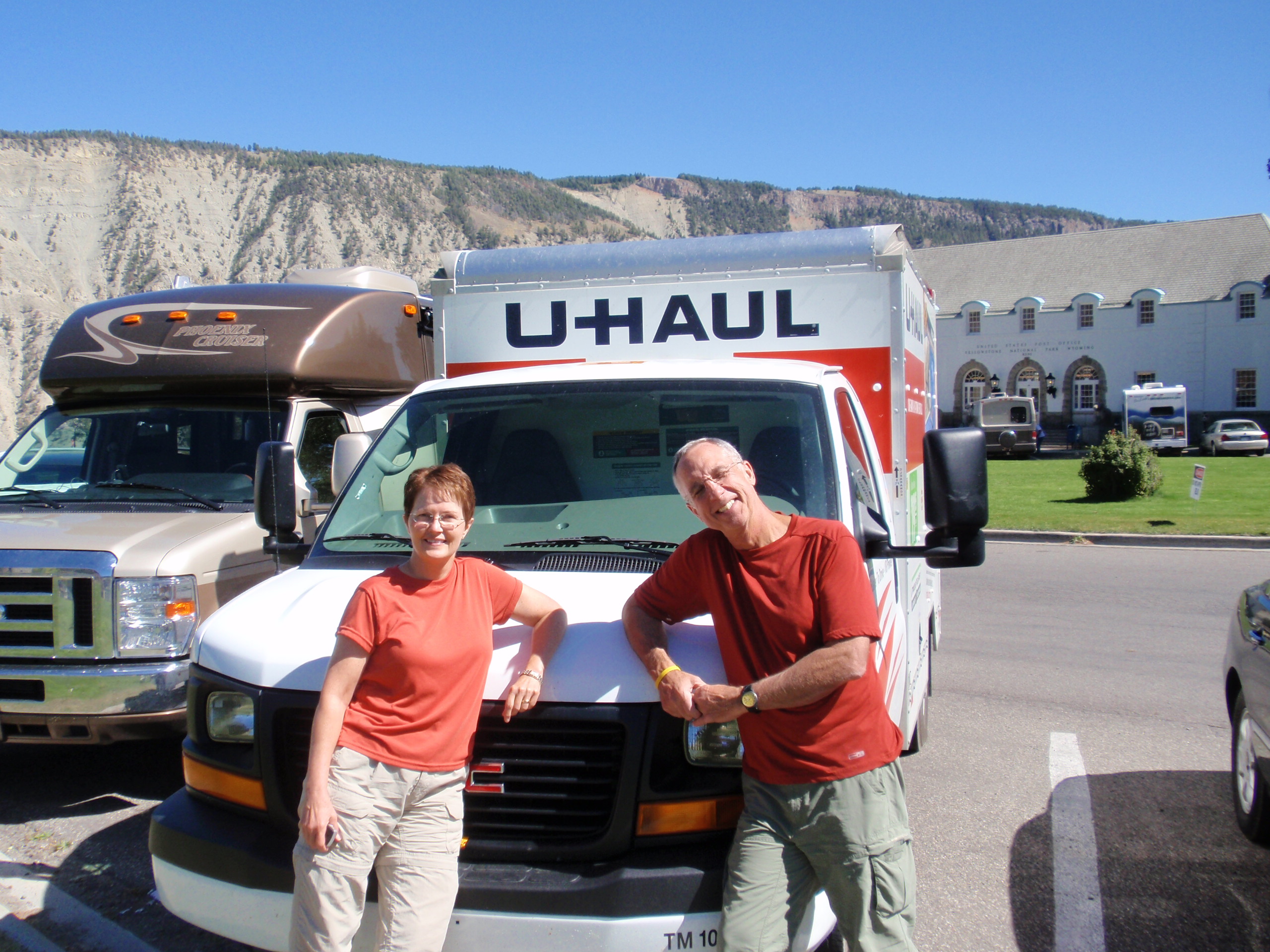
All of our worldly possessions are crammed into a 10-foot U-Haul and the back of our truck camper.  Of this, some would think, look how far they have fallen!  We prefer to see this as a very freeing experience that will allow us to pick up and move about as we see fit.  This is certainly not appealing to everyone but seems to be what is calling us at this time in our lives.

Leaving Yellowstone

One last lunch for a while with our friend Rosie (sorry Jim could not be there) and we are off.   We are sorry to be leaving so soon before the beginning of the elk rut, where the resident elk herd at Mammoth Hot Springs in Yellowstone perform quite a show for employees and guests alike.  As if staged, a very large bull elk strolled into Mammoth this very morning, getting ready to round up his harem of cows and steel himself against any other bulls in the area who may want to challenge him.

A very prominent bull elk lovingly known as “Number 6” (the ear tag number on him) was king of this territory until a freak accident took his life over a year ago.  He was a “bad boy” who had to have his antlers removed a couple of times for doing battle with vehicles and making a nuisance of himself.  He was a beauty who gave us all chills whenever we heard him bugle.  There were many tears shed over his passing.

2009 Mammoth Bull Elk

Goodbye for now Yellowstone.  We will remember your wildness, your breathtaking vistas, and all the wonderful people who you summon and continue to draw back to your beauty and mystery year after year.