Tapping into Native Roots

Although “native roots” may conjure up thoughts of the medicinal plant cannabis, that is not what this post is about. Sorry guys, but many of you probably already have your sources and could teach me a thing, or two, or three about that ancient plant. What this post is about is learning to use the native plants we have all around us, for medicine. Since this is one of my many passions, it was not surprising to hubby that I asked (ok, maybe begged a bit) the Campus Manager at Yellowstone Forever to allow me to support this field seminar. My charms won out as he graciously agreed. 😉
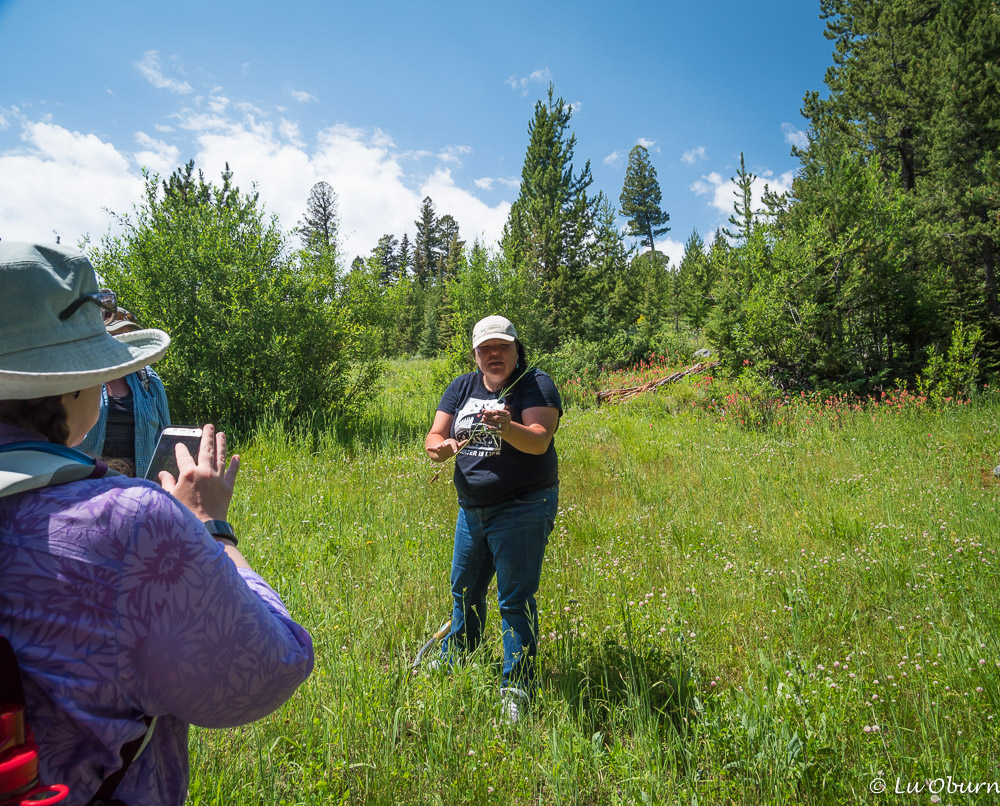
Linda Black Elk

I was so honored to be a part of this course, led by Linda Black Elk, PhD and Ethnobotanist. Linda is part of the Catawba Nation and is married to Lakota native, Luke Black Elk, who has an illustrious family history – activist mother and revered grandfather, Chief Black Elk.  Side note:  Black Elk Speaks is a great read.

Hubby supported Luke’s course on Lakota Creation Stories immediately after the Native Plants class. Sadly no amount of begging or bribing has convinced him to write a guest post about his experience, which he loved. Fortunately for me, the Native Plants and Their Uses class began with singing and praying by both Linda and Luke, in their native Lakota tongue. It brought me to tears it was so beautiful. No photos were allowed during this sacred ceremony.

Luke and Linda sharing stories around the campfire.

Our Native Plants’ course consisted of indigenous stories (many were heartbreaking), identifying and learning the beneficial uses of local plants, foraging for specific plants, and bringing our bounty back to the Lamar Buffalo Ranch to make balms, salves, and elixirs. Seeing what I do at home, making so many of my own products, hubby said he couldn’t imagine a more perfect course for me to support. I had to admit that it was very special and completely in line with my belief system.

Classroom time after some foraging.

Since removing anything from a national park is strictly forbidden, our foraging for two days took us outside the park, where we strolled through forest lands for several hours, as Linda educated us on the medicinal properties of the many plants we found along the way. We harvested fireweed, sticky geranium, and yarrow, to be used later in the making of balms and salves, as well as wild onion and garlic for fire cider.

Salve in the making

There is something so comforting about walking in nature, harvesting plants that have been on this earth since ancient times, providing countless generations of people food and medicines. I’ve been told a time or two that I am an old soul and being in this environment, feeling such a strong connection to the past, I feel that may be true.

I loved this course and would highly recommend it for anyone interested in creating their own elixirs, salves and balms or want to learn more about native customs. Check out Yellowstone Forever for this and other great field seminars here.

Linda Black Elk and her husband Luke are a fantastic couple, armed with a wealth of indigenous history they are anxious to share.  It was a humbling experience to be in their presence. I walked away with a notebook full of information that I am happy to share if anyone is interested.

Since cold and flu season is upon us, here are a couple of recipes that might be of interest, because it’s all about keeping it natural (at least for me):

Elderberry Elixir

Ingredients:

  • 1 c. dried elderberries (I purchase mine from Mountain Rose Herbs.)
  • 1 star anise
  • 1 cinnamon stick
  • 3 cloves
  • one good-sized piece of ginger (~4 slices)
  • 4 c. good quality water
  • 1-2 c. raw honey

Add all ingredients except honey to heavy-bottom pan. Bring to boil, then reduce to simmer. Cook down liquid to 1/2. Add honey at end, after pan removed from heat. Keep in the fridge so elixir doesn’t ferment. Lasts a long time.

 NOTE: Powerful anti-viral & anti-bacterial agent. Great for treating colds.

Fire Cider
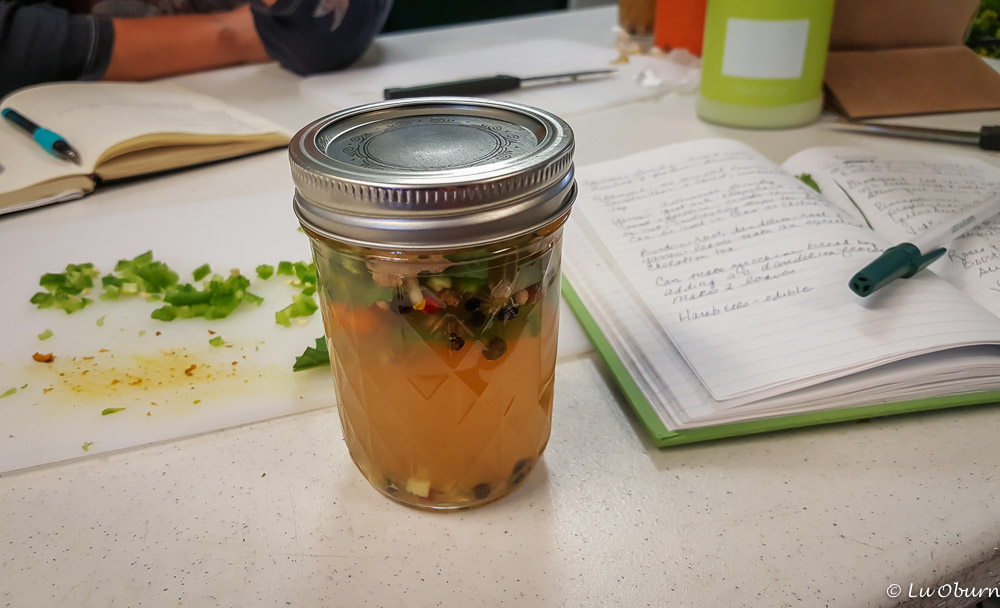
Ingredients:

  • 1 onion, diced
  • 1 head garlic, cloves separated & minced
  • 3/4 c. horseradish root, finely diced
  • 1 (6″) piece of ginger, diced
  • 1 (6″) piece of turmeric root, diced
  • 2-3 T. peppercorns
  • Chilies, sliced – add according to your heat preference. One large jalapeño might be a good start.
  • Unfiltered, raw apple cider vinegar

Pack all ingredients besides vinegar in 2-quart jar. Add enough vinegar to fill the jar.

Let fire cider steep for 3-4 weeks on your countertop. Shake periodically.

Strain the vinegar into a clean jar & store in fridge, where cider will keep for up to 12 months.

Enjoy a shot of this daily. Honey can be added for a little sweetness. Be forewarned, this one packs a bit of a punch! 😮

NOTE: This can be used as an expectorant and is a great tonic for sore throats. Great for those with high blood pressure and is also good for the heart.

Disclaimer:  The views expressed here are my own and those of the instructor and do not necessarily represent the views of Yellowstone Forever.  

SaveSave

SaveSave

SaveSave

SaveSave

SaveSave

The Emotional Allure of the Sea

“There’s nothing more beautiful than the way the ocean refuses to stop kissing the shoreline, no matter how many times it’s sent away.”  ~  Sarah Kay

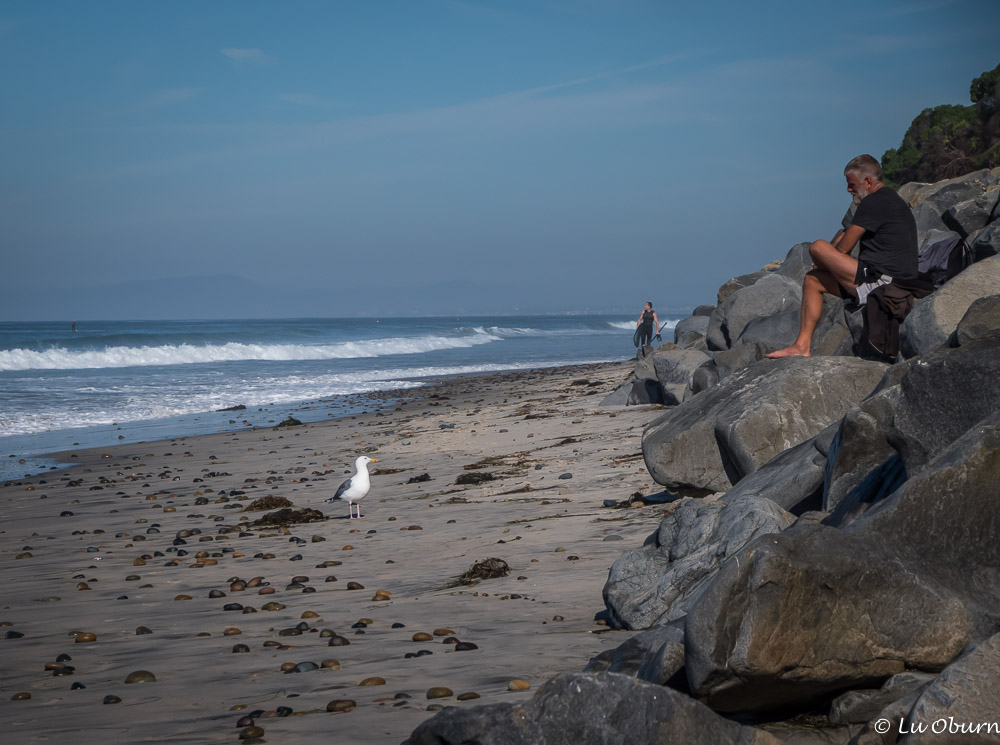
As holiday madness begins to wrap its crazed tentacles around us, even the most imperturbable beings may find themselves taking deep calming breaths.  Since our anniversary immediately followed the Thanksgiving holiday this year, hubby decided to surprise me with a three-day beach getaway to Encinitas.  How could I refuse?

Photo bombed by an errant shorebird.

Given that our bodies are about 60% water; the same percentage of salt in our blood is what exists in the ocean; about 70% of our planet’s surface is water; and water is essential to life, it is not surprising that most people are inexplicably drawn to the sea, even if they don’t swim or even enjoy sticking their toes in the water.  What is it about the sea that draws us in?

I recently read an article by marine biologist Wallace J. Nichols on the theory of our “blue mind”, a “mildly meditative state characterized by calm, peacefulness, unity, and a sense of general happiness and satisfaction with life in the moment”, elicited when we are in or near water. “We are beginning to learn that our brains are hardwired to react positively to water and that being near it can calm and connect us, increase innovation and insight, and even heal what’s broken,” Nichols explains.  When we humans think of water – see water, hear water, immerse ourselves in water, we feel something.

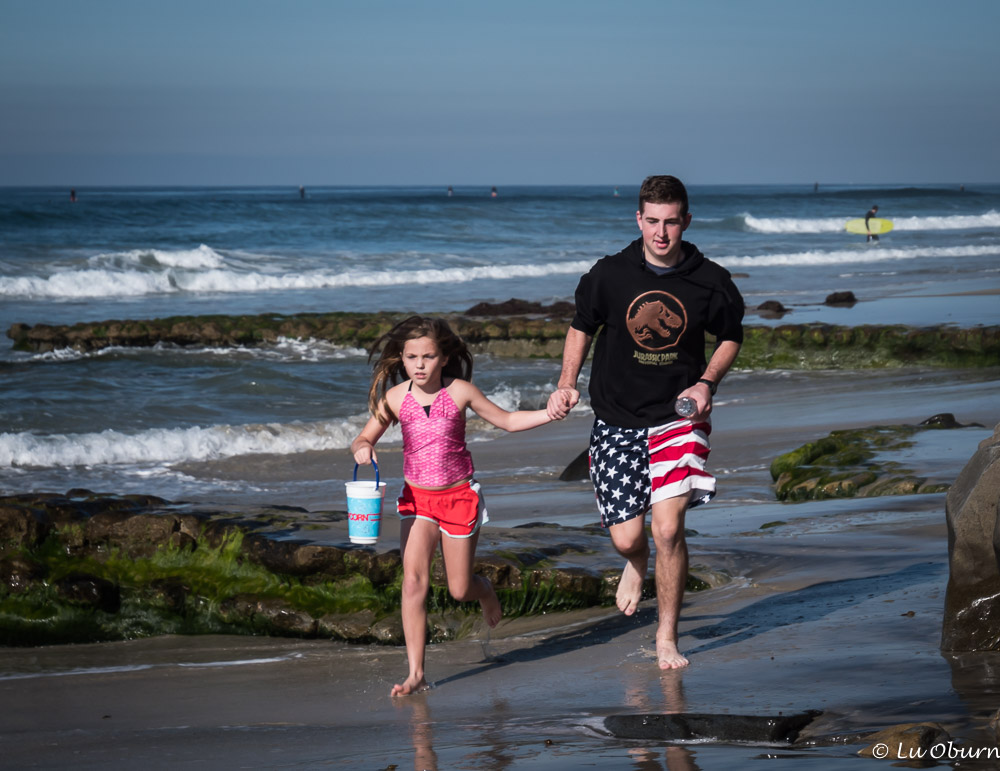
Undoubtedly, children feel joy…

And birds, well who knows…

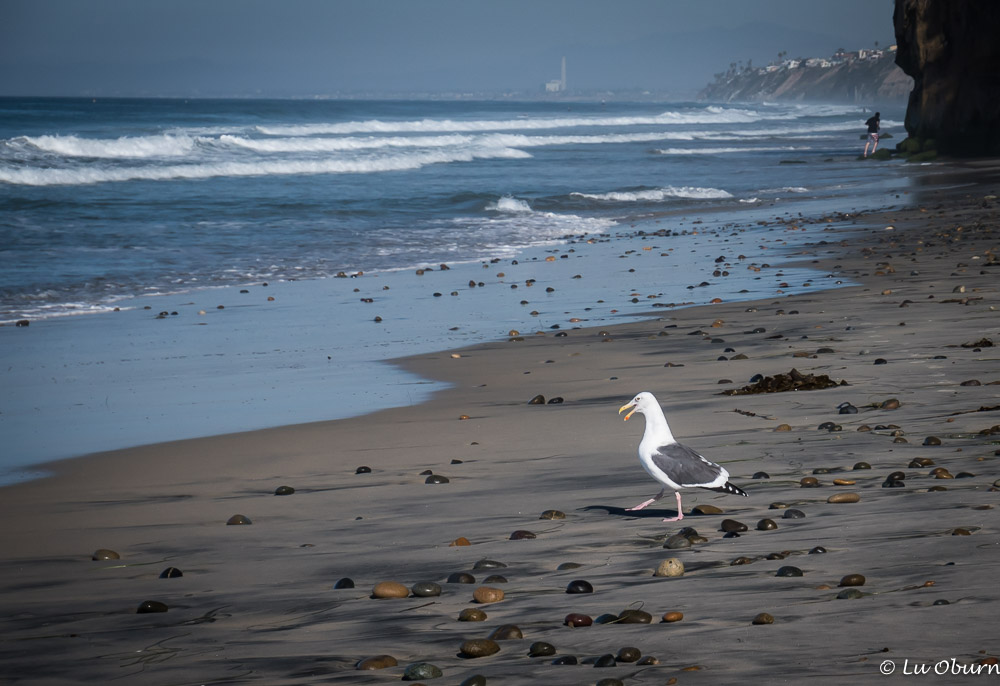
Begging for a morsel, or a sandwich would be nice.
Expressing his displeasure walking away empty-billed.

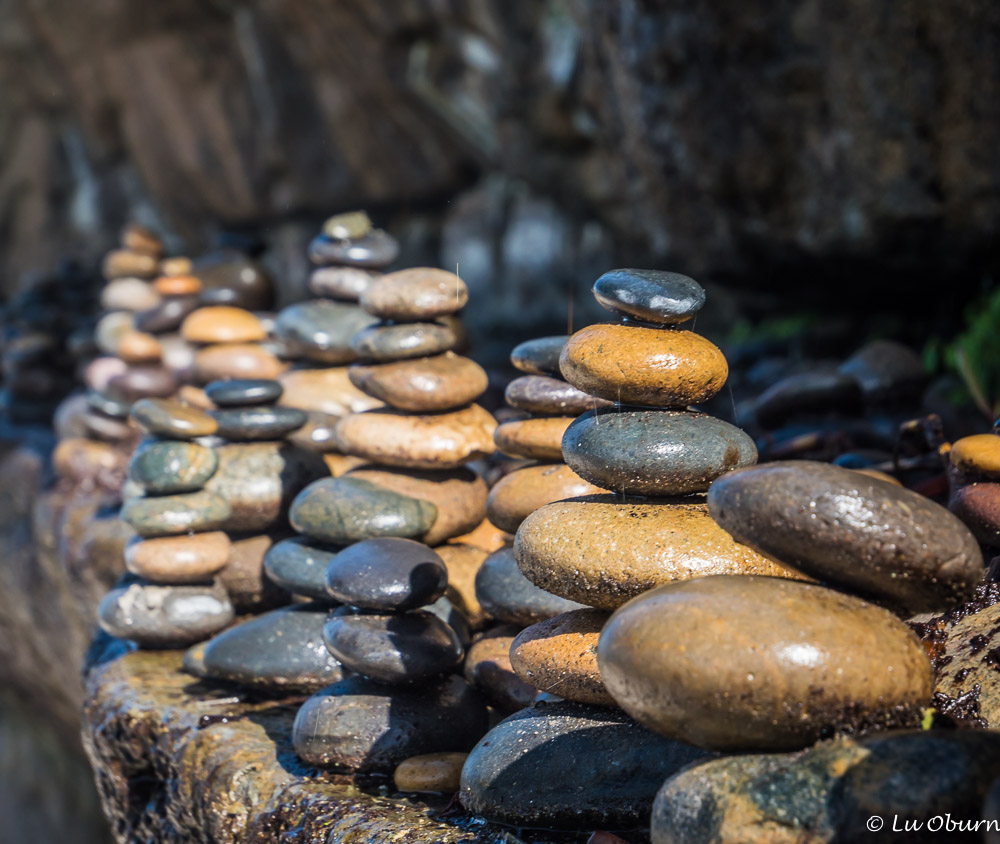
I cannot deny nor begin to explain the serene turbulence I feel as I listen to the hypnotic sound of polished rocks being flung to the shore and drawn back out to sea by the powerful movement of the waves.  With each breath of salty sea air, my entire being courses with an electric current of emotion.  Gazing out across the water at the horizon, I imagine what lies beyond.  I am reminded of how small I am and how insignificant my worries.

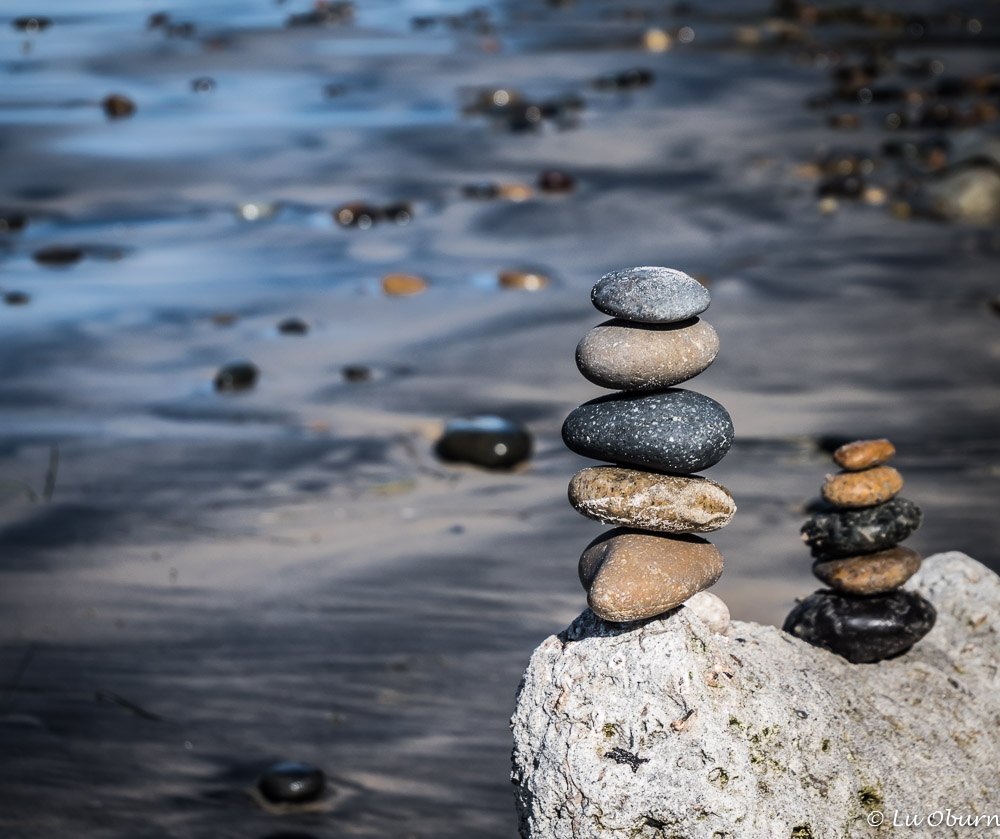
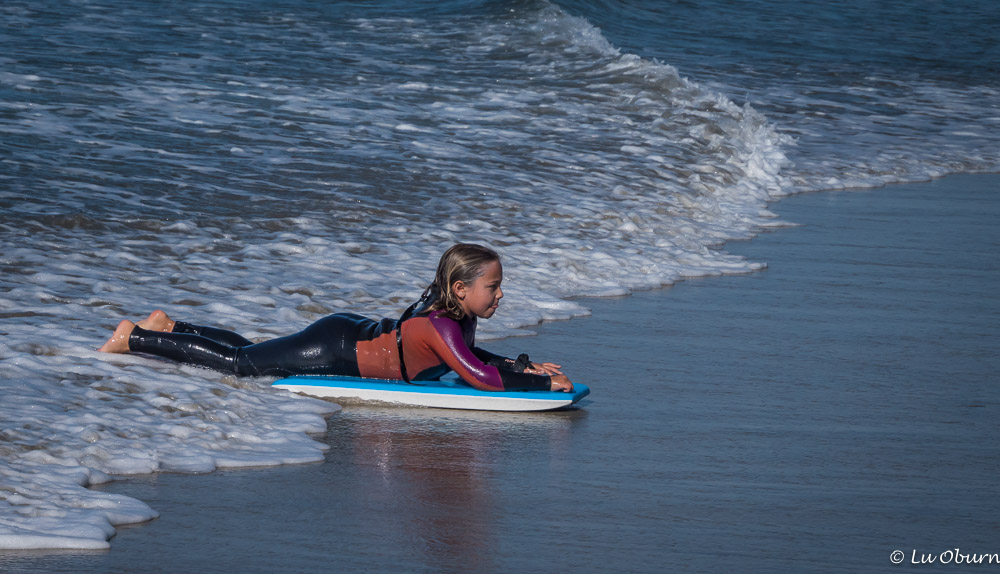
Feeling perfectly balanced.

Our three-day getaway was just the rejuvenating respite needed.

This post was inspired by The Weekly Photo Challenge “Serene”.

Artistry Forged by Fire and Ice ~ Yellowstone Forever Field Seminar Series, Part II

“There are two kinds of truths:  the truth that lights the way and the truth that warms the heart.  The first of these is science, and the second is art.  Neither is independent of the other or more important than the other….The truth of art keeps science from becoming inhuman, and the truth of science keeps art from becoming ridiculous.”  ~  Raymond Thornton Chandler

Day 2 of the Yellowstone Forever Field Seminar “Observing Thermal Biology and Geology” took us to Mammoth Hot Springs, where art and the world of science collide.  Brace yourself for another geology lesson. 🙂

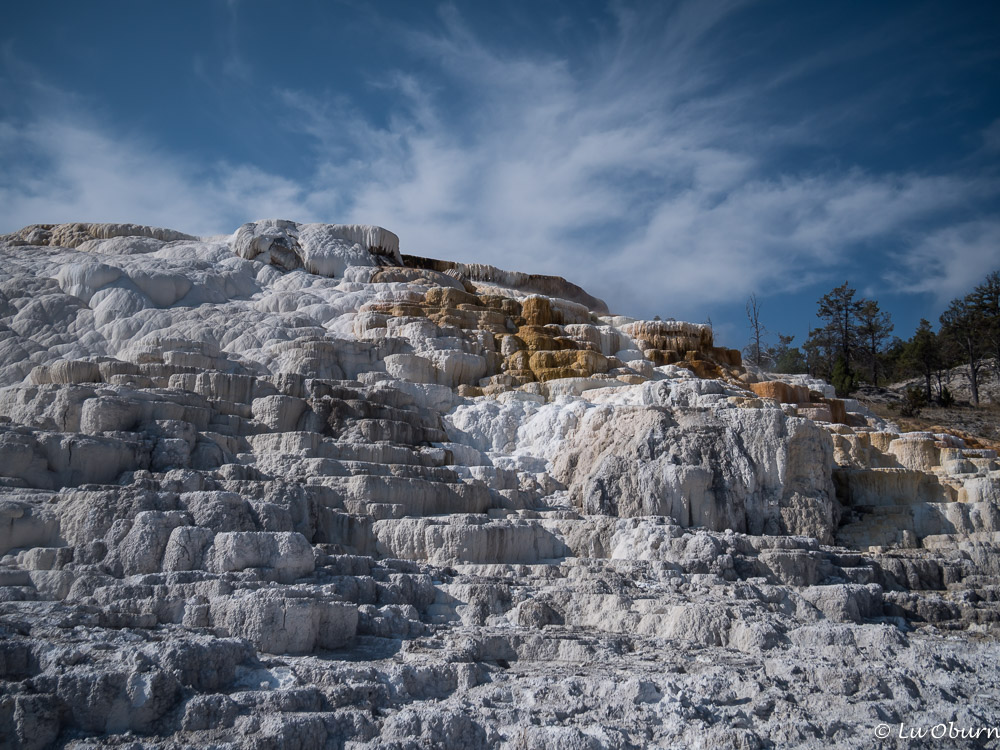
The geology at Mammoth Hot Springs, aka Mammoth Terraces, is older than that at Norris Geyser Basin, and without the “rotten egg” smell of hydrogen sulfide found in many of the thermal features throughout the park. Non-existent at Norris, limestone, a soft sedimentary rock with a high calcite mineral content, is found in abundance near Mammoth Hot Springs.  It is soluble in water and weak acid solution, dissolving into calcium carbonate, also known as travertine.  And it is travertine that has molded Mammoth Hot Springs in a big way.

Mammoth Hot Springs Terraces

Travertine is deposited here at the Mammoth Terraces faster than anywhere else on earth, at a rate of 5 mm per day or 7 feet per year.  Mammoth Hot Springs today would have looked far different to those early visitors to the park who actually climbed onto the Terraces to soak in these waters, seeking relief for their physical ailments.  In fact, travertine is being deposited at such a rapid rate that unstable rock formations have been created that often collapse under their own weight.  It is not surprising that no one is allowed onto these Terraces anymore.

As our class stood looking out over Palette Springs, found at the Mammoth Terraces, we were asked to describe what we were looking at.  I couldn’t help but feel like I had stepped onto another planet.  Almost devoid of trees, except for those left standing as ancient silent sentinels, this sculpted, terraced alabaster mountain loomed over me, capped by a dazzling cerulean sky.  Water cascaded over the edges in rivulets, and a patchwork of orange, gold, and green graced the sides and base, thanks to the work of a myriad of microbes.

Palette Springs at Mammoth Terraces. The large egg-shaped boulder on the left is Devil’s Thumb.

As at Norris Geyser Basin, microbes have created these intriguing formations.  This is how cellular life began on our planet, with microbes swimming in hot spring environments.  I have read that roughly 60% of all life on our planet is microbial, most buried deep below the soil we walk on.

Bruce Fouke, geobiologist who recently authored the book “The Art of Yellowstone Science – Mammoth Hot Springs as a Window on the Universe”, along with the help of professional photographer Tom Murphy, believes that it takes the blending of art and science to unravel the mysteries of hydrothermal features such as Mammoth Hot Springs.

Canary Springs majestically stands above the Mammoth Upper Terraces.  The white and gray travertine are older deposits.

He has said that “the water temperature, chemistry and flow at Mammoth are similar to that found on the early Earth, and the hot springs still harbor microbial life that evolved billions of years ago.”  And he should know, as he has studied this park since 1996, doing research for NASA and now through his own foundation.  He had the good fortune to meet Tom Murphy in 2008, whose photographic passion since 1975 has been in telling Yellowstone’s story in breathtaking images.  And I was fortunate to meet Tom Murphy and attend a slideshow presentation of his work several years ago, as well as listen to Bruce Fouke speak this past summer on his studies at Mammoth Hot Springs.  As volunteers we were given a copy of his new book, which I am in the process of finishing…a fascinating read.

“Daily it is forced home on the mind of the geologist that nothing, not even the wind that blows, is so unstable as the level of the crust of this Earth.”  ~  Charles Darwin

There are several boardwalks surrounding both the upper and lower Terraces.  As we wandered those walkways during our class, Joshua broke down the creation of these terraces, what we were seeing above ground, and what was most likely occurring below the surface as well.  To say he bolstered the elasticity of my brain matter these two days was an understatement. 🙂

Our fearless leader Joshua challenged us to participate in active observation.

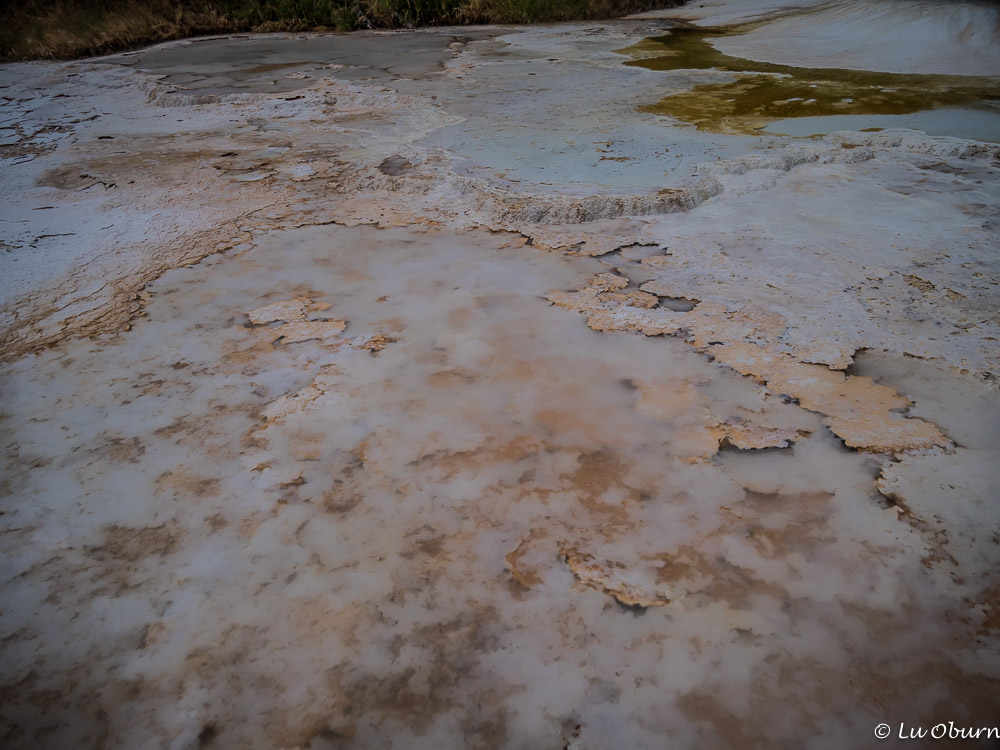
When we arrived at the Upper Terraces at Mammoth Hot Springs, our naturalist assignment was made clear to us – find a pattern in color or structure and attempt to determine the microorganism involved and why the area we selected looks unlike others around it.  Huh?

This is the pool I studied for my assignment. The milky substance that floats upon the surface, then later sinks, is calcite ice.

Armed with an infrared thermometer gun, pH strips, a book identifying the characteristics of specific microbes, and a journal, we went to work. Suffice to say, this assignment challenged me, but it was a great exercise in looking beyond the surface and making observations, something we often don’t take the time to do.  And, I passed the class!

If you love the national parks and would love to learn more, check out the Yellowstone Forever Field Seminar catalog. There is something for everyone who has a passion for the natural world.

Disclaimer:  The views expressed here are my own and do not necessarily represent the views of Yellowstone Forever.  
“Humanity’s quest for a sustainable existence will define our present and future place in the universe.  The art and science of Mammoth Hot Springs provides an unexpectedly insightful vantage point from which to envision this future.”  ~ Bruce W. Fouke & Tom Murphy

SaveSave

SaveSave

SaveSave

SaveSave

SaveSave

SaveSave

SaveSave

SaveSave

SaveSave

SaveSave

SaveSave

SaveSave

SaveSave

SaveSave

SaveSave

SaveSave

Artistry Forged by Fire and Ice ~ Yellowstone Forever Field Seminar Series, Part 1

I have said time and again that this past summer was stimulating and educational for us, but I know as a blogger that my passions may not match yours so if geology isn’t your thing, feel free to look at the pretty pictures instead.  I say this as someone who gave geology a mere passing nod until I supported a couple of naturalist courses on the subject.  Now I am spellbound and will never look at Yellowstone the same, nor anywhere else for that matter, where geologic forces come together to create majestic peaks, valleys, and canyons.

I can’t say which of the Yellowstone Forever field seminars I supported was my favorite, but without a doubt I can say that the instructor who led the Thermal Biology and Geology course this summer, Joshua Theurer, is extremely bright, passionate about Yellowstone, and can hold a student’s attention like the most seasoned of instructors.  I was fully engaged in both his field seminars I supported and look forward to participating in more of his classes in the future.

Steamboat Geyser, world’s tallest active geyser, whose last major eruption occurred in Sept. 2014
Cistern Spring, which drains when Steamboat Geyser erupts. This spring grows more in one year than most do over 100 years – 1/16″.

Joshua’s “Observing Thermal Geology and Biology” course, which followed on the heels of Virginia’s “Landscape Geology” class (also wonderful), was fortuitous for me (or so I thought), giving me a leg-up, as it were…hardly. This is a complex subject, and we were required to complete an exercise before the end of the course, in order to receive credit for this naturalist class.  I could go on and on about everything I learned but instead will touch on some of the highlights, so as not to put anyone to sleep.

Imagine, if you will, the earth as an egg:

  • The outer layer of the earth, the crust, is analogous to the shell of the egg.  It is ~ 25 miles thick.  Yellowstone has a much thinner crust than average, as little as three miles thick in places.
  • The mantle, which makes up the bulk of the earth and moves in enormous convection cells, is like the egg white.  It averages about 3000 miles in thickness.
  • The core of the earth, resembling the egg yolk, is composed mostly of metals and acts as a nuclear reactor, our primary heat source.

There are about two dozen hot spots on earth, with Yellowstone being one of the largest.  The theory is that a hot spot originates at the core of the earth and doesn’t move.  The continental plates move across them.

Given the 10,000+ hydrothermal features in Yellowstone, one would assume a significant magma chamber below the park, deep in the mantle of the earth, and you would be right.  In 2011 the University of Utah’s research concluded that this chamber was at least 400 miles thick and this was all they could determine as their equipment went no further.  In 2015 they discovered a “mantle plume” of roughly 1000 miles below the original magma chamber, a reservoir 4.5 times larger than their initial discovery!  We now believe there is enough magma below Yellowstone to fill the Grand Canyon 11 times.  Although this sounds ominous, given Yellowstone is classified as a “supervolcano”, scientists don’t expect a major eruption is in the park’s near future, and feel that there would be weeks, if not months, of increased seismic activity prior to such an eruption.

Echinus Geyser, the largest acidic geyser in the world, and one of the most popular in Yellowstone.

Day one our course took us to one to the hottest and most rapidly changing thermal areas in all of Yellowstone – Norris Geyser Basin.  Mechanically it functions like other geyser basins but is far more complex, due to the converging of three fault lines beneath it.

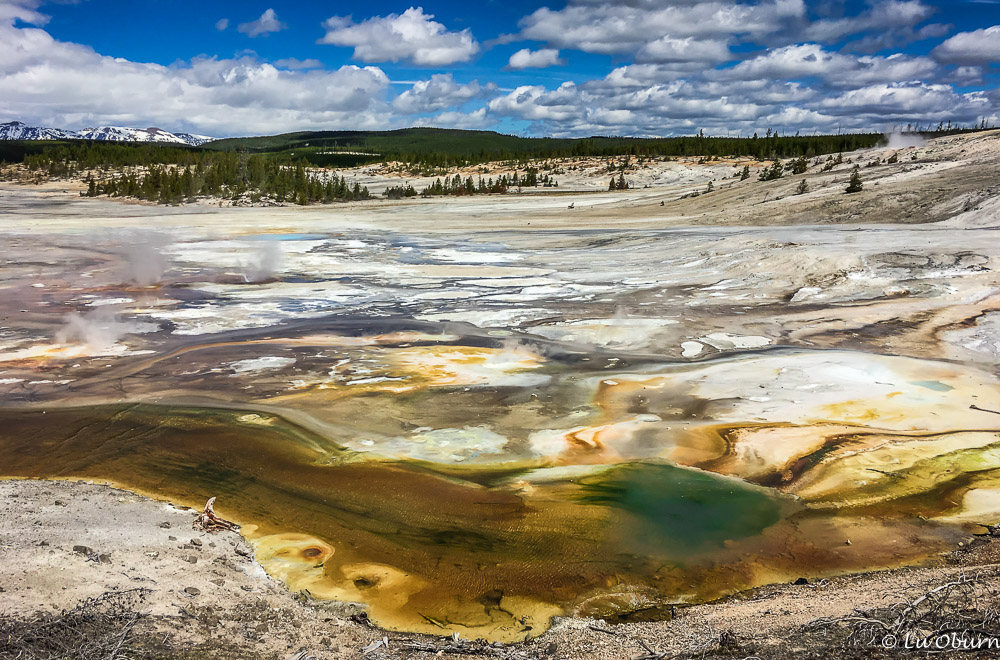
Porcelain Basin resides within Norris and was so named for the milky color of the mineral deposits found here.

There are four types of thermal features found within the park:

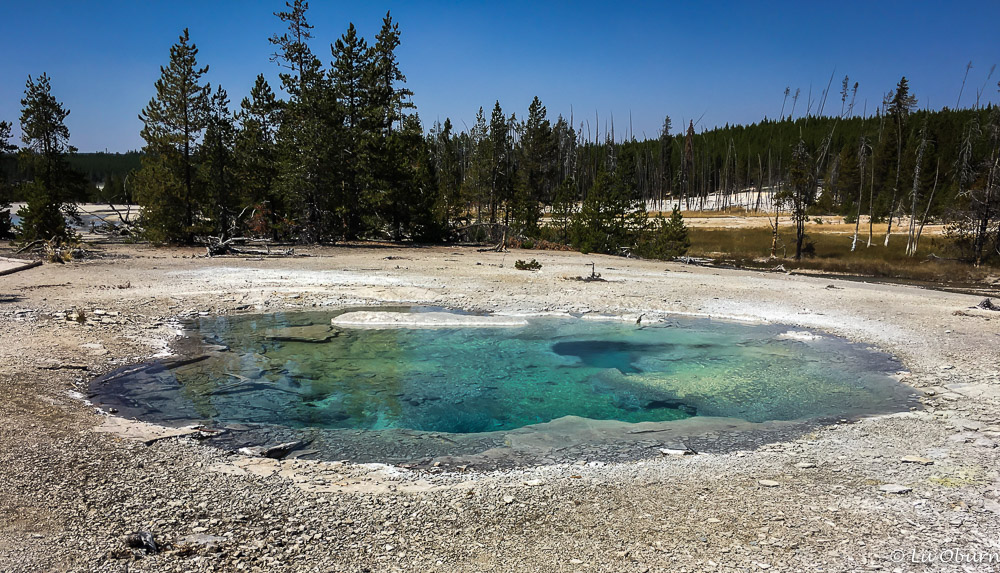
  1. Hot springs – most common and have no constrictions.  Water continually circulates, preventing the water from reaching a temperature needed to produce an eruption.  The deeper the blue color, the hotter the water.  Deep blue signifies temps of at least 159º F.
  2. Geyser – around 500 in the park.  These features erupt when the gas bubbles’ surface area is so great that the water is lifted outside the reservoir.
  3. Mudpot – most acidic, with a pH of 2 or less and a limited water supply.  Gases convert rock to clay.
  4. Fumarole – known as a steam vent, and is the hottest hydrothermal feature in the park.  Water is converted to steam even before it reaches the surface, and is usually announced with a loud hissing sound.  Temperatures can reach to 280º F.  Norris’ hillsides are dotted with these steam vents.

Hot springs, geysers, and fumaroles can be found within the Norris Geyser Basin.  I am not aware of any mudpots within Norris, but some can be found just a few miles south at Artists’ Paintpots.  The varying colors found within these thermal features are due to special microbes, called thermophiles, that make their home here, and the off-putting smell (think rotten eggs) is due to the elevated levels of sulfuric acid and hydrogen sulfide gas found in the thermal features.

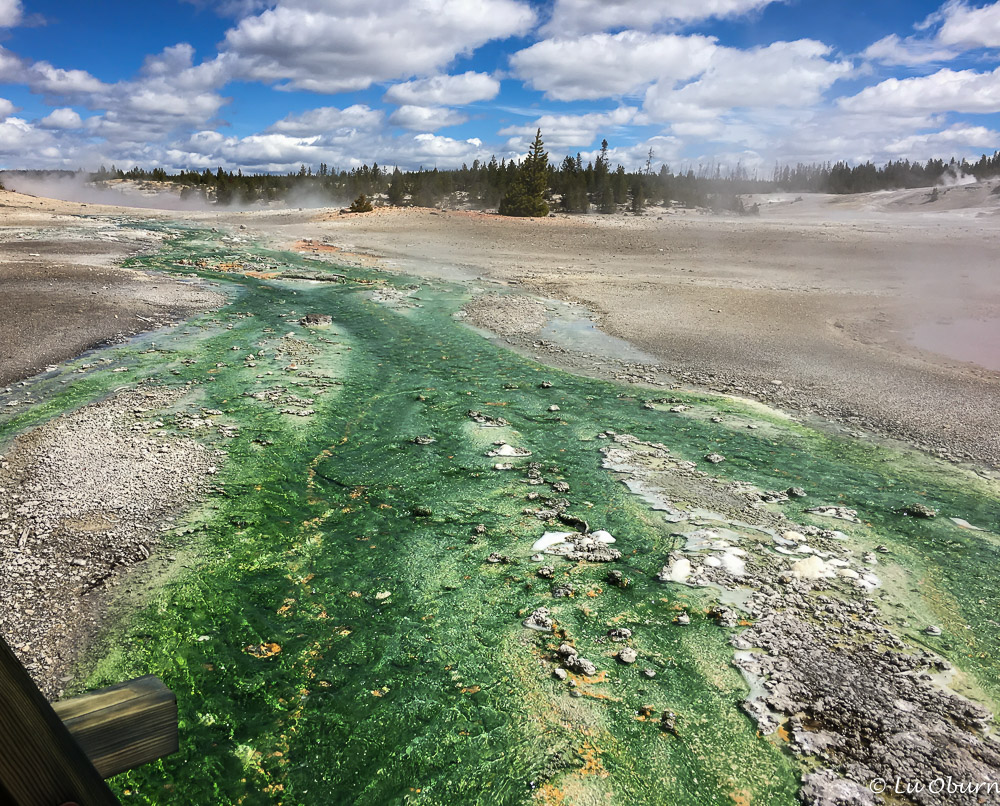
Thermophilic algae, known as “Cyanidium” create the bright-green color seen in this area of the Porcelain Basin in Norris.  Temperatures here average about 120º F, with a pH of 3-4.  This organism can be found nowhere else in the park.
Crater Spring

And one of my favorites…

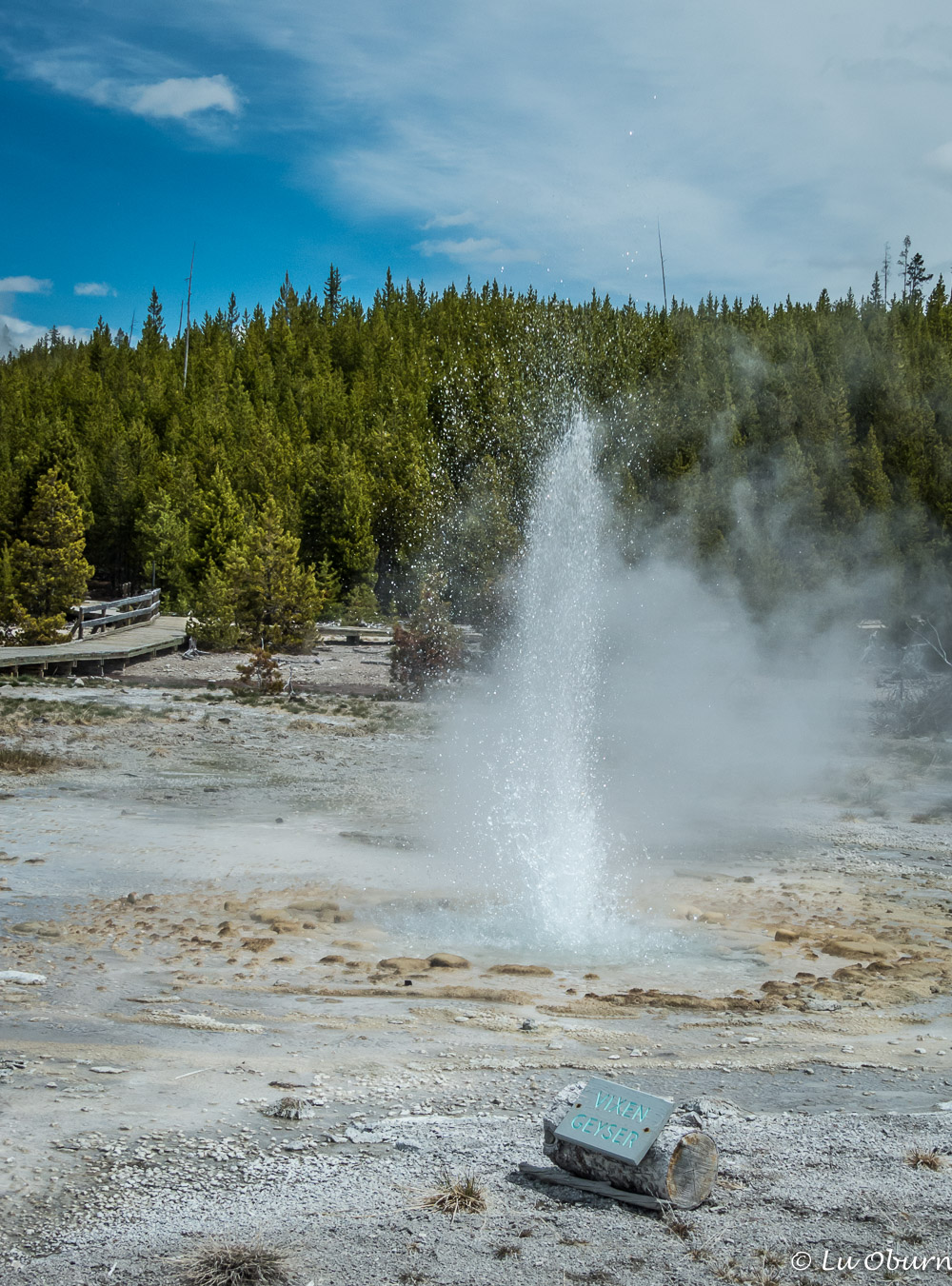
Vixen Geyser, a sassy little gal, who is very active.

Disclaimer:  The views expressed here are my own and do not necessarily represent the views of Yellowstone Forever.  
Next Up:  Day 2 of Thermal Biology, where travertine abounds.

SaveSave

SaveSave

SaveSave

SaveSave

SaveSave

SaveSave

SaveSave

SaveSave

SaveSave

SaveSave

SaveSave

SaveSave

SaveSave

SaveSave

Travel is…

 “We travel, initially, to lose ourselves; and we travel, next to find ourselves. We travel to open our hearts and eyes and learn more about the world than our newspapers will accommodate. We travel to bring what little we can, in our ignorance and knowledge, to those parts of the globe whose riches are differently dispersed. And we travel, in essence, to become young fools again- to slow time down and get taken in, and fall in love once more.”  ~  Pico Iyer

We have returned home from our time on the road, where dreams of sinking into my comfy bed have once again become reality.  The last couple of weeks have been a flurry of activity, setting up my kitchen once again, including getting some ferments bubbling on my countertop, coordinating annual doctor visits, re-establishing a weight-training regiment (thanks to having a gym in our little community), and largely just getting back into a “normal rhythm”.

Time and again my thoughts return back to our summer in Yellowstone National Park, and then move beyond.  I find myself absorbed in what travel can do for us, beyond the stunning landscapes, to what it can do for our minds, our bodies, and our souls.  Whether travel serves as a walk in nature, a drive to a mind-blowing landscape, or a long plane ride to an exotic destination, there is ample evidence supporting the health benefits of travel.

Here are my top 10 thoughts on what travel is for me.

1/  Travel is humbling.

“Traveling tends to magnify all human emotions.” — Peter Hoeg

As I look out over a vast canyon or windswept mountain or stare up at a night sky, I feel small, yet mighty.  I feel more alive than any experience I could ever have sitting in front of a computer or television screen.  Travel opens not only my eyes, but my heart.

2/  Travel is a way to create meaningful relationships.

We are forever grateful for those we have met during our RV travels, many we know will be lifelong friends, all who have been sprinkled with the same wanderlust as have we.  And writing a travel blog has connected me with so many across this beautiful globe, many I will never meet, but who have ingrained themselves in my heart.

3/  Travel is challenging.

It forces us to endure long airport security lines, many hours of bus travel as we bump along a lonely highway, or painfully long airline flights to foreign lands.  Jet lag can zap energy, cause headaches, make one feel disoriented. But if we take a deep breath, are gentle with ourselves, and move beyond these initial challenges, we see the wide world that is open to us.  What frazzles our nerves can also expand our level of patience.  It’s called character building baby!

4/  Travel is an avenue for discovering who we are and who we want to be.

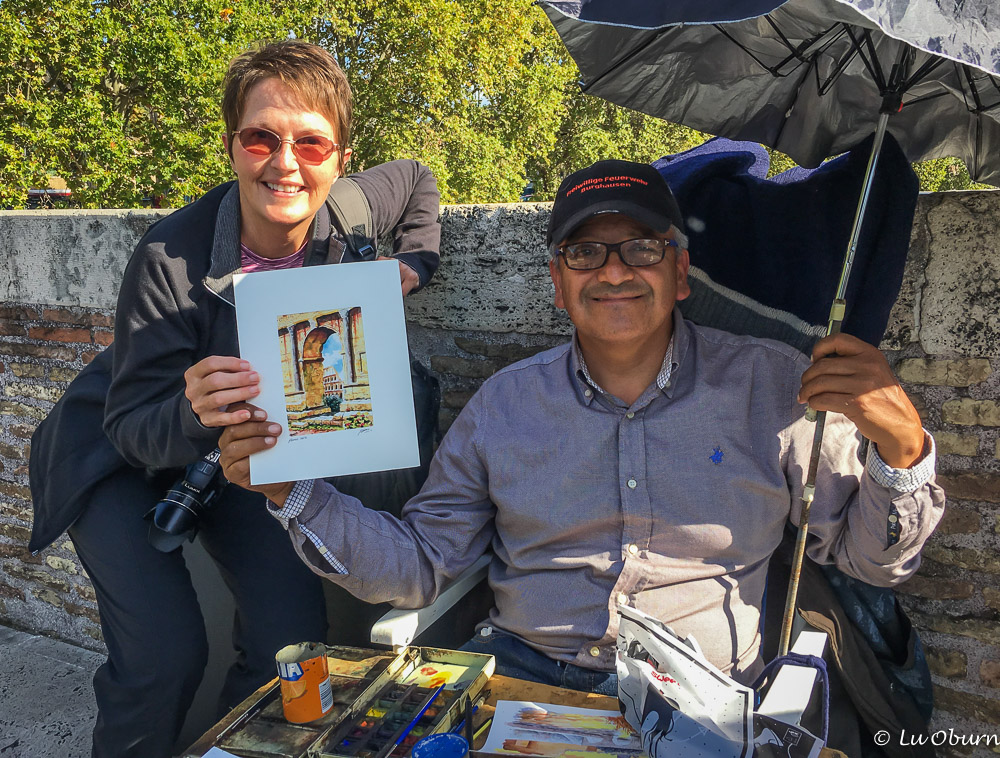
This gentle artist in Rome, Italy indulged us with a photo. How could I resist one of his paintings?

I know that I am much more open-minded than I was before my nomadic ways began.  Stepping beyond my country’s borders has given me a brand-new perspective on how I want to look at the world.  Taking a break from my norm allows me time to reflect upon my personal journey through this life.  Travel has restored my faith in humanity and broadened my world views as I have seen good reflected in the eyes of strangers.  Travel encourages philanthropy as we discover new causes and ways to assist those suffering in this world.

5/  Travel is a means for detoxing from the negative effects of social media and news feeds.

The power of the internet seen in Cirque Terre, Italy.

Although we all seem to live in the world of social media to one extent or another, disconnecting, at least for a time, is healthy for both our bodies and our minds, and can be quite liberating.  Our summer in Yellowstone forced us away from phones and computers and found us immersed in a world of  like-minded people excited about learning more about the natural world.  We met so many people we are now proud to call friends and reconnected with friends not seen for many years.  We will be eternally grateful for our time at the Lamar Buffalo Ranch and hope to do it all again soon.

6/  Travel is educational.

Whether you are hiking across an open meadow, zip-lining through the forest canopies of Costa Rica, participating in a cooking class in some foreign land, or walking the streets of a city new to you, there is always something new to learn, something exciting to embrace.  Travel is a magnificent teacher and hopefully, makes us more interesting.

7/  Travel is empowering and a confidence builder.

Travel forces us to step outside our comfort zone, as we navigate new territories, try a new activity that scares us to death, strive to learn a new language or embrace new customs.  If we don’t shrink away from these challenges, we might discover a feeling of empowerment arising.  And even if we learn only a few new words or phrases in another’s language, there is evidence to show that learning a foreign language strengthens our brains, not to mention the mental clarity that nature provides.

8/  Travel is a great story teller.

…and creates rich, lasting memories.

9/   Travel is a soul feeder.

Two ninas with a gift for me ~ Ajijic, Mexico

Need I say more?

10/  Travel is the ultimate happiness fairy!

Research shows that people who are anticipating an experience; e.g. a vacation, are much happier than those who are waiting for things, like that new iPhone.

Our lives have been forever enriched by our travels, friends met along the way, and the experiences encapsulated in our hearts.  We are already planning our next adventure.

How has travel changed you?

“Veni, vidi, amavi” ~ I came, I saw, I loved.  ~  Anonymous

SaveSave

SaveSave

SaveSave

SaveSave

SaveSave

SaveSave

SaveSave

SaveSave

SaveSave

SaveSave

SaveSave

SaveSave

SaveSave

SaveSave

SaveSave

SaveSave

SaveSave

SaveSave

SaveSave