Mesmerizing Trees, a Bit of History, and Wonderful Friends ~ Golden Isles, GA

It seemed strange to leave Florida after spending the entire winter here but we have so much more of this beautiful country to see so northward we head. Crossing the state line into Georgia we felt winter’s final vestiges as a blustery, rainy day greeted us at Coastal Georgia RV Resort in Brunswick.  Given the forecast it seems our time here is destined to include wind, overcast days and cold.  We have been spoiled by southern Florida’s dreamy winter weather so we can endure a bit of cold.

We are exploring the Golden Isles of Georgia for the next few days, in the southern part of Georgia’s scenic coastline.  The four barrier islands of St. Simons Island, Jekyll Island, Sea Island, Little St. Simons Island, and the mainland of historic Brunswick join together to form the Golden Isles.  Alluring marshland, sandy beaches, and maritime forests create a land of serene, natural beauty.  Historic landmarks, museums and art galleries provide the back story and legacy for the area.  And the southern charm and hospitality found around every turn cannot be beat.

Jekyll Island offers visitors a tranquil setting thanks to a strict conservation clause that limits development to only 35% of its land and with only 220 residents occupying the northern part of the island, much of Jekyll Island will always retain its natural wildness.  On a calm, chilly morning we biked the island before the winds gathered steam later in the day, passing under live oaks dripping with Spanish moss, crossing boardwalks spanning marshes, and through pine-scented forests.

One of our favorite stops on Jekyll Island was Driftwood Beach, a mesmerizing, haunting stretch of beach that looks like a tree graveyard due to slow erosion of the northern end of the beach being deposited on the south end of the island.

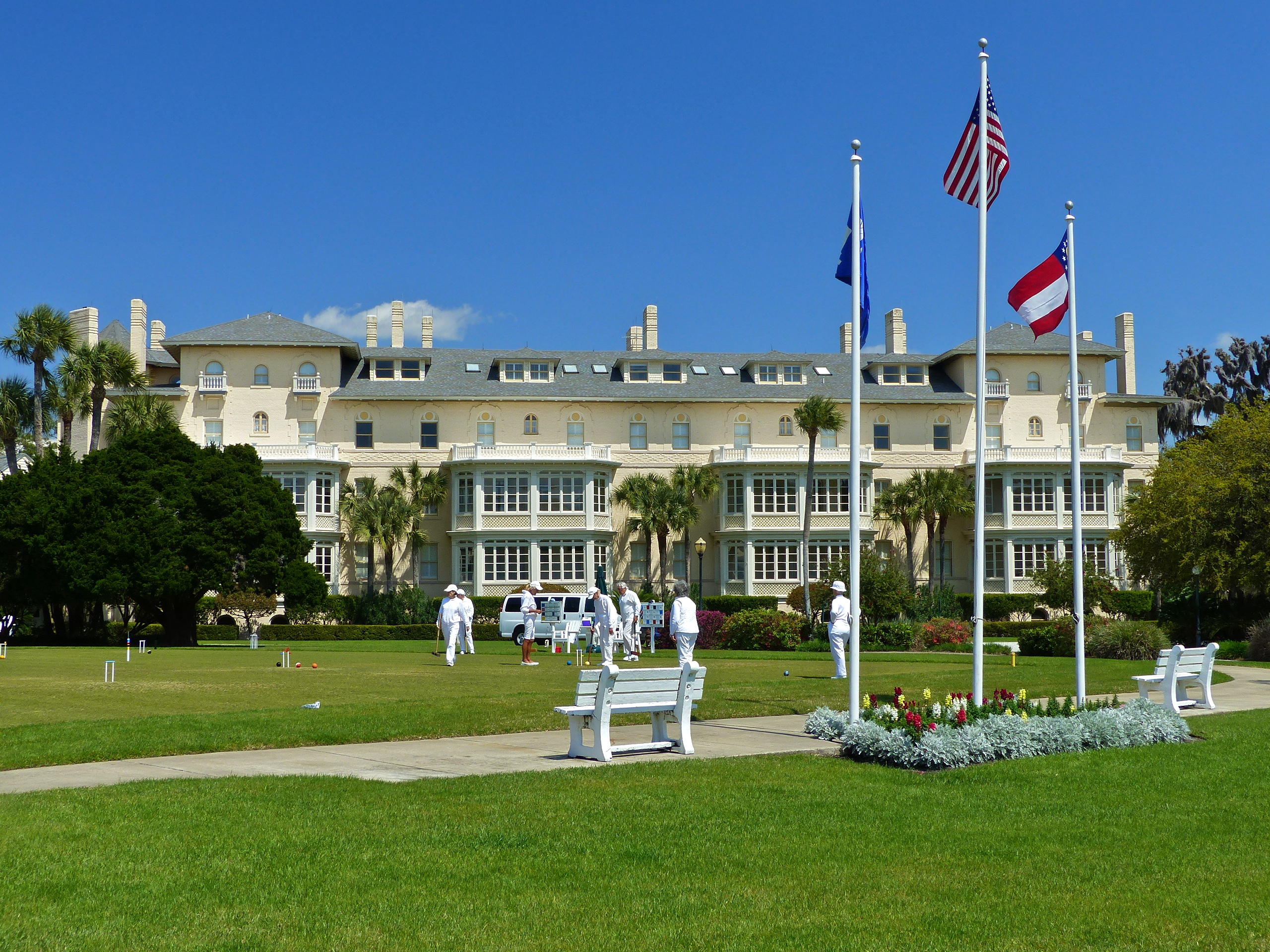
Jekyll Island has long been appreciated for its landmark historic district.  Built in 1886, the Victorian Inn known as the Jekyll Island Club Hotel is the focal point of the historic district and many of the surrounding “cottages”, which can be toured, add to the opulence.

Once a private club for some of America’s wealthiest, with member names such as Morgan, Rockefeller, Pulitzer, and Vanderbilt, Jekyll Island Club Hotel is now one of Georgia’s top resorts, open to the public.  On the day we visited there were three couples playing croquet on the lawn, dressed all in white.  It felt like stepping back into the 1900’s.
St. Simons Island, the largest of the barrier islands, lies across the salt marshes which were celebrated in the poem Marshes of Glynn written by renowned Georgia native and poet Sidney Lanier.  Majestic live oaks draped with Spanish moss line many of the streets on this beautiful island, framing the lovely properties beyond, some steeped in history.

We headed to the Visitor Center to get some information and I hoped to get a map of the mysterious Tree Spirits I had read so much about.  It seems that local artist Keith Jennings began carving soulful faces into St. Simons Island live oak trees in 1982 and to date has created 20 of these works of art.  Jennings says he works with the tree’s soul and as the wood speaks to him the face begins to develop and peers back at him.  They are so popular they even have their own Facebook page.

Surprisingly, there were no maps available for the location of these tree spirits, at least none that the Visitor Center employee was aware of, although she did have a vague idea of where we could find a few of these unique carvings.  So with cryptic notes in hand, I headed out with a skeptical husband in tow.  To say Terry was less than excited about this scavenger hunt was an understatement, given the traffic and cold, windy day, but he knew I was determined to find at least one.  We found four before I felt I was pushing hubby’s patience button, with directions like “go to Redfern Village and find Gnat’s Landing.  There is a tree nearby that has a tree spirit carving”.

Each we found were wonderful discoveries, the weathered faces working well with the drooping, moss-covered branches to create haunting, contemplative features.

The trees on these barrier islands never failed to enchant us and seemed to be a recurring theme during our visit.  The Avenue of the Oaks was our next stop, a must-see in our opinion.  Once the entrance to Retreat Plantation, known for its superior sea island cotton and sweeping flower gardens, this double row of 188 year-old live oaks now grace the entrance to the Sea Island Golf Club.

This short trip to the Golden Isles was made more special by a visit from our good friends Stan and Marilyn.  We enjoyed revisiting Jekyll Island with them and sharing a yummy meal at Southern Soul Barbeque on St. Simons Island. Visits with them are guaranteed to leave our sides aching from laughter and bring tearful goodbyes as we part.   We can’t thank them enough for taking the time to come our direction during their recent travels.

Good friends Stan & Marilyn on Driftwood Beach.

A few images on the grounds of Christ Church on St. Simons Island:

Our next stop is Savannah.

Our Nation’s Oldest City ~ St. Augustine

This past week has been spent with family, and although we had lots planned when we arrived in Titusville, much was set aside to reconnect and relax with sister and niece.  This visit had been a long time coming so we decided that days devoted to conversation and cooking meals together trumped lots of activities.  We did explore Merritt Island National Wildlife Refuge and Canaveral National Seashore and if you find yourself in and around Titusville, I would recommend both.  And of course, there is the Kennedy Space Center.
Leaving Titusville behind and arriving at our final stop in Florida for the winter, we decided to play tourist one last time before we head further north, and where better than in our nation’s oldest city, St. Augustine.  In doing research you will find there is plenty to occupy your time here, whether you enjoy history, the beach, culture, nightlife, shopping, or delving into the paranormal.  And when you tire of all this sightseeing, there are many interesting restaurants downtown to saté your appetite.

The trolley seems to be the most popular way to traverse this city, with about 20 stops along the route, allowing you to hop off and on at your leisure, all while getting a little history lesson from your driver.  We prefer to walk instead, planning our own route and getting some exercise, unless the city we are in is too spread out and St. Augustine is a very walkable city.   There are plenty of brochures to grab from the visitor center to educate you about this historic city and a public parking garage right at the visitor center that can be accessed for $10/day.

This is where colonial America began, 55 years before the Pilgrims set foot on Plymouth Rock.  First visited by Spanish explorer Juan Ponce de Leon in 1513, St. Augustine was later founded by Pedro Menéndez de Avilés in 1565.  Over three years Avilés would import 500 African slaves to this city, the first slaves brought to this country, a sad piece of history.

Over many years the Spanish, French, British and finally the United States fought for control of St. Augustine.  I am not a huge history buff so I will leave you to read the details online if you are interested.   There are two forts in the city, Fort Matanzas and Castillo de San Marcos, for those who love history, and we found both to be interesting.

Our interest in this historic city lies more in the striking architecture found around the Old Town area, particularly some of the old hotels and churches, almost all that were influenced by Henry Flagler, a Standard Oil executive and partner to John D. Rockefeller.   In the 1880’s Mr. Flagler decided that St. Augustine should be a winter resort for the wealthy.  The stunning details in the Lightner Museum (formerly Hotel Alcazar), Flagler College (once the grounds for the Ponce de Leon luxury hotel), and the Memorial Presbyterian Church were certain to lure the affluent.

Tours are given at many sights around the city, some for a small fee and some that are free of charge.  We found the docent-led tour of the Memorial Presbyterian Church to be fascinating, and the architecture had already drawn us in.

Built in 1889 by Henry Flagler, this is the only Presbyterian church of its kind in the world.  It is of the Venetian Renaissance architecture style, shown in the copper dome and ornate terra-cotta frieze, and was inspired by St. Mark’s Basilica in Venice.   It is breathtaking both inside and out.

This sacred building was a labor of love for Henry Flagler, dedicated to his daughter Jennie Louise Benedict, who died due to childbirth complications the same year this church was constructed, hence the word “memorial” in the name.  Every last detail reflects Flagler’s loving touch, particularly the 92 stained-glass windows, designed by German artist Herman Schladermundt. Each window represents a segment of the “Apostle’s Creed” and they are all spectacular.

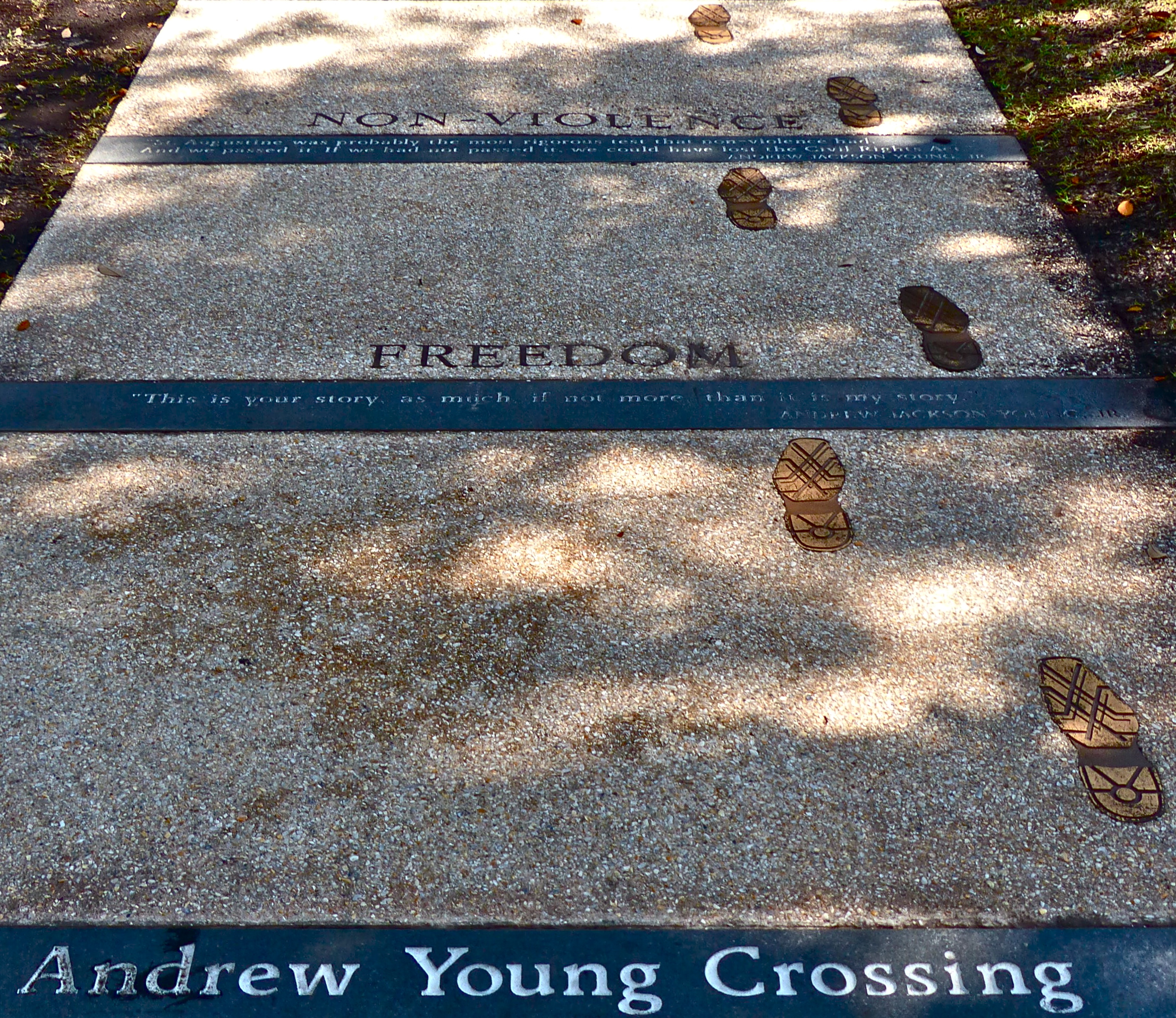
I must admit that until we arrived in St. Augustine I did not realize the importance of this city to the Civil Rights movement.   On June 9, 1964, Andrew Jackson Young, Jr., Civil Rights activist, led a march from Lincolnville, a St. Augustine district founded by former slaves, to the downtown plaza.  Mr. Young was sent to the city by his friend, Martin Luther King, Jr., to organize a peaceful human rights protest.  When his group arrived at the downtown plaza, they were confronted by a large white mob and were beaten.  Always vigilant to Dr. King’s non-violent strategy, they walked away.   This was a pivotal event that aided in the signing of the Civil Rights Bill on July 2, 1964.

These bronze footsteps, incorporated into the sidewalk that runs diagonally through the plaza, honor this leader who received his first beating in the Civil Rights movement.

Our nation’s oldest city is rich in history, expressed in both her simplest of buildings and her most opulent.  Although a part of her story reflects some of our nation’s less than proudest moments, St. Augustine still maintains a charm all her own.

From here we continue north into the “Peach State” ~ Georgia.

Night Symphony and a Close Encounter

We have learned to keep an open mind when plans don’t seem to gel as we had originally hoped, so as not to miss the beauty at our fingertips.  That was to be the case with last minute reservations made at Savannas Recreation Area in Fort Pierce, when we could not get reservations at a preferred state park.

Campground view
Campground view

Savannas Recreation Area covers 550 acres and five distinct biological territories.  Our camp site, like most, looks out onto a meandering lagoon, literally ten large steps from our door.  Trails through the prairies and marshes criss-cross the park, a beautiful, serene setting.

There is plenty to do in and around Fort Pierce, a local farmers’ market ranked second-best in the state, a historic downtown, the Navy Seal museum, and bike trails and white-sand beaches across the causeway on North and South Hutchinson Islands to while away a sunny day.

Even with much to do outside our back door, most days our contentment is found on the paths and walkways inside the campground, where we are never without birdsong, and an amazing variety of wading birds foraging or soaring overhead.  Each day as light moves to dark the night symphony builds to a crescendo, bullfrogs, a multitude of winged insects, and numerous birds joining in the chorus.  Standing outside, peering into obscurity, we feel as if in a jungle, particularly when the limpkin, a bird we have not seen since Shark Valley, joins in the ensemble.  Much easier heard than seen, it seems this beautiful bird does its best singing after dark, not that it has a great singing voice, more a loud wail or scream.  I have read that his call was used quite often for jungle sound effects in Tarzan films, sounding more like an ape than a bird.

At check-in we were told that a pair of sandhill crane were nesting across the lagoon in the marsh.  We had not seen this magnificent bird since our Yellowstone days and were excited to catch a glimpse.

One late afternoon while wandering through the park, we spotted two rather tall birds strolling up the road.  Walking quietly with camera at the ready, I was prepared for them to fly away as we moved closer, as most birds are prone to do.  Much to my surprise they continued to wander, paying little attention to us as they fed in the grasses.

These were the sandhill cranes I was hoping for.  There is no difference in appearance between a mating male and female, except that the female is a bit smaller.   These elegant birds stand 4.5 – 5 feet tall, weighing in at 10-14 pounds and are said to be fairly social.  They make a trumpeting or trilling sound that can be heard from a great distance, engaging in “unison calling”, standing close together singing a synchronized elaborate duet.  And when in the mood, they do a dance that has a gangly grace to it.  We felt fortunate that they shared all of this and more with us on this particular day.

Before out visit was over, the male allowed me to sit literally three feet from him, watching him preen, with an occasional tilt of the head in my direction as I quietly spoke to him.  Terry wished he had a camera turned on me, as the look on my face was that of pure joy.  I felt honored to be allowed so close.

At Savannas we have found serenity in the richness of nature and alluring details in the night that quite often are overlooked.  We are once again reminded of the awe inspired when we live in the moment.

Sunrise over Indian River Lagoon

Back to the Wilderness ~ Everglades National Park

Walking along shadowed paths, the sun not yet quite ready to greet the day, contentment settles over me.  I feel as if I am floating upon the fog that is blanketing the grasses, alert to the callings on the wind and the chirping of insects underfoot.  I think this is how it feels to be in the moment.

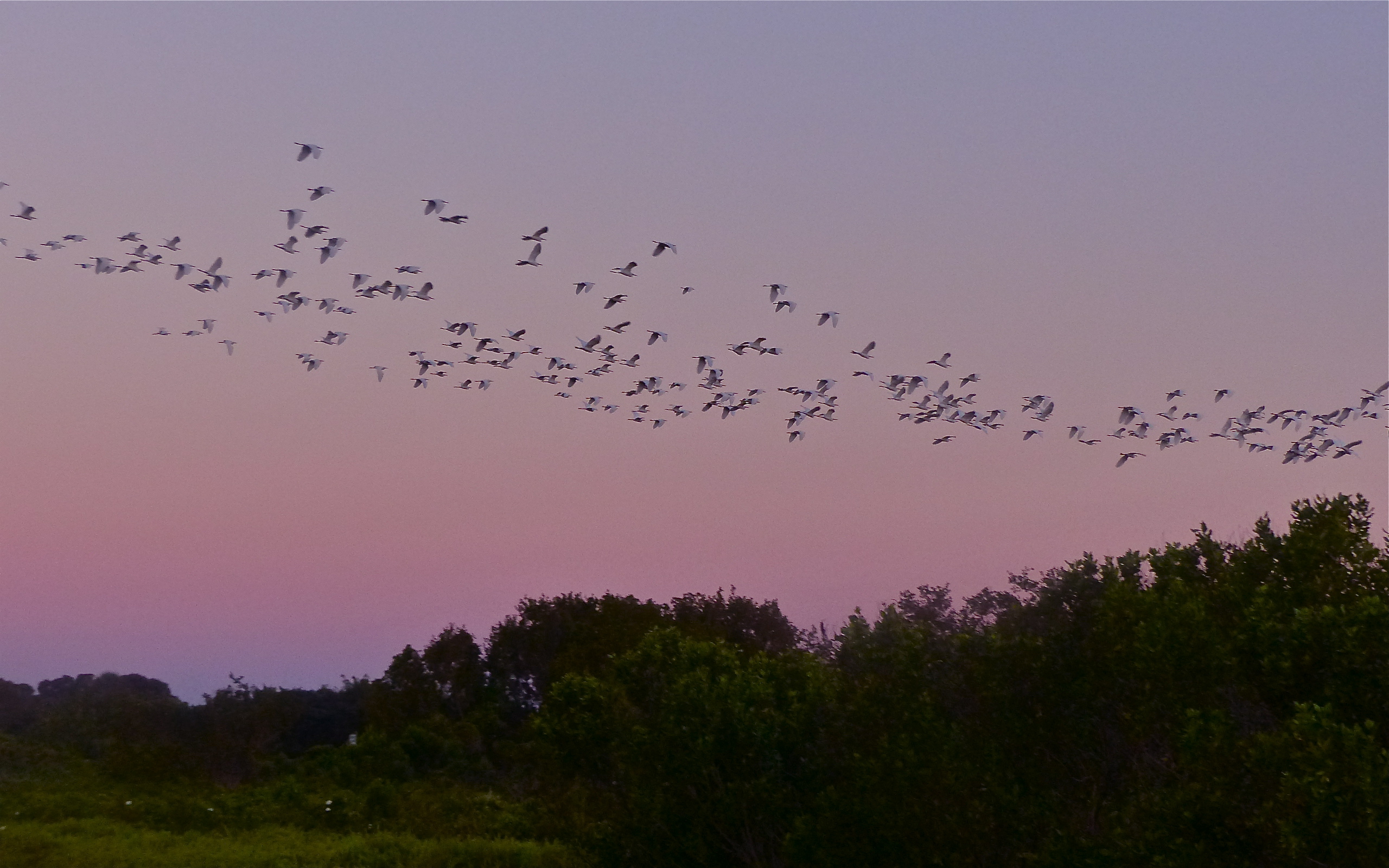
I marvel as egret wings caress the pastel sky above me but I am keenly aware that I am only seeing a small percentage of the birds as those seen back in the 1940’s when this land was slated for protection under the National Park system.

We are back in the Everglades, and after the exhilaration of the Keys, this has been quite an abrupt change.  A bit of sadness washed over me as we left to start our trek north, but strolling this campground my spirit is buoyed by the calm, ready for a week devoid of cell phone and internet connectivity, free of the trappings of modern existence.

Our travels have taken us to the southern tip of the Everglades, the Flamingo campground, our home for five days.  This is America’s Crocodile Capital, where saltwater melds into fresh, the only place in this country I have read where alligators and crocodiles co-exist.  We had already visited the western part of the park so I was wondering if we would find enough to occupy ourselves for this length of time.  I need not have worried.

Here are our top 6 favorite activities while visiting Flamingo (in no particular order):

1)  Eco Pond

A trip to Eco Pond, about 0.5 miles from the Flamingo campground, particularly at sunrise, is a birder’s delight.  Bug repellant is a must as these pesky insects seem to like first light as much as we do.

Hundreds of egrets with a splash of pink coloring the landscape.

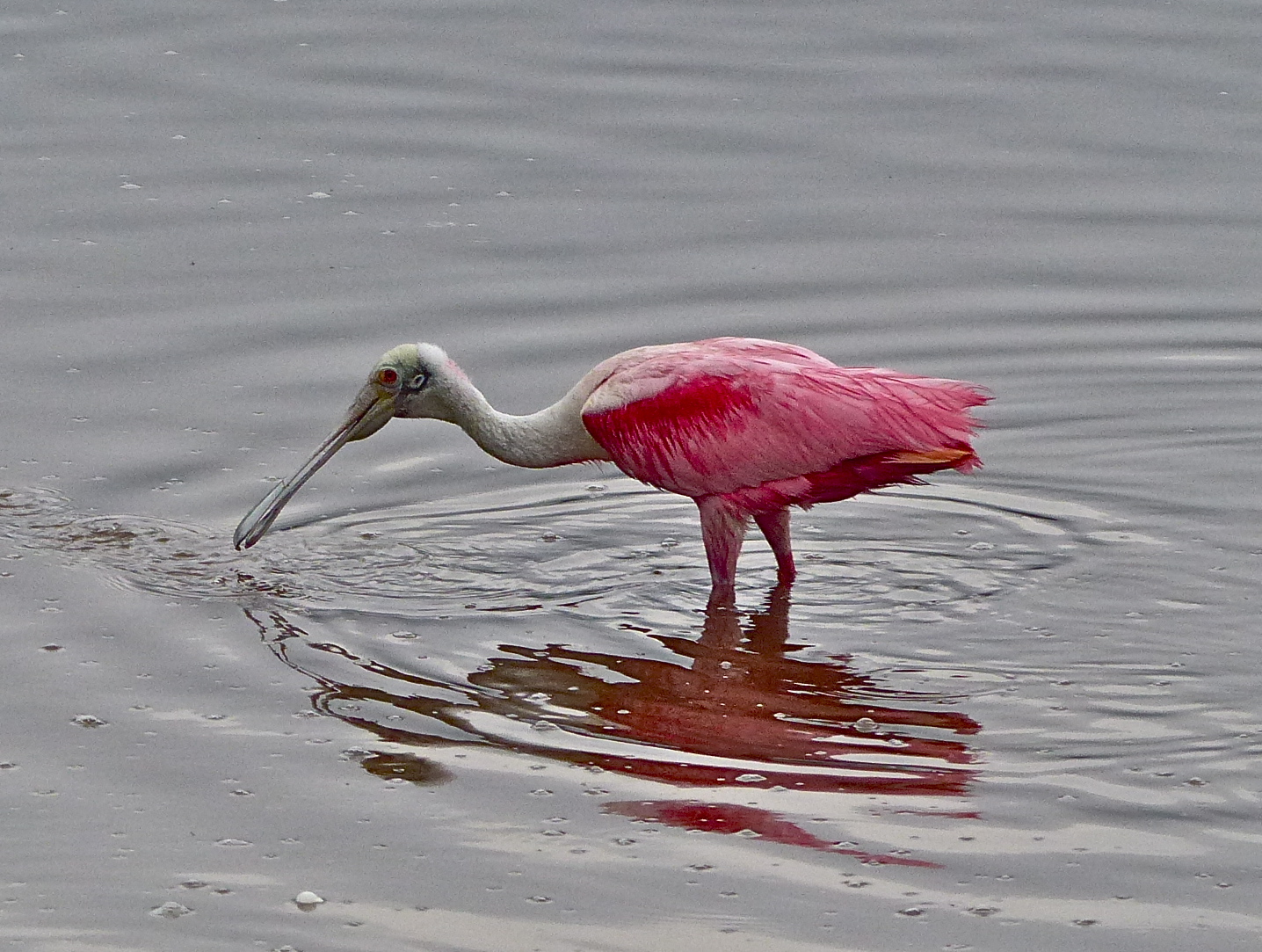
The roseate spoonbills’ captivating pink plumage comes from a red pigment found in some crustaceans they feast upon.

The ravishing roseate spoonbill
The ravishing roseate

2)  Anhinga Trail

We were lucky to be in the park for the ‘Big Day Birding Adventure’, led by Ranger Christi, conducted only twice monthly.  We started at the Anhinga Trail, spending a couple of hours there, and headed back south, making several stops until we arrived back at the Flamingo Visitor Center.

Ranger Christi (center) pointing out anhingas nesting in the surrounding trees

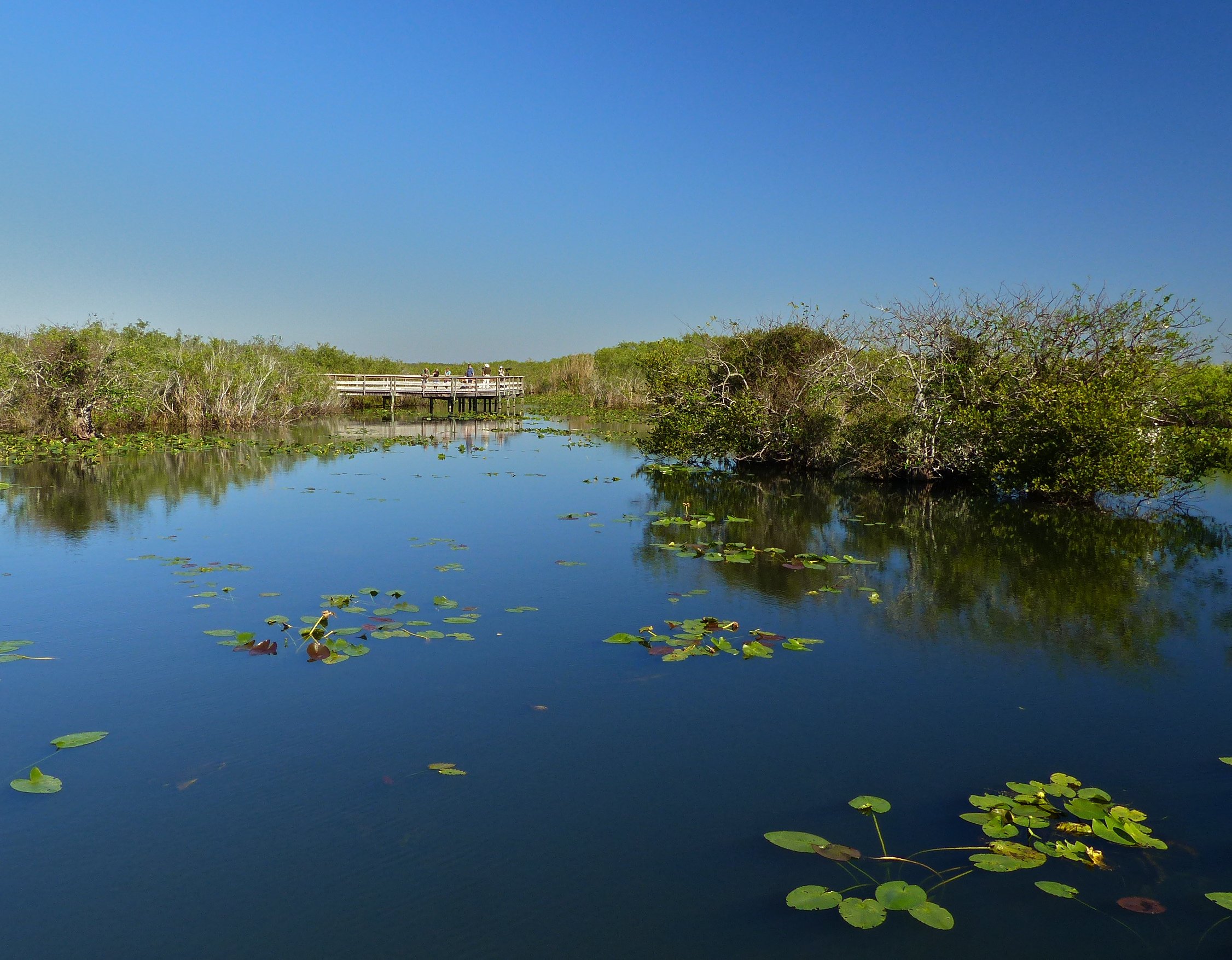
Lots of boardwalks cross over lily pad laden waterways, with countless wading birds on the shores contemplating a delicious breakfast.

Long lengths of boardwalk traverse the watery depths.

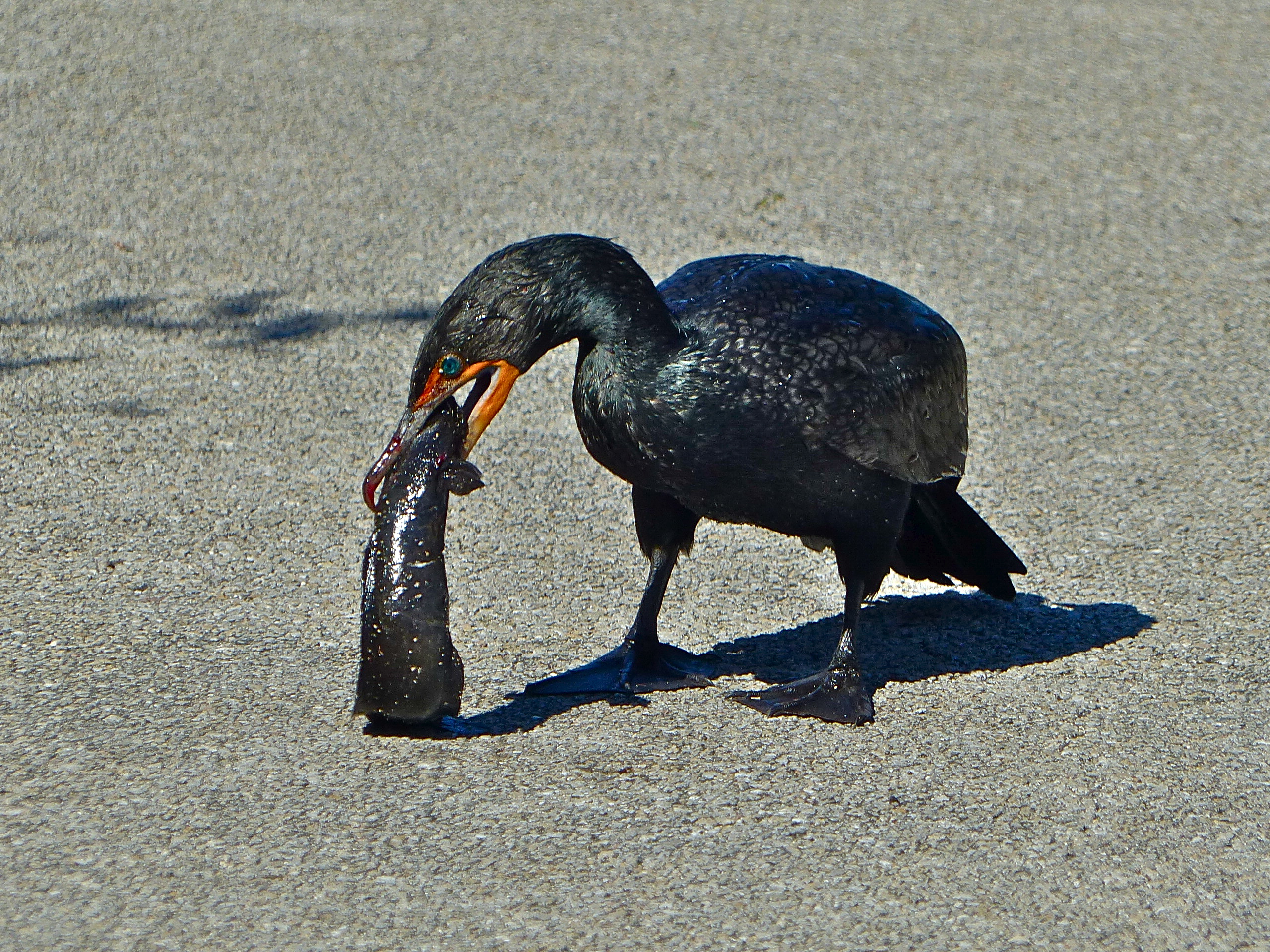
We entertained ourselves watching a cormorant try to gulp down a rather large walking catfish before a waiting wood stork swooped in.  He swallowed it just in the nick of time. 🙂

A cormorant desperate to enjoy a big breakfast before having it stolen away.

3)  Bike Rides

We spent many a day biking the campground and roadways, stopping off at various ponds or boardwalks to enjoy the wildlife.

Mottled duck at Mrazek Pond

4)  Pinelands Trail in Search of Tree Snails

As you walk this 0.5 mile trail, keep your eyes trained up into the canopies of the smooth-barked Jamaican dogwood and gumbo limbo trees, and you just might spot some of the colorful Liguus tree snails.

5)  Hang out at the Marina

This time of year, spending time at the marina will reward you with some pretty spectacular views of osprey nesting, and if you’re lucky, you might be there for feeding time.

A very intense stare
A tender moment captured as an osprey feeds her chicks

Many also come to the marina to spot the crocodiles lying on the banks or taking up residence in the boat slips.  Early in our stay this is where we saw the crocs from a safe distance.  Much to our surprise, the very next day a 9-footer decided to visit us at the campground, causing a bit of excitement.

An unexpected campground visitor

6)  Kayak to your Heart’s Content

We spent many a day paddling the waterways in the park.  It is one of the best ways to see roosting birds, pelicans feeding, dolphins frolicking, and alligators and crocodiles sunning themselves on the banks.

The water level in the Florida Bay rarely exceeds a depth of six feet so watching the tides is important if you don’t want to get grounded in the seagrass.  Low tide is the best time to check out the variety of birds on the mudflats.   We paddled Florida Bay one blustery day at low tide, which made for a nice shoulder work-out.  We also experienced it at early morning high tide, paddling from the marina to Snake Bight, a 5-mile round trip that rewarded us with dolphin sightings and a variety of roosting birds in the mangroves.

If you want a bit more excitement, venture out into the Buttonwood Canal and paddle among the crocodiles and alligators.  I didn’t let my mind linger too long on what would happen if our inflatable decided to spring a leak.

Traversing the Buttonwood Canal - a much different feel from the open Florida Bay
Traversing the Buttonwood Canal – a much different feel from the open Florida Bay

Nature’s many voices can be heard in this pristine wilderness.  Hopefully the future health of the Everglades can survive the many demands being placed on her water supplies so future generations can enjoy her wild beauty.

Our journey north and back to civilization officially begins.

The Vibe of Key West

1890 Key West icon, a "place for travelers to rendezvous".
1890 Key West icon, a “place for travelers to rendezvous”.

We weren’t sure how we would feel about Key West prior to our visit.  Would we love her quirky, laid-back vibe or be turned off by her tawdry, overly done commercialism?  After having visited, we give it a big two-thumbs up and decided we would love to come back for a longer visit, as a day just scratches the surface.

The city’s official motto of “One Human Family” drew me in immediately.   The belief that “all people everywhere are entitled at birth to equal rights, dignity and respect; and lives that are free from prejudice, discrimination, harassment, or violence” is one that all cities would do well to embrace.

Since we arrived early to get ahead of the crowds, the first order of the day was to sample the local coffee and we found just the right spot at the Old Town Bakery, where one of the local residents rushed up to make our acquaintance.

Not everyone in town is excited to see these colorful characters roaming the streets.

We opted to enjoy our few hours here on foot, taking in the sights and sounds at our leisure.  We wandered along the Historic Seaport Harbor Walk, where people were already lining up to take a cruise on a sailboat or catamaran.  From there it was on to Mallory Square, the place to be at sunset and for the show that accompanies the sun’s final rays of the day, flame-tossing jugglers, tight-rope walkers, and sword swallowers.   It is also here where you can sit, enjoy a meal, and watch the cruise ships dock.

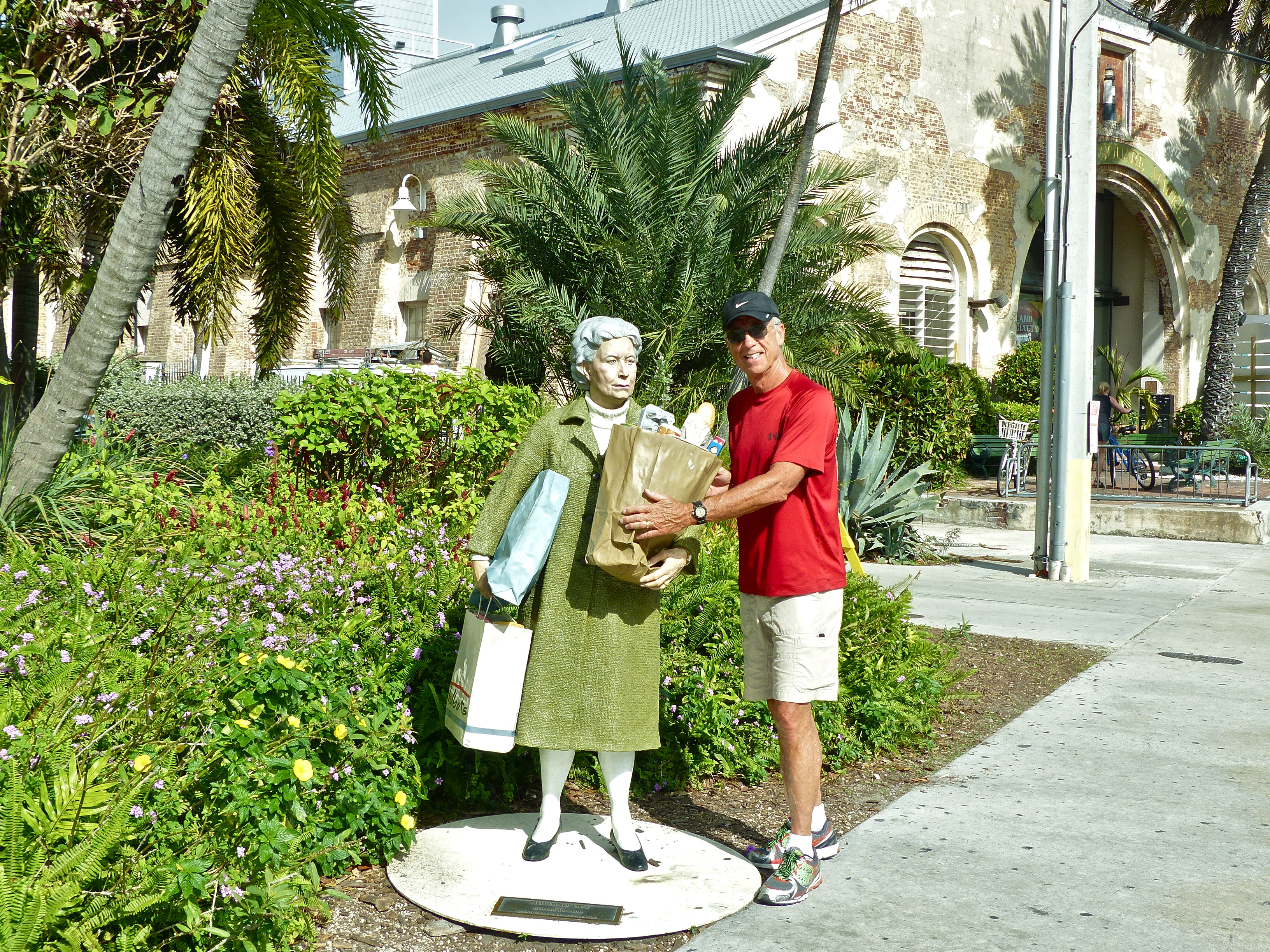
Near Mallory Square is the Key West Art and Historical Museum, with its many life-size bronze statues scattered about and is where Terry decided to be the perfect gentleman and help an elderly lady.

With lunchtime nearing, I don’t know about you but I think it looks more like Terry is trying to steal her groceries.  We’d better get this boy some food fast!

Since there is a large Cuban influence here (and we love Cuban food) we decided to wander into an Old Town residential neighborhood and check out El Siboney for lunch, the place we were told where the local Cubans dine and is the “epicenter for good Cuban food”.   We were not disappointed as we dined on the best roasted garlic chicken and plantains we had ever eaten, and the homemade sangria was pretty tasty too.

Pleasantly full and recharged for the rest of our visit, we headed south to get a picture taken where everyone who visits Key West does, at the point furthest south, and the line was already growing.

Can we go to Cuba honey?

I recently read that this buoy does not stand on the southernmost point of Key West but rather land west of here on the Truman Annex, where the “Winter White House” for Harry S. Truman stands, claims that right.  No marker exists there as it is U.S. Navy land and cannot be accessed by civilians.

The brightest spot of our day was visiting the Butterfly and Nature Conservatory.  The magic begins as you enter, where  hundreds of butterflies swirl around you, dancing to the relaxing music, as you stroll paths lined with flowering plants, colorful birds and gurgling waterfalls.   Fifty to sixty different species of butterflies from around the world can be found here, all beautiful, all guaranteed to put a smile on your face.

This slideshow requires JavaScript.

A day in Key West would not be complete without a stroll down Historic Duval Street, running from the Gulf of Mexico to the Atlantic Ocean, and in many ways the heartbeat of the city.  Any manner of shop or eating and drinking establishment can be found here, like a continuous happy hour.  I read somewhere that Key West is the place to “find yourself, lose yourself, be yourself, or re-invent yourself” and this just might be the street where those discoveries are made.  At the least it is probably the hottest place in town to people-watch.

The end or just the beginning?

Well, it looks like the end of the road for us, at least for this day.

There is no end to the activities in Key West to delight your senses, and food and drink aplenty to dazzle your taste buds.  Galleries, museums, historic buildings, and beaches await our next visit to eclectic Key West, city with an effervescent magic all her own!

Our time in the Keys has flown by and we leave dragging our feet but with fond memories we carry along.  It is back to the Everglades for us, land of gators, crocodiles, exotic birds, and raw, wild beauty.  Hopefully the mosquitoes will have had their fill before our arrival. We will most likely be out of cell phone and internet range for several days.  Have a wonderful week! 🙂