A Blending of Ancient History and Culture ~ Tuscany, Italy (Part 2)

Our little farmhouse was well positioned for trips into the Tuscan countryside to explore quaint hill towns, as well as a day trip into Florence.  I had read about the Crete Senesi, which refers to the clay soil containing sediments that date back 2.5 million years.  The landscape within the Crete Senesi has been described as lunar-like, which fascinated me, so I knew a drive through that area was going to be on the agenda.  And it just so happened that a Benedictine monastery I had read about, the Abbey of Monte Oliveto Maggiorewas a stone’s throw away, so you know the expression “two birds with one stone”, and our day was planned.
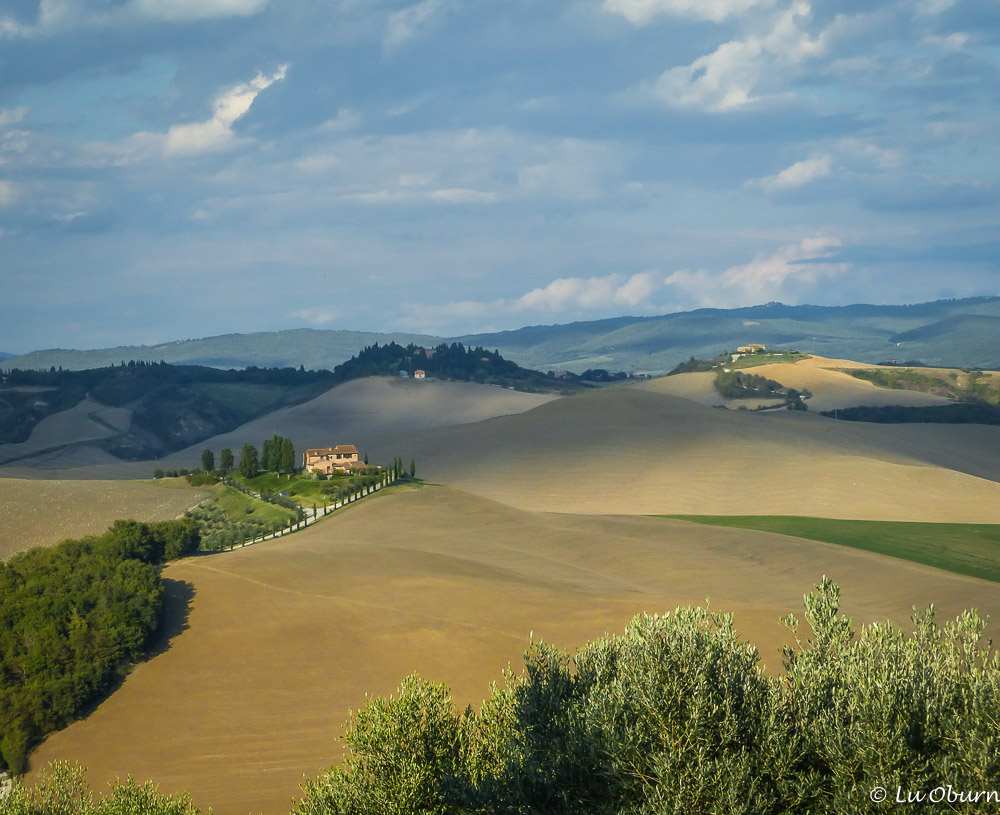
I found the starkness of the landscape, with only a single villa, a few cypress, and a spot of green among rolling hills of clay quite beautiful.

In contrast, the Abbey of Monte Oliveto Maggiore, although still considered part of the Crete Senesi, sat tucked within a forested area.  After parking our vehicle in the lot above, we took a 10-minute wooded walk  down a long line of cypress to a medieval palace of red brick, the abbey.  In the courtyard a large statue of Saint Bernard Tolomei greeted us, holding the book of rules for the notably strict order to which he belonged.

In the year 1272, Bernard Tolomei, founder of the abbey, was born to an aristocratic family in Siena.  He had a distinguished career as a lawyer until he was called here to become a hermit monk at the age of 40.  He founded the Olivetan order of the Benedictines and in 2009 was made a saint.  This complex is the order’s mother abbey.

The beauty of the abbey and the simplicity of the Benedictine lifestyle is seen in the paintings, murals, and statues displayed throughout the monastery.

This slideshow requires JavaScript.

We had spoken to those who enjoyed Florence more than Rome, but since we were flying back to the states through Rome, we decided to explore her in detail and give Florence more of a passing nod – a quick day trip.  So on another rainy day Terry and I drove to the hill town of Poggibonsi and caught the train to Florence.  With limited time to visit, we made the most of our day and tested our patience as we maneuvered through the hordes of tourists at the Duomo, then moved on to the Accademia and Uffizi Galleries.  Luckily I had made reservations for the galleries before our visit (truly a must) so didn’t have to stand in the longest of lines, but once inside, there was no escaping the crowds.  We just had to jump in and start swimming!
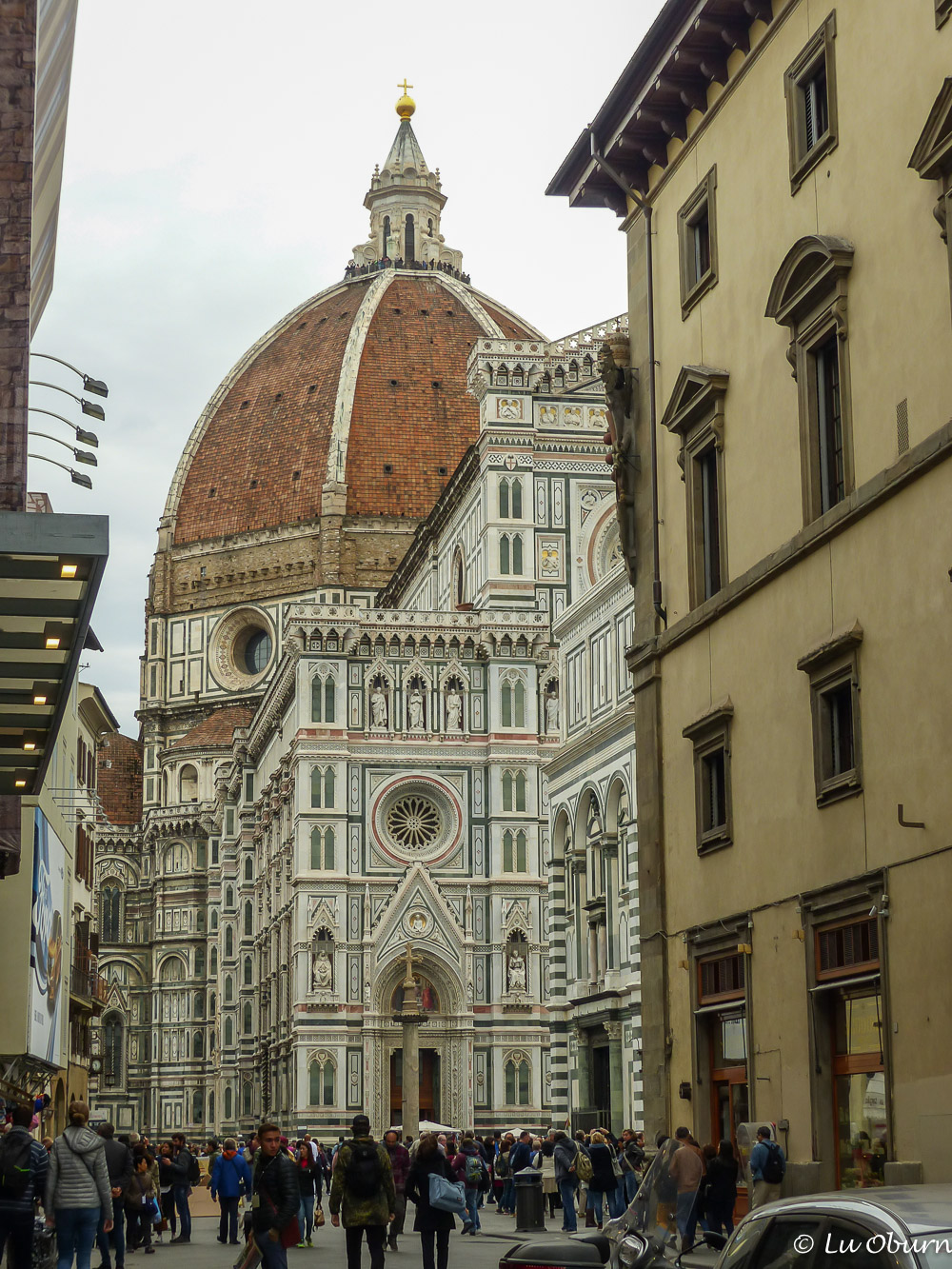
A shot of the Duomo from afar as we braced for the crowds.

Florence is Europe’s cultural capital, so culturally rich that it has more artistic masterpieces per square mile than anywhere else.  It is the birthplace of the Renaissance and the modern world, and produced the likes of Michelangelo, Leonardo, Brunelleschi, Dante, and Florence Nightingale, just to name a few.  As I write this I’m thinking we should have spent more time here, then I remember the mob of tourists, which outnumber the locals from April to October, and I shudder.

All sights in Florence diverge out from the Duomo.  The exterior is extravagant, covered in white, pink, and green marble, and in need of a good scrubbing. Brunelleschi’s lavish dome was the model for those that followed, including St. Peter’s Basilica in Rome and the U.S. Capitol building.  The inside, which I’m not sure yet how we managed to enter given the crowds, is underwhelming and felt empty to me.

If one must brave the Florence crowds it would be a tragedy to miss Michelangelo’s David, the shepherd boy with the perfect physique, armed with only a slingshot and five stones, who took on the giant Goliath.  All 17 feet of him is standing in naked glory at the Accademia Gallery, in a halo-like dome.  For me, seeing  David was worth the price of admission and the train ride to Florence.  Some of Michelangelo’s unfinished work, which looks to be trying to free itself from the slabs of unworked marble, line the hallway leading to the Renaissance man.

From here we headed to the Uffizi Gallery, which houses the greatest collection of Italian paintings anywhere, one of Europe’s five top art galleries.  This is where the famous Botticelli’s Birth of Venus can be found.

From a window in the Uffizi Gallery you get your best views of the Arno River, second only to the Tiber River in importance in the Tuscany area.  Spanning the narrowest part of the river, the Ponte Vecchio can be seen, Florence’s most famous bridge, lined with shops since Roman times.

It seems famous statues can be seen in every plaza in Florence, and although I could regale you with so much more, I will stop here as I feel my head is about to explode!  I am not an art aficionado but it was thrilling to see works of art I had only seen in books or online.

Next Up:  A little less culture, a lot more sun…the Amalfi Coast
A Story of Cypress-Lined Drives and Hill Towns ~ Tuscany, Italy (Part 1)

Tuscany was our next destination, and like others who have read the book Under the Tuscan Sun, I too had romanticized a visit to the land of manicured vineyards, cypress-lined drives, rustic farms, and hill towns studded with towers and medieval castles.

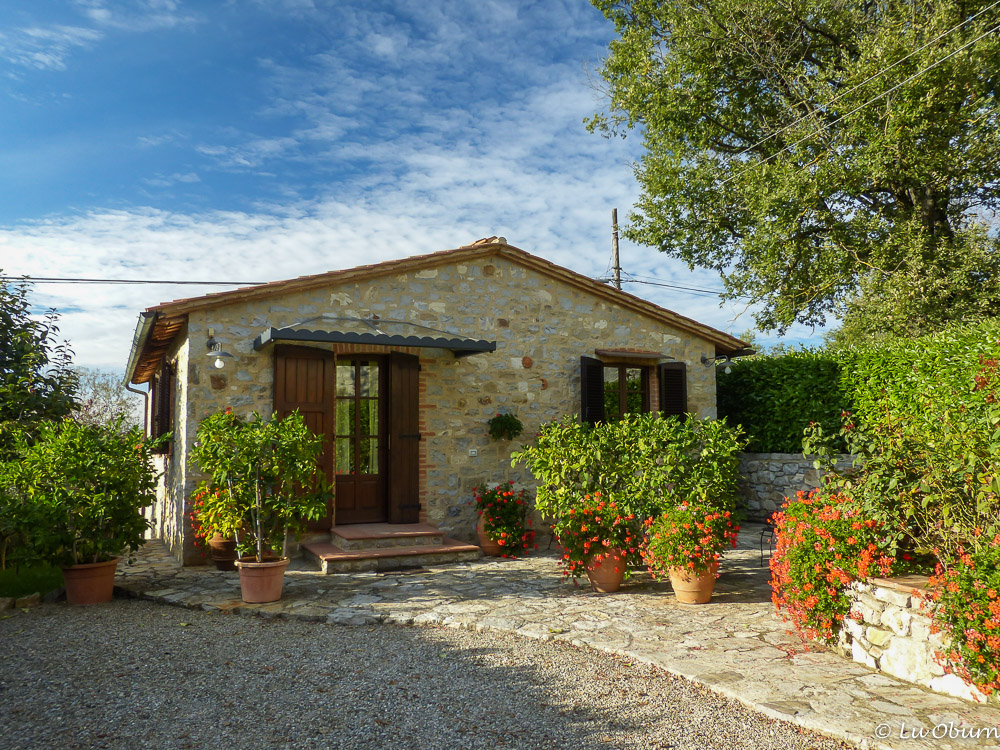
Our little agriturismo for the week

I was determined to stay in an agriturismo and found one in the Chianti region, just outside the village of Castellina in Chianti, where Mama Daniele warmly greeted us.  Although she spoke little  English she was still able to communicate how all things functioned in this charming little farmhouse.  I think all four of us were looking forward to a slower pace while here, and that’s exactly what we got, some more than others, as Margee succumbed to a cold, which grabbed Terry a  few days later, and then Frank to a lesser degree.  It’s a wonder I avoided it while living in a sick ward so I became chief cook and bottle washer while they got their rest.

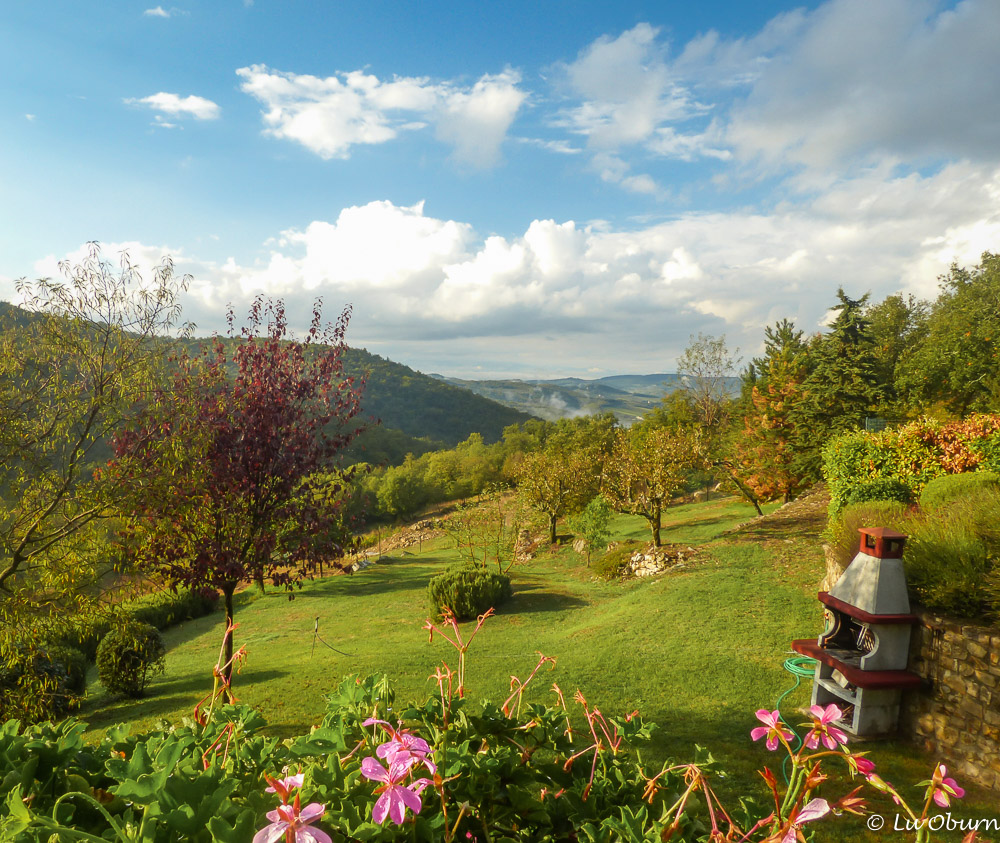
View from the terrace off our bedroom

The weather gods had certainly blessed us up to this point in our travels so we knew our days were numbered before lower temps and cloudy days moved in, and they did while here.  It seemed to be apt for those a bit “under the weather”.  Other than one day of rain and a couple of others with drizzles, it wasn’t a wash-out.  And when the infirm felt up to it, we took to the road for some exploring.

With such profuse landscape changes, from pastoral in the Crete Senesi, to the rocky Chianti region, to vineyards clinging to hillsides and winding, narrow country roads, Tuscany is a feast for the senses, and her wines and local fare are a threat to waistlines.  I hear the gym calling my name. 😦

With countless hill towns to choose from, each with their own unique beauty and rich history, it was difficult to choose.  Since many can trace their lineage to Etruscan times, long before ancient Rome, we knew we would be experiencing quaint villages with medieval charm, no matter which we visited. Here is what we managed to cross off of our very long list:

1)  Volterra

We visited Volterra twice, with our first stop being a “wash-out”.  Its name means “land that floats” and in the winter she is blanketed by heavy clouds.  We saw a bit of this during our first visit, yet we were drawn back and it became one of our favorite hill towns.  It has managed to escape the rush of tourists, given its out-of-the-way location, and we were drawn to its sense of purity and otherworldly charm.  Twilight fans will remember that this is where the powerful Volturi vampire clan resided.

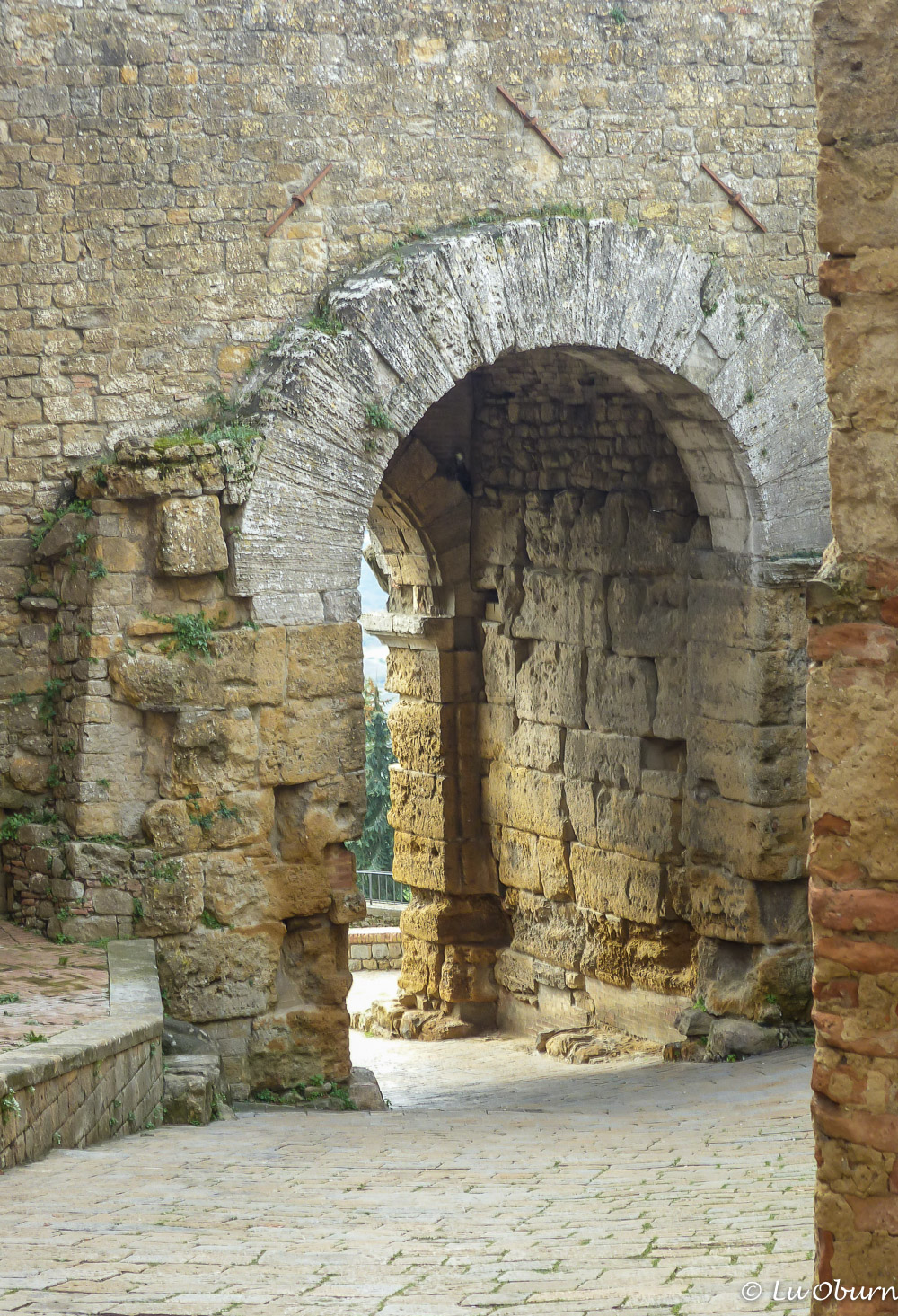
Volterra is more than 2,000 years old and is one of the most important Etruscan cities.  Impressive walls encircle the town, topped with an imposing fortress.  The Etruscan Arch, built of massive stone in the 4th century B.C., welcomed her 20,000 residents.

I read a story that on June 30, 1944, Nazi forces were planning to blow up the Arch to slow the Allied forces. Locals pulled down the stones, secured the gate, and managed to convince the Nazis to leave the Arch alone.  The blocks were put back into place and today you can walk through the oldest standing gate.

2)  Pienza

A tidy village with Renaissance-planned streets, it is where Pope Pius II was born.  This little village is great to explore with a camera, then stop for wine tastings and pecorino cheese sampling.

3)  Siena

This town that sits atop three hills, with her cozy squares and grand cathedral, once rivaled medieval Florence. In the 13th century Siena had a population of about 50,000 and was a major banking and trade center.  Then Black Death hit, the bubonic plague, wiping out a third of her people, and Siena has never recovered.

Siena is where the famous Palio horse races are held twice each summer.  Ten horse and riders, riding bareback and dressed in specific colors, represent 10 of the 17 city wards.  The first race is run early in summer to honor the Madonna of Provenzano and the second in August in honor of the Assumption of Mary.

A thick layer of dirt is laid over the bricks in the Il Campo Square and the race is run three times around the piazza, lasting no more than 90 seconds.  Often unmounted horses finish the race without their riders.  A medieval pageant paves the way, attracting spectators from around the globe.

Siena’s 13th-century Gothic cathedral and it’s 6-story striped bell tower, unlike others, was built and paid for by the people and the republic of Siena as a tribute to the Virgin Mary.

4)  San Gimignano

Some say this is Tuscany’s glamour girl, a town adorned by her remaining 14 medieval towers, of which there were once 72.  San Gimignano today is best known for cinghiale (cheen-GAH-lay), wild boar and saffron, and boasts of having won the award for gelato world champion.  Of course we had to taste for ourselves.  It was pretty yummy, even at 10:00 in the morning. 🙂

Next Up:  An Abbey and Day Trippin’ to Florence

Seductive Italian Riviera Coastline ~ Cinque Terre

The Cinque Terre (Five Lands), a six-mile stretch of coastline along the Italian Riviera, seductively draws tourists, her allure building every year.  Hanging off the cliff sides, this grouping of five villages, the coastline that hugs them, and the surrounding hillsides all coalesce to form the Cinque Terre National Park, a UNESCO World Heritage Site. Leave your vehicle at your hotel, if you came in one as we did, and join the tourists who use her walking paths, trains, shuttles, and boats to move from village to village.  At least these tourists seem more laid-back than those we had seen in other large cities.

Although Cinque Terre has been “discovered”, there remains an air of authenticity here.  The enchantment of the Cinque Terre is found in the colorful houses and shops, appearing to be stacked one on top of another, running down the ravines and hillsides to the shore.  Her real charm is in the lack of corporate development.  There is something provocative about the locals refusing to give in to the trappings of the modern world.  Their philosophy of living a good life is through religious devotion, family ties, hard work, and lots of wine and laughter.  Throughout the centuries these hardy locals have terraced the hillsides, building houses, planting vineyards, olive groves, and family gardens, tending and harvesting them.

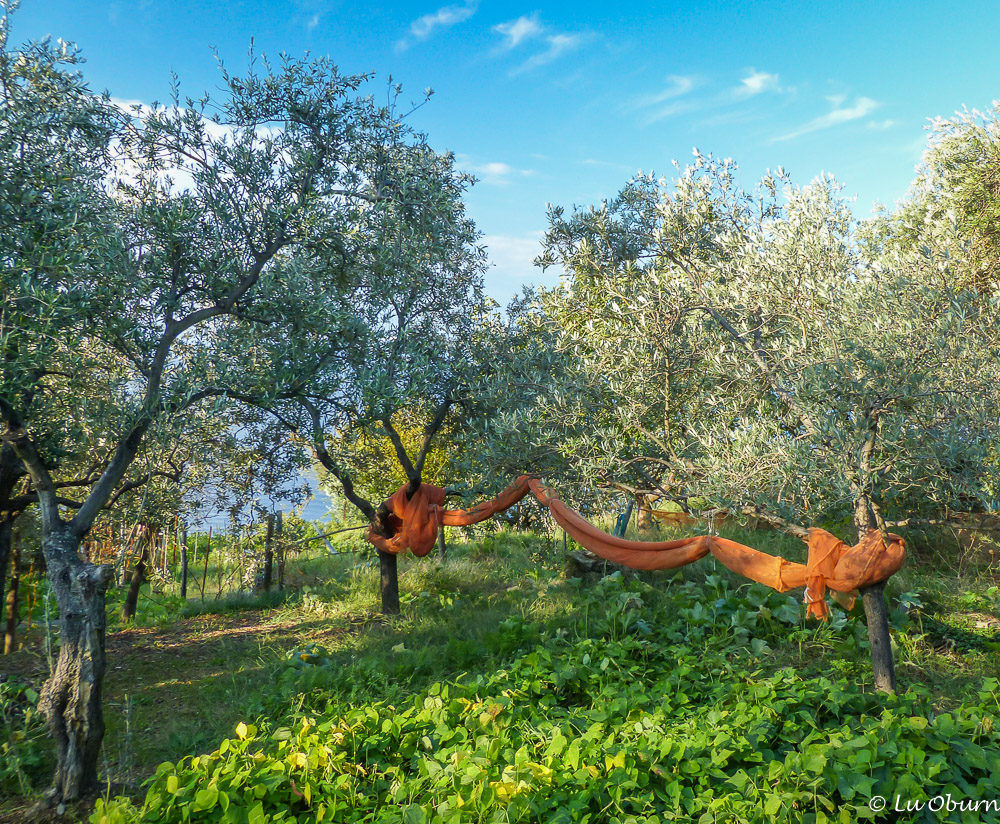
Nets tied up under olive groves awaiting a new harvest.

We had hoped to be spontaneous about sleeping arrangements here but the more we read of the Cinque Terre, even in the shoulder months of September and October, the more we thought an advance hotel reservation may be in order.  Knowing we might be crowd weary at day’s end, I chose a hotel above the Cinque Terre, in the small village of Volastra.   We couldn’t have been more pleased with Hotel Il Saraceno and her proprietress, Antonella. Arriving late afternoon when restaurants were closed, we walked to the market for local fare of cheeses, salami, bread, antipasto, and wine.  The terrace back at the hotel became our banquet table and Antonella contributed wine glasses for the affair.  Waking to cappuccino and a wonderful breakfast spread each morning and coming back to a quiet little hotel above the bustling villages each night made this the perfect respite.

We had planned to hike the Sentiero Azzurro (Azure Trail) when we arrived, a trail that connects all five villages. Unfortunately sections have been closed for repairs since the devastating floods and mudslides of October 2011 and are yet to reopen.  We hiked all that was available and enjoyed the views from each section.  Purchasing the Cinque Terre Multi-Service Card, which included the use of walking trails within the National Park, as well as the train and shuttles, completed the logistics for navigating from village to village, and it paid for itself quickly.

Given Cinque Terre’s location on the Mediterranean, seafood is plentiful here.  Acciughe ( ah-CHOO-gay), aka anchovies, is a local specialty and not the salty version we know of in the states.  These are fresh from the sea, cooked in various dishes.  I enjoyed a layered casserole of whole anchovies, potatoes, tomatoes, white wine, oil, and herbs…very tasty!

The villages each have their own unique qualities so each draws its own special crowd. From north to south, here are the “five lands” of the Cinque Terre:

1)  Monterosso al Mare

This is the oldest of the five villages, founded in A.D. 643, when locals moved from the hills to the coast to escape barbarians.  It is the only town built on flat land, has both an old town and new town, separated by a tunnel, and is the only village with a proper beach.  It was one of two villages hit the hardest by the floods of 2011.

2)  Vernazza

Founded around the year 1000, it has the closest thing to a natural harbor and this is where the action is in town. We spent much of our time in this quaint village down at the harbor, watching old men puttering with their fishing boats and students sketching and watercoloring, as we enjoyed  sunny days, picnic lunches of friggitoria (bite-sized seafood piled into a paper cone), and gelato (of course).  Many feel Vernazza is the jewel of the Cinque Terre.

Vernazza was hit the hardest on  October 25, 2011, when 22″ of rain fell, burying much of the town under ten feet of mud.  With the affluence brought on by tourism, some locals had abandoned their land, leaving vineyards unworked and stone walls crumbling, all which slid into the village, adding to the devastation – a tough lesson for the residents.

3)  Corniglia

The quiet middle village, Corniglia is the only town not on the water, although steps lead down to a rocky cove. Some say that vases of wine found at Pompeii were those made in this peaceful little village.  Wine is still the life blood today.

4)  Manarola

Tucked in a ravine, mellow Manarola has a little harbor at its base.  It’s hillsides, blanketed with vineyards, have more grapes than any other village.  Great photos can be taken of the colorful village and harbor from a point on the peninsula.  Our first hike was from Volastra down to Manarola, a steep descent through olive groves and vineyards, with gorgeous views of the Mediterranean.

5)  Riomaggiore

Largest of the five villages, Riomaggiore was built in the 8th century by Greek settlers fleeing persecution in Byzantium.  It is the laid-back working man’s town, with colorful murals honoring the workers who built the 300 million cubic feet of stone walls, made without mortar, that runs through Cinque Terre.

I had read that Cinque Terre has a way of mesmerizing those who visit, with many planning to leave but still here. We had much yet to see in Italy so we made our escape after a fantastic 4-day visit.

Next Up:  “Under the Tuscan Sun”

A Slowing Sinking City ~ Venezia, Italia (Seconda Parte)

After taking the Venice Grand Canal tour, it was time to step inside some of the elaborate buildings we’d seen from the water.

We savored our early morning wanderings, a wonderful way to watch Venice wake ~ merchants getting products hand-carted to their doorsteps, children standing hand-in-hand with parents at vaporetto stops, waiting for their school ride, silent gondolier boats gently bobbing canal side, and fishermen casting out their first lines of the day.

Here is a glimpse at our excursions during our visit to this unique city:

1) St. Mark’s Square

This political and religious center of Venice turns into a giant dance floor at night and is said to be the place for romance, with orchestras playing and bodies swaying, but early morning it’s eerily quiet.

The Campanile (bell tower) sits at the edge of the square and guards the Grand Canal.  You can ride an elevator 325’ to the top of the tower for some of the best views of Venice, if you care to stand in long lines to do so.  We took a pass.

2) St. Mark’s Basilica

Before the basilica opens its doors, there is a side chapel available for those who wish to sit in silence. This was my main reason for arriving so early.  As we stepped through the door, mass was being said in another part of the church, in Italian of course.  Although I couldn’t understand the words, I felt their lyrical message being carried throughout the basilica, filling the gilded, mosaic dome.  I couldn’t imagine a more peaceful way to begin my day than sitting in silence in this holiest of places.  It was quite a humbling experience.

When the doors later opened to tourists, we were there to tour the most famous church in Venice, built in the 11th century to replace an earlier chapel.  Unfortunately no photos are allowed inside, which is just as well as I couldn’t begin to capture the exquisite beauty found inside this holy space.  The interior walls and domed ceiling, depicting Christ ascending into heaven, glow with gold mosaics and colored marble.

Venetians smuggled St. Mark’s bones into the city in A.D. 828, where they were interred under the main altar of the original church.  In the year 1094, when the present church was almost complete, the church officials were preparing to re-inter St. Mark’s bones under the new altar when they realized that during the long years of the church’s construction they had forgotten where they stored the remains…oops!  All parishioners bowed down to pray for help and, led by the doge, they soon found their patron saint.

Thanks to one of the lower points in Christian history, when Venetian crusaders looted the city of Constantinople and brought the plunder back home, we now can view the Golden Altarpiece.  Sparkling brightly behind the main altar, it is made of enamels illustrating religious scenes, all set in a gold frame and studded with sparkling precious gems from the year 1100.

3) San Marco Museum

Upstairs in the basilica, the museum offers a glimpse at some of the mosaic sections removed from the original church, along with the larger-than-life bronze horses that once graced the balcony of the church. Stone replicas now stand in their place.  As this was part of the basilica, no photos were allowed.

4) Accademia Gallery

This is Venice’s top art museum, filled with highlights of the Venetian Renaissance.  The artwork begins in the Middle Ages and runs to the 1700’s.

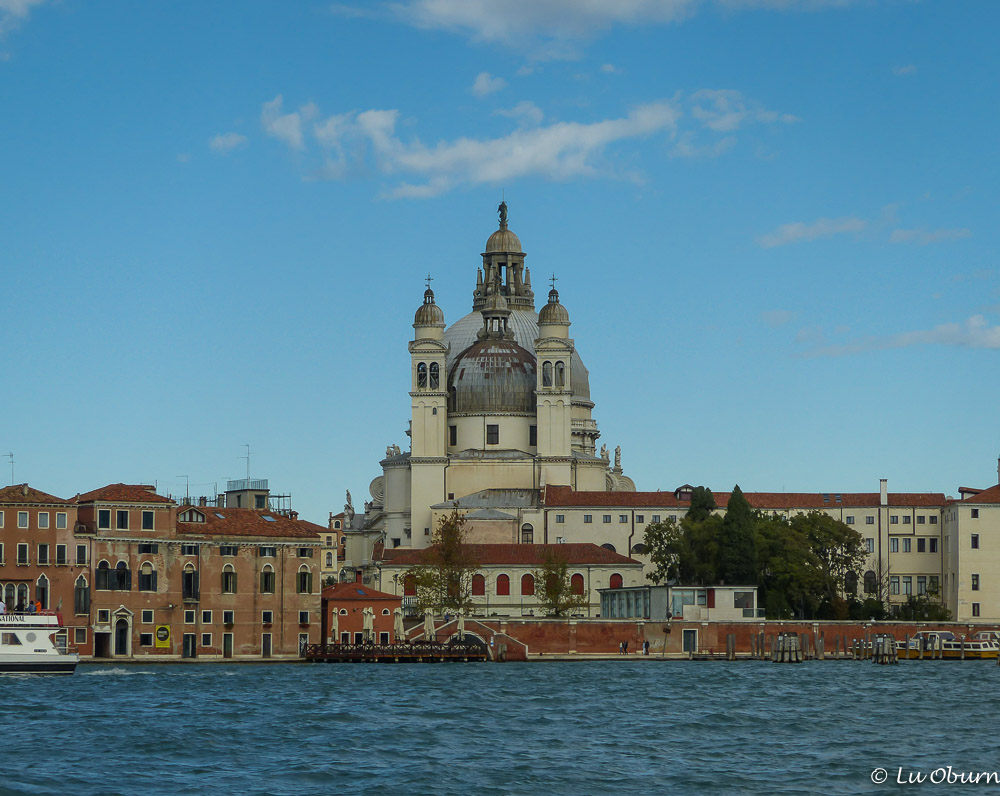
5) La Salute Church

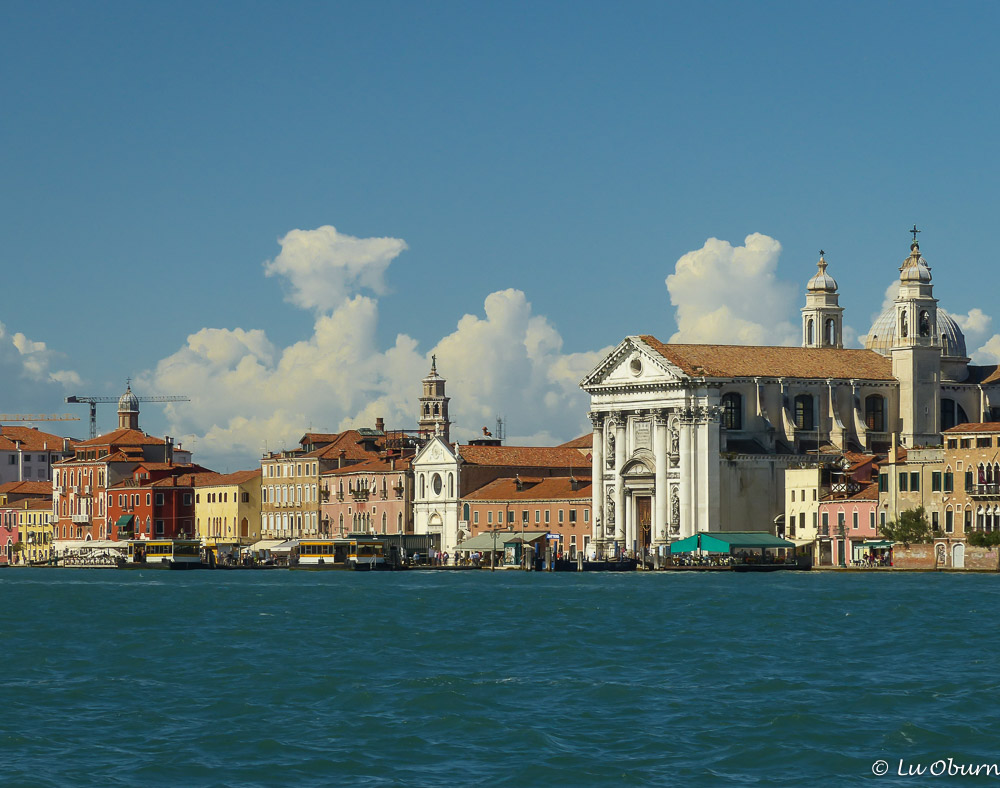
Topped by a crown-shaped dome, this Church of St. Mary of Good Health was built to honor the Virgin Mary and thank God for delivering the people of Venice from the plague of 1630 that killed almost one-third of the city’s population.

6) Doge’s Palace

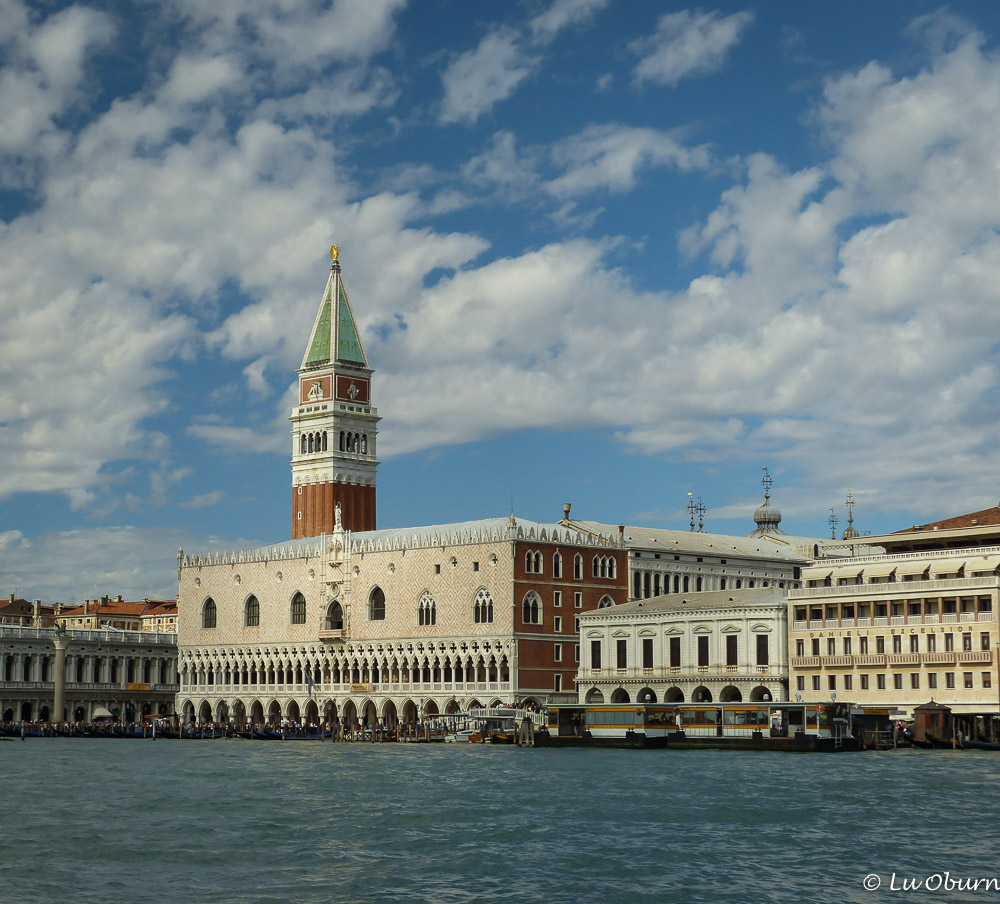
Built to illustrate the power and wealth of the Republic, the doge (ruling duke) lived with his family in this palace. It is also the place where the Senate met, deliberated, and passed law.

The grand staircase is well worth the visit, as are the many rooms filled with artistic treasures.  The Doge Palace houses the largest oil painting in the world, Tintoretto’s Paradise.

7) Bridge of Sighs

This small bridge spans a canal that connects the Doge Palace with the prison.  Legend has it that a condemned man would be led over this bridge on his way to prison, take one last look at Venice through the marble-trellised windows, and sigh.  Prison cells are eerie and three levels deep.

8) San Giorgio Maggiore Monastery

On a small island across from St. Mark’s Square, the white marble façade of San Giorgio Maggiore Monastery gleams brilliantly against the azure water of the Grand Canal.  This is another of Venice’s beautiful churches to explore and a great place to get a bird’s-eye view of Venice from the bell tower.

The monastic community of San Giorgio was founded in A.D. 982.  At one time you could rent rooms from the friars, but unfortunately they no longer offer this.

A large blessing hand, entitled “Together”, created by artisan Jaume Plensa, formed of 8 alphabets – Arabic, Chinese, Cyrillic, Greek, Hebrew, Hindi, Japanese, and Latin, hangs from the ceiling. It is meant to be an inviting and welcoming symbol of mercy.

“Today more than ever we must show that living together as brothers in total and mutual respect, cultural and spiritual, is the only way to live in peace.”

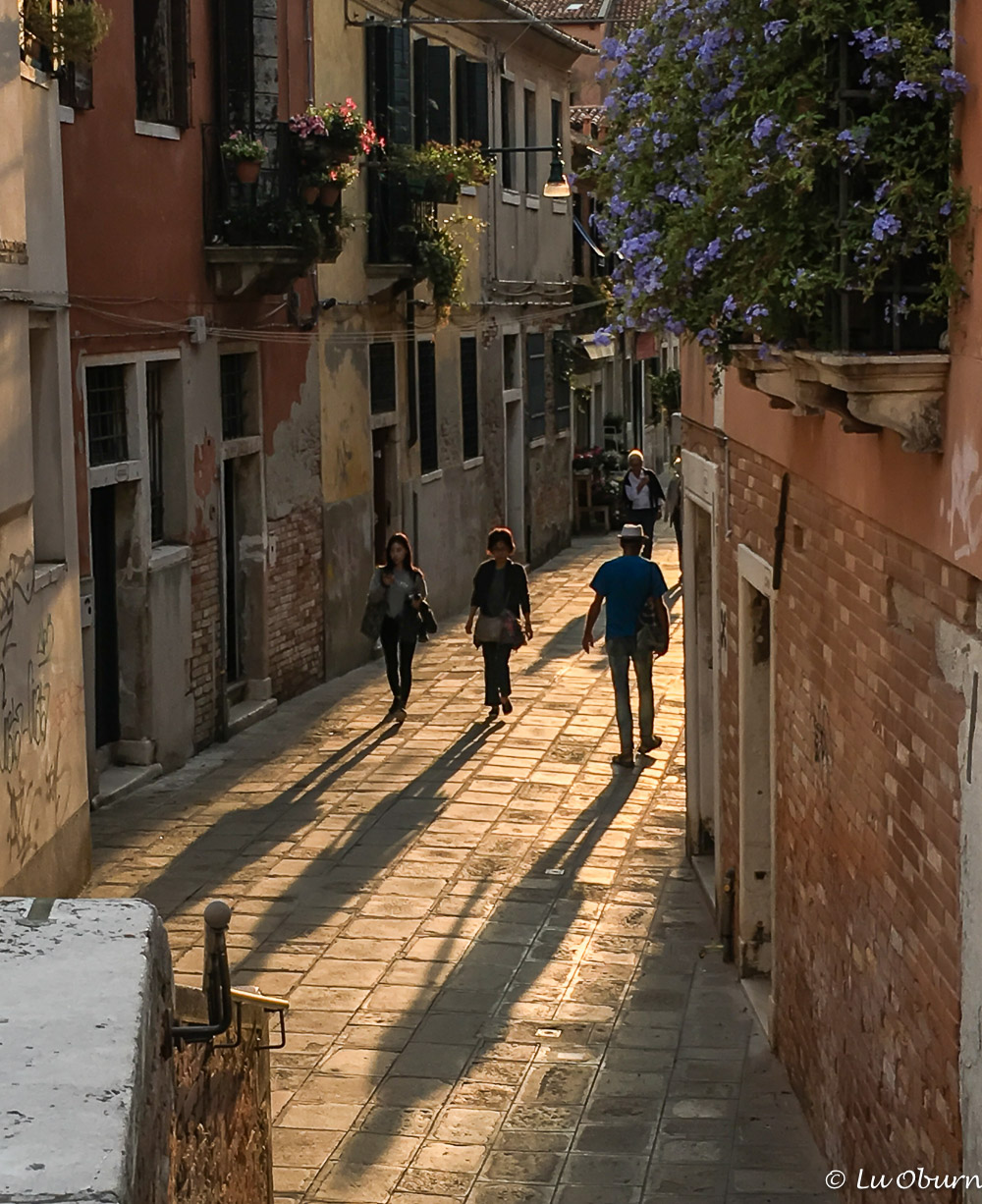
Getting deeper into Venice as the shadows lengthen

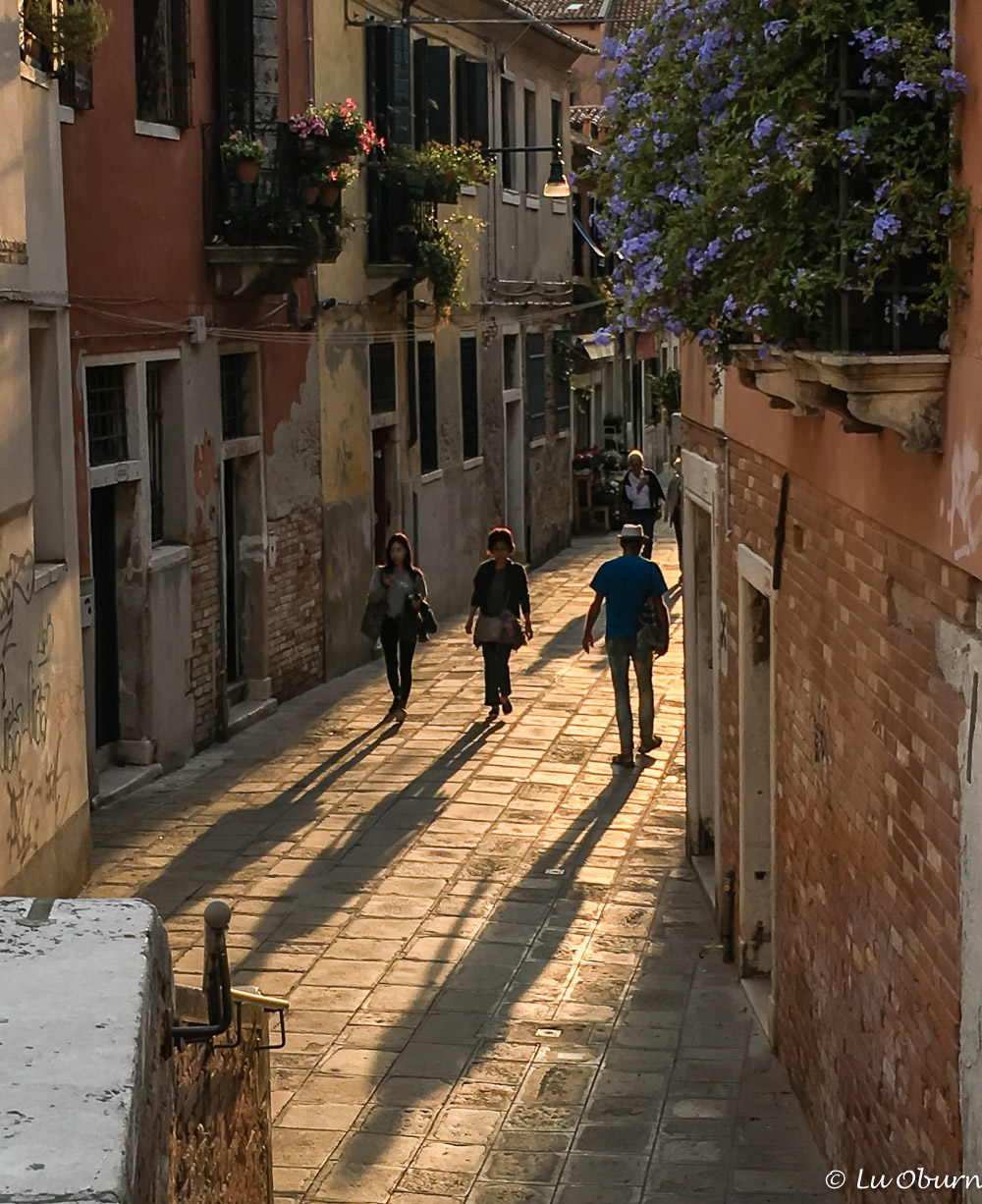
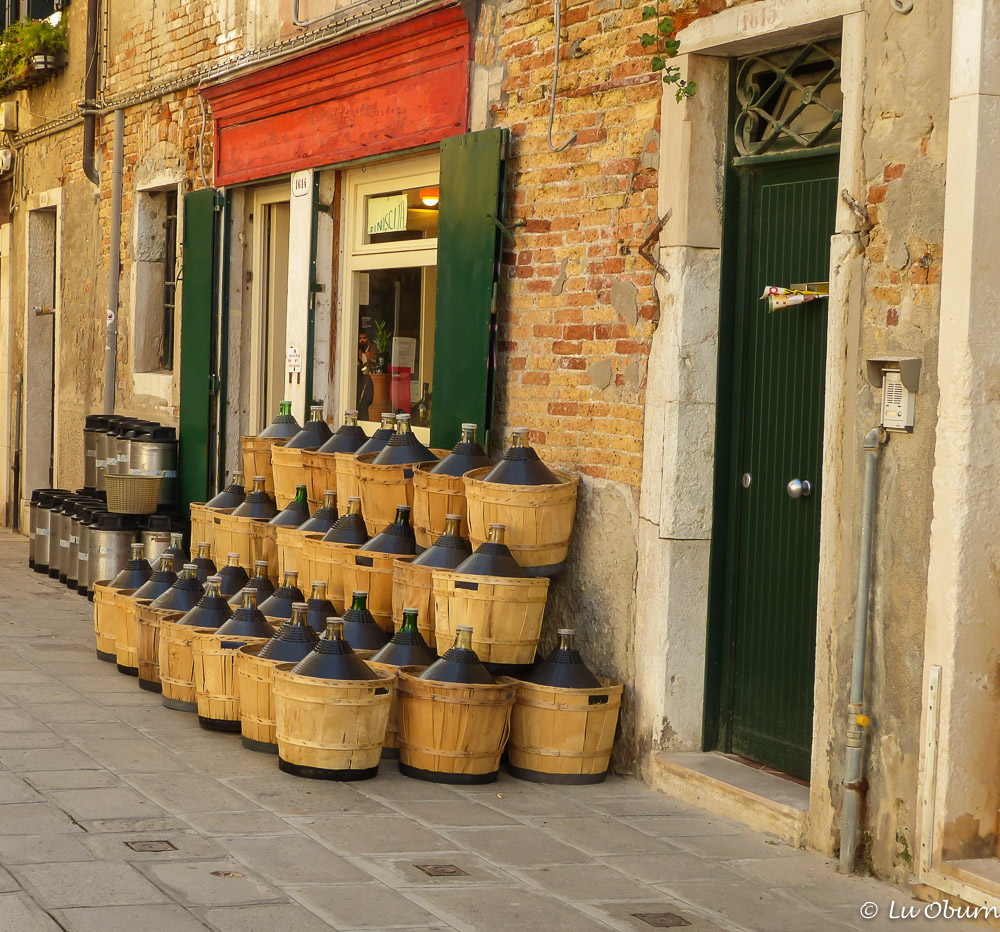
With all the elegant palaces to visit, the ancient works of art to study, and the history to soak in, some of our fondest memories of Venice will be our wanderings along the alleyways deep in the city. Try as we might to get lost so I could use my “City Maps 2 Go” app, we never did.

A batch of wine, waiting to be bottled
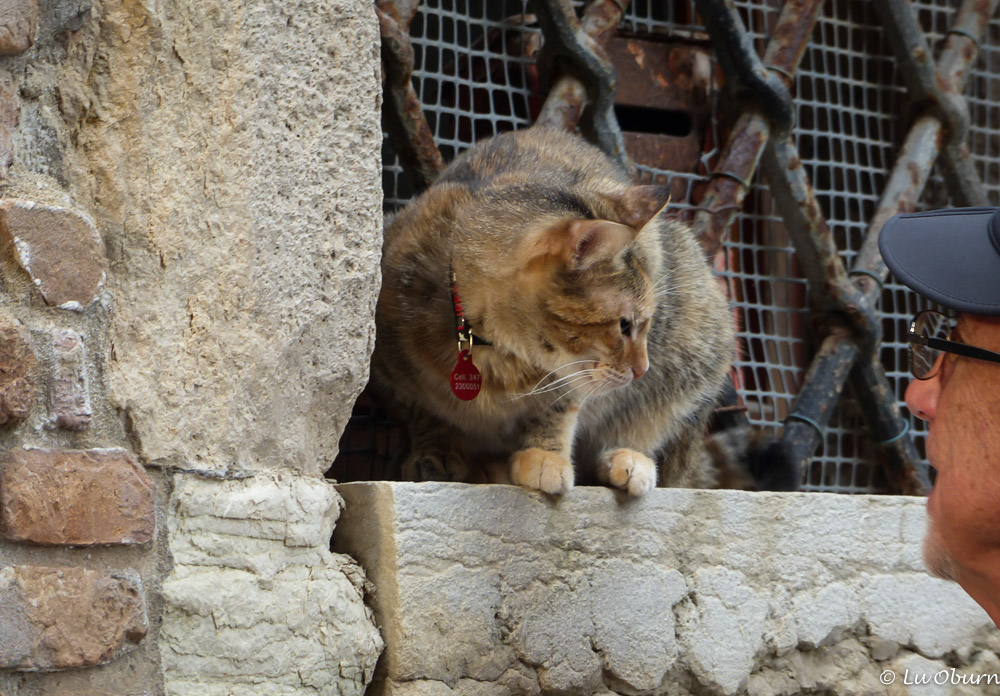
Terry found another furry friend in one of those alleyways.

Surprises awaited us around every turn, across each bridge that spanned the canals.  Nondescript doors opened into tiny little wine bars and enchanting restaurants, and artisanal gelato shops abounded. Along with seeing so many fascinating sights, it seems we may have eaten our way through Venice as well. Ahh, la vita di Venezia!

Next Up: Cinque Terre

A Slowly Sinking City ~ Venice, Italy (Prima Parte)

Venice, situated in a lagoon in a calm section of the Adriatic Sea, is Europe’s best-preserved big city.  I had longed to see this romantic, elegantly decaying city since watching a documentary many, many years ago – gondoliers traversing the waters of the Grand Canal, singing Italian ballads to their paying passengers.

Park your car at the bus station just across the causeway (no cars allowed on this island) and come along with me as I give you a sneak peek into this urban wonderland.  Leave your 21st century mindset behind as we step way back in time (about 1,500 years).

Venice, a colorful kaleidoscope of people, 400 bridges, 2,000 alleys, and 177 canals, is made up of more than 118 small islands, joined in the shape of a fish.  What was once a refuge from barbarians is now a slowly sinking city filled with tourists.

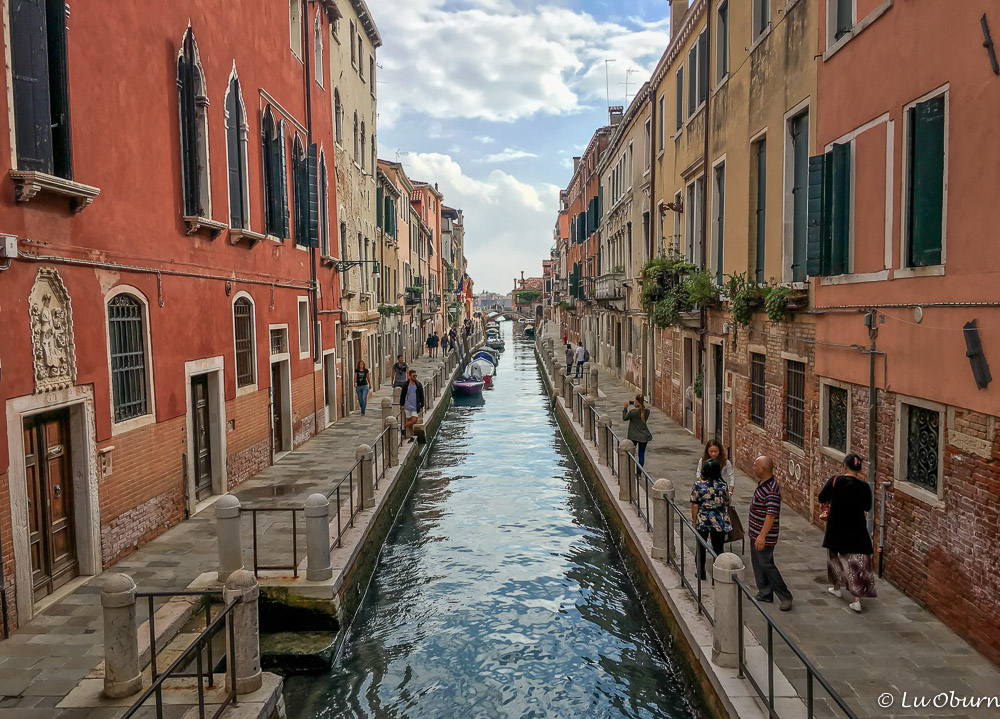
Just one of the colorful canals snaking through Venice.

The sinking has not been caused by the hordes of tourists, although some locals may think otherwise during peak travel season.  Venice has battled rising water since the 5th century and the water seems to be winning.  A phenomenon called “aqua alta”, usually occurring mid-autumn until late winter, causes the city to flood about 100 times a year.  The aqua alta occurs when a large tide combines with strong winds and an incoming storm.

This grand deteriorating city sits atop sediments that are still settling and compacting.  Along with the forces of Mother Nature, some man-made events have caused the city to be more vulnerable to flooding as well – offshore pier work and the construction of a railroad bridge to the mainland. You will know the aqua alta has arrived when you step into a paved square and find water pooling in stone grates at the square’s lowest point.  Time to seek higher ground!

Silhouettes during an evening stroll along the alleyway where we stayed.

Since a serious flooding in 1966, officials have struggled to find a solution.  It has taken about four decades for all to agree to install mobile gates on the floor of the sea, where she enters Venice’s lagoon.  When the seawater rises to a certain level, air is pumped into the gates, causing them to rise and shut out the Adriatic.  The project is due to be finished sometime this year.  There are many skeptics.

Coupled with that “sinking feeling”, Venice is also losing her population.  There are 58,000 residents in the “old city” and this number is down to about half of what it was just 30 years ago. It’s an expensive place to live, as everything has to be shipped in and hand-carted to its final destination.  Locals are leaving at a rate of about 1,000/year and of those remaining, roughly 25% are senior citizens.

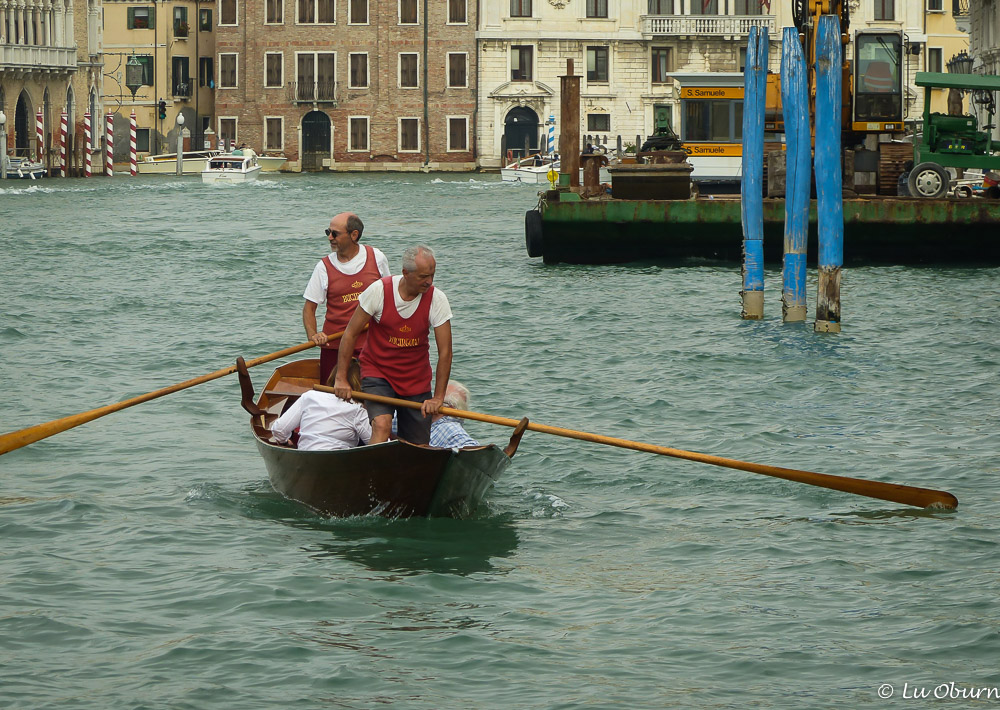
A more primitive water taxi perhaps?

Even so, the city is thriving thanks to the tourist trade.  But her cultural heart is dying.  City planners fear that in a few short decades once proud Venice won’t be a city any longer, but rather a “cultural theme park”.

So, let’s visit this unique city before it’s too late. Take a deep breath; step onto the vaporetto (water taxi) with the locals and tourists; know you will pay an exorbitant price for some items; and yield to her magic.  It’s time to take a ride on the Grand Canal!

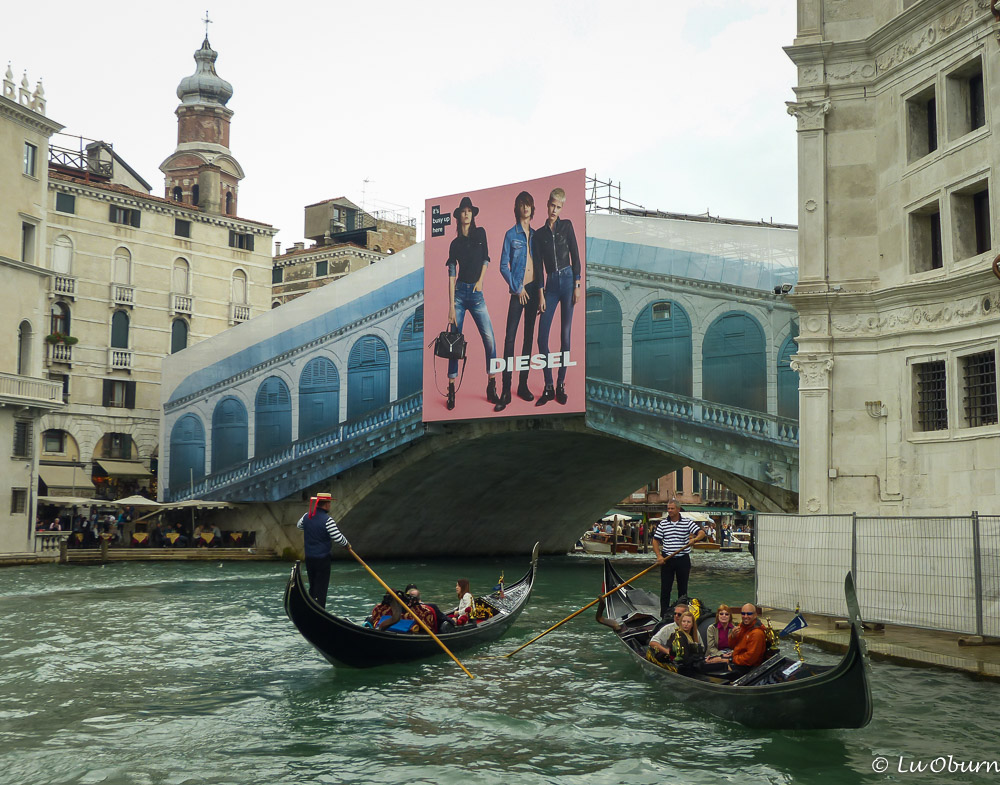
The Rialto Bridge, a major landmark of Venice, is lined with shops and currently being restored. This is the third bridge built on this spot, constructed in 1588. It closed the Grand Canal to shipping and made it a canal of palaces.

The Grand Canal is Venice’s “Main Street”.  It is two miles long, 15 feet deep, and nearly 150 feet wide, making it Venice’s largest canal, with some pretty impressive sights along its shoreline.  Nearly 25 miles of canals drain the city, dumping into the Grand Canal.

If you are waiting for your luggage to arrive, this is where you might find it.

Dating from the days when Venice was the world’s richest city, palaces can still be seen lining the Grand Canal. Sadly they are slowly rotting as there are now very strict laws prohibiting changes to these buildings.  Many of these grand palaces now sit vacant, still with brilliant chandeliers gracing the space above watery, empty ground floors.  But in some ways this only adds to Venice’s charm.

Police, taxis, ambulances, garbage trucks, and gondoliers all travel the waters of the Grand Canal, although gondoliers do prefer the quieter canals.  This is where most accidents between the vaporetti and gondoliers occur.

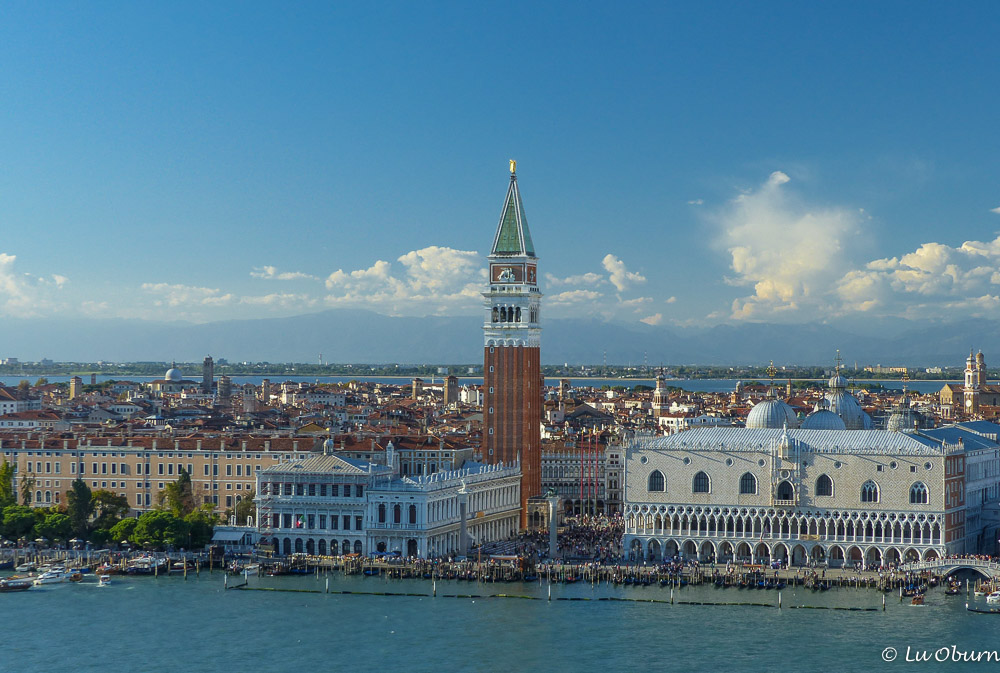
There’s the bell tower at St. Mark’s Square, rising above the Doge’s Palace.  Ok, here is our stop.

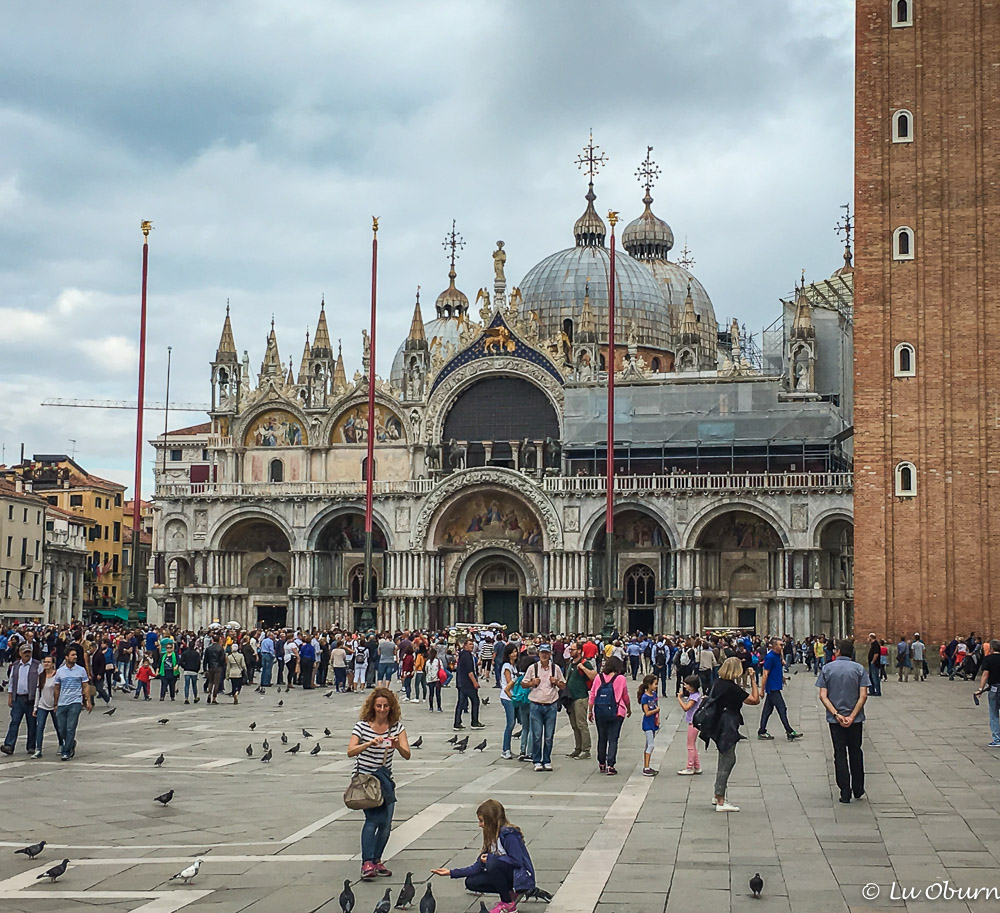
St. Mark's Square and Basilica, where the tourists and pigeons compete for space.
St. Mark’s Square and Basilica, where the tourists and pigeons compete for space.
Interesting bell on a building in St. Mark's Square, along with the symbol of Venice, the winged lion. Representing the evangelist St. Mark, it appears in both merchant and military naval flags.
Interesting bell in St. Mark’s Square, along with the symbol of Venice, the winged lion. Representing the evangelist St. Mark, it appears on both merchant and military naval flags.

Time to head back to rest up for a full day of sightseeing tomorrow.  Let’s get back on the vaporetto.

The Accademia Bridge near sunset.

Here’s my stop, San Basilio in Dursoduro (the belly of the fish), where I have secured an apartment for us for the next three days.  See you soon for part two, where we’ll take a peek inside some of these beautiful old buildings.

Ciao!