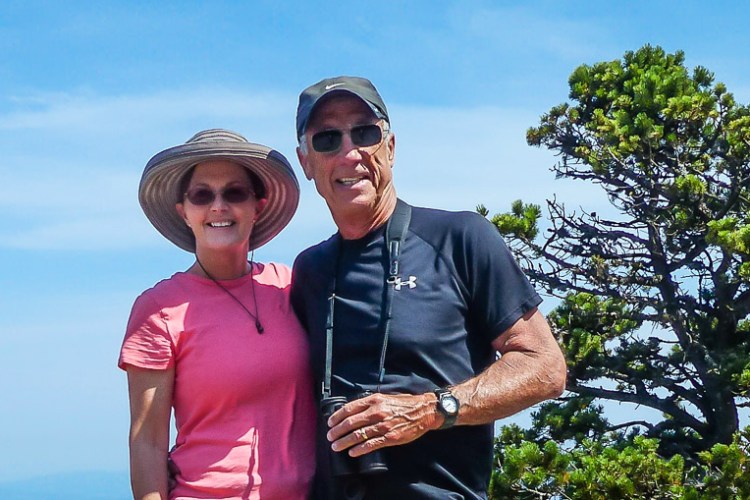
After lengthy careers maneuvering the treacherous waters of corporate America, Terry and I decided in August of 2011 that life was too important to take so seriously. We wrote what was to be our final resignation letters, stuffed our backpacks to maximum capacity, and headed south of the border for a Mexican adventure.Read more About Us
“I have no special talents. I am just passionately curious.” ~ Albert Einstein
Passion is that spark that creates the fire in our soul, allows our hearts to expand, and makes us feel vitally alive. As we move through life passion often evolves from a focus on career and accumulating money to finding our authentic self, peeling away the layers to find the real “me” that has been buried under the needs of others. Read more Pursuing Passion
“Physical fitness is not only one of the most important keys to a healthy body, it is the basis of dynamic and creative intellectual activity.” ~ John F. Kennedy Read more Let’s Get Healthy
Did I ever tell you you’re my hero? You’re everything, everything I wish I could be. Oh, and I, I could fly higher than an eagle, ’cause you are the wind beneath my wings. Fly, fly, fly high against the sky, so high I almost touch the sky. Thank you, thank you, thank God for you, the wind beneath my wings. ~Bette Midler~
On Tuesday, March 15th, my dear friend Barbara Burke, gifted artist and musician, passed away with her husband Peter by her side. Hers was a long illness of 12+ years, but even so, her beautiful spirit always showed through the pain and suffering and she was able to create amazing works of art on her computer, with her big toe, until the very end . She was a gift to us all, too soon gone.
I was one of the lucky ones to have had you in my life Barb, if even for a few short years, and my life will forever be enriched by your beauty and your grace. You taught us all such precious lessons and your strength through all your suffering will carry us through. You were a rare jewel that we were able to touch and marvel at, as you took care of all of us and made us better people for having known you.
You are soaring now with the eagles, unencumbered by your physical body and a wheelchair, with the wind in your hair.
On the road from Puebla to Veracruz, in the distance we caught a glimpse of the second tallest volcano in the Americas, behind Mount McKinley. Volcan Orizaba sits at 18,490 feet, but on this day, refused to show her impressive size, hiding behind cloud cover instead.
Veracruz is a major port city on the Gulf of Mexico and is the largest city in the state of Veracruz. It is Mexico’s largest and oldest port and was founded in 1519. The port is an important economic engine, for imports and exports and especially the automobile industry.
Veracruz is a very large producer of fruits for all of Mexico, as was evident as we passed fields of orange, lime, lemon, papaya, banana and mango. The highlands also produce some of the best coffee in Mexico. Spanish, Caribbean, and African influences are seen in the food and music in this vibrant city.
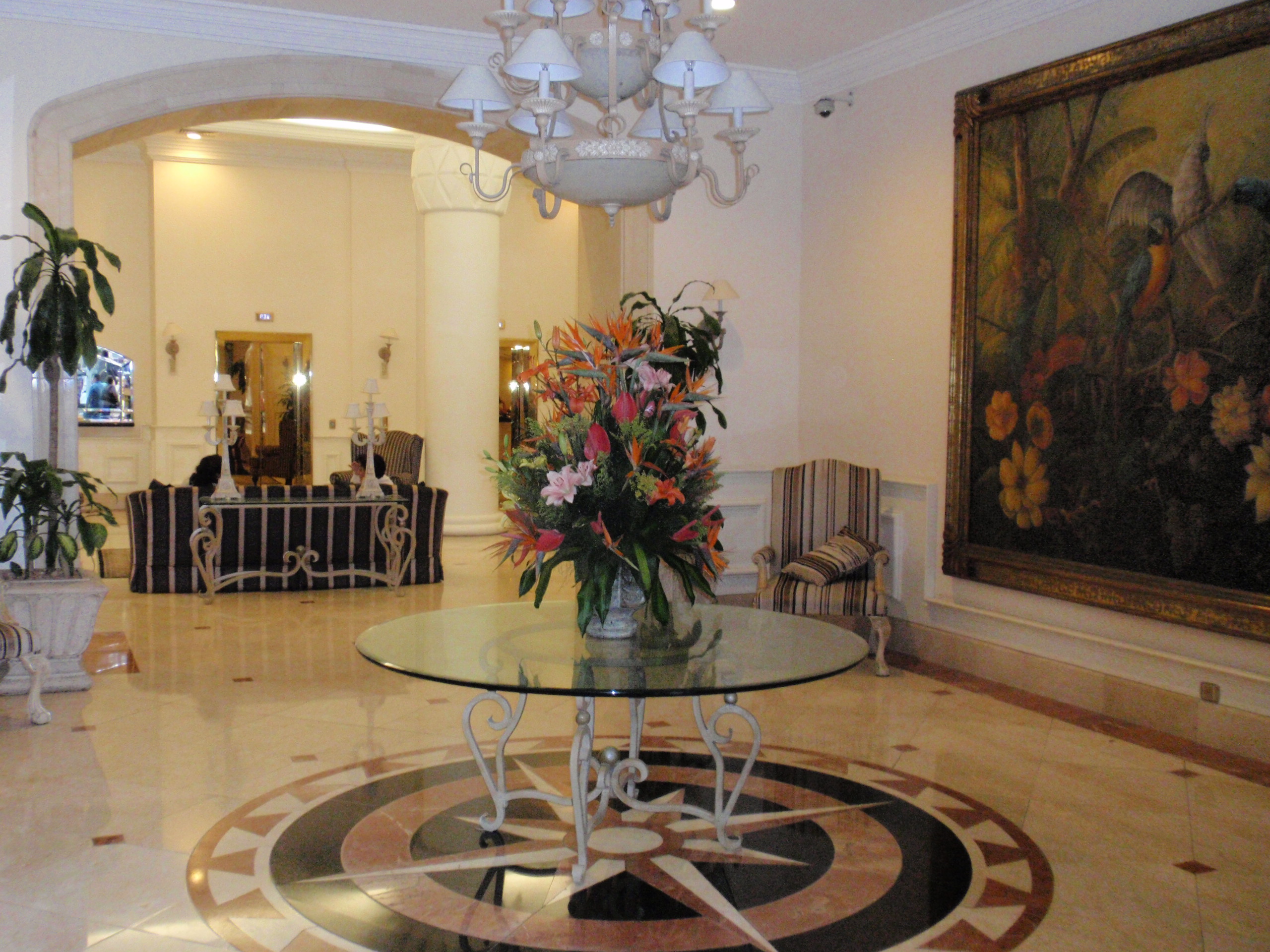
We spent the night at the Gran Hotel Diligencias, overlooking a plaza gearing up for yet another evening of Carnaval festivities!
View from our Hotel Room Gearing up for Carnaval FestivitiesStriking View of our Hotel Lobby
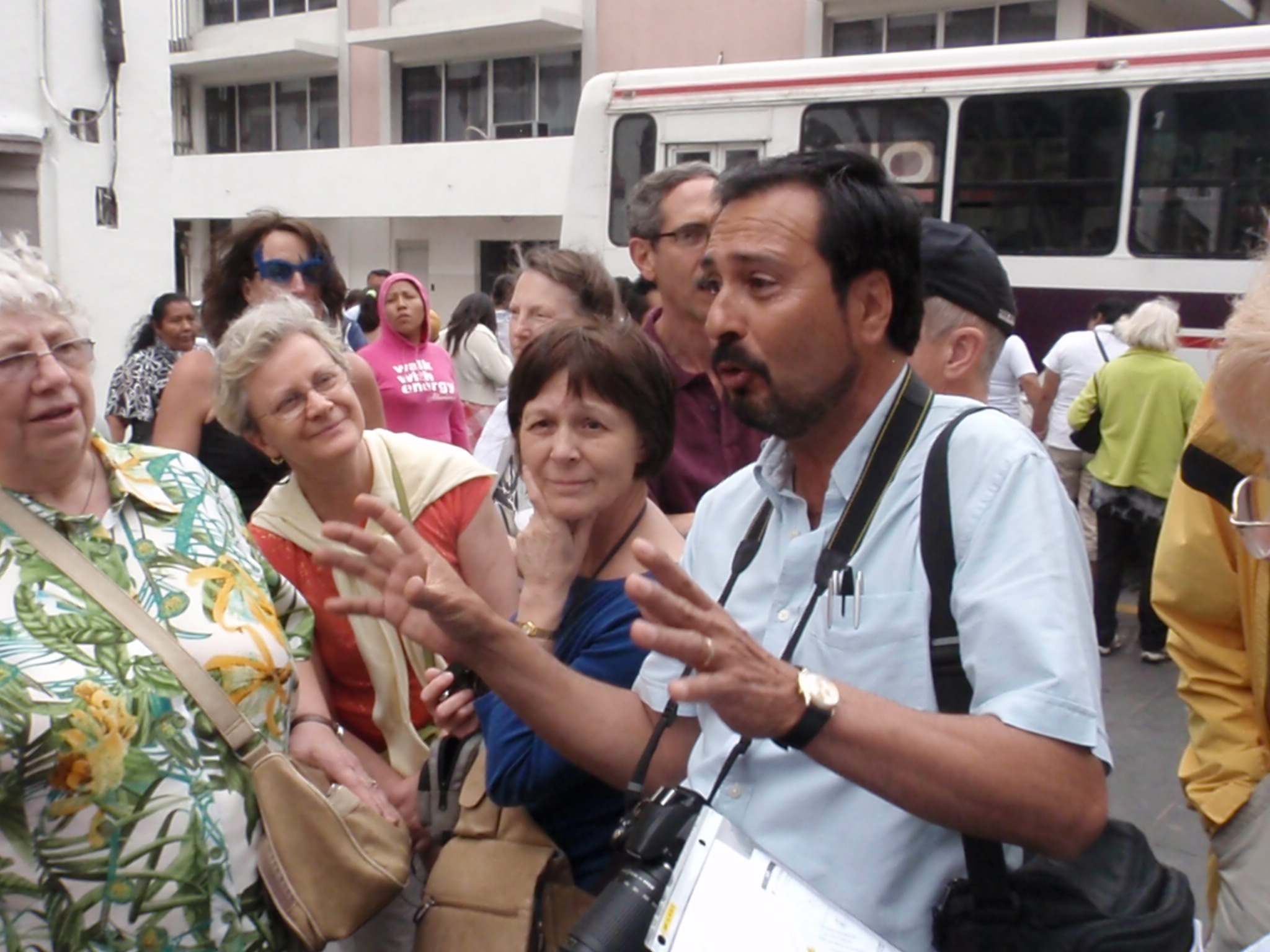
Our tour director Manuel took us on a short walk to the wharf, giving us the lay of the land as we fought the Carnaval crowds.
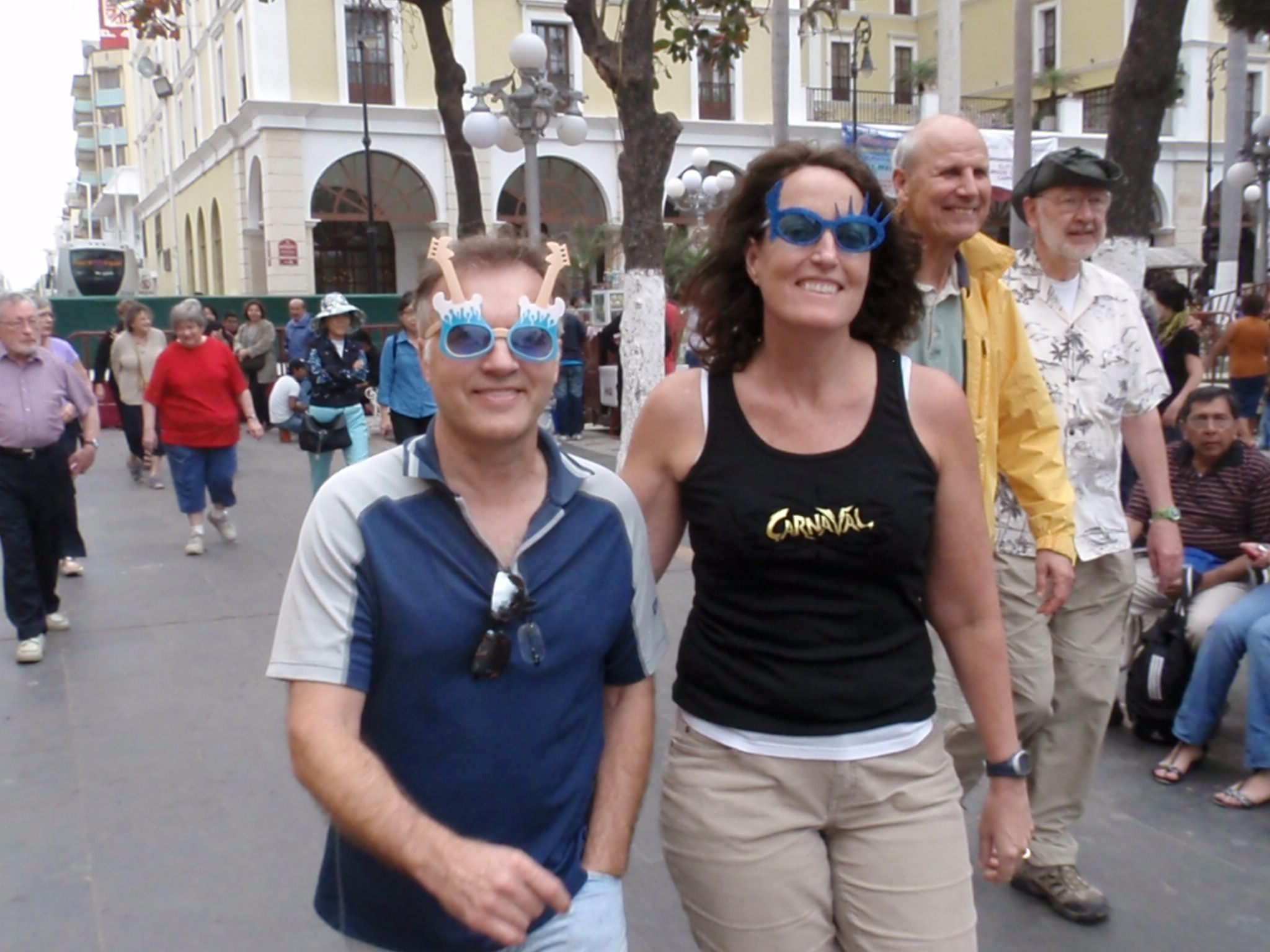
Rick and Tara, a newlywed couple from Chicago, were on our tour and preparing for the Carnaval fiesta to take place later than evening. There was music, food, laughter, and crowds everywhere in the city so Terry and I decided to chill for a while and grab a refreshment.
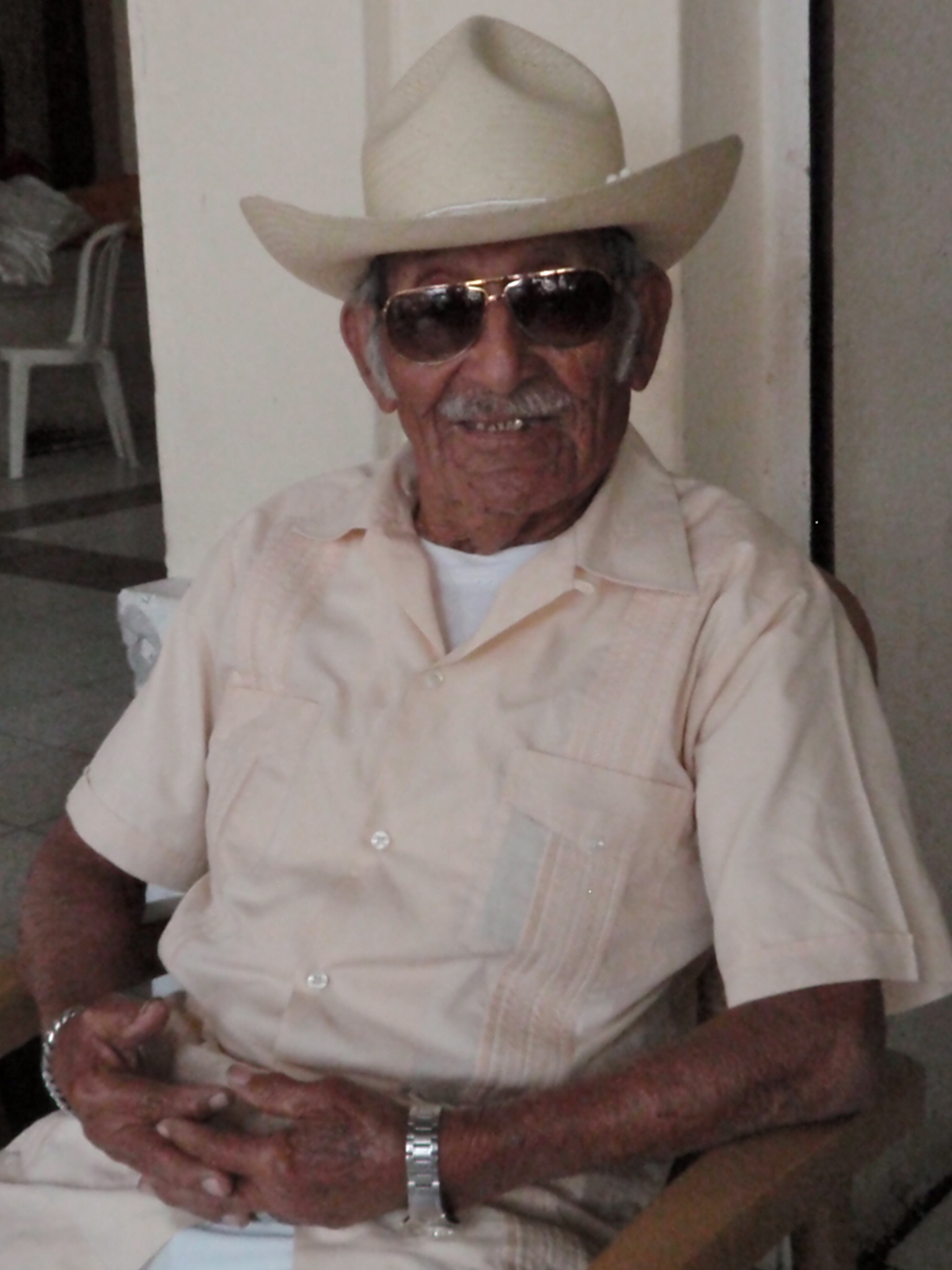
Guadalupe Martinez Carrazco, 94 years young, was so diligent in assisting us to find seats that we just had to buy him a cerveza. I believe he was hoping for that all along. Perhaps it is the Corona that is keeping him going as he was outwardly flirting with all the women, who seemed to be enjoying it!
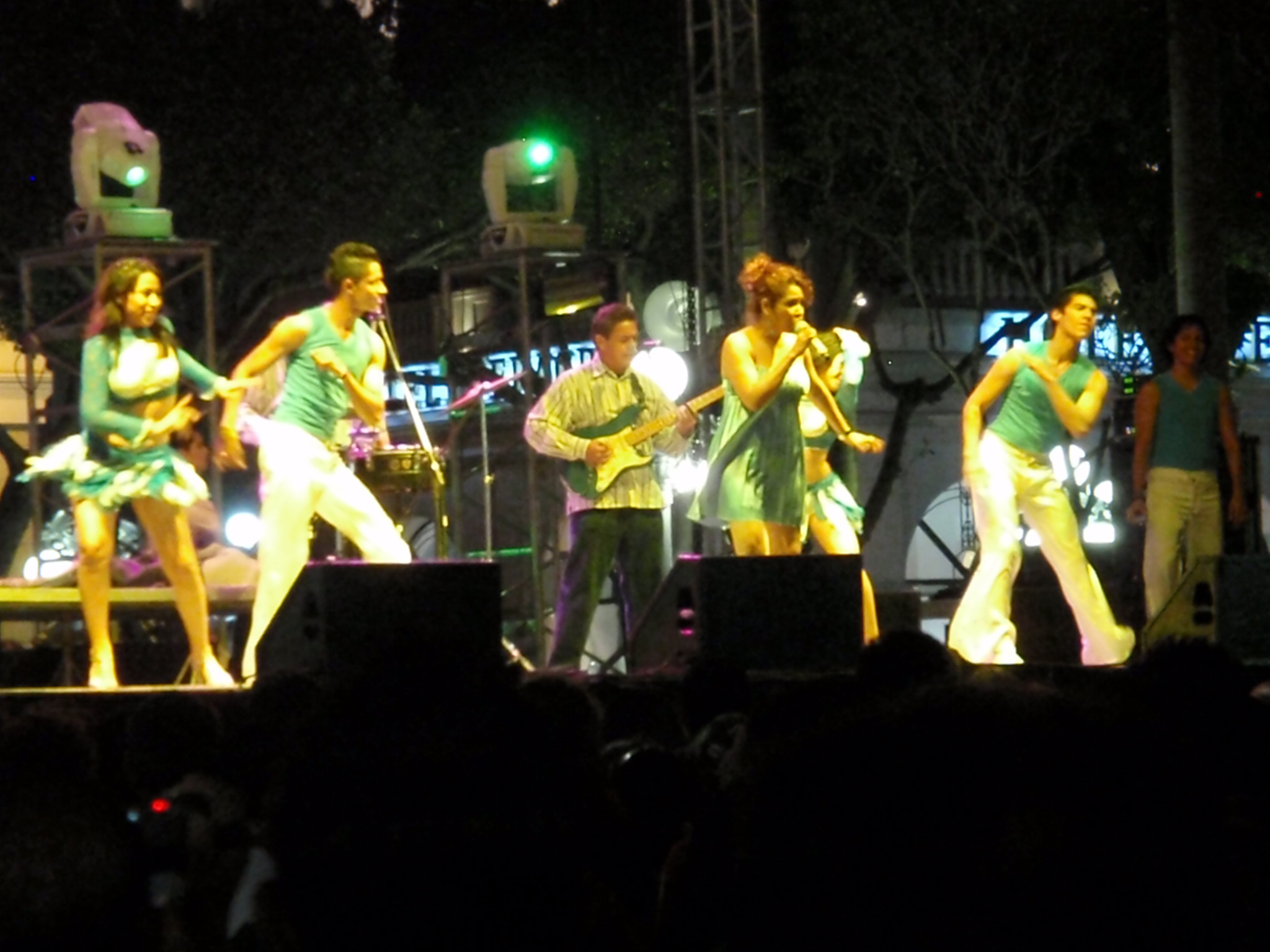
That evening, directly across from our hotel, a stage was being set for the night’s performances. The music was superb and everyone in the crowd around us started to dance, young and old. Does no one in this country not know how to dance, and dance well?!
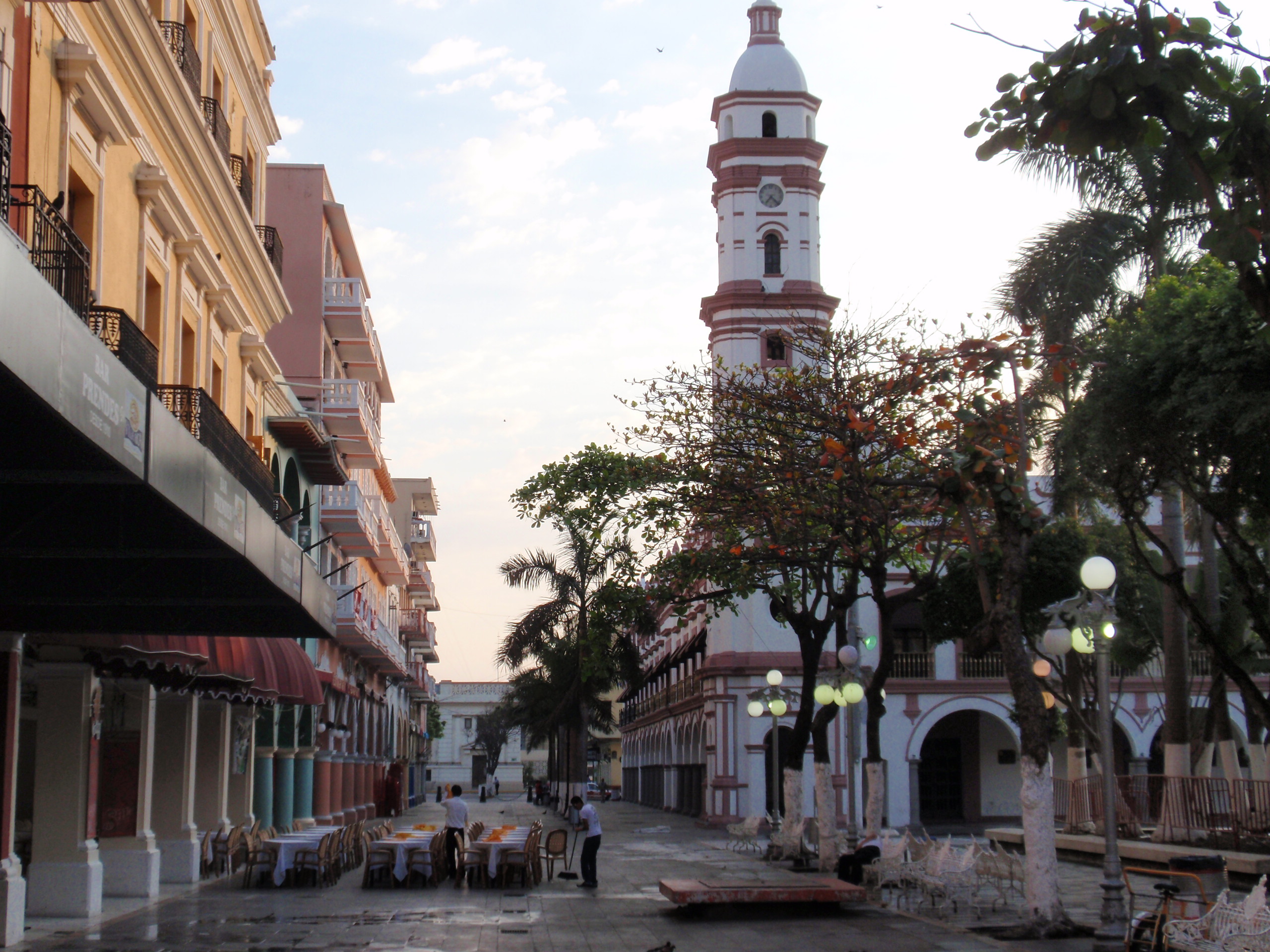
The next morning, as we waited to load onto our bus, Terry snapped a rare street scene without the throngs of people streaming by. Notice another lovely church steeple in the background.
From here we headed to Villahermosa, then on to magical Palenque, who some say is the most outstanding archeological site in all of Mexico. It certainly was one of the most important, as this was where royalty lived, Pakal the Great.
I have much more to share of our Caravan tour, however, 10 days into our 6-week adventure we received a phone call that our dear friend Barbara was admitted to the hospital and is in intensive care. We elected to cut our trip short and return home, which we did last night. Today I will board a plane to Arizona so my remaining posts will be a bit delayed. Please pray for Barbara and Pete during this very difficult time.
Although Puebla is no longer a part of this Caravan tour, given the delay with our bus getting the “boot”, our tour director Manuel presented us with a little treat, in the way of a short stop in Puebla.
Puebla is the capital of the state of Puebla and is one of the five most important colonial cities in Mexico, being a main route between Mexico City and the port city of Veracruz. It was founded in 1531 and due to its rich history and architectural styles, ranging from Renaissance and Mexican Baroque, Puebla was named a World Heritage Site in 1987.
Puebla is the only city in Mexico where the Indians were not displaced. It is the seat of the best textiles and tiles in all of Mexico and is the 4th largest city, with a population of approximately 1.5 million.
The university in Puebla, University of the Americas, is internationally recognized for the fields of medicine and archeology.
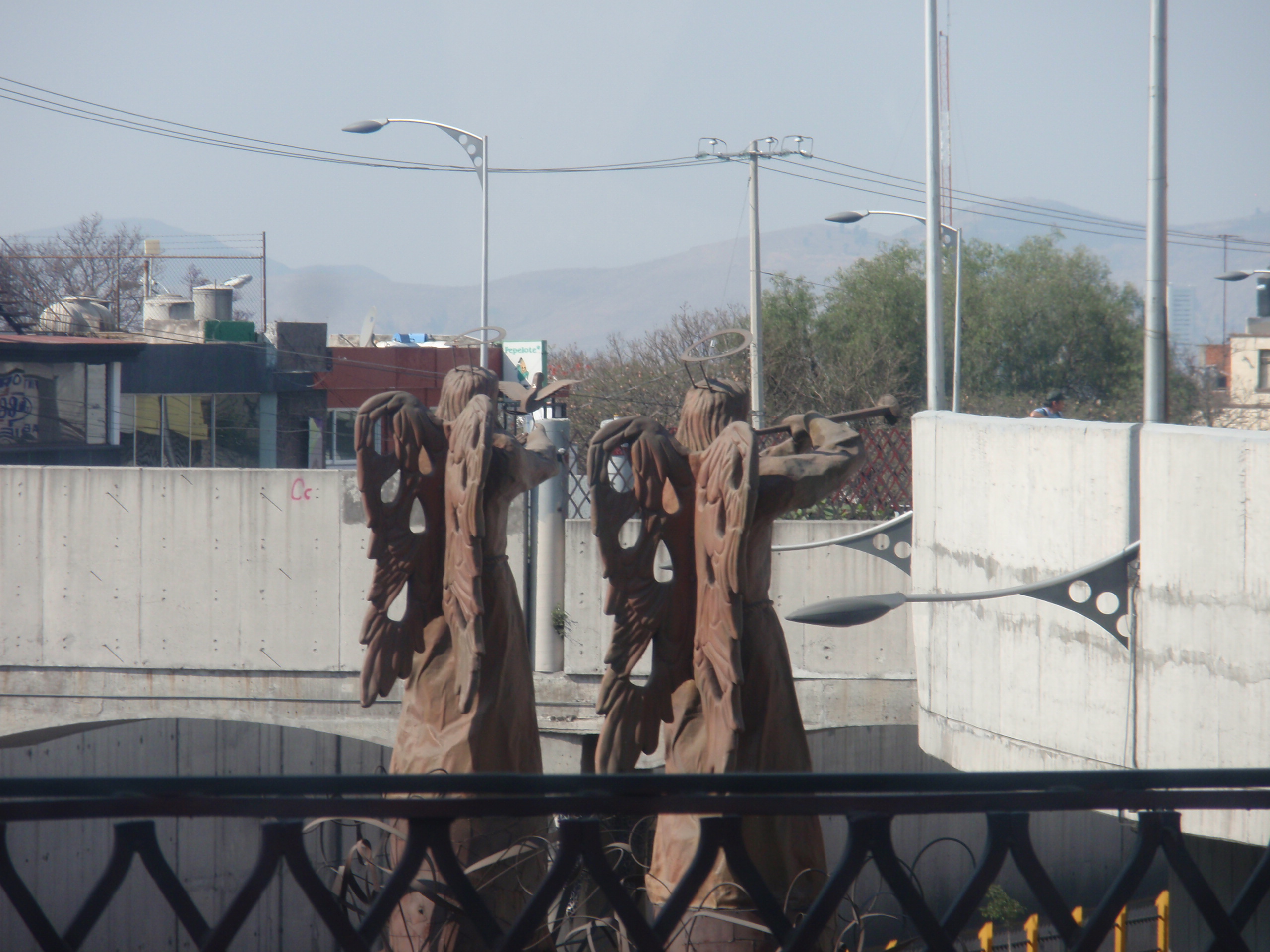
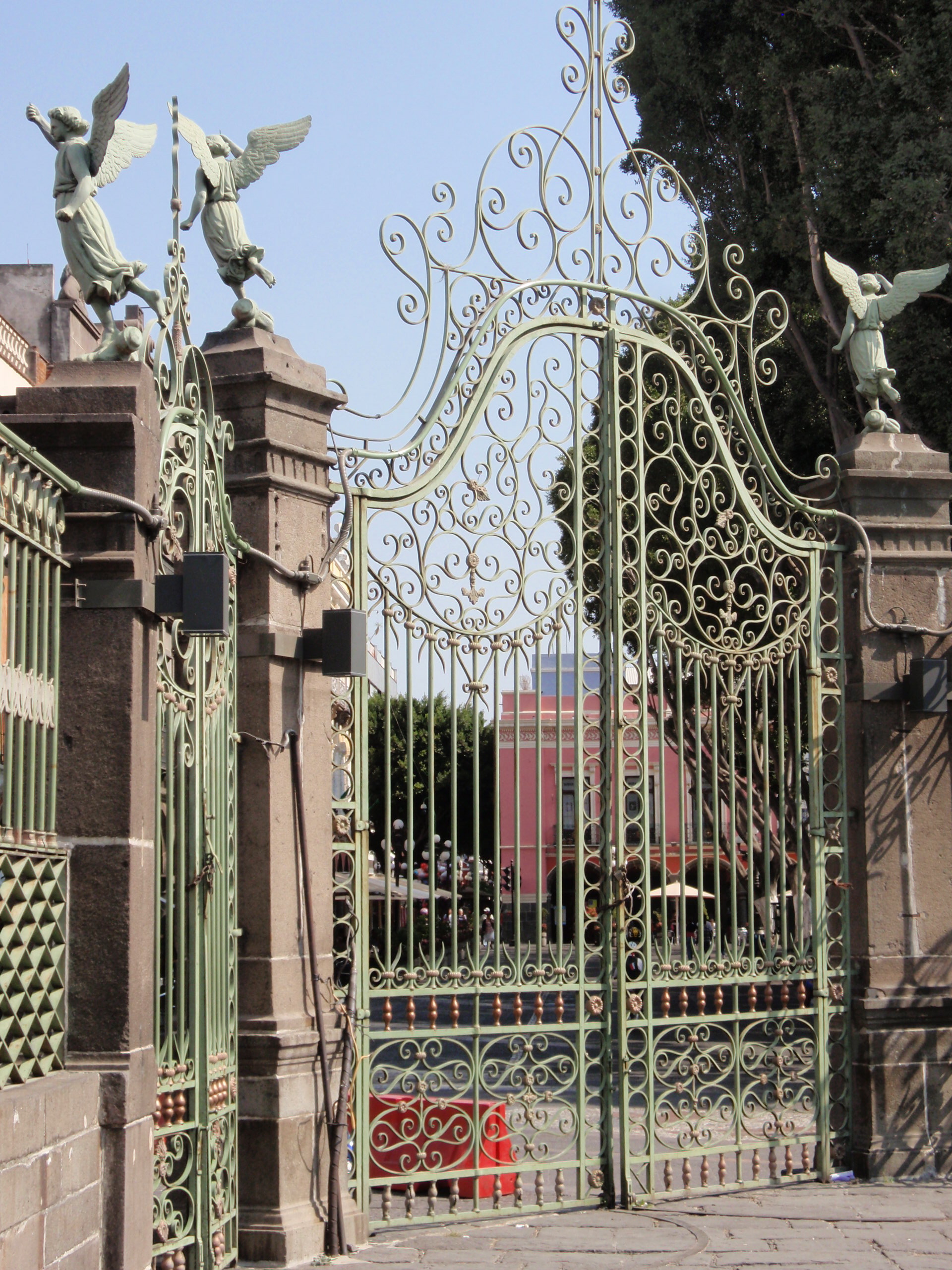
As we entered the city there are a number of life-size trumpeting angels that can be seen guarding the city.
Trumpeting Angels Guarding Puebla
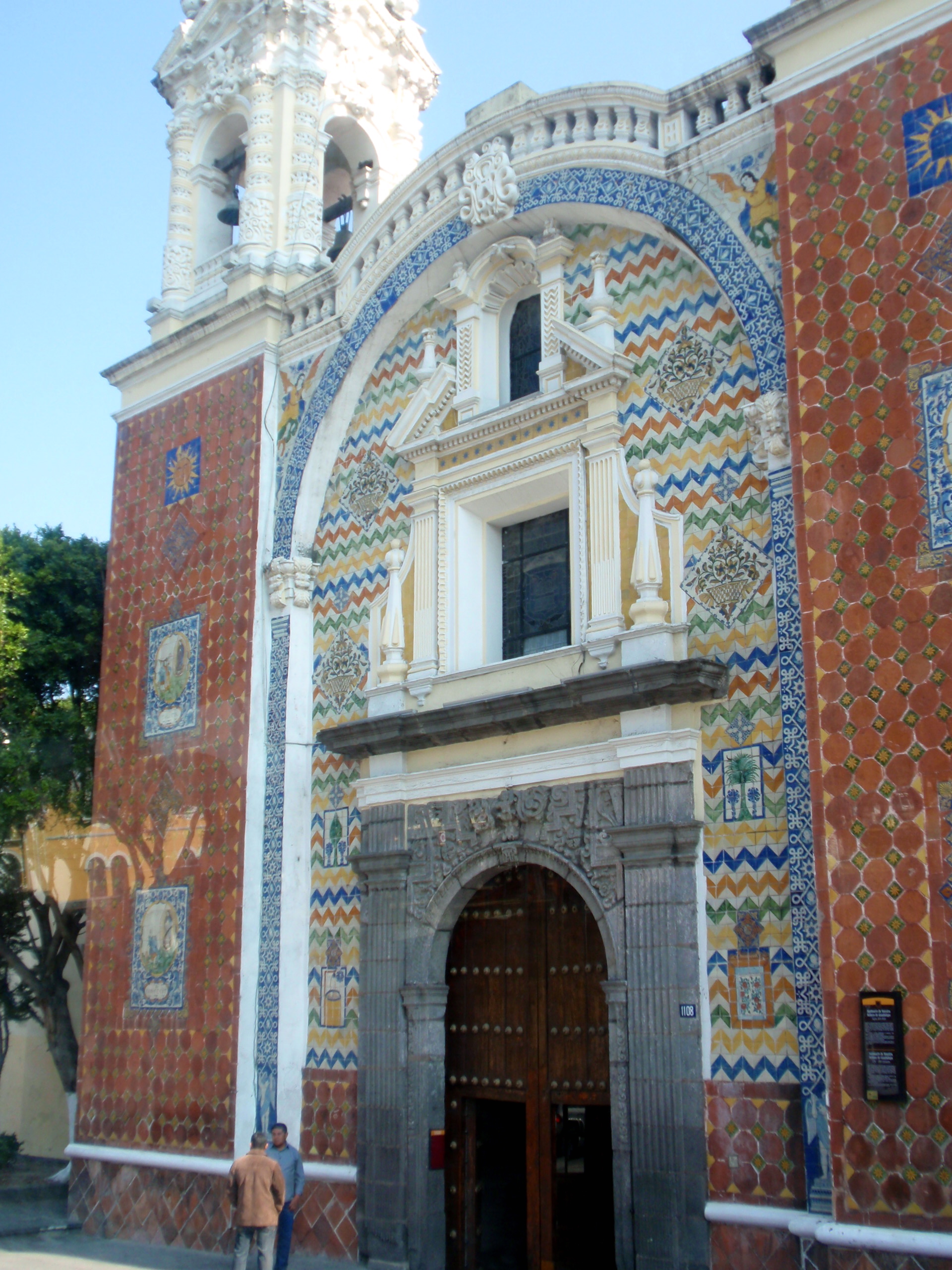
It is an understatement to say that Puebla has some of the most striking churches that we have seen to date and is definitely still on our “bucket list” to visit in more depth.
Tiled-Fronted Church Dedicated to the Virgin of Guadalupe
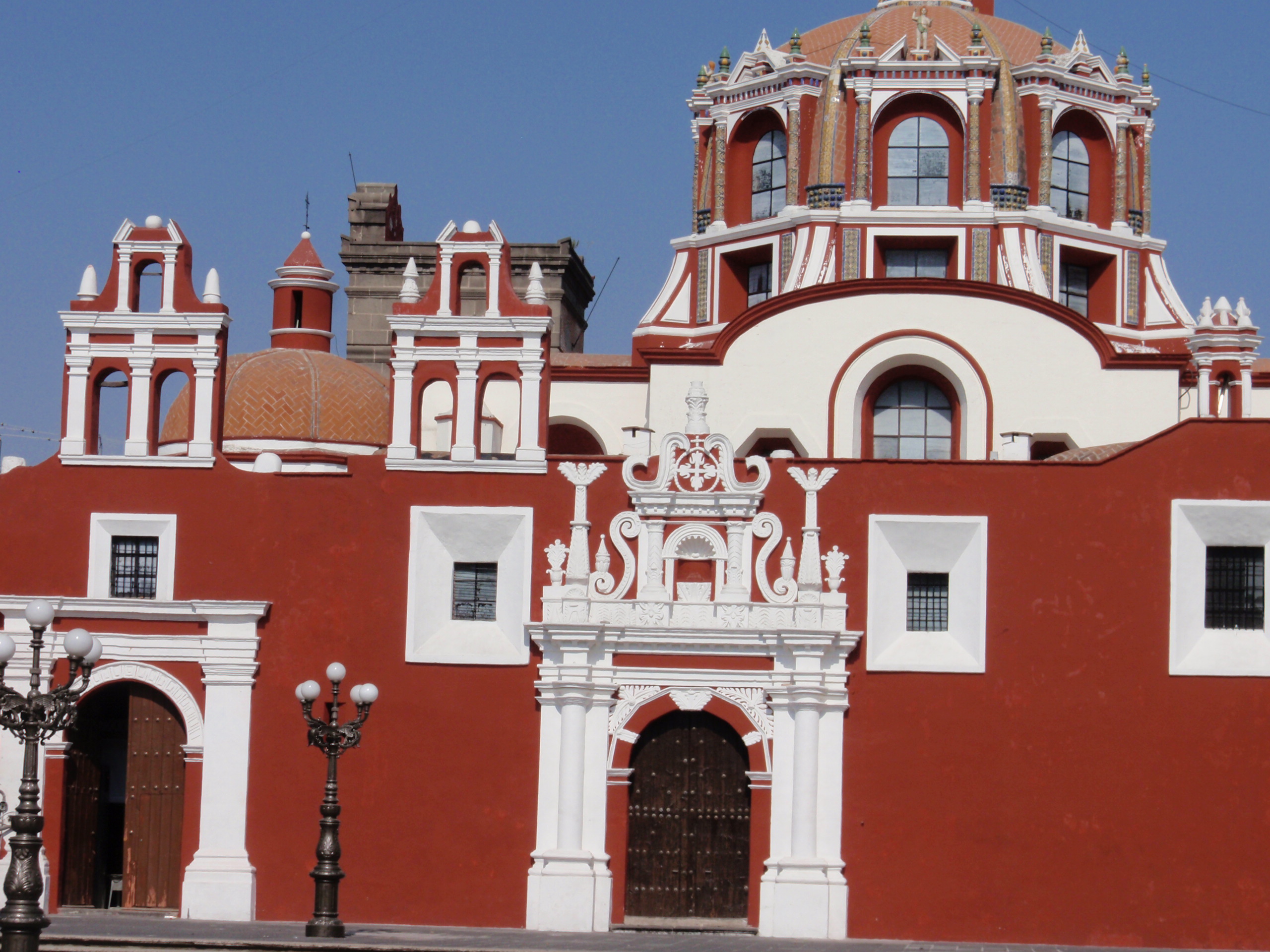
The Templo de Santo Domingo was probably one of the most striking churches in the city, both in color and facade, as well as the chapel inside housing the Virgin of the Rosary.
Beautiful Facade of the Templo de Santo Domingo
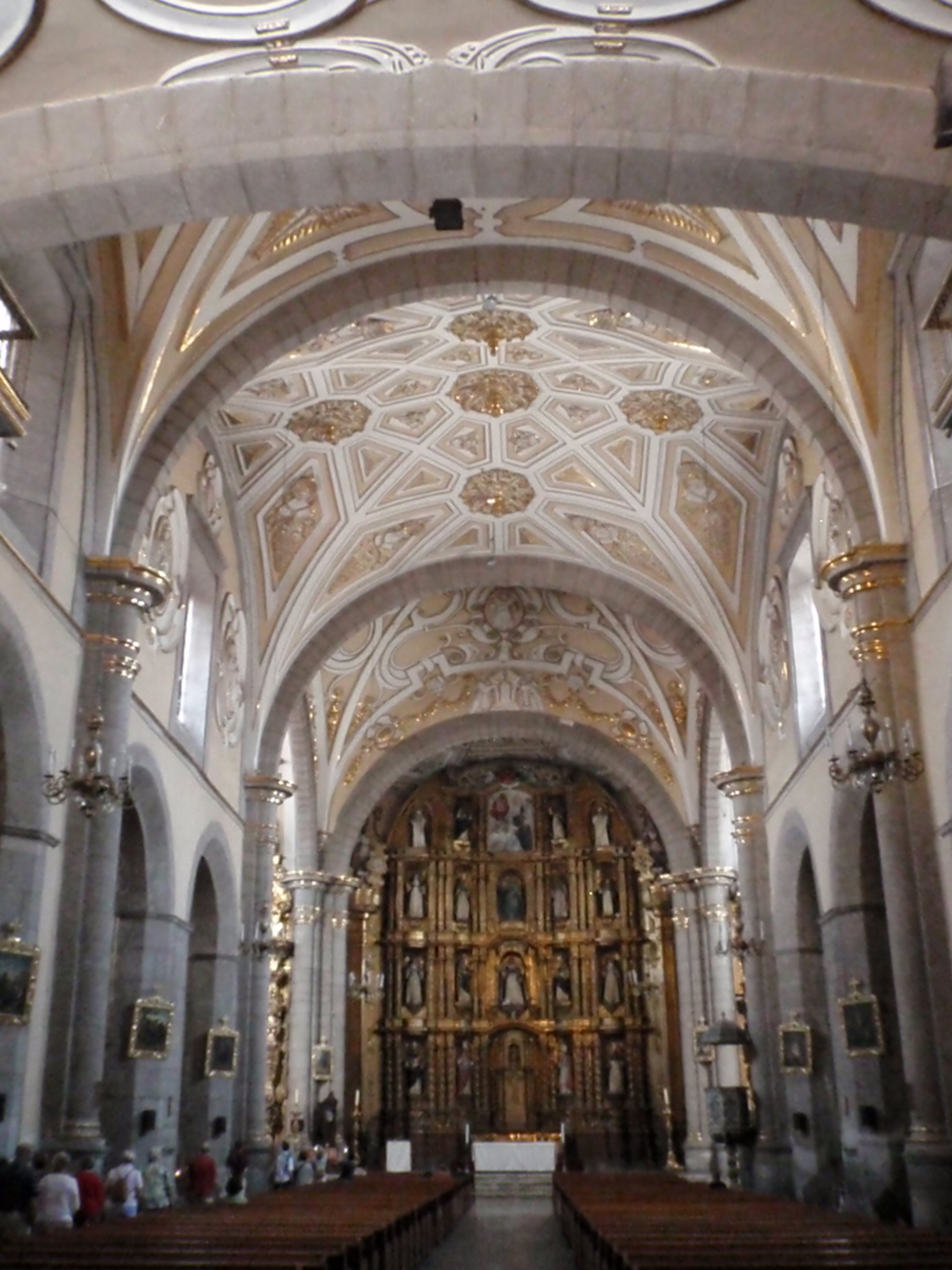
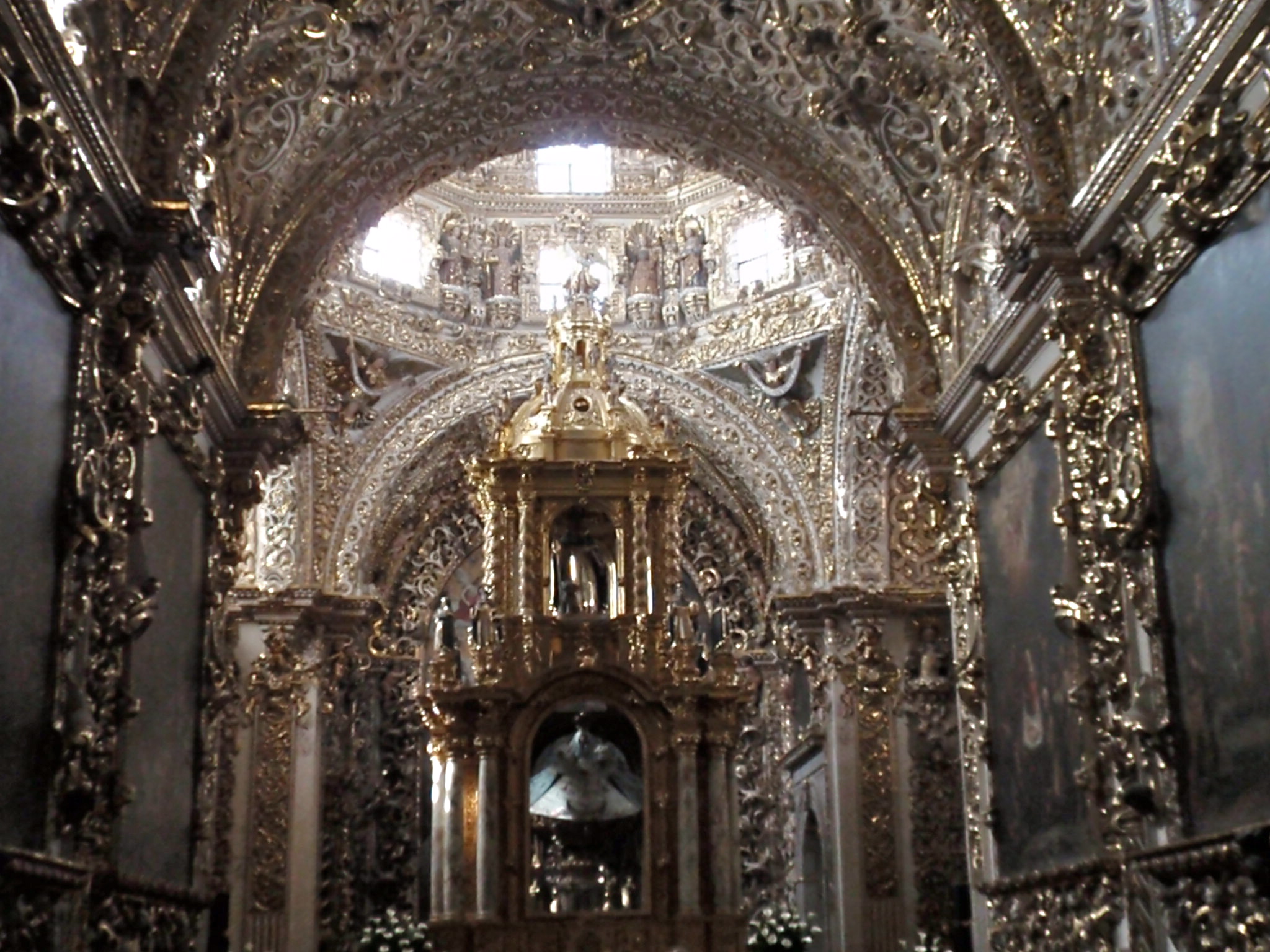
The interior of Templo de Santo Domingo is difficult to capture, with its many arches and gold leaf lined ceiling, but the chapel dedicated to the Virgin of the Rosary has to be seen to be believed.
The elaborate murals and the massive amount of gold leaf in the chapel left me with such a feeling of awe. This is an ornate chapel of unbelievable proportions.
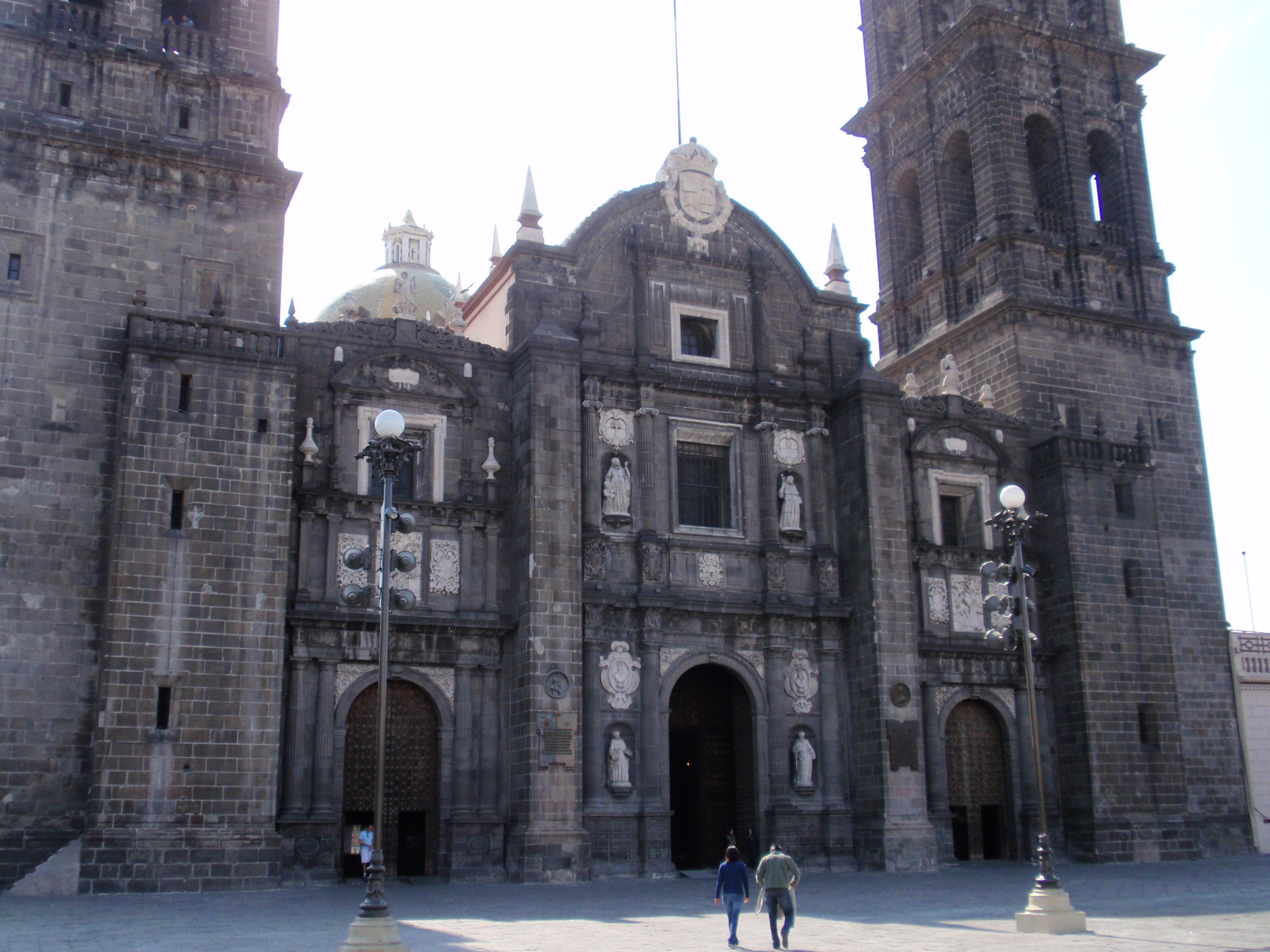
Although the Cathedral below may not look as interesting as some churches from the outside, the inside revealed quite a few gems, although we were not able to photograph them due to a mass being held at the time we were there. The walls surrounding the chapel were beautiful, bedecked with angels on every pedestal.
The zocalo (plaza) is the focal point of this city, with the Cathedral, the residence of the Bishop of Mexico, and several shops and cafes bordering it.
From here we headed to Veracruz, where Carnaval was still in full swing.
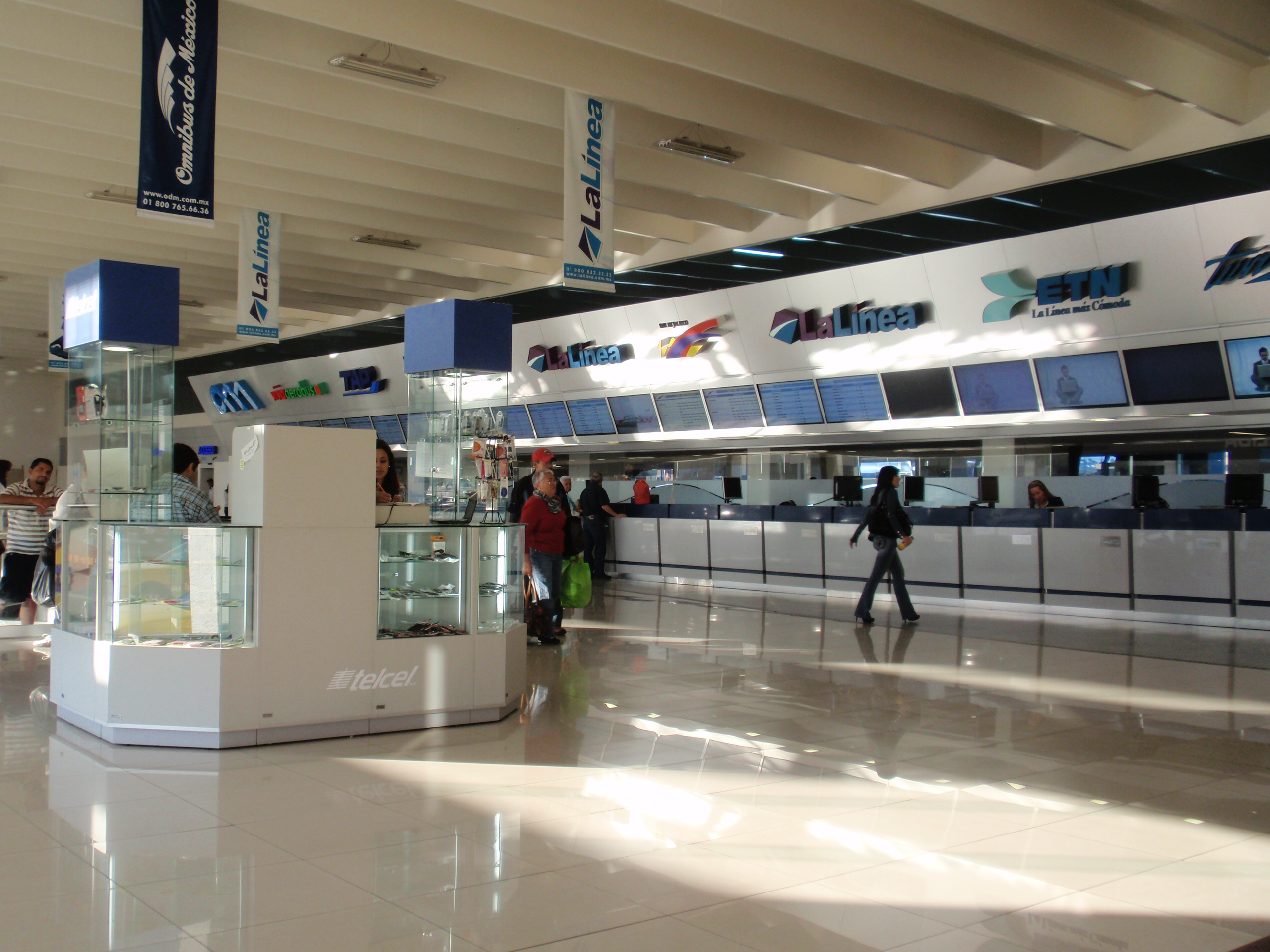
We began our 8-day Caravan tour of Mexico’s Ancient and Colonial Cities in Mexico City, where we took an ETN bus from Guadalajara.
Beautiful New Bus Station in Guadalajara
We spent 2 days in this fascinating capital city of Mexico, and one can really only scratch the surface in that amount of time. There is so much history here, entwined within this cosmopolitan city of roughly 25 million people throughout the entire metro area. Surprisingly, for a city its size, it is less polluted than those much smaller than itself, given the anti-pollution efforts of the Mexican government, with a mandatory semi-annual inspection for all who own vehicles.
It is currently the dry season in Mexico, so we had not seen any rain since mid-September, until our last night in Mexico City. Walking back to our hotel in the historic district, we were blessed with a shower. It was actually a little chilly as this city sits at an elevation of 7300 feet.
We stayed at the Hilton Reforma and we were foolish enough to not take any pictures. It is considered a 5-star hotel, so suffice to say, it was lovely. Our first night was dinner and an orientation.
Our first full day began with a drive to the Teotihuacan (pronounced Teh-oh-tih-wah-KAN) archeological site, which is an Aztec name, meaning “the place where men become gods”. These ruins were discovered in 1884 by railroad workers.
Back in the year 400 AD, Teotihuacan was the sixth largest city in the world and Mexico’s largest pre-Columbian city, with a population of approximately 200,000 people at its height. A great fire appears to have destroyed the city in the 7th century and its prosperity and influence began to dwindle after this. 300 years later, Teotihuacan was mysteriously abandoned by its people.
Almost one thousand years later, the Aztec believed that Teotihuacan was a holy place, where the sun, moon, and universe were created.
The first palace that you walk through to arrive at the Avenue of the Dead is El Patio de Los Jaguares (Jaguar Palace). Colorful murals can still be found throughout this site.
As we were pressed for time, we quickly moved on to the Avenue of the Dead, down to the Pyramid of the Moon, as we were anxious to climb it.
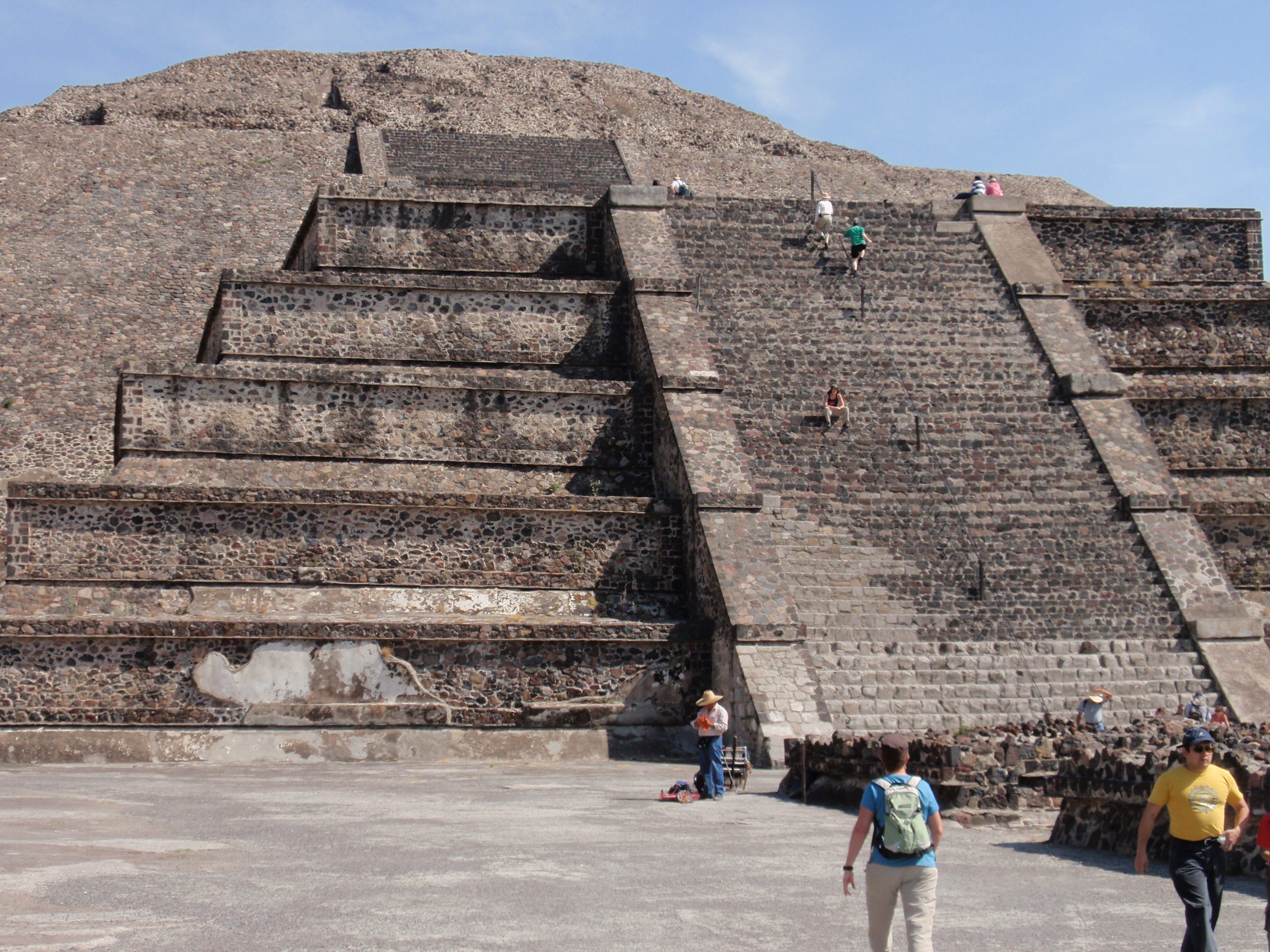
Piramide de la Luna (Pyramid of the Moon) was considered a sacred building within Teotihuacan, as it sat at the beginning of the main road, Avenue of the Dead, and was thought to be used for ceremonies.
Pyramid of the Moon stands 50 meters tall, and if heights are not one of your loves, this climb could be somewhat daunting, as the steps are steep and very tall. It is definitely worth the climb, however, as the views from the top are breathtaking.
Terry is standing on top of Pyramid of the Moon, with Pyramid of the Sun in the background.
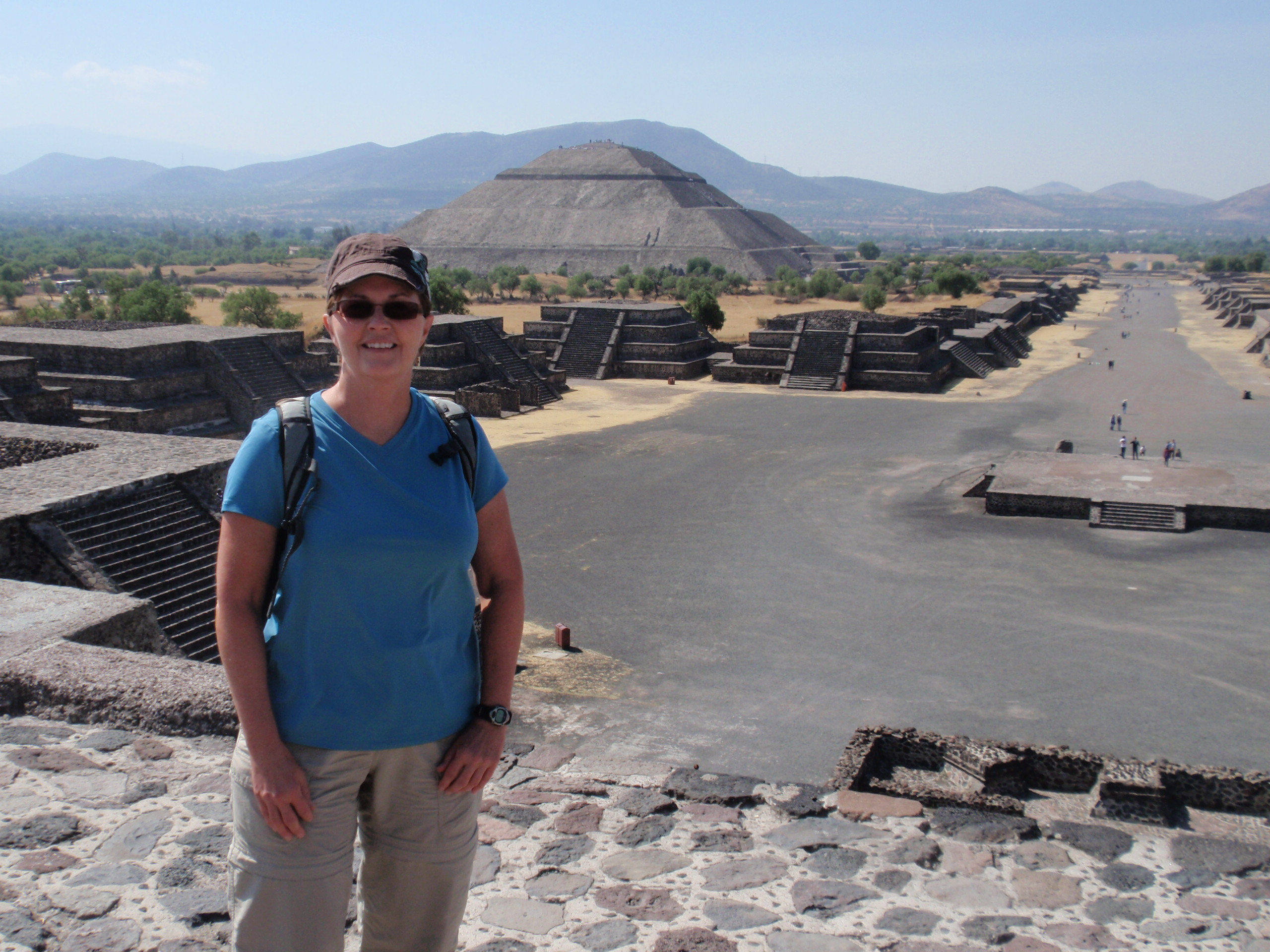
And to prove that I, too, made it to the top (no, I did not Photo Shop myself into this picture), here I am with lovely views of Avenue of the Dead and Pyramid of the Sun behind me.
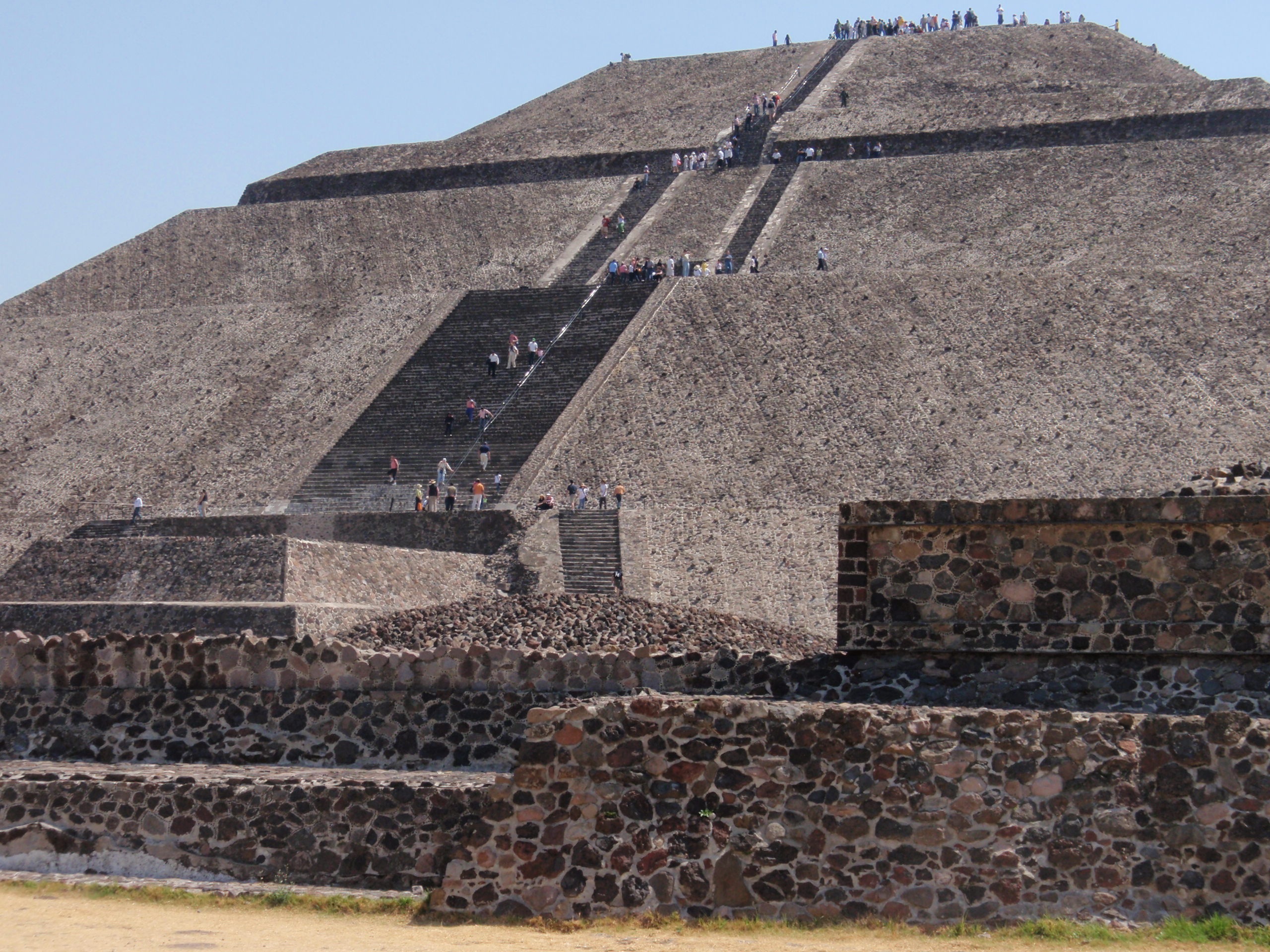
Piramide del Sol (Pyramid of the Sun), standing 60 meters tall, was the largest pre-Hispanic building of its time (100 – 650 AD) and was a very important structure, as it was believed that the sun god was worshipped at this monument. Supposedly, a natural volcanic vent sits under this structure, allowing travel down to the underworlds.
Terry and I just had to climb to the top of the Pyramid of the Sun. As you can see in the background, the views are spectacular. We have also been told that in the very near future most of these archeological sites will be closed to climbing in order to preserve the sites so we climbed everything that was available to us.
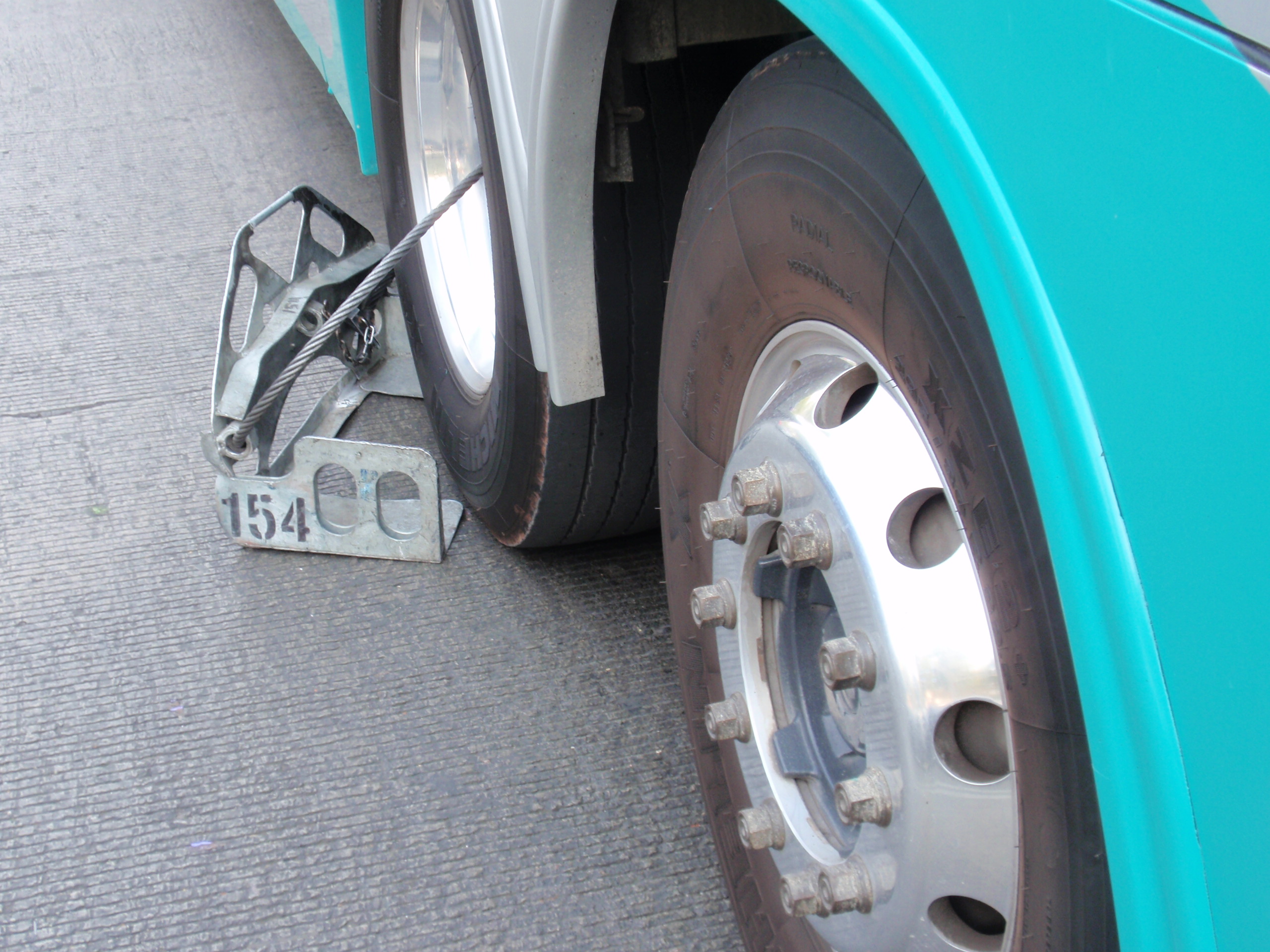
After lunch we were scheduled to visit the National Palace and the Anthropology Museum. As we boarded the bus, unbeknownst to us, our bus was in a no parking zone so the traffic cops gave us the “boot”.
We learned it is quite an ordeal to have the boot removed once the parking fine is paid so, after an hour of waiting, we all loaded into a couple of vans and headed to the Museo Nacional de Antropologia (Anthropology Museum). This is a fascinating museum that could take one days to go through, but unfortunately we only had two hours so we focused on the Aztec and Mayan exhibits.
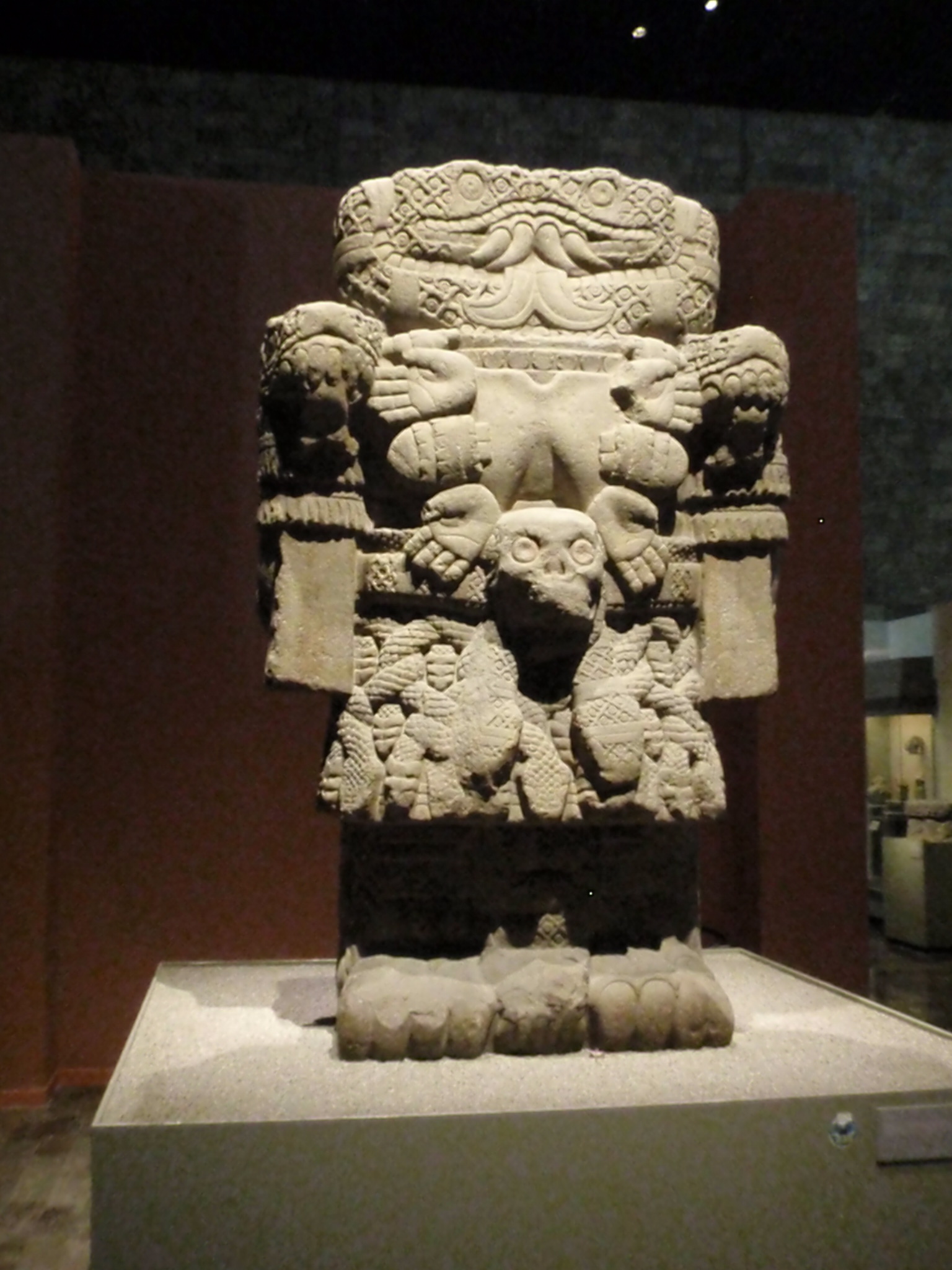
Above is a statue of Coatlicue, the earth goddess of Aztec mythology. She is the mother of sun, moon, stars, and all the Aztec gods and goddesses. Her name means “serpent skirt”. It is said that she is the source of all life on earth and took the dead back again into her body. This statue depicts Coatlicue as both creator and destroyer.
Her head is made up of the joined heads of two snakes and her skirt is made of snakes woven together. Her large breasts show her as a nourishing mother, while her clawlike fingers and toes depict her as a devouring monster. She dons a garment of human skin and a necklace of hands and hearts with a single skull in the center. This suggests that Coatlicue consumed everything that died.
This is the infamous Stone of the Sun, which was misidentified as the Aztec Calendar because of its symbolic content and names of the days. It is actually a large sacrificial altar.
Human Skull Adorned with Stones and Colorful Tiles
The Mayan room was especially interesting since we had seen many archeological sites of Mayan creation.
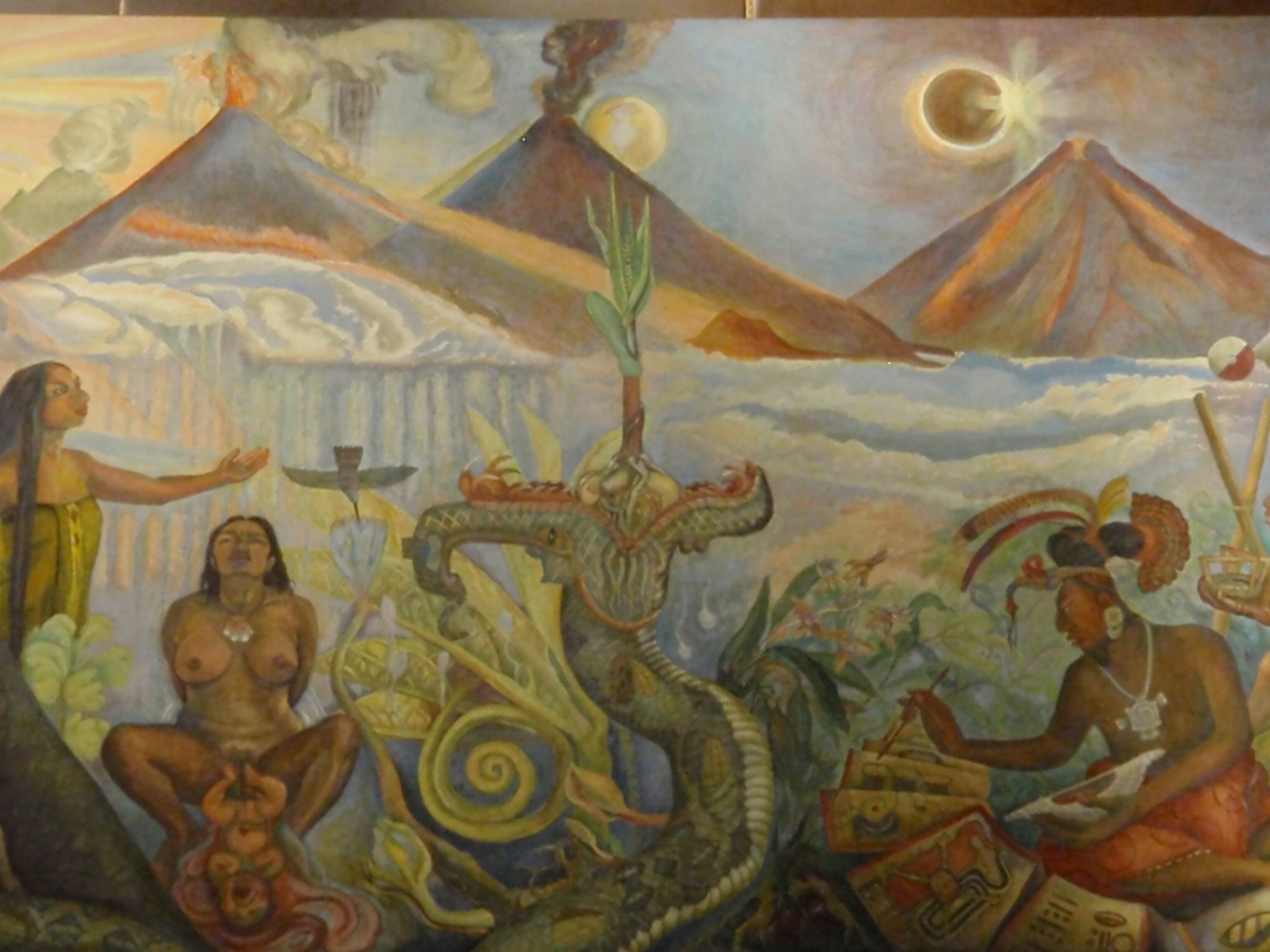
This beautiful mural was covering one wall of the exhibit room. Notice the birthing process, along with the serpent with mouth open, representing entry into the underworlds.
These are the funerary effects of Pakal the Great, the Great Mayan King who reigned over the inhabitants of Palenque. His actual sarcophagus is located in the Tomb of the Inscriptions at Palenque, which he had built during his reign. For the Mayan people, existence after death took place in a parallel universe reproducing the conditions of earthly existence, so they regarded it with the same importance as life itself. Jade was very important to them, so Pakal was buried with many jade objects. His mortuary mask was encrusted with more than 200 tiny carved and polished jade stones, perfectly assembled.
We did not have time as a group to visit the National Palace so some of us set out on our own after dinner to do a little sightseeing.
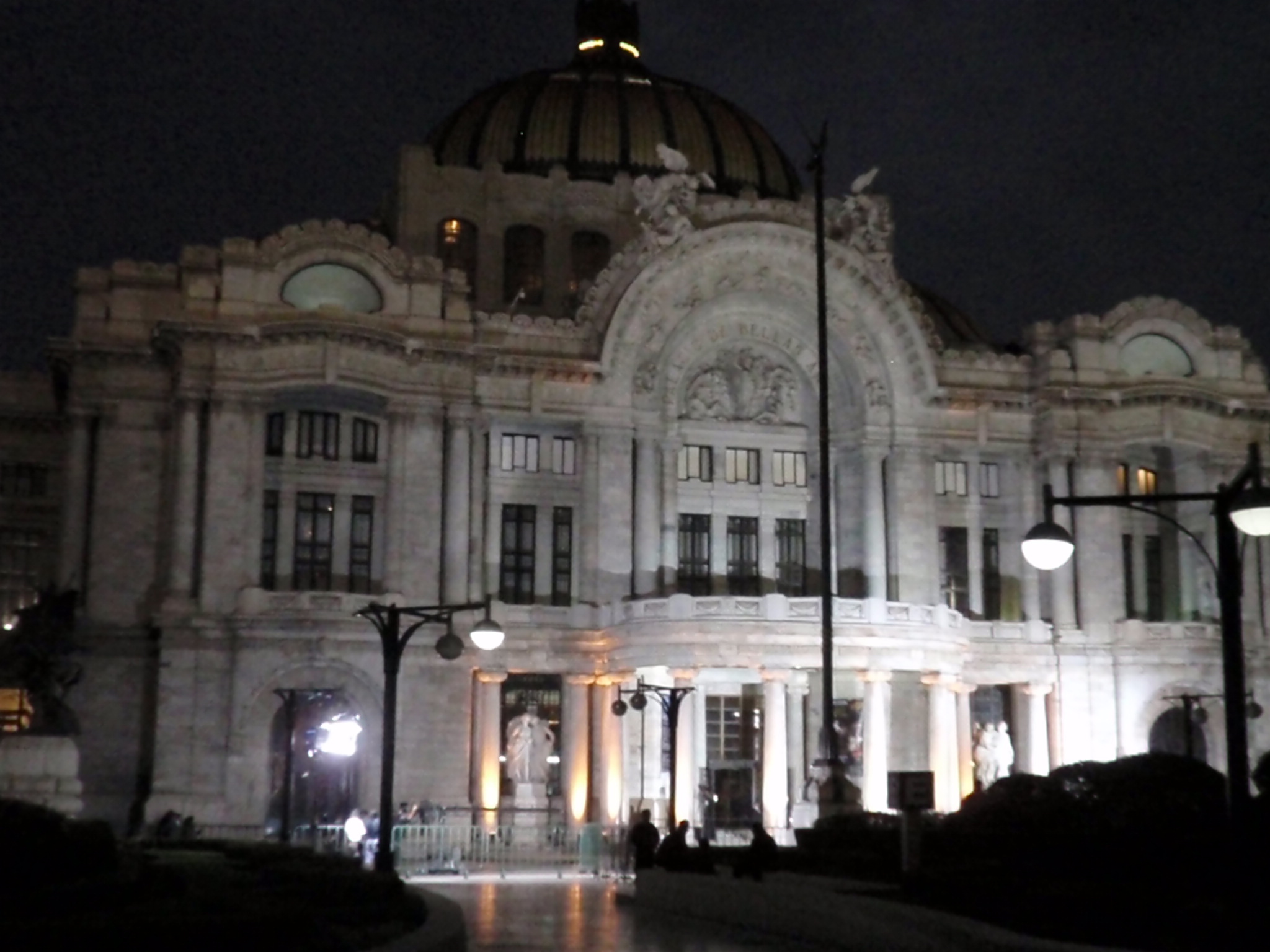
This is the Palacio De Bellas Artes, the Palace of Fine Arts, which houses an opera house and museum. It was beautiful during the day and enchanting at night when lit. Construction was begun on this structure in 1904, then stopped because of the Mexican Revolution. It began again in the early 1930’s and was completed in 1934.
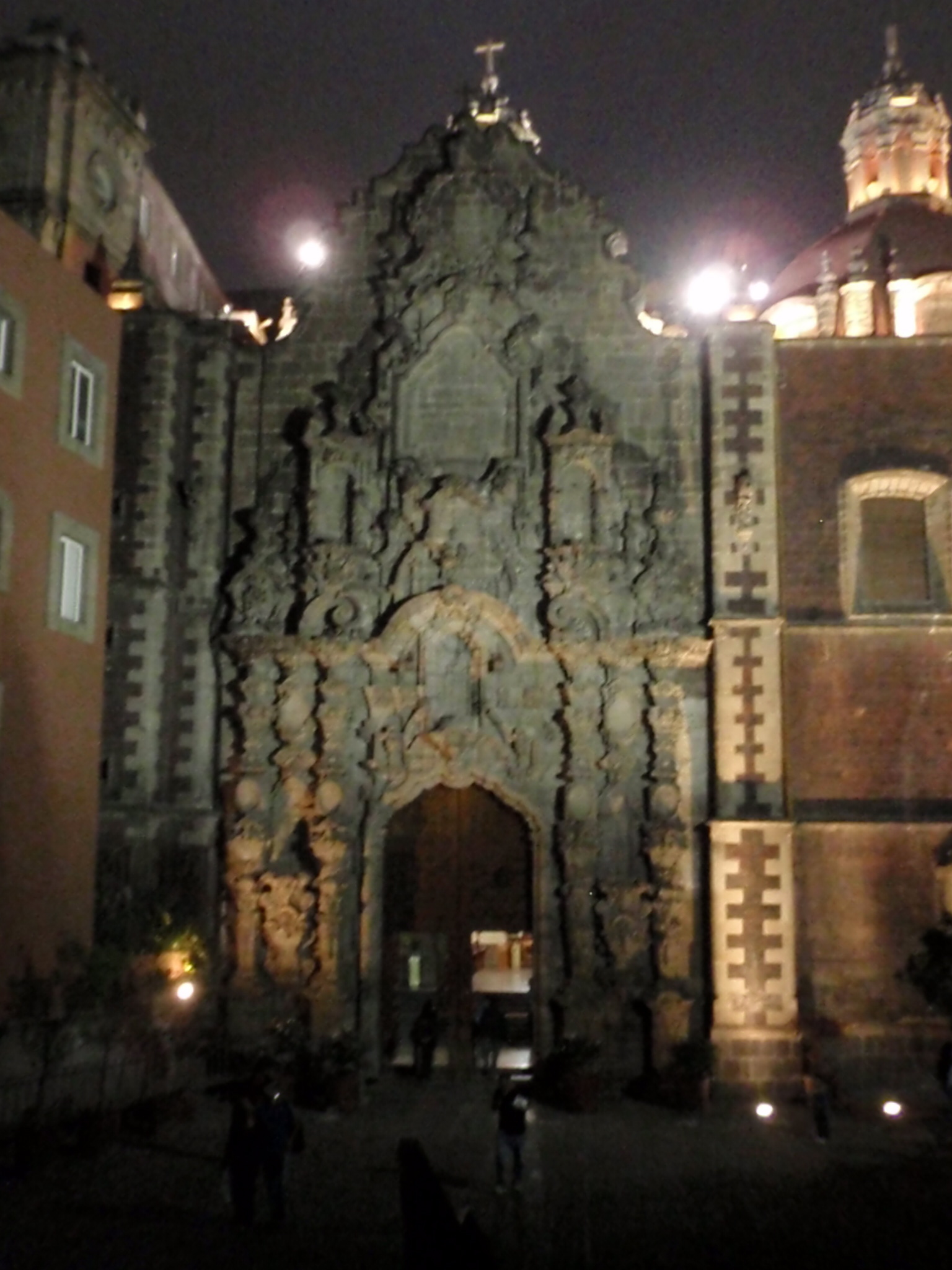
This is the Templo de San Francisco, where a wedding was taking place when we stepped inside.
The Cathedral was not lit at night but the picture below shows a lovely gold-leaf altar.
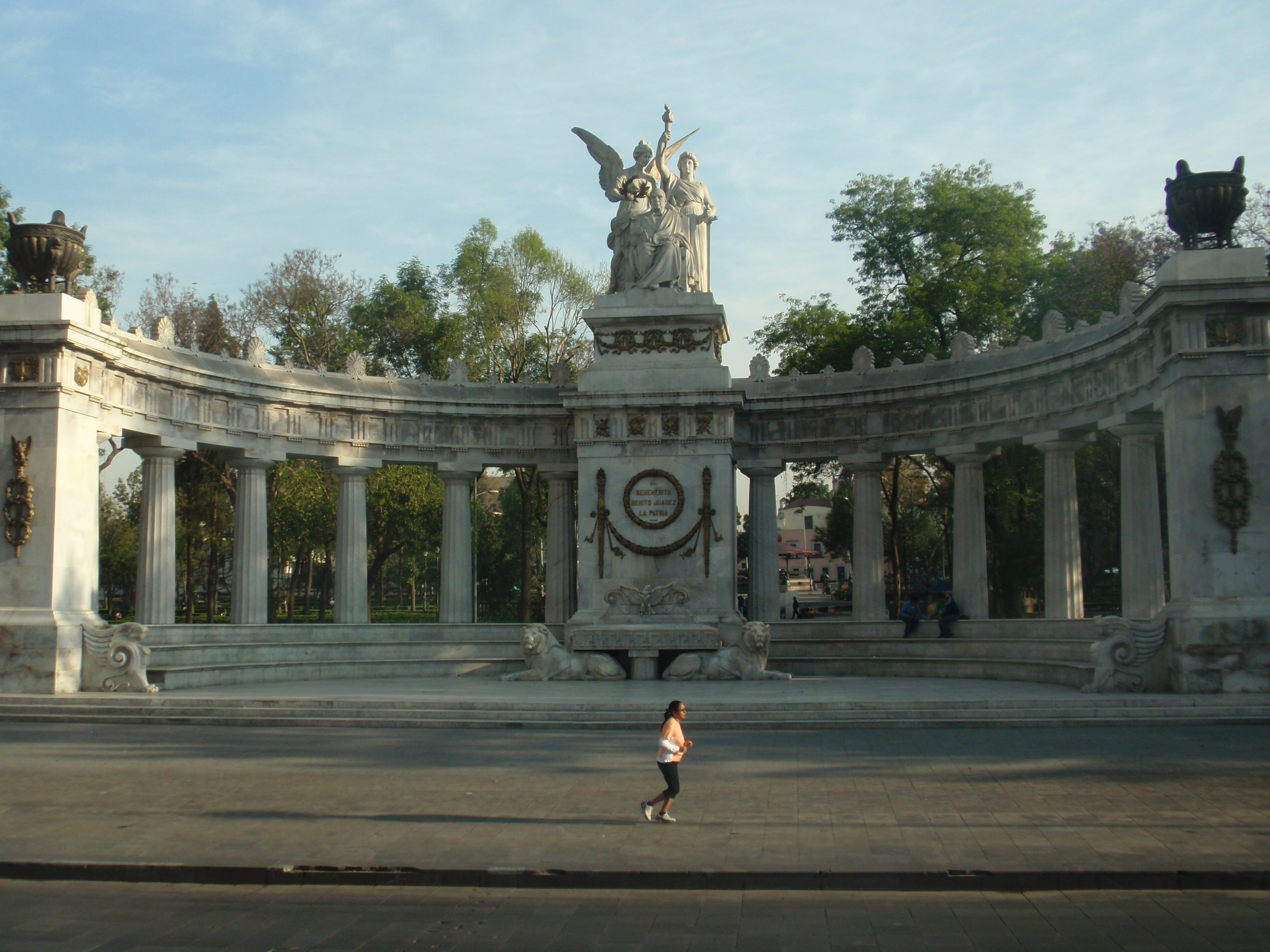
A monument dedicated to Don Benito Juarez, on the grounds of Alameda Park, the first public park of the Americas, built in 1592. This park was very large and picturesque and was directly across from our hotel.
This ended our stay in Mexico City. The next stop on our tour was to be in Veracruz, where Carnaval was still in full swing.
We are about to embark on a 6-week adventure! Our journey begins tomorrow morning in Guadalajara, where we board a bus to Mexico City and join an excursion conducted by Caravan Tours of the ancient and colonial cities of Mexico. This 8-day tour will take us throughout the ruins of the Mayan and Aztec civilizations and will conclude in Cancun. From there, we will travel on our own into the Central American countries of Belize and Guatemala.
Check in often as I attempt to document our wanderings and Terry will contribute beautiful photos of our adventures along the way.











 Paint Your Landscape