Moving Right Along

We have enjoyed touring our nation’s capital, and for those who love history, museums, stunning architecture, and lots of freebies, Washington DC is THE place to visit.  I suspect there are few cities in the U.S. where so much can be seen without opening your wallet.

And just as there’s no end to the monuments and museums one can explore in this city, the list of bike trails crisscrossing lovely woods and parks and running alongside gurgling streams, lakes and rivers goes on and on, and we have tested many of them.  From our temporary home at Greenbelt Park the Sligo Creek Trail, Anacostia River Trail, and the Paint Branch Trail have become a major part of our weekly exercise routine.

Our favorite city ride has been the Mt. Vernon Trail, the trail we had hoped to bike with friends John and Pam.  This 36-mile trail traverses DC and Alexandria, VA alongside the Potomac River, to George Washington’s plantation home, Mt. Vernon.  Loading bikes and bodies onto the Metro (a new experience for us) was a great way to hit the trail and avoid the traffic, but can be a bit of a hassle if the subway traffic is heavy.

The ride down to Mt. Vernon was awesome but the sea of tourists we found on arrival not so much.  We have become a bit crowd-weary so after a quick snack we hopped right back on the trail.  Luckily we had taken the Mt. Vernon tour many years earlier so didn’t really miss anything.

Stopping to admire planes lift-off at Ronald Reagan Airport, watch the lazy Potomac glide by, stroll through Teddy Roosevelt Island, and catch a freebie performance at the Kennedy Center for the Performing Arts (yes, you can do that donning bike clothes) can easily be accessed from the trail.  Wracking up miles on the endless bike trails has been a welcome break from hectic city life.

As much as we have enjoyed all DC has to offer, we are moving on, letting the ticks pick on someone else for a while.  We knew there would be ticks (not unusual back east) but they are a rather acute problem at Greenbelt Park, in what could be the perfect location for families wanting to see DC on a budget.  It seems Terry is quite the “tick-magnet” and no matter how he tries to protect against these tiny critters, even staying on the pavement, they still seek him out.  They don’t seem to like me at all, which pleases me to no end.  We look forward to taking a break from big city traffic and daily tick checks as we begin our slow journey west.  Happy summer everyone!
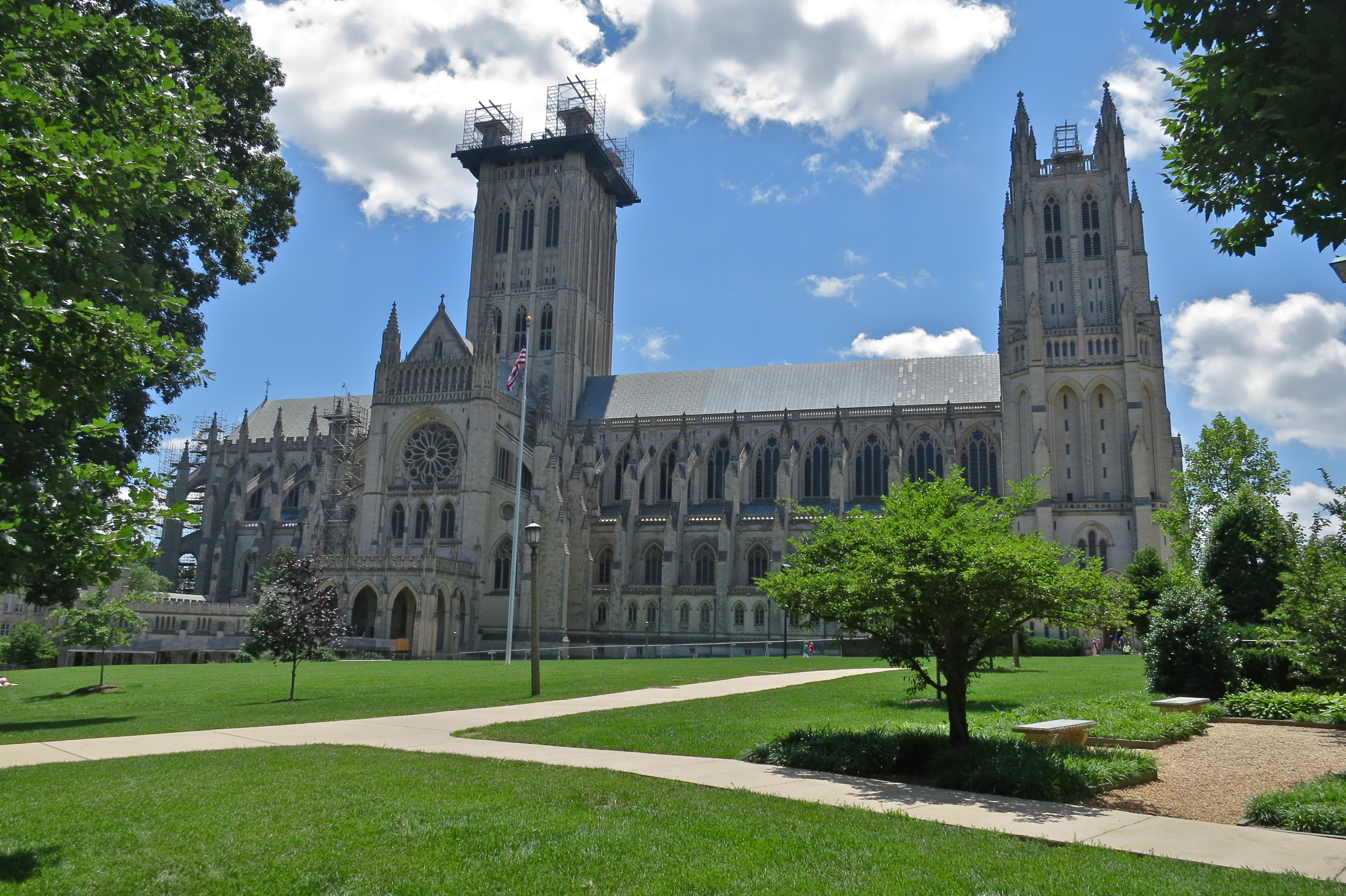
Spiritual Home for a Nation ~ Washington National Cathedral


As the Washington National Cathedral rose above the surrounding landscape, the pealing of Carillon bells signaled our approach.  Every Saturday at 12:30 pm the carillonneur makes his ascent up 150 limestone spiral steps to arrive at the highest point in Washington DC, the central tower, reaching 301 feet towards the sky.  Sitting at the keyboard, looking out at some of the most stunning views of the city, this talented musician is surrounded by 53 Carillon bells, the largest weighing 12 tons and almost 9 feet in diameter, the third heaviest in the world. The sounds he produces are nothing short of angelic and we were thankful our timing was spot on to give audience to this beautiful melody.

While most of us know this majestic landmark as the Washington National Cathedral, its official name is the Cathedral Church of St. Peter and St. Paul and it has been “called to serve as the spiritual home for our nation”, welcoming all faiths.  It is the 6th largest cathedral in the world and the Cathedral of St. John the Divine in New York City is the only cathedral in this country that is larger.  Made principally of Indiana limestone, it is an architectural marvel and each element has a story to tell, from the lovely gardens to the stained-glass windows, to the gargoyles stationed around the property. The flying buttresses, pointed archways, large windows, and ribbed vaulting proudly display the traditional Gothic design.

The first foundation stone for this lofty undertaking was laid in 1907 in the presence of President Theodore Roosevelt and the final finial was set in place 83 years later to the day in 1990, under the watchful eye of President George H. W. Bush.

The National Cathedral is the location of funeral and memorial services for almost all the 21 U.S. Presidents since 1893 and many Presidential Inaugural Prayer Services are held here.  More than 220 people are interred beneath these towers, two notables being Woodrow Wilson and Helen Keller.

Some interesting facts contained within these walls:

  • 231 stained-glass windows honoring important people, spiritual leaders and important achievements.  The Space Window displays a piece of lunar rock in an air-tight nitrogen-filled capsule.
  • 288 angel statues
  • 112 gargoyles (my favorite).  A Darth Vader sculpture sits atop the northwest tower.
  • The Great Organ consists of 10,650 pipes.
  • 9 chapels within the Cathedral
  • $65 million was raised, all in private donations, to complete the Cathedral.

Today scaffolding sheathes the Cathedral silhouette, the result of an 8.5 magnitude earthquake that rocked the east coast on August 23, 2011, sending cracks through the flying buttresses, toppling gargoyles and finials, and punching a hole through the roof.   The central tower is encased in a metal framework and metal netting has been draped inside, around the top of the tower, to prevent stray stones from causing further damage.  Unfortunately, all this metal now covers some of the magnificent stained-glass windows, but many can be viewed here.  The largest of these windows is the North Rose Window, a stunning 26 feet in diameter, depicting Judgment Day.

The Washington National Cathedral tells an iconic visual story, woven throughout its stained-glass windows, carvings and tapestries, the movement of mankind from creation to redemption.  I only wish we’d had many more hours to explore her many facets.

A Diplomatic Turning Point ~ Battle of Antietam

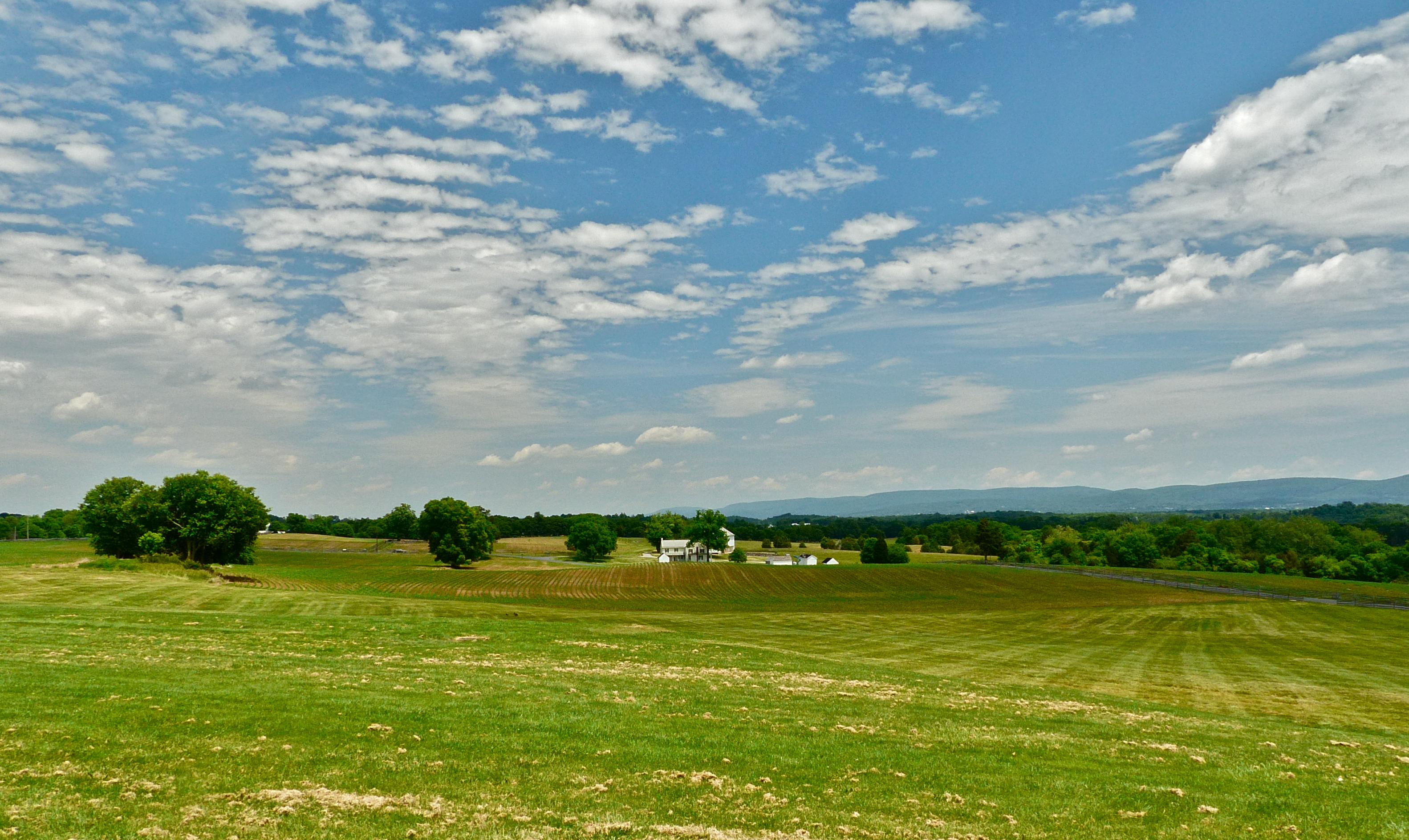
Looking out over what is now bucolic rolling farmland, it is inconceivable that on September 17, 1862, the bloodiest one-day battle of the Civil War took place here, the Battle of Antietam, near the small town of Sharpsburg, MD.

A discovery made four days earlier set the wheels in motion for this meeting of competing forces.  A copy of General Lee’s Special Order 191, outlining his plan of operations for the campaign, was discovered at a campground by a Union soldier. An innocuous envelope containing three cigars wrapped in a note may likely have changed the course of the war.  This note became known as the “Lost Order“.

At dawn on this clear autumn day, a 12-hour battle ensued, with counter-attacks sweeping back and forth through Miller’s Cornfield and the West Woods.  The Union forces outnumbered the Confederates, but Stonewall Jackson’s men near the Dunker Church, where the battle began, held their ground.

During the second phase of the battle, the Confederate forces felt they had found a natural defensive position, a narrow road used by farm wagons worn by use, known as the Sunken Road.  The battle raged for four hours, but in the end, the loss of lives for the Confederacy was great.  This stretch of ground later became known as the “Bloody Lane”, where it was said “the blood flowed like a river inside it”.

After 12 hours of fighting Robert E. Lee’s first invasion of the north resulted in a draw. On this one day alone, about 23,000 men were killed, wounded, or listed as missing. Due to the tragic nature of many of the Civil War battles, exact numbers were impossible to calculate.  The Confederate retreat later that day gave President Lincoln the “victory” he hungered for before issuing the Emancipation Proclamation.

Antietam, the bloodiest one-day battle of the Civil War, influenced how our nation would memorialize future battlefields.  Each December, 23,000 luminaries are lit to honor those killed, wounded, and missing during this fateful conflict.

A Break with History

I readily admit that history was not my favorite subject in school, most likely because of the manner in which it was presented.  Having a great tour guide in John while at Gettysburg several weeks back changed my entire perspective and we have immersed ourselves in bygone times ever since.  We couldn’t be in a better place for it either, Washington DC.  But a girl needs flowers now and then and hubby was happy to tag along when he learned my desire for them came without a price tag. 😉

“Those who contemplate the beauty of the earth find reserves of strength that will endure as long as life lasts. There is something infinitely healing in the repeated refrains of nature — the assurance that dawn comes after night, and spring after winter.” ~ Rachel Carson, Silent Spring

With all the hustle and bustle felt while walking along the mall in DC, it was hard to imagine a lush oasis just 2 miles from the Capitol, but here it was, the National Arboretum, and like many places in this vibrant city, it is free to the public.  Established in 1927, this research arm of the Department of Agriculture is “dedicated to serving the public and improving our environment by developing and promoting improved floral and landscape plants and new technologies through scientific research.”

These 446 acres and 10 miles of winding roadways are the perfect place to breath in a sweet-smelling bouquet of fragrances and hues, compliments of Mother Nature.  Open year-round, there is something to delight no matter the time of year, but spring and fall surely offer the most arresting backdrop of plantings, thanks to the dedicated volunteers who do most of the gardening.

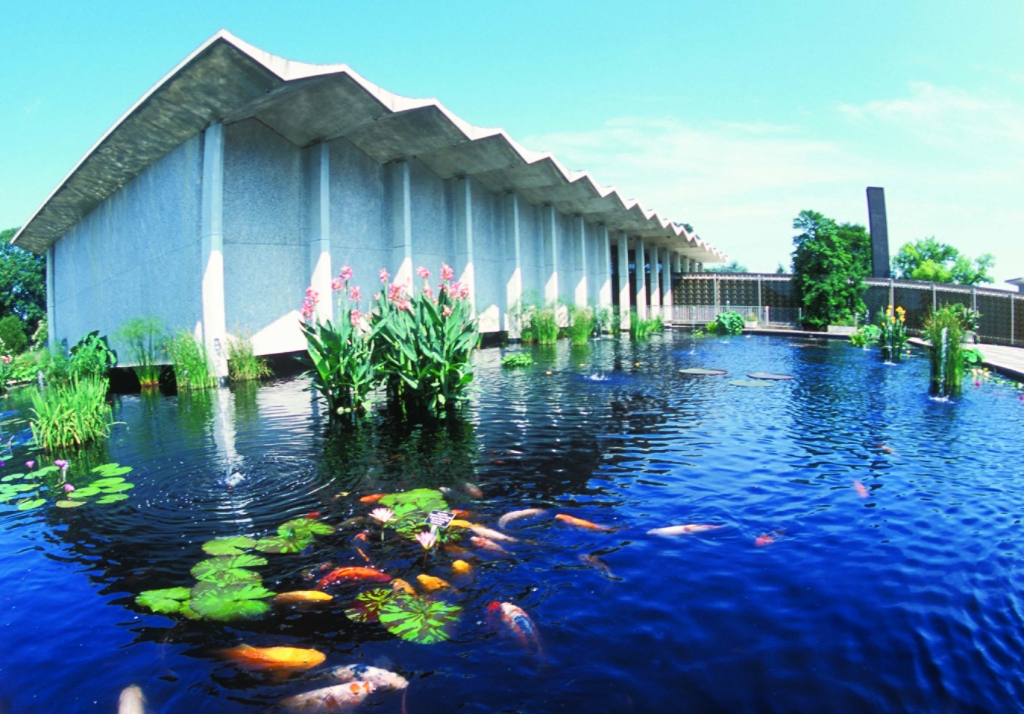
Koi pond at USNA - photo credit www.fona.org
Koi pond at USNA – photo credit http://www.fona.org

I was hoping to see the huge koi pond surrounding the administration building when we arrived but unfortunately it had been drained for construction.  What began as a disappointment quickly dissipated as I stepped into gardens of brilliant colors, unusual plantings, and verdant rolling hills.

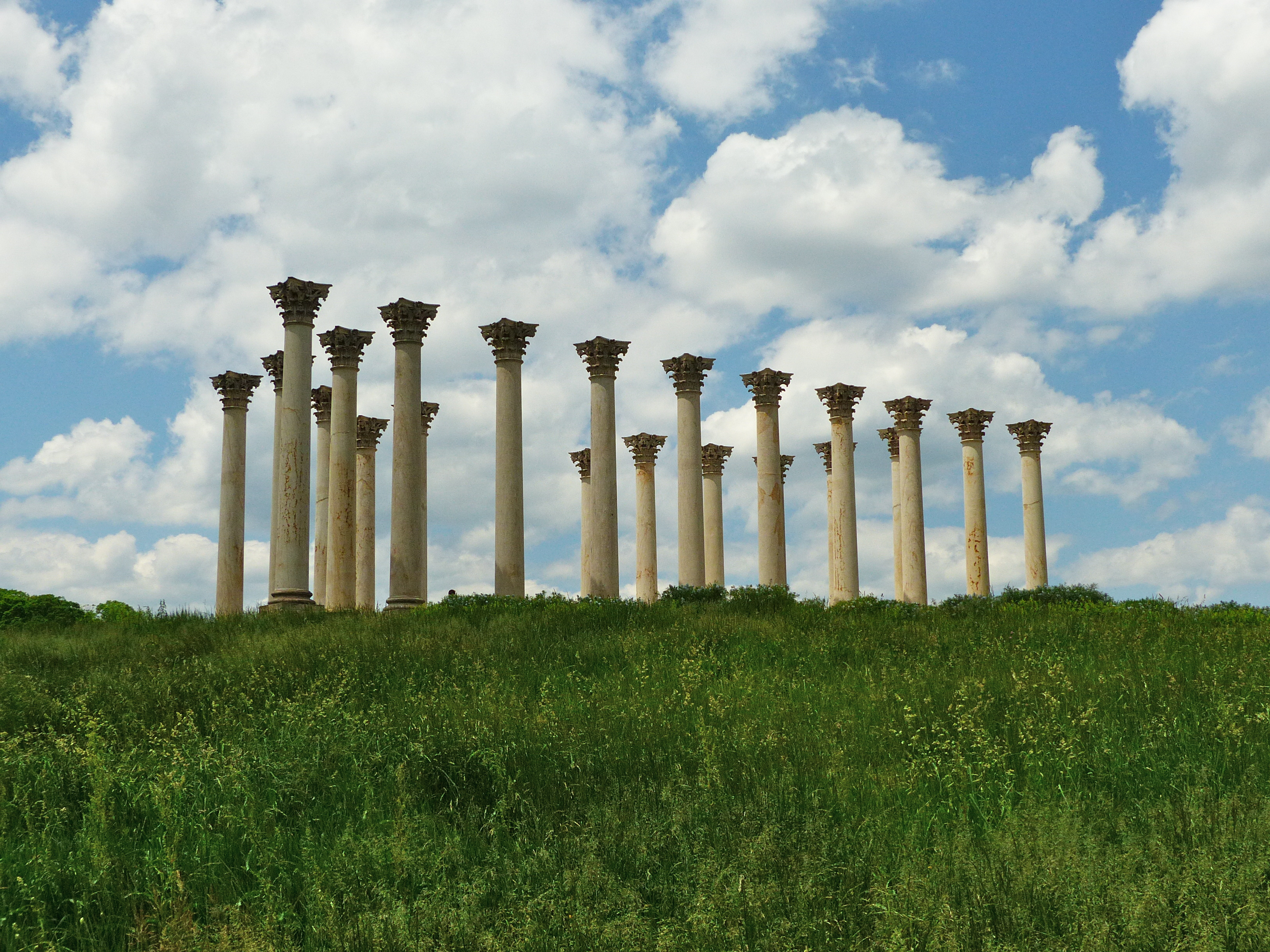
One of the first scenes to catch your eye is a series of Corinthian columns (22 to be exact) standing on a grassy hilltop, on this day against an azure sky filled with billowing clouds.  These are the National Capitol Columns, once supporting the East Portico of the U.S. Capitol, removed during the Capitol expansion in 1958.

The Azalea Collection seems to be the favorite of the park, with a riotous explosion of color in the spring and landscaped trails that take you to the top of Mount Hamilton, with a view through the budding trees of the U.S. Capitol.

But a stroll through Fern Valley offers contemplative stillness among a cascading forest of ferns and Liriodendron blooms strewing the pathways.

Or perhaps you like things scaled back a bit, a world of miniatures, carefully nurtured for more than a hundred years.  If so, the Bonsai Museum is not to be missed.

I loved it all, but perhaps one of my favorites was at the pond on Azalea Hill, teeming with beautiful little croaking frogs, my all-time favorite amphibian.

For us the National Arboretum was a wonderful respite to escape the hectic pace of a metropolitan city, submerging ourselves in a much-needed nature fix. 🙂

Remembering the Fallen ~ Arlington National Cemetery

Memorial Day, a federal holiday established after the Civil War, is a day we honor the service, sacrifice, and immeasurable courage of all those Americans who lost their lives while in military service.  This month, 150 years ago, the first military burial took place at Arlington National Cemetery. Although we knew there would be throngs of people visiting this weekend, and there were, we felt compelled to walk these hallowed grounds, to honor the fallen and their selfless service.

As we entered the visitor center, packed with those here to pay their respects, we knew we would need to return at a later date to take in the exhibits at a much more leisurely pace.

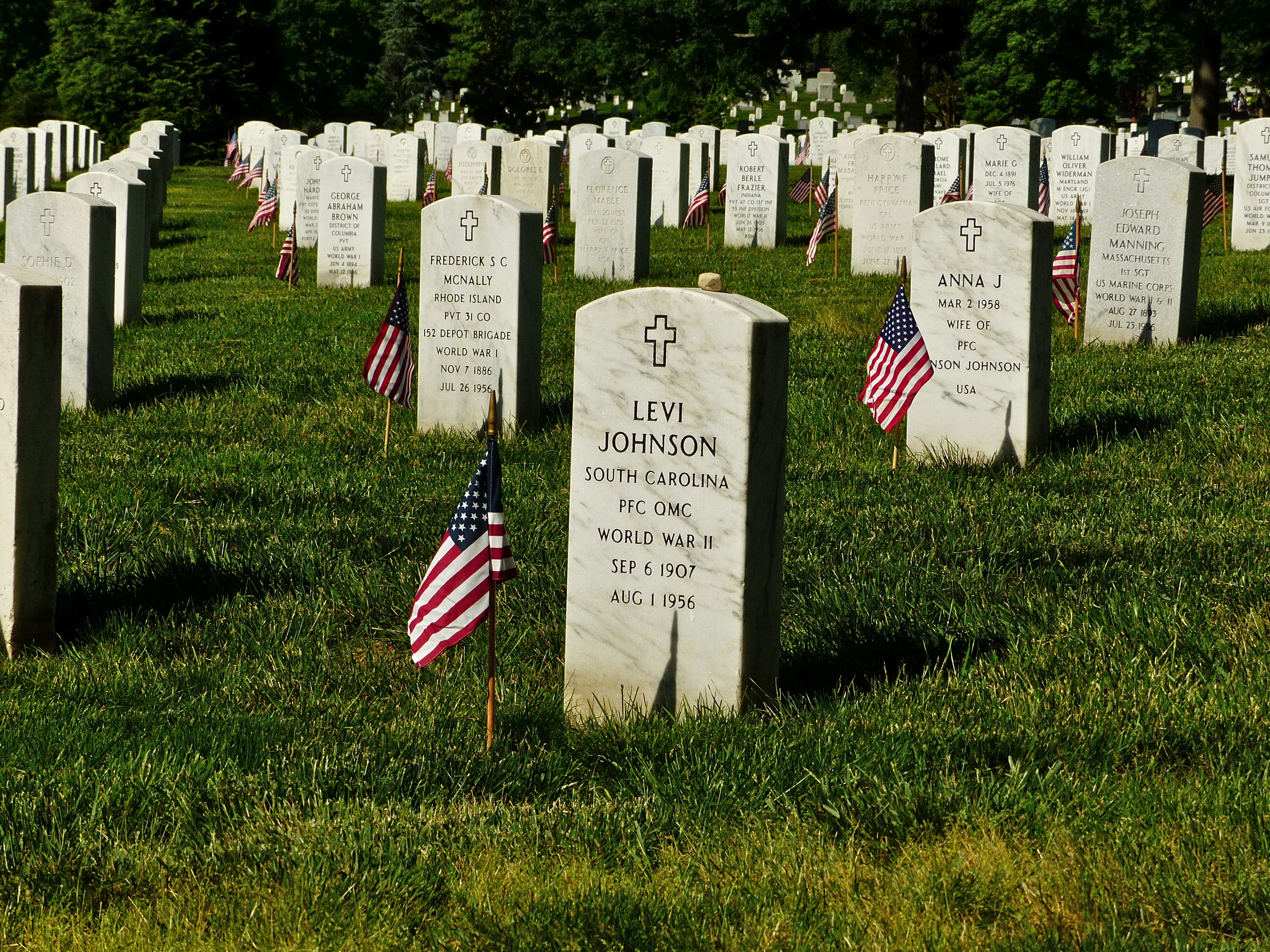
Beyond the doors of the visitor center, rolling verdant hills, dotted with countless white headstones adorned with small American flags, grace the landscape.  More than 400,000 active-duty, veterans, and their families lie beneath these grassy slopes, a profoundly beautiful and peaceful final resting place.   Immaculate gardens with trees hundreds of years old pay tribute to those who sacrificed everything.

On any given weekday, as many as 30 funeral services are performed at Arlington.  As we walked along one of the many paths winding through the gardens, a somber sight met our eyes, servicemen marching in unison, followed by a horse-drawn caisson carrying a flag-draped casket.  A riderless horse slowly walked behind, one lone boot strapped to the saddle.  The sense of loss was felt as the funeral procession passed by. Three rifle volleys and the mournful sound of a lone bugler playing Taps accompanied the service.

The Tomb of the Unknowns sits high on a hill overlooking Washington DC, one of the most well-attended sites within Arlington.  Within this crypt lie the remains of unknown servicemen from World War I, II, and the Korean War.  Soldiers from the 3rd U. S. Infantry Regiment (The Old Guard) maintain a 24-hour, 365-day long vigil, with an elaborate ritual changing the guard taking place every 30 minutes.  The poor lighting conditions and the throngs of visitors made it impossible to get good photos but I was thankful to witness this memorable ceremony.

Rising above the Potomac River on a lush hillside stands the impressive Arlington House, where Robert E. Lee and wife lived out their years caring for her family home. Standing outside the front door you look out over the Washington Monument and the Capitol and at the base of this grassy hilltop the Eternal Flame flickers, site where President John F. Kennedy was laid to rest, one of only two Presidents interred at Arlington.  Many thought the family plot in Massachusetts would be the burial site but First Lady Jacqueline Kennedy felt “he belongs to the people” so Arlington was chosen, and the lovely Jacqueline is buried at his side.

On this most somber of holidays, we remember the fallen and our thoughts go out to the loved ones who live with the gravity of their loss.