Lamar Valley Rhythm ~ Yellowstone National Park

 “Those who contemplate the beauty of the earth find reserves of strength that will endure as long as life lasts. … There is something infinitely healing in the repeated refrains of nature — the assurance that dawn comes after night, and spring after winter.”  ~  Rachel Carson, Silent Spring
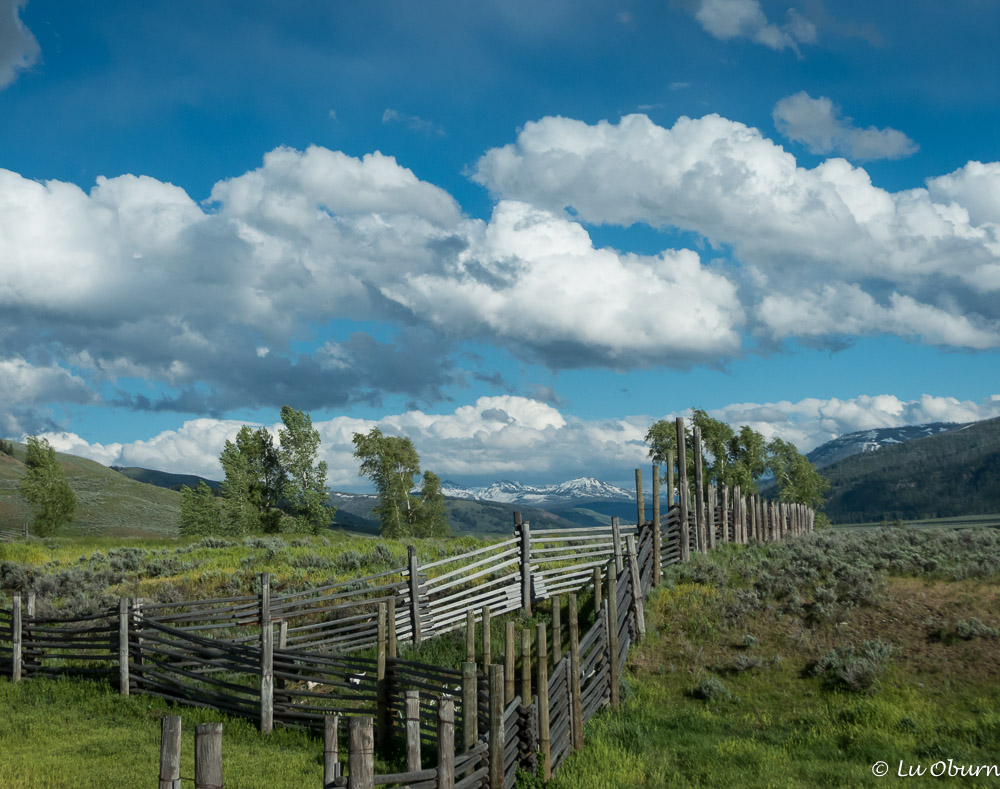
Beartooth Mountains seen from the Lamar Buffalo Ranch

Golden fingers caress the eastern sky, drawing back the darkness and the sense of mystery that blankets this ethereal landscape.  The playing of light and shadows across the mountain peaks seems to evoke a spiritual presence.  It is the dawning of a new day in the Lamar Valley, a magical landscape that must be felt, as words fail to describe the sublime sense of serenity this wild landscape evokes.

Time spent at the Lamar Buffalo Ranch, immersing oneself in nature, can be soul-cleansing.  It opens the senses more fully, forces us to move “in the moment”.  Nothing here feels commonplace, from the robin who sings her melodious morning song perched on a rustic cabin, to the lyrical gurgling of the swollen stream that rushes past the ranch, to the tiny barn swallows perfecting their aerial dance above.  Everything is observed through a microcosm of acute clarity.

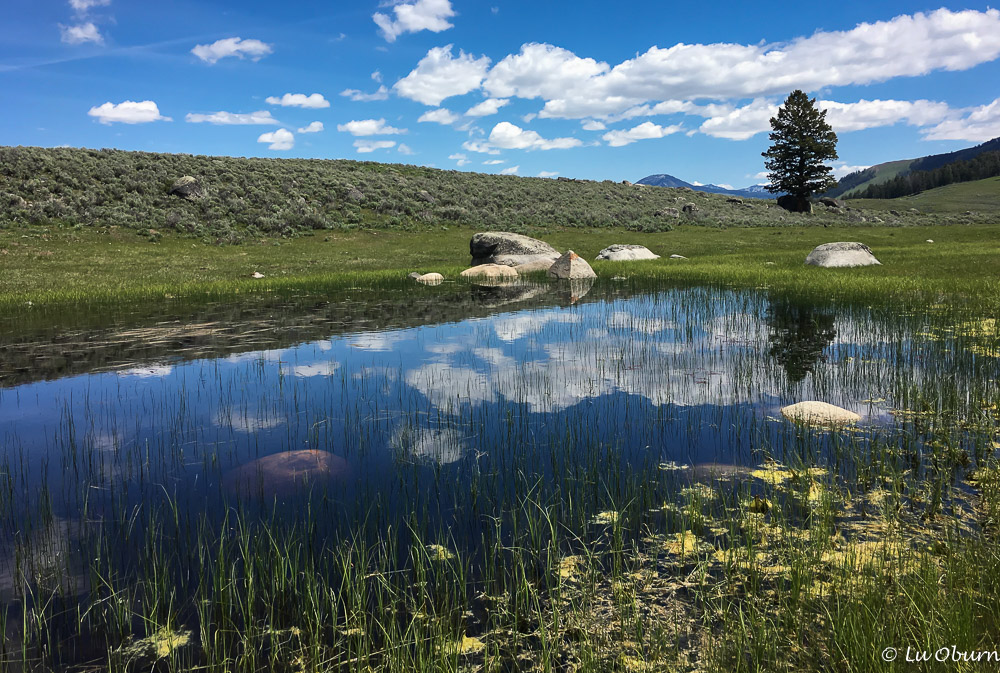
The air smells like sage, sunshine, and fecund earth. Winter snow melt and spring rains provide Lamar a cool, deep drink, resulting in a verdant valley. Springtime heralds the arrival of the “red dogs”, bison calves cavorting in the supple green grasses, never far from mom when they feel the need to suckle. The swollen streams that rush through the valley in the spring slow to a languid crawl in summer and bison graze placidly along the valley floor as far as the eye can see. As the lushness of spring surrenders to the warming of late summer, snorts and bellowing grunts carry over the breeze, broadcasting the “rut”, the bison’s mating season, when bull dominance ranking is challenged.

Beyond the human sight, wolf, grizzly, and coyote roam the shadows of the forest edges, awaiting that perfect moment when they are called to action, with the chance to provide a needed meal for their hungry families.  A familiar wolf pack, the Junction Butte pack, can often be seen hunting in the valley, reminding us of the disquieting nature that is the circle of life in the wild.  There is a poetic justice to knowing that these predators are part of the fabric of this lush landscape.

One can feel the sense of timelessness here in the Lamar Valley.  As the sun sinks lower into the western sky, the trumpeting call of the sandhill cranes wafts across the deepening shadows.  The majestic mountains looming over the valley floor reflect the geologic clashing of the forces of nature, and remind us of the intimate connection we all have with the wilderness, no matter our place in life.  To lose any part of these untrammeled wild spaces would mean a loss of part of our humanity.
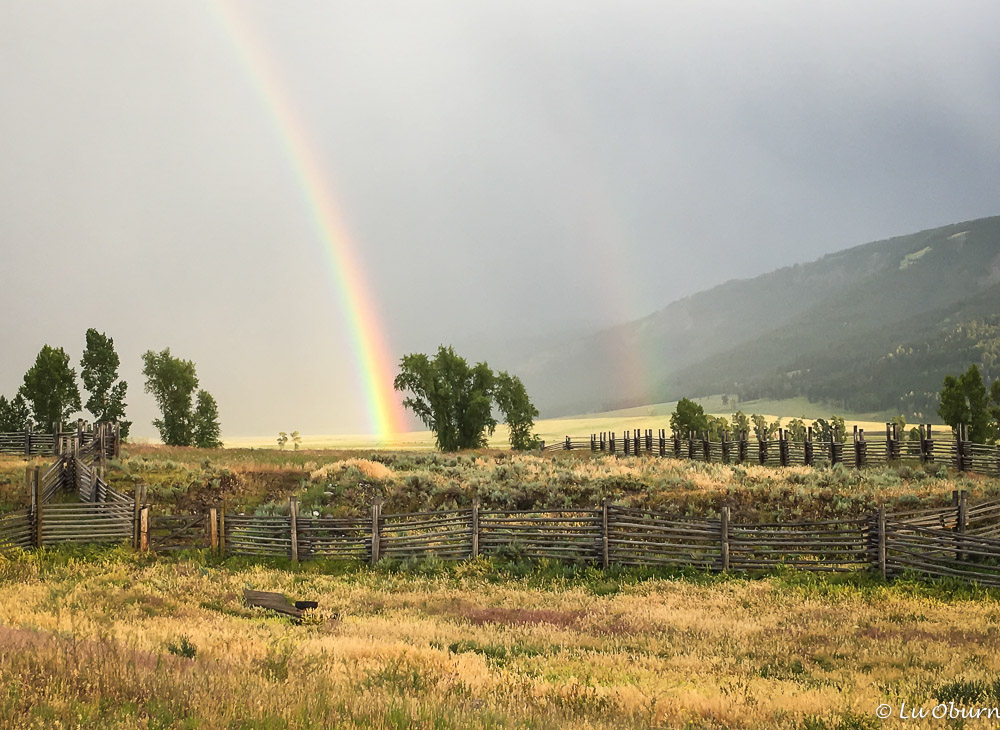
A double rainbow emerges over the Lamar Buffalo Ranch following an afternoon rain shower.

The Lamar Buffalo Ranch is an intrinsic thread woven into the Yellowstone history.  A visit to the park would be incomplete without experiencing the magic of the Lamar Valley.

Citizen Science ~ Yellowstone Forever Field Seminar Series

“The real wealth of the Nation lies in the resources of the earth soil, water, forests, minerals, and wildlife.  To utilize them for present needs while insuring their preservation for future generations requires a delicately balanced and continuing program, based on the most extensive research.  Their administration is not properly, and cannot be, a matter of politics.”  ~  Rachel Carson

I recently had the opportunity to support one of Yellowstone Forever’s naturalist programs, Citizen Science.  Although I have now supported many field seminars, this program continues to evoke special memories for me. Along with seeing breathtaking sights, as we do with all programs; e.g. wildlife, birds, plants, etc., and studying new and interesting topics, this was an opportunity to take the knowledge and data we collected and give back.  The research we conducted and data we garnered from the field was passed to the National Park Service, with whom we have a collaborative relationship.

What is Citizen Science?

Citizen Science is the name given to projects and activities sponsored by a broad array of organizations, state and local government, community environmental groups, and international organizations.  It is a wonderful way for “non-scientists” to make a difference.  Citizen Science programs allow the average layperson to contribute to scientific studies by supporting professional researchers.

Who can participate?

Volunteers of all ages who are concerned with the environment can participate in Citizen Science programs.

The Citizen Science program I supported through our Yellowstone Forever field seminar was three-pronged.  The first day we hiked to a one-hundred meter transect that had been laid out earlier by our instructor, Joshua.  We collected data on the specific wildflowers we located there, broken down into quadrants.

Students inspecting wildflowers along the transect

Our second day was focused on the invertebrates feeding and pollinating these wildflowers.  This study was led by the park entomologist, Erik.  We set up pit-fall traps at the transect the evening before and the next morning hiked back to the transect, doing net-sweeping to capture insects in the area, checking and emptying our pit-falls to see which insects had visited the previous night, and participating in timed observations to see which insects were actively pollinating the plants.  We returned to the classroom to look at these interesting little invertebrates under the microscope and learned how to mount insect samples, like you might find in the Smithsonian Museum in Washington, D.C.

Our final day found us gleefully standing in the pouring rain and hail to study collared cow bison.  This bison survey was led again by Joshua.  Our research took us to a specific area of the park where telemetry had given him the information we needed to locate the collared cows within a herd.  Our task was to count how many cows, bulls, and yearlings we found, determine if the collared cows had any calves, and collect fresh scat and grasses found in the area where the herd was congregated.

Many of the yearlings were quite inquisitive but never aggressive as we approached.  It bears mentioning that wildlife should not be approached in this manner without a professional guiding the way.  It took some time for us to determine if one little “red dog” belonged to the collared cow, but eventually the adorable little calf wandered over to mom, touching noses, a tender moment that registered success.  We collected our necessary samples and moved along, letting the bison do what they do best, munch their way across the meadow.

We had an incredible three days, learned an immense amount about the landscape we walked, and left with the students feeling euphoric about what had been accomplished.

If you have a passion for nature and would love to give back, here are a few organizations that have established Citizen Science programs, also known in some circles as Citizen Naturalists:

Look for Citizen Science programs in your area.  Happy researching!

Disclaimer:  The views expressed here are my own and do not necessarily represent the views of Yellowstone Forever.  

Intro to Wolf Management & Ecology ~ Yellowstone Forever Field Seminar Series

After a few weeks of preparation, it was finally time to support my first field seminar, Intro to Wolf Management and Ecology.  Since the reintroduction of wolves to Yellowstone in 1995, debates relative to this alluring creature have been tireless and complex.  Wolf watchers in the park are enamored by them, ranchers and hunters not so much.

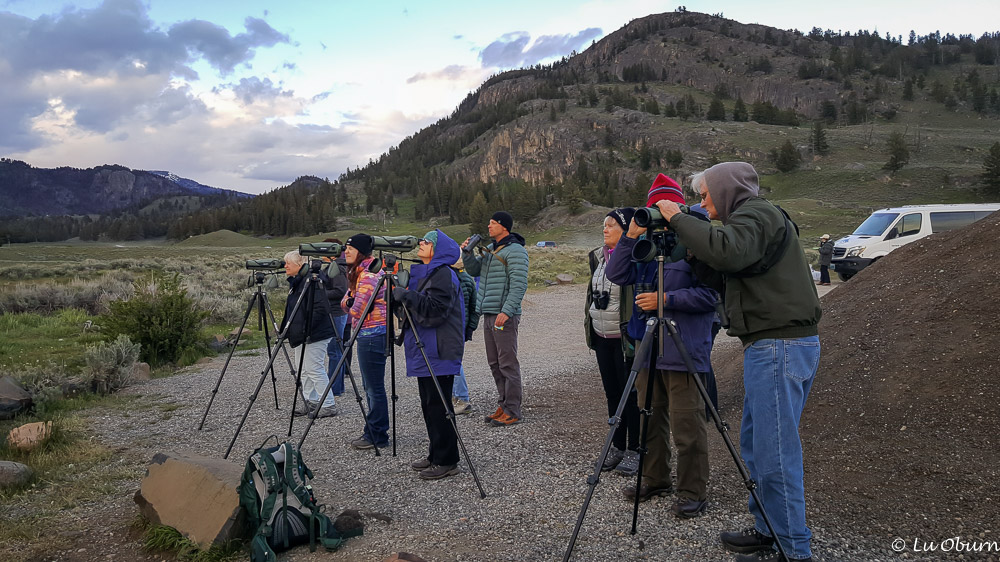
Sunrise at Slough Creek, site of an active wolf den.

I had heard several park employee discussions on the topic of reintroduction of the wolf, namely Doug Smith, project leader for the Wolf Restoration Project, since our arrival to the park.  He has studied wolves for the past 20+ years and still brings the same passion to the topic as he did as a Yellowstone freshman.  I was anxious to hear some fresh views on this subject from our class instructor, Jon Trapp.  Beyond  embracing many of the views presented by Doug, Jon also spoke on the topic of wolf denning, subject of his master’s thesis.

Our classroom time took us through the past couple of decades since reintroduction, how many of the wolves have been collared and tracked, the family dynamics of how they hunt together, and what happens when an alpha member of the pack is killed.  It was most informative and supporting this field seminar added another dimension to my time at the Buffalo Ranch.

Field time at the Slough Creek den

Wolves get a bad rap, some of it deserved, as they do kill some livestock.  No rancher wants to work hard to grow their herd, only to have a predator take from him.  The good news is that when this happens, the rancher is compensated for his loss.

Hunters who share the sentiment that the only good wolf is a dead wolf feel that the elk population has been jeopardized by the reintroduction of the wolf.  It is true that the mainstay of the Yellowstone wolf’s diet is elk; however, statistics have shown that many more elk are taken down by cougars than wolves.  I learned that 85-95% of the time when hunting an elk, the wolf is not successful, and their elk hunting is compensatory, killing weaker elk who were most likely going to die anyway.

Instructor Jon Trapp balanced over an abandoned wolf den

Our field studies were the most exciting, taking us to an area of the park where we could view an active wolf den using spotting scopes.  Watching the pups emerge from the den, tumbling over one another, frolicking in the sunlight, delighted us all.  Jon also took us to one of the first acclimation pens, Rose Creek, where we read the story of the first alpha female to the reintroduced to the park.  On another outing we inspected an abandoned wolf den.

With the wolf’s return to the world’s first national park, Yellowstone has regained its balance of historic mammals and is now described as the largest intact ecosystem in the temperate world.  We now see this region as it was before the Europeans arrived.

Biologists and scientists spend significant time in the field tracking the wolves of Yellowstone, but in the end what matters most is that we carved out another little piece of wildness with their reintroduction.  We need these wild spaces, their coarseness, erratic ebbs and flows, the magic and mystery.

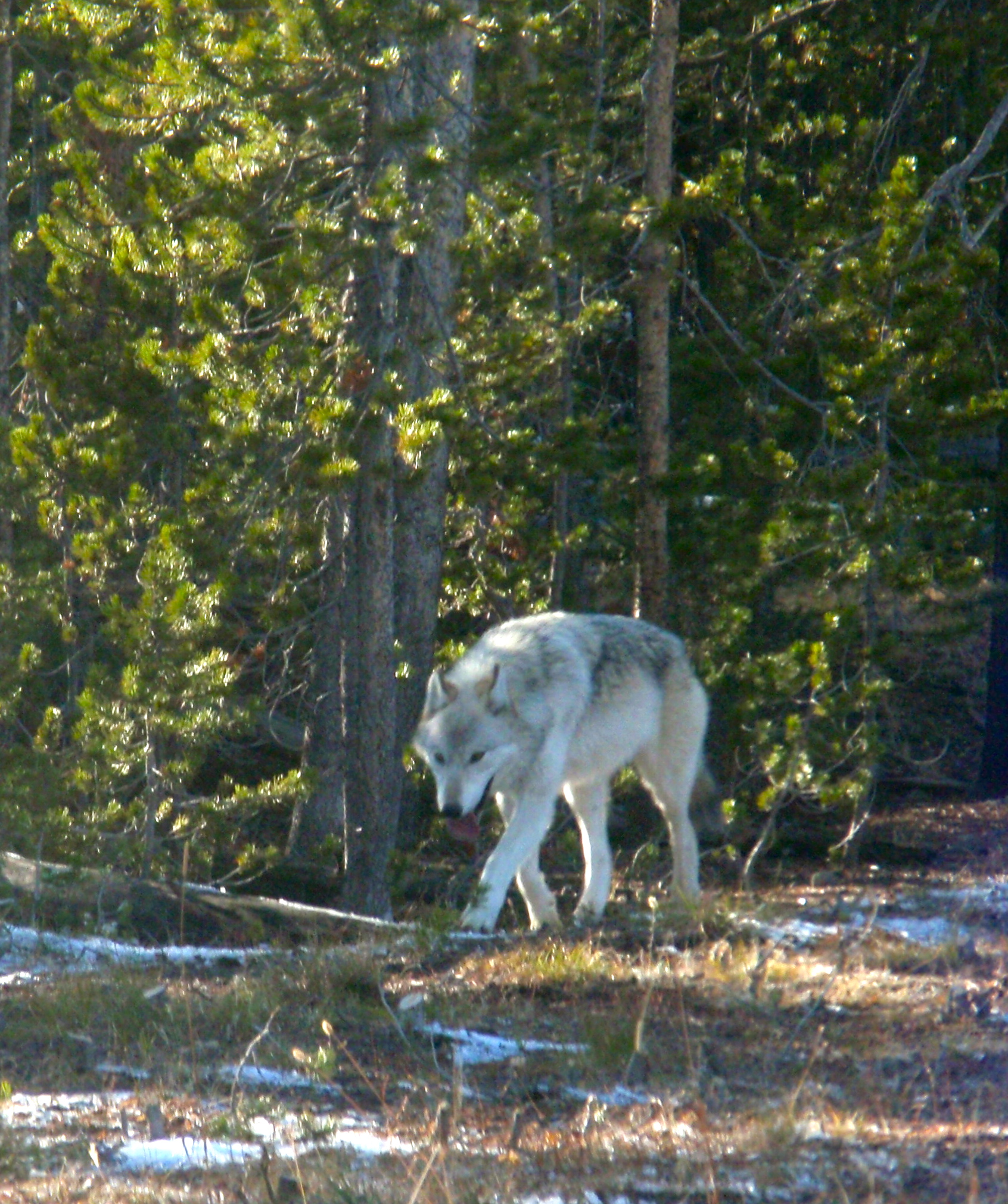
Photo of the white wolf from September 2010, recently shot and killed within Yellowstone NP.

Disclaimer:  The views expressed here are my own and do not necessarily represent the views of Yellowstone Forever.  

SaveSaveSaveSaveSaveSave

SaveSave

SaveSave

SaveSave

SaveSave

SaveSave

SaveSave

SaveSave

SaveSaveSaveSave

SaveSave

SaveSave

SaveSave

SaveSave

SaveSave

SaveSave

SaveSave

SaveSave

A Yellowstone Forever Summer

Planning for our summer began in earnest several months ago but we just arrived at our destination, Yellowstone National Park, a few weeks ago and what a whirlwind it has been.

Giving back by way of volunteering is a passion of ours and this year we have elected (and been chosen) to be program volunteers for Yellowstone Forever.  Formerly known as Yellowstone Association, a merger in October 2016 between the Association and the Yellowstone Park Foundation created Yellowstone Forever, the educational and philanthropic partner of the park.  We will be supporting the naturalists who conduct the Field Seminars and soaking up every bit of knowledge we can along the way.  Their subject list is diverse, ranging from wildlife, birding, photography, geology, sketching, hiking, Native American studies, backpacking, fly-fishing, and an entire new Naturalist Series.  It is going to be an active and educational summer, one in which we feel fortunate to participate.

Training for our Yellowstone summer adventure spanned a couple of weeks and covered a broad spectrum of activities; e.g. orientation, bus driver training, an intensive two-day wilderness first aid class, course preparation, and camp duty…whew!

When we finally arrived at our summer home, the Lamar Buffalo Ranch, we hit the ground running with a dedicated group who travel from near and far to ready the campus for the upcoming summer season.  From top to bottom we scrubbed and scoured the bunk house, bath houses, and cabins, in anticipation of a busy summer.  If it sounds like a lot of prep, it is, but the care taken by Yellowstone Forever to ensure happy field seminar participants has resulted in numerous returnees year after year to consume the knowledge eagerly shared by the engaging naturalists who conduct the classes.

This slideshow requires JavaScript.

Yes, it has been a whirlwind few weeks, tiring yet exhilarating.  Although far from being expert program volunteers, we both have one field seminar under our belts, “Intro to Wolf Management and Ecology” and “Bears, Bones, Signs, and Stories”.

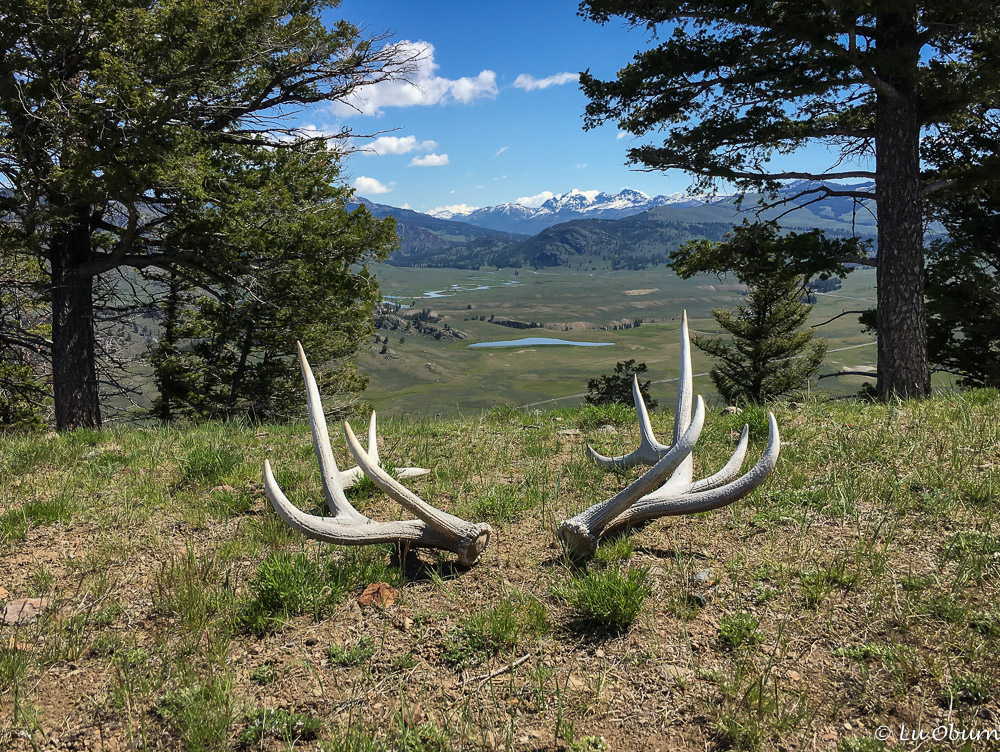
As I sit on the back porch of our bunkhouse looking out over the heart of the Lamar Valley, known as the “Serengeti of North America”, I listen to the resounding thunder rolling across the landscape. Countless bison can be seen grazing, while their young “red dog” calves frolic.  I am humbled by the wonder of this magical landscape. I have no doubt that my Yellowstone Forever summer will change me in ways I cannot foresee.

Rumi said:

“There is a voice that doesn’t use words.  Listen.”

I believe that voice can be found in the wilderness, in places like Yellowstone National Park.  I plan to spend plenty of time listening.  As time and the internet permits, I hope to share what I have learned.

Hope you are all having a great start to your summer!

Disclaimer:  The views expressed here are my own and do not necessarily represent the views of Yellowstone Forever.  

SaveSave

SaveSaveSaveSave

SaveSave

SaveSave

SaveSave

SaveSave

SaveSave

SaveSave

SaveSave

SaveSave

SaveSave

“Les Trois Tetons” ~ Grand Teton NP

Fur trappers, when first gazing upon the Teton Range, dubbed the South, Middle, and Grand peaks “Les Trois Tetons”, meaning “the three breasts”.

With less than three days to explore one of nature’s finer creations, Grand Teton National Park, we knew we would be leaving much for another time.  A day of hiking and one dedicated to exploring the park’s beauty through a lens seemed the best approach. Fortunately this wasn’t our first visit so we didn’t feel compelled to maintain a crazed, frenetic pace.

Grand Teton NP_160622-1300642
Bison at Antelope Flats

Waiting in a long line at the entrance station, hubby turned to me and said “remind me why we decided to visit a national park during peak season and while the National Park Service is celebrating their centennial year”.  Yes, probably not our most prudent decision.  Shoulder season is typically our time for exploring these treasures but a planned visit to friends in the area and another adventure already scheduled for the fall found us rubbing elbows with hordes of tourists.

Grand Teton NP_160622-1300675
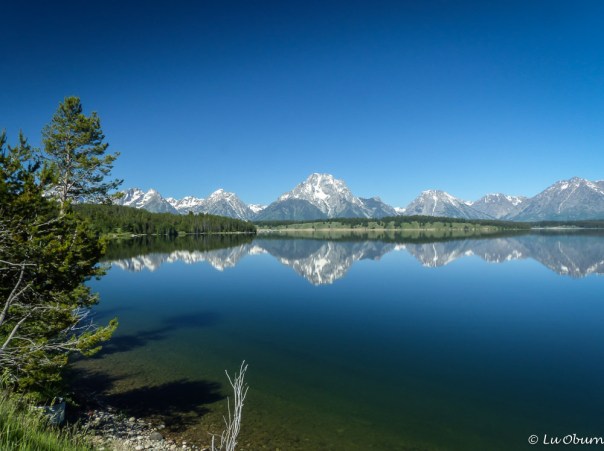
Grand Teton reflection on Jackson Lake

With map and park newspaper in hand we pulled away from the entrance station and were immediately reminded of why we are drawn to this park.  Without any rolling foothills to soften the visual effects, Grand Teton’s massive, craggy peaks rose dramatically off the Jackson Hole valley floor, a sight likely to leave most breathless.

Grand Teton NP_160622-1300480
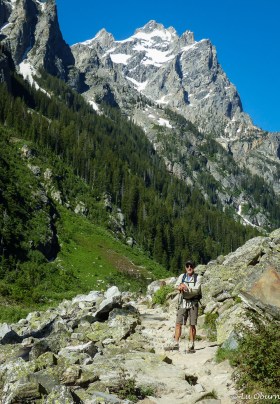
Terry on the trail

The 2.7 billion-year-old rocks found in the core of this range are some of the oldest in North America, but these magnificent mountains rank among the youngest in the world.

After passing a couple of full campgrounds and another long wait, we quickly set up camp at Colter Bay.   With map and newspaper in hand we charted our course for the next two days.

The Forks of Cascade Canyon Trail at Jenny Lake became our hike of choice. Instead of taking the boat shuttle across the lake, an option for many as it shaves about four miles off the hike, we opted to start our trek from the String Lake trailhead.  It made for a nice 12.5-mile hike, with a 2000’ elevation gain.

We even got a peek at a moose feeding in the willows across a meadow, a wonderful treat. They have been known to dive up to 18 feet under the water’s surface and stay there for up to a minute, in search of aquatic plants, which makes for a rather uncooperative photography subject.

Grand Teton NP_160622-1300514
Moose munching on willows

The next morning found me rubbing sleep out of my eyes at 4:30 am, heading out in the hopes of capturing sunrise shots without the crowds.  Tucked into a warm bed, hubby graciously declined the offer to join me.

Both artists and photographers flock to the Tetons.  With her sagebrush flats, wet and alpine meadows, lakes, ponds, and forests, there is plenty available for a creative mind.

Grand Teton NP_160622-1300590
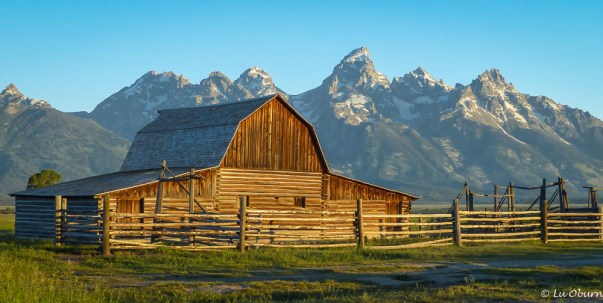
Moulton Barn on Mormon Row

A favorite stop to complete a wonderful day of sightseeing was the Laurance S. Rockefeller Preserve Center.  This plot of land south of the village of Moose offers 8 miles of trails and showcases Mr. Rockefeller’s vision and his legacy of conservation stewardship.  A small circular room allows you to quietly sit, enjoying the sounds of the park: crickets chirping, owls hooting, wolves howling, male ruffed grouse flapping his wings in courtship, an elk’s mating call, wind blowing through an aspen grove, a thunderstorm…ahhh!

Grand Teton NP_160622-1300658
Just me and my shadow at Oxbow Bend

Wind speaks through pines.  Light animates granite.  An eagle soars – it’s shadow crosses over us. All life is intertwined.  ~ Anonymous

 This is the connectedness felt when we quiet ourselves in nature.