So what the heck is watchful waiting anyway? Well, in medical terms, for someone facing prostate cancer, it can be the standard treatment, given your test results. Hubby Terry received this cancer diagnosis almost 5 years ago, one that roughly 1 in 6 men will receive sometime in their life, not unlike breast cancer statistics for women. Unfortunately, given his age at the time and his Gleason Score, he was not a candidate for watchful waiting, too young and tumor too advanced. A prostatectomy was in order instead and he has been blessed to have a wonderful surgeon. Ever the vigilant one, Terry has done his follow-up tests like clockwork ever since.
Our change in plans came about as a result of a regularly scheduled PSA blood test earlier this year. Although not alarming by any means, the finding did not fall within the ‘normal’ range, which should be negligible once the prostate has been removed. Additional PSA tests done here within the past two weeks have all provided the same conclusion, which could indicate any number of things. Terry received the news from his doctor’s office that a battery of tests was to be the next course of action, to rule out a few things. However, after further analysis and given that the PSA test score has not continued to increase, his doctor notified him yesterday of the decision to forego further tests for 90 days and practice watchful waiting instead. What to make of this? It feels like we are in limbo, as nothing has changed except to move the date out for yet other procedures.
A good lesson to be learned during this watchful waiting is to get back to the present; live for now; and not focus on what may be 90 days down the road. None of us knows the road ahead so why not look at what is around us instead? Given the beauty found in this country, it sounds like a sound plan! Special thanks to everyone who sent warm thoughts and prayers our way.
If you liked this blog post, why not subscribe to my blog via feed reader or e-mail?
As I have written about in earlier posts, Yellowstone National Park was on our calendar for May through October. Our planned 5-month stay involved working for Yellowstone Association in their Old Faithful bookstore, where we were looking forward to reacquainting ourselves with old friends and meeting some new folks. Well, as life would have it, a change of plans is now in the works as some unforeseen medical tests needed for Terry have caused us to postpone our trip. Given the abundance of excellent doctors and medical facilities in the San Diego area, we feel it prudent to stay put for the time being.
Now for the positive news. A cancellation here at San Elijo State Beach has allowed us to stay right where we are for the next 30 days (thank you so much Bill). During this period of waiting for test results and possible other procedures needed, we plan to stay near metropolitan areas in California. We still have so much to explore in California, so we will most likely do just that once June rolls around. The beauty of this lifestyle is the ability to quickly shift gears, allowing us to move a few things around on our bucket list.
Although we will miss friends who we were very much looking forward to spending time with, we believe things happen for a reason, even when the path forward is unclear. Staying in California feels like the right thing to do at this moment and with faith guiding us, how can we go wrong?
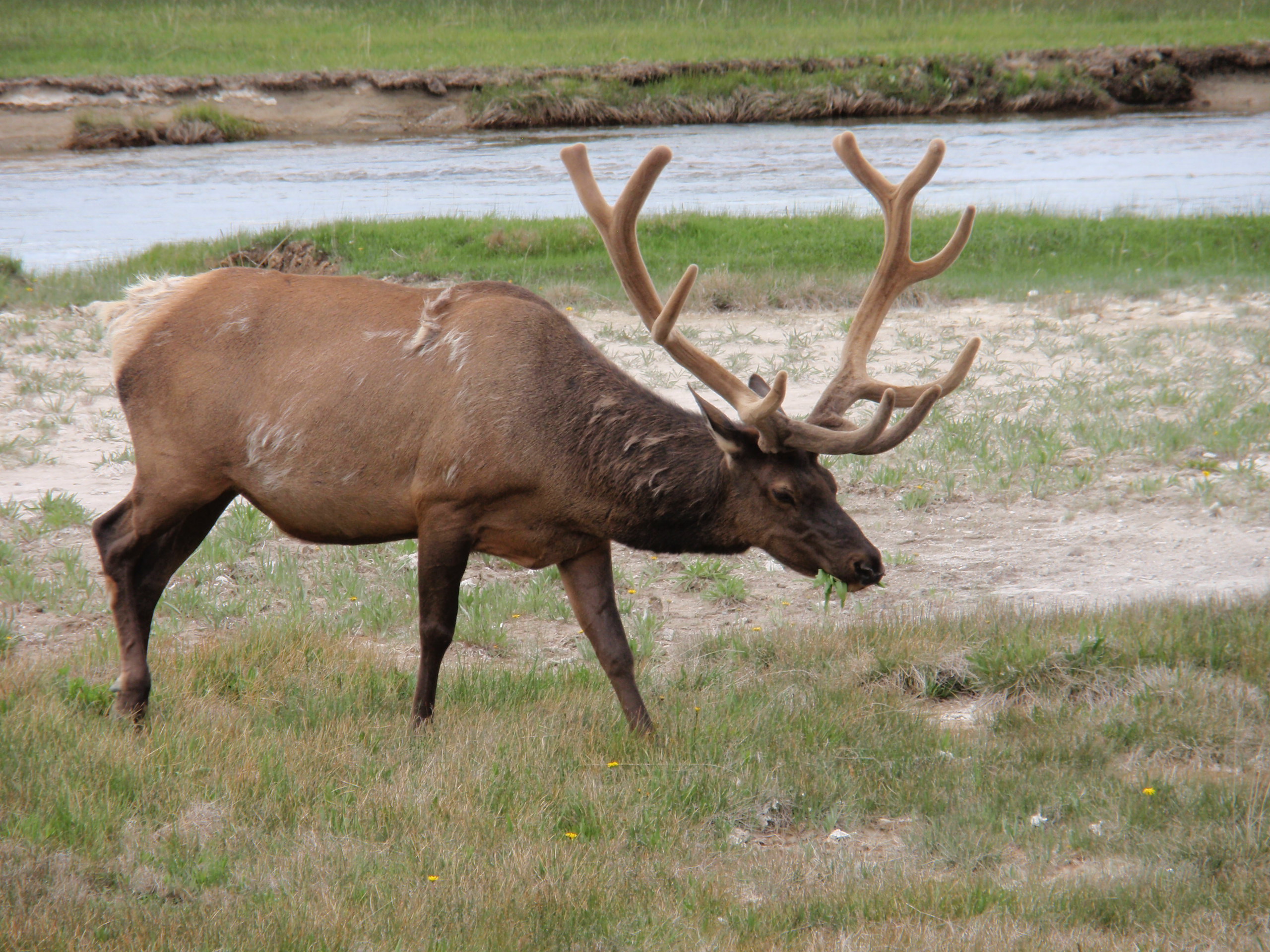
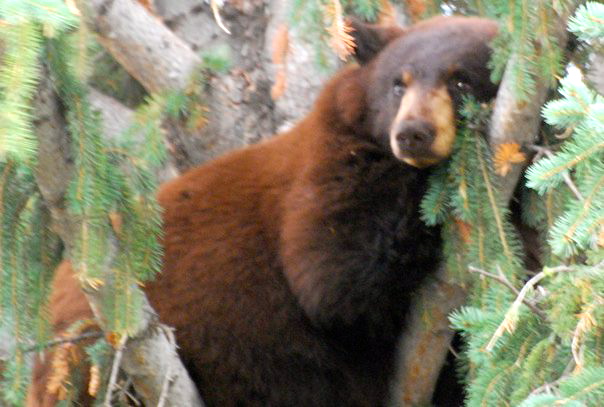
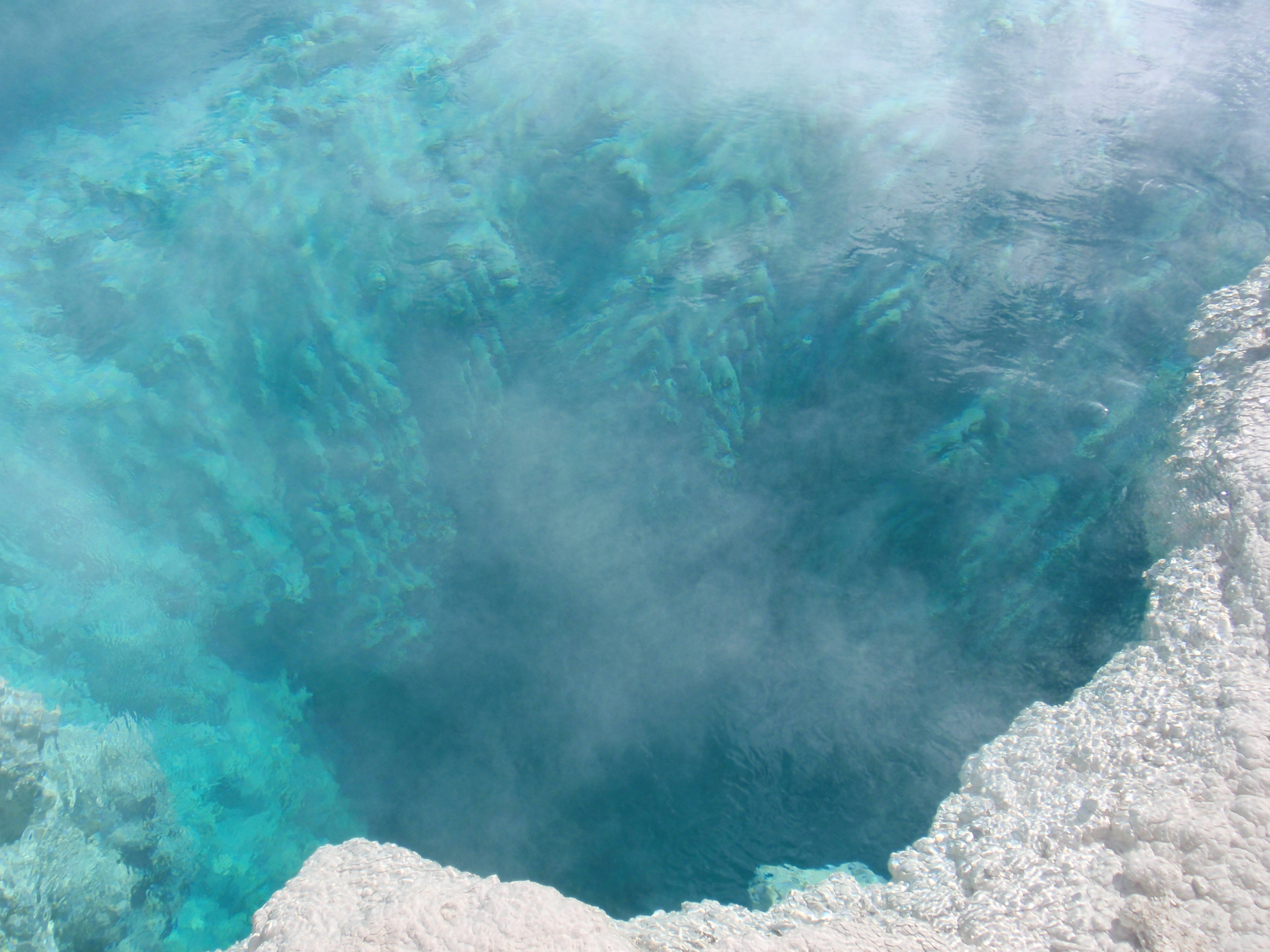
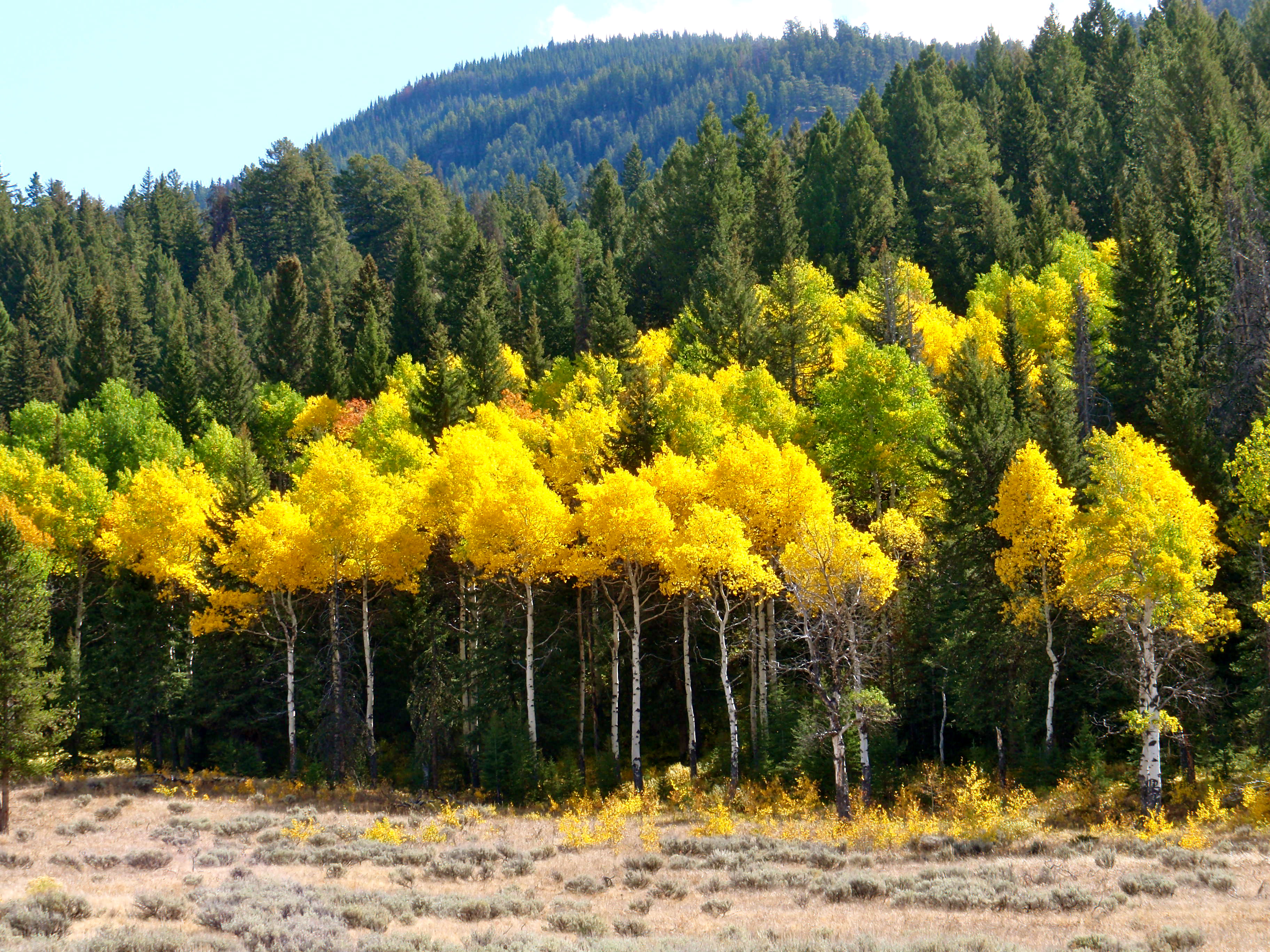
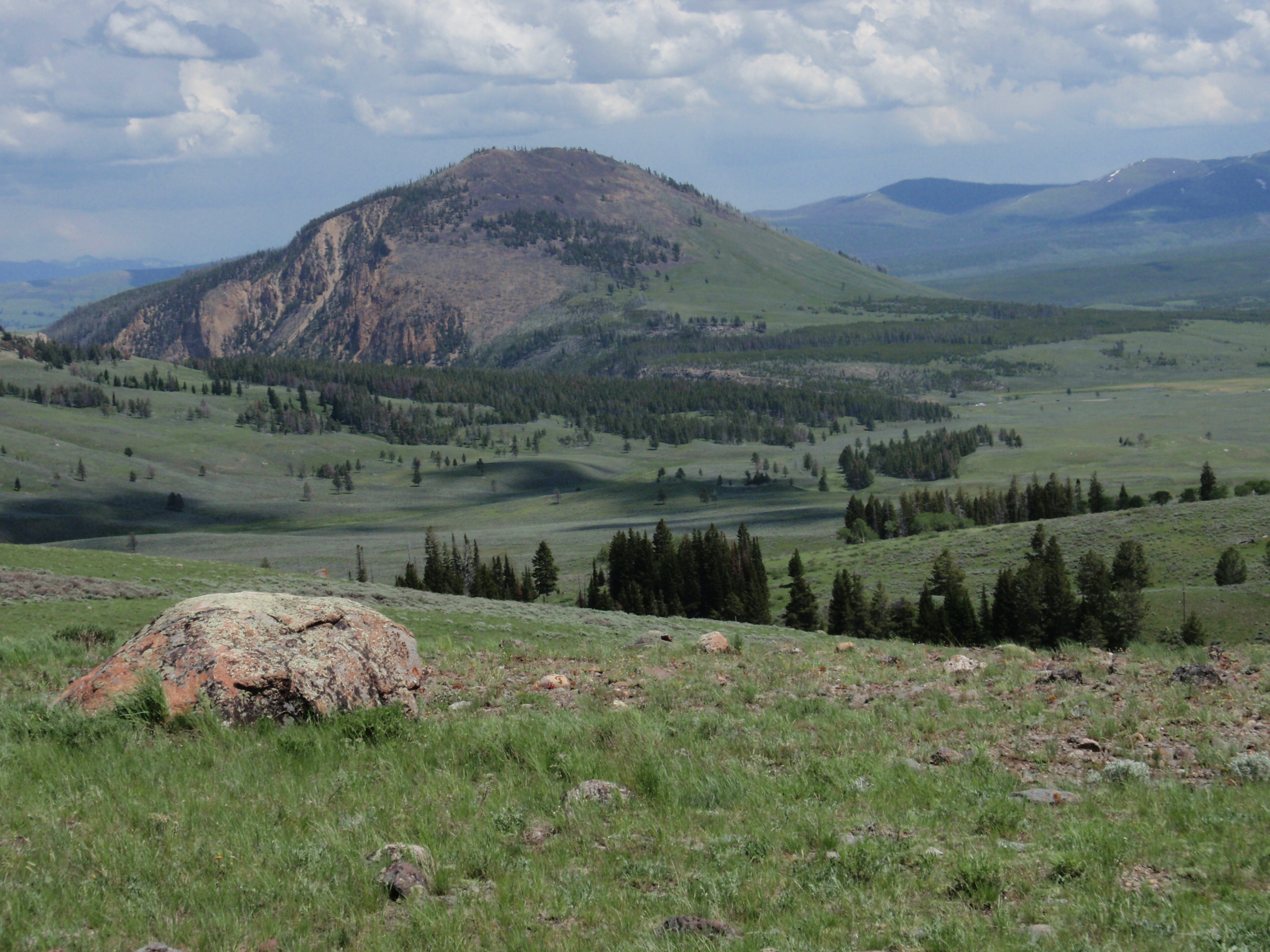
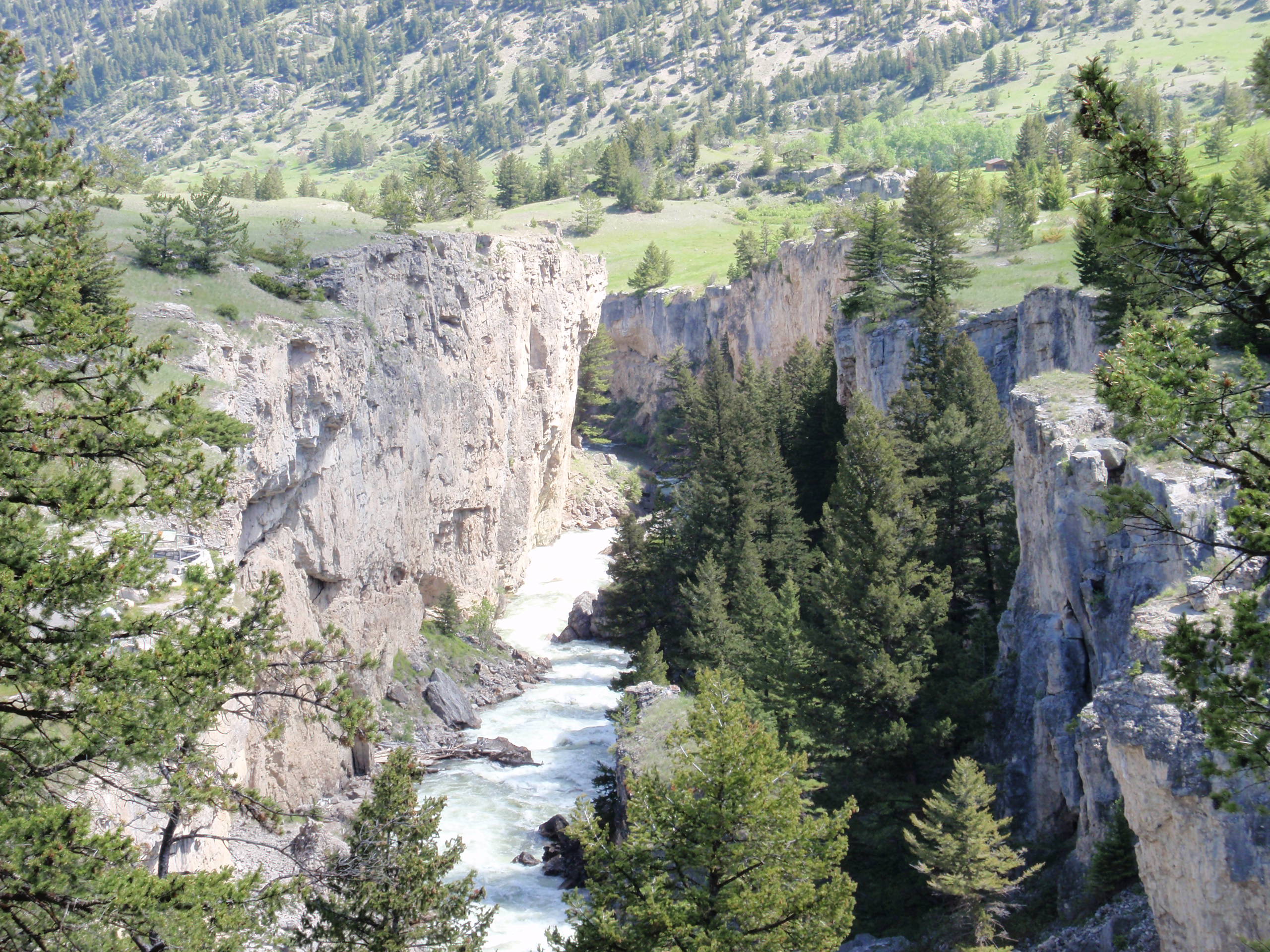
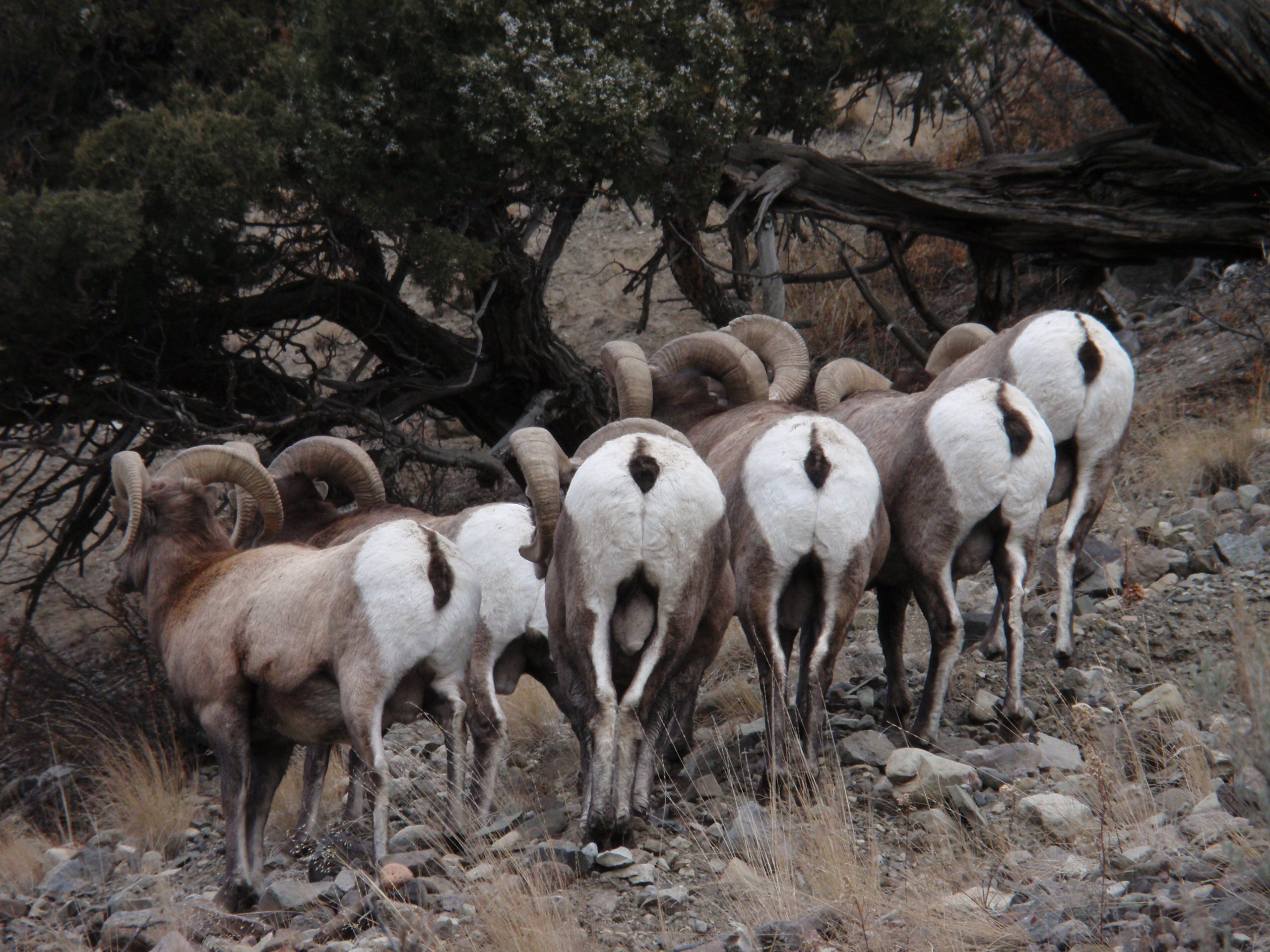
Since Yellowstone was to be our destination, I feel it only fitting to honor this first national park with a few photos that were captured during previous visits. If you haven’t been yet, what are you waiting for? It is a magical place even during the winter. And while you are contemplating a visit, check out this fabulous photography blog site featuring the hunt of the Yellowstone red fox in the winter. We have seen a video of this and it is amazing!
Given our change of plans, if any of you out there have spent time in northern California and have some memorable experiences or recommendations for places to stay, we would love to hear about them.
If you liked this blog post, why not subscribe to my blog via feed reader or e-mail?
One of the things we have missed while in San Diego is hiking in the wilderness, without having to drive a great distance to do so. We have not been able to get to Mission Trails Regional Park yet so the next best thing was to head out to Torrey Pines State Reserve, about a 6 mile drive south for us. We heard the hiking was nice and read that this is one of the wildest stretches of land remaining on the southern California coast so we were counting on some pretty spectacular views.
The not-so-rare-looking Torrey pine
This day use only park is home to the nation’s rarest pine tree, the Torrey pine, named after the renown botanist Dr. John Torrey of New York, back in 1850. Ironically Dr. Torrey never set foot in this part of the country but instead was bestowed this honor by a colleague of his, Dr. Charles Christopher Parry, who did travel here and took action in 1855 to protect this species of pine. Where this rare pine once covered a large area, it now only grows here and on Santa Rosa Island off the coast of Santa Barbara.
You can park down at the beach in the day use parking lot and walk up to the top (which would afford you the most exercise) or drive up and park where the network of trails begin. There is a nice little visitor center and museum to peruse and interpretive nature walks are provided on the weekends. To keep the park pristine, no food or drink except water and no pets or bikes are allowed on the trails.
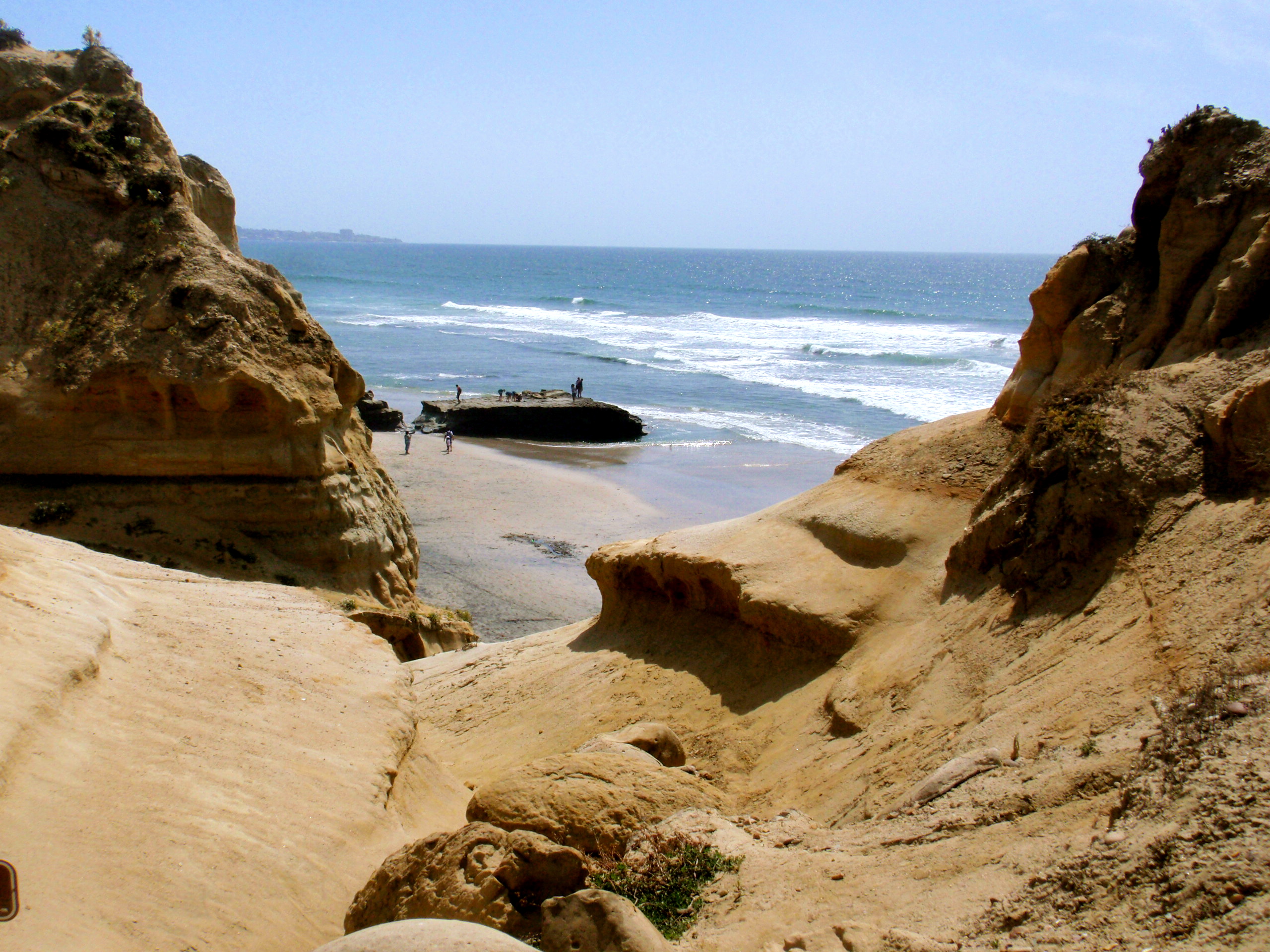
Eight miles of trails criss-cross the park, some hugging the sandstone cliffs, offering stunning 360º views.
Sandstone cliffs with views of Del Mar and Cardiff
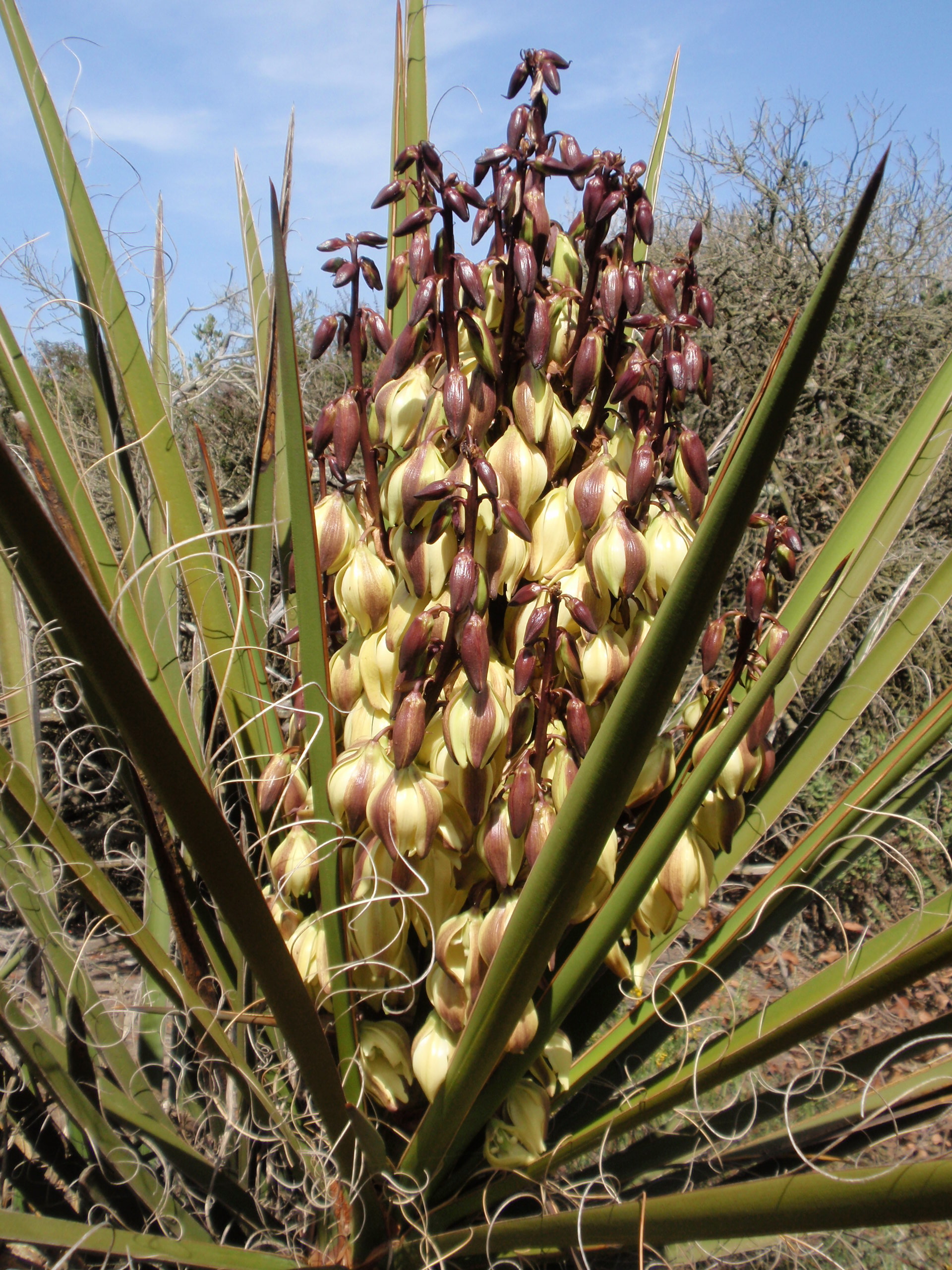
Other trails take you through chaparral, prickly pear cactus and Mohave yucca, just beginning to bloom. You can catch a glimpse of the famous Torrey Pines Golf Course through this shrubbery.
Flowering Mohave yucca
The Beach Trail descends 300 feet to Torrey Pines beach and lagoon, an area vital to migrating birds, with views of Flat Rock. South of this rock is San Diego’s “unofficial” nude beach, Black Beach.
View of Flat Rock on Torrey Pines beach
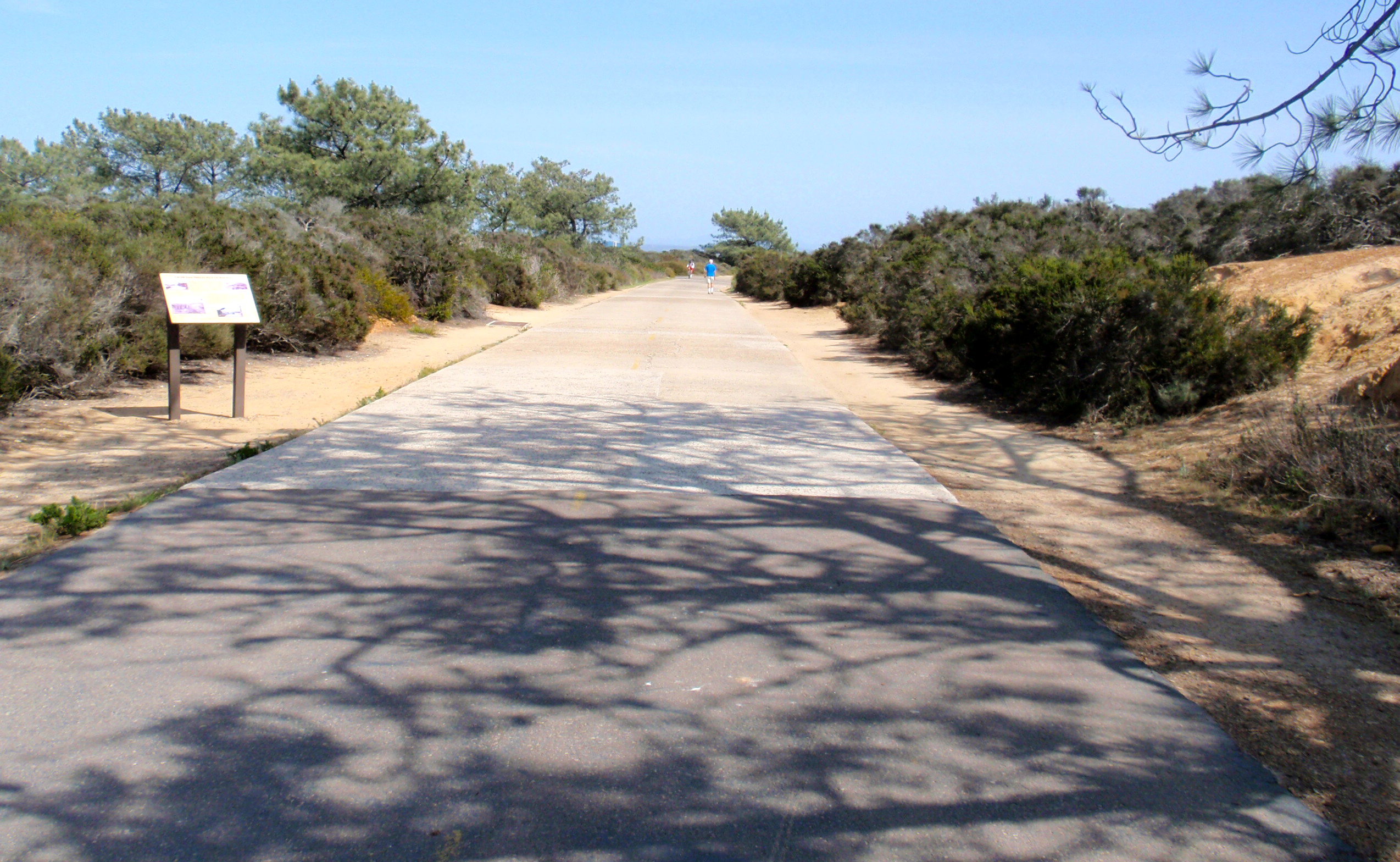
The Torrey Pines Park Road was once part of the main highway running between Los Angeles and San Diego. Originally a dirt road built in 1910, it was paved a few years later. Even paved, its steep grade posed a problem for the vehicles of that era. Because Model Ts used gravity to deliver gas to the engine that was set in front of the car, motorists had to climb the road in reverse! This road is now used by those wanting to enjoy the views while working up a sweat.
With the sound of the pounding surf and the salty smell of the ocean tantalizing the senses, you can forget that you were here for some exercise. If you are looking for a heart-pounding hike, this is probably not going to get you there but you definitely can’t beat the views!
If you liked this blog post, why not subscribe to my blog via feed reader or e-mail?
Hard to believe we have been here at San Elijo State Beach 2.5 months already, with only a couple more weeks to go. Thought it was about time to tell you about this little jewel that keeps people coming back year after year, some 20+. Many of those who frequent this beach are locals, some living in Encinitas, right across town. The smiling faces tell the story. Many come for the surfing (some of the best in the state we are told), some to watch their kids build sand castles and splash in the surf, some to take strolls along the water’s edge, taking in the sights, sounds, and smells that engulf them, and others to rekindle friendships year after year. Many boast that this is the best state beach on the California coast.
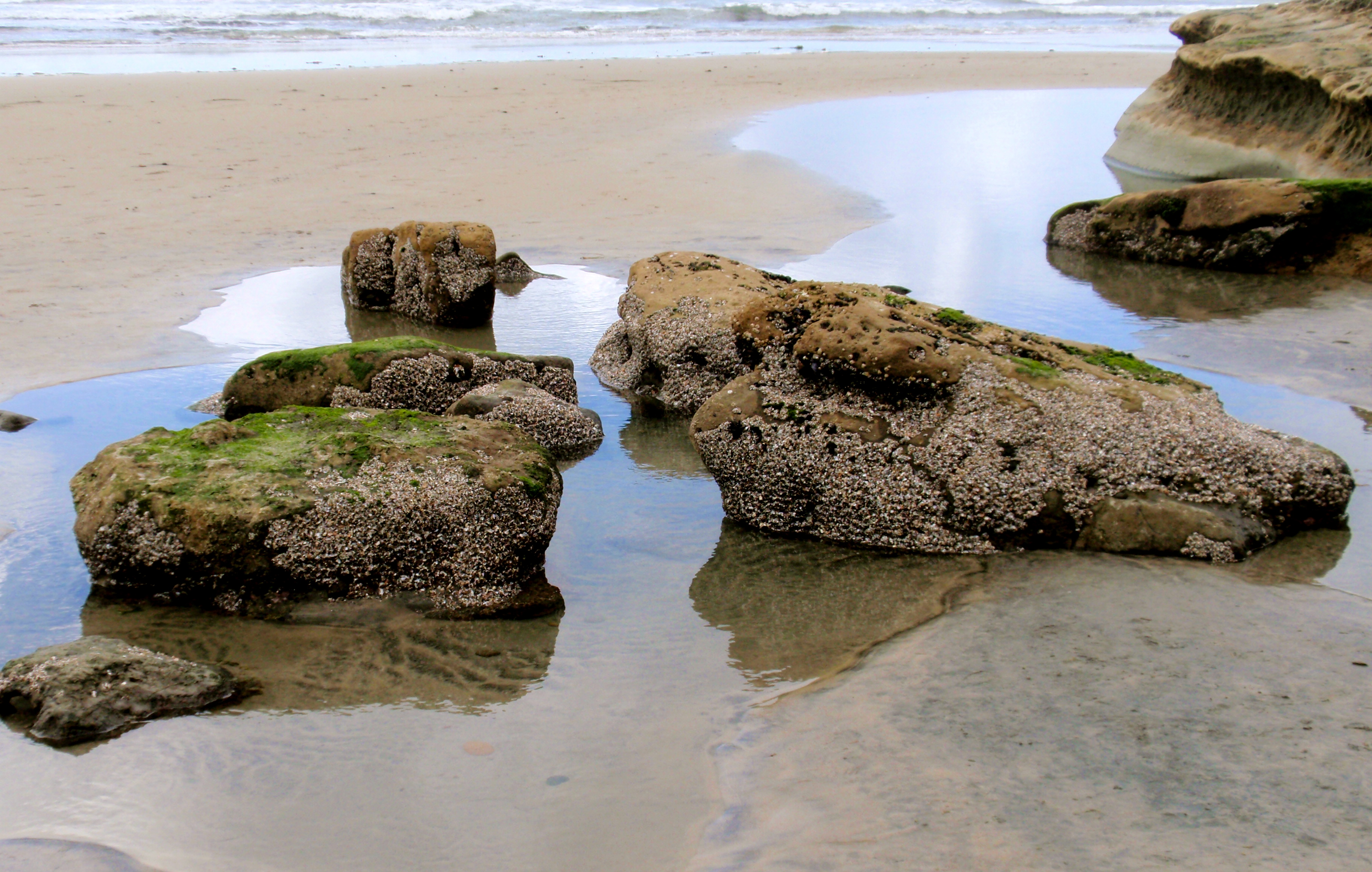
Life on the rocks
One big draw other than the beach, we believe, is that you can literally walk out the campground gates, cross the Coast Hwy, and you are in the sleepy little laid-back town of Cardiff, which boasts some pretty decent restaurants, a Sambazon Acaí Cafe (check it out for a yummy organic, superfood fruit bowl) and a great gourmet grocer, Seaside Market.
Buddha Healing Statue ~ Self Realization Fellowship
Head north out of the gates instead and walk to Encinitas, which seems to be the focal point for many of the little towns surrounding it. Much larger than Cardiff, it has huge grocery chains, big-box stores, great restaurants to entice anyone, wonderful consignment stores, and lovely boutiques to browse through. Our favorite Encinitas restaurant so far, for a nice dinner out, is 3rd Corner, a first-rate little bistro/wine shop. Choose a bottle of wine in their shop, if you like, and they will uncork it for you at your table. And their entrées are killer to boot! If you like craft beers, Union Kitchen and Tap is the go-to place, and Kim’s Vietnamese is just up the street for good pho.
Tennis anyone?
Solana Beach, just south of San Elijo, is another laid-back beach town with some trendy shops and a great Thai restaurant, Bangkok Bay. Cedros Avenue is a colorful street lined with shops that has something for everyone. The walk back to San Elijo from Solana Beach looking out over the ocean never disappoints.
Outside the San Elijo State Beach campground, at the corner of Chesterfield and Coast Hwy 101 sits a somewhat controversial statue entitled “Magic Carpet Ride”. Commissioned by the Cardiff Botanical Society and designed by local surfer and sculptor Matthew Antichevich, this 16 foot bronze statue was originally designed to represent a surfer performing a “backside floater” (whatever that is). A lack of funds prevented the sculptor from including the surf in this piece. Serious surfers criticize the design as being too thin and effeminate, the feet and hands being positioned incorrectly, and resembling more a novice than experienced surfer. Locals have dubbed this statue the “Cardiff Kook”, surf slang for a wannabe surfer.
Hey, who you callin' a kook?
Like him or not, the local community has had great fun adorning him for local birthdays, holidays, charitable events and remembrances, such as 9/11. Many of his wacky costumes have been captured and can be seen here.
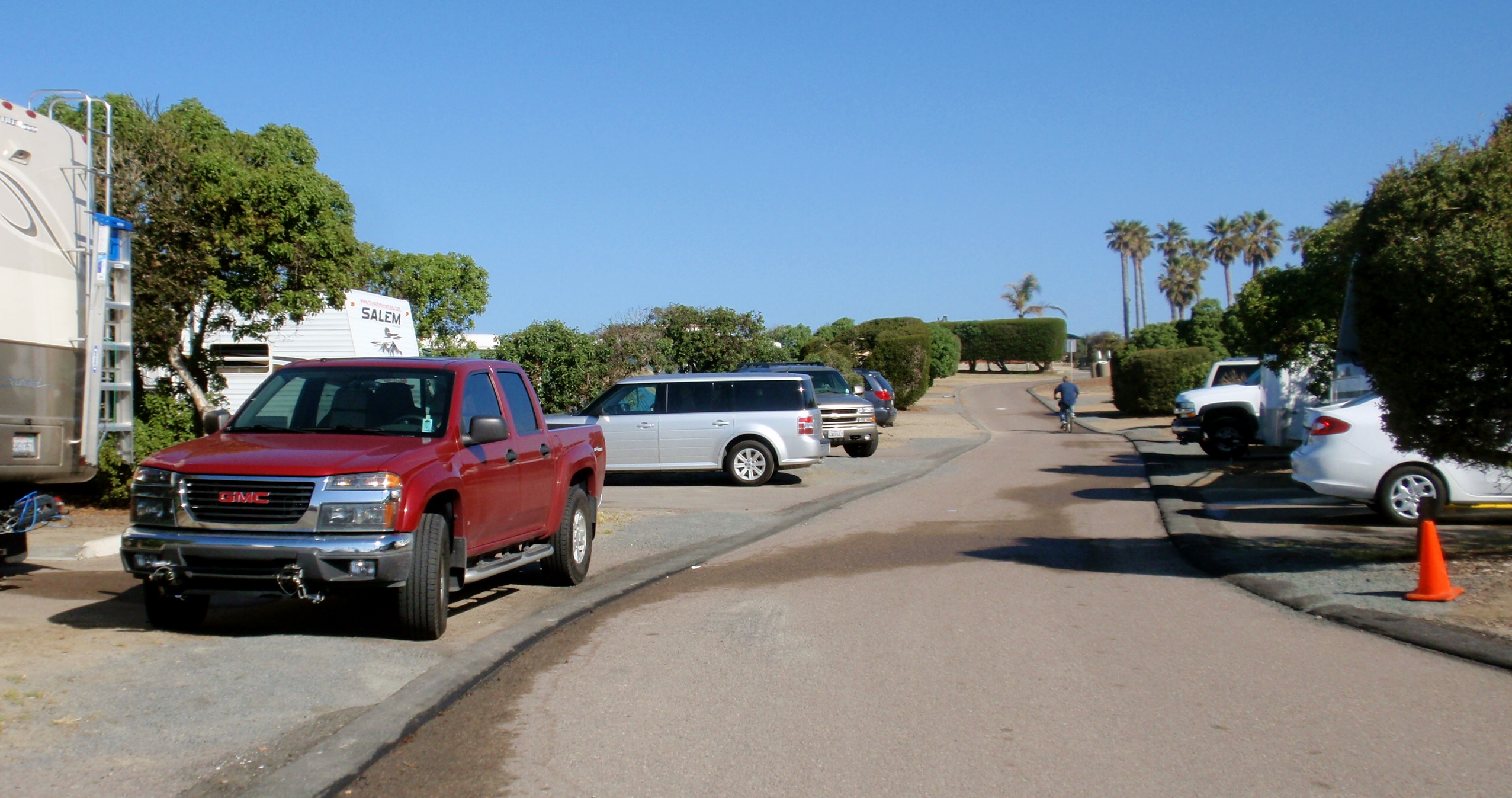
With 171 campsites (both hookups and non-improved sites), tent campers and RV’ers large and small (their rigs that is) take up residence at San Elijo. Most reservations are made online through Reserve America, many 7 months in advance. If you are lucky enough to snag a cancellation, the gods are indeed smiling down on you. During the busy season these are few and far between.
View of south end of campground
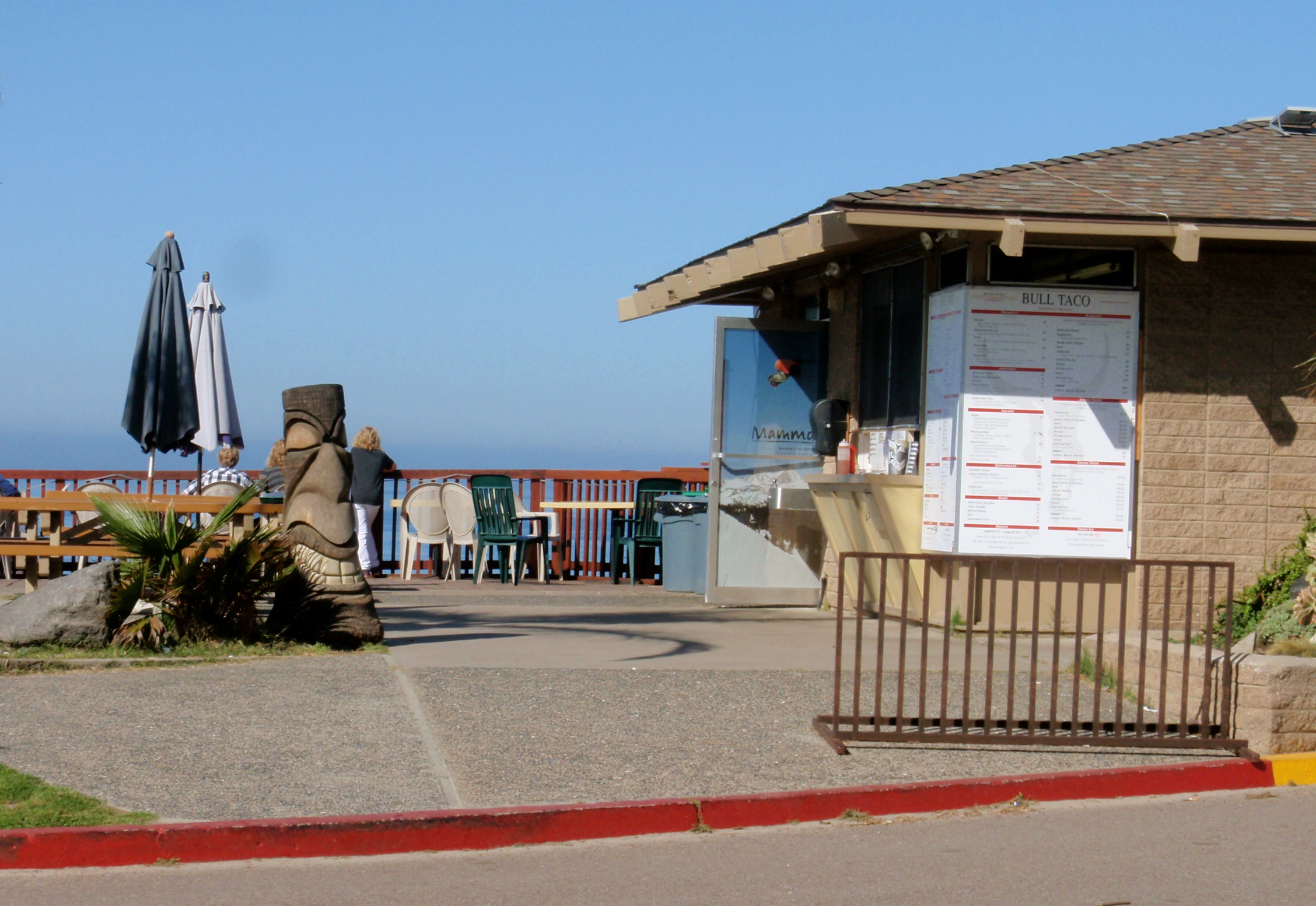
Amenities include public showers, camp store, wi-fi (very spotty), and it’s home to the original Bull Taco, an “inauthentic Mexican” joint serving up breakfast, lunch and dinner.
Bull Taco, known for its "inauthentic Mexican" food.
It is a draw with the locals and other campers as well, allowing for take-out or the chance to sit on the deck enjoying a fish taco, watching the surfers or the setting sun. The smells wafting out of this little haven make your mouth water as you pass by.
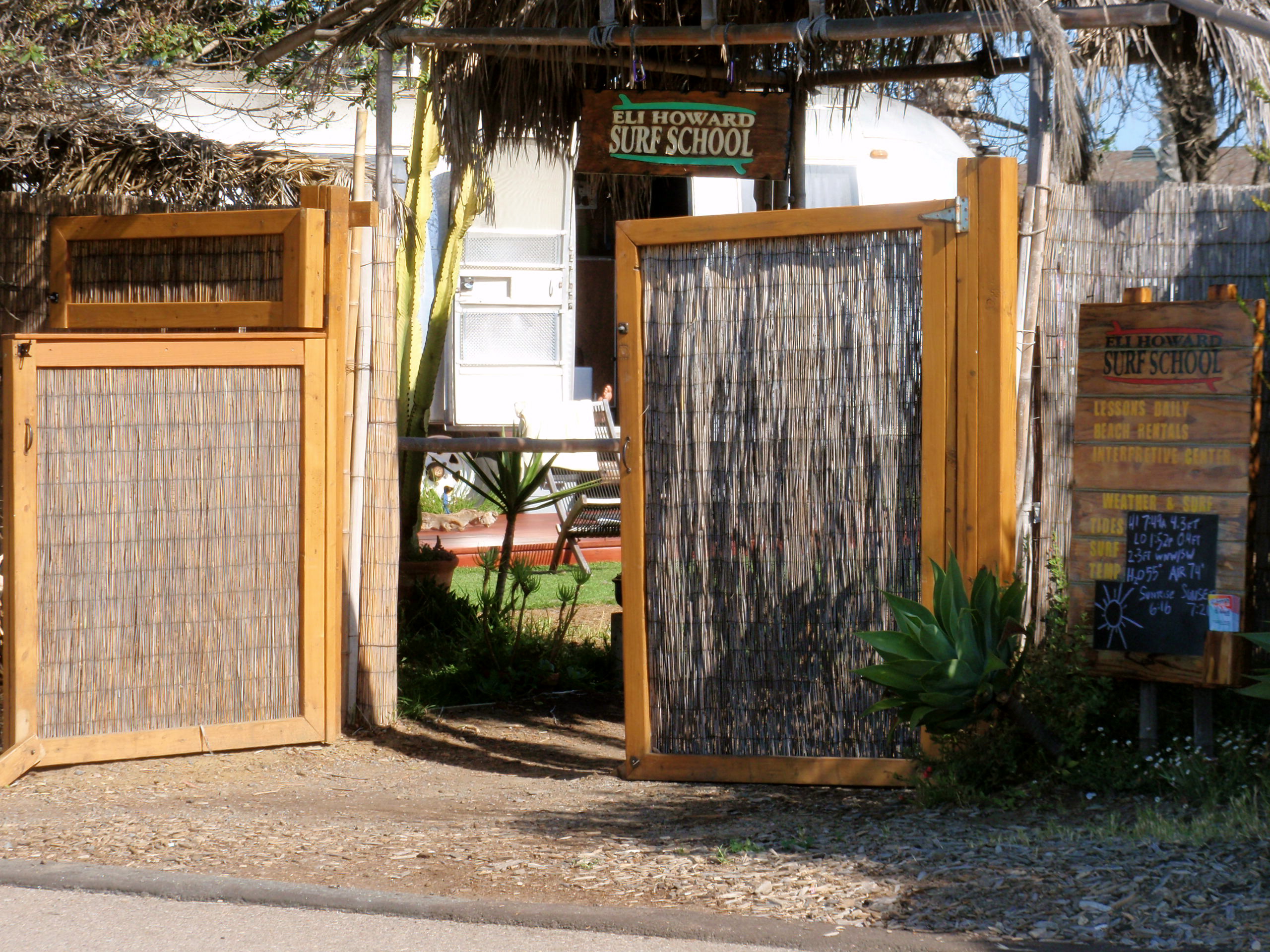
Also on the grounds is the Eli Howard Surf School, an overnight surf camp run by Emily, hubby Greg, and their two beautiful, energetic dogs. Emily outfitted our granddaughter Alyssa with a wetsuit and boogie board while here on vacation and made her feel totally at ease.
Eli Howard surf camp
This has been our first workamping experience and what a great place it has been to cut our teeth. The job itself has been fun, allowing us time to visit with the campers at check-in or when motoring around in our golf cart to make sure all is well. This gig also gives us a tremendous amount of downtime, which is what retirement is supposed to be all about, right? The entire San Elijo staff, as well as other camp hosts, have been wonderful, making our experience one we hope to repeat, here as well as in other beautiful settings. What a great way to see this country, meet interesting people, and feel you are contributing to the community where you have settled. This is a volunteer position, as many are, and given the economic conditions in California, we hope in some small way we are helping to keep state beaches like this open for generations to come.
Our friend Bill, a founding member of the non-profit Friends of Cardiff and Carlsbad State Beaches, is passionate about preserving these beaches and has been working diligently to do just that. If you are interesting in workamping here, this is the site to visit. Can’t beat San Diego whatever the season!
If you liked this blog post, why not subscribe to my blog via feed reader or e-mail?
Destination Joshua Tree National Park and with the Salton Sea on the way, a picnic lunch seemed like a good idea. The Salton Sea is one of the world’s largest inland seas, a shallow closed drainage system with no flow out to rivers or oceans. Any loss of water is caused by ground seepage or evaporation only. Some of the largest lakes in the world are of this type I have learned, such as the Caspian Sea, the world’s largest.
Sitting 226′ below sea level, directly on the San Andreas Fault, this waterway is 35 miles long and 15 miles wide, which gives it the title of largest lake in California. It was created by a flood in 1905 and has greater salinity levels than that of the Pacific Ocean. This is a very important wetland area with over 400 species of birds identified and several million taking this “bird highway” from Alaska to South America annually.
Birds of the Salton Sea
The desert pupfish, who lived here thousands of years ago when mammoths, camels and sloths roamed this land still survive today, although far fewer. He is a tenacious little fella (2″ in length) thriving in both salt and fresh water, hot or icy cold water, and can easily adjust to wide swings in oxygen levels. Who else is so adaptable? Certainly not me.
Boondocking is available at Salton Sea State Recreation Area lakeside but be forewarned, your experience could change based on the direction the wind is blowing. There were many fish carcasses (tilapia I believe) strewn along the banks where we lunched, a testament to the gluttony of the visiting birds or the rising salinity level of the water? However, with the lake and several mountain ranges as your backdrop, perhaps some things can be overlooked.
Joshua Tree National Park was to be our last stop of the day before heading back to the beach. These 790,000+ acres of desert in southeastern California were declared a National Park in 1994, much of them still wilderness area.
Vast geologic changes can be seen as you drive through the park – wide open vistas, stands of some of the tallest Joshua trees anywhere, and large rock outcroppings that make the landscape look otherworldly or as if a giant was stacking up large piles of marbles. It is a rock climbers’ paradise, one of the most popular in the world, with ~ 5000 routes to choose from, many for experienced climbers only.
Hall of Horrors rock formation
Joshua Tree National Park was named after its namesake tree, which is a member of the agave family. Legend has it that Mormon immigrants named this tree after the biblical figure Joshua, seeing the limbs outstretched as if in prayer. The largest Joshua tree in the park is over 300 years old and 40 feet tall.
Spring rains bring large clusters of whitish-green flowers to the branch tips of he Joshua tree. Given the less than average rainfall this year, the trees are just beginning to bloom, along with the spiny ocotillo, one of my favorites. As with many things in life, timing is everything and I think we were just a wee bit ahead of the spring colors. So it’s back to San Diego where colors seem to abound no matter the time of year.
 So what the heck is watchful waiting anyway? Well, in medical terms, for someone facing prostate cancer, it can be the standard treatment, given your test results. Hubby Terry received this cancer diagnosis almost 5 years ago, one that roughly 1 in 6 men will receive sometime in their life, not unlike breast cancer statistics for women. Unfortunately, given his age at the time and his Gleason Score, he was not a candidate for watchful waiting, too young and tumor too advanced. A prostatectomy was in order instead and he has been blessed to have a wonderful surgeon. Ever the vigilant one, Terry has done his follow-up tests like clockwork ever since.









 Paint Your Landscape