Touring the City of Light ~ Part Deux

Gaining a bit of confidence that we could navigate through Paris by foot and metro, we set off to explore the Arc de Triomphe and Champs-Elysées.

Planned in the mid-19th century by Baron Haussmann and commissioned by Napoleon, the magnificent 165-foot Arc de Triomphe was built to commemorate Napoleon’s 1805 victory at the Battle of Austerlitz.  At the foot of the arch, two centuries of Parisian history unfold, from the funeral of Napoleon, the arrival of the Nazis, and the triumphant return of Charles de Gaulle after the liberation of the Allies.  Beautiful carvings on the pillars and an eternal flame that marks the Tomb of the Unknown Soldier grace the arch and the base. Once inside we climbed the 284 steps to the observation deck, where we took in the panoramic views of the city and the 12 arteries (roadways) radiating out from the arch.  This is the only place in Paris where, if there is an accident, each driver is considered equally at fault. No matter the circumstances, insurance companies split the costs 50/50.
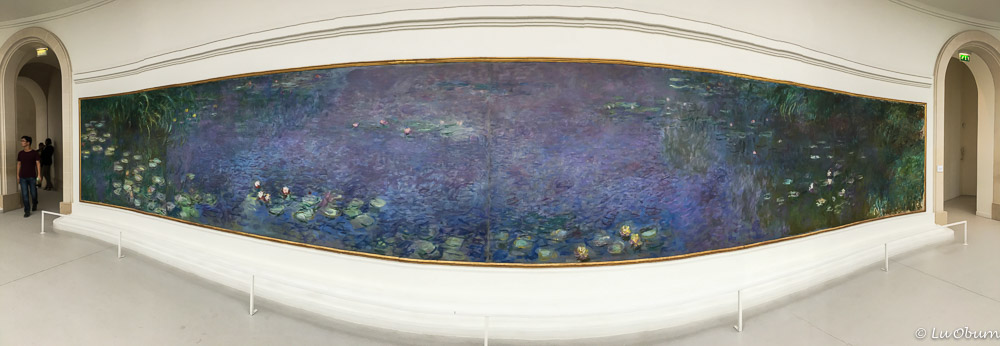
Claude Monet's "Water Lilies" ~ Orangerie Museum
Claude Monet’s “Water Lilies” ~ Orangerie Museum

We took the lift back to the base of the arch and strolled the Champs-Elysées, the internationally famous boulevard that has become Paris’ backbone.  When we entered the Tuileries Garden, we made our way over to the Orangerie Museum, another of our favorite museums in the city.  It is the closest you will come to stepping into an Impressionist painting. Although we enjoyed many of the various artists’ paintings, Monet’s Water Lilies were the most striking.

We had an adventure planned for that evening so decided that a midday rest was in order.  After strolling through the Tuileries Garden we hopped onto the metro, where Terry was to experience a different kind of adventure.

Everywhere we went we heard “beware of pickpockets”, particularly on the trains, metro and other crowded public spaces. While standing next to him on a crowded metro, hubby was suddenly surrounded by three young (12-13 year-old) girls, one making eye contact with him, while another went for his bag. As soon as I noticed the little one maintaining steady eye contact, I heard a very stern “What are you doing?” coming from hubby as he grabbed a little hand.  The one with her hand in his bag scurried away as quickly as she could, not successful on this day.

Before leaving Paris we all decided that an evening Seine River tour was a must.  The company we chose provided a lovely one-hour cruise filled with interesting historical facts.  One of the more interesting facts we learned about the Eiffel Tower was that it initially was intended to last only 20 years.  Since it now has become the symbol of France it is routinely painted every 7 years, requiring 60 tons of paint and 3 years to complete.

This wrapped up another incredible day in the City of Light.

Touring the City of Light

Terry & Frank outside our apartment

After much anticipation we landed in Paris, spent after a very long night, with just our adrenaline to keep us moving.  We hopped on the Easy Bus at Charles de Gaulle airport and, after Elan (our driver) traversed the side streets to avoid rush-hour traffic, we arrived at the apartment we had rented.

In five days we know we will barely scratch the surface here in the City of Lights, the most dense city in all of Europe, (with 20x’s more density than New York City) but we are planning to give it our best shot.  Since we will be on the go so much I have decided to write “mini-posts” while in Europe, then go back and add more detail when we return to the states.

Our first two days in Paris began with a leisurely breakfast at a local boulangerie, where I was able to practice a little of the French language – emphasis on little.  Once fortified we walked along the Seine River to tour Sainte-Chapelle, a royal Gothic-styled chapel, built around 1238, once the residence of the Kings of France.  It houses some of the most extensive stained glass of the 13th century anywhere in the world.

From there it was a short walk to Notre Dame (Our Lady of Paris), a medieval Catholic Cathedral.  It is among the largest and well-known churches in the world.  We had hoped to climb to the top of the tower but the lines were too long and we had much yet to see.

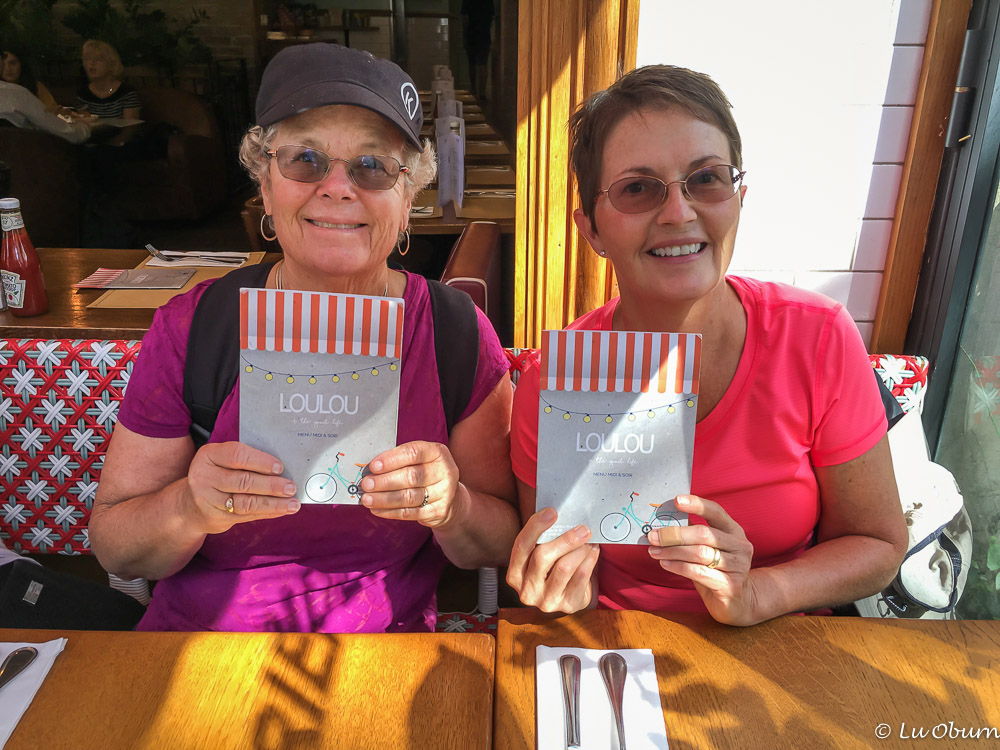
Lunch was in the Latin Quarter at LouLou’s, a must-top for this Lulu…délicieux.

Since we were enjoying the local fare so much, we agreed that walking was needed to burn off the calories  so off we strolled to the Louvre Museum.  Crossing over the Pont Neuf, the oldest standing bridge across the Seine, we stopped to take a few photos of some Locks of Love before continuing on our journey.

Although we had purchased a 4-day Museum Pass, which allowed us to skip some of the longest lines, once inside the Louvre it is impossible to avoid the crowds.  You’ve got to just shoulder your way through the massive surge. We all agreed that for that reason alone, some of the smaller museums were more to our liking, but the architecture, the paintings, and sculptures were magnifique!

We rounded out our first day with an evening reservation at the Eiffel Tower where the views from above are breathtaking.

Day two took us to the Orsay Museum, which we all agreed was incredible.  Build around 1900 and housed in an old railway station, the architecture and the clock towers are impressive.  It holds the largest collection of impressionist and post-impressionist masterpieces in the world, including artists such as Monet, Degas, Van Gogh, Renoir, and Cézanne.

A walk to the Trocadéro for another view of the Eiffel Tower and a stroll through the Rue Cler market and day two was a success.

International Travel Mantra ~ Pack Light

Photo courtesy: soultravelers3.com

In less than two weeks we will be jetting our way to Europe for a two-month extravaganza through France and Italy.   To say we are excited would be an understatement.  We’ve been busily tying up all the loose ends before we leave so I decided recently to do a carry-on packing run, the only bag (along with a small purse) that I will be taking.  We chose a carry-on without wheels and one that converts to a backpack, believing better on our backs than trying to wheel a bag over cobbled stones.

As I think about this upcoming trip, my mantra has been to “pack light, pack light, pack light”.  I already know, given the limited space for clothing, that I will be ready to toss out everything I am bringing when I return to the states.  A girl can only wear the same clothing for so long, right? 😉  Actually, I know that we can live out of our little bags for two months, as several years ago we traveled through Mexico for a year and headed south of the border with just a regular-size backpack strapped to our bodies, no vehicle, no place to call home.

I won’t bore you with all the details of what is going into my little black bag, but I would love to get packing tips or other travel tips from you avid travelers.  Are there any unusual items that one should not forget or something that you brought along that just weighed you down?  Is there something that caused an aha moment for you, something you told yourself you wouldn’t forget the next time you hopped a plane to an exotic place?  I think I have the clothing needs wired, erring on the side of being a minimalist, as I know I can wash my wicking-wear clothes in my room or at a launderette.

I am bringing along a small MacBook and a camera, so I can download my photos, keeping track of where we are from day-to-day.  I plan to continue the blog, as long as the Internet gods are with me,  albeit on a much more scaled-down fashion until I return.

So, all you world travelers, come on, share your deep-dark secrets on how to make living out of a backpack complete, utter bliss. 🙂

One of the Top Drives in the World ~ Icefields Parkway

There is a dramatic stretch of highway that parallels the Continental Divide, melding together two stunning Canadian parks.  This two-lane highway, stretching from the picturesque little village of Lake Louise in Banff National Park to the vibrant little town of Jasper in Jasper National Park, has been rated as one of the top drives in the world by Condé Nast Traveler, 144 miles of soaring rocky mountain peaks, ancient glacier ice fields, and immense sweeping valleys.  I would not be classified a worldly traveler (more a wannabe) but I must agree that it is tops on my list.

This is more than a drive.  It’s a journey through natural history, jaw-dropping landscapes, and more than 100 ancient glaciers.  It is so much larger than my meager brain can wrap itself around.  The best way to describe the beauty of the Icefields Parkway is through photos.  Here are just a few of the dramatic sights seen along this winding stretch of road:

Herbert Lake reflection

Herbert Lake, sitting under the peak of Mt. Tempe, was our first stop of the day after leaving Lake Louise.  Its morning reflection was a great start to our day.

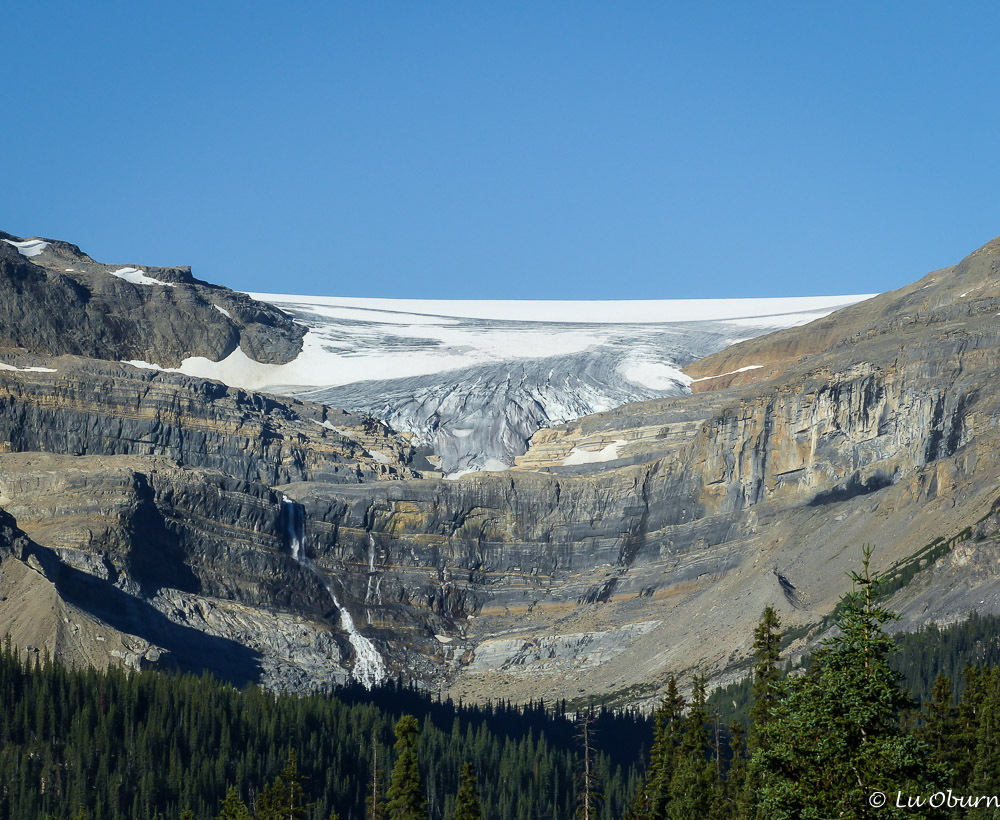
Bow Glacier and Bow Falls

Bow Glacier and Bow Falls , one of the many striking glaciers along this beautiful stretch of highway.

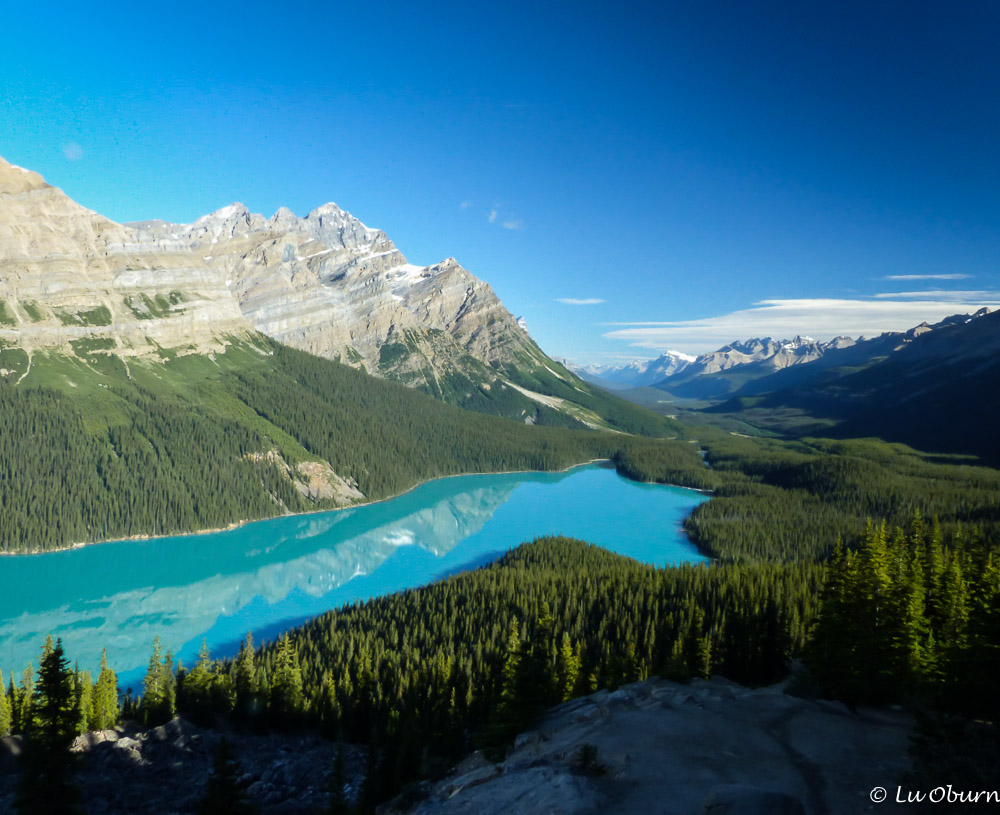
Peyto Lake

Peyto Lake, named for “Wild Bill” Peyto, one of the first game wardens in the park.  The unusually bright blue water of the lake, created by glacial “rock flour”, which scatters the blue-green rays of light, coupled with the wide view of the Mistaya Valley, make this one of the most scenic sights along the parkway.

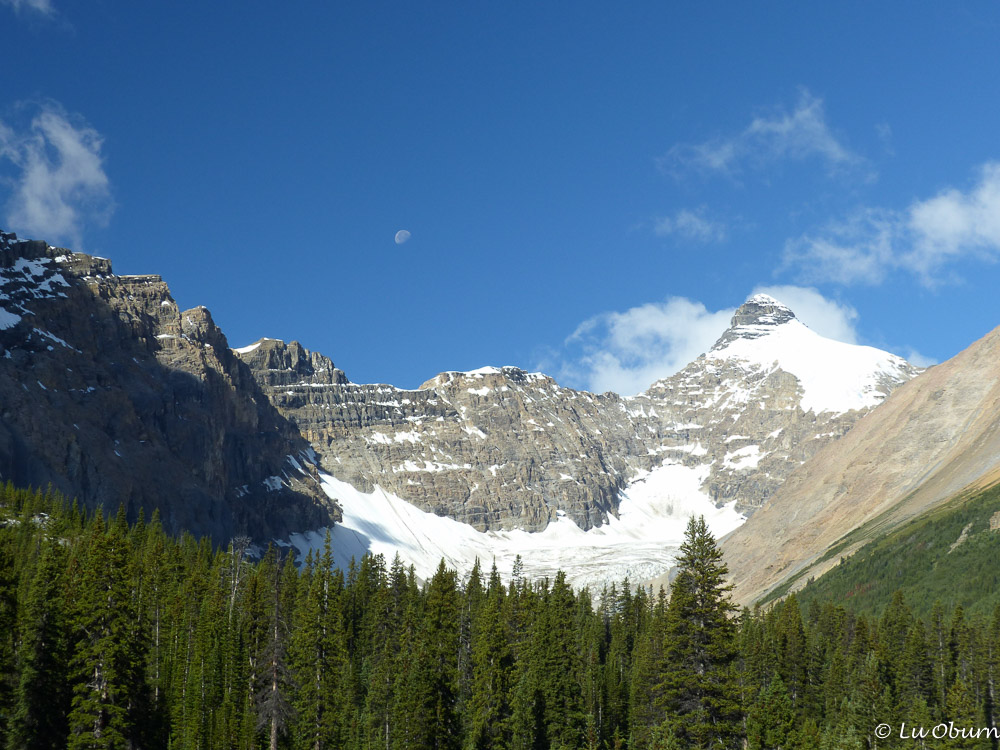
Hilda Pass

Another glacier seen from Hilda Pass.

Sunwapta Pass view

And another from the Sunwapta Pass.

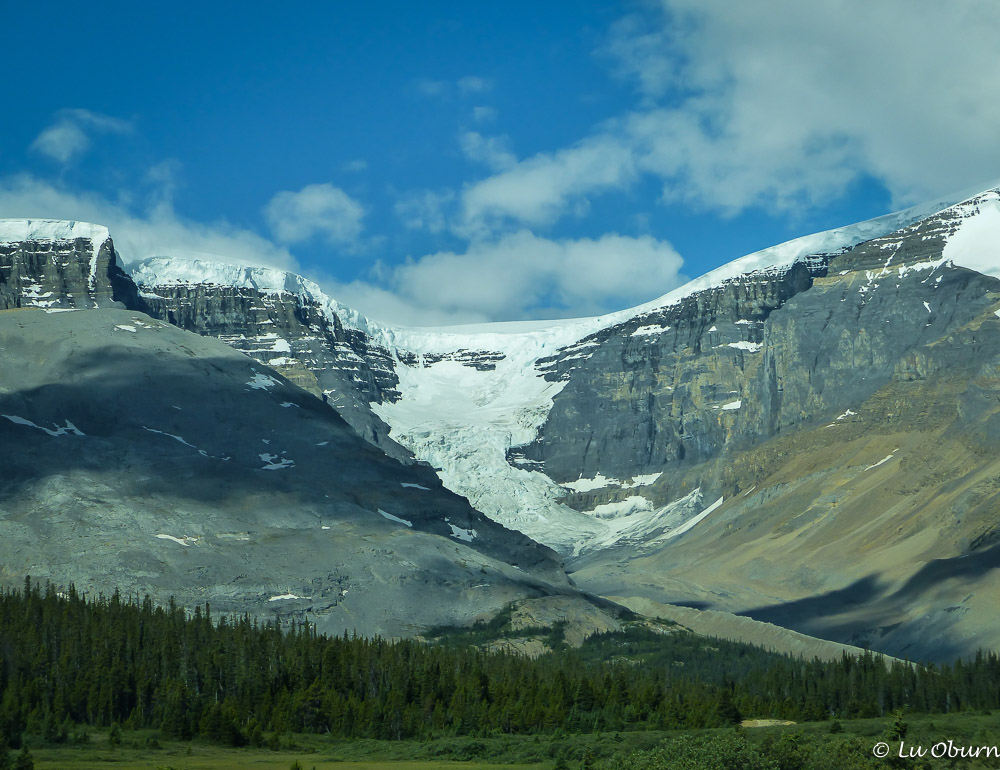
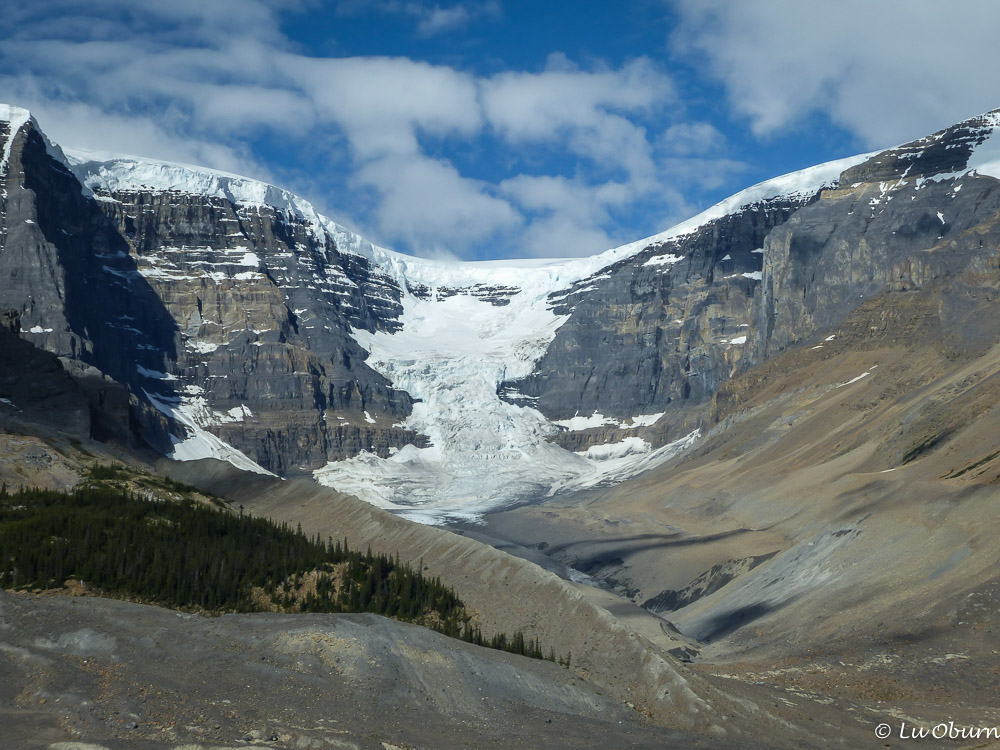
The Columbia Icefield, composed of eight glaciers and encompassing an area of about 200 miles, sits near the halfway mark on the Icefields Parkway.  This ice mass is one of the largest south of the Arctic Circle and is one of the most reachable in North America.  The Athabasca, Snowdome, and Stutfield Glaciers can be seen from the parkway.

The Columbia Icefield Centre, much like a large National Park Visitor Center, is where you can book the Columbia Icefield Glacier Adventure, a 90-minute excursion onto the Athabasca Glacier aboard a massive Ice Explorer.  Tours on the Glacier Skywalk, a glass-floored observation walkway 918 feet above the spectacular Sunwapta Valley, can also be booked at the center.

Not unlike most other visitor centers, there is a 20-minute film that can be watched here.  We experienced “Through Ice and Time”, the best film I have ever seen in a National Park visitor center.

Snowdome GlacierSnowdome Glacier, part of the Columbia Icefields.

Athabasca Glacier

And the mother of them all, the Athabasca Glacier, largest in the Columbia Icefields, is the glacier the Ice Explorers drive visitors onto.  In 1844 this massive glacier covered the area across the street at the Columbia Icefield Centre, where the parking lot now sits, another testament to how far these glaciers have retreated.

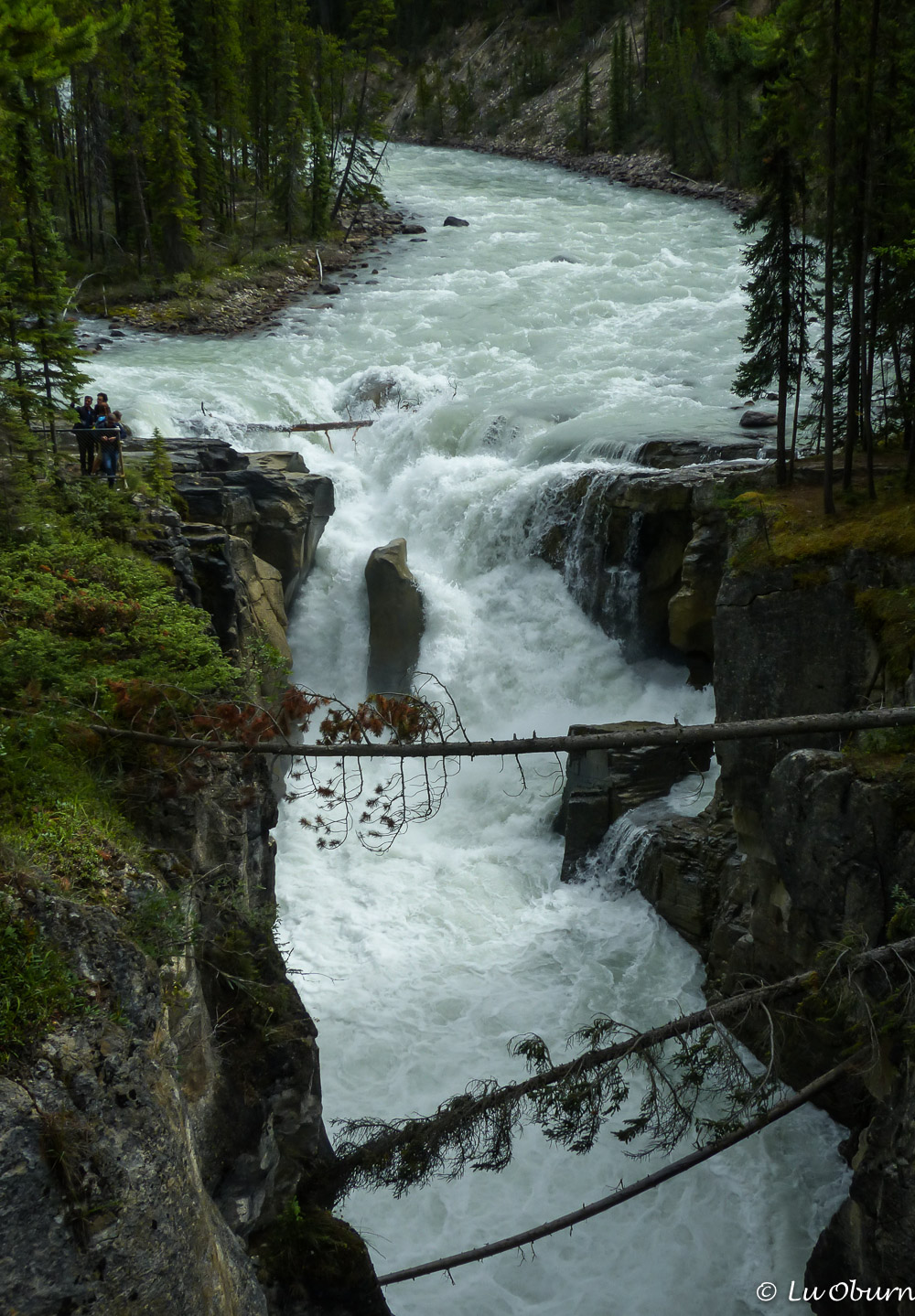
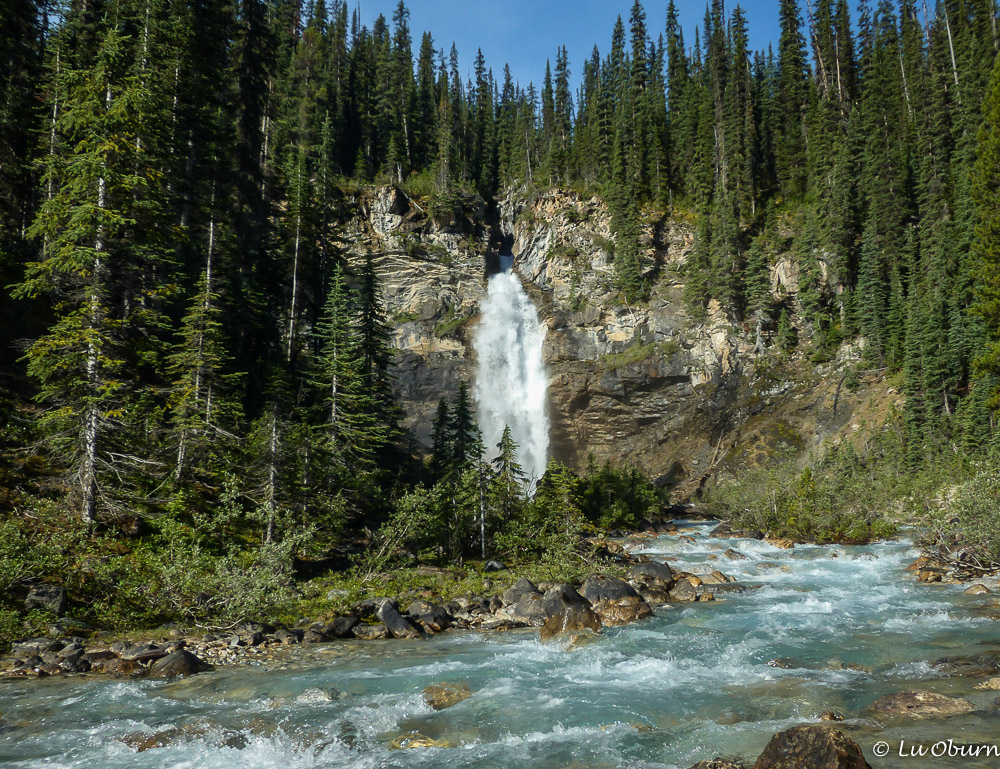
Sunwapta Falls

Thundering Sunwapta Falls, whose power can be felt and heard when you stand on the bridge above it.

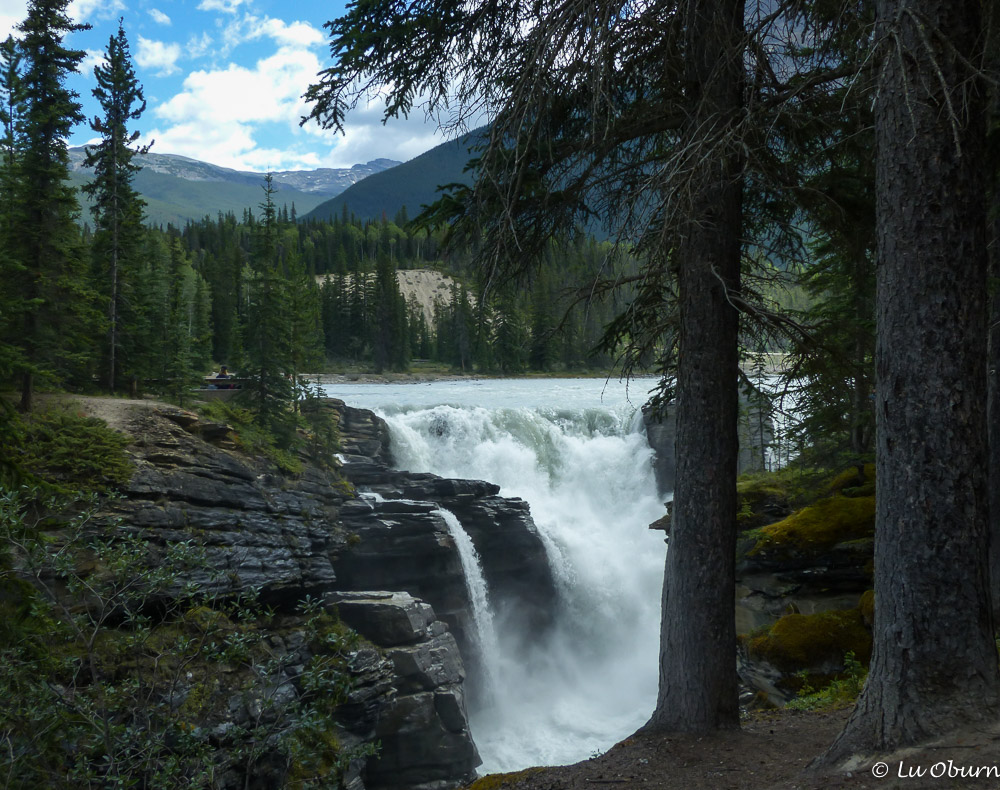
Athabasca Falls

The massive power of the Athabasca Falls is created as the Athabasca River funnels into a narrow gorge.

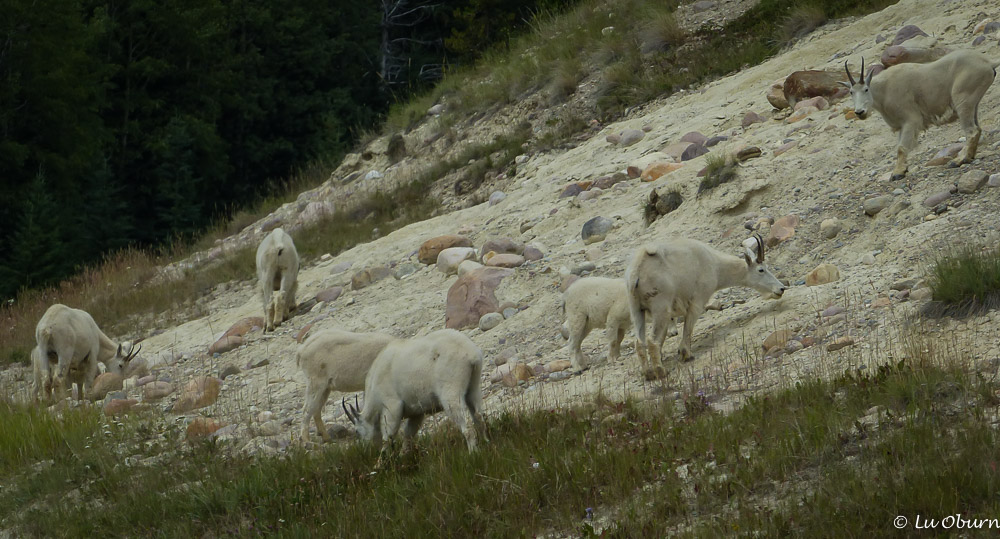
Mountain goats

Mountain goats come down from the red cliffs of Mt. Kerkeslin to lick mineral deposits along the road.

A trip to the Canadian Rockies would be incomplete without experiencing this spectacular drive on the Icefields Parkway and the Columbia Icefields.  As we drove the winding roads, I was remembering a post I had recently read by blogger friend Sue, who had recently biked this route with hubby Dave and a group of other cyclists.  I bow down to you both. 🙂

Those Spectacular Canadian Rockies ~ Banff and Yoho National Parks

While visiting friends in Cochrane, Alberta, we had to make the difficult decision of how to spread out our limited time in Canada.  I recall when we lived in Yellowstone shaking our heads each time a visitor came into the park with a few short hours to spend.  We wondered if it was worth the time to visit when so much would be missed.  Here we were faced with a similar decision, during peak tourist season, and I found myself as excited as those first-time Yellowstone visitors, wanting to see it all.  We were so close to many national parks so of course I wanted a taste of as much as possible, rationalizing that we could always return for more.

Our first stop was Banff National Park, in the Alberta province, where we pitched our tent for three nights at Lake Louise campground.  What began as a 16 square mile hot springs reserve is now 4125 square miles of unparalleled mountain terrain, Canada’s first National Park, home to seven National Historic Sites.  Banff, along with Jasper, Yoho, and Kootenay National Parks is recognized as part of the Canadian Rocky Mountain Parks UNESCO World Heritage Sites.

Ok bear, here I come!

I thought our western mountains were breathtaking, but Canada really takes it up a notch with their Rockies, a beautiful melding of heaven and earth.  There is an unspoiled “wild-ness” here, thanks to the  ice-age glaciers acting as landscape sculptors, creating the rugged mountain ranges and gouging out the valley into a deep basin.

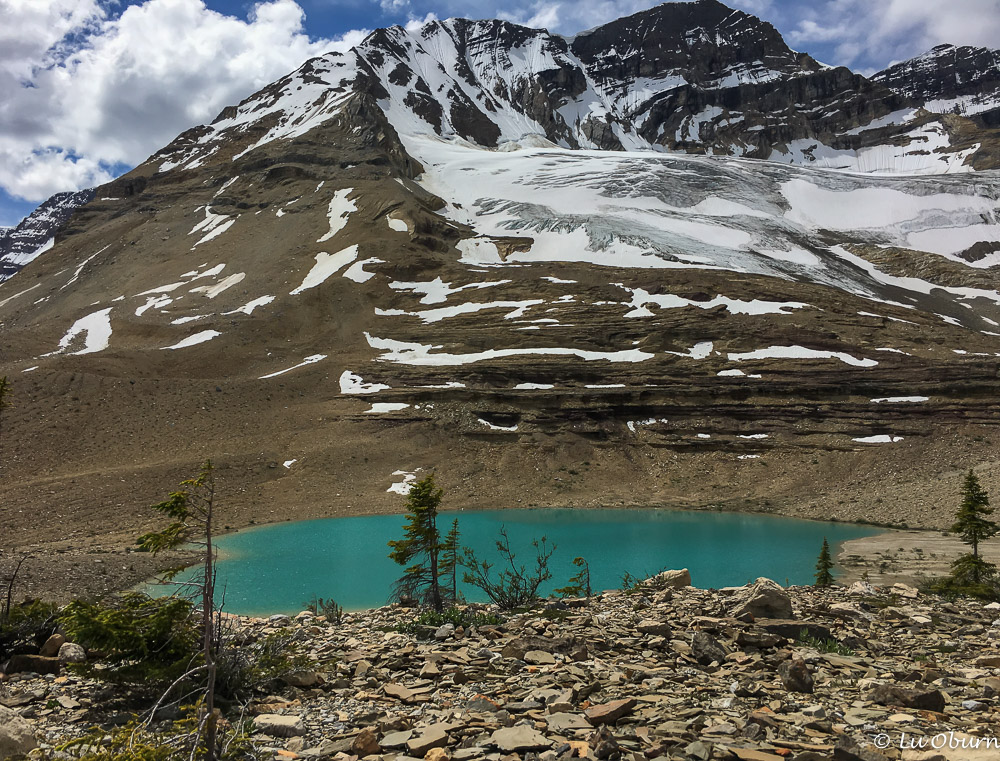
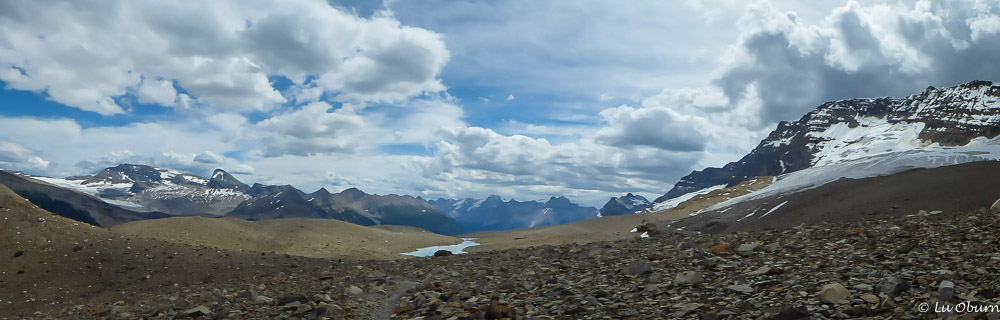
Spectacular glaciers and turquoise lakes above treeline on the Iceline Trail

The glaciers that covered the Canadian Rockies have vastly retreated but have left behind vivid memories found flowing in the turquoise and jade green waters, unusual gorges and canyons, and unique rock formations.

The next morning we set out for the much smaller Yoho National Park, in the province of British Columbia, and the second Canadian National Park.  The unusual name for this park is a Cree expression meaning awe and wonder, which was exactly what we were feeling throughout our first hike in a Canadian park.

Although the smallest of the four parks that form the Canadian Rocky Mountain Parks UNESCO World Heritage Sites, it holds some of the oldest and most significant shale fossil beds in the world, as well as 36 peaks soaring above 10,000 feet.  It packs a punch!

Takakkaw Falls - 830 foot drop in one stretch and 1260 foot drop in total, among the highest in Canada
Takakkaw Falls – 830 foot drop in one stretch and 1260 foot drop in total, among the highest in Canada

Since we had time for only one hike in Yoho, we chose a memorable hike, the Iceline Trail.  There are several ways to tackle this hike, out and back, a shorter loop and the big loop.  Guess which one I chose? 😉

Terry climbs to get a better view of Takakkaw Falls

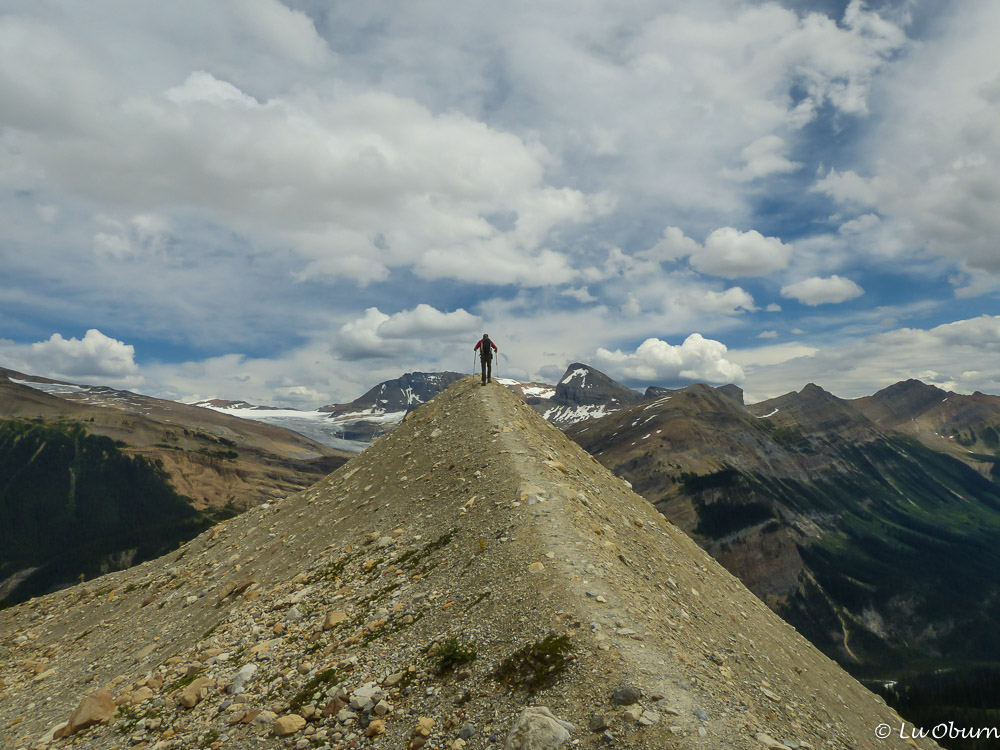
The Iceline Trail via Little Yoho (the big loop) is 13-miles, with many of those above treeline.  It’s roughly 3000′ of elevation gain made for a challenging hike, but the 360º views of glaciers, flowing streams, and one of the tallest waterfalls in all of Canada made it worth the effort.

One of the infamous red chairs found after completing the Iceline Trail.

The next day we decided to scale back our hiking and chose to hike the Lake Agnes Trail in Banff National Park to a European-style tea house, the highest tea house in all of Canada. It is probably the most “civilized” way to see the Rockies.  The trail is 4-miles round-trip, with a 1300 foot elevation gain, just enough for me after our previous day’s trek.

Lake Agnes tea house

And a visit to Banff is not complete without visiting the most iconic site in the park, the emerald waters of Lake Louise, where millions come every year to bask in her beauty.  It is the most famous glacial lake in the Canadian Rockies, named for Princess Louise Caroline Alberta, daughter to Queen Victoria.

The iconic Lake Louise

The world-famous Fairmont Chateau Lake Louise sits on the edge of the lake, striking an impressive pose.  And it looked like millions were there on the day we visited and none spoke our native tongue.

Fairmont Chateau Lake Louise

Enough though we visited during peak season and had little time to explore, we wouldn’t have passed on getting a glimpse into these two spectacular Canadian parks, and we will definitely be back.  I am already reading about Banff in the winter – snowmobiles, dog sleds, cross-country skiing, sleigh rides.  Sounds like fun, doesn’t it? Hubby is not convinced. 😉

Next Up:  Icefields Parkway