Intro to Wolf Management & Ecology ~ Yellowstone Forever Field Seminar Series

After a few weeks of preparation, it was finally time to support my first field seminar, Intro to Wolf Management and Ecology.  Since the reintroduction of wolves to Yellowstone in 1995, debates relative to this alluring creature have been tireless and complex.  Wolf watchers in the park are enamored by them, ranchers and hunters not so much.

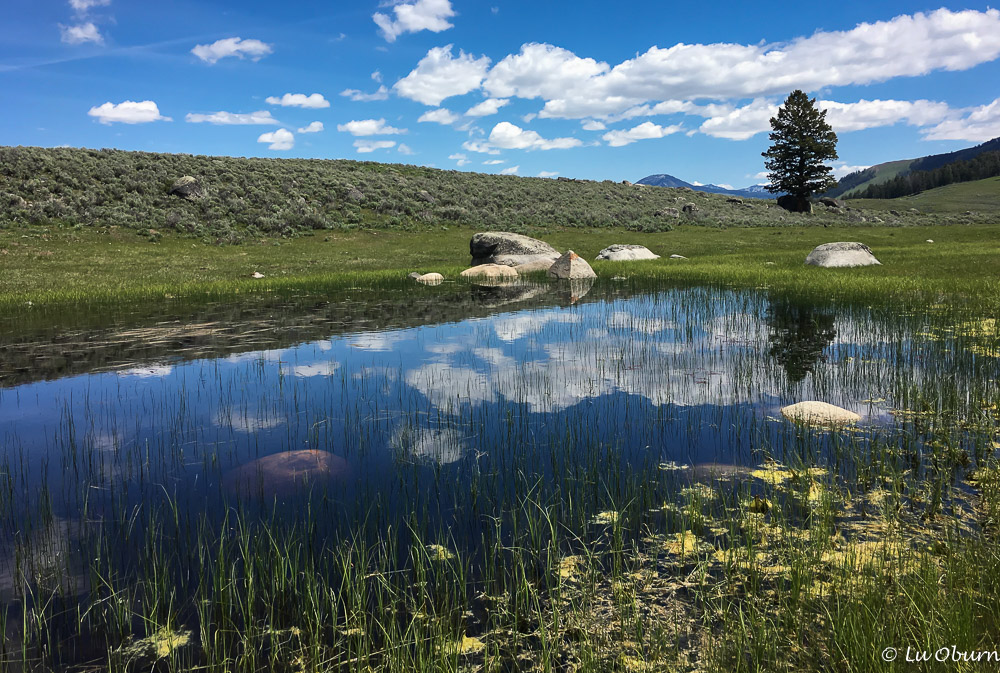
Sunrise at Slough Creek, site of an active wolf den.

I had heard several park employee discussions on the topic of reintroduction of the wolf, namely Doug Smith, project leader for the Wolf Restoration Project, since our arrival to the park.  He has studied wolves for the past 20+ years and still brings the same passion to the topic as he did as a Yellowstone freshman.  I was anxious to hear some fresh views on this subject from our class instructor, Jon Trapp.  Beyond  embracing many of the views presented by Doug, Jon also spoke on the topic of wolf denning, subject of his master’s thesis.

Our classroom time took us through the past couple of decades since reintroduction, how many of the wolves have been collared and tracked, the family dynamics of how they hunt together, and what happens when an alpha member of the pack is killed.  It was most informative and supporting this field seminar added another dimension to my time at the Buffalo Ranch.
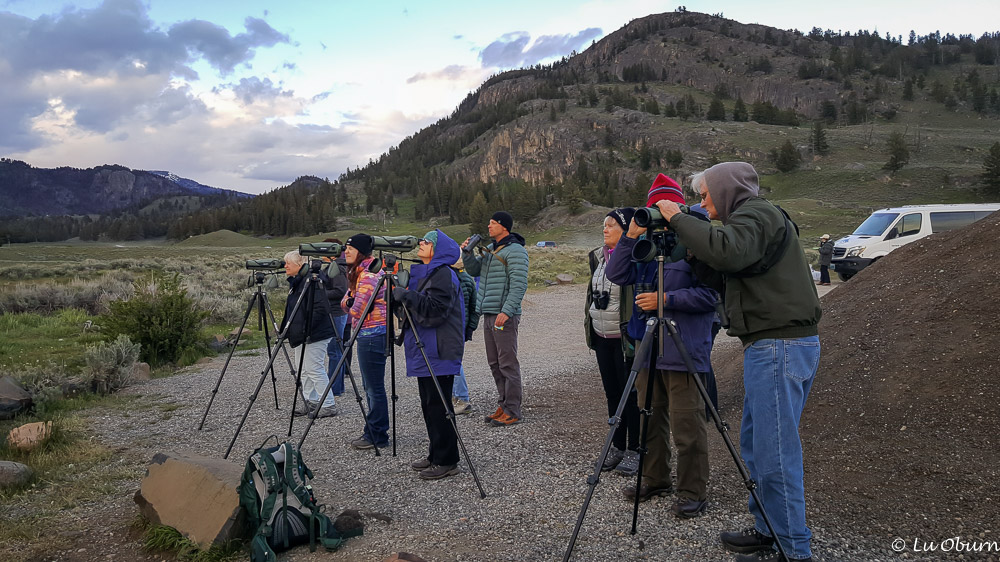
Field time at the Slough Creek den

Wolves get a bad rap, some of it deserved, as they do kill some livestock.  No rancher wants to work hard to grow their herd, only to have a predator take from him.  The good news is that when this happens, the rancher is compensated for his loss.

Hunters who share the sentiment that the only good wolf is a dead wolf feel that the elk population has been jeopardized by the reintroduction of the wolf.  It is true that the mainstay of the Yellowstone wolf’s diet is elk; however, statistics have shown that many more elk are taken down by cougars than wolves.  I learned that 85-95% of the time when hunting an elk, the wolf is not successful, and their elk hunting is compensatory, killing weaker elk who were most likely going to die anyway.

Instructor Jon Trapp balanced over an abandoned wolf den

Our field studies were the most exciting, taking us to an area of the park where we could view an active wolf den using spotting scopes.  Watching the pups emerge from the den, tumbling over one another, frolicking in the sunlight, delighted us all.  Jon also took us to one of the first acclimation pens, Rose Creek, where we read the story of the first alpha female to the reintroduced to the park.  On another outing we inspected an abandoned wolf den.

With the wolf’s return to the world’s first national park, Yellowstone has regained its balance of historic mammals and is now described as the largest intact ecosystem in the temperate world.  We now see this region as it was before the Europeans arrived.

Biologists and scientists spend significant time in the field tracking the wolves of Yellowstone, but in the end what matters most is that we carved out another little piece of wildness with their reintroduction.  We need these wild spaces, their coarseness, erratic ebbs and flows, the magic and mystery.
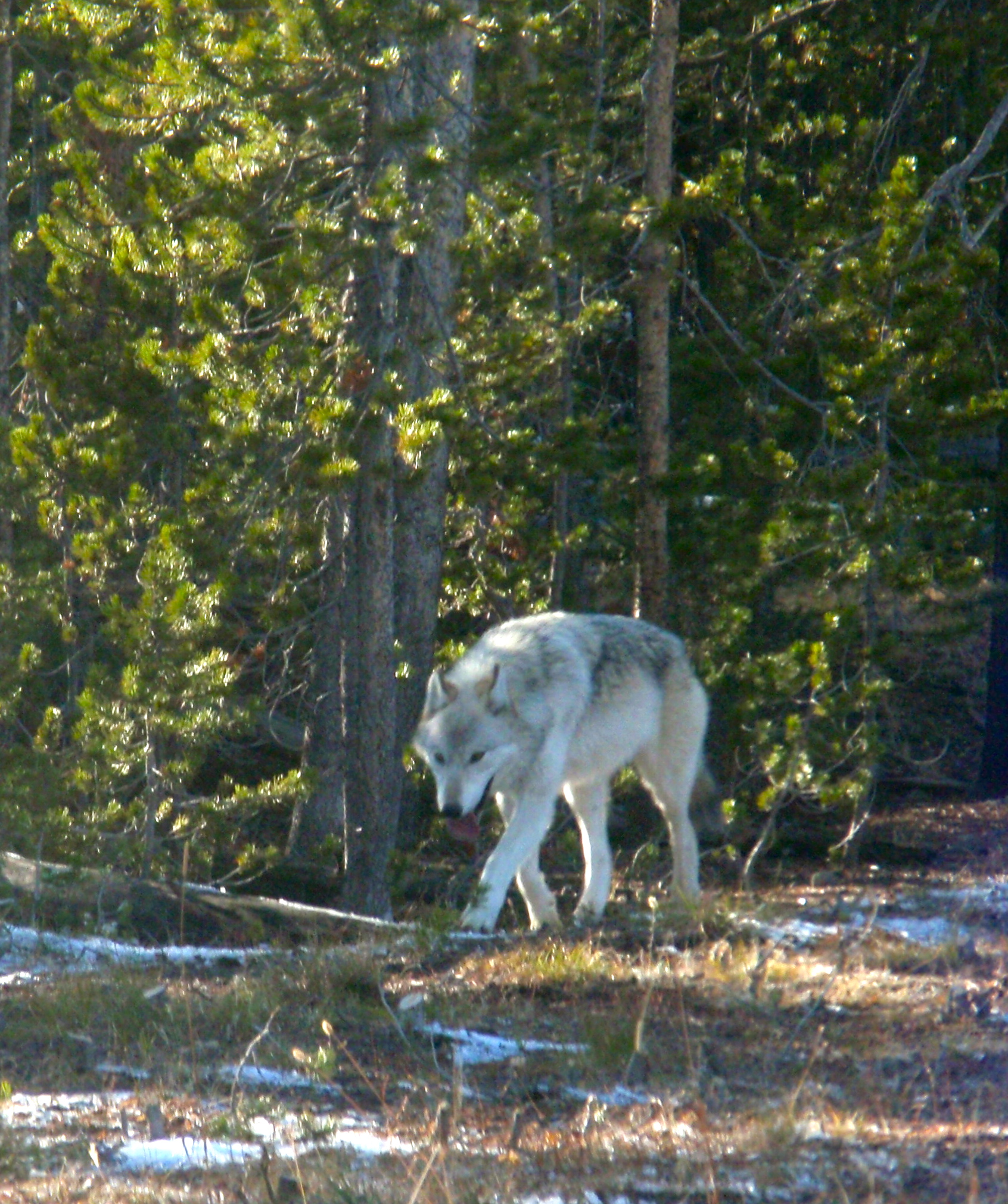
Photo of the white wolf from September 2010, recently shot and killed within Yellowstone NP.

Disclaimer:  The views expressed here are my own and do not necessarily represent the views of Yellowstone Forever.  
SaveSaveSaveSaveSaveSave

SaveSave

SaveSave

SaveSave

SaveSave

SaveSave

SaveSave

SaveSave

SaveSaveSaveSave

SaveSave

SaveSave

SaveSave

SaveSave

SaveSave

SaveSave

SaveSave

SaveSave

A Yellowstone Forever Summer

Planning for our summer began in earnest several months ago but we just arrived at our destination, Yellowstone National Park, a few weeks ago and what a whirlwind it has been.

Giving back by way of volunteering is a passion of ours and this year we have elected (and been chosen) to be program volunteers for Yellowstone Forever.  Formerly known as Yellowstone Association, a merger in October 2016 between the Association and the Yellowstone Park Foundation created Yellowstone Forever, the educational and philanthropic partner of the park.  We will be supporting the naturalists who conduct the Field Seminars and soaking up every bit of knowledge we can along the way.  Their subject list is diverse, ranging from wildlife, birding, photography, geology, sketching, hiking, Native American studies, backpacking, fly-fishing, and an entire new Naturalist Series.  It is going to be an active and educational summer, one in which we feel fortunate to participate.

Training for our Yellowstone summer adventure spanned a couple of weeks and covered a broad spectrum of activities; e.g. orientation, bus driver training, an intensive two-day wilderness first aid class, course preparation, and camp duty…whew!

When we finally arrived at our summer home, the Lamar Buffalo Ranch, we hit the ground running with a dedicated group who travel from near and far to ready the campus for the upcoming summer season.  From top to bottom we scrubbed and scoured the bunk house, bath houses, and cabins, in anticipation of a busy summer.  If it sounds like a lot of prep, it is, but the care taken by Yellowstone Forever to ensure happy field seminar participants has resulted in numerous returnees year after year to consume the knowledge eagerly shared by the engaging naturalists who conduct the classes.

This slideshow requires JavaScript.

Yes, it has been a whirlwind few weeks, tiring yet exhilarating.  Although far from being expert program volunteers, we both have one field seminar under our belts, “Intro to Wolf Management and Ecology” and “Bears, Bones, Signs, and Stories”.

As I sit on the back porch of our bunkhouse looking out over the heart of the Lamar Valley, known as the “Serengeti of North America”, I listen to the resounding thunder rolling across the landscape. Countless bison can be seen grazing, while their young “red dog” calves frolic.  I am humbled by the wonder of this magical landscape. I have no doubt that my Yellowstone Forever summer will change me in ways I cannot foresee.

Rumi said:

“There is a voice that doesn’t use words.  Listen.”

I believe that voice can be found in the wilderness, in places like Yellowstone National Park.  I plan to spend plenty of time listening.  As time and the internet permits, I hope to share what I have learned.

Hope you are all having a great start to your summer!

Disclaimer:  The views expressed here are my own and do not necessarily represent the views of Yellowstone Forever.  
SaveSave

SaveSaveSaveSave

SaveSave

SaveSave

SaveSave

SaveSave

SaveSave

SaveSave

SaveSave

SaveSave

SaveSave