After lengthy careers maneuvering the treacherous waters of corporate America, Terry and I decided in August of 2011 that life was too important to take so seriously. We wrote what was to be our final resignation letters, stuffed our backpacks to maximum capacity, and headed south of the border for a Mexican adventure.Read more About Us
“I have no special talents. I am just passionately curious.” ~ Albert Einstein
Passion is that spark that creates the fire in our soul, allows our hearts to expand, and makes us feel vitally alive. As we move through life passion often evolves from a focus on career and accumulating money to finding our authentic self, peeling away the layers to find the real “me” that has been buried under the needs of others. Read more Pursuing Passion
“Physical fitness is not only one of the most important keys to a healthy body, it is the basis of dynamic and creative intellectual activity.” ~ John F. Kennedy Read more Let’s Get Healthy
One tequila, two tequila, three tequila, floor! ~ George Carlin
Day 2 – Oh no, tequila hangover (just kidding)!
We decided to start our day with a tour of Museo del Tequila, which proved to be very interesting and informative.
The courtyard was so warm and inviting, with stunning stone archways, beautiful paintings on the walls, and rooms with wonderful sculptures, photos and stories portraying the history of Tequila.
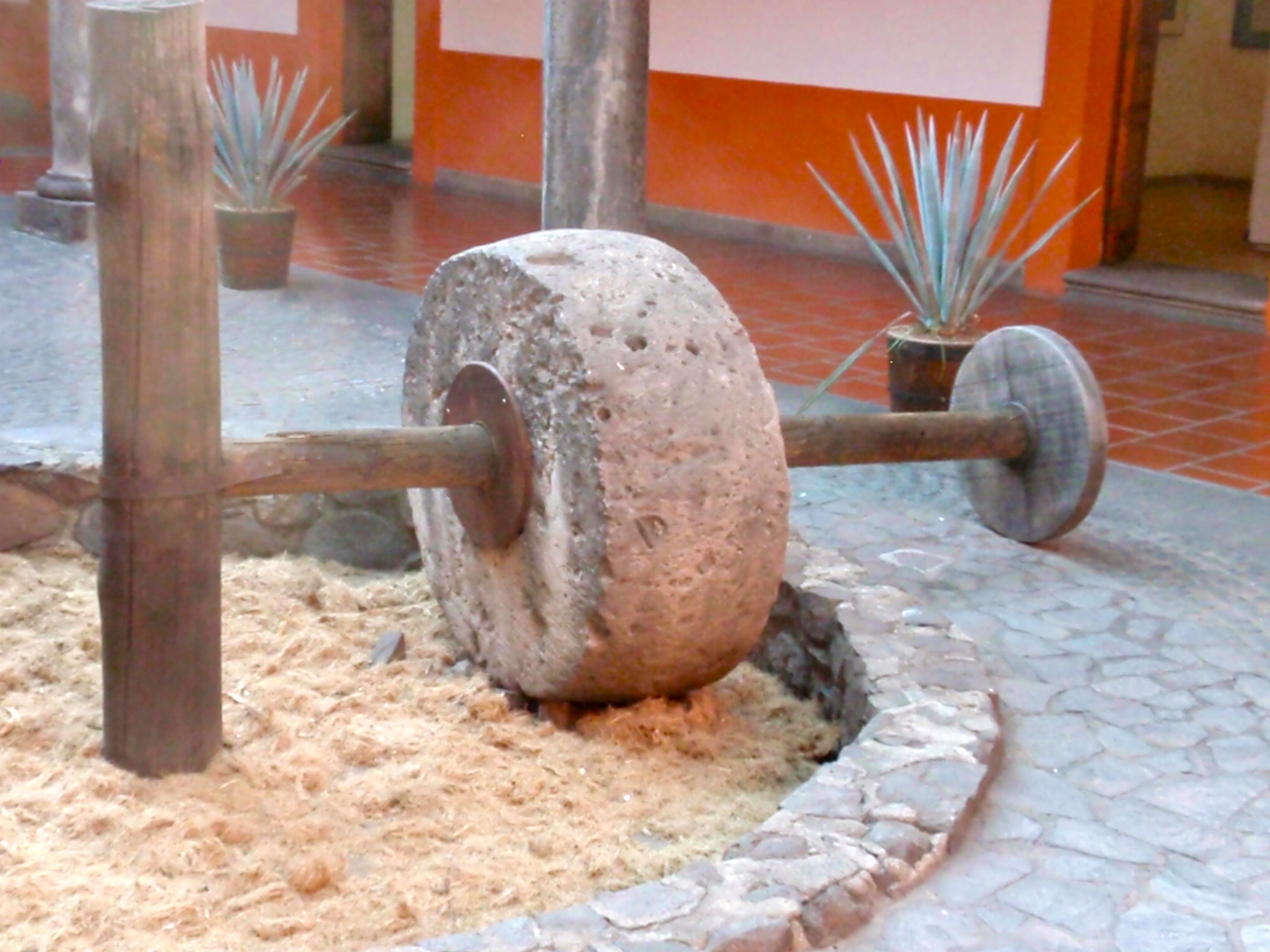
In earlier days, this stone wheel, called a tahona, was pulled by mule, oxen or horses to extract all the juices from the agave fibers. Fortunately, today the process is much easier, as these tahonas could weigh as much as 3 tons.
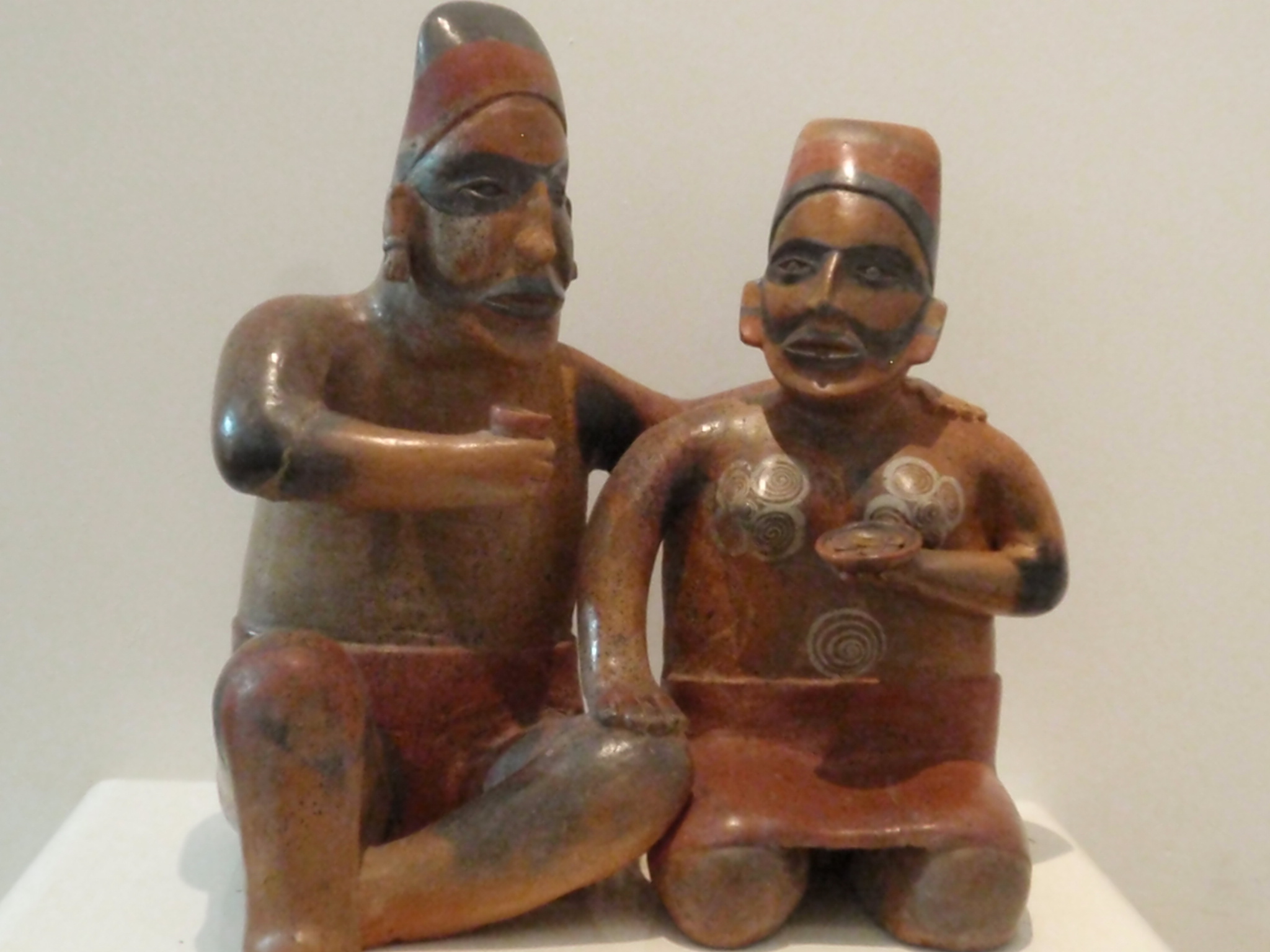
This is a sculpture of ancient Aztecs sharing a cup of pulque.
Jose Cuervo began their distillation operation in 1758 and is the second largest tequila manufacturer in Tequila. Although we did not take a tour of their distillation facilities, we did enjoy their gardens, which were gorgeous, as well as their retail establishment.
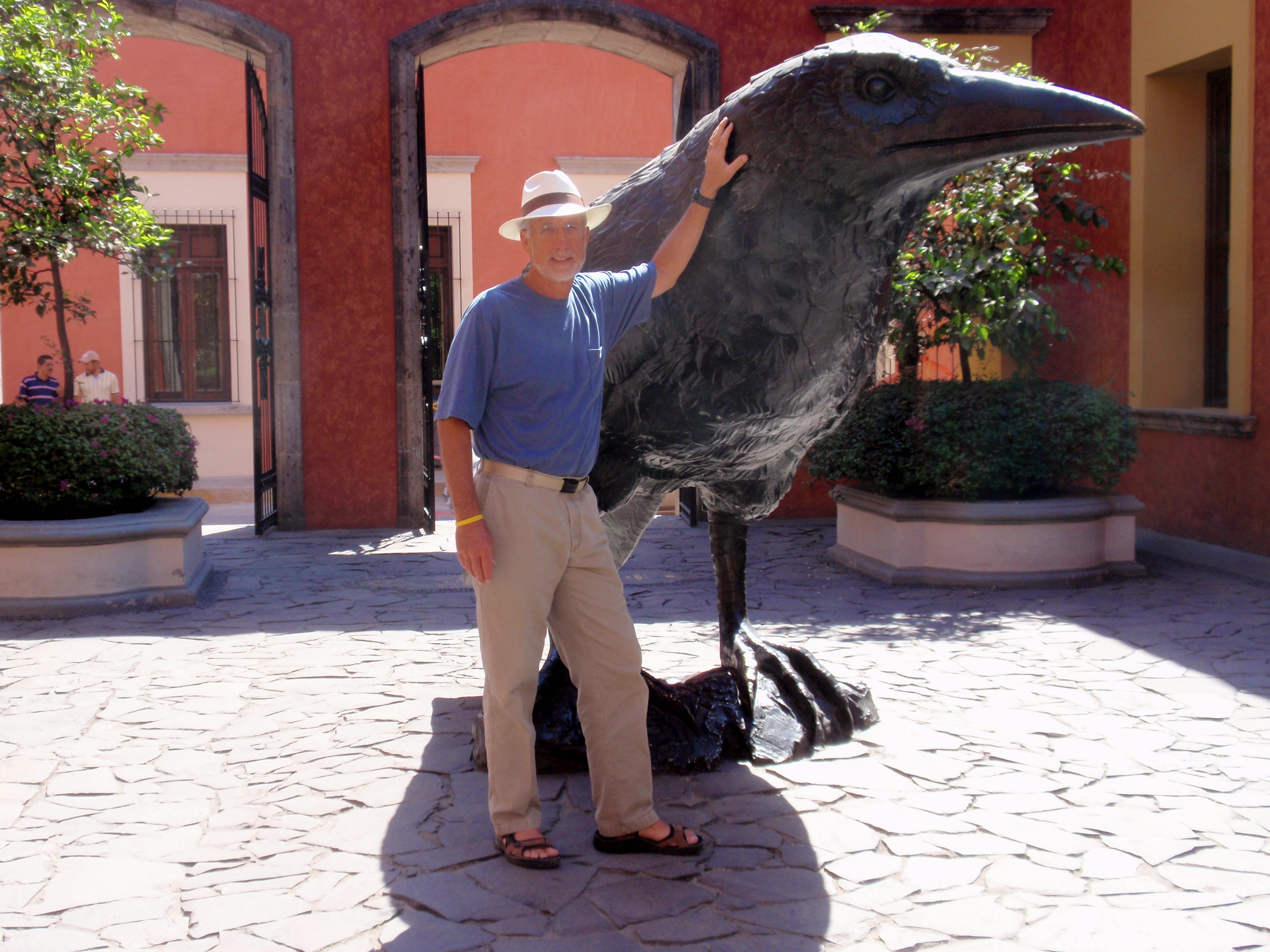
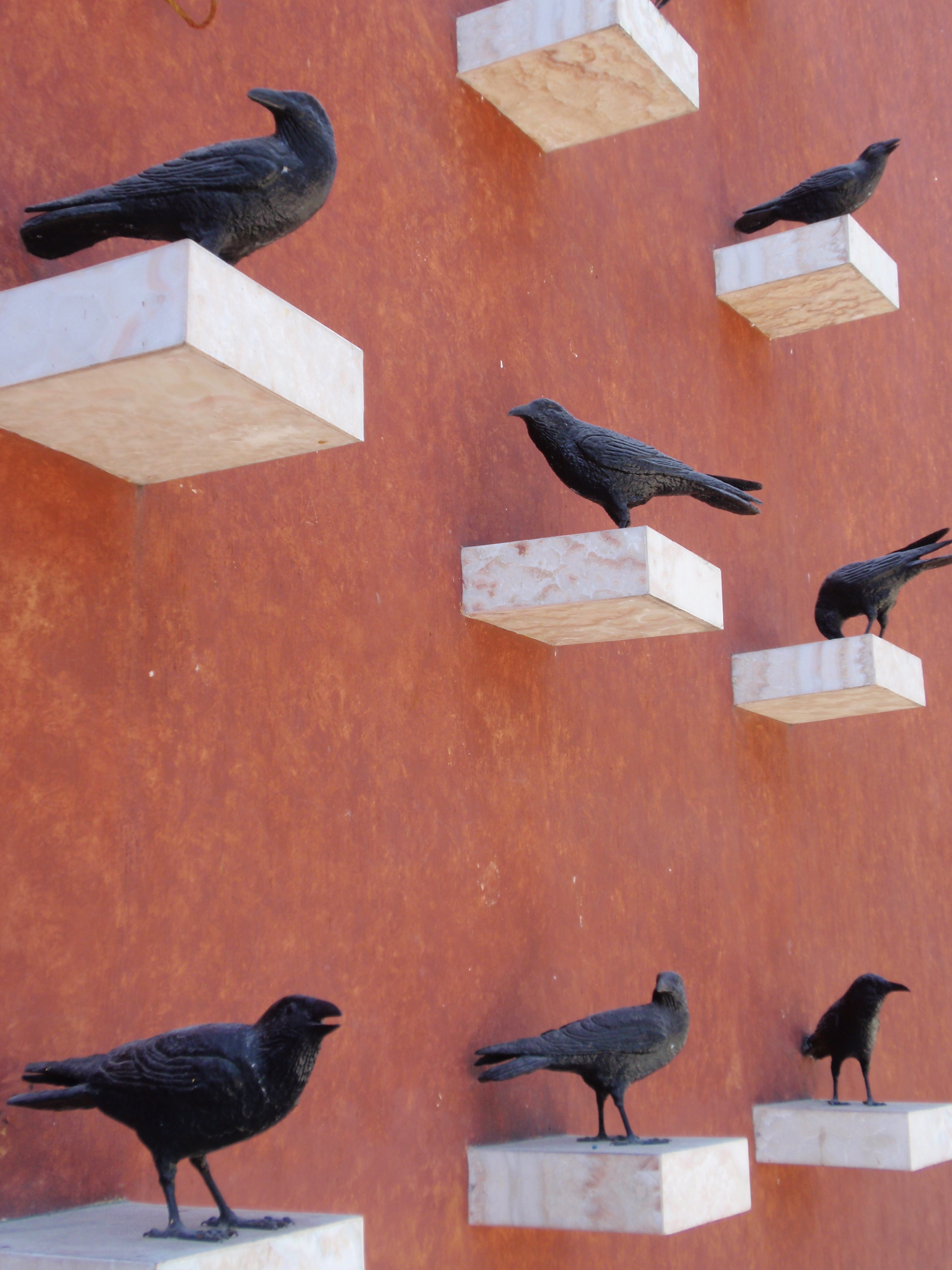
The raven appears to be the trademark for Jose Cuervo. Note the large raven in the upper left corner of the birdcage.
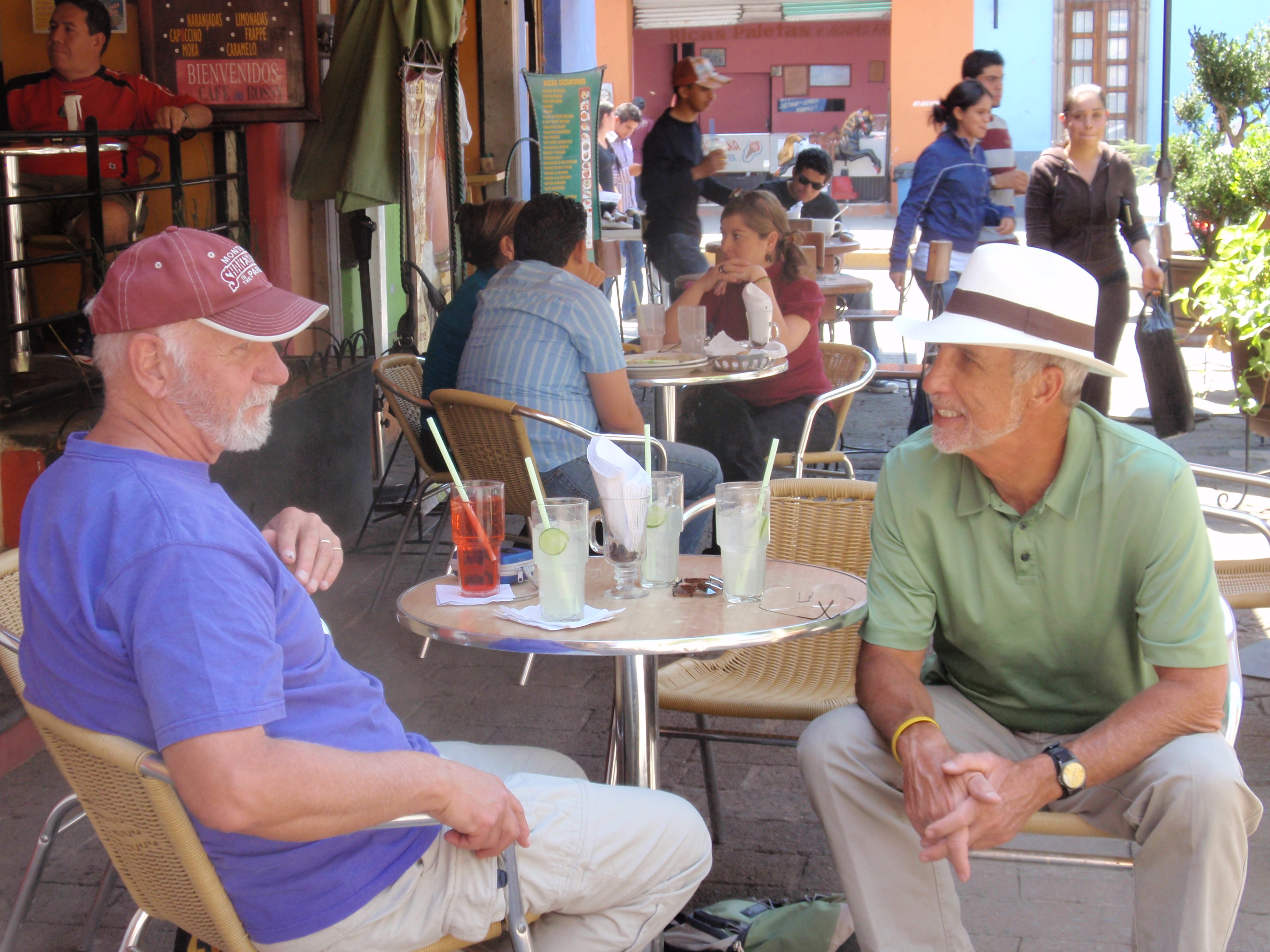
The photographer, my husband Terry, sporting a new beard and Panama hat! He is standing in the courtyard of the Jose Cuervo gift shop and cafe.
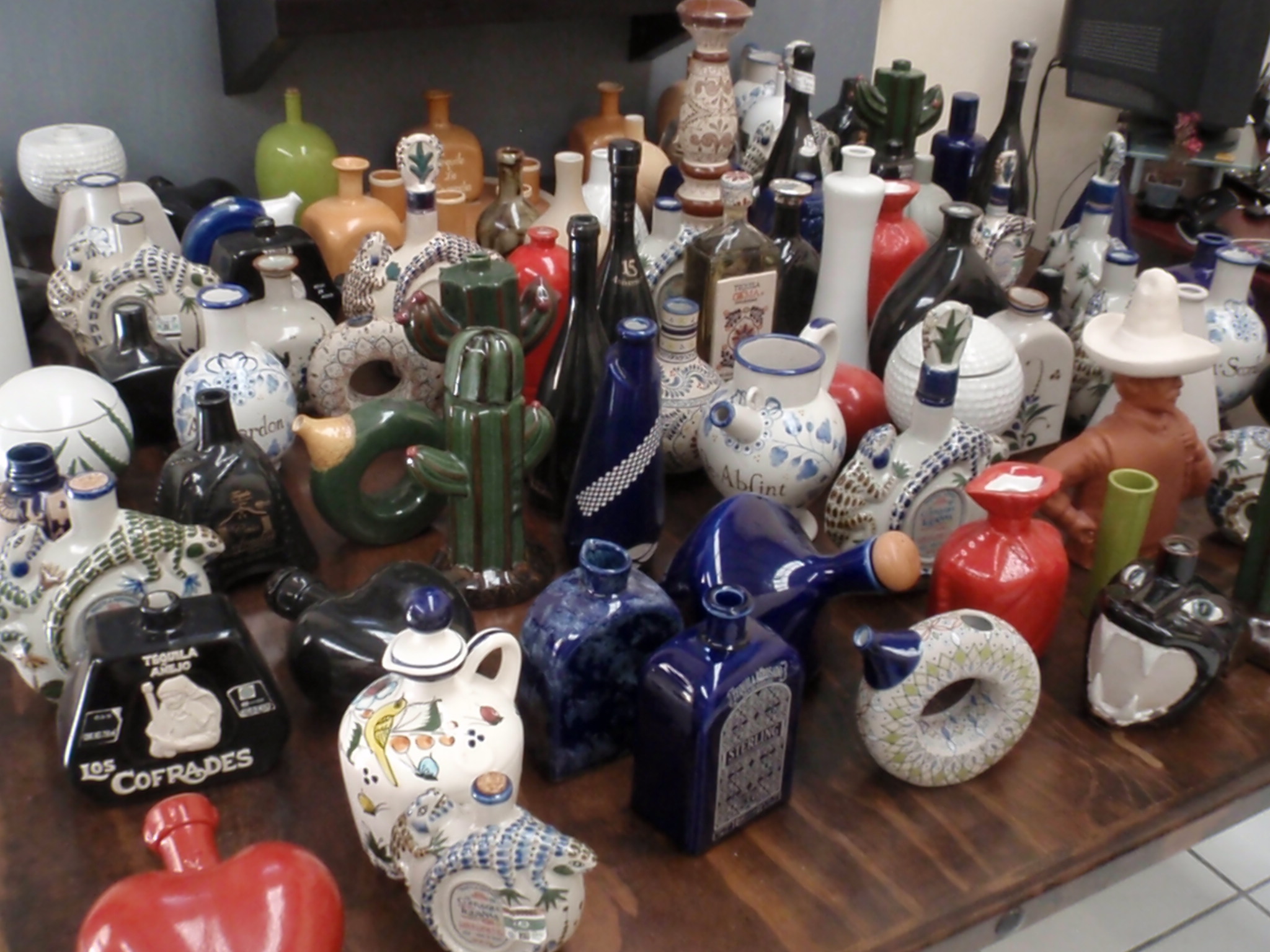
This is a very colorful presentation of the award-winning Jose Cuervo tequila boxes for the past 15 years that were displayed in their gift shop.
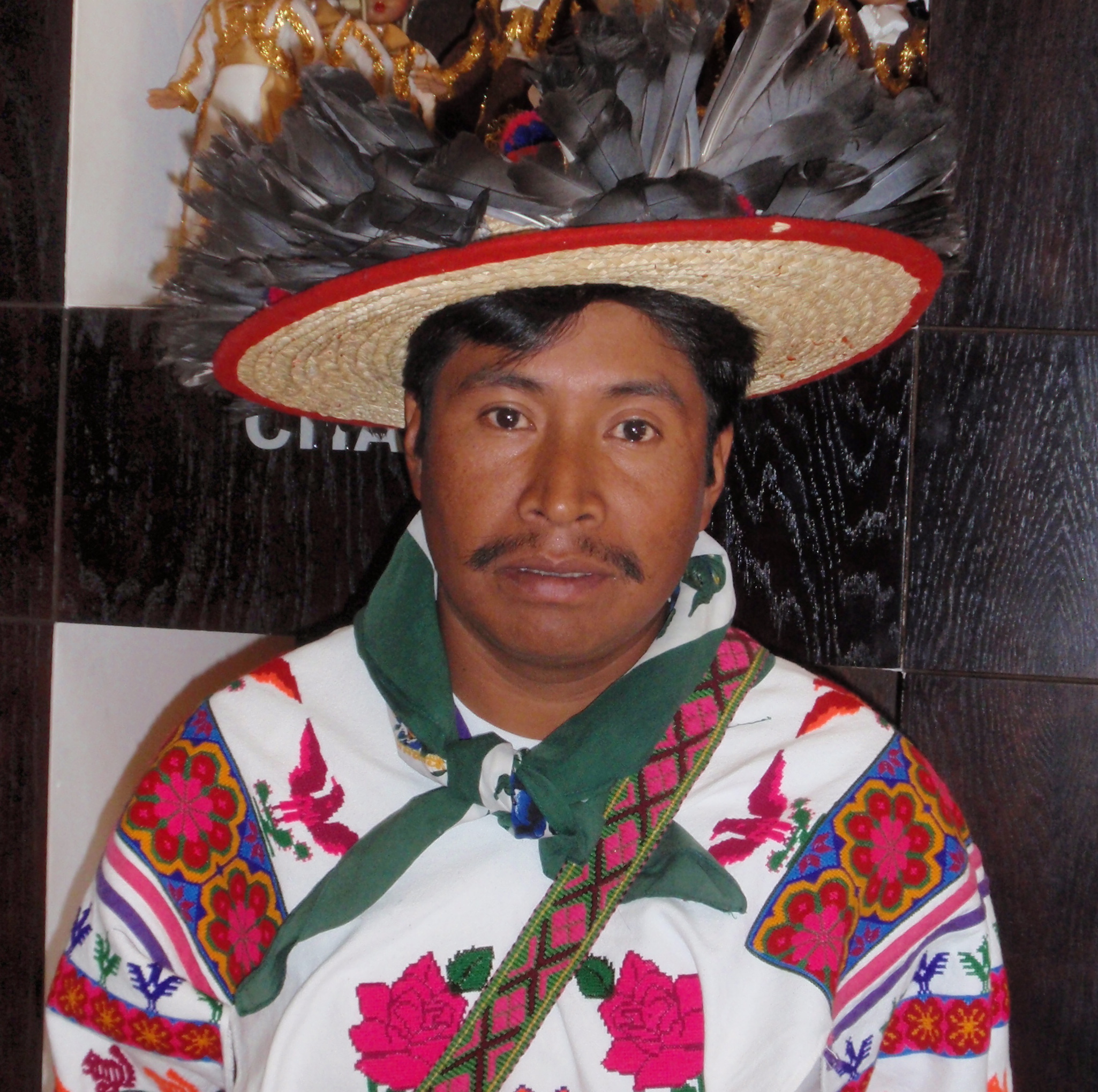
A Huichol artist, whose jewelry and pottery was displayed in the gift shop, was kind enough to let us photograph him.
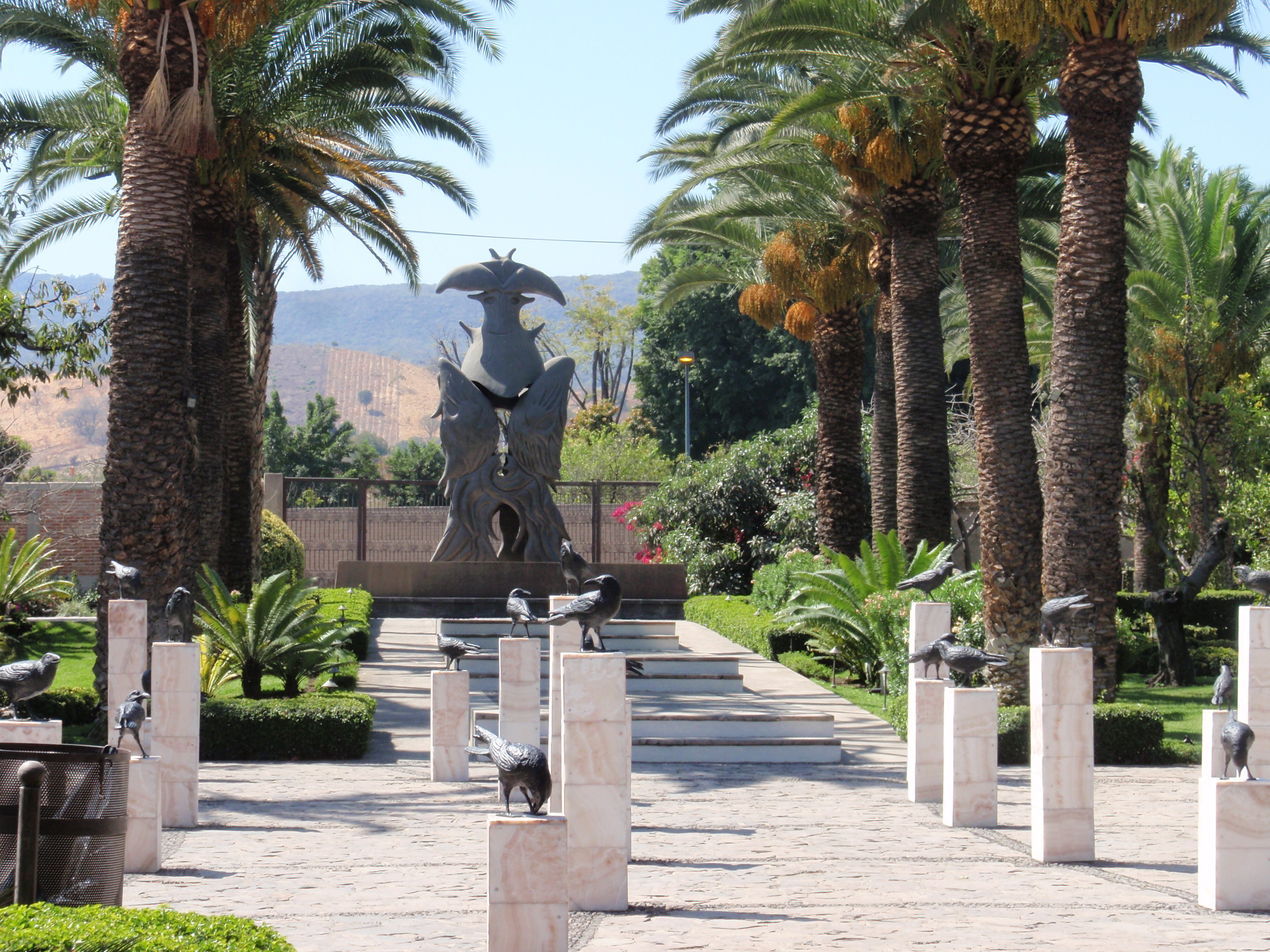
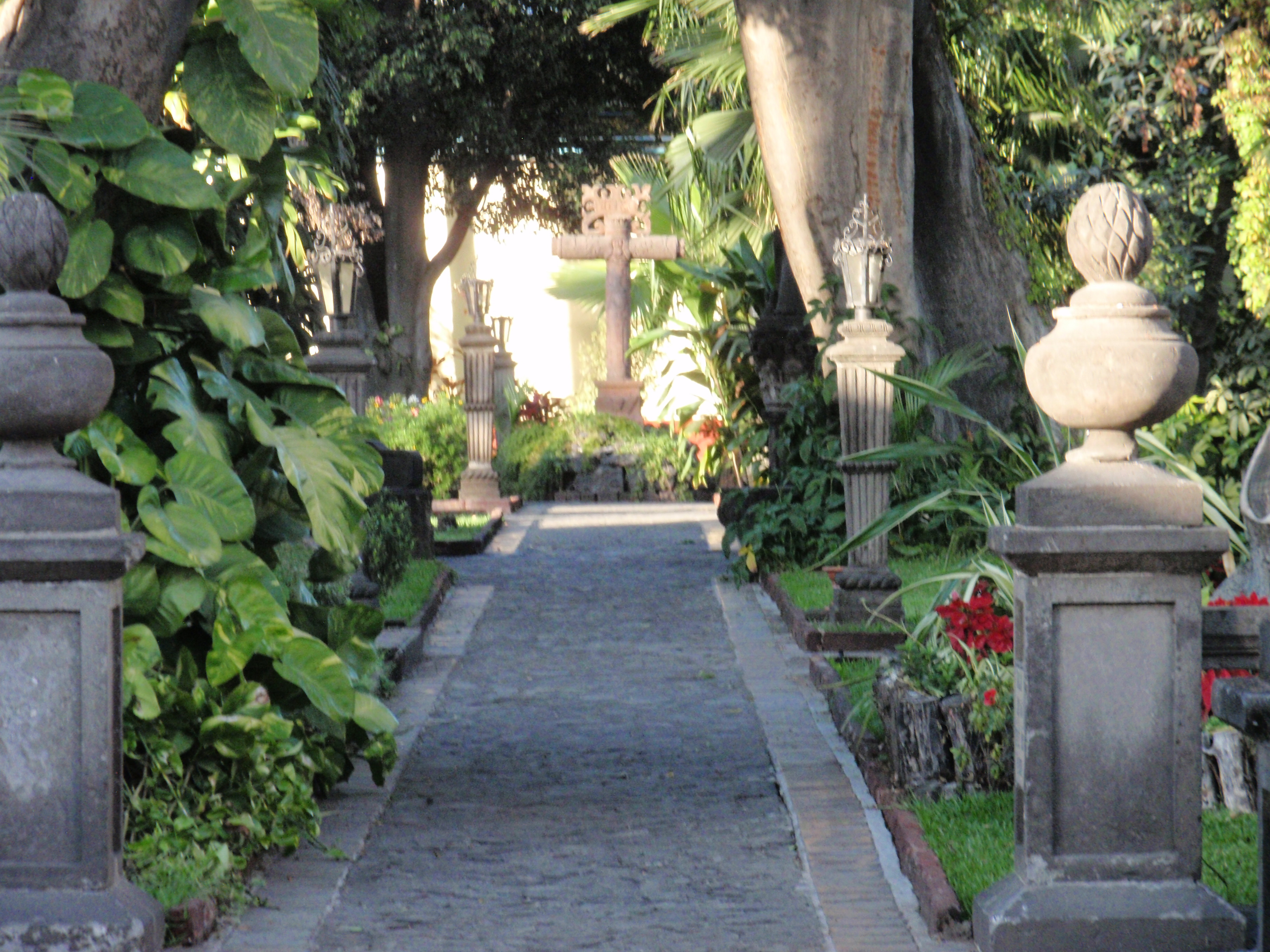
One of the many fabulous Cuervo gardens, with an unusual sculpture as its focal point and many pedestals of varying heights displaying the proud trademark, the raven.
Another wonderful wall display of the Cuervo trademark.
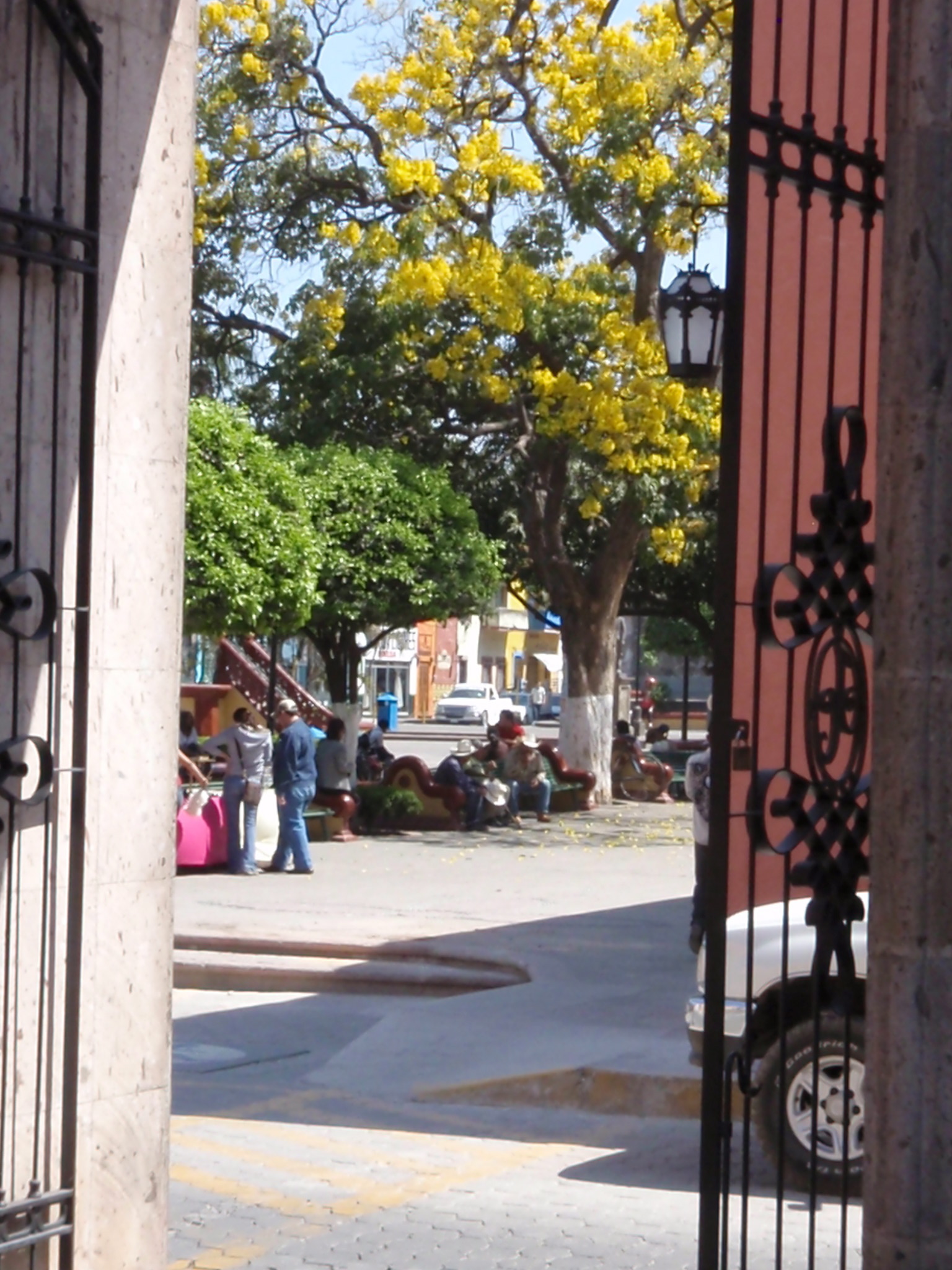
A peek through the iron gates of the Jose Cuervo courtyard to the plaza beyond, where we headed to retrieve our vehicle and journey back to Lakeside. This was definitely a worthwhile trip!
No visit to Jalisco, Mexico is complete without a trip to Tequila. We found it to be a very clean, quite charming city of 35,000, and chock full of history, as one might expect.
The city was established in about 1656 and has been named a World Heritage Site. Tequila’s origin lie with the Aztec peoples of Mexico, who made a beverage from the agave plant long before the Spaniards arrived in the village that was then called Techinchan.
When the Spanish conquistadors arrived in 1530, having run out of all spirits they had brought with them from Spain, they fermented agave juice. The first tequila factory, however, would not be established for another 70 years, at the hacienda of Don Pedro Sanches de Tagle.
The first order of business for us when arriving in Tequila was to secure a room for the night. We looked for the main plaza in the city, knowing that there would be an interesting church to visit as well. We were very surprised to find such a lovely hotel bordering the plaza so we quickly booked two rooms, got settled, then headed off to explore the city.
Hotel Plaza del JardinInterior View of Hotel Staircase off the FoyerPlaza Shot Taken from the Mirador of our Hotel
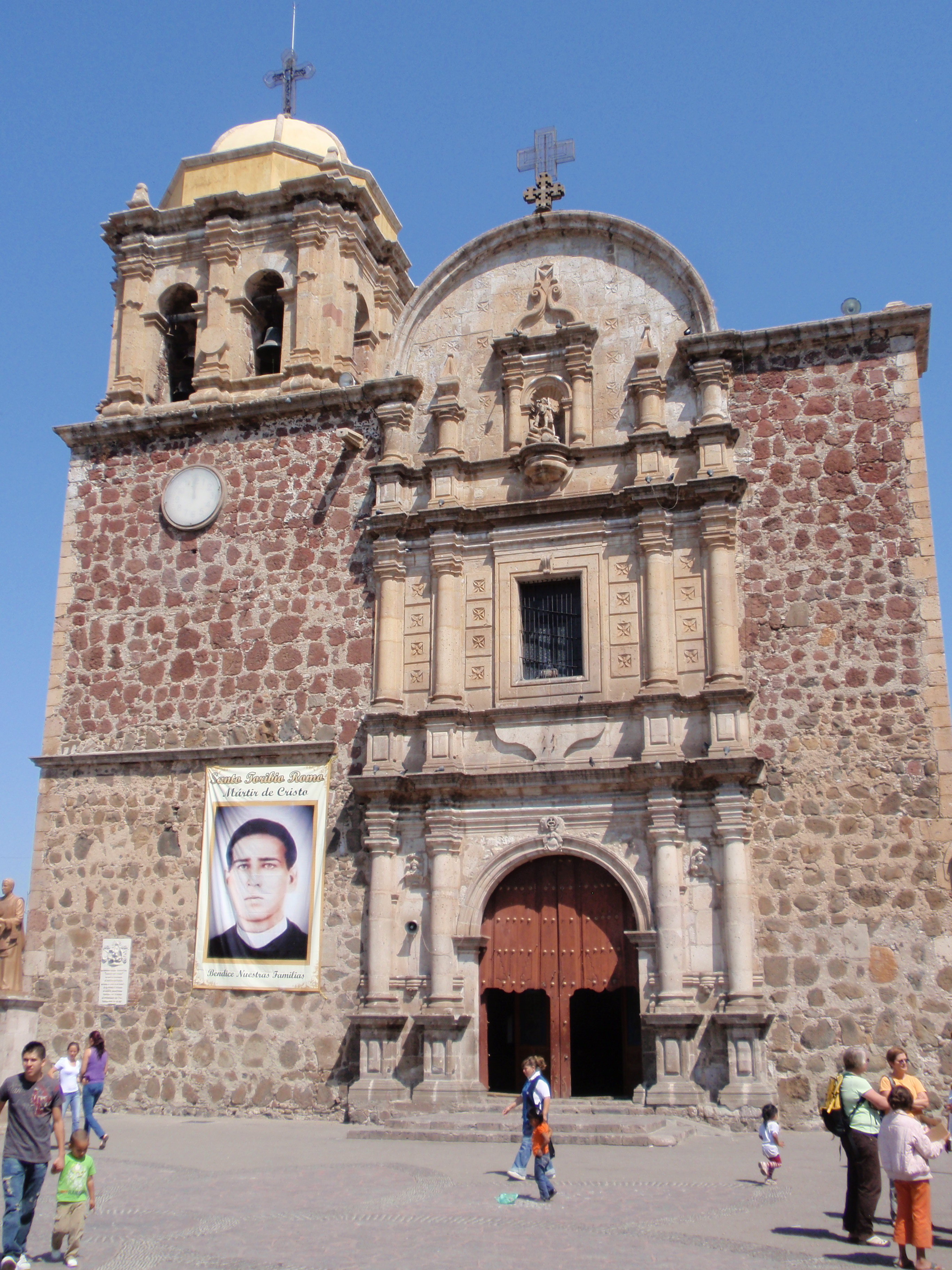
And yet another history-laden beautiful church, right off the plaza.
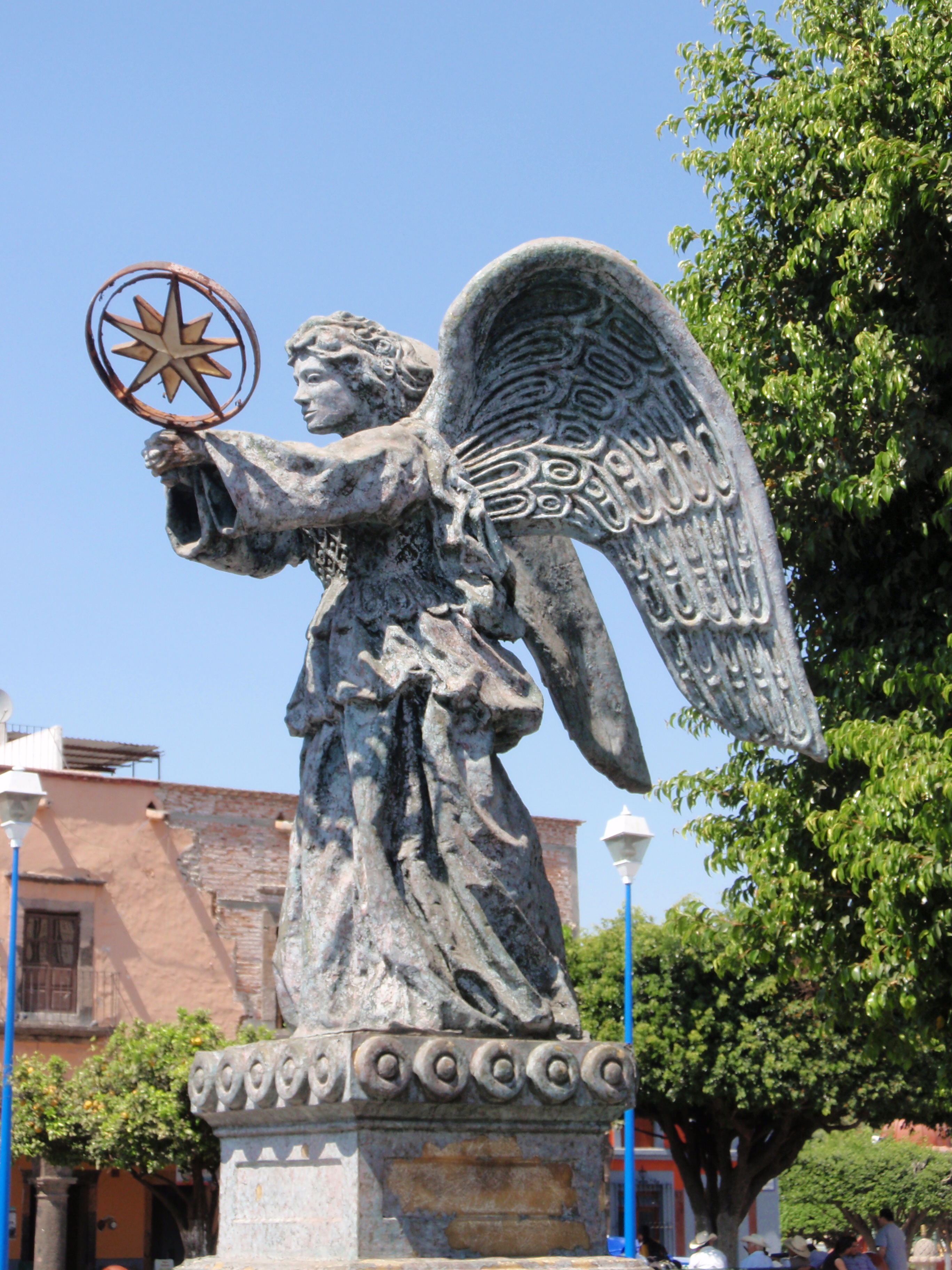
Church of Santiago ApostolInterior of Santiago Apostol ChurchAngel Guarding the Church
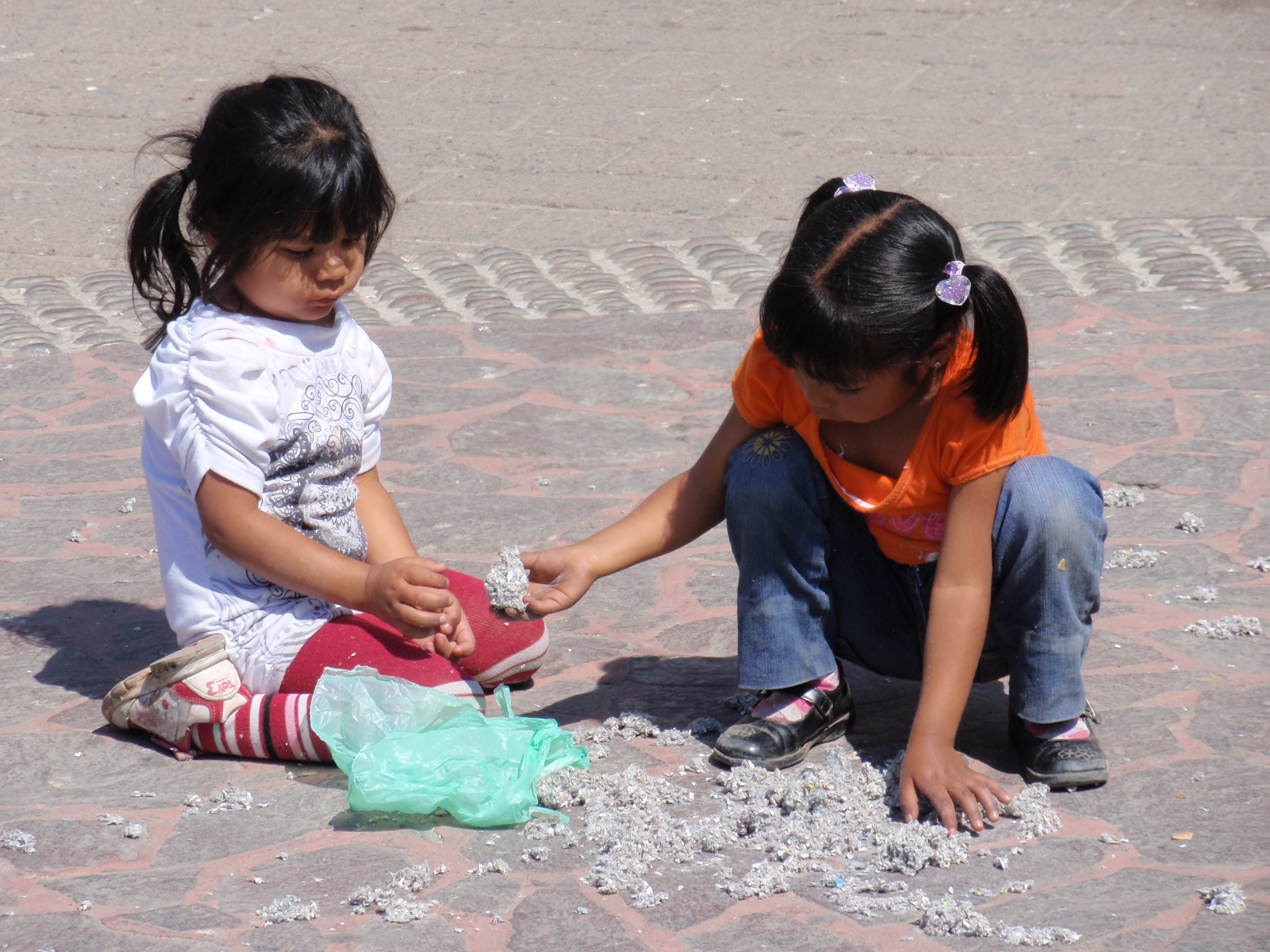
Terry snapped the photo below of two beautiful little girls playing on the grounds of the church. At closer inspection, it appeared they were playing with cellulose insulation, of all things!
While Rosie and I set off to check out the market, the “boys”, awaiting lunch, planned out the activities for the afternoon, certainly excited about what lie ahead in the tasting rooms.
I had not the first idea of how tequila was distilled from the agave plant so I was excited when a local tour guide approached us and offered to take us on a tour. As an added bonus, she spoke perfect English.
Our first stop on the tour was to view the Jesus Reyes distillery, a small factory that continues to produce tequila in the ways that were done before many of the more modern technologies were developed. It has been in operation since 1840 and only distills small amounts of tequila for select stores.
Ex Hacienda El Martineno ~ Jesus Reyes Distillery
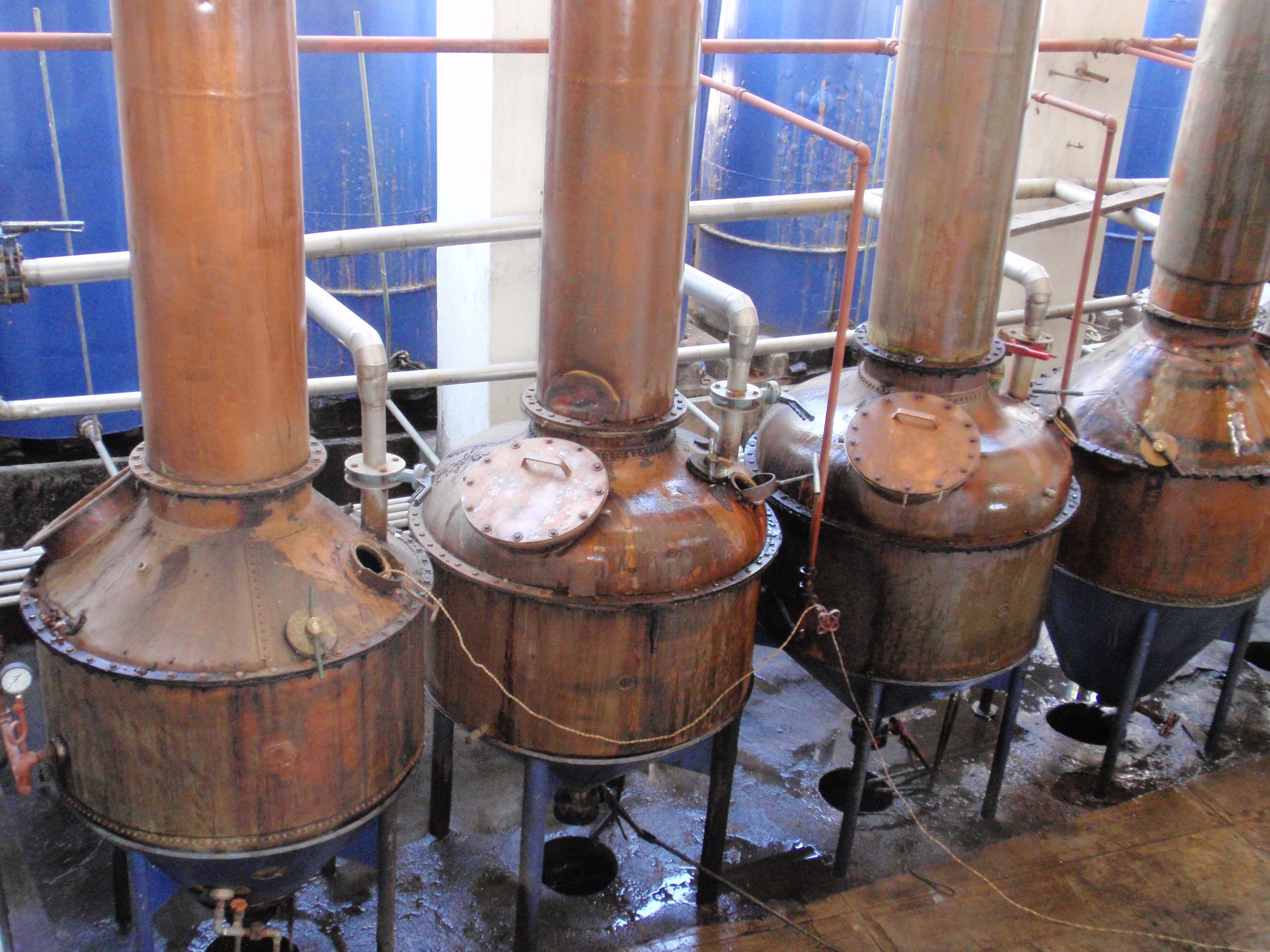
The hearts of the agave, once harvested, are placed in ovens to steam for most of a day, under high temperatures. Once this process has been completed, the hearts (pina) are transferred to distillation tanks. The remaining juices are steamed under very high temperatures to produce tequila.
Distillation Tanks
These copper stills, during the distillation process, create what can technically be called tequila, although at a much higher proof than is allowed by law for consumption. We were told that of approximately 1000 liters of agave juice, only 10% becomes tequila after the process is completed. It is the condensation itself that becomes the tequila. The fiber that remains behind has many uses, one of which is compost for the next planting of the agave fields.
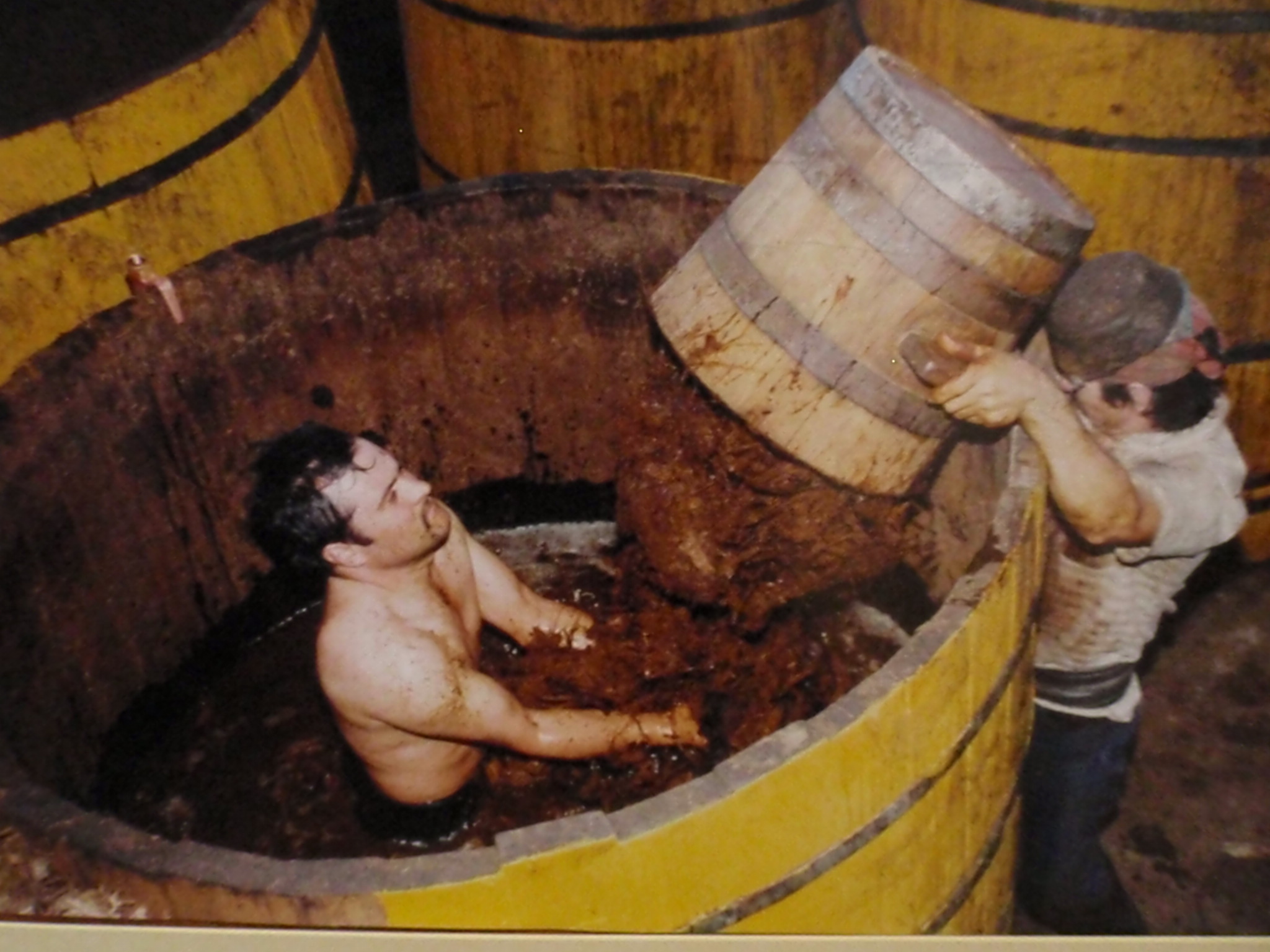
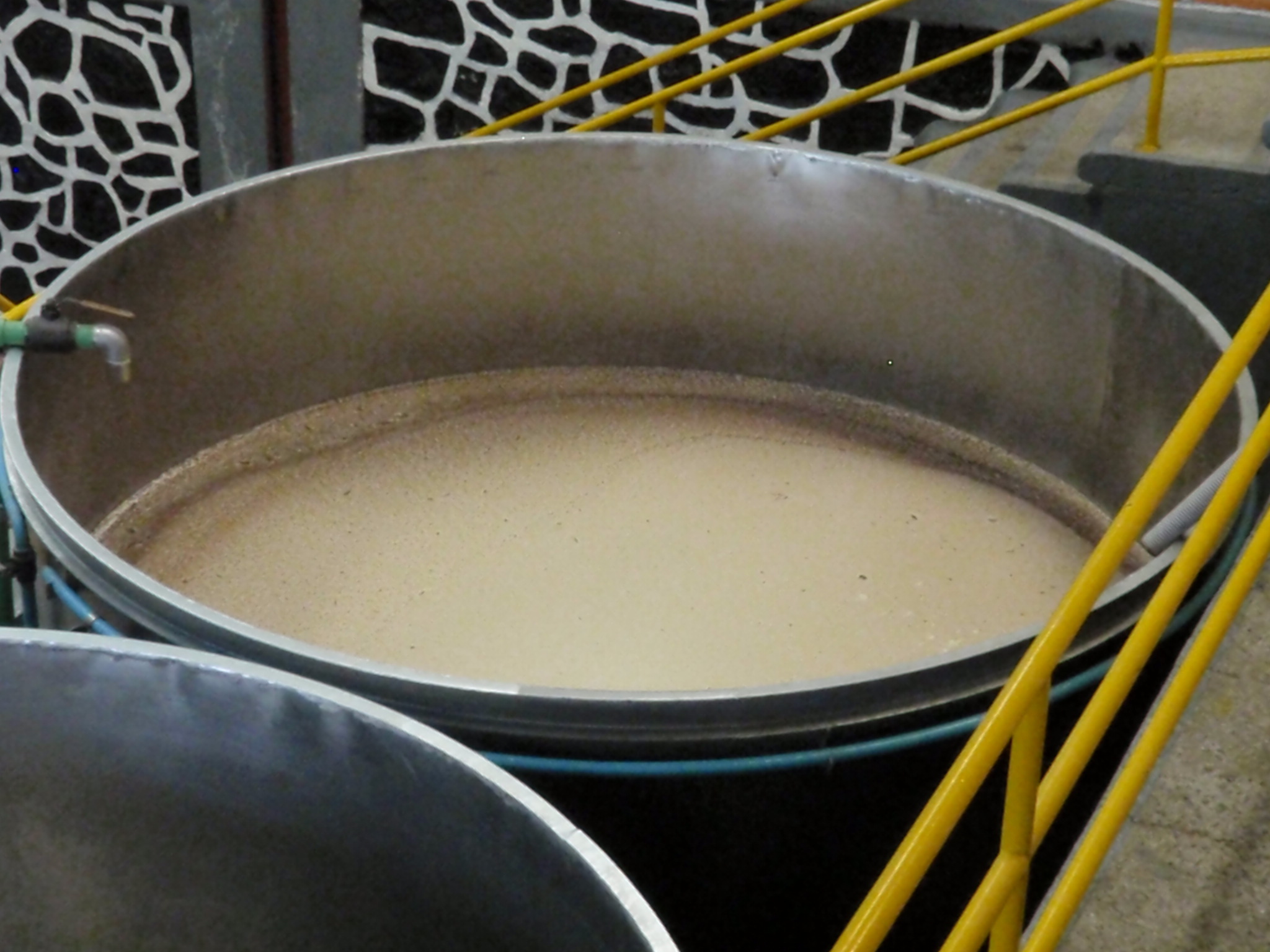
The above bubbling mass is the contents of a fermentation vat, where the tequila is transferred after the distillation process. Since bacteria is needed for the fermentation process, these vats are left open, where small bugs drop into them. We were assured that the end product is strained many times and the alcohol content must surely kill off anything bad, right?! Actually, many decades ago the bacteria that was used for this fermentation came from the bodies of the workers in the agave fields, as the picture below depicts.
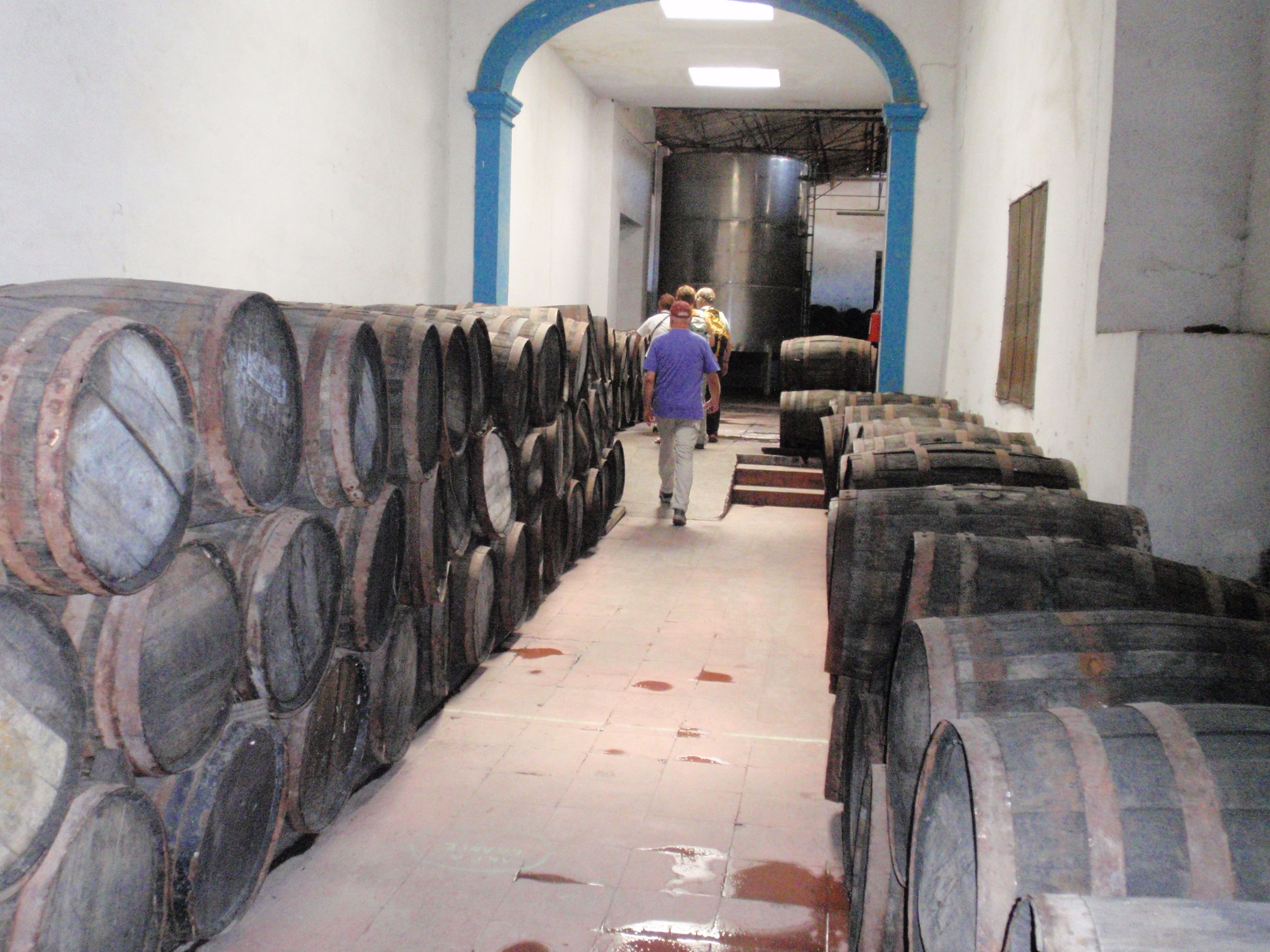
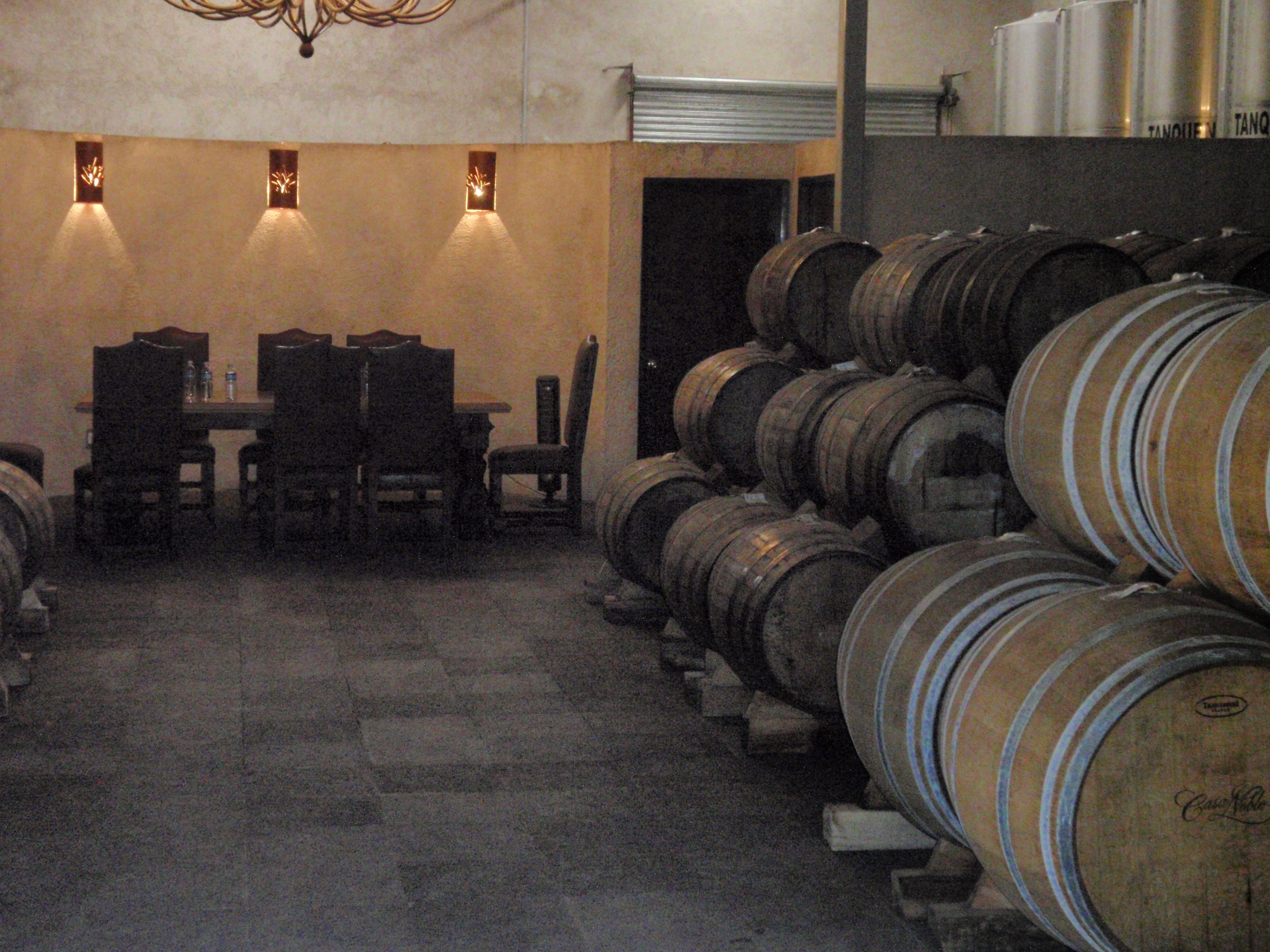
White Oak Barrels, Aging the Tequila
Some tequilas are aged in white oak barrels, while others go immediately to bottling.
The end result in the tasting room, where we were given a quick lesson on how to imbue our senses, both taste and smell, with the heady liquid. Good tequila is not drunk with salt and lime, as we are accustomed to NOB, but rather sipped, as any other good spirit. Given that this distillery produces few bottles and does not sell much beyond their factory walls, a bottle or two just had to find its way home with us.
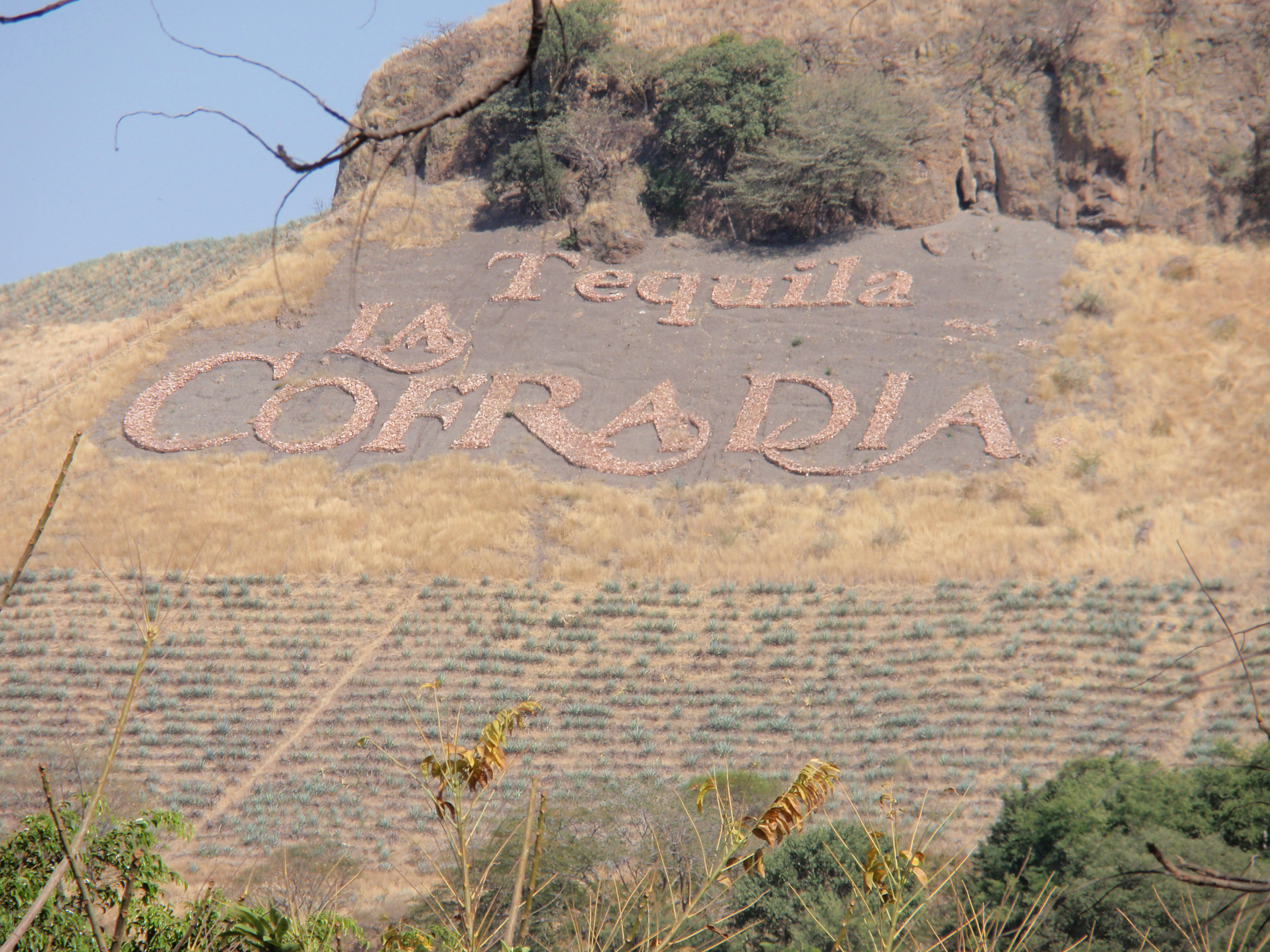
From here we opted to visit a mid-size distillery, to view the differences with some modern technology thrown in. La Cofradia (a religious order) is a 20-year old factory that creates their own bottles and pottery on site as well. A lovely boutique hotel sits on the grounds, along with a duck pond, which completed the restful setting.
Off to the factory to see how the distillation process differs from that of Jesus Reyes.
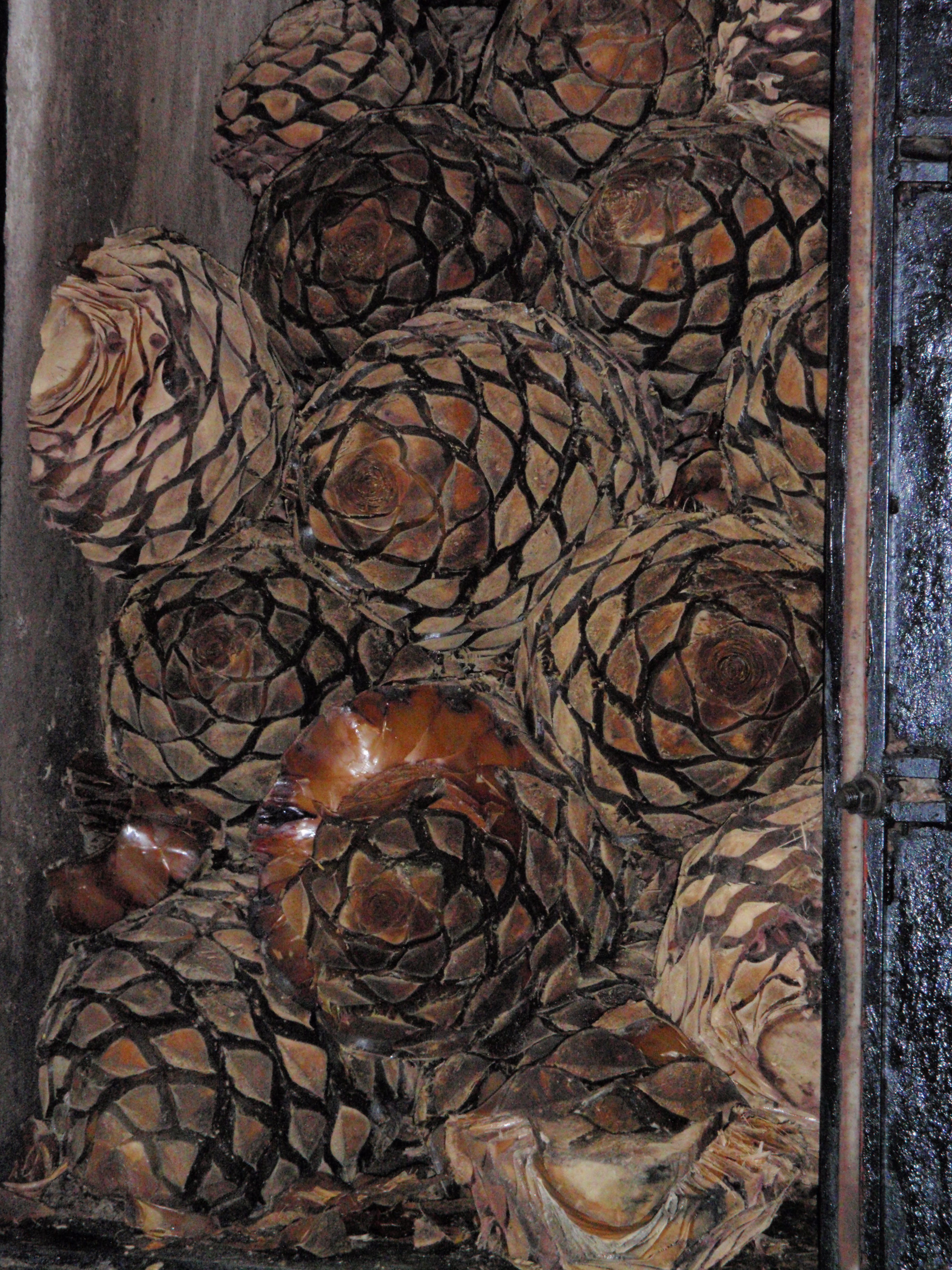
Pinas after Steaming in the Ovens
Once these pinas were cooled, we were allowed to taste. We found the agave heart to be very sweet, with the heat having concentrated the sugars.
The equipment was definitely more modern but the process explained at this factory was the same.
Stainless Steel Distillation TanksModern Fermentation VatWhite Oak Barrels ~ Aging of Tequila
Tequilas carry different classifications, dependent upon the amount of time aged:
Blanco: clear; unaged; bottled immediately after distilling
Reposado: aged between 2 months and one year; somewhat amber in color
Anejo: aged 1-3 years; darker amber, taking on more of the flavor of the barrel
Extra Anejo: aged greater than 3 years
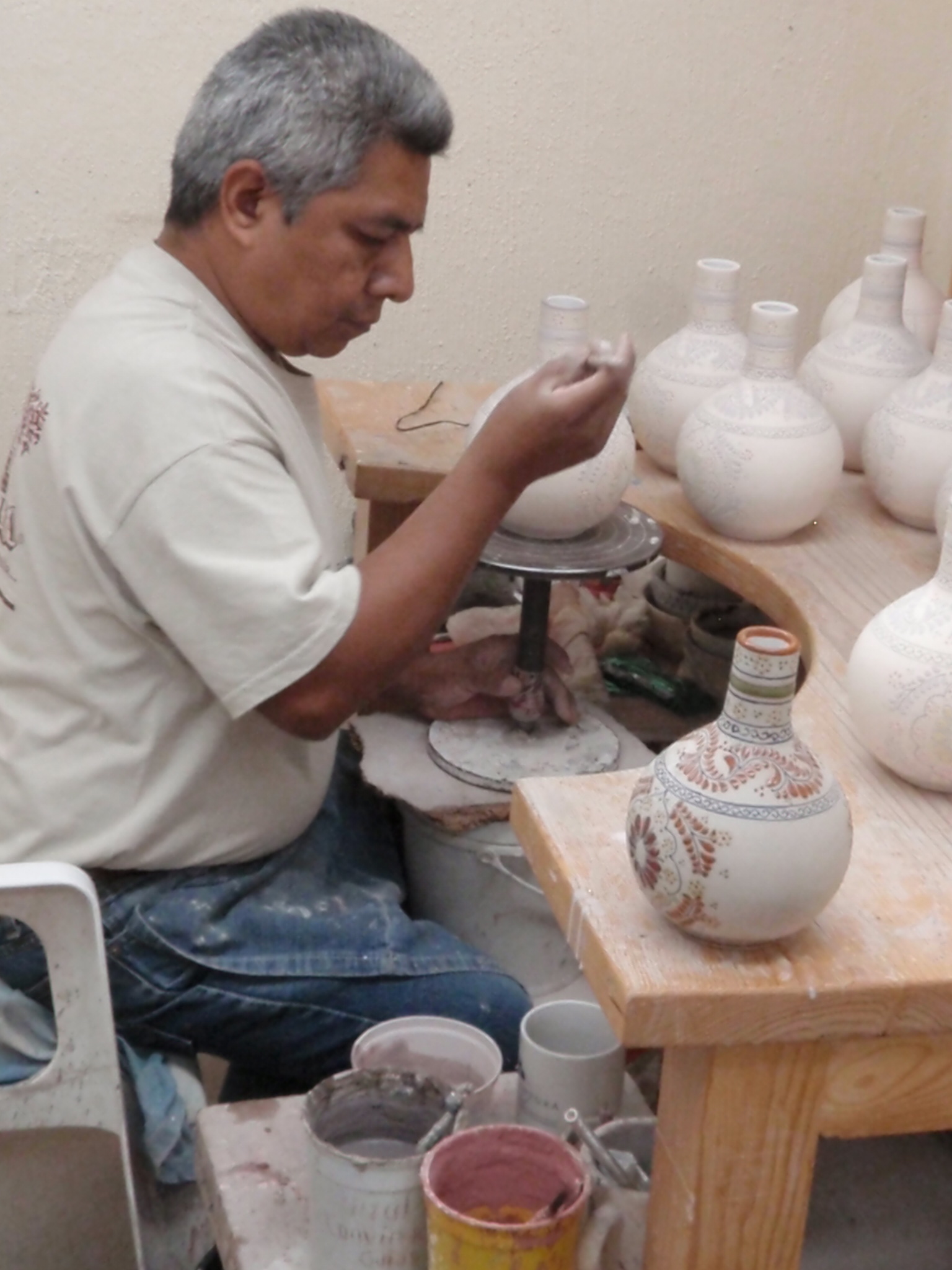
A tour of the ceramics factory was next on our list. We toured several rooms displaying various stages of bottles to be fired, along with beautiful pottery pieces.
Worker Intricately Painting the Bottle Prior to Firing
And some of the finished products:
Last stop ~ tasting room!
On the way back to the plaza, we discovered that our trolley driver loved his music, cranked up so that everyone in town, and I mean everyone, could hear us coming. He seemed to know the entire town, as people waved and spoke as we went by. There was no sneaking back into town for us!
The remainder of the day was spent wandering the city blocks around the plaza. As luck would have it, a security guard allowed us to enter the Sauza gardens, the largest of the distilleries in the city, having been established in 1873. These were some of the loveliest gardens we had seen yet in Mexico, as evidenced below.
The streets were so clean and the flags and buildings so colorful, with abundant statues and murals.
Tequila Street ViewTurquoise Building off the PlazaSpectacular Mural in Municipal Building
We were fortunate to be able to spend three days at the Pacific coast beach village of Melaque (pronounced May-la-kay). Located approximately 4 hours southwest of Guadalajara, this little village of 4000 inhabitants, residing just north of the resort city of Manzanillo, has a lovely 3-mile beach. The temperatures were in the mid to upper 70’s and the water temp was just about perfect, very refreshing. This was a very clean beach, with small hotels and restaurants dotting the landscape. We were grateful to be able to find a room right on the beach.
Fortified with banana pancakes and eggs Mexicana, compliments of El Patio Restaurante, we headed to the beach for a day of sun and surf. A few cervezas on the beach rounded out the day beautifully!
At the northern end of the Melaque beach lies the sleepy little fishing village of Barra de Navidad, which we visited on our way out of town. A very colorful mural was being created by a local artist as we passed by.
We are excited about the prospects of returning to this area in May for a yoga retreat.
Our next adventure away from Lakeside took us through the colonial city of Colima and town of Comala, on our way to the beach. We knew that there was much more to experience in this area than we had time to see, so a second trip will definitely be in order. We spent just a short overnight stay in Colima, so we felt as if we had just scratched the surface of this colonial city of roughly 130,000 people.
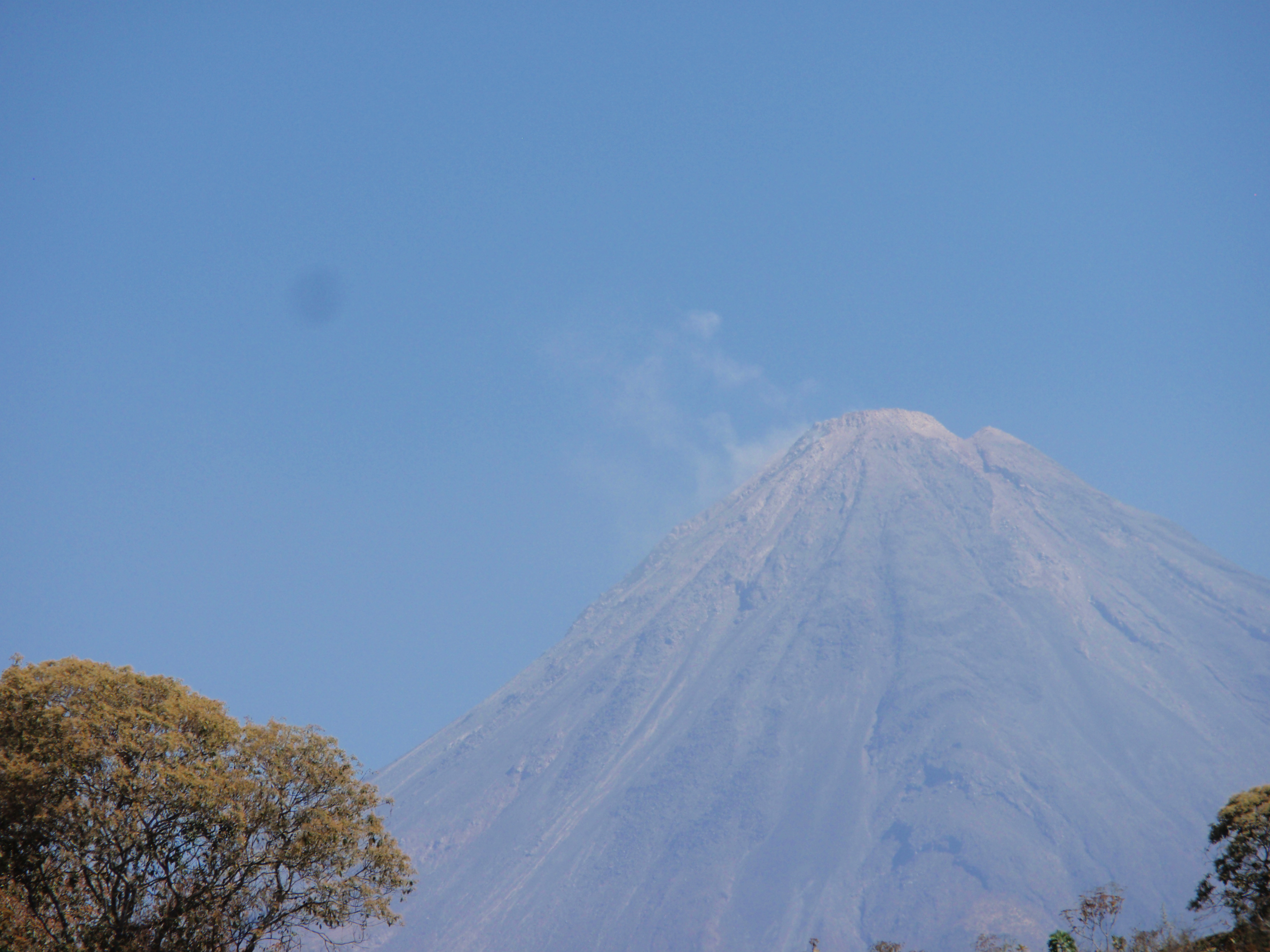
Approximately 45 minutes outside of Colima are two volcanos, one inactive, that stands at 14,200 feet and the most active volcano in Mexico, El Volcan de Fuego, hovers at 13,488 feet. Explosive activity occurs on a regular basis and we attempted to drive as close as we could in hopes of seeing some of this activity. Not much was happening during our visit.
El Volcan de Fuego
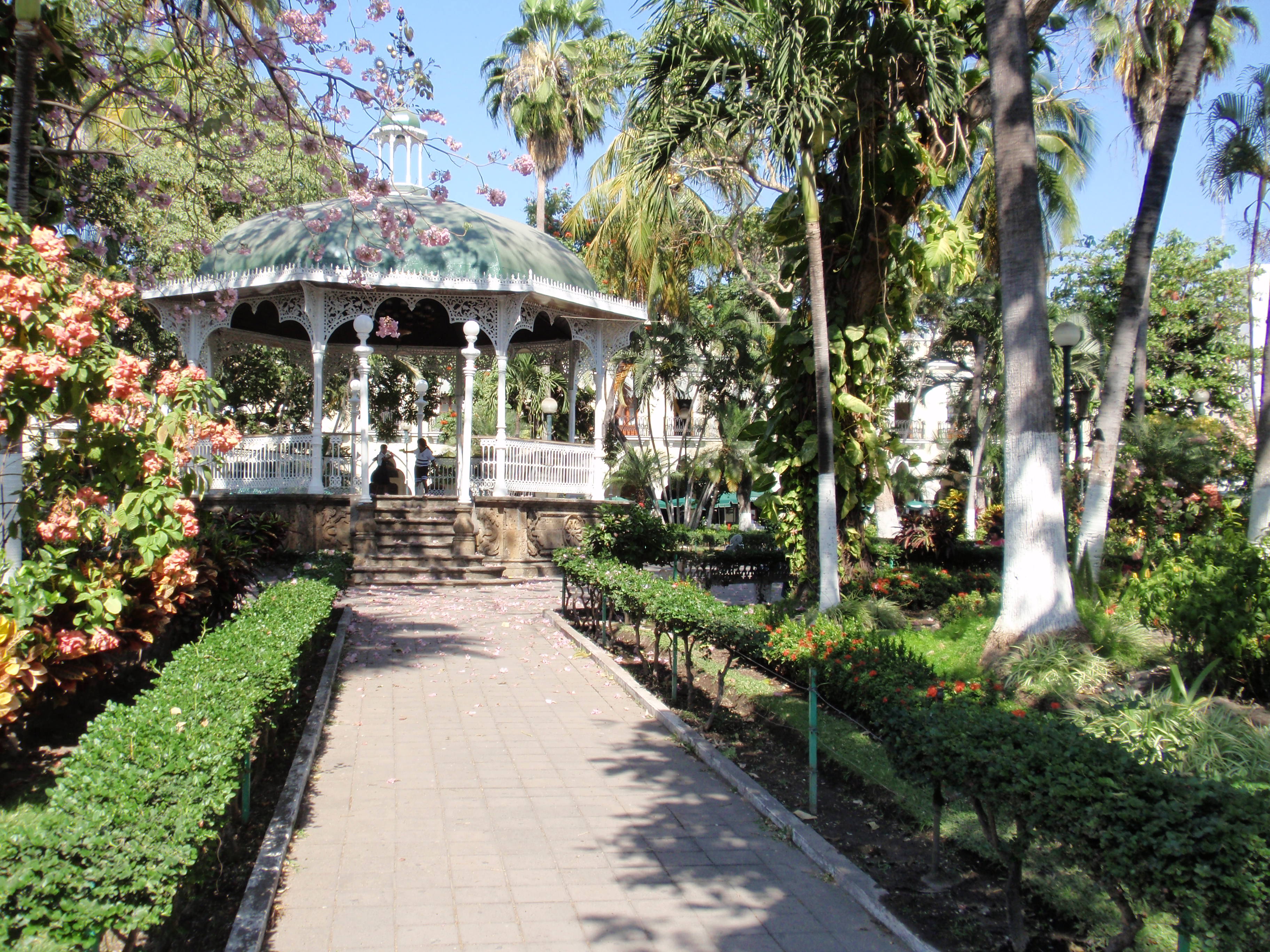
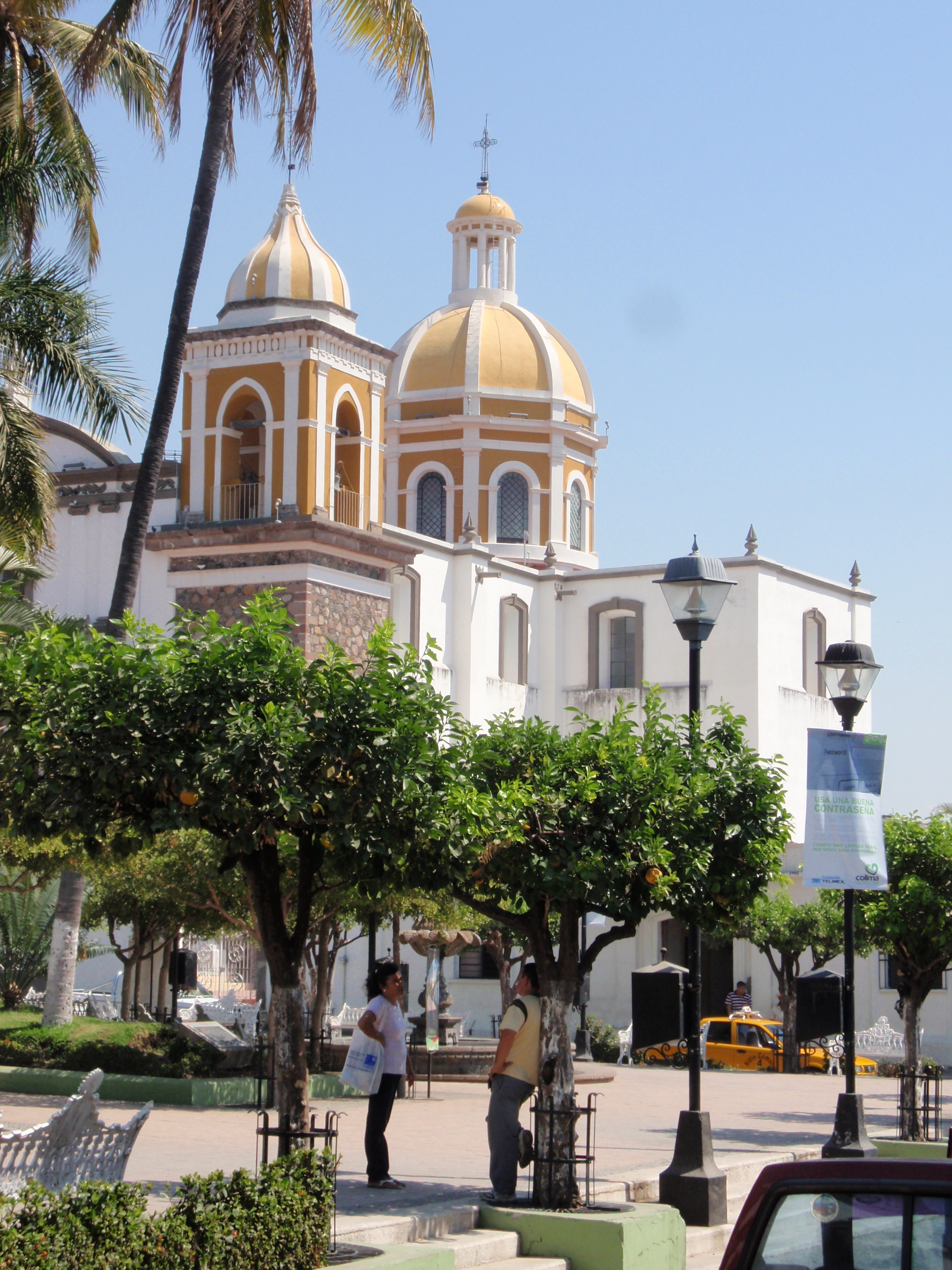
One of the beautiful plazas in the city that we visited was that of Jardin Libertad, the plaza that was bordered by the Colima Cathedral and Palacio Gobierno, as well as the Hotel Ceballos (a Best Western hotel) and the Museo Regional, the regional museum that we found to be quite fascinating.
Jardin Libertad, with her Lush Gardens and Bronze StatuesColima Cathedral and Palacio Gobierno
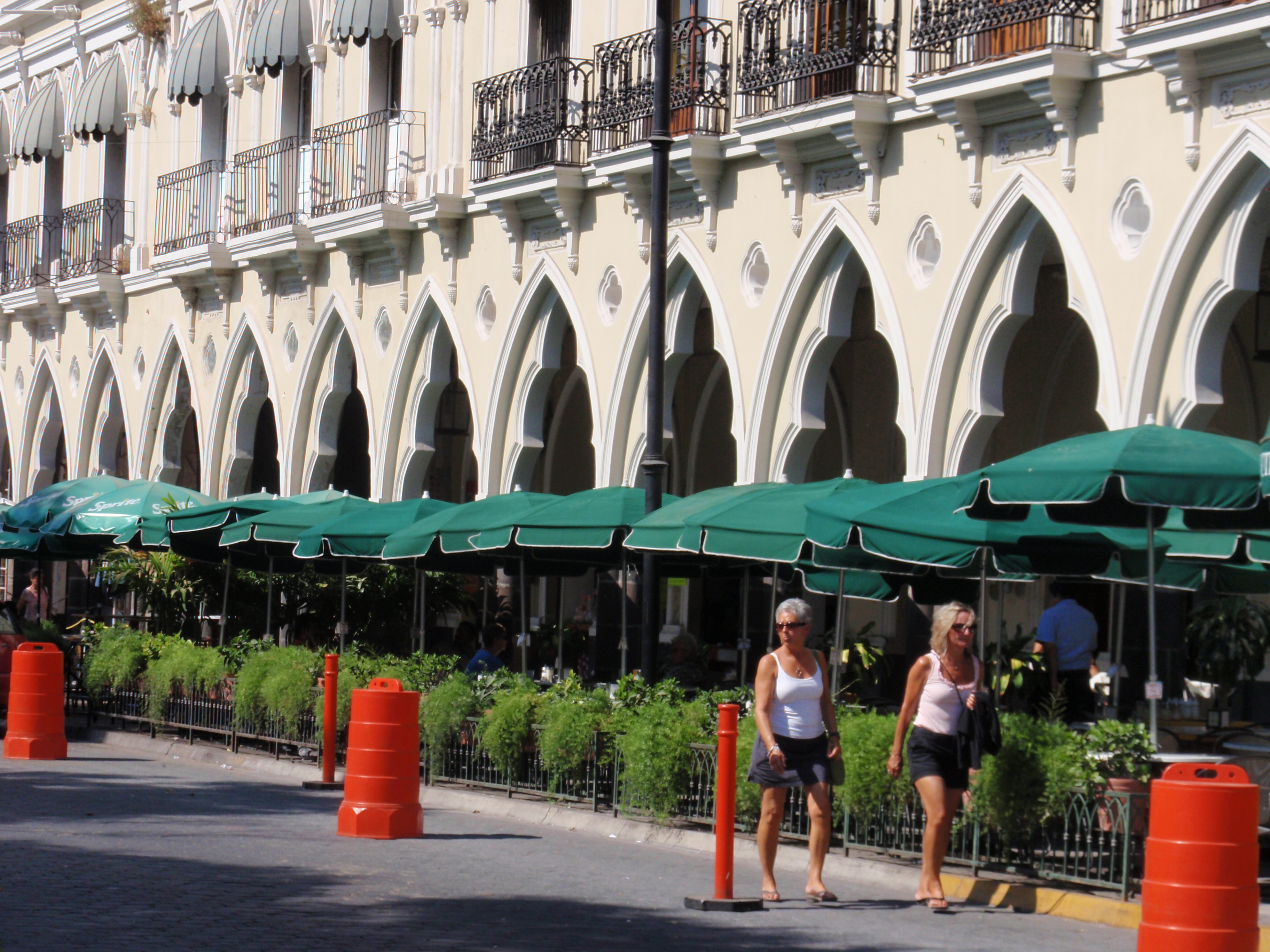
We decided to enjoy a leisurely lunch at a sidewalk cafe outside the Hotel Ceballos before venturing across the plaza to explore the Museo Regional.
Sidewalk Cafe with Hotel Ceballos in the BackgroundJim & RosieTerry & Me
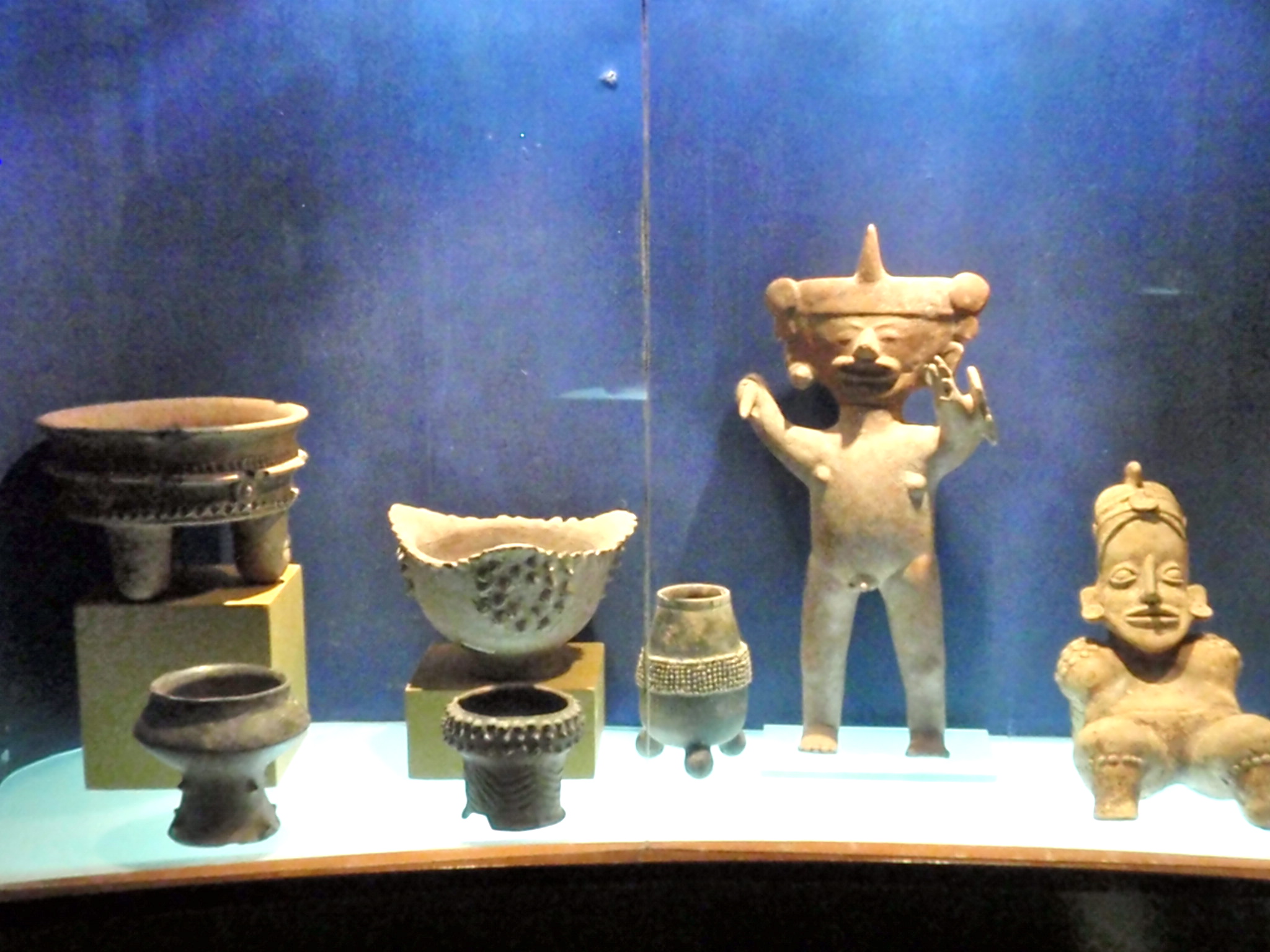
The region around Colima is famous for the clay dog figurines sculpted by the Nahuatl who settled in this area. Perros cebados (round dogs) ceramic artifacts have been discovered in abundance throughout the city and many were on display in the Museo Regional, which bordered the south side of Jardin Libertad.
Perros Cebados in the Museo Libertad
In the majority of Mesoamerican cultures, the dog was revered and thought to hold mystic powers. They had utilitarian uses as well. Fat, hairless, short-legged dogs were often used for food, while more slender, longer-legged creatures were used to ensure that those who died could be reborn in the afterlife. Dogs of this type were placed in the tombs of the recently deceased to guide the departed soul safely to the next world. Ceramic dogs were often used for this purpose. Dogs were also believed to safeguard homes from evil spirits and intruders.
This well-known Dancing Dogs statue, Perritos Bailarines, can be seen in a glorieta (traffic circle) on the outskirts of town, giving tribute to the importance of the dog throughout the centuries.
There were many other interesting artifacts and sculptures in the museum, depicting various time periods, along with a beautiful mural:
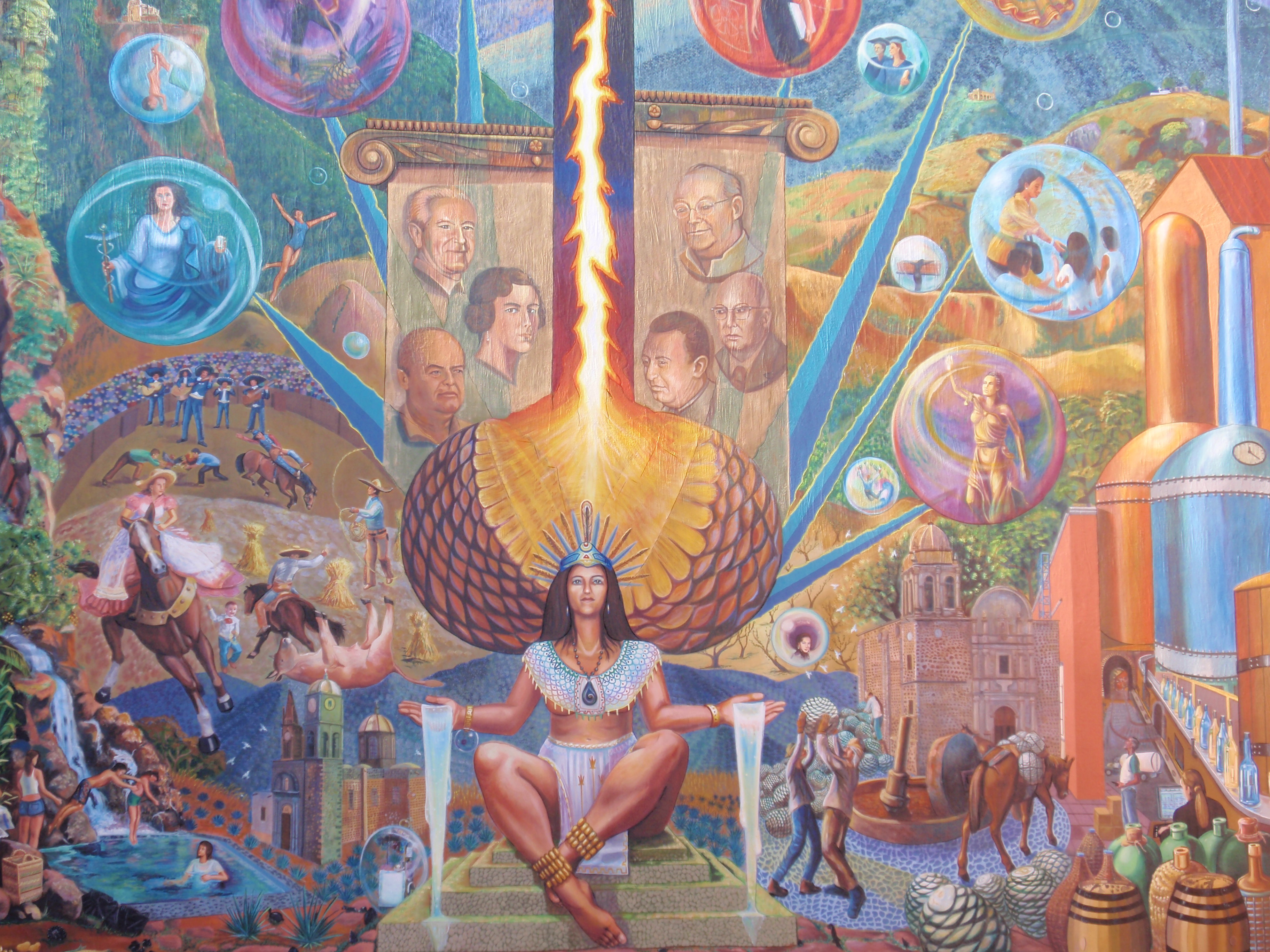
The focal point of the mural is that of the god of El Volcan de Fuego, demonstrating his power, while the female god of the dormant volcano sleeps under her snow-capped peak. Gods of the sun and the moon are also reflected in this piece.
Not unlike other colonial cities, beautiful and sometimes unusual sculptures dot the landscape.
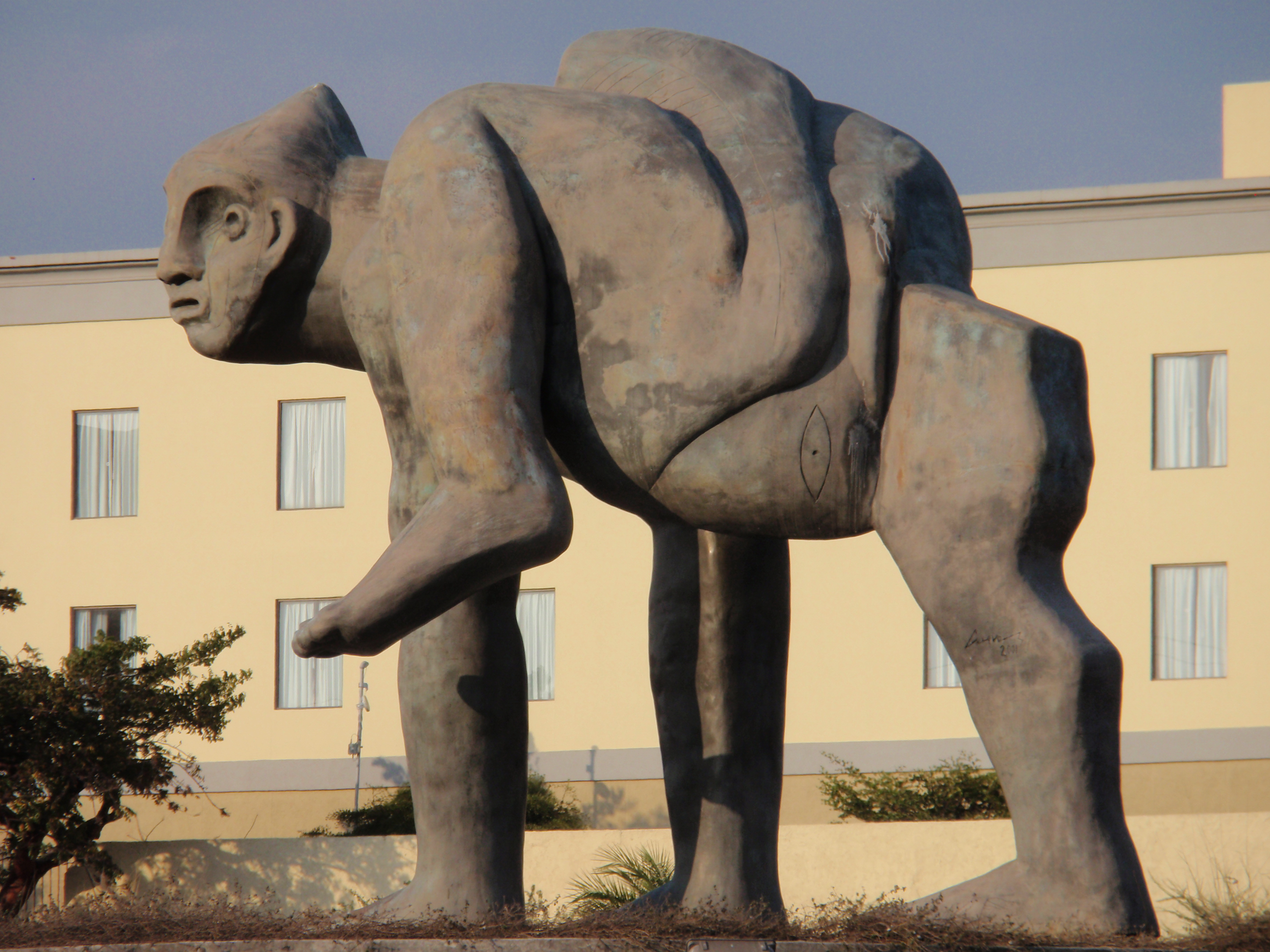
This statue, welcoming tourists to the city, is aptly named Figura Obscena, and is the work of Mexican sculptor Jose Luis Cuevas. It represents a man on his hands and knees, with one leg lifted in the gesture of marking his territory. I wonder what message this artist is attempting to send? As one might imagine, it is a controversial piece amongst the local population.
Another interesting and much more conservative sculpture can be seen outside one of the municipal buildings on the periphery of the city.
Mourning Dove on the Grounds of a Municipal Building
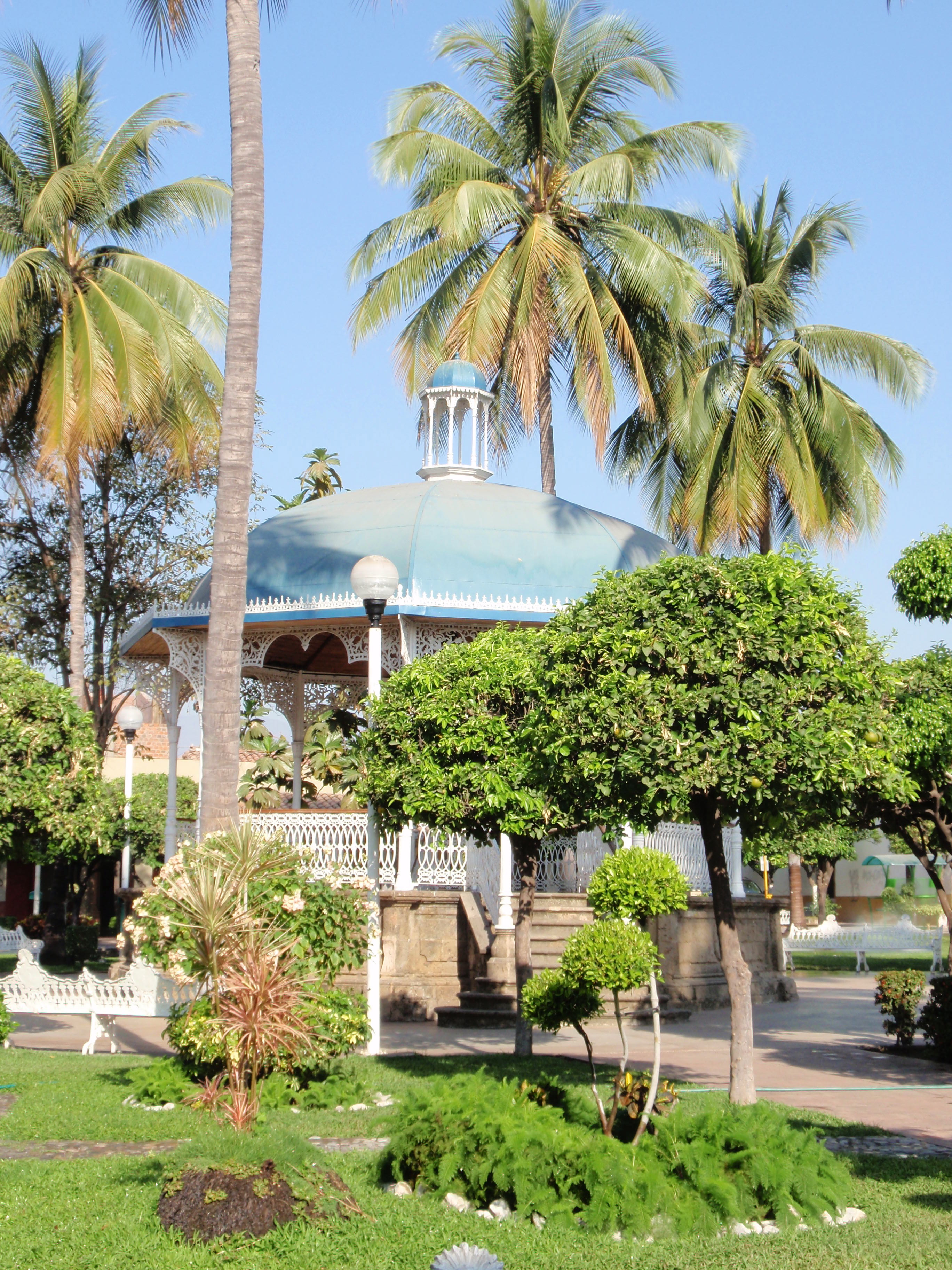
Prior to heading to Comala, we stopped at another beautiful plaza across the city, where gardens displayed a profusion of colors and textures.
Jardin de la Independencia
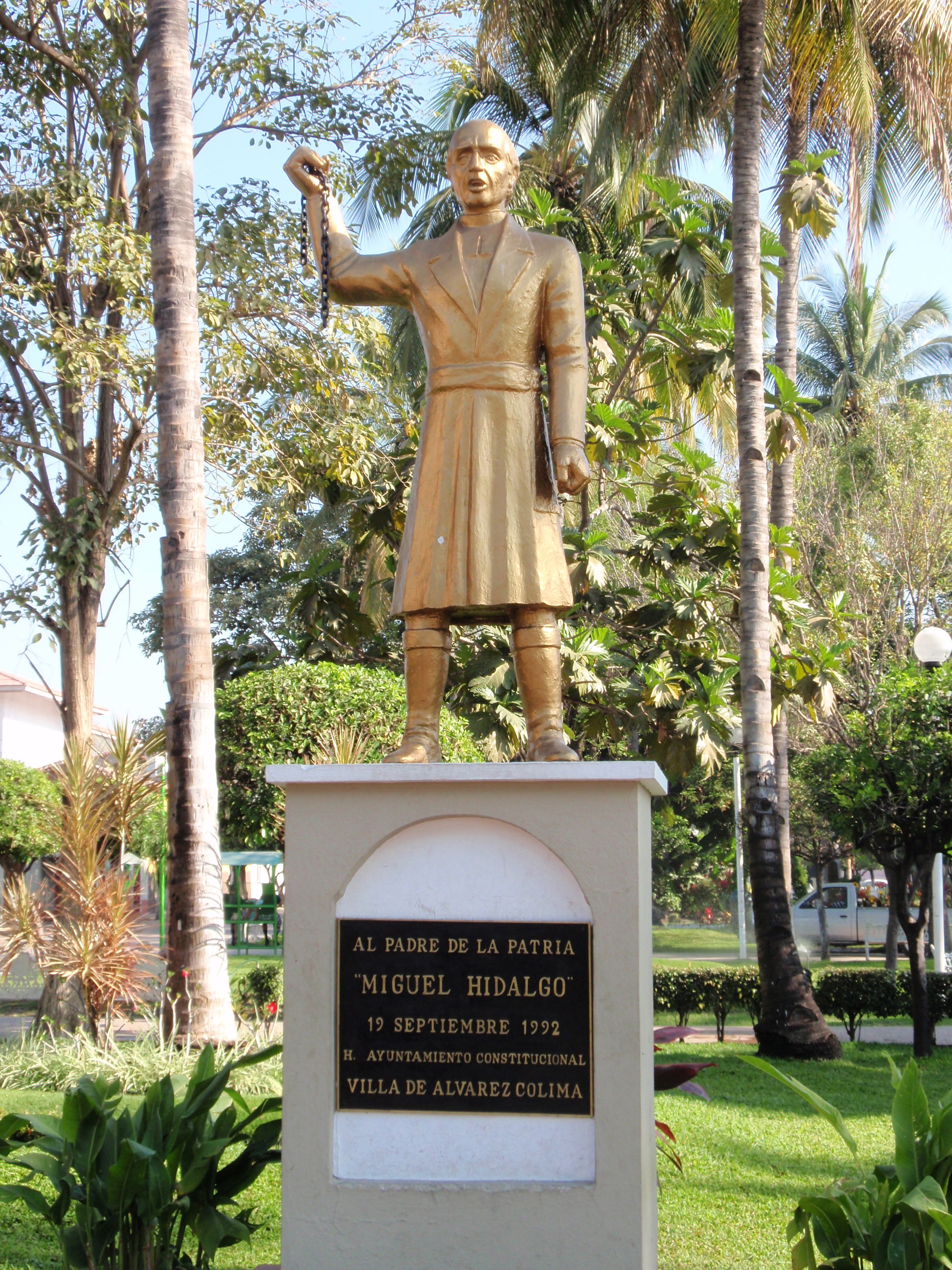
A very well-known figure in Mexico’s independence from Spain, priest Miguel Hidalgo shown with the symbolic “breaking of the chains of oppression”.
A funeral was being held in the church directly across from the plaza. Once this service ended, the procession to the cemetery commenced on foot, with family and friends walking behind the hearse.
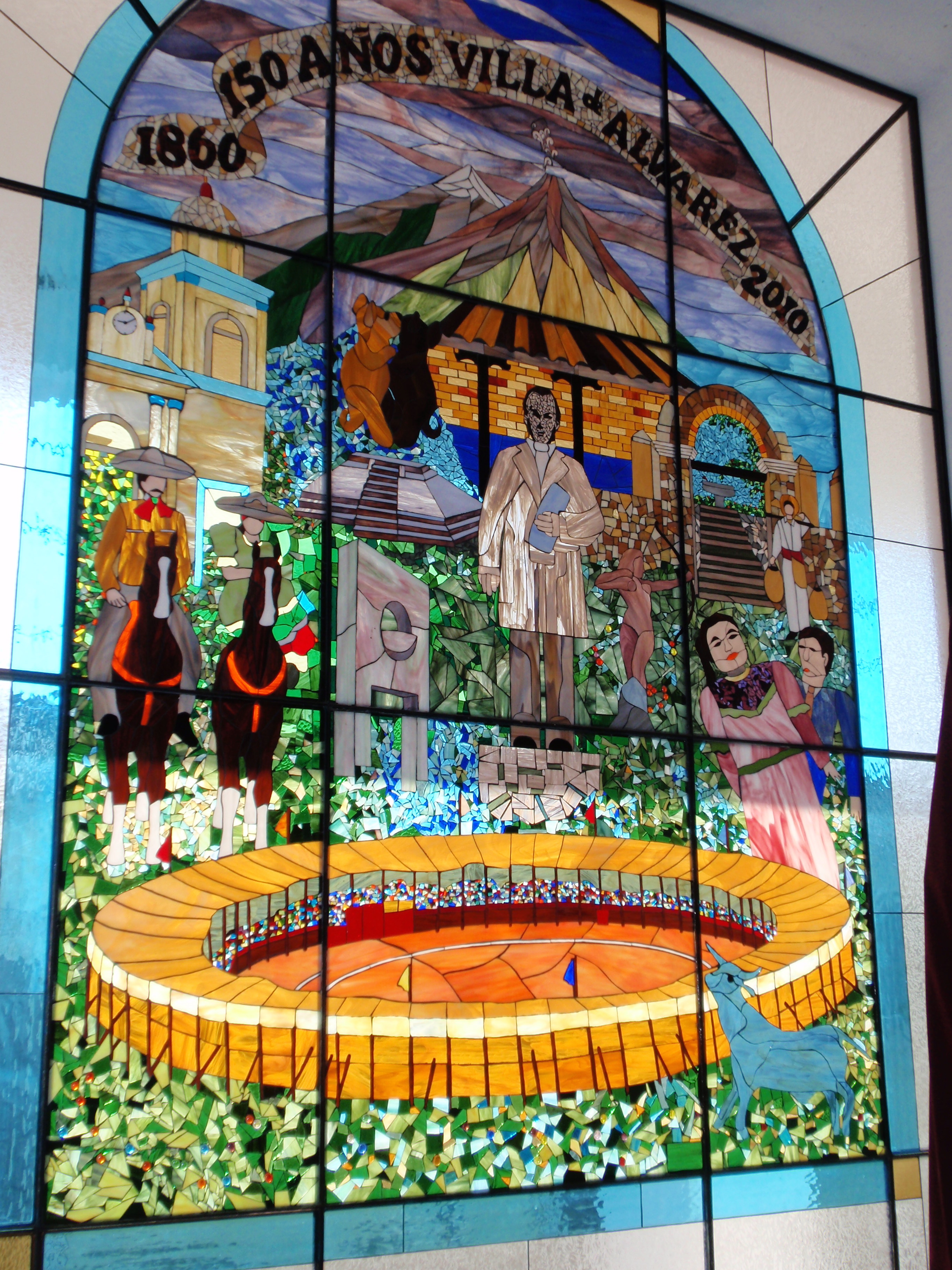
A beautiful stained-glass window adorned the entrance to the Gobierno Principalia, the licensing building across from the plaza.
We are now ready to head to Comala, but first Rosie and I decide that one last look at the map is prudent, given the lack of street signs in the city. You could easily drive around in circles without a map, particularly if I were your directionally challenged navigator!
Comala is a charming little town located a couple of kilometers outside the city of Colima. The one difference we identified immediately upon entering the town limits was that the buildings in and around the plaza were white, unless the brightly colored buildings in so many other cities. This did not detract at all from its beauty or charm.
Restaurants line the plaza, offering free botanos (snacks) with just a drink order. We dined at Los Portales, where the appetizers were tasty and abundant.
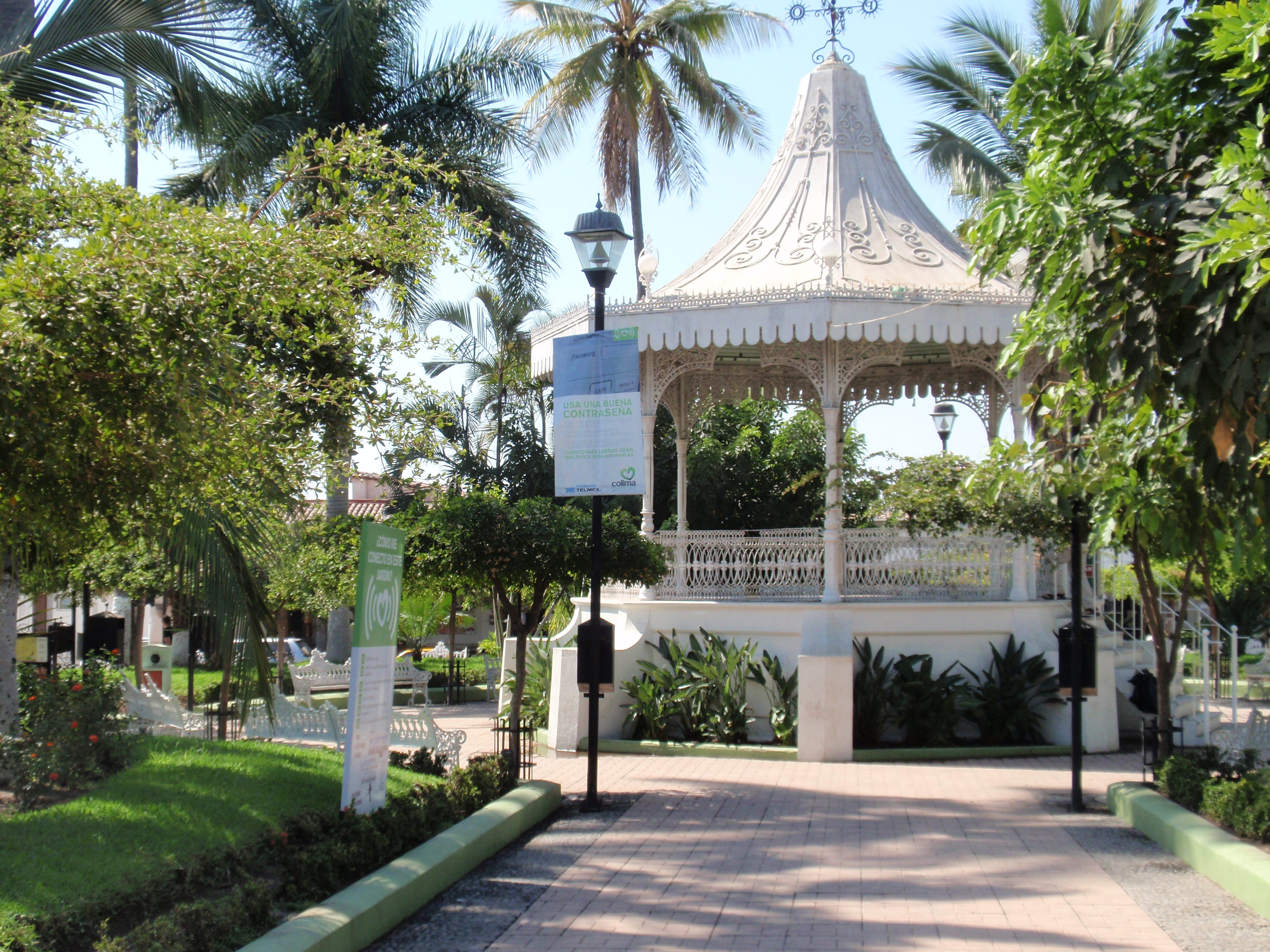
And yet, another lovely little plaza with a church bordering the gardens.
Having been nourished by our botanos at Los Portales, it is time to head to the beach, but not before we investigate Zona Magica, which we had read about but could not fathom. There is a section of road just outside Comala, where if you stop at the bottom of what “appears” to be an incline and place your vehicle into neutral, a “force” will pull you up the incline. We tested this several times and, sure enough, we were pulled up the hill. Is this a scientific fact or is this just an illusion? We will never know!
The warmth of a friend’s presence brings joy to our hearts, sunlight to our souls, and pleasure to all of life. ~ Anonymous
We have been blessed with the company of two very special friends, Rosie and Jim, for the past two weeks. We looked forward to their visit for several weeks and, in a flash, two weeks went by and today we returned them to the airport to make their way back NOB (north of the border). We are now left with some beautiful memories and some lovely pictures, thanks to my husband the photographer.
We have been on foot or taking advantage of the public transportation system since our arrival in Mexico. Since we had places to see and much to do within a span of two weeks, we decided to rent a car for the duration of our friends’ visit. I knew from the start that I would be leaving the driving to Terry, not without a bit of trepidation on his part as well, given what we have seen of some of the local driving flair and the challenging street signage (or lack thereof).
Our first venture out beyond our little village was to a town across the lake from us called Mazamitla, whose name means “the place where arrows are made for hunting deer”. Many tourists refer to it as the “Switzerland of Mexico” and one can notice a resemblance in some of the architecture.
This village of 11,700 inhabitants was founded by the Aztec in 1165 and sits approximately 7200 feet above sea level. Many locals venture to this lovely little town when the temperatures begin to inch upwards during the summer months.
Our drive around the lake to arrive at our destination was interesting, to say the least. Suffice to say that Mexican drivers have nerves of steel or maybe very poor eyesight or love to play chicken with other traffic, or some combination of the above. I thought Terry was very courageous to accept the task of driving, as part of this drive consisted of a road with no shoulders, with large trucks attempting to pass under questionable conditions. Thank goodness when we got closer to Mazamitla the road conditions improved considerably and the landscape unfolded to pine, oak and mesquite trees, reminding us of states NOB.
We enjoyed a lovely lunch upon arrival and took a walk through the main part of town, with shop-lined streets that ended in a plaza and church, as do so many other towns. Many of the shops’ shelves were lined with canned fruits and sauces, along with a popular drink called rompope, a combination of milk, brandy, sugar and chocolate. Potted flowering plants were on sale in many shops as well.
Once we were fortified with a little food and enjoyed some window shopping, it was time to brave the roads once again. The area around Lake Chapala is highly agricultural, so we distracted ourselves with views of the greenhouses dotting the hillsides, with questions of what could be growing beneath them. Of course, our own “nerves of steel” driver kept eyes on the road as we ventured back around the lake!






















 Paint Your Landscape