It All Began With a Pig ~ San Juan Island, WA

San Juan Island, second largest in the San Juan Island Archipelago, is the most populated of all the islands.  At high tide over 400 islands and rocks dot these waters, 128 of which are named.  San Juan Island is one of four accessible by ferry.

One wouldn’t know it now, but this quiet little island was once on the brink of an international conflict between two world super powers, the British and the U.S.

The Pig War, a confrontation in 1859, spurred by the shooting of a pig, escalated to a boundary dispute between these two countries, both claiming rights to the island. Luckily no blood was shed.  Well, not exactly true…there was the pig.  Today remnants of both the American and British camps are available for touring.

Homesteaders moved in after this conflict, taking to the sea.  Salmon fishing and harvesting clams and oysters was big business until the 20th century when the island vibe shifted to a gentler pace, focusing on nature and wildlife.  Today the island draws those seeking outdoor adventures, kayaking, fishing, whale watching, and boating.

As the ferry docked at Friday Harbor, a vibrant seaport lay before us, filled with boutique shops, cafes, museums, and galleries, many honoring the natives, first inhabitants of the island.  It is a town devoted to art, with festivals scattered throughout the year showcasing the unique talents of the local artists.

We made Demeter Bakery our first stop for great coffee and delicious pastry and when hunger pangs announced lunchtime, we headed to Market Chef for a yummy sandwich and salad.

A few of our favorite stops were the Arctic Raven Gallery, featuring intricate Indian carvings and colorful Arctic and coastal native art, wonderful little Griffin Bay Bookstore, and the San Juan Islands Museum of Art, where we were treated to a rare glimpse of Susan Middleton’s fascinating exhibit, Spineless: Portraits of Marine Invertebrates, the Backbone of Life, and a unique installation called Liminal Currents.

As we lie on the floor, looking up at the swaying branches we experienced the dancing underwater world as perceived by an animal such as the orca, who uses sound to understand spatial relationships within its environment.  Orca generated sounds, from the residents pods in the San Juans, have been added to enhance the experience.

I spent a few moments writing an intention, which I tied with ribbon to part of the linear sculpture.  At the wrap-up of the exhibit, the contents, branches, and messages will be gathered and burned, “transforming the scribed energy into light”.

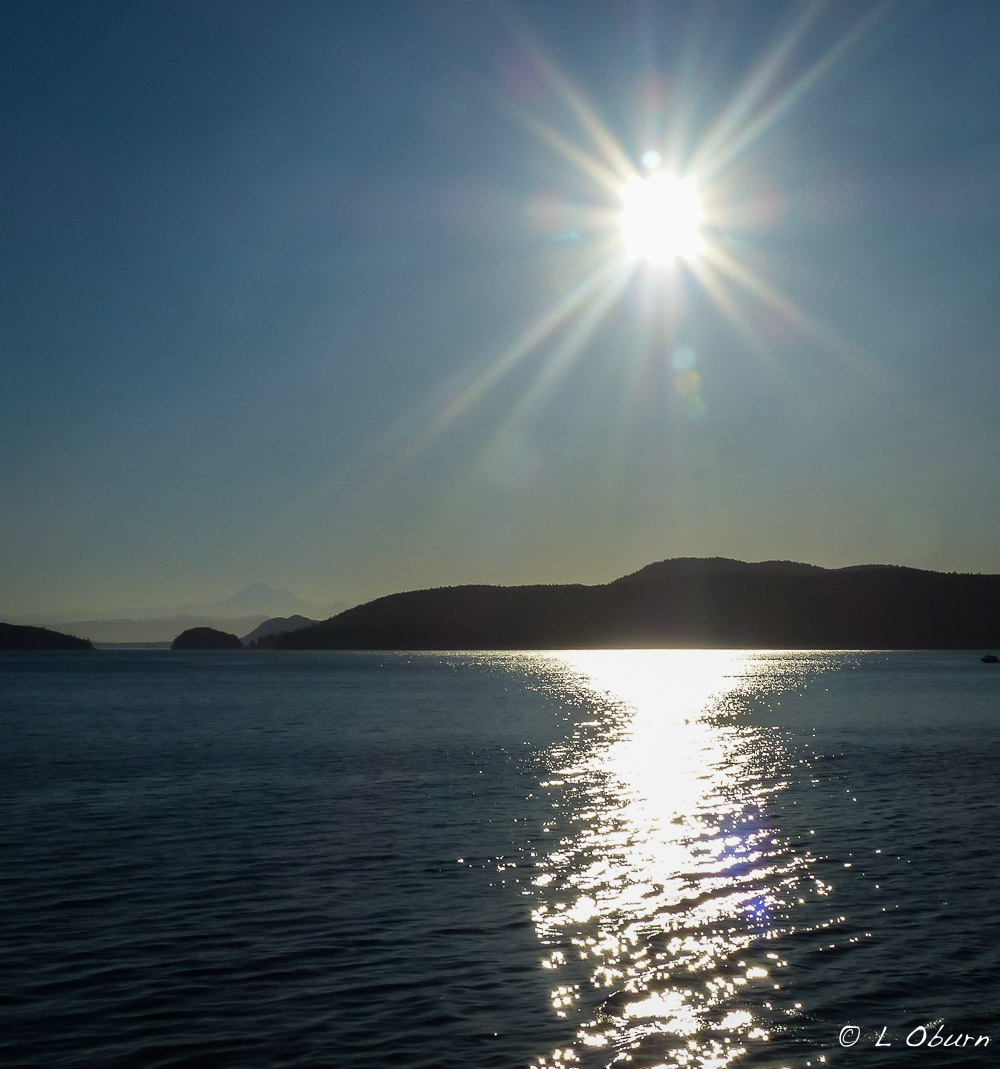
As we moved beyond Friday Harbor, a diverse landscape opened before us – pastoral farmland, driftwood-strewn beaches, and bluffs overlooking island-dotted shimmering water.

The hike up Mt. Finlayson, a lovely walk through Douglas fir and red-barked madrona trees, provided us a birds-eye view of Cattle Point Lighthouse from the top.
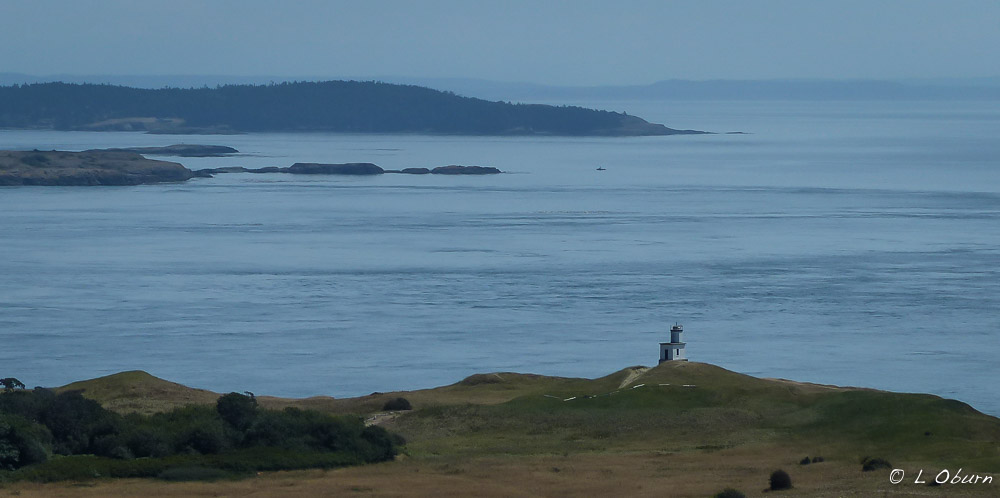
Lime Kiln Point, a day use park, is considered one of the première places in the world to view whales from land.  Orcas are often spotted here but on our visit, gulls, terns, and an occasional oystercatcher were the only wildlife.  This is where the little sentinel Lime Kiln Lighthouse stands watch, a navigational aid still today for ships traversing Haro Strait.

We passed on a whale-watching trip while in Port Townsend, joining Laurel and Eric (Raven & Chickadee) instead on a tour booked through Maya’s Legacy Whale Watching, where we grabbed the last remaining seats.  Caption Jim uses a smaller boat for a more intimate experience, sprinkling in some history of the area as well.  We had heard that it was the best tour around, and being two of only seven on the boat, we had to admit it was pretty special.
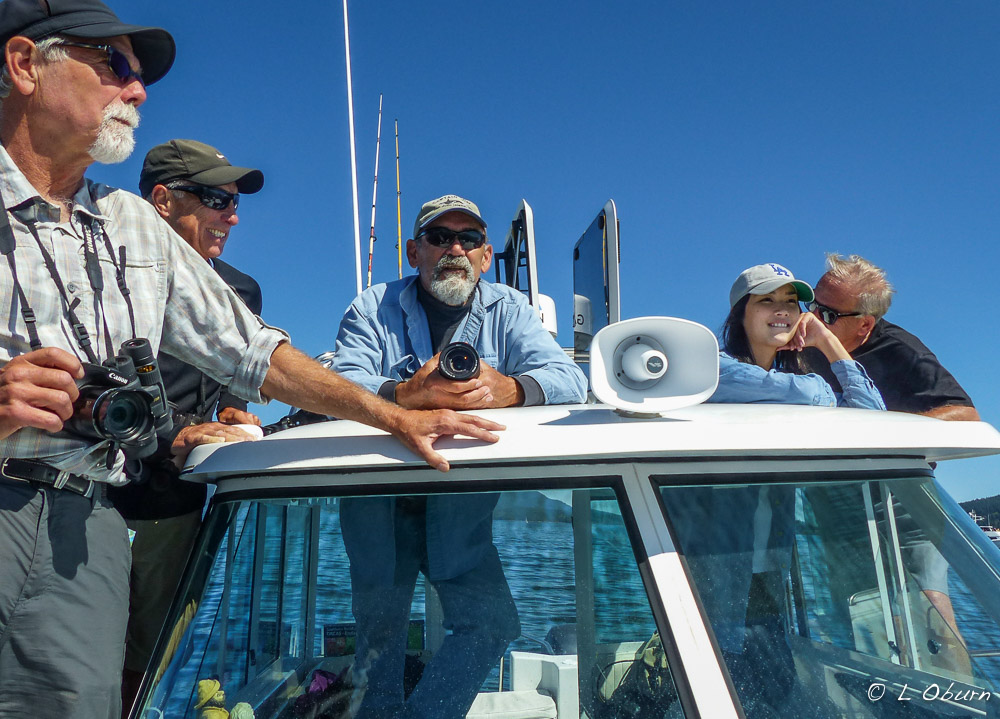
Captain Jim & some of his crew

A quick stop to Roche Harbor, a charming marina harboring some of the most beautiful yachts in the world, and we took to sea in search of orca.

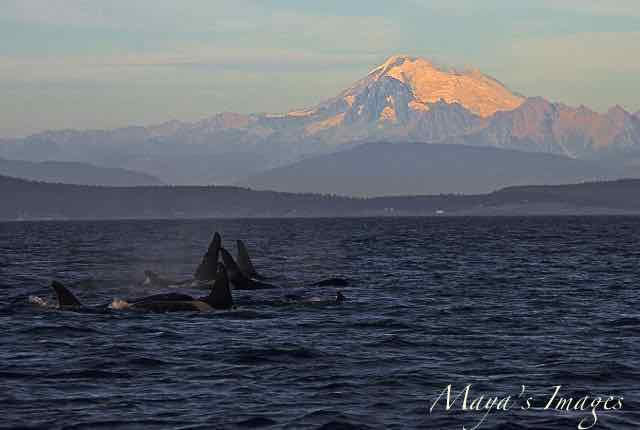
Before long a resident pod sighting was confirmed in an area they are seldom found, off the shore of Spencer Spit State Park, right where we are volunteering.  It seems we needed to board a ferry to San Juan, hop on a whale-watching boat, and return back to the very spit we have walked most days since arriving on Lopez, just to see these beautiful creatures. Go figure!

(Not very clear shots but gives a perspective of how close these amazing creatures were to the spit.)

For their safety, we had to stay within 200 yards of the orcas, so my camera could not do these beauties justice.  Captain Jim graciously allowed me to share some of his stunning photos.

The above images are photo courtesy of Captain Jim of Maya’s Legacy Whale Watching.  If you plan a whale-watching trip on San Juan Island, we highly recommend this tour company for a more intimate experience. You won’t be disappointed. 🙂

A visit to the Sculpture Garden near Roche Harbor rounded out our visits to San Juan Island.   We know there is much more to see, giving us reason to return.

We are most grateful to Laurel and Eric, for introducing us to the islands that have become their second home, providing us great recommendations, and including us on the whale-watching adventure.  You two are the best!

Next Up: Orcas Island

Discovering Unexpected Treasures on Whidbey Island, WA

Crossing the Admiralty Inlet from Port Townsend, we ferried over to our next Washington adventure, Whidbey Island, the longest island in the lower 48 states.  For the next three days we would have our own personal tour guides, Frank and Mary, eager to impart their knowledge of the rich history of the island.  This lovely couple is our winter next-door neighbor and had extended this generous offer before we left So Cal in May, which also included a private “mooch-docking” site in their driveway…sweet!

A beautiful Whidbey Island sunset looking out over the lagoon at Frank and Mary's
A beautiful Whidbey Island sunset looking out over the lagoon at Frank and Mary’s

Whidbey Island boasts five state parks and America’s first national historic reserve, Ebey’s Landing.  And the views of the Olympic Mountains and pristine seas are breathtaking.  Let’s go exploring!

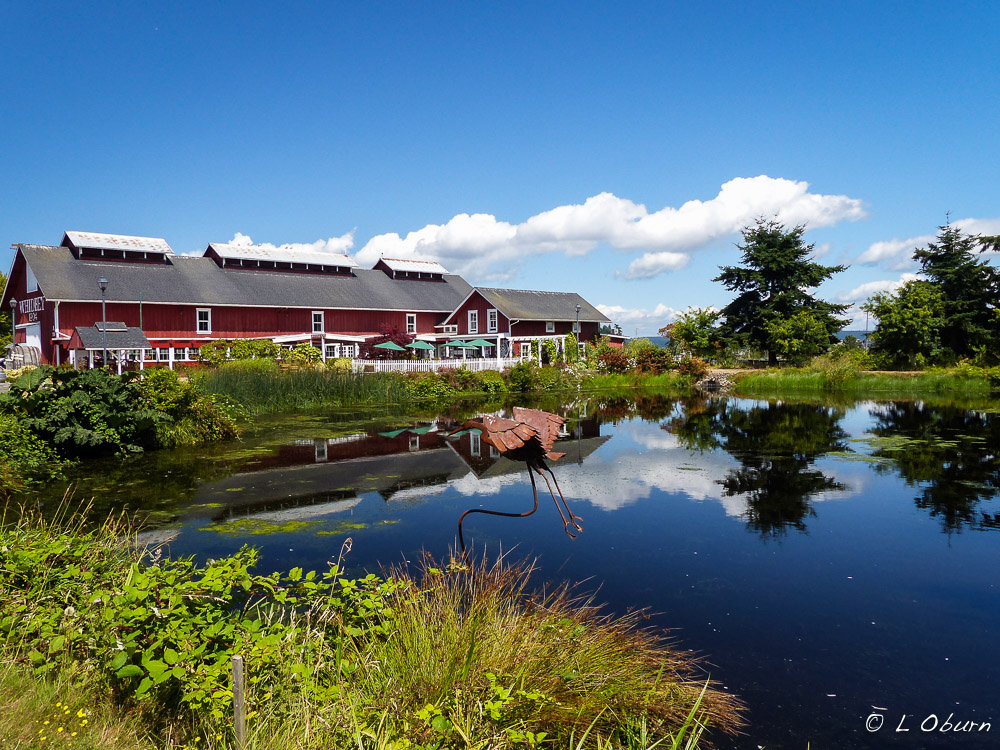
Beginning in the town of Coupeville, where Frank and Mary live, we stepped back into the 19th century as we strolled the finely preserved Victorian downtown and wharf overlooking Penn Cove, one of the only remaining original wharfs and wharf building in the Pacific Northwest.  Getting into the local groove, we dined on world-famous Penn Cove mussels at Toby’s and gourmet ice cream bars at Lavender Wind.   This quaint town, the second oldest in Washington, sits within Ebey’s Landing National Historical Reserve.

Stunning wharf and wharf building

Here is a glimpse of what our lovely tour guides had on the agenda for our stay:

1/  Fort Ebey State Park

Once a coastal defense fort during World War II, it is now a state park with a cozy campground tucked in the woods.   We took a hike along the bluff with views of Puget Sound and the Olympic Mountains, then down into the kettles, with Frank offering a brief history lesson on these Ice Age geologic formations.

2/  Ebey’s Landing National Historical Reserve

This, the first national historic reserve in our nation, preserves the 1850’s character of its 25 square miles, including farmland, beaches, parks, trails, and nationally registered historic buildings.  A feeling of serenity flowed as we walked the paths and looked out over farmland and shimmering seas.

3/  Fort Casey State Park

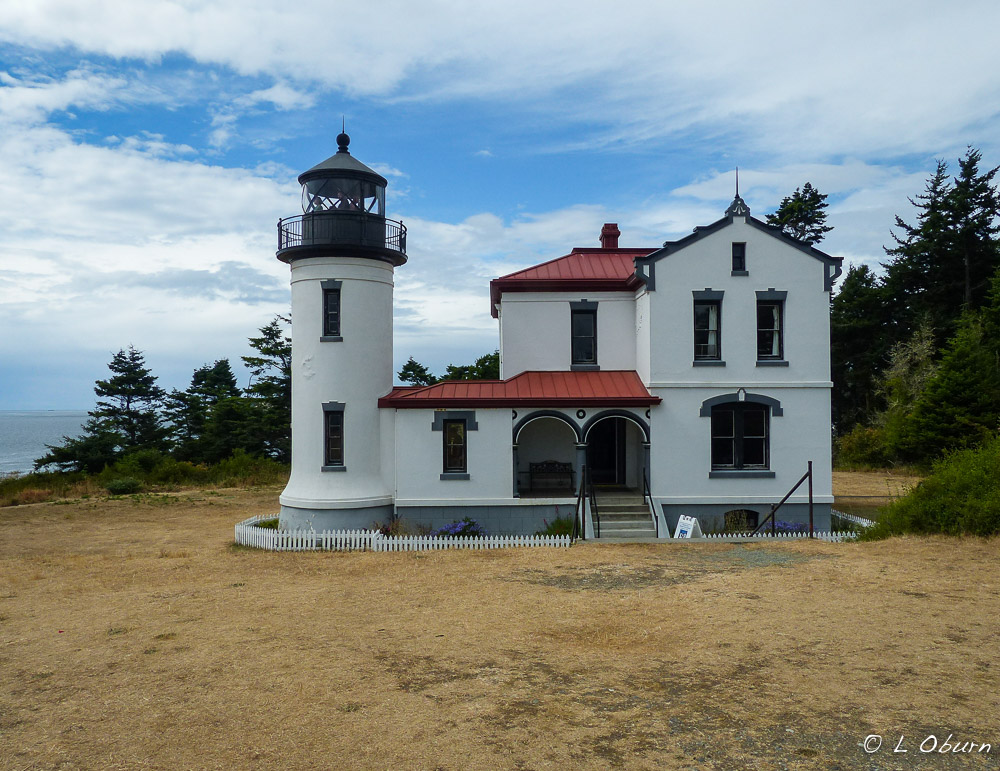
World War I gun batteries and bunkers can still be seen in this state park, along with miles of hiking trails, camping and fully restored Admiralty Head Lighthouse.  Fort Casey Underwater Park is nearby for you scuba lovers.

4/  Admiralty Head Lighthouse

Admiralty Head Lighthouse

This stately lighthouse, companion to Point Wilson Lighthouse sitting four miles away in Port Townsend, on Admiralty Inlet’s western shore, was deactivated in the early 1920’s. In 2012 a historic reconstruction of the lantern house was installed atop the tower. Student volunteers from three Whidbey Island high schools completed all the work…very impressive.

4/  Lavender Wind Farm

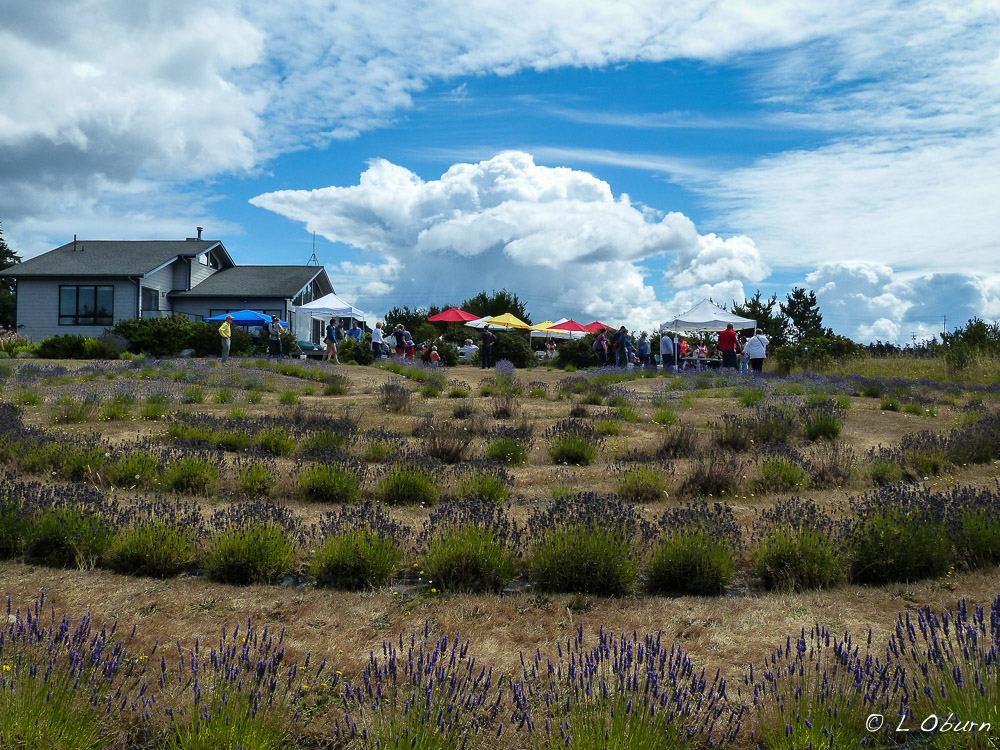
Clouds billowing over a lavender labyrinth

On a much smaller scale than Sequim, Coupeville’s Lavender Festival was still very sweet.  Educational talks, strolls through gently swaying aromatic fields, and walking a lavender labyrinth added to the joy of the day.

5/  Greenbank Farm

Gorgeous Greenbank Farm

Living history Greenbank Farm, a gathering place since its start in 1904, is home to beautiful gardens, café, farm and gift shop, and art galleries. But it is perhaps most known for its Organic Farm School, organic seed project, community gardens, and Naturalist Training Program. This is a place I would love to explore in more depth.

6/  Captain Whidbey Inn

This lovingly restored 1907 historic inn overlooks Penn Cove and the world-famous Penn Cove mussel rafts.  This inn’s rooms are reminiscent of Old Faithful Inn in Yellowstone NP.

Our short stay with Frank and Mary was a whirlwind of activity but what will linger most is the deepening friendship forged.  Early evenings spent on their deck over a glass of wine, dinners revisiting the day’s adventures, Mary’s morning T’ai Chi Chih classes on the deck, surrounded by gentle breezes and soothing music, while eagles soared and kingfisher chattered, these are the memories that fed our spirits. Pure gratitude is what I feel when I think of these two generous souls.

We left after three days, content with the knowledge that there would be many more memories made when we see them again this winter.  A brief stop at Deception Pass State Park, with a hike down to the beach and a walk out over the iconic bridge to peer into the turbulent waters, rounded out our sightseeing on this wonderful island.

We spent a couple of nights at Washington Park in Anacortes to round out our time on Whidbey Island and prepare ourselves to catch a ferry to the San Juan Islands.  As luck would have it, our good friends from Colorado, Kevin and Erin, were in town visiting Erin’s mother Sally.  We spent a leisurely evening at Sally’s home enjoying a dinner prepared by Kevin, our wine, coffee, tea, and foodie connoisseur.  We have spent countless engaging hours of conversation over many of Kevin’s culinary treasures and we walked away once again in awe of his talent.   Although I didn’t capture this time with photos, we will never forget the lovely conversation and generous nature of these two.  So glad we were able to meet Erin’s mother as well, a delightful woman.  Thank you for a wonderful ending to our time on Whidbey Island.

Next Up:  San Juan Island

Rugged, Unbroken Wilderness ~ Neah Bay, WA

“…But for us there was no wilderness, nature was not dangerous but hospitable, not forbidding but friendly. Our faith sought the harmony of man with his surroundings; the other sought the dominance of surroundings.  For us, the world was full of beauty; for the other, it was a place to be endured until he went to another world.  But we were wise. We knew that man’s heart, away from nature, becomes hard.”  ~  Chief Luther Standing Bear

Neah Bay, home to the Makah Tribe, was to be our last stop on the Olympic Peninsula. Ancestral Makah were highly skilled mariners who traversed the treacherous waters of the Pacific with relative ease, and their tradition as fishermen remains today.  Wanting to learn more about this proud people, our first stop was the Makah Cultural and Research Center.

This small museum is recognized as our nation’s finest tribal museum, with a stately totem pole gracing the entrance, a full-size longhouse replicated, and four cedar dugout canoes displayed.  The finest artifacts are those extracted from an archeological dig in nearby Ozette.  This felt like sacred space to me, so it was not surprising that photography was prohibited.

No photos beyond this point.

Beginning in 1970 and continuing for 11 years, the Makah Tribe and Washington State University collaborated to recover over 55,000 artifacts from Ozette, a village just south of Neah Bay that once served as one of five year-round homes for the Makah.  A tragic mudslide changed all that in the early 20th century when a group of longhouses was entombed, preserving them and their contents for over 500 years.  This center is the sole repository for those findings.

The orientation film we watched included several interviews with local residents, whose passion for maintaining their ancestral traditions was clearly evident.  The last fully fluent Makah speaker died in 2002, but there are still elders who remember something of the language today, and young Makah are working to keep their ancestral language alive.  The center houses the Makah language program used in the schools still today to preserve and teach their native tongue.

For our short stay in Neah Bay we chose to camp at Hobuck Beach Resort, a no-frills campground that is nothing more than a grassy field for dry camping, but it serves its purpose.  The sound of the nearby beach lulled us to sleep at night.

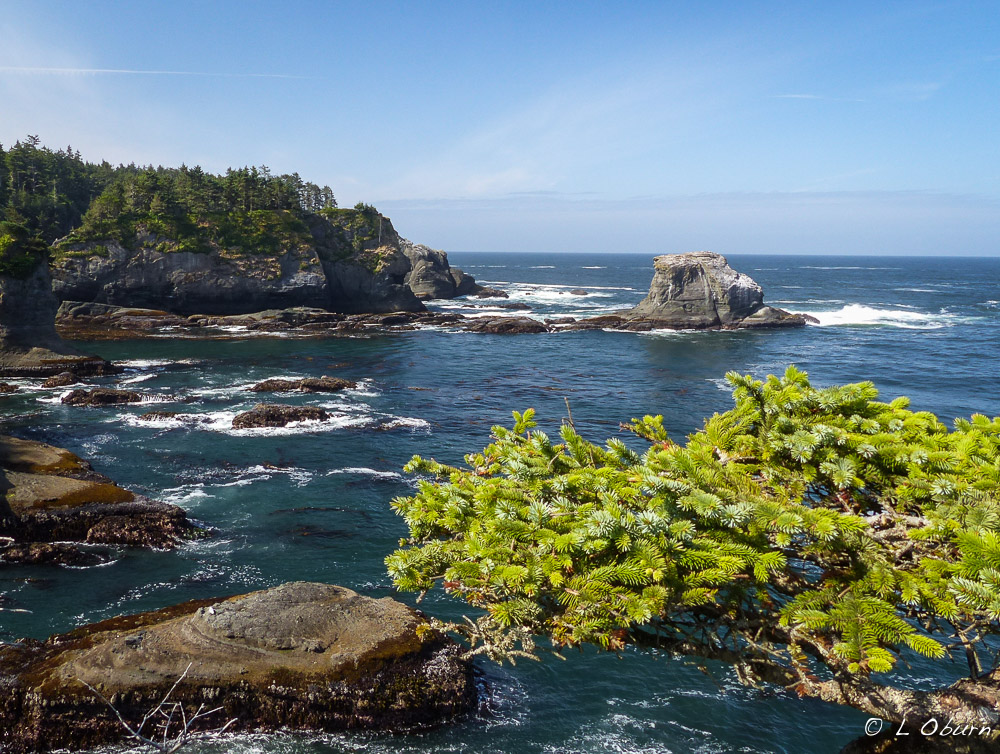
The next morning dawned clear, a perfect day I hoped for viewing Cape Flattery Lighthouse and the rugged coastline.  And if you are lucky, unlike us, puffins may be seen bobbing in the cold waters offshore.   A short hike through fern-draped forest brought us to the furthest northwestern edge of the lower 48, Cape Flattery, with sunny, unobstructed views of untamed coastline and a sole sentinel, Cape Flattery Lighthouse, sitting one-half mile off the cape on Tatoose Island.  First built in 1854 with a 65-foot tower, it is one of the oldest lighthouses in our nation and is now deactivated. Due to its archeological significance and a home for nesting birds, the Makah restrict access to the island.

Don’t be deceived by the façade. Magic happens within.

After reading other blogger posts, I was determined not to leave Neah Bay without a stop at Take Home Fish Company, aka Kimm’s Place.  The thought of melt-in-your-mouth smoked salmon danced in my mind as we pulled up to the curb, kicking my salivary glands into high gear.  I could almost taste the buttery flesh.  But the greeting we received stopped me in my tracks.  They had just sold their last morsels. 😦  We had one more shot tomorrow for this delicacy.

Feeling a bit dejected, we settled instead for lunch at Linda’s Wood-Fired Kitchen, where Terry recognized one of the speakers from the film at the Makah Center the previous day.   He was one of the village artisans, a master at carving totem poles.

The marine layer was determined to join us the next morning as we prepared for our final hike on the Olympic Peninsula.  With swirling fog tendrils reaching out to us through the old-growth forest, we made our way to Shi Shi (pronounced ‘shy shy’) Beach.  An interesting 2-mile hike, with the use of ropes near the end, led to a sandy beach with tumbled sea stacks and roaring surf.  Lingering fog added a mysterious quality to the day.  We continued our hike another two miles down the beach to Point of Arches, where low tide provided views of ochre stars.  Normally we would have stayed longer to play in the tide pools but there was another treasure drawing us back to town.  I was not about to miss our window of opportunity at Kimm’s again.

Pulling up to the ramshackle blue trailer for a second time, we found the salmon still in the smoker, but the proprietor took pity and pulled out everything that was ready. Oh my, this was by far the best salmon we had ever put into our mouths…a perfect ending to our time in Neah Bay.

Next Up: To the Islands

Breathe Deeply and Relax ~ Sequim

When we made the decision to spend the summer in the Pacific Northwest, our travels revolved around attending the Sequim Lavender Weekend.  I imagined standing among rolling hills of lavender gently swaying in the breeze, breathing deeply the intoxicating scent, listening to the humming of busy little bees.

It’s harvest time!

Sequim (pronounced skwim) is known for its commercial cultivation of lavender and has grown so much over the years that it has now claimed the title of “Lavender Capital of North America”, rivaled only by France.  The drier climate, unlike much of the Olympic Peninsula, seems to favor this beautiful, aromatic herb known for its relaxation quality.

This bustling little town falls within what is known as the Olympic Rain Shadow.   While the town of Forks, just 60 miles away, receives about 120 inches of rain per year, Sequim is practically a desert, registering only 16 inches annually.  The Olympic Mountains act like a wall to protect the northeastern Olympic Peninsula from the bulk of the rain that moves across the Pacific Northwest, wringing much of the moisture out of the air before it falls to the ground.

Image courtesy of olympicrainshadow.com

Fog and cool breezes that come off the Strait of Juan de Fuca make Sequim more humid that your average desert, so everything around is lush and green.  Fruits and vegetables are abundant here, as we soon learned when the “welcome wagon” arrived at our lovely little campsite at Dungeness Spit Recreation Area.

Friends Ardythe and Celene (mother and daughter) from our former Yellowstone National Park days, now living in Sequim, came bearing gifts of cherries from their tree, a huge bag of fresh produce and herbs from their garden, and fresh eggs from their chickens.  We were so touched by their generosity.

Celene & Ardythe on the beach, searching for sea glass

And that was just the beginning.  Celene made a scrumptious dinner with friend Ben a couple of nights later, where I was able to spend some time with the girls and Chris, Ardythe’s husband and my former colleague, catching up on life since Yellowstone.

Our visit to Sequim would not have been complete without a visit to the New Dungeness Lighthouse, which requires an 11-mile out-and-back walk on the longest sand spit in the U.S., a hike best done at low tide.  This stretch of sand continues to grow at a rate of 13 feet per year…pretty amazing!  At the tip is the beautifully restored New Dungeness Lighthouse and a small museum.  We enjoyed lunch outside on the lawn while visiting with a couple who had signed up to act as lighthouse keepers for the week, an intriguing program.

We knew the lavender festival would be well-attended so we decided to visit a couple of farms for photo ops before the crowds descended.  Our choices were Jardin du Soleil

and Graysmarsh Lavender & Berry Farm, a you-pick farm with rolling hills of lavender and many types of berries.  We loved the berries so much we went back a second time before leaving Sequim.

Fellow Jojobians Roger, Shary, Art, and Cj were in the area for the weekend festivities and joined us at the Washington Lavender Farm.  With the backdrop of the George Washington Inn, a B&B that replicates the Mount Vernon estate in Virginia, and the Strait of Juan de Fuca, the grounds were lovely. The staff was dressed in period costume and Revolutionary War battles were being re-enacted on the lawn.  With good food, music, and friends by our side, it was a delightful day.

A girls’ outing with Ardythe and Celene rounded out our stay in Sequim.  They gave me a flavor of the area with a trip to Glass Beach in Port Townsend in search of sea glass, visits to Port Gamble and Bandy’s Troll Haven, and stops along country roads for photos of old barns.  The time we shared together is something I will always remember and I look forward to seeing them again somewhere down the road.

Next Up: Going back in time to Neah Bay

Quirky Victorian Seaport Town ~ Port Townsend, Washington

It was time to step away from our nature immersion and soak in a bit of culture and what better place to do that than Port Townsend, cultural hub of the North Olympic Peninsula. This Washington seaport town, with its strong emphasis on locally grown, is an eclectic artistic community.  The architecture of the Victorian era is peppered throughout the town in its beautifully restored homes and businesses.

Camping at Point Hudson Marina and RV Park, where the Admiralty Inlet connects the Strait of Juan de Fuca and Puget Sound, we found a sweet spot to watch the ferries, various seafaring vessels, kayakers and paddle boarders glide by.  It is essentially a gravel parking lot but the views and the ability to walk and bike everywhere in town made it the perfect spot to experience Port Townsend.

Each morning found me walking the tree-lined downtown streets, before much of the town awoke, starting my day with a local brew.  Many carefree afternoons were spent browsing galleries and boutique shops in both uptown and downtown Port Townsend.

Looking back on our time in Port Townsend, here are our top 5 experiences:

1) Northwest Maritime Center

Docents George and Joan offer tours of this fascinating center that celebrates both its maritime past and future.  A boat livery, exhibition space, stunning resource library, wood shop, learning lab and classrooms occupy the inside space, while the outdoor common area has a beach boardwalk, boat staging platform, and a deepwater pier.

The Maritime Education Building offers programs featuring sail making, small-craft boat and kayak building, and maintenance.  The Wooden Boat Foundation provides students a hands-on learning laboratory with a wide array of courses related to nautical science and maritime history.  This is one fascinating complex.

Earlier this summer the Maritime Center sponsored the first annual “Race to Alaska”, a non-motorized race (sail, row, or paddle).  Beginning at the Port Townsend pier, the qualification stage spanned the Strait of Juan de Fuca to Victoria on Vancouver Island, where a stand-up paddle boarder was among the qualifiers.

2) Rose Theatre

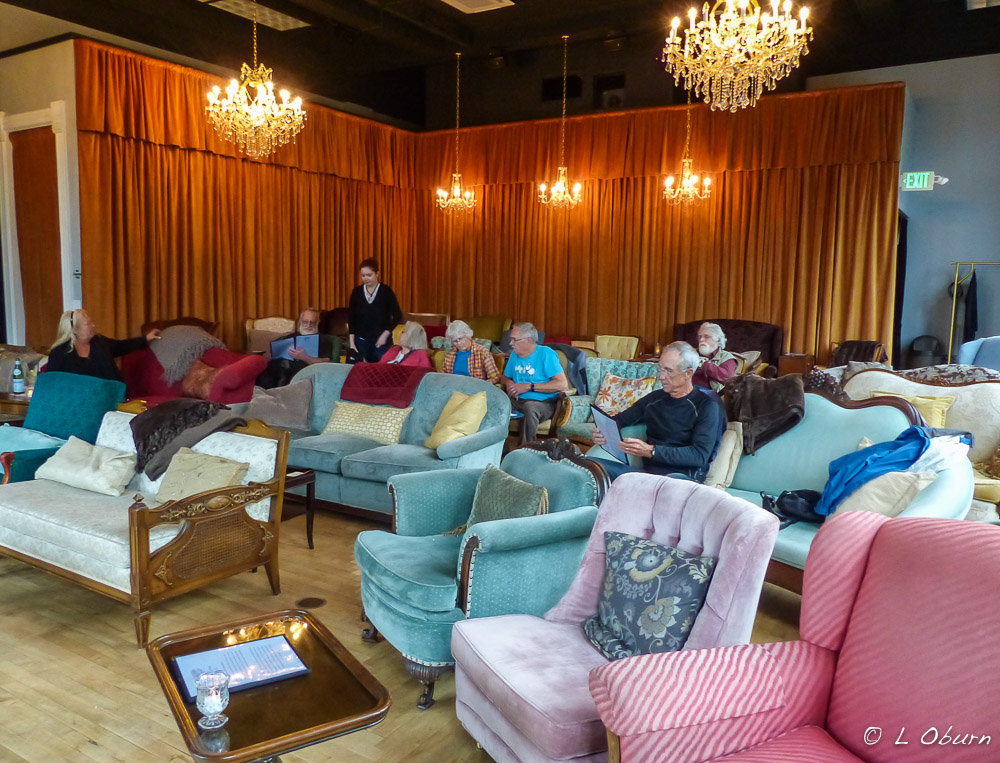
Opening as a vaudeville house in 1907, this venue has experienced many transitions to arrive at the one-of-a-kind movie house it is today. Choose the film playing in the upstairs Starlight Room and you can watch from your own comfy chair, with an adult beverage and meal in hand.  We saw “Me and Earl and the Dying Girl”, a wonderful indie flick.

3) Farmers’ Market

This is a super cool market featuring more than 70 local vendors. With a variety of organic produce, meats, artisan breads and pastries, cheeses, cider, and coffee, it is a definite palette-pleaser.

But the best part of the farmers’ market may be Cape Cleare Salmon, a food cart creating the most amazing grilled salmon panini, a mouth-watering mix of salmon, pesto, heirloom tomatoes, and baby greens, with a fried egg on top!   I don’t often indulge in bread but we loved this one so much we came back again on our way through town for another taste.  It was just as yummy the second time around!

4) Better Living Through Coffee

This one makes the list, not only for the ambiance and great coffee, but also the relaxing early morning stroll along the downtown streets to get there.  Peering into darkened shops hiding their little treasures, with only my thoughts to occupy me, was something I looked forward to every morning.

5) Fort Worden State Park

This decommissioned 19th-century military fort now offers barracks converted to vacation homes, camp sites, sandy beaches, hiking/biking trails, Marine Science Center, and pretty little Point Wilson Lighthouse that must be admired from afar, as no access has been allowed since this station was automated in 1976.

Port Townsend has two breweries for craft brew lovers, the Pourhouse and Port Townsend Brewing Company.   We reconnected with friends Bill and Lisa at the Pourhouse, where we enjoyed some brews and a meal while catching up on our life adventures these past couple of years.  No photos, just good food and drink, and great conversation.

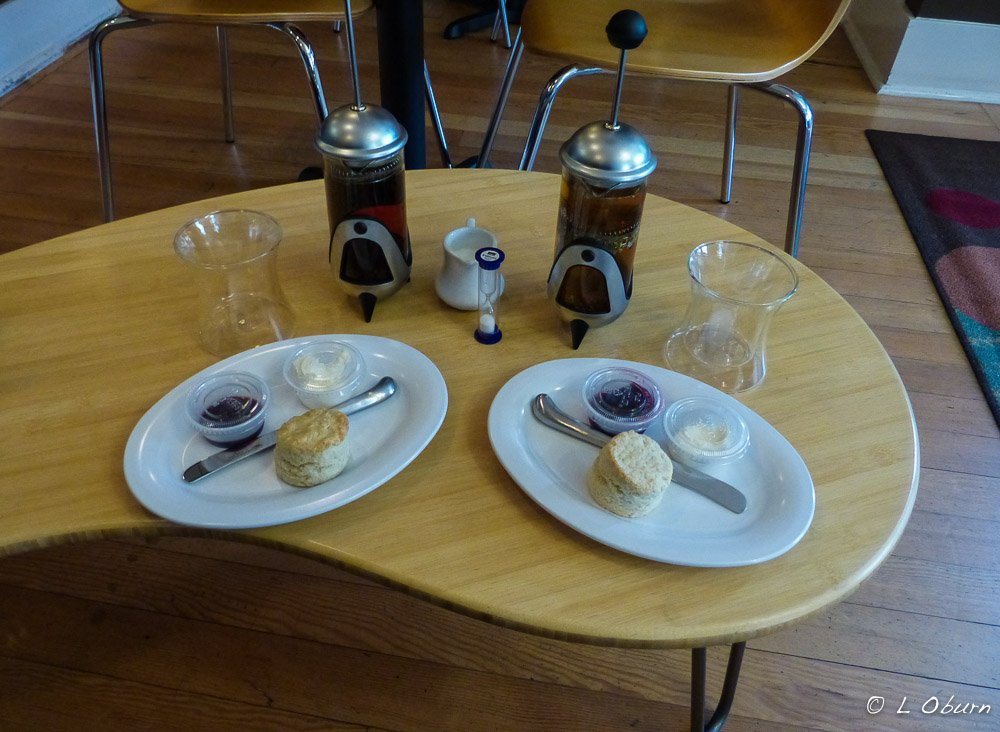
And if retail therapy is your passion, the shopping choices are plentiful.  I was able to stock up on infused oils and vinegars at Lively Olive Tasting Bar and found some wonderful spice blends at The Spice & Tea Exchange.  Pippa’s Real Tea is an excellent place to pick up some unusual teas and have a cup in their tea room, enjoyed with a proper scone served with homemade jam and clotted cream…yum!

Besides biking the downtown streets, the Larry Scott Memorial Bike Trail is easily accessible at the Boat Haven. It’s an extension of the Olympic Discovery Trail, a trail that will eventually traverse 130 miles of the North Olympic Peninsula.

We weren’t ready to leave the laid-back vibe of Port Townsend after five days, but the scent of lavender was in the air, calling to us.

Next Up: Sequim