Happy Holidays

As most of you know, we headed north of the border in early December to spend time with family and friends during the holiday season.  The first leg of our journey began in Phoenix, where we had stored our vehicle and personal belongings.  When we opened our storage unit and began to pare it down even further, we were struck by what minimalists we have become, which made me reflect on what is important to us and what we all (if we are honest with ourselves) at times lose sight of, with the hectic event that has become our daily lives.

We spent the first two days in Phoenix with our good friends Carl and Marcia, whose kindness and generosity of spirit are so uplifting and my hope is that each of you have someone in your life who gives so freely of themselves as they do.

Carl, Marcia, Jassmine (Jazz), Me, and Terry

From Phoenix we headed to Sedona for several days, to spend time with our friends Rosie and Jim, as well as Barb and Pete.

Rosie and Jim, as always, were generous with their time and opened their home to us. Jim went out of his way to keep us fed, cooking for us and others daily. Thank goodness we hiked most days to counterbalance the additional calories we consumed.  I don’t know what made my stomach hurt more; too much of Jim’s good cooking or his wacky sense of humor, which kept us laughing.

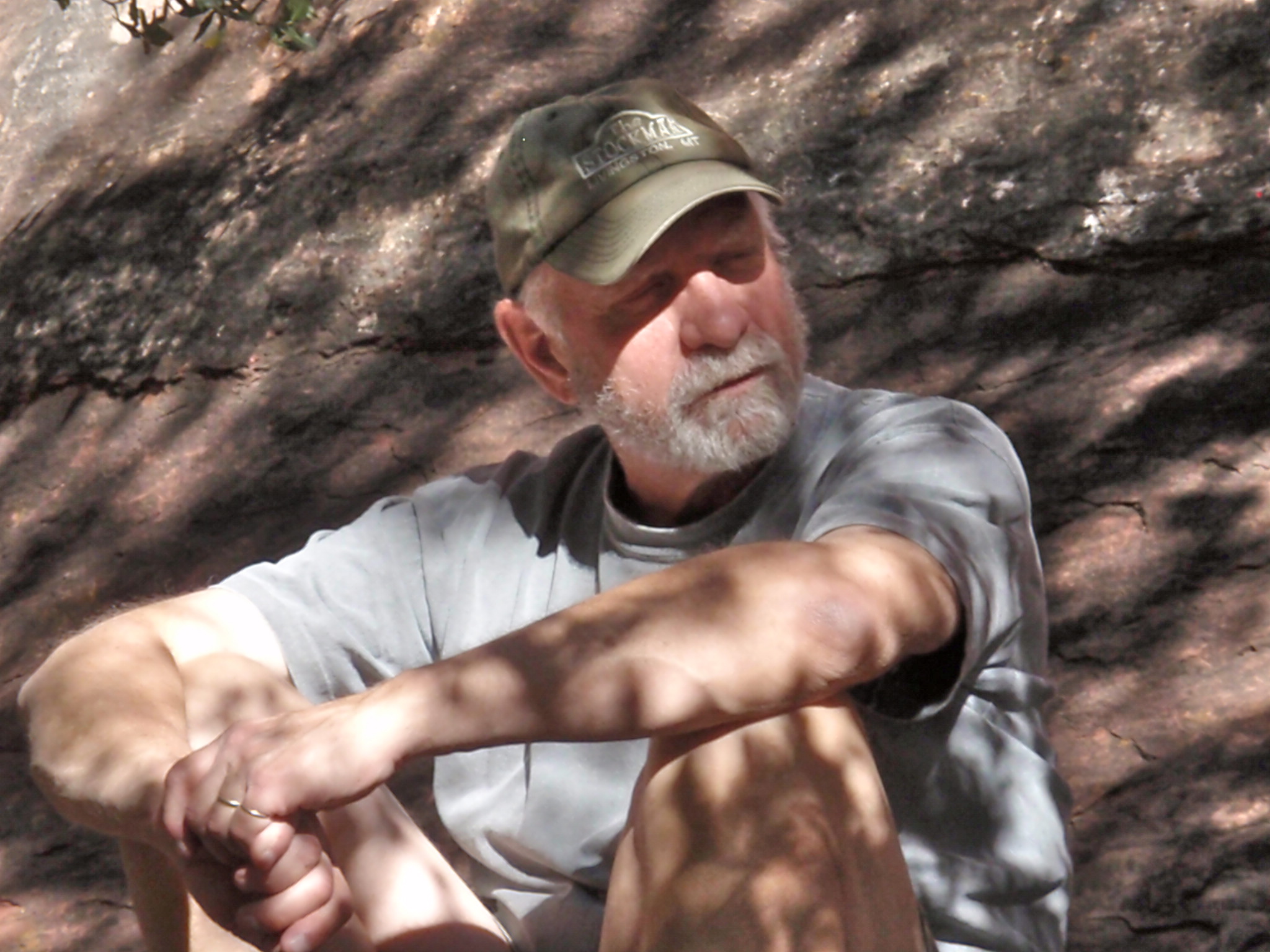
Me and Rosie
Jim
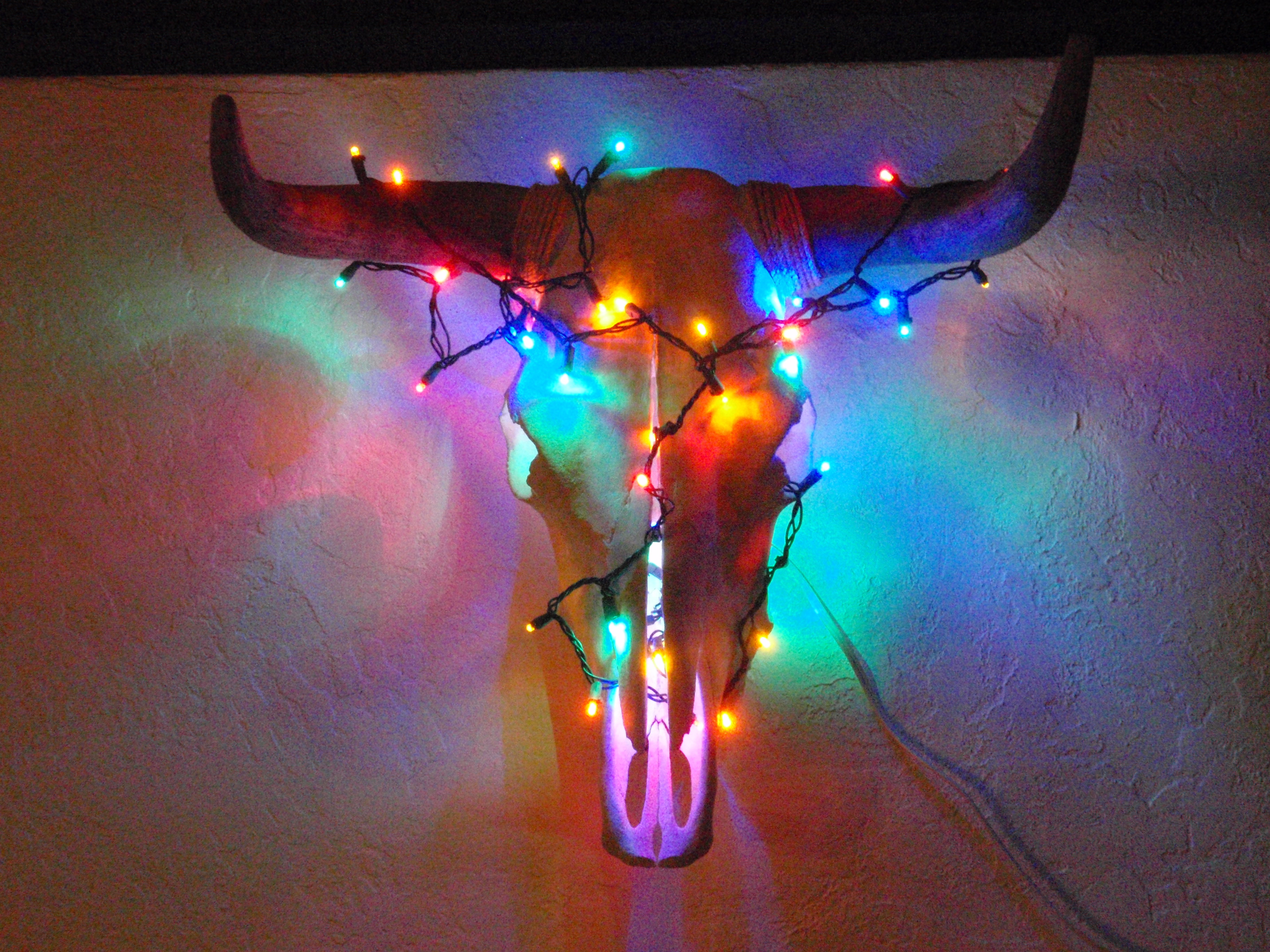
Jim and Rosie's Christmas Steer

Last, but certainly not least, are Barb and Pete, two special friends that we always look forward to spending time with in Sedona.  Most of you have already heard me speak of Barb.  Barb is my anam cara, my soul friend, who has been ill for many years.  She and her husband Pete have such courage and strength in the face of adversity.  I pray that I could conduct myself with the same grace that they do everyday if I were faced with the same challenges.

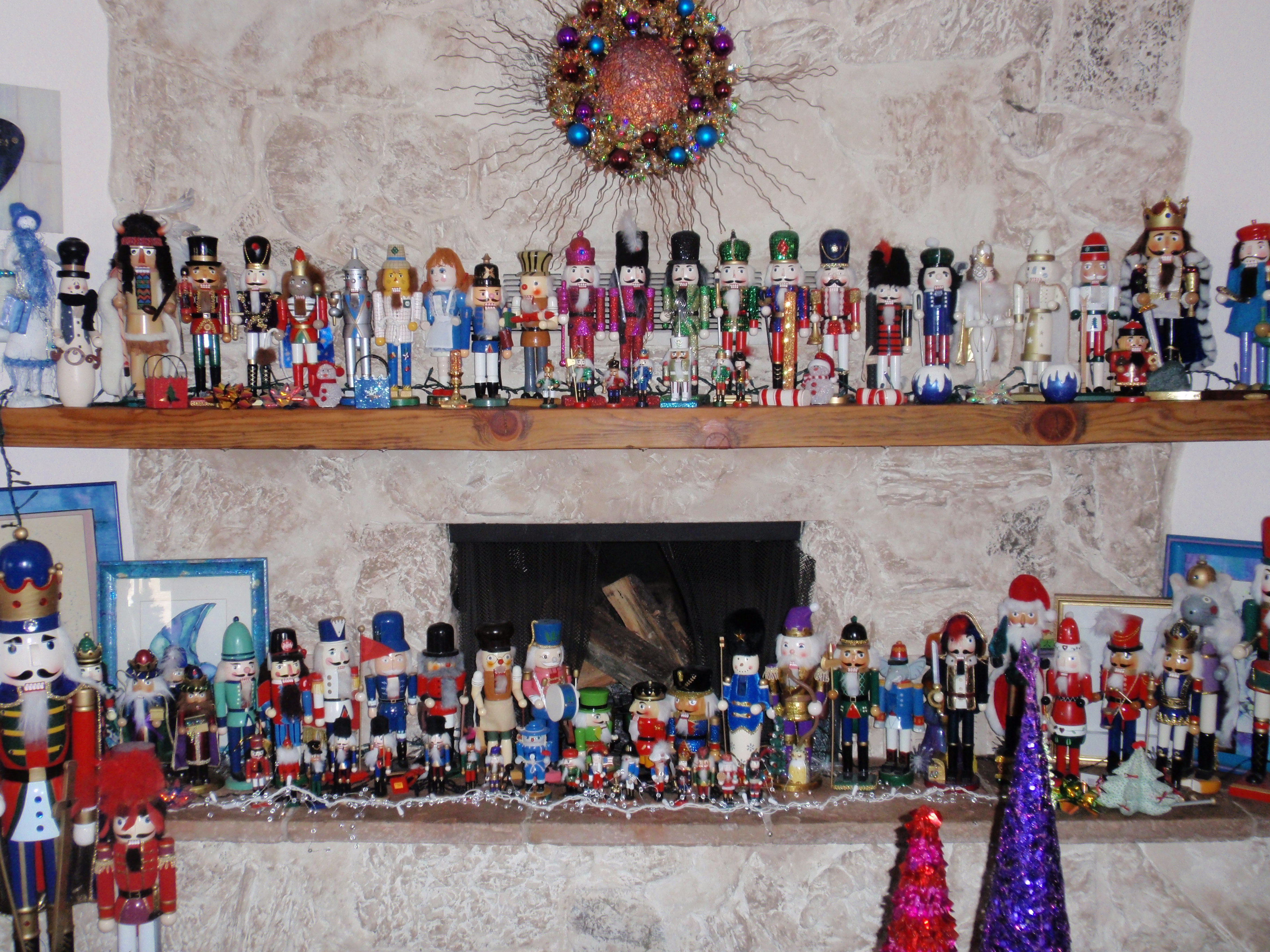
Pete and Barb
Barb's Amazing Nutcracker Collection!

We are fortunate to have friends spread across the country, as well as friendships developed in Mexico.  Kevin and Erin are two we met in Mexico, friends and mentors, who so generously give of their time and their knowledge and made our transition to Lakeside so easy, and we feel blessed to have them in our lives.

It would be lovely to spend the holidays with all our friends but obviously, this is unrealistic, so here is to all our friends fondly remembered at this time.  May we all step away from the stress of the commercialism of the holiday season and take a few moments to practice loving kindness for family (those close to us and those estranged), friends, and all those known to us and unknown who are suffering  at this time.

This year we are fortunate to be spending the holidays with family, unlike years of the past.   May this season find you embracing family and friends and may 2011 bless each of us with a sense of peace as we navigate through the waters of our lives.

Happy Holidays!


Puerto Vallarta

The week of Thanksgiving is a typical week when gringos and locals alike migrate to the beaches, before the kickoff of high season and higher rates.  Who were we to argue with this, so away we went to Puerto Vallarta!

Before I provide a glimpse into yet another lovely Mexican city, I must first apologize to my friends in the colder climes up north, particularly in the Yellowstone National Park area, for the timing of this post.  We happened to notice that the temps during the week of Thanksgiving plummeted into negative figures, with plenty of snow to boot.  Suffice to say, we thought about all of you when we were basking in 80 degree temps during the day and 65 at night.

For those who have never been to Puerto Vallarta, it is on the Pacific Coast side of Mexico, on one of the largest bays in the world – Banderas Bay.  North to south, this expanse of water extends 42 kilometers (roughly 26 miles).

Puerto Vallarta became an international destination with the filming of The Night of the Iguana in 1963, starring Elizabeth Taylor and Richard Burton.  The home that they purchased during filming is still on one of the tour routes.

In 1973, the construction of the big hotels began and PV was labeled as a mecca for water sports, one of them being parasailing, and no, this is not me.

Many locals still make their living from the sea.  Terry was able to get a photo of some men readying their nets in the hopes of capturing some of the ocean’s bounty, while a pelican alights in a tree nearby, anxious for a free lunch.

While Terry was snapping these pictures, I just happened to be looking out into the bay and saw two beautiful manta rays project themselves from the depths again and again, fly through the air, and dive back down into the bay.  What a miraculous sight this was but unfortunately, I had no camera in hand!

The malecon here is probably unlike any other in Mexico, as it is lined with restaurants, nightclubs and fine shops, a tourist’s heaven.  It does have the obligatory plaza with gazebo and church nearby.

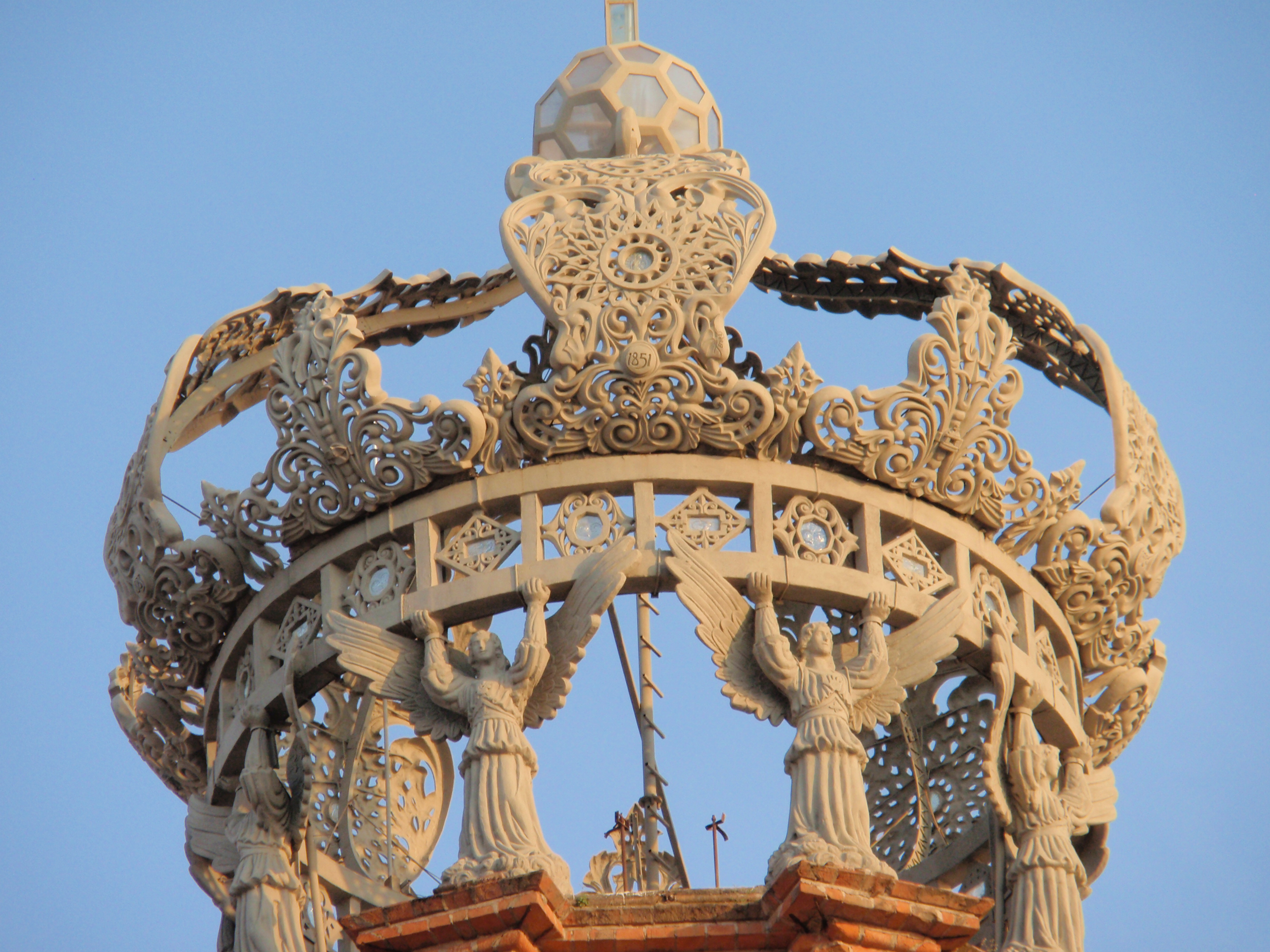
The Church of Guadalupe was constructed in 1951, right off the main plaza and has a magnificent crown balanced on top of her steeple, fashioned after the one worn by Mexico’s 18th century Empress Carlota.

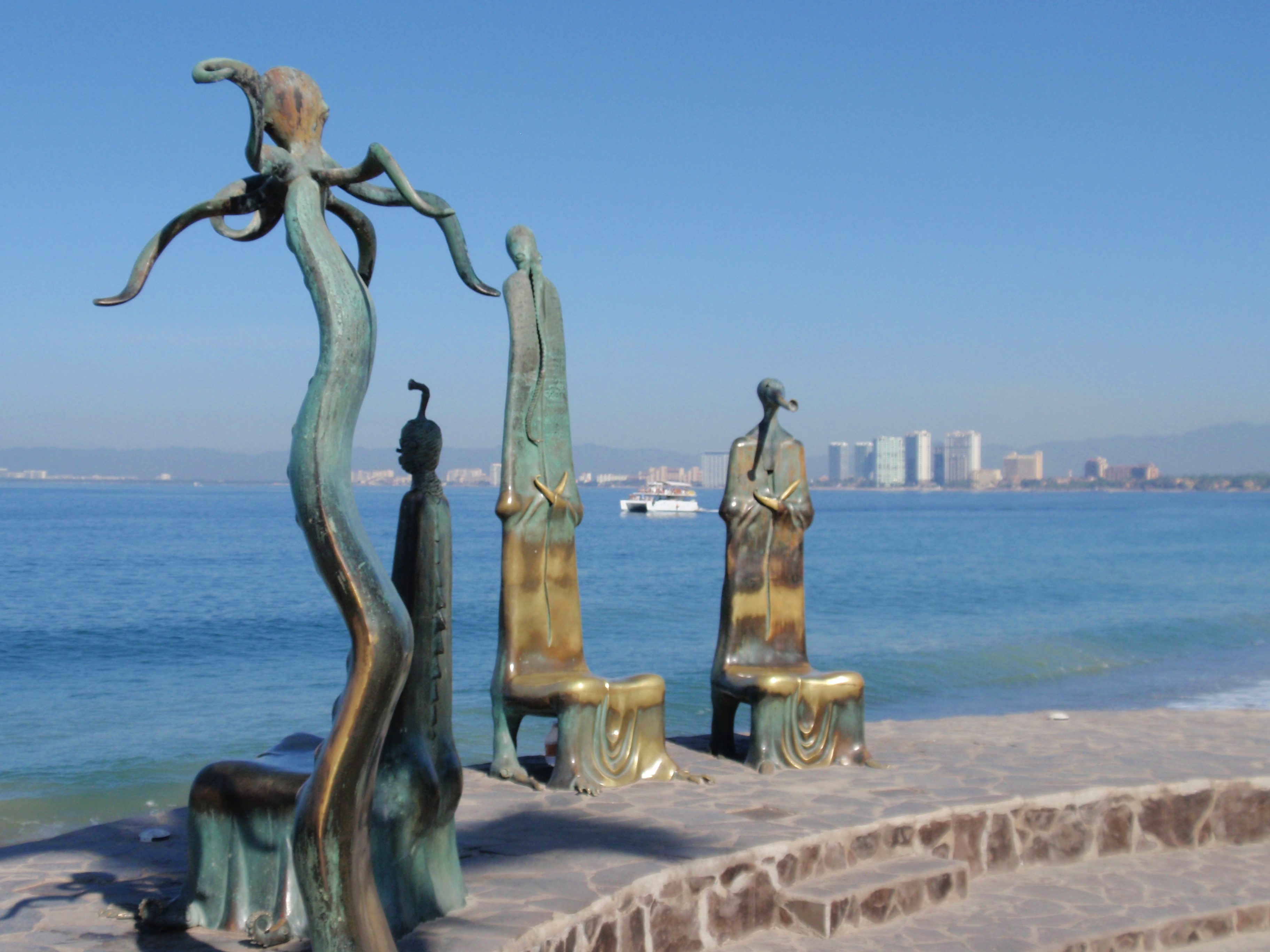
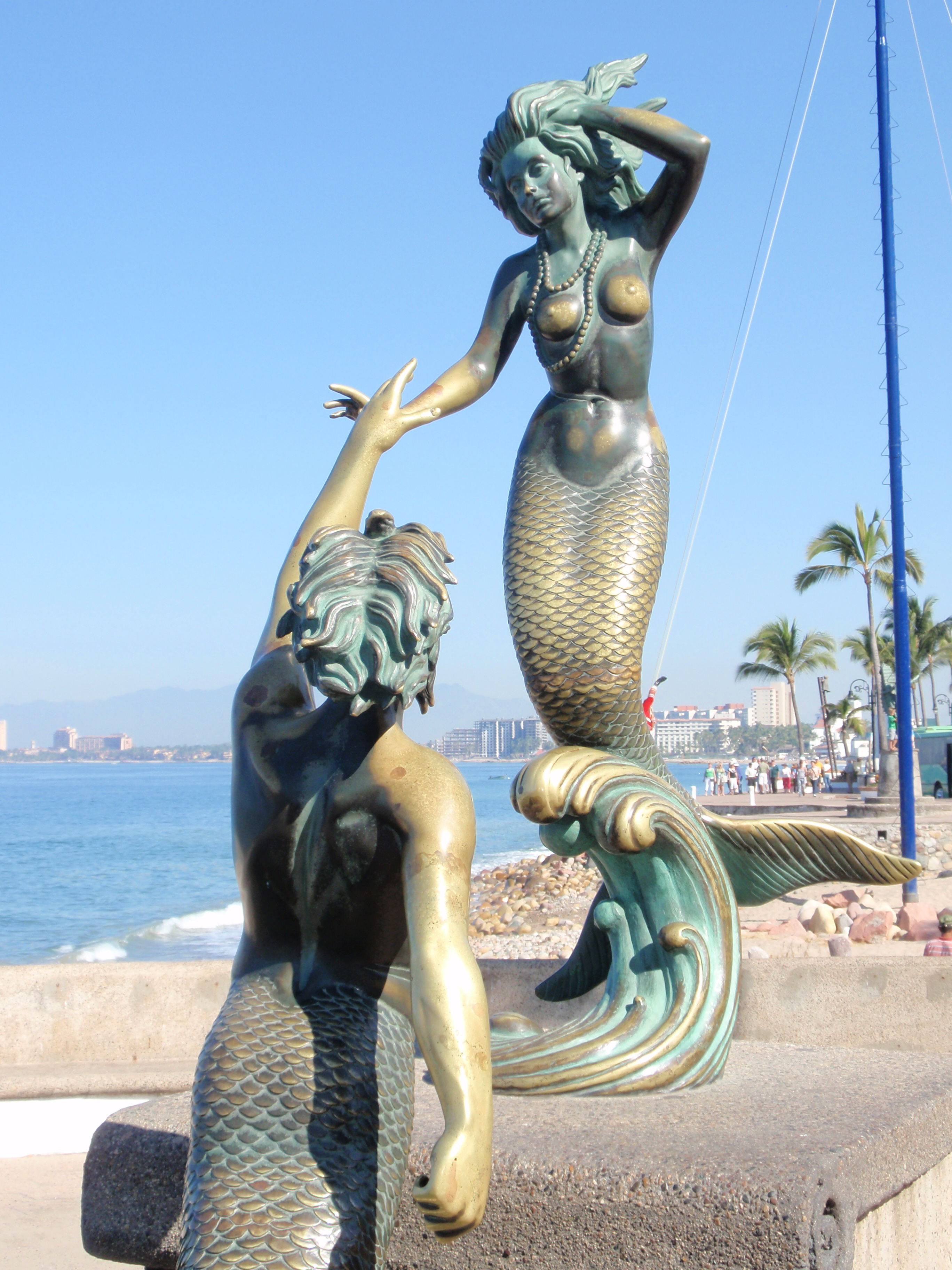
Intricate and unusual sculptures and statues lined the malecon, many of them displaying mermaid-like creatures.

Mermaid Violinist
Mermaid Saxophonist
Sea Creature Chairs - Very Strange Indeed!

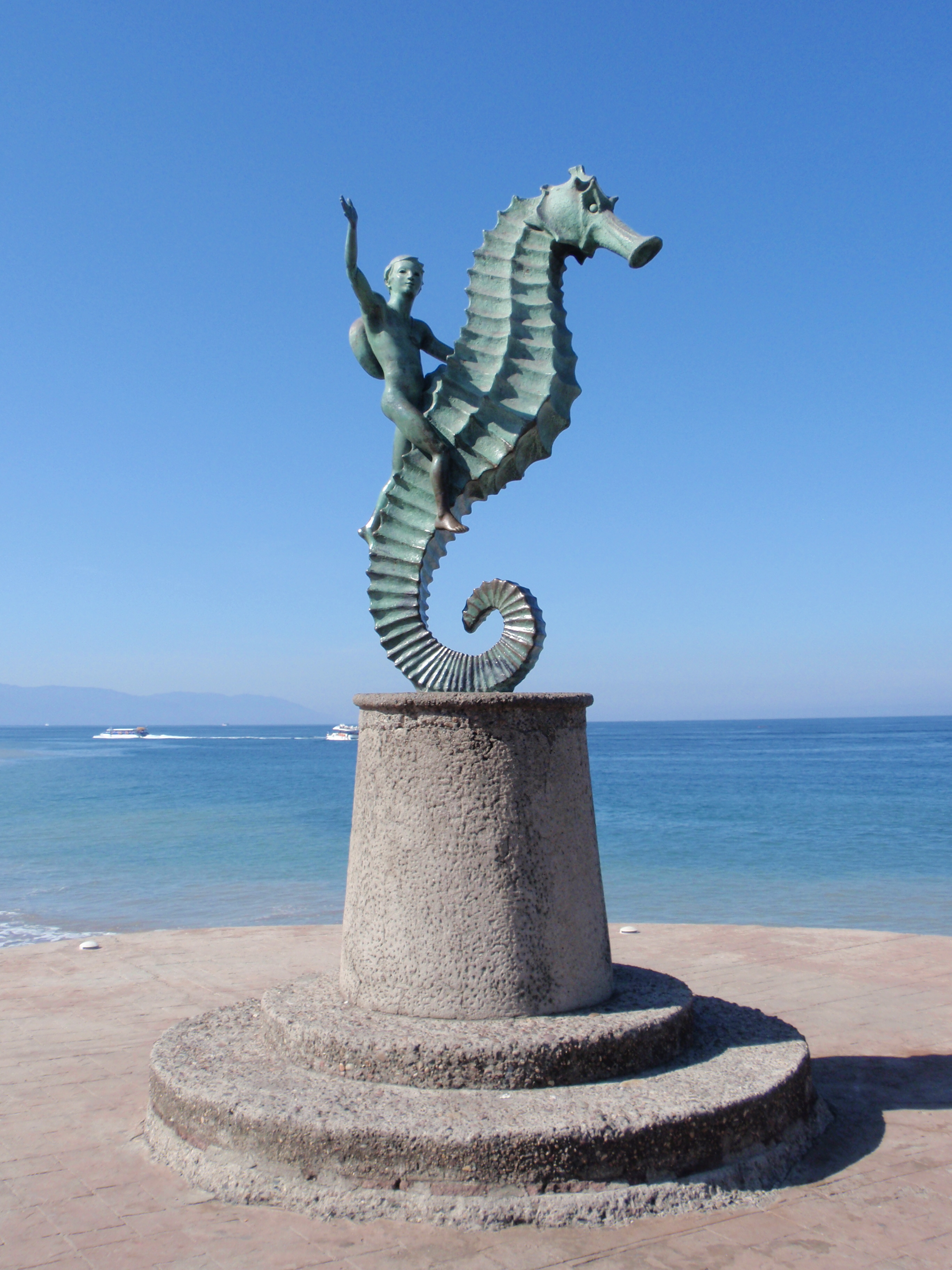
The malecon’s first statue was that of a little mer creature.

Caballito del Mar ~ Little Seahorse

The next sculpture is that of Angel de Esperanza (Angel of Hope), washed away by Hurricane Henna in 2002 and replaced in 2007.

Triton (son of sea-god Poseidon) and Nereid

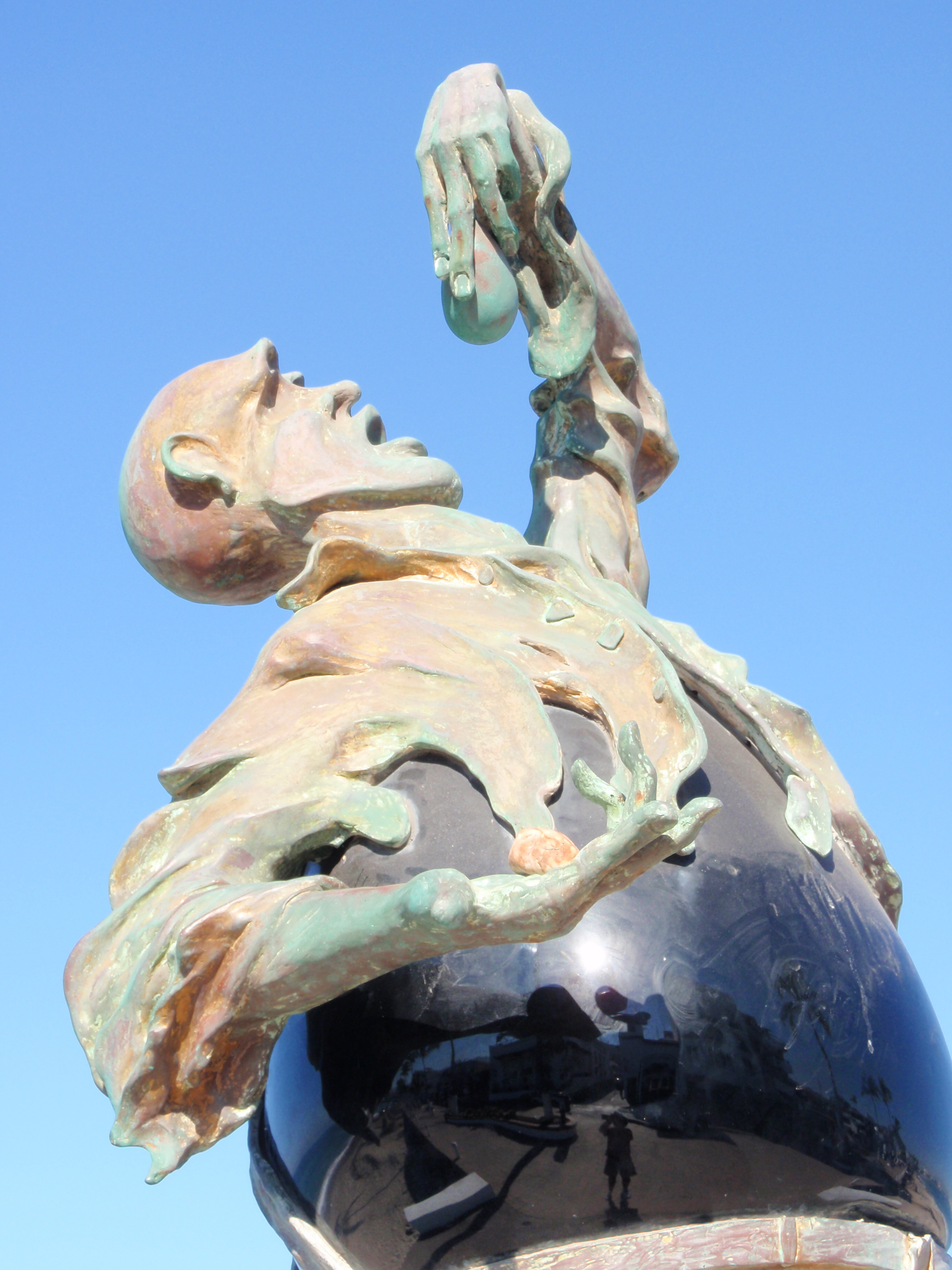
We stood and looked at the next statue for some time, trying to determine what in the world this man was going to eat!  Looking down at the base of the statue were the words “Come Piedras”.

Come Piedras (He Eats Stones)!

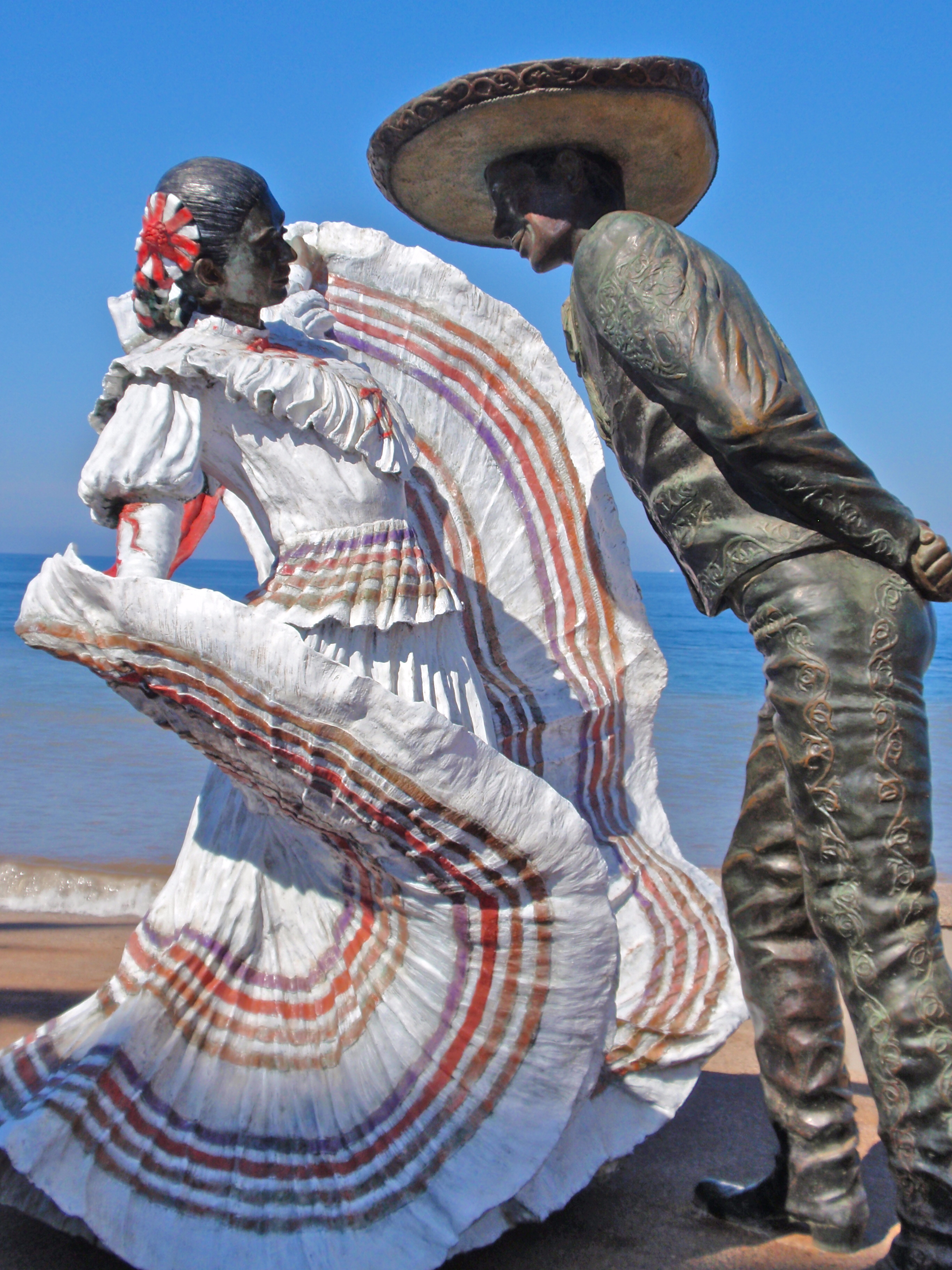
One of the more colorful sculptures depicted a celebration of the Xiutla Folkloric Ballet.

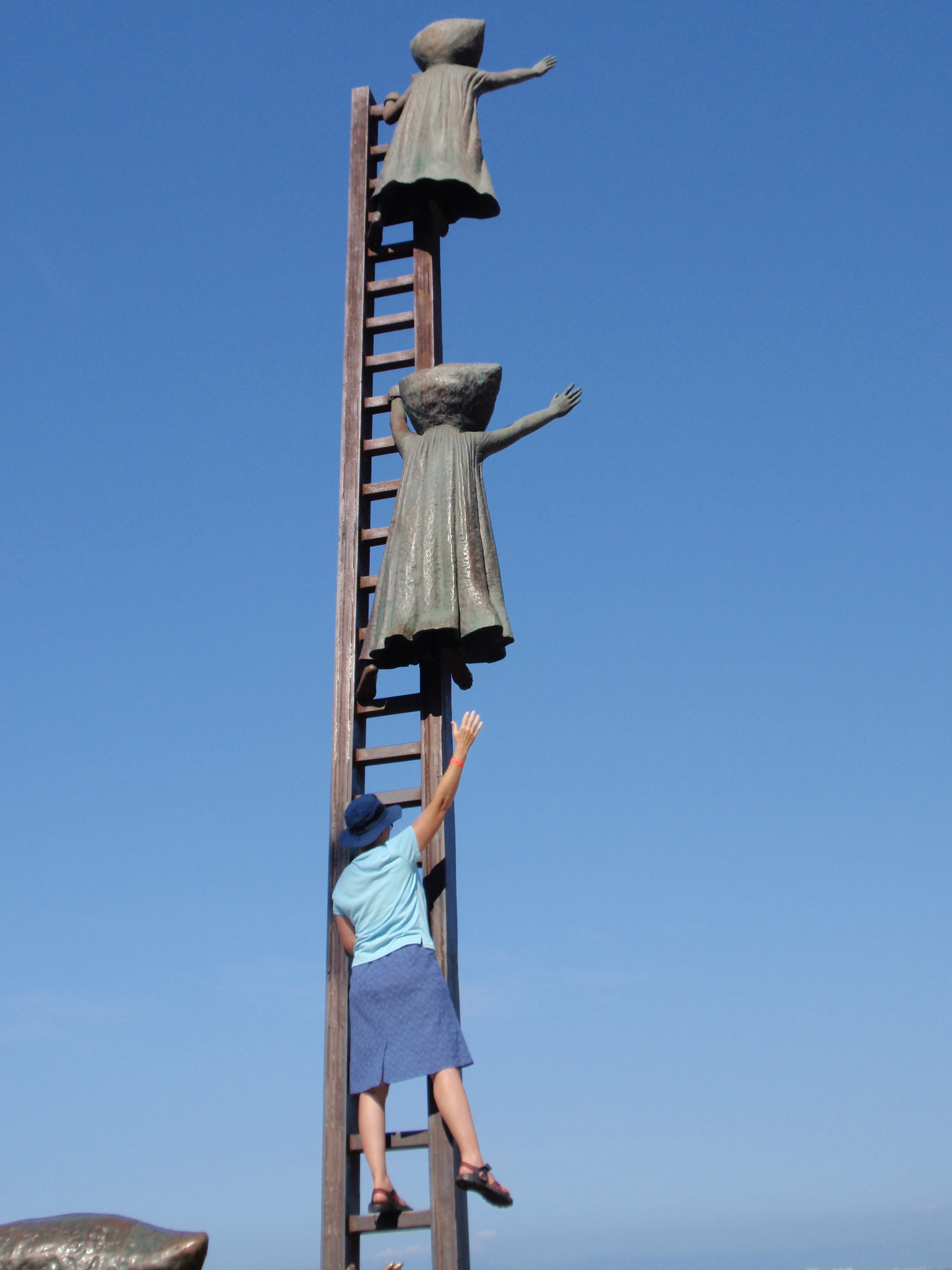
A sculptor by the name of Bustamante, whose trademark is to create statues of people with triangular heads, has a sculpture displayed by the name “In Search of Reason”, where it appears the mother is calling out to her children who have climbed high onto the ladder.  Wanting to experience this thrill myself, I had to be the tourist and have my picture taken!

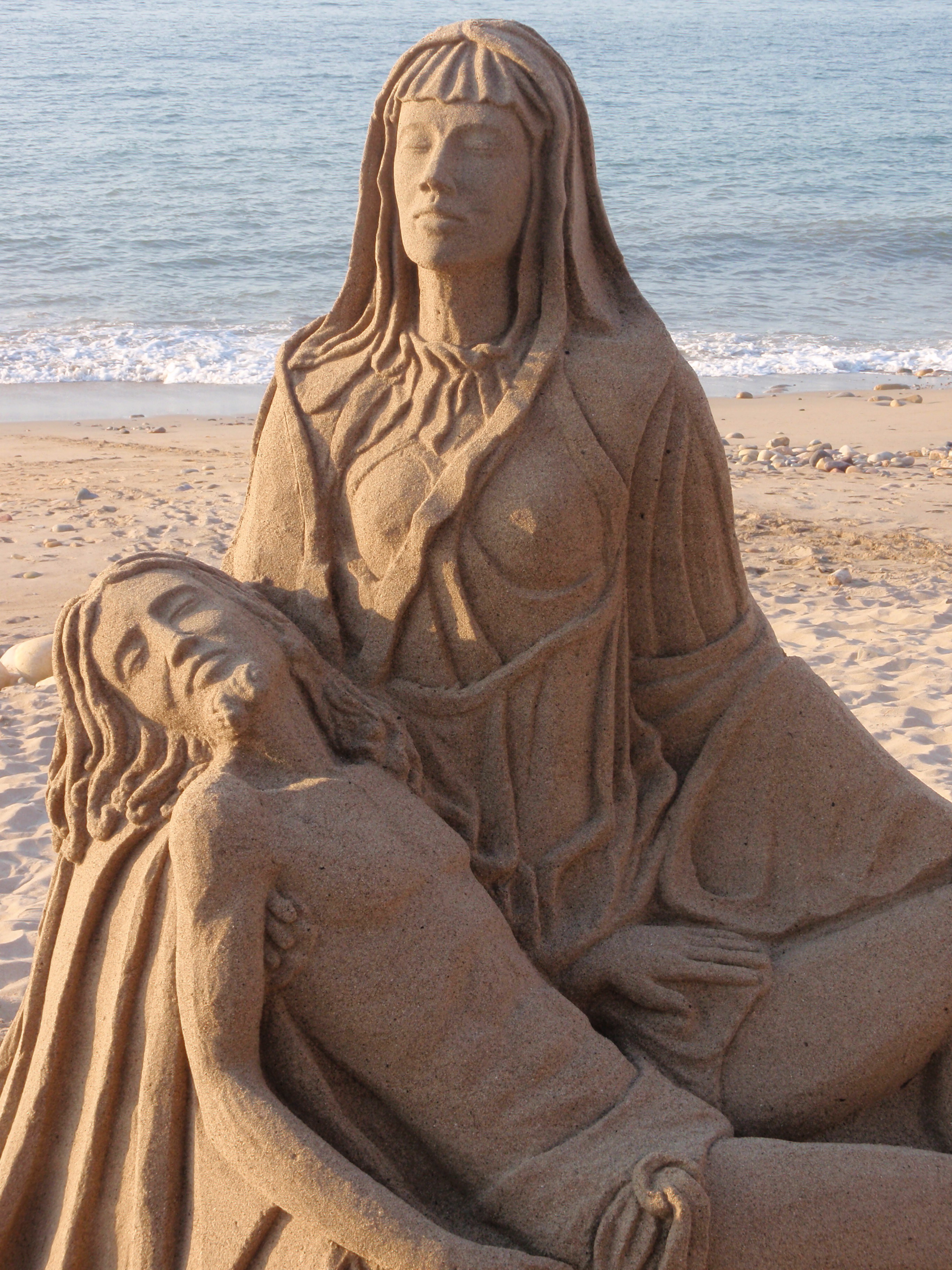
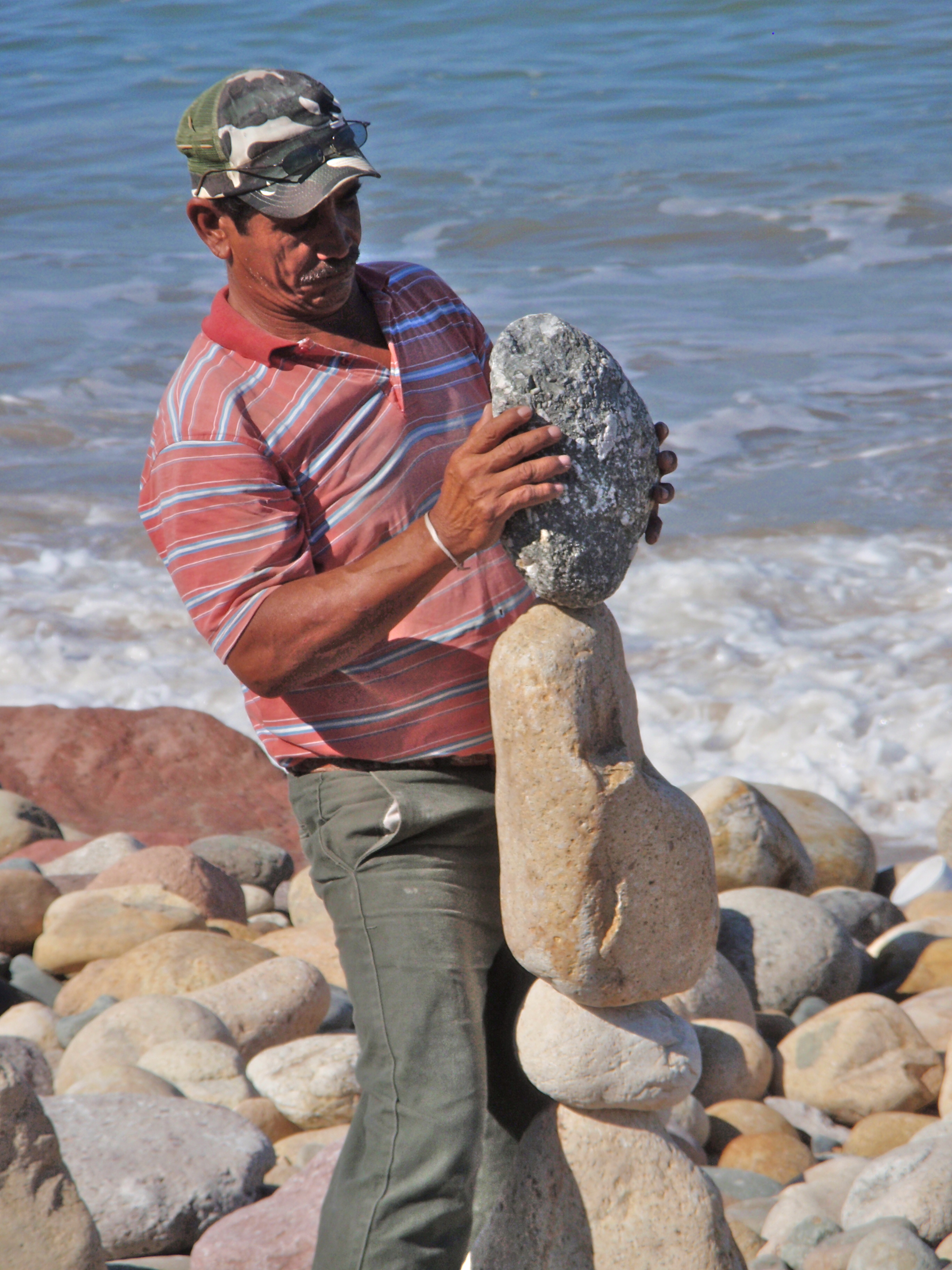
Along with the famous bronze sculptures were less permanent pieces of artwork being fashioned by locals, those created in sand or by rocks worn smooth by the movement of the tides.

These look like some very sophisticated cairns.  Terry watched as this man stood sans movement for the longest time to balance the final rock.

Some Serious Concentration Needed for This Balancing Act

The final product…

Ta-Da!

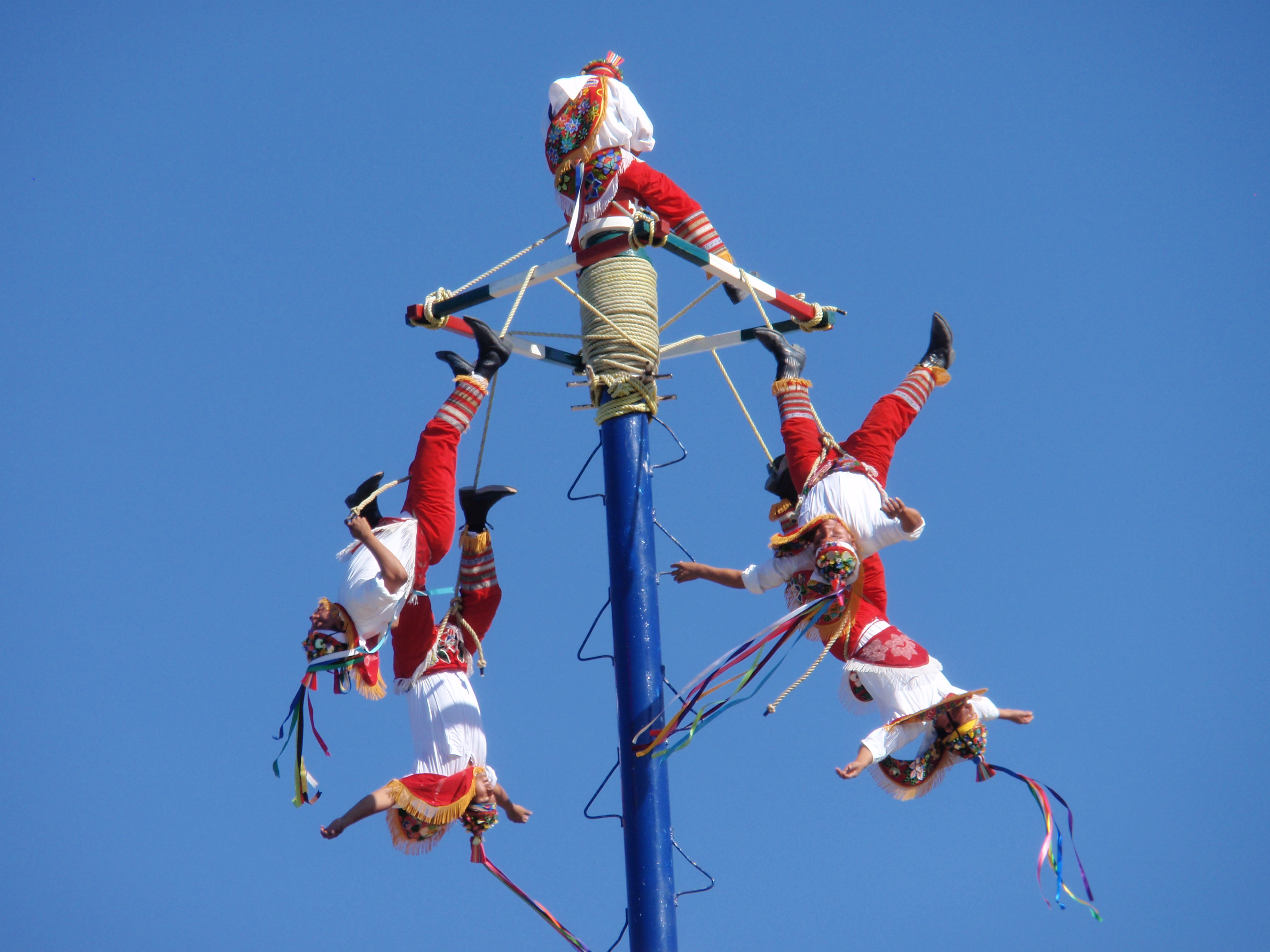
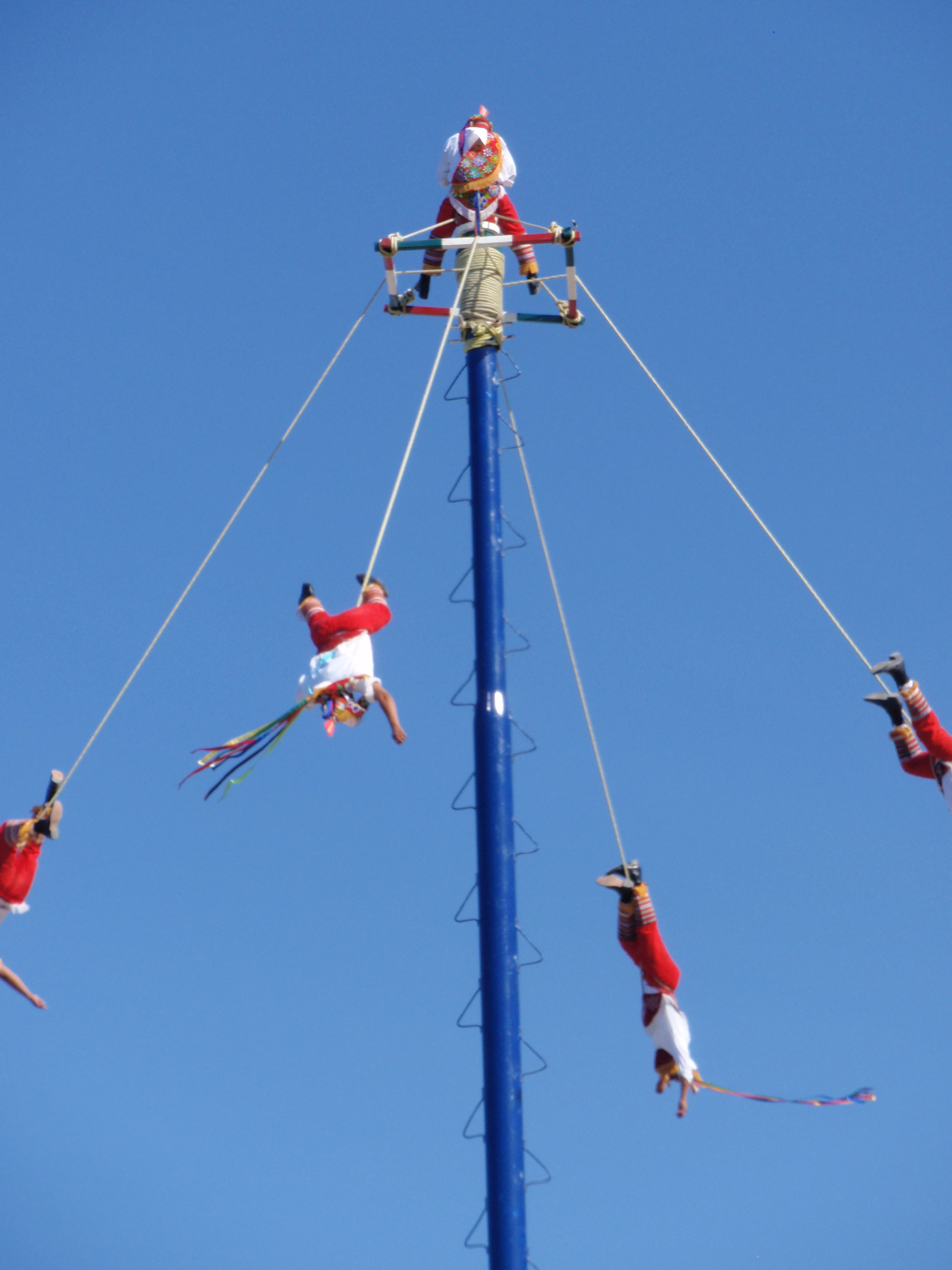
A very exciting performance that took place on the malecon was that of the Danza de los Voladores (Dance of the Flyers), a ritual that has its roots in the pre-Hispanic period, associated with the town  of Papantla, Veracruz and was dramatized when asking the gods to end a severe drought.  Five indigenous men scale a pole, via a ladder, 42 meters (138 feet) high.  The piper, the first up the ladder, sits atop the pole on a small platform, playing a drum and flute, while the others encircle him, securing themselves with ropes.  They launch themselves backwards off their tiny perches, as they spin upside down until they reach the ground.  This would certainly not be for the faint of heart!

Puerto Vallarta is such a popular beach destination that many very large cruise ships enter her port on a regular basis.  As we were waiting to hop onto a catamaran to take us to the more secluded beach of Las Caletas for some snorkeling, sea kayaking, and a sumptuous lunch, the Mariner of the Sea made her approach.

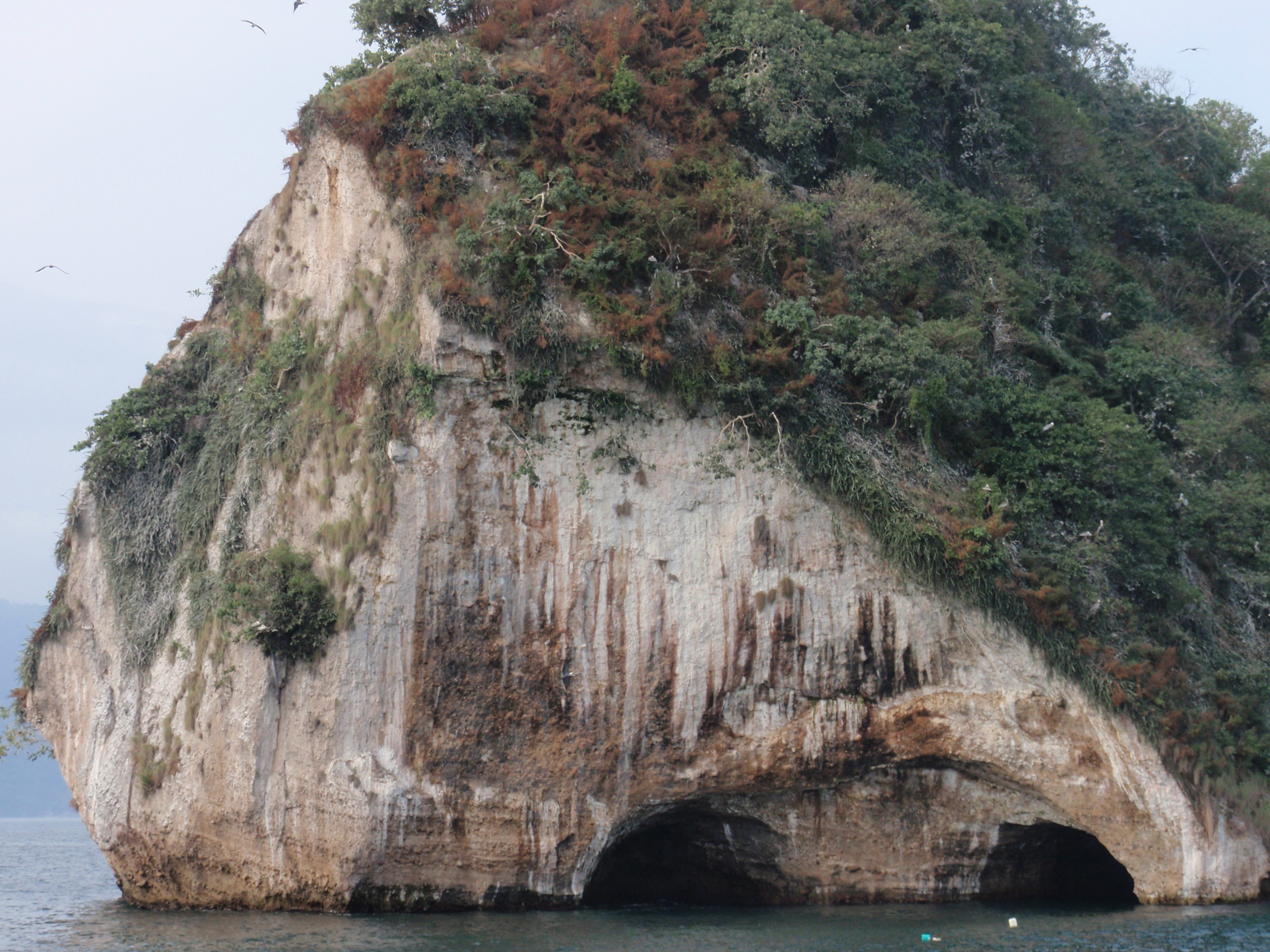
On our trip out to Las Caletas, we passed by two large rock formations jutting out of the bay that served as bird sanctuaries.

As our boat docked at Las Caletas, a beautiful macaw swooped in to welcome us.  Her timing was impeccable!

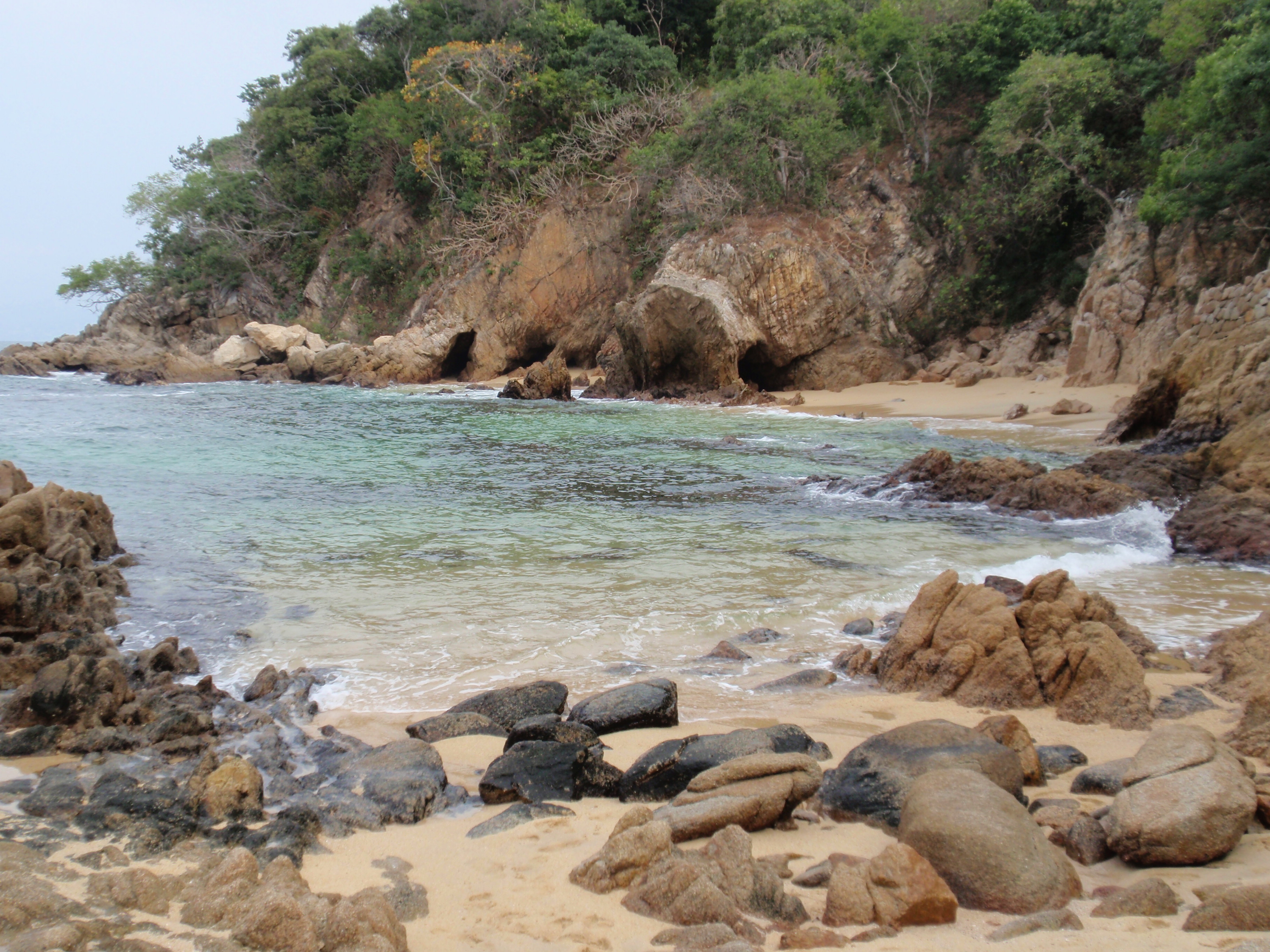
And the cove was beautiful!

Our week at the beach ended with a very comfortable bus ride back to the Lakeside area.  We hope you all had a wonderful Thanksgiving.  Stay warm and we will see some of you up north very soon!

This One’s For You Mom!

Our mother is a woman of many interests and talents.  The one talent I will focus on for purposes of this blog is that of her remarkable “green thumb” and her love for turning the earth, planting, and marveling at the beauty that arises from a small seed or seedling.

Mom is not unlike many women who do not like to divulge their age, so I will honor her by not sharing this information, but suffice to say that she became a Master Gardener at a somewhat advanced age, an accomplishment worthy of celebration!  In the past, her gardens (Rabbit Tracks) have been featured in several local tours, as she has the innate ability to create just the right balance of color and texture in her plantings.

Mom, given your passion for gardening, I have put together a small vignette of the flora that grows within the walls of the small community where we live, excluding the poinsettia tree, which is blooming in great abundance in Lakeside as of this writing and is a less than subtle reminder that the Christmas holidays are right around the corner. Although we cannot take responsibility for growing these beauties, our neighbors were very gracious in allowing us to give you a peek into the gardens they enjoy tending.

This slideshow requires JavaScript.

Chapala

I have blogged about some interesting colonial cities we have visited but decided that it is probably just as important to focus on some of the colorful villages just outside our back door, Chapala being one of them.

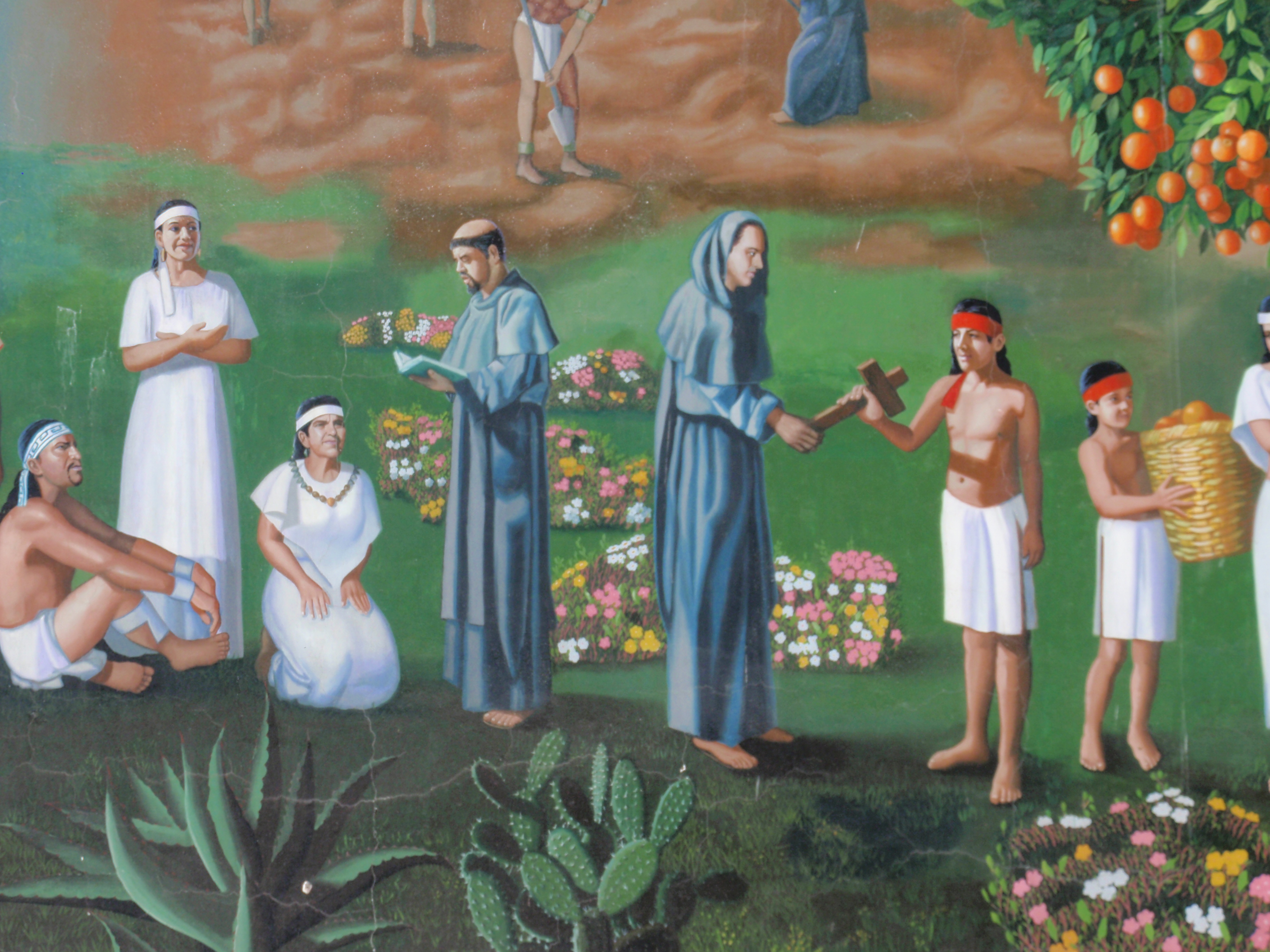
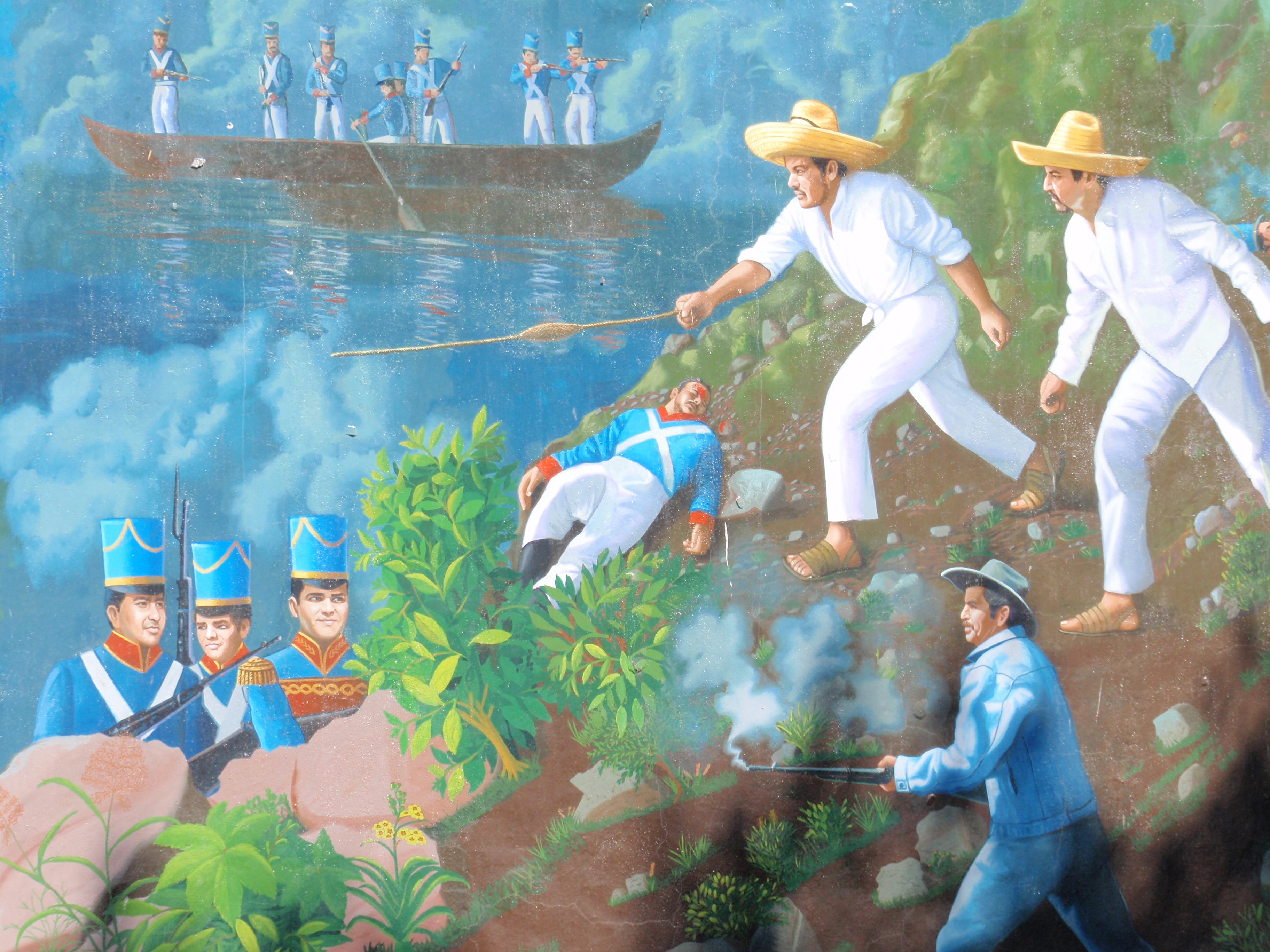
Chapala is the village just east of us, being the municipal seat of the Lake Chapala region and the largest village, I believe, around the lake.  Chapala is more than 500 years old and was probably named for the last chief of the Nahuati-speaking indigenous people of the region – Chapalac.  Murals leading into the village provide a visual depiction of various events that defined its colorful history.

Like many villages and cities in Mexico, a main plaza with gazebo, church and marketplace are the focal points, and Chapala is no exception.

Gazebo in the Chapala Plaza

The church between the plaza and the malecon is not as grand as some that we have seen, but is a beautiful tribute to Saint Francis of Assisi.

Templo de San Francisco de Assisi
Church Interior

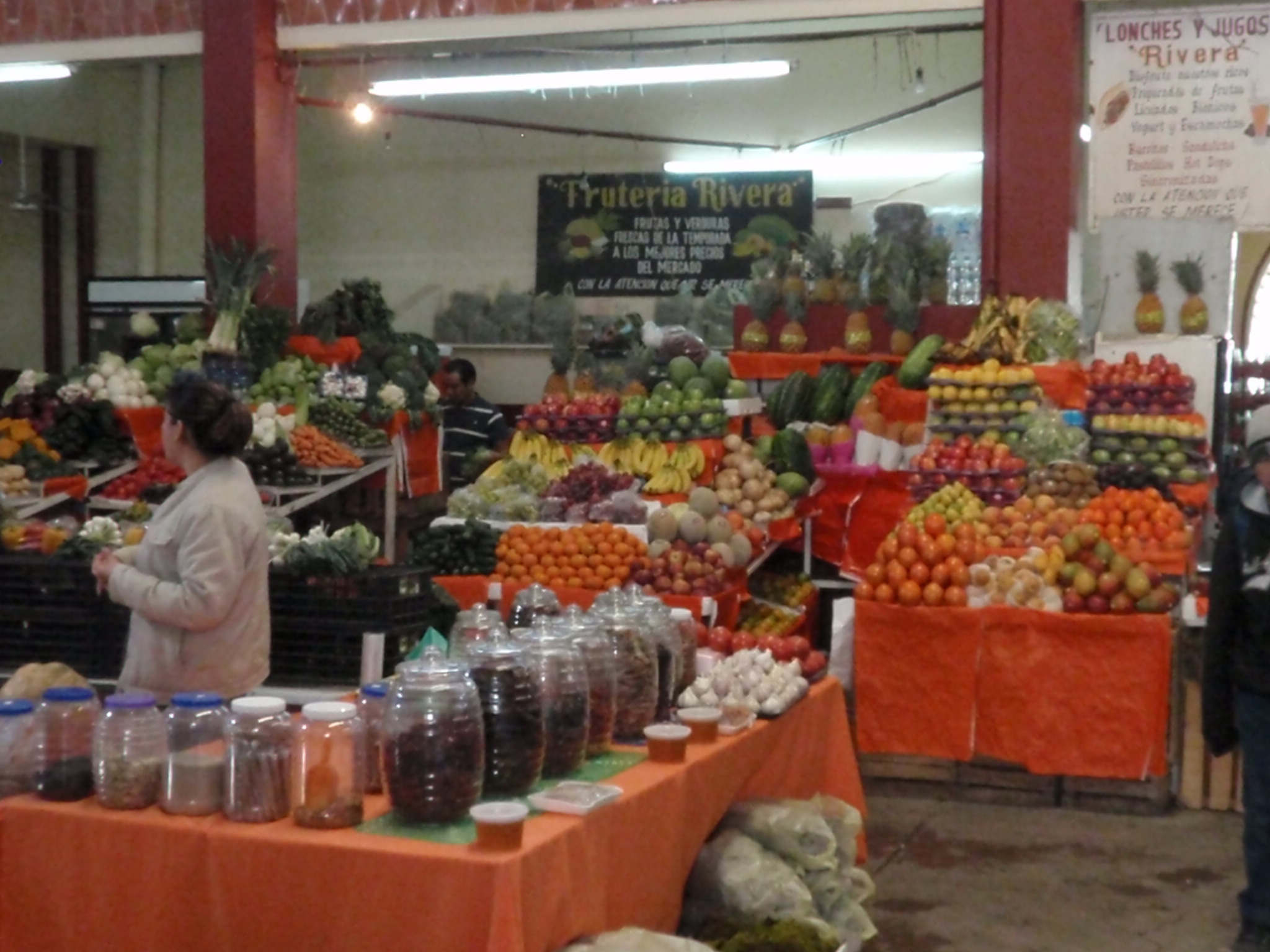
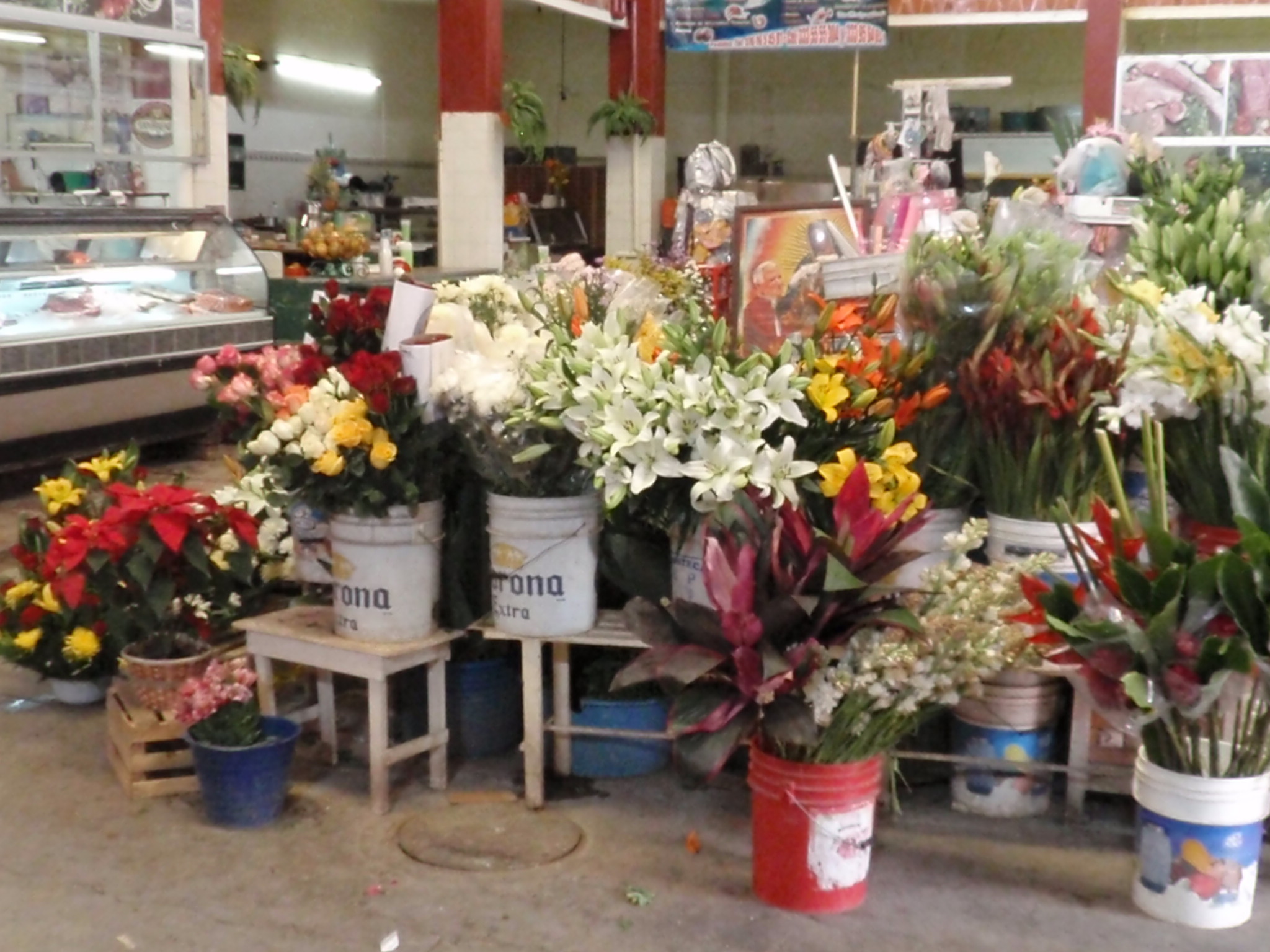
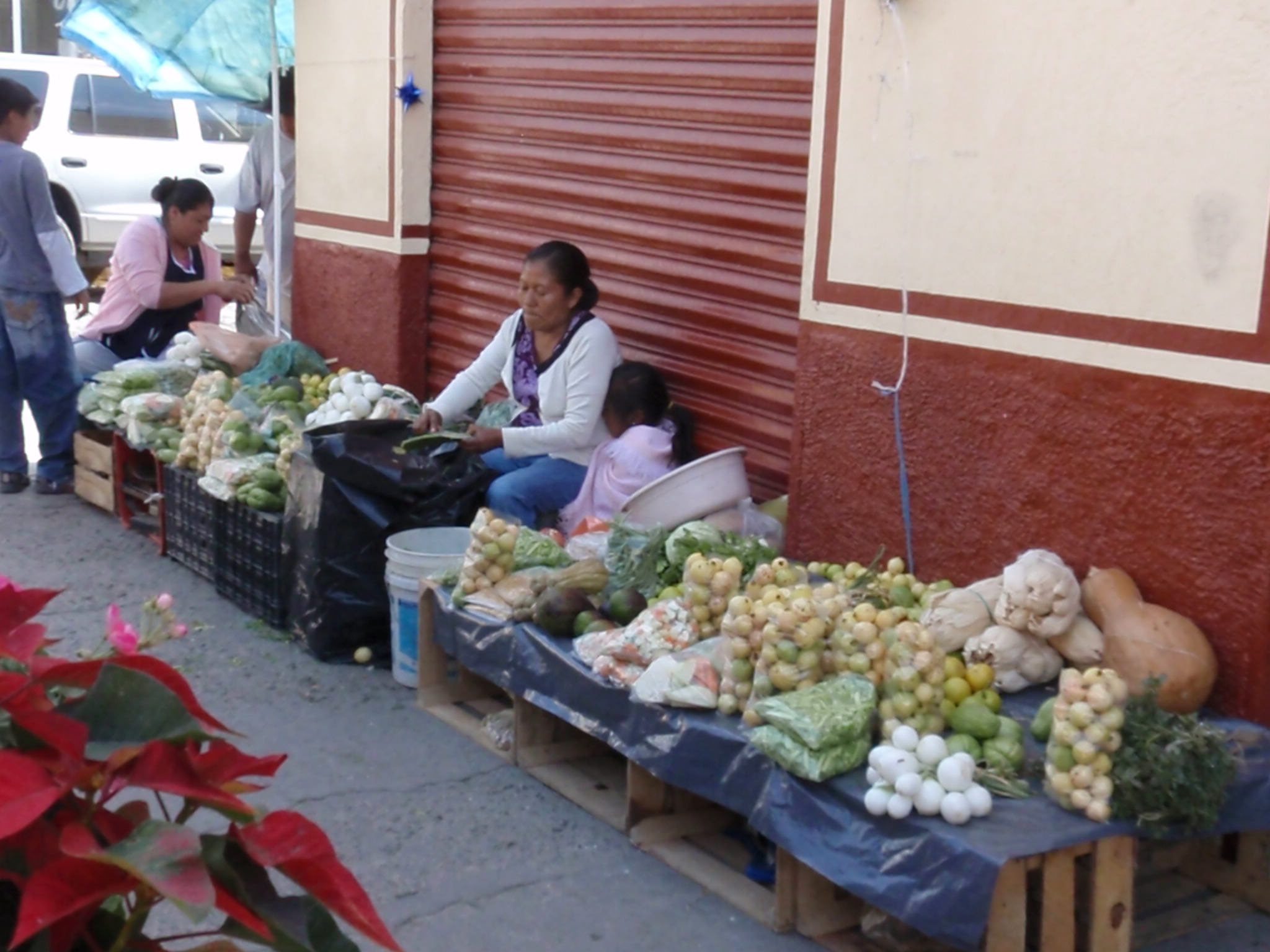
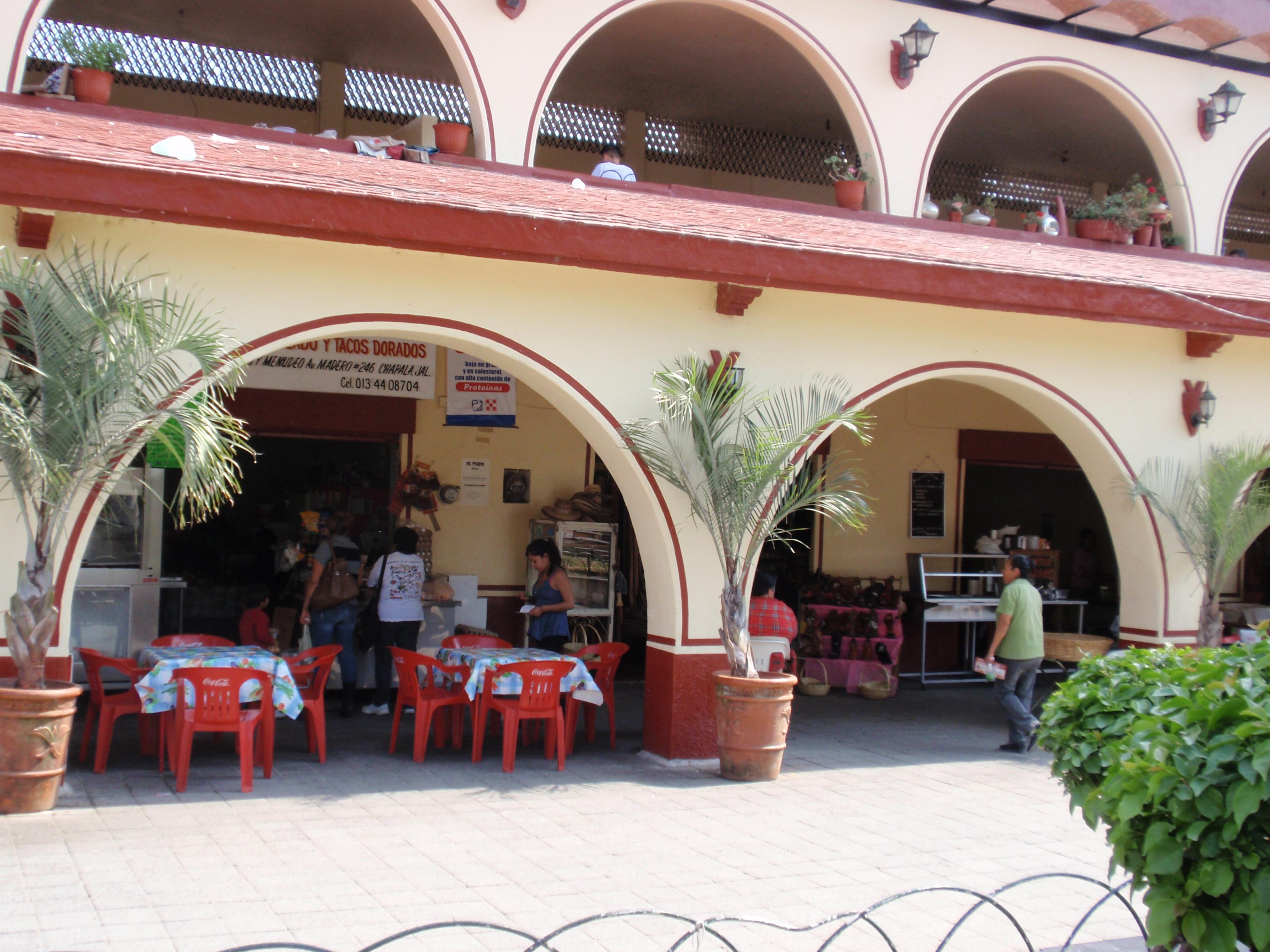
The Chapala marketplace is a colorful, bustling daily affair, which offers fresh fruit, vegetables, meats, cheeses, and flowers, just to name a few.

Native Preparing Nopales from the Prickly Pear Cactus
A Favored Restaurant for Tacos - Muy Delicioso!

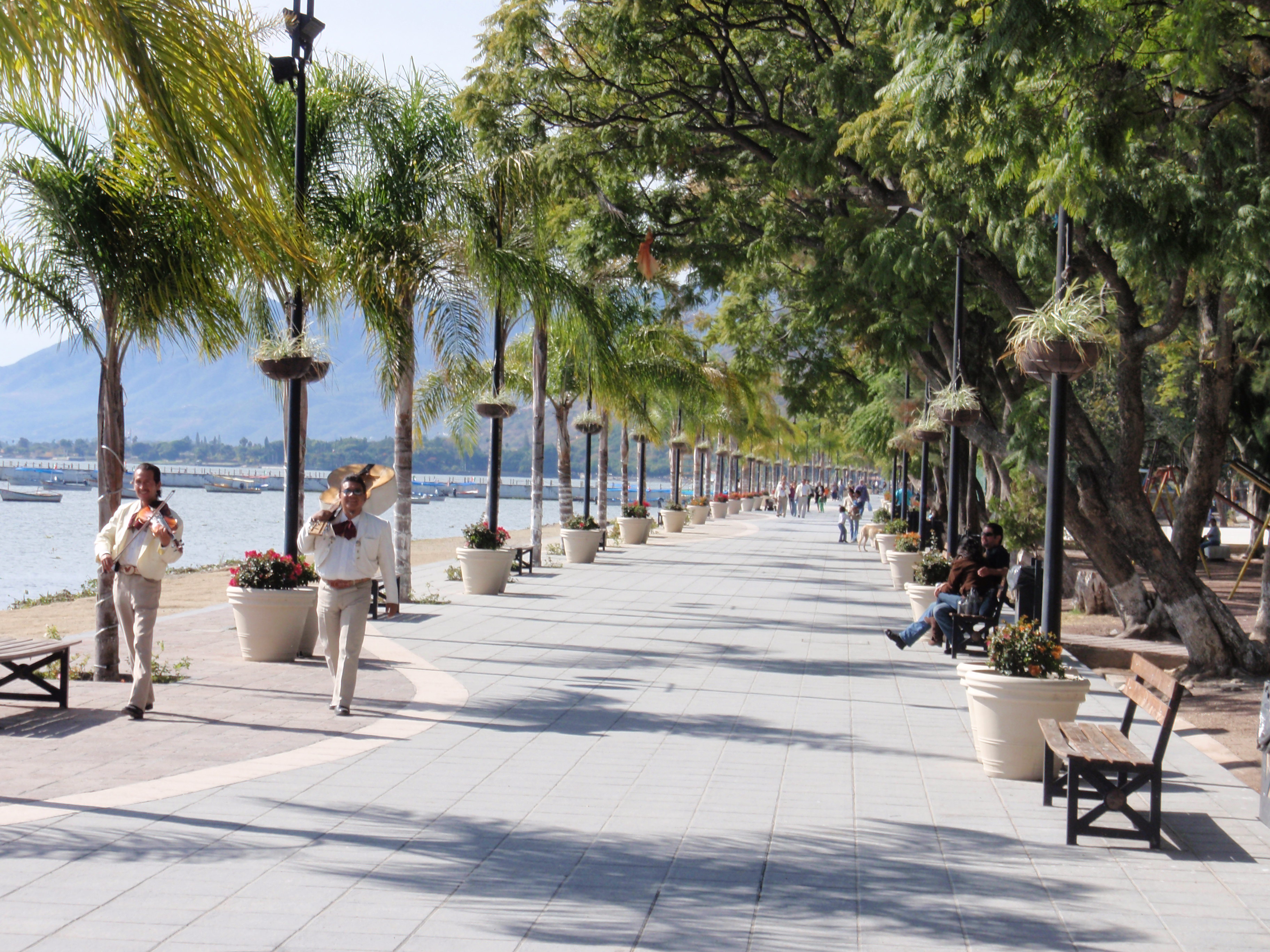
One of the most prodigious features of Chapala has to be the malecon (waterfront), where folks can be seen wandering at any time of the day.  The villages that we have seen thus far around Lake Chapala all have their version of a malecon, but none as grand as that of Chapala.

Mariachis Walking the Malecon
Tribute to the Chapala Fishermen
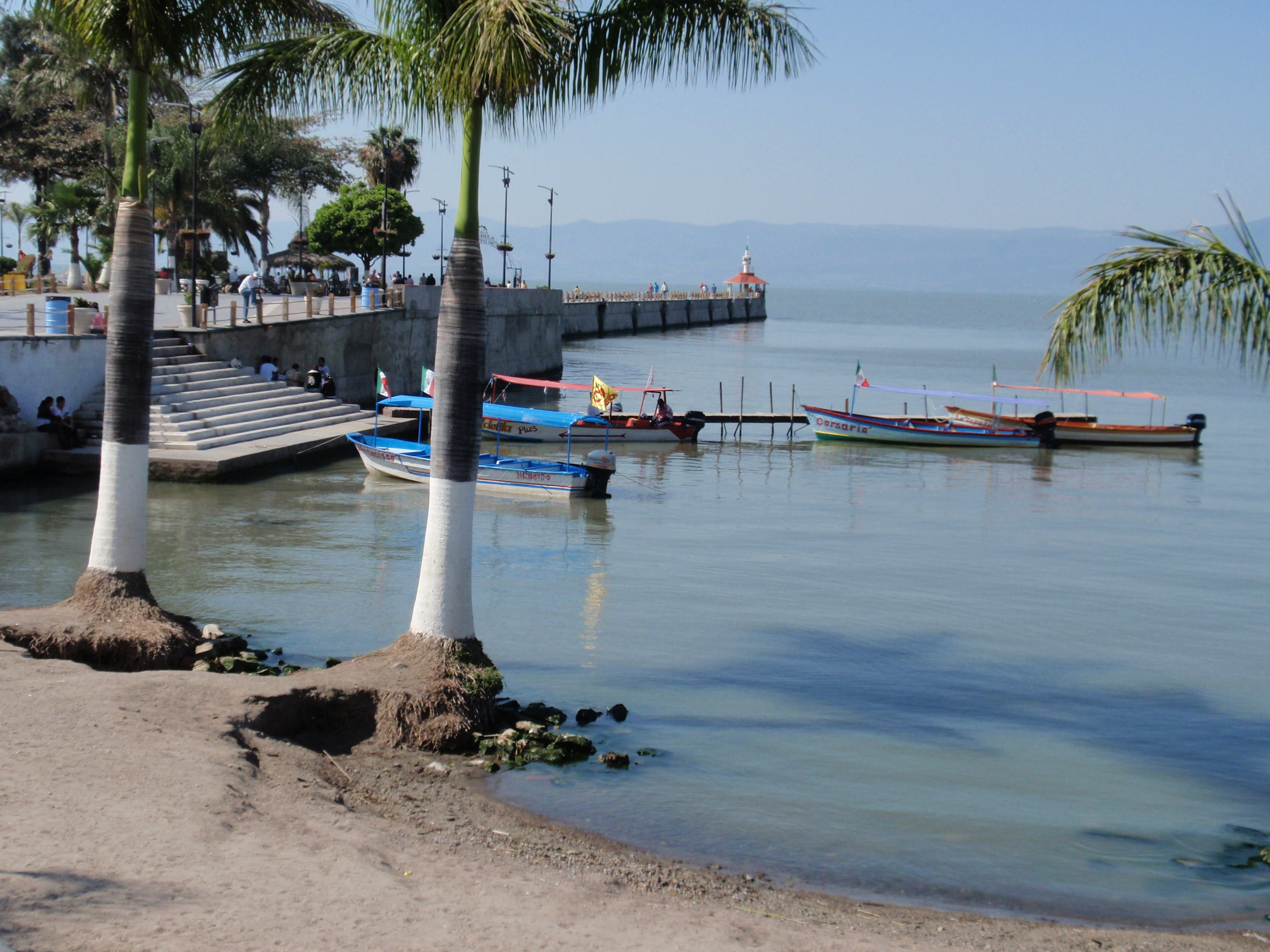
Southeastern View of the Malecon, with Scorpion Island in the Distance

Scorpion Island (Isla de los Alacranes) is a small island that can reached by way of tour boats anchored on the Chapala shore.  Due to its name, it does not sound like a desirable place to visit, but we are told that its name arose from the shape of the island and is not based on the number of critters residing there.

Tour Boats

Lake Chapala is the largest natural lake in Mexico and the third largest in Latin America, with a length of approximately 48 miles and a width of 22 miles.

One day soon we hope to take a week-long tour around the lake, exploring many of the other villages.  There is so much to see and do in this country.  It is a wonder that I have time to blog!

Feria Maestros del Arte

We attended the Feria Maestros del Arte festival this weekend at the Club De Yates De Chapala (Chapala Yacht Club).  This is the ninth year for this event and was the inspiration of Marianne Carlson, a local Lakeside resident.  She originally decided upon this forum after she had visited 17 artisan villages in Mexico several years ago.  Many of the indigenous artists did their craft in their homes so it soon became apparent to Marianne that the average person would never be able to witness the beauty of this folk art.  As Marianne has expressed on her website, the feria “offers a vehicle to promote the indigenous and folk art of Mexico, while at the same time educating the public that such art is on the brink of becoming endangered and disappearing forever”.

The Feria is a non-profit and the true beauty of this organization is that it provides an avenue where the artists are provided transportation to this event; are housed with local Lakeside residents for the three days that the show occurs; and they take home 100% of their sales.  Although many items were clearly out of our price range, for collectors and with those who have deeper pockets than ours, one-of-a-kind pieces can be obtained for a fraction of the price one would pay for them in a gallery.  Many art pieces are well within the average consumer’s budget and when you see the detail and the countless hours that have gone into the creation of their beautiful, expressive artwork, you would never begrudge them one centavo.

Marianne hand-picks the artists, traveling to their homes to gain a better understanding of the familial history of their craft.  Because of the painstaking efforts by her and a number of volunteers that coordinate this event, as expressed on her website, the feria “is a “heart” show – not just another “art” show”.

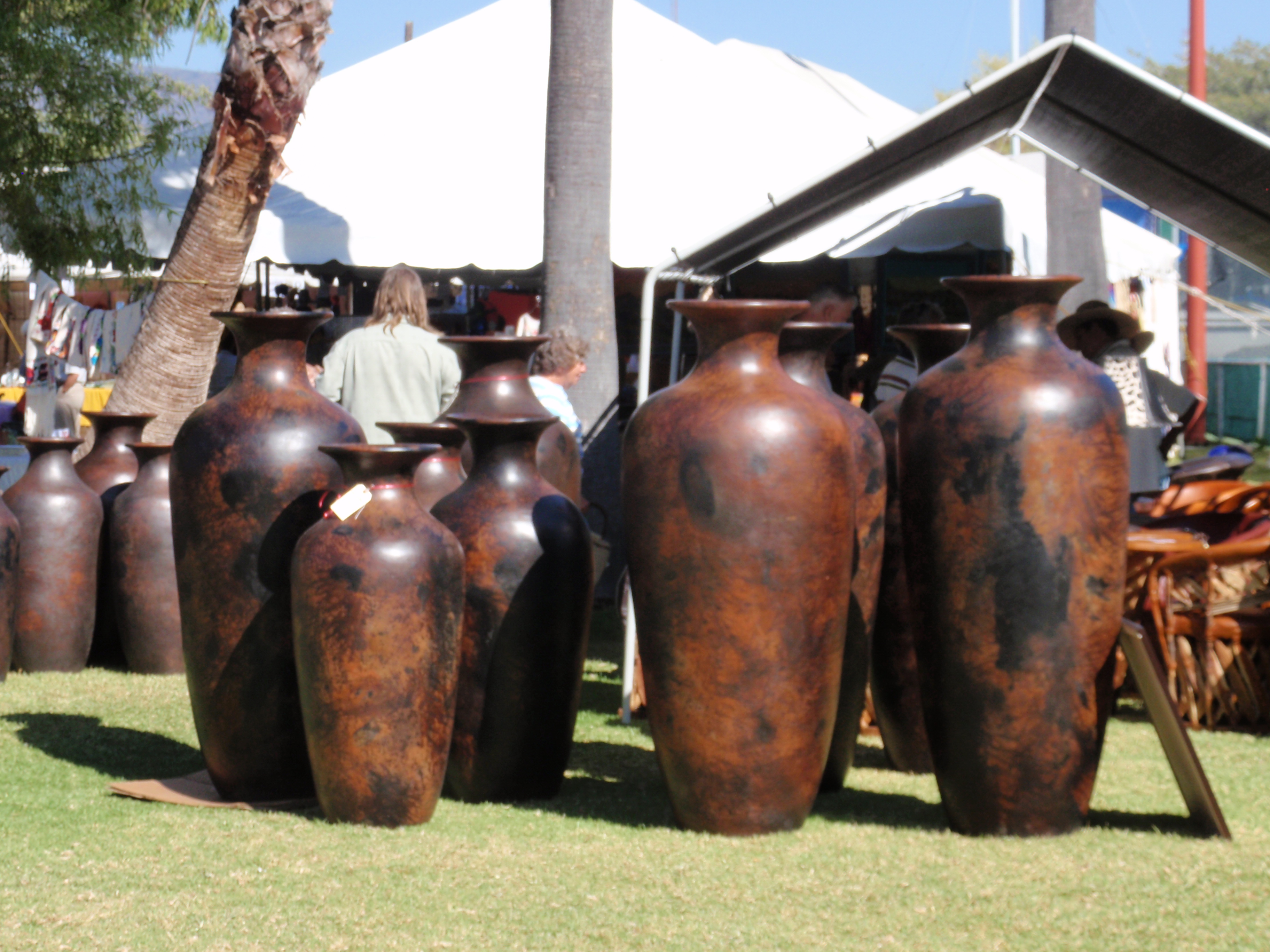
Artwork displayed by the Castilla Orta family from Puebla, Mexico stood out as some of the most spectacular at the show.  For the past 40 years, this family of clay potters has created stunning and whimsical pieces.  In 2009, Alfonso, the patriarch of this family, passed away but his entire family still carries on his tradition.

Below is just a sample of their amazing artwork.

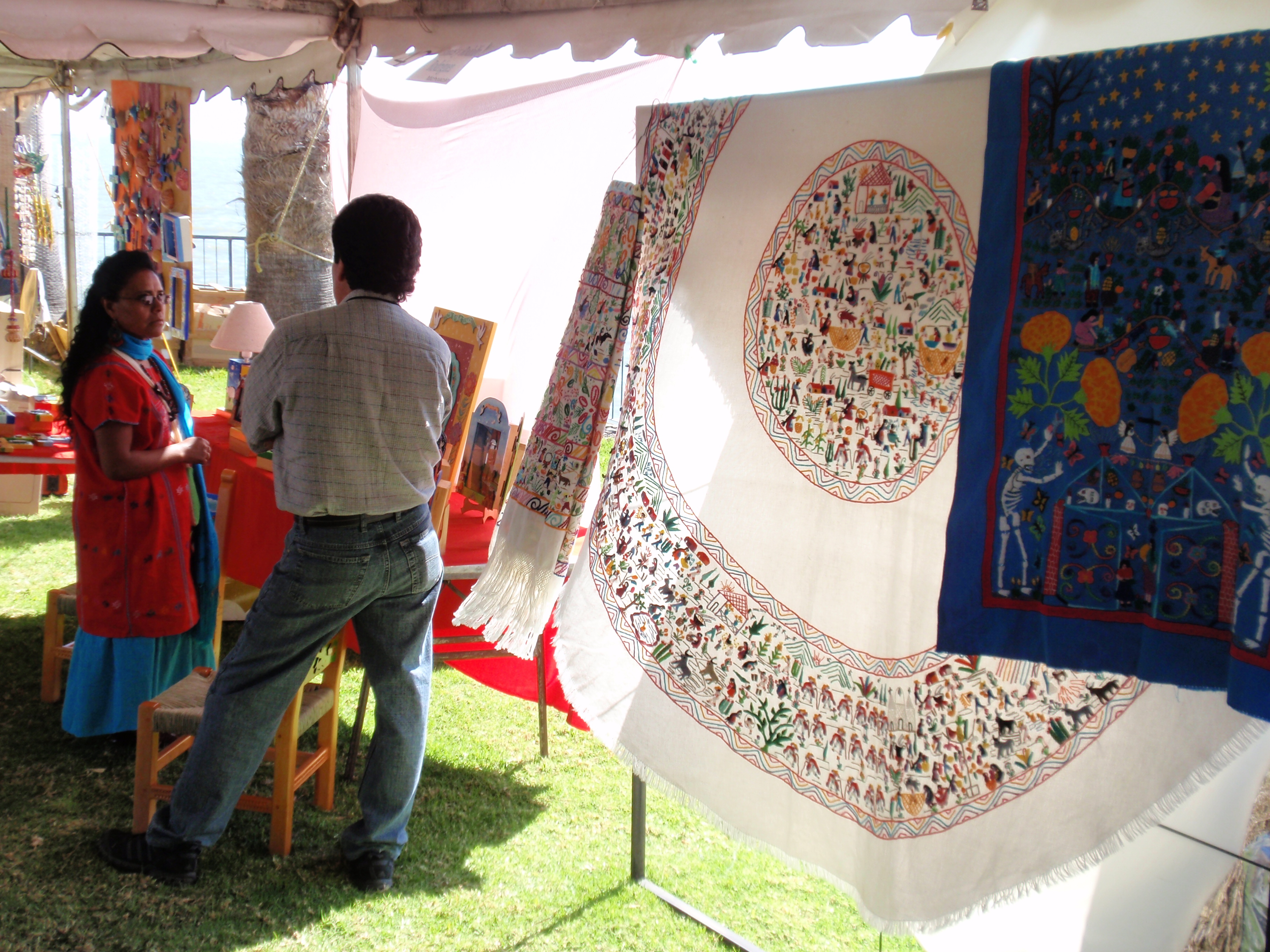
There were some amazing rebozos (shawls) on display at the show and a special presentation for women on the many ways to wear this artwork.  Don Isaac Ramos Padilla was another artisan who passed away this past year and was a true maestro of Mexican weaving, having struggled to hone his trade since the early age of 10.  This patriarch of Mexican weaving worked 12 hour days, 7 days per week to produce an average of 2 rebozos per week.  He received numerous awards for his work, the most noted being the Grand Prize at the National Arte Popular Judged Art Show in 2008.  Few weavers in Mexico have achieved this type of tribute.

His family endeavors to continue his unique form of weaving, in which he did all the processes himself:  mixing the dyes, dyeing the cotton, setting up the loom with the thousands of strands, painting on the pattern, and finally the weaving.  The level of detail and the heart and soul put into each rebozo are reflected in the price tag but well worth every peso when you watch this family at work on the loom.

So many talented artisans stood out at this festival, to include those gifted in obsidian artwork, hand-woven rugs, pottery, fused glass, hand painted gourds and huipiles (hand-woven women’s blouses), to name a few.

Pottery from Cocucho, Michoacan
$500 Pesos, not Dollars - Quite a Bargain!
Mexico's Famous Pineapple Pottery from Michoacan
Intricate Embroidery
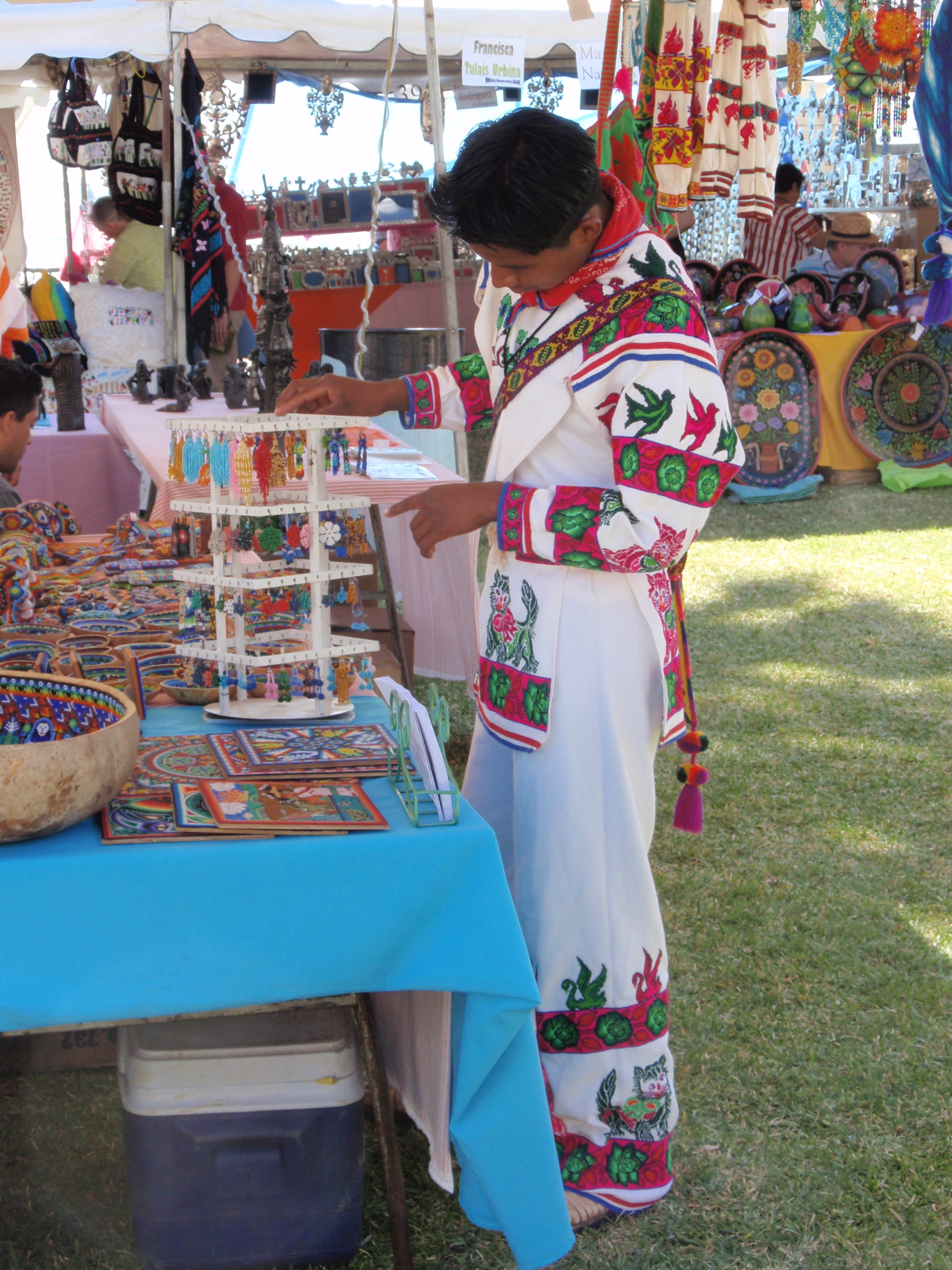
Huichol Indian Artisan in Native Costume

Isabel Mendoza of Guadalajara is carrying on the tradition of straw art begun by her grandfather.  We felt that it was some of the most magnificent artwork on display at the feria.  This is just one example of what she is able to do with dyed, very small pieces of straw collected in the mountains by the locals, attached to a beeswax background.

Mexican Straw Art

Last but not least is the infamous Mexican catrina, beautiful and intriguing.

La Catrina
Life Size Catrina Overlooking Lake Chapala

Had it not been 10:00 in the morning, we may have ventured over to the Tequila Tasting Bar but opted instead to view the Ballet de Chapala performing some regional Mexican dance steps.  The colorful costumes and enthusiastic smiles were a joy to watch!

For anyone wanting to learn more about Mexican indigenous art, there is a landmark book entitled “Great Masters of Mexican Folk Art”, published by Fomento Cultural Banamex, that you may enjoy.