Pictured Rocks National Lakeshore ~ #2

Advice from a Waterfall:  Go with the flow/Roar with excitement/Let your cares fall away/Create your own music/Immerse yourself in nature/Stay active/Make a splash!  ~(c) Ilan Shamir  http://www.yourtruenature.com

Another day of fun in the sun.  Well, not quite today, but it wasn’t raining and we did not have to don parkas so off we went to do some more exploring.  Unfortunately, overcast days don’t work so well for taking photos but I told Terry to give it his best shot.

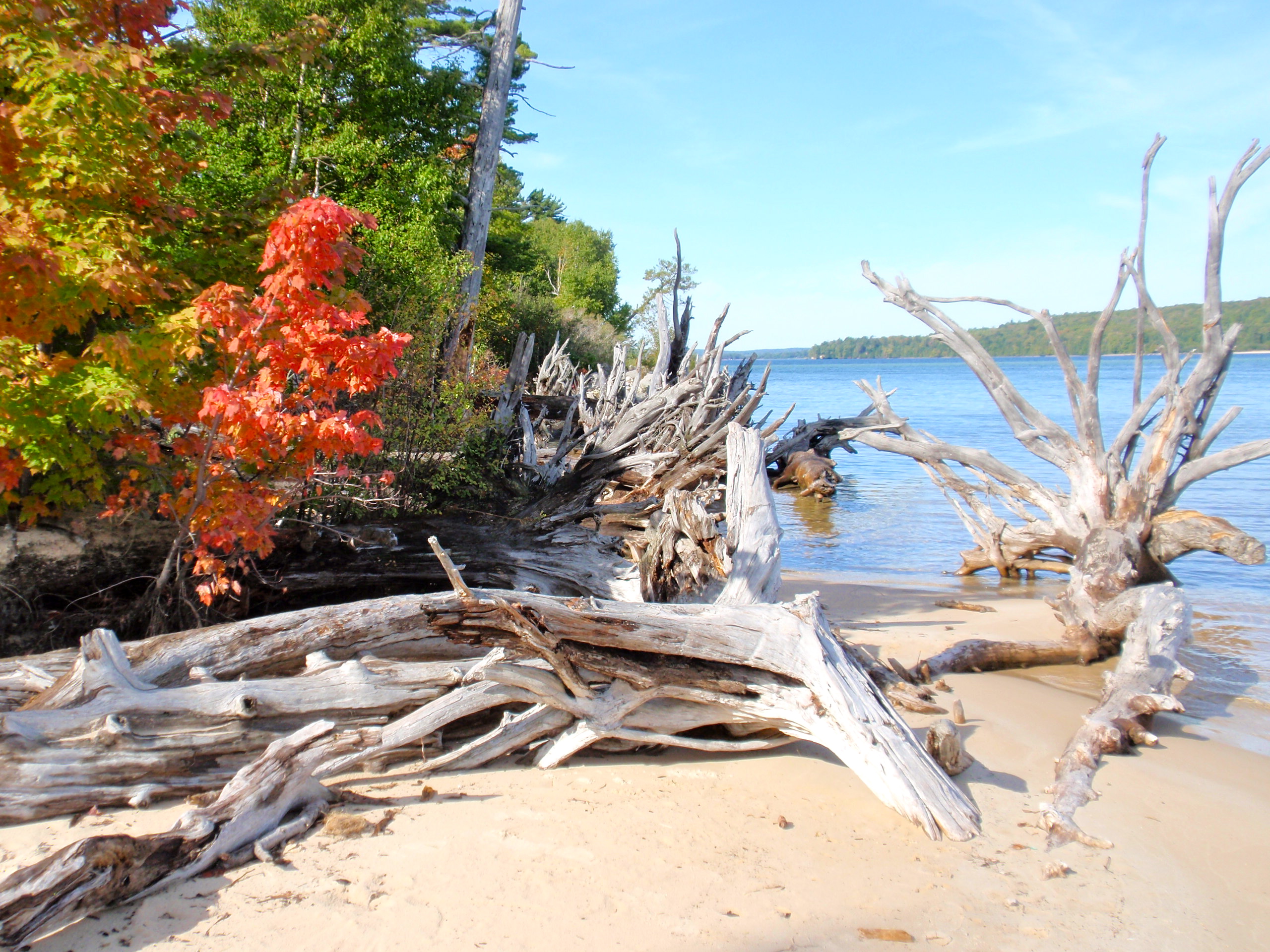
We headed off to the east part of the park today and our first stop was down the beach about 1.5 miles from Au Sable Light Station.  There was a great path that wound through the woods but we opted instead to walk along the beach, which took us all the way out to the lighthouse.  It was much more picturesque, we thought, with the lake breeze in our face and the waves lapping up on shore.
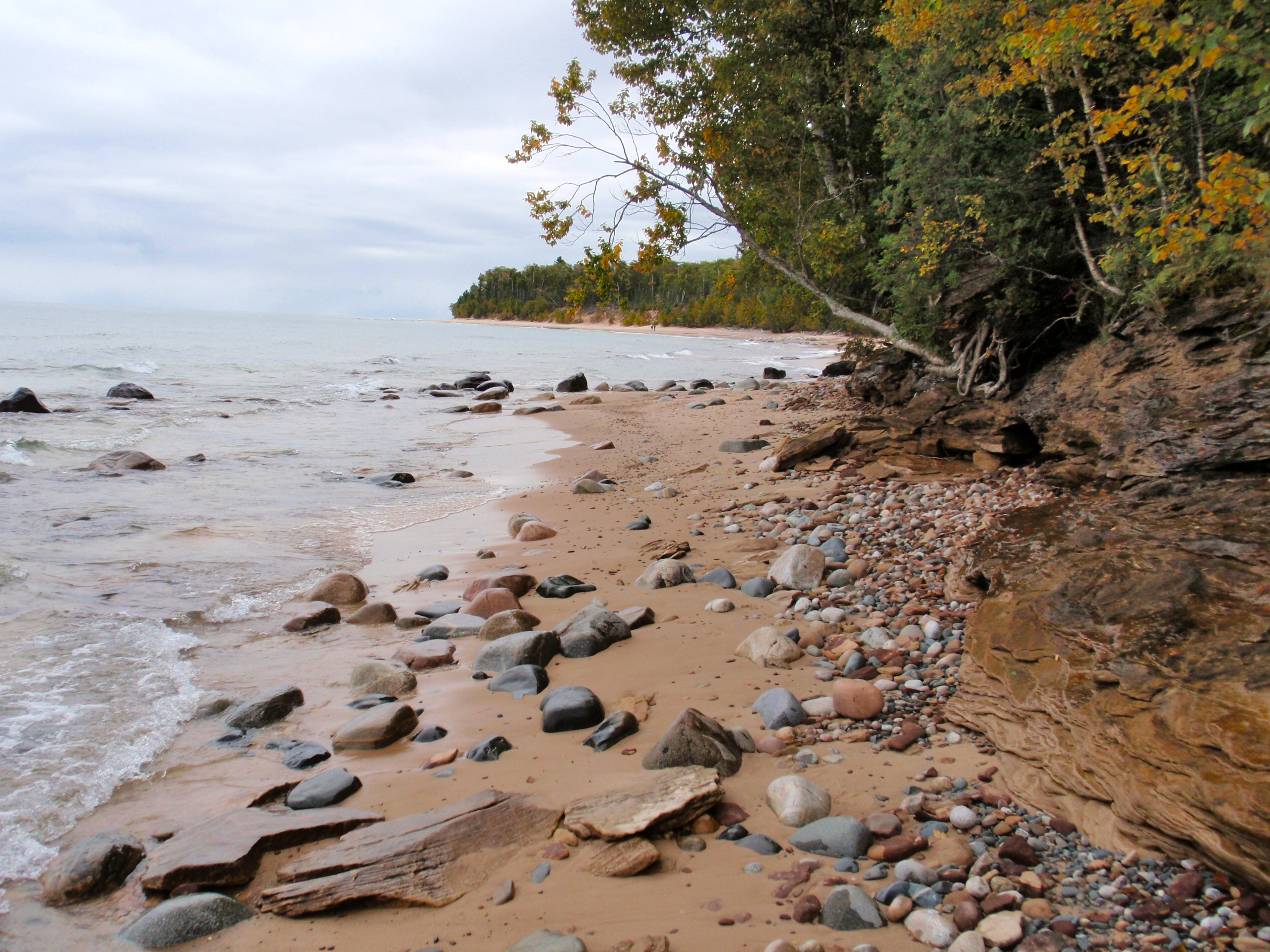
This stretch of beach lines Au Sable Point (French for “with sand”), which as early as 1622 was recognized as a hazard for mariners.  When the lake traffic began to boom in the 19th century with the opening of the Soo Canal, Au Sable Point was particularly dangerous. Many vessels would become victim to its sandstone reef, which is one-half mile wide and stretches out from the shoreline for a mile, lying no more than six feet below the surface is some spots.  Besides the offshore sandstone reef, the region was infamous for its thick fog as well.  Many a ship went aground here and with the weight of the wooden boats and the small engines used at the time, there was no way for them to recover.

We saw evidence of three shipwrecks, all built in the late 1800’s, on this short stretch of beach.  The picture above is that of the Sitka, which went down about a mile offshore in heavy fog and high winds in October, 1904.  She was 272′ feet in length and her bones now lie on the shore at Au Sable Point.

Mariners felt that “in all navigation of Lake Superior, there is none more dreaded by the mariner than that from Whitefish Point to Grand Island”.  Congress took action in 1872, building a lighthouse on Au Sable Point, which was completed in August, 1874.  It is the most remote lighthouse in the Upper Peninsula.
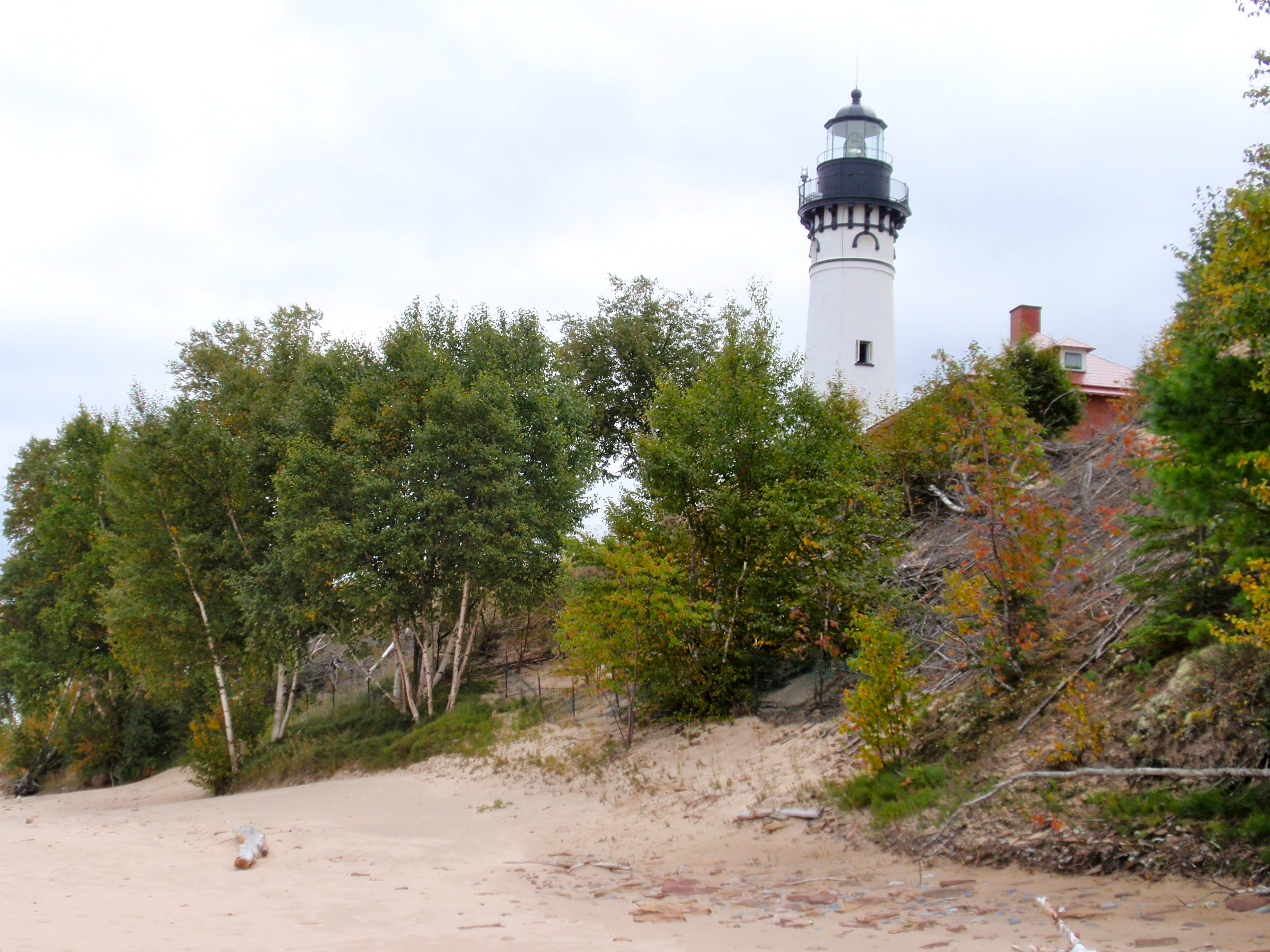
Au Sable Lighthouse from the Beach

We were fortunate to make the decision to tour the lighthouse today as we learned that tomorrow is the last day of the season for doing so and busloads of tourists are brought out for the day.  We had the place almost to ourselves and, although the park ranger was not available to give a tour, Harold was kind enough to do so.  We learned later that the park ranger is Harold’s daughter and he has been volunteering at Au Sable for the past several years.  His daughter completed her thesis on the lighthouse and has gathered extensive data for the on-site museum.

Au Sable Lighthouse from Land

The beacon for the lighthouse projects 18 miles out to sea and is now powered by a photovoltaic system instead of the original Fresnel lens, which still resides at the lighthouse.  In 1968 the Au Sable Light Station was transferred to the National Park Service, although the Coast Guard continues to maintain the beacon and solar panel that charges the storage battery.

A few miles down the road is the Log Slide, part of the Grand Sable Dunes.  These dunes are believed to have developed during the melting of glacial ice about 9500 years ago.
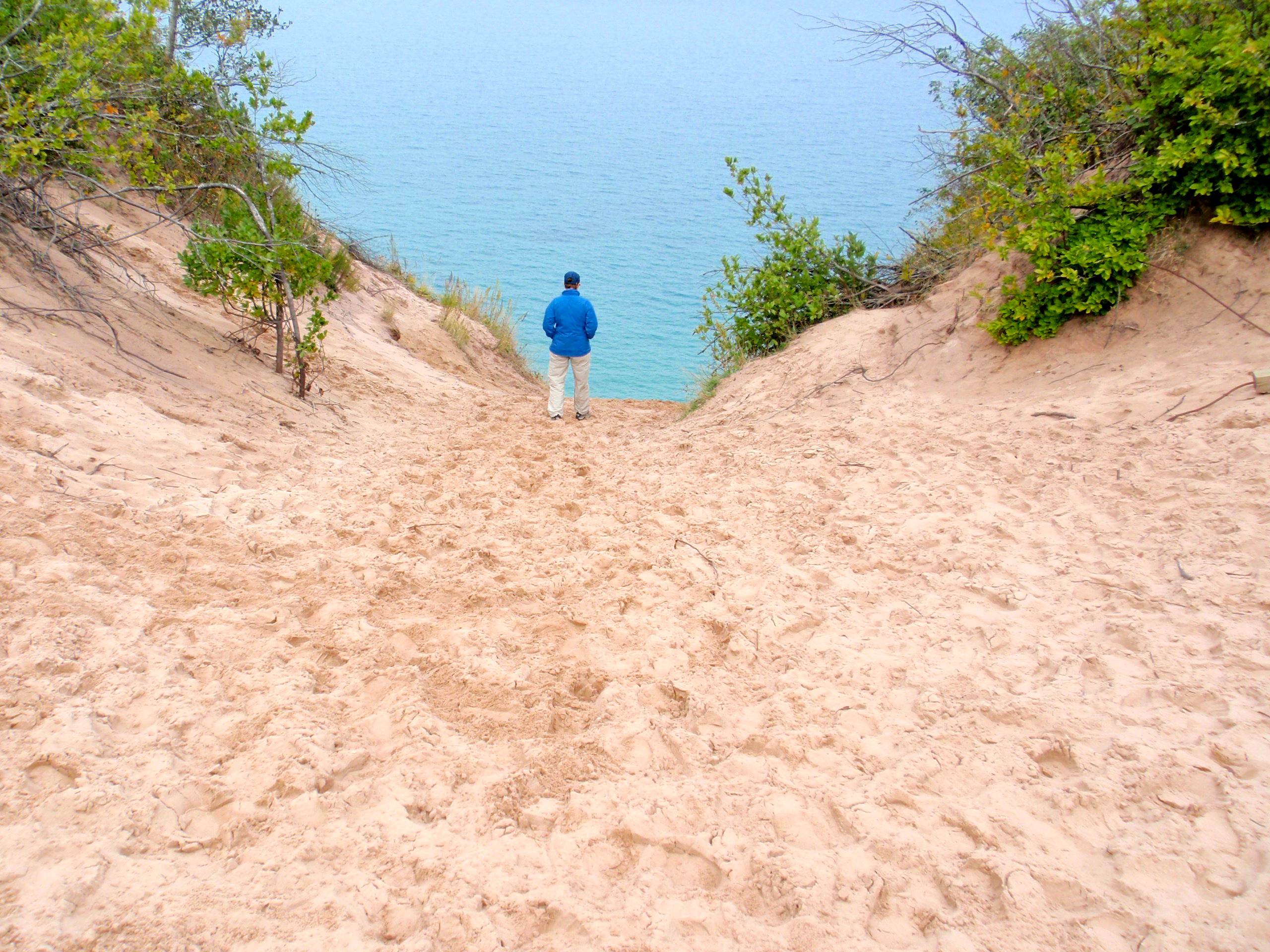
The picture above is where the Log Slide was during the days of the white pine lumber era in the 1880’s.  Logs were hauled to this point by horse teams then slid down a dry log flume to Lake Superior.  They were loaded onto boats and taken to the Grand Marais sawmills.  Although this sandy hill looks more like a gentle slope, it is a 500′ drop to the bottom, with overhangs hidden at the bottom.  We did not venture far down the slope, given the warnings posted.

From here we took a short hike down to Sable Falls, a 75′ waterfall that tumbles over several cliffs until it reaches Lake Superior.

Sable Falls

We had wanted to take some pictures of the changing colors, as it seems the trees are changing color before our very eyes.  We have been waiting for a summer day and the sun peered out when we were heading back to the campground.  This is not the peak season yet but the trees are spectacular.  Enjoy the colors!

Pictured Rocks National Lakeshore ~ #1

Advice from a Lake:  Be clear/Make positive ripples/Look beneath the surface/Stay calm/Shore up friendships/Take time to reflect/Be full of life ~ (c) Ilan Shamir  http://www.yourtruenature.com


Fall has announced her arrival to Michigan’s Upper Peninsula.  While not at their peak yet, the trees are changing color daily.

Pictured Rocks was our destination and we arrived Monday afternoon at the City of Munising Tourist Park.  There was no one at the campground office so we perused the sites, grabbed one on the lake, paid our fee and settled in.  Later that afternoon Terry walked back to the office to ensure all was well and was told by the attendant that we had chosen the best site in the park.  Maybe she says this to everyone but we certainly think we got lucky.  Stepping out our door, we are literally 20 yards from Lake Superior.  Full hook-ups and right on the water.  Life is good!

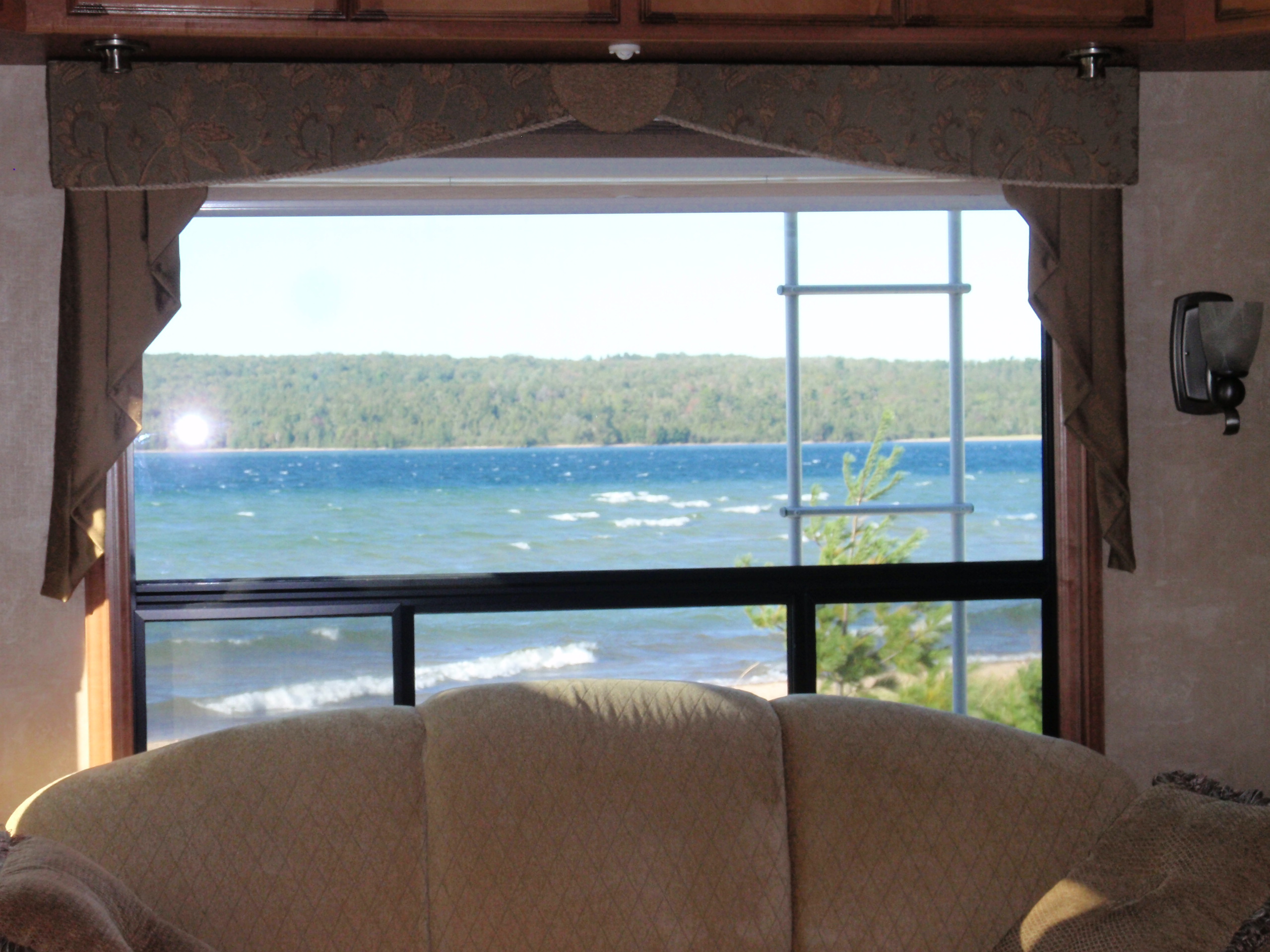
It was a little blustery when we arrived but was still warm enough to walk along the beach.  We felt like we were walking along the ocean instead of a lake, watching the waves lapping the shore.  We can walk a mile in either direction and the views from our living room windows are amazing!

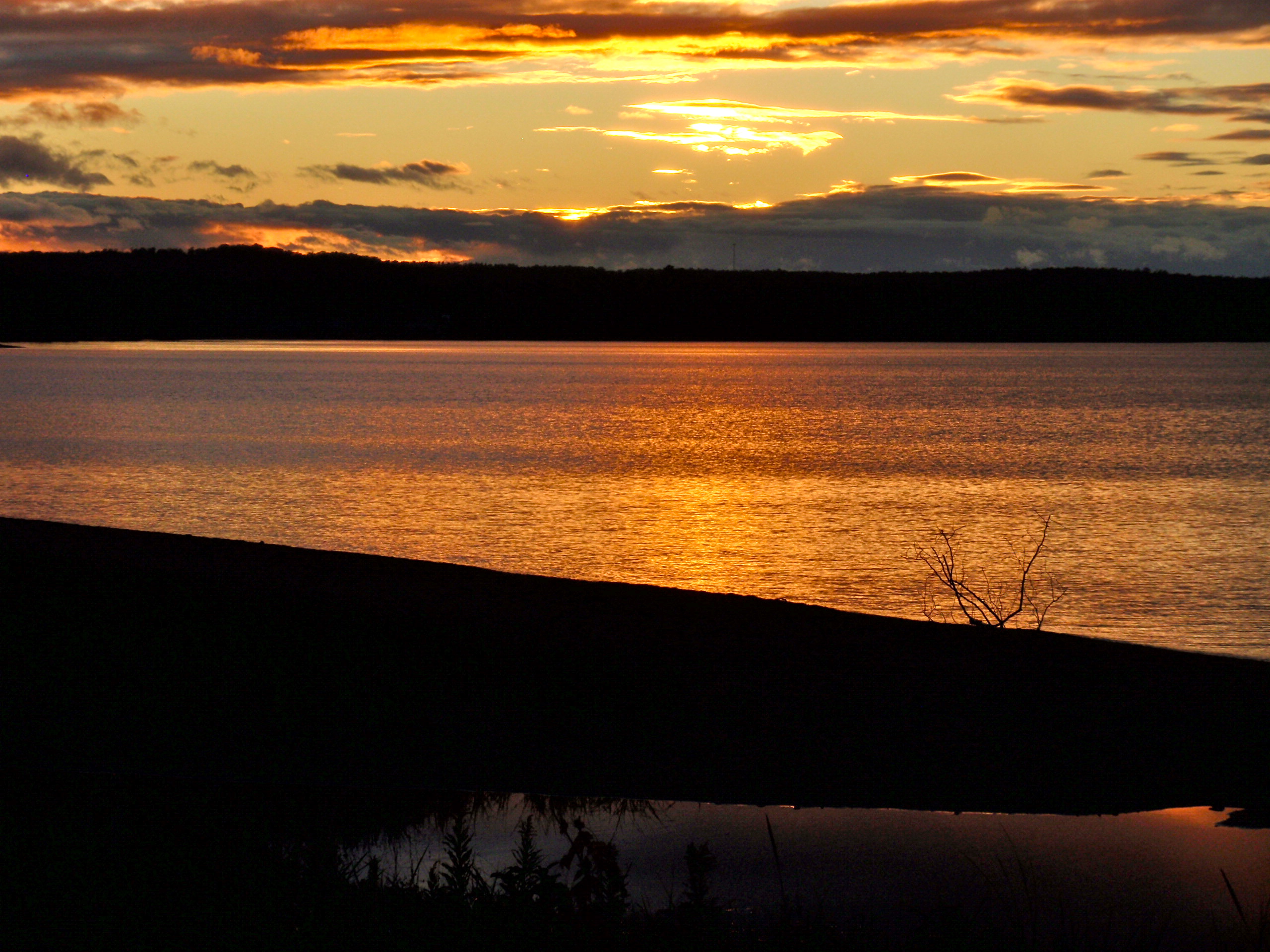
Sunset over Lake Superior

Tuesday morning we decided to get the lay of the land.  Our first stop was to the Pictured Rocks National Lakeshore Visitor Center, where we picked up literature on available activities in the area.  I learned that Michigan has more waterfalls than any other state in the U.S. and more shoreline than any state besides Alaska.

From here it was time to do some exploring.  Our first stop was to Munising Falls, a 50′ drop into a sandstone canyon.  Lovely and right within the city of Munising.

Munising Falls

Just a few miles down the road is Sand Point, a picturesque little cove just begging to be photographed.

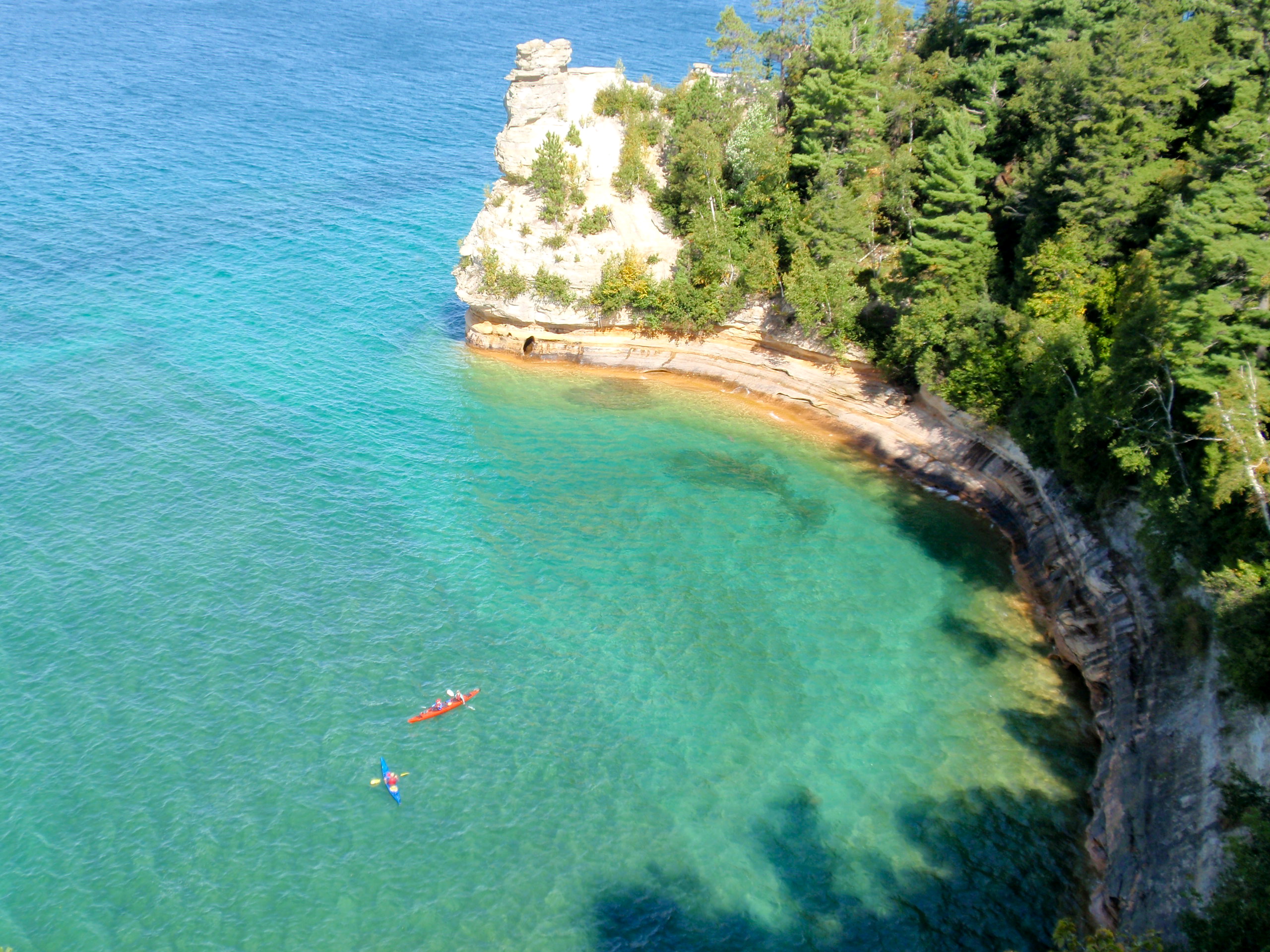
Sandstone cliffs 5 miles from Munising Falls are known as Miners Castle, for the turret-shaped rock caused by wind and water erosion.  This 9-story rock formation is one of Pictured Rocks most popular attractions.

Kayakers Enjoying the Views of Miners Castle
View from the top of Miners Castle

A one-mile hike through a beech and maple forest and we were rewarded with a view of one of the lakeshore’s most spectacular sights – Miners Falls.  The falls of the Miners River cascade over a 60-foot precipice of sandstone and they were stunning.

Miners Falls

The weather predictions have been for clouds and the possibility of rain over the next couple of days but we refused to let that deter us.  Today we ventured out to get a good day hike in.  It proved to be a sunny day instead and we settled on the Chapel Basin hike.

This is a 10 mile hike weaving through dense beech and maple forests, opening up onto sandy beaches, with Pictured Rock views from almost every turn, and the “cherry on top” was a great waterfall.  Normally a hike of this length would not keep us out 6 hours but today that is just what we did.  There was just too much to see and we wanted to take advantage of the great weather as we know our days of sunshine may be numbered.

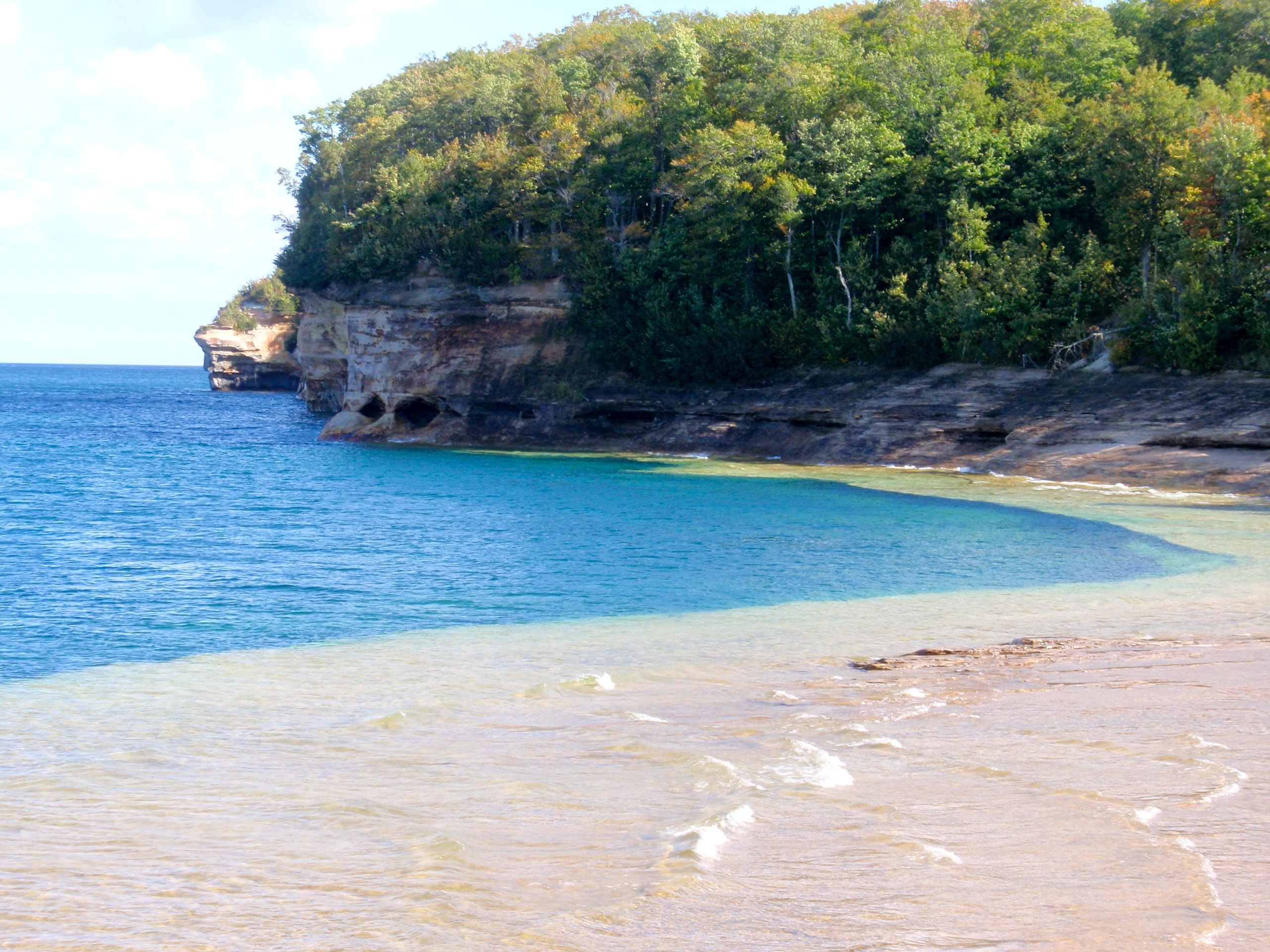
The first leg of our journey took us through forest to Mosquito Beach, with gorgeous views of Lake Superior.  The photo below is looking east across the beach.  Notice what the wave action has done to the sandstone formation.

Mosquito Beach

Looking to the west on Mosquito Beach are caves known as the Caves of the Bloody Chiefs, which legend says were used by ancient chiefs to tie captives and let Lake Superior batter them to death.  A rather gruesome story but a lovely sight nonetheless.

View of Caves of the Bloody Chiefs on Mosquito Beach

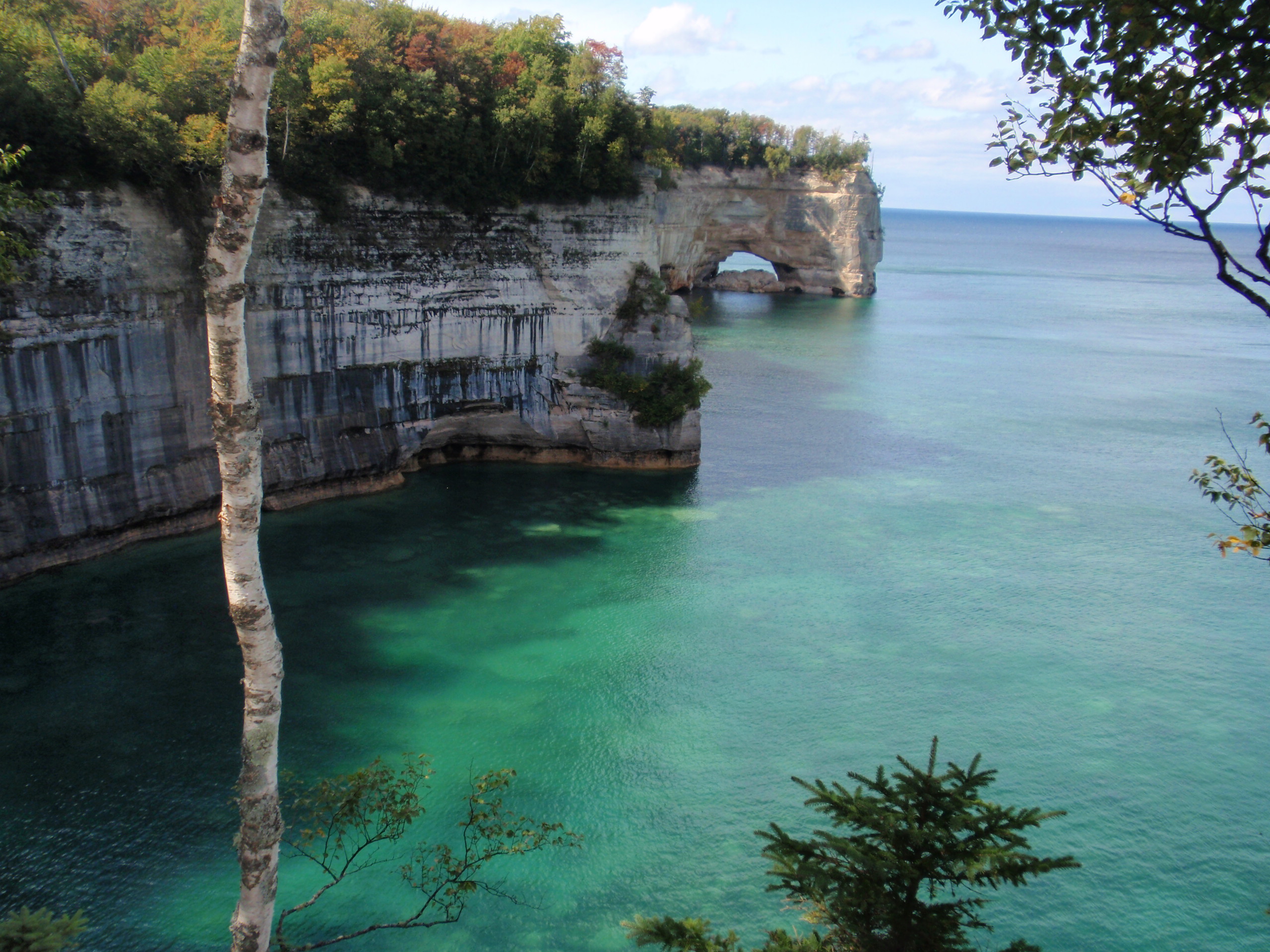
Three miles further down the trail we saw a breathtaking sight I am sure has captured many a photographer’s eye, Grand Portal Point.  Until September 16, 1900, it contained a massive arch through which a small ship could sail.  Kayakers could still paddle through a small archway until Grand Portal suffered a second collapse in late 1999, inhibiting all boat activity.

The colors and textures that presented themselves along this trail were too numerous to count.

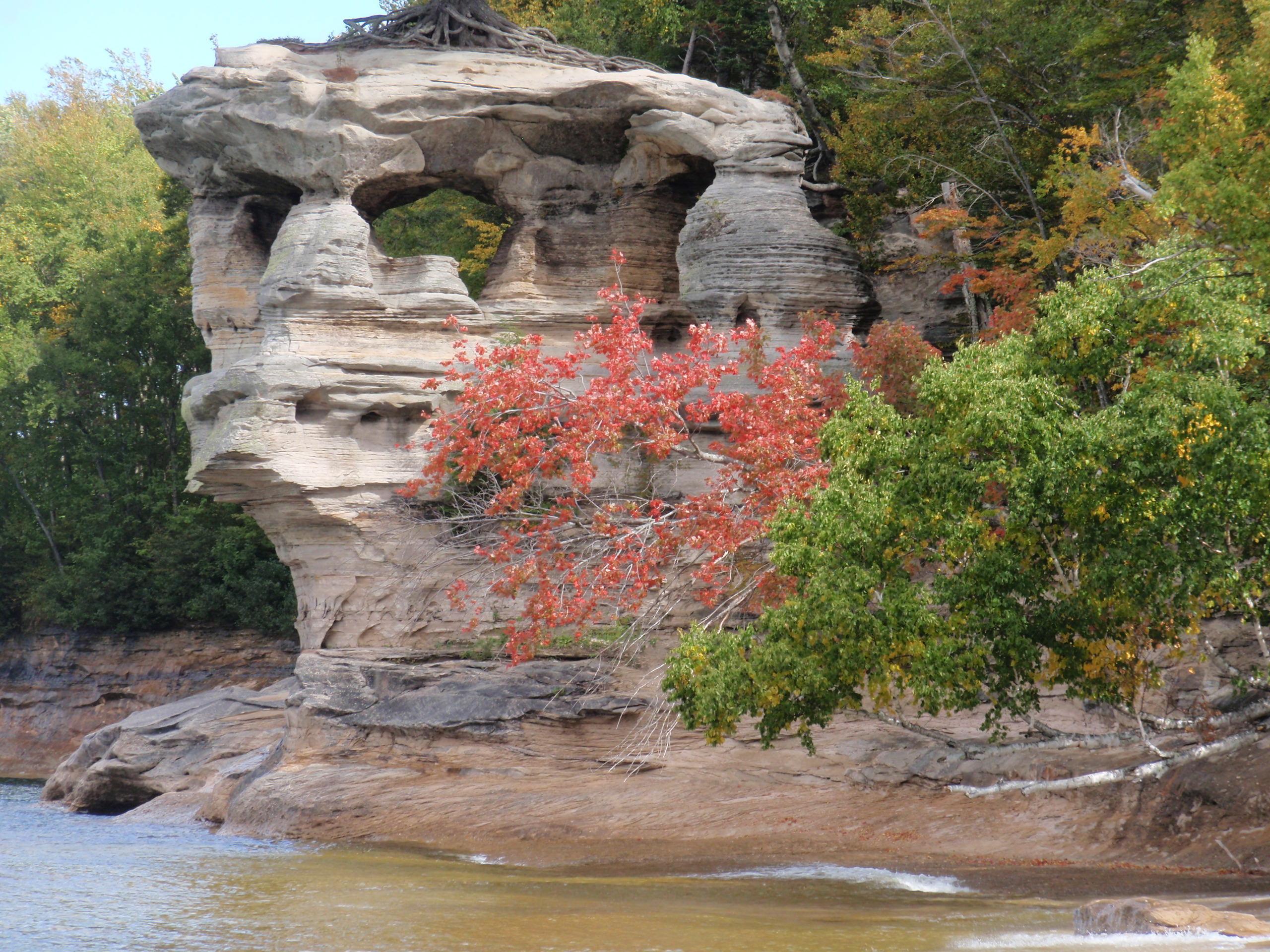
Another 1.5 miles down the trail and we arrived at Chapel Beach and the beautiful Chapel Rock formation.

First View of Chapel Rock
Stunning Up-Close View of Chapel Rock

Back on the trail and we were shocked to see that the tree sitting atop Chapel Rock still has its lifeline on the mainland.  Notice how the root system is suspended over the chasm.

 Although dense, we were surprised at how far into the forest we could see from the trail.  The canopy was high above us and the forest floor was covered mainly with ferns.

Last but not least was a stop at Chapel Falls, the final stunner for this hike.  It has a 60′ cascade and flows down to the base of Chapel Rock.

Terry and I have done our fair share of hiking and feel that today’s hike is at the top of our list of favorite forays into the wilderness.  We can’t wait to continue our UP exploration.

Our Rig at Dusk

Houghton, MI ~ #2

The day was sunny and cool so we headed north with John and Janie to explore Eagle Harbor, Copper Harbor and Ft. Wilkins State Park.  Our first stop was Ft. Wilkins Historic State Park in Copper Harbor, formerly a U.S. Army post built to keep the peace in Michigan’s Copper Country.  Located at the northern tip of Keweenaw Peninsula, it was established in 1844 and was abandoned just two years later.  The story told is that the miners were law-abiding and the Natives were well-behaved also, so when war was declared with Mexico, the soldiers shipped out.  I am inclined to agree with Janie that given the brutal winter temperatures, leaving for warmer climes was too inviting.  The fort was manned again for a short time in the late 1860’s and became a state park in 1923. It is presently being painstakingly restored to what army life was like in the mid-19th century.

Recreated General Store at the Fort

A restored lighthouse that was originally built in 1848 is reached by boat.  Since we were planning to explore the lighthouse at Eagle Harbor, we decided to pass on this one.

There is a wonderful campground in the park, which is big-rig friendly.  Had we not already had such an appealing site back in Houghton, this would have been a good alternative.

We continued our journey to Eagle Harbor, stopping at a little gift shop along the way. The homemade fudge was delightful and we were given some tips on places to go by one of the gift shop employees.  Heading up Brockway Mountain Drive proved to be a good tip, affording us a view of the bay below.  The leaves were beginning to change as well, which was an added bonus.

View of Copper Harbor and the Bay
Janie & John on Top of Mt. Brockway

Next it was on to Eagle Harbor.  The lighthouse here was originally built in 1851 and replaced in 1871.  It currently houses a museum but continues to be a working lighthouse. The Coast Guard operates the light at the top of the tower, guiding sailors across the northern tip of Keweenaw Peninsula.

Eagle Harbor Lighthouse
Shoreline Below the Lighthouse

A volunteer greeted us as we entered the lighthouse.  Being the polite person that I consider myself to be, I continued to acknowledge his musings even though I was attempting to read some of the history of the building.  The rest of my party made the wiser choice to abandon me and him when his stories began to put them to sleep.  After listening to a story that went absolutely nowhere, I said “I’m done” (to myself of course) and backed away as well.

Me Watching Terry as Janie Snaps a Photo of Him

From here we head back, with a planned stop in Calumet.  We stopped for a quick photo of the landscape.  Can you see the huge freighter in the background?

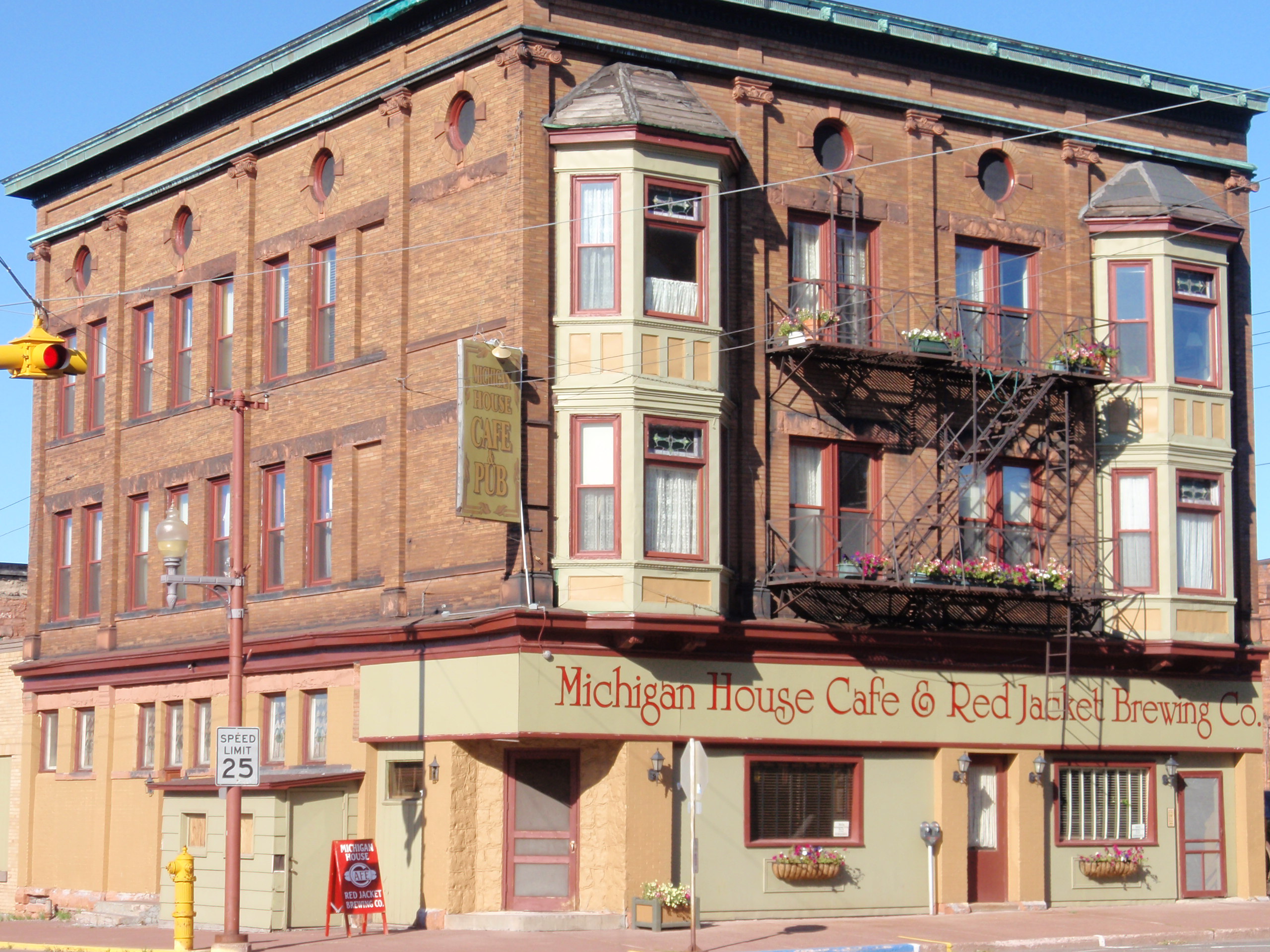
The town of Calumet had some great old buildings and a great looking brew pub so we decided to stop and taste the local fare.  We had read about the Red Jacket Brewing Company but were sadly disappointed in both the food and the microbrews.  Only one of their own was on tap and they were out of several others.  Thankfully the company was good and the building itself had a great back bar and ceiling mural.

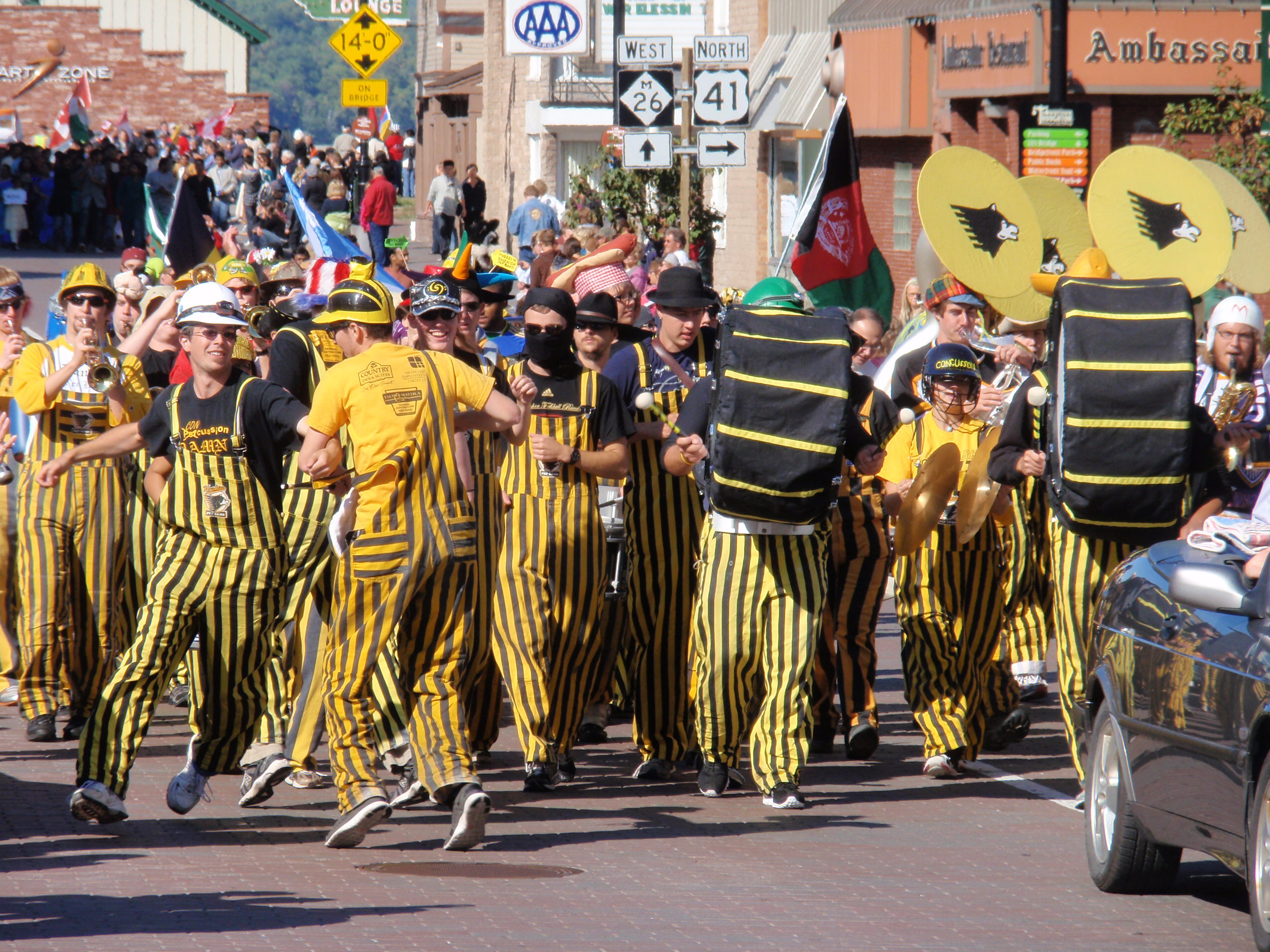
It was a great day and we still had the Parade of Nations to look forward to. Advertisements for this festival were posted around Houghton and Hancock.  This is a multicultural festival honoring the multitude of countries that have come together in this melting pot.  The parade was great fun, with participants in their native dress, but the food festival afterwards was most memorable.  All countries represented had a food booth so there were foods to sample from around the globe.  This was the 22nd year for this festival and it certainly was well attended.  The main entertainment was a group from Madison, WI, named Limanya, a West African drum and dance ensemble.  They were high energy and very impressive!

Michigan Tech band, not very organized, but having a great time.

Limanya

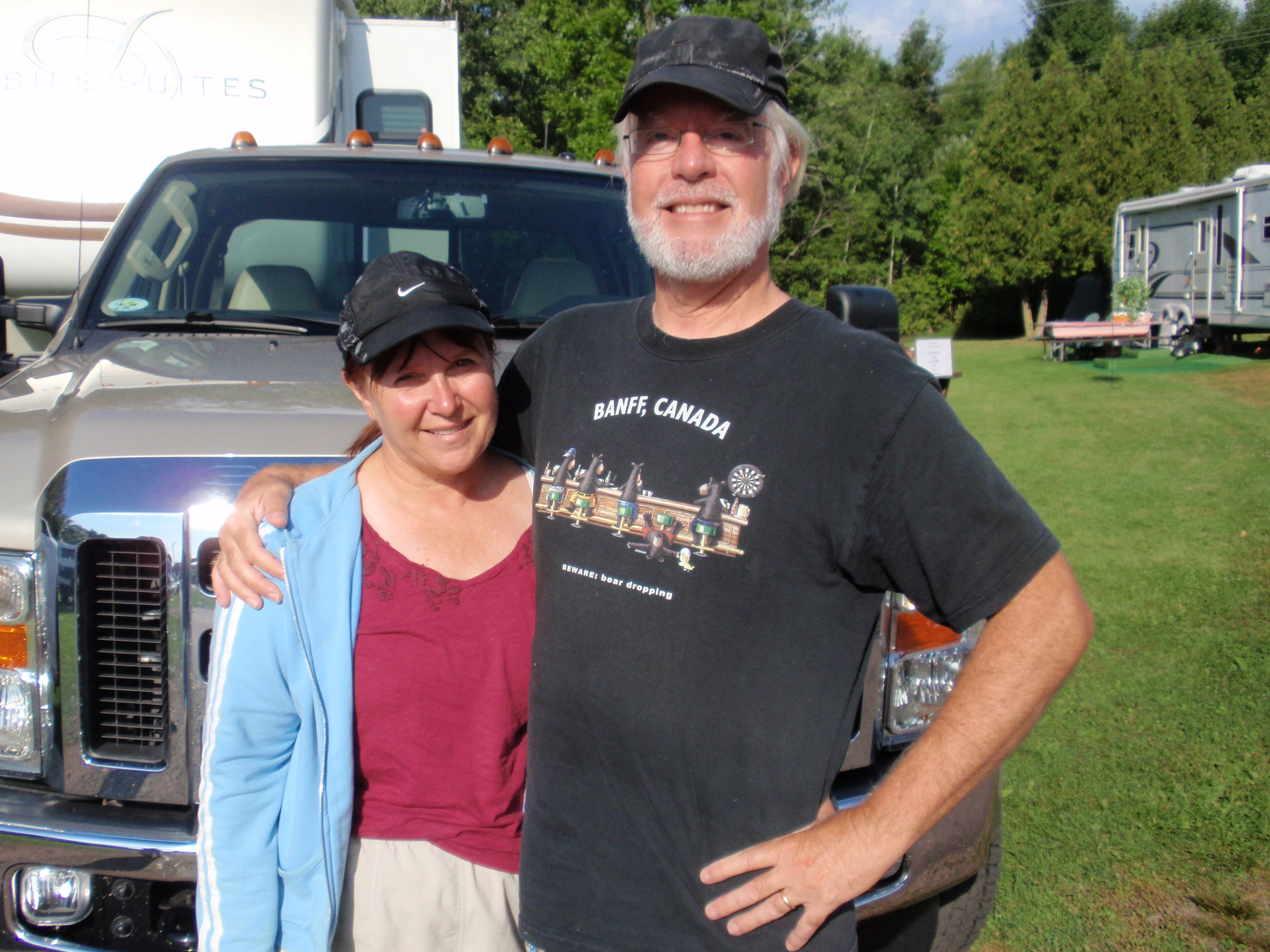
Our week in Houghton has drawn to an end and sadly we must say goodbye to John and Janie.  We are planning to stay in touch and hope to see them down the road in the future.  Janie has an amusing blog entitled  flamingoonastick.blogspot.com, which I encourage all to check on.  Terry and I are heading on to Munising and Pictured Rocks.

Houghton, MI ~ #1

We are spending a week at the City of Houghton RV Park.  I have to admit that my first reaction when driving into the park was not as positive as that of Bayfield, WI, our last stay.  The sites were closer together and were paved, not grassy.  However, when we got settled and I looked out our back window I quickly changed by mind.  We sit on the banks of the Portage Waterway and can watch the sunset from our window or while sitting around the fire.  Many boats, large and small, travel the waterway, so it has been great fun watching these boats glide by while sitting on our sofa.   An added bonus was to have our newfound friends John and Janie as next-door neighbors for the week!

Houghton, an old copper mining town, sits on the hills bordering the Portage Canal in Keweenaw Peninsula and has been tagged as one of The 100 Best Small Towns in America.  With a population of 7700, it is the largest city on the Keweenaw Peninsula. Many Cornish and Finnish immigrants came to this area to work in the copper mines and their influence is still apparent in the culture and cuisine in the area.

This historic, photographic town is the birthplace of professional hockey in the US, hosting the Portage Lakers back in 1903.  Dee Stadium currently houses a museum as tribute to professional hockey and is home to the Portage Lake Pioneers Senior Hockey Team.

There are some wonderful hiking and biking trails running along the Portage Canal that we were able to take advantage of.  We have had a couple of fairly cool days and the leaves on the trees are beginning to change color.  We are hoping to see a spectacular color show as we continue to venture further into the UP.

Houghton is also home to Michigan Tech University, best known for its engineering school.  We spent some time walking the grounds of the university and could see the international influence here.

Given that Houghton has an average snowfall of 208″ annually, it is sometimes said to have two seasons, “winter’s here and winter’s coming”.  This town is host to a number of winter sports:  cross-country skiing, Nordic skiing, snowshoeing, ice fishing, snowmobiling, ice hockey, and ice skating.  Personally, as we have aged, we have become more warm weather fans but you can see the enthusiasm for all things winter here.

Something we really wanted to do was to visit Isle Royale National Park but realized early on that the season for this trip ended after Labor Day.  We were a little bummed but will just have to come back for a visit at another time.  We did the next best thing instead, toured the visitor center and watched a video relating to Isle Royale.  The 5-hour ferry trip to the island originates in Houghton at the docks outside the visitor center.

After spending some time separately doing some exploring, John, Janie, Terry, and I decided to meet at the town library.  John can be a little on the quiet side at times but we knew that he was enjoying himself when we walked in and he was grinning from ear to ear.  We didn’t know how long they had been there but Janie mentioned that he loved to read so maybe the library was just what the doctor ordered for him.  Oh, did I forget to mention, The Library is a restaurant and brew pub.  I’m thinking something else put a smile on John’s face that day.  We enjoyed several brews and the best artichoke dip any of us had tasted.  We liked both so well that we visited again later in the week.

Connecting Houghton to Hancock is the world’s heaviest and widest double-deck vertical draw bridge, Portage Lift Bridge.  Its center lifts to provide 100′ of clearance for ships.  The lowest deck is used to accommodate snowmobile traffic in the winter.  It is the only land-based link between the north and south section of the Keweenaw Peninsula.

Historic Hancock, founded in 1859 by the Quincy Copper Mining Company, is home to 4600 residents and is the northernmost city in Michigan.  Hancock has a strong Finnish heritage and has been called “the focal point of Finns in the US”.  This quaint town was named after John Hancock, one of the signers of the Declaration of Independence.  I don’t think you could call this downtown thriving but it had some interesting little shops that have seemed to stand the test of time.

Finlandia University, the only private university in the UP, was founded in 1896 under the name of Suomi College, affiliated with the Evangelical Lutheran Church.  Finnish pastor J. K. Nikander founded this school to ensure the advance of seminary training in America.  Its role at the time was to preserve Finnish culture, train new ministers, and teach English.  In 2000, Suomi changed its name to Finlandia University, with a liberal arts focus.

The first building erected at Suomi College was Old Main, constructed in 1898 from local sandstone.   The university has since outgrown this building but it still stands as a tribute to Mr. Nikander.

Later in the week we ventured out with John and Janie to explore Eagle Harbor, Copper Harbor, and Ft. Wilkins Historic State Park.  We were also fortunate enough to be here for the 22nd Annual Parade of Nations and International Ethnic Food Festival.  I will blog about these in my next post.

Apostle Islands National Lakeshore ~ #3

There are a total of six lighthouses placed in strategic points among the Apostle Islands. While here we were able to take a ferry to Raspberry Island and tour their newly renovated lighthouse.

Raspberry Island sits 1.5 miles from the mainland and is 1/2 mile in width at its widest, making it one of the smallest of the Apostle Islands.  It was judged to be the perfect location for the second lighthouse.  Sitting on a bluff at the southwest point of the island, this lighthouse served double duty by showing the way to westbound ships passing Bayfield and directing eastbound ships between Bear and York Islands and into the channel around the mainland to Bayfield.

Raspberry Island Lighthouse cost $6,000 to build and its lantern was first lit in 1863. The current standing lighthouse was completed in 1906.  The light of its lantern (5th order fresnel) can be seen for 10 miles and it flashes once every 60 seconds.  W learned that each lighthouse lantern flashes at a different interval so sailors know which lighthouse they are looking at.

A 3/4 mile trek takes you down to the beach.  Looking from any direction you can see islands dotting the channel.   We are still astounded at just how clear the water is, unlike many other lakes we have encountered.

What Terry and I most wanted to see were the sea caves.  Water is such a powerful force and what the waves have done to the sandstone shoreline, both the thawing and freezing action over centuries, is amazing!  Probably the best way to see these is to go with an outfitter or use your own sea kayak and get up close and personal.  This can be dangerous if you don’t know what you are doing, particularly during specific times of the year.  We were approaching the end of the season for sea kayaking so we decided to take a trail off of the mainland to get a bird’s-eye view instead.  We have been told that some of the best sea caves of the Great Lakes are located on the shorelines of the Apostle Islands.

We were pleased to have another couple join us for our hike, a couple we met while Terry was attempting to maneuver the rig into our site.  They are from Iowa and have been full-timing for the 1.5 years.  We were able to glean a great deal of information from them that will be helpful to us and all had a chance to laugh at some of the goofy things we have both done while on this journey.  We are thoroughly enjoying their company and feel we have developed a new friendship.

Janie & John

Probably the most photographed and the most impressive sea caves are those on Devil’s Island and Sand Island, but those we were able to see from the mainland were dramatic as well.

Kayakers Investigating Sea Caves
The Power of Water
Sandstone and Verdant Forest
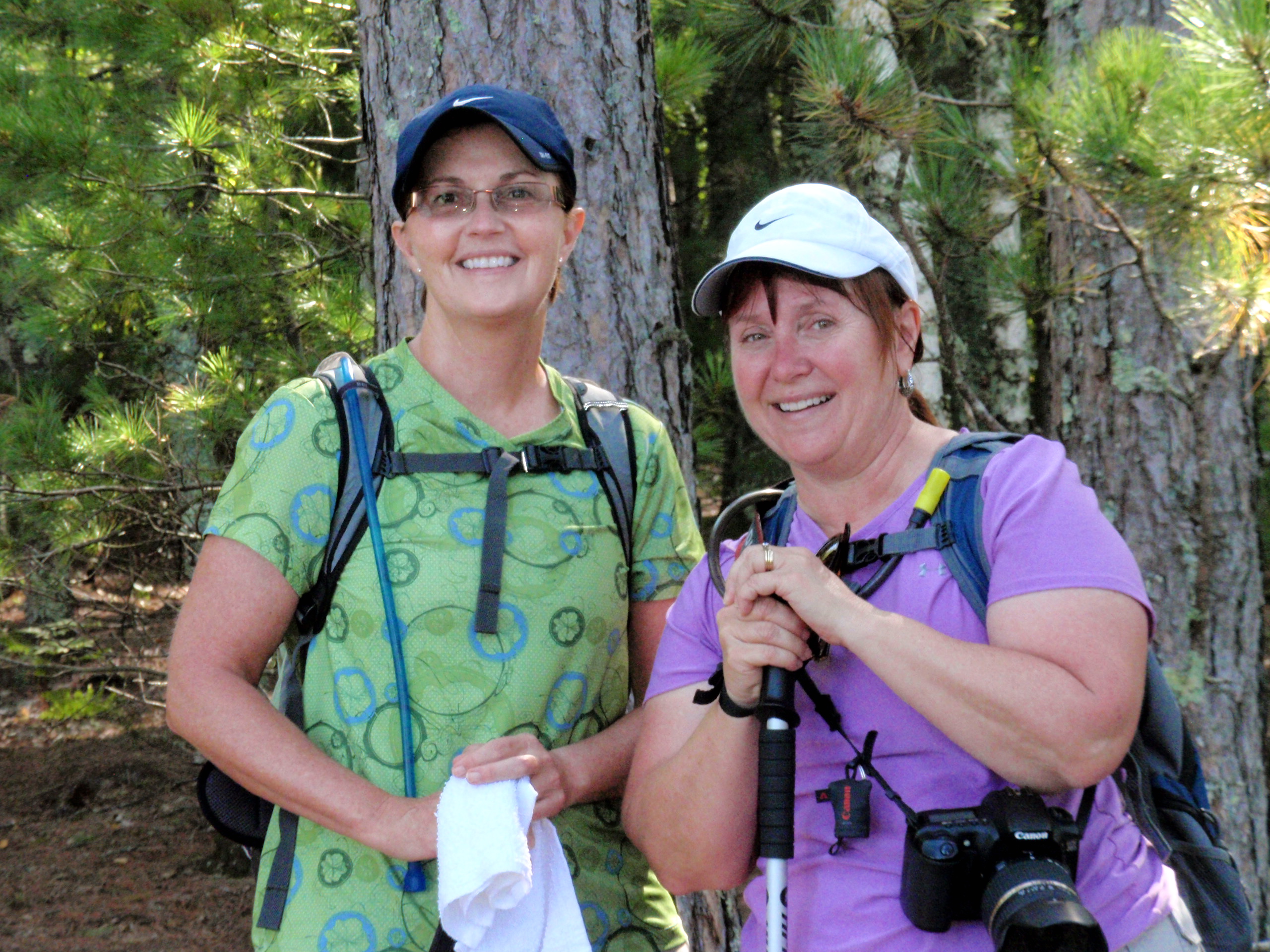
Me & Janie Enjoying our Hike

From here we are headed to Houghton, Michigan and are pleased that John and Janie were planning a trip there as well.  We are looking forward to creating a few more memories together.