Our mother is a woman of many interests and talents. The one talent I will focus on for purposes of this blog is that of her remarkable “green thumb” and her love for turning the earth, planting, and marveling at the beauty that arises from a small seed or seedling.
Mom is not unlike many women who do not like to divulge their age, so I will honor her by not sharing this information, but suffice to say that she became a Master Gardener at a somewhat advanced age, an accomplishment worthy of celebration! In the past, her gardens (Rabbit Tracks) have been featured in several local tours, as she has the innate ability to create just the right balance of color and texture in her plantings.
Mom, given your passion for gardening, I have put together a small vignette of the flora that grows within the walls of the small community where we live, excluding the poinsettia tree, which is blooming in great abundance in Lakeside as of this writing and is a less than subtle reminder that the Christmas holidays are right around the corner. Although we cannot take responsibility for growing these beauties, our neighbors were very gracious in allowing us to give you a peek into the gardens they enjoy tending.
I have blogged about some interesting colonial cities we have visited but decided that it is probably just as important to focus on some of the colorful villages just outside our back door, Chapala being one of them.
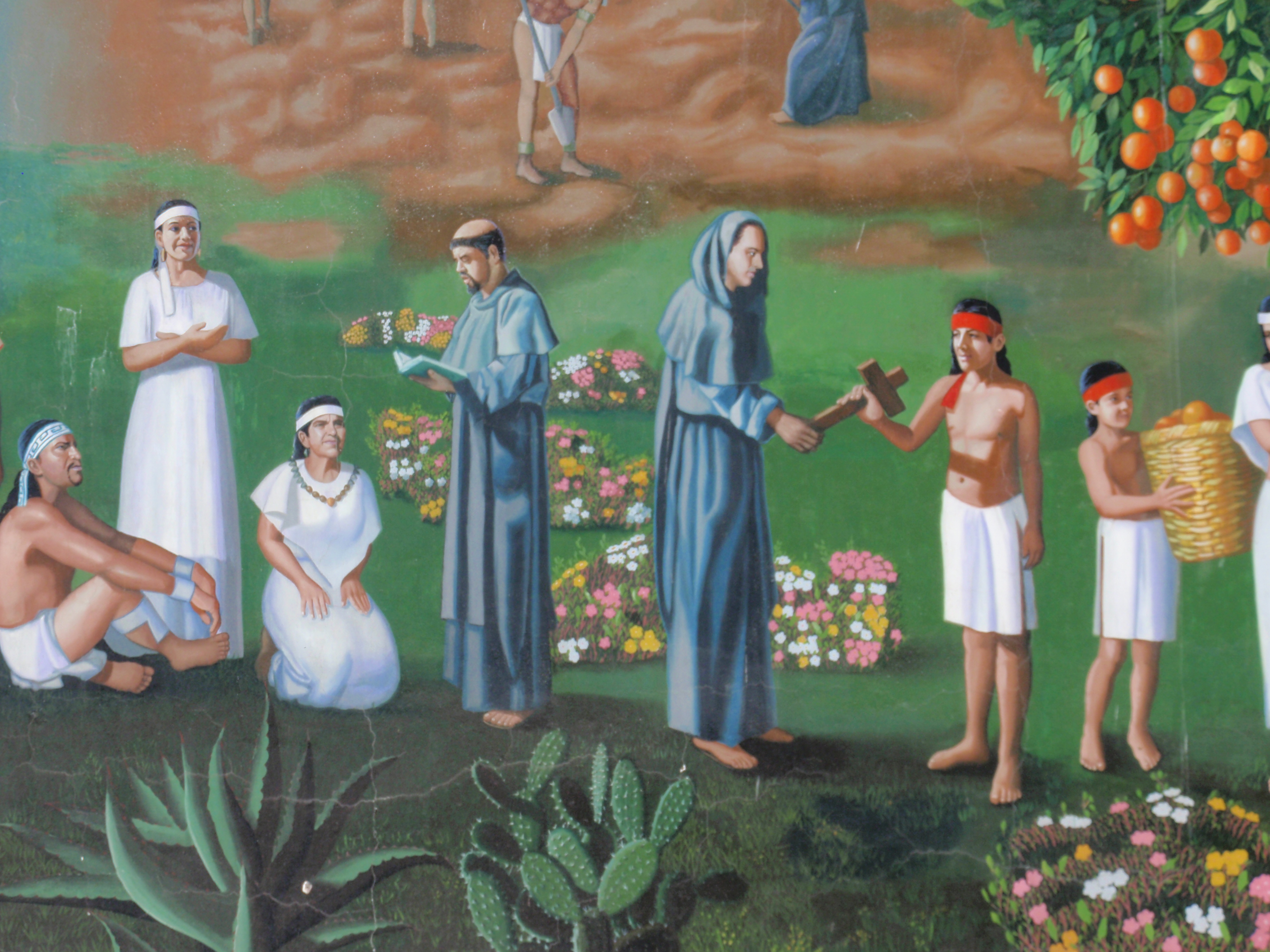
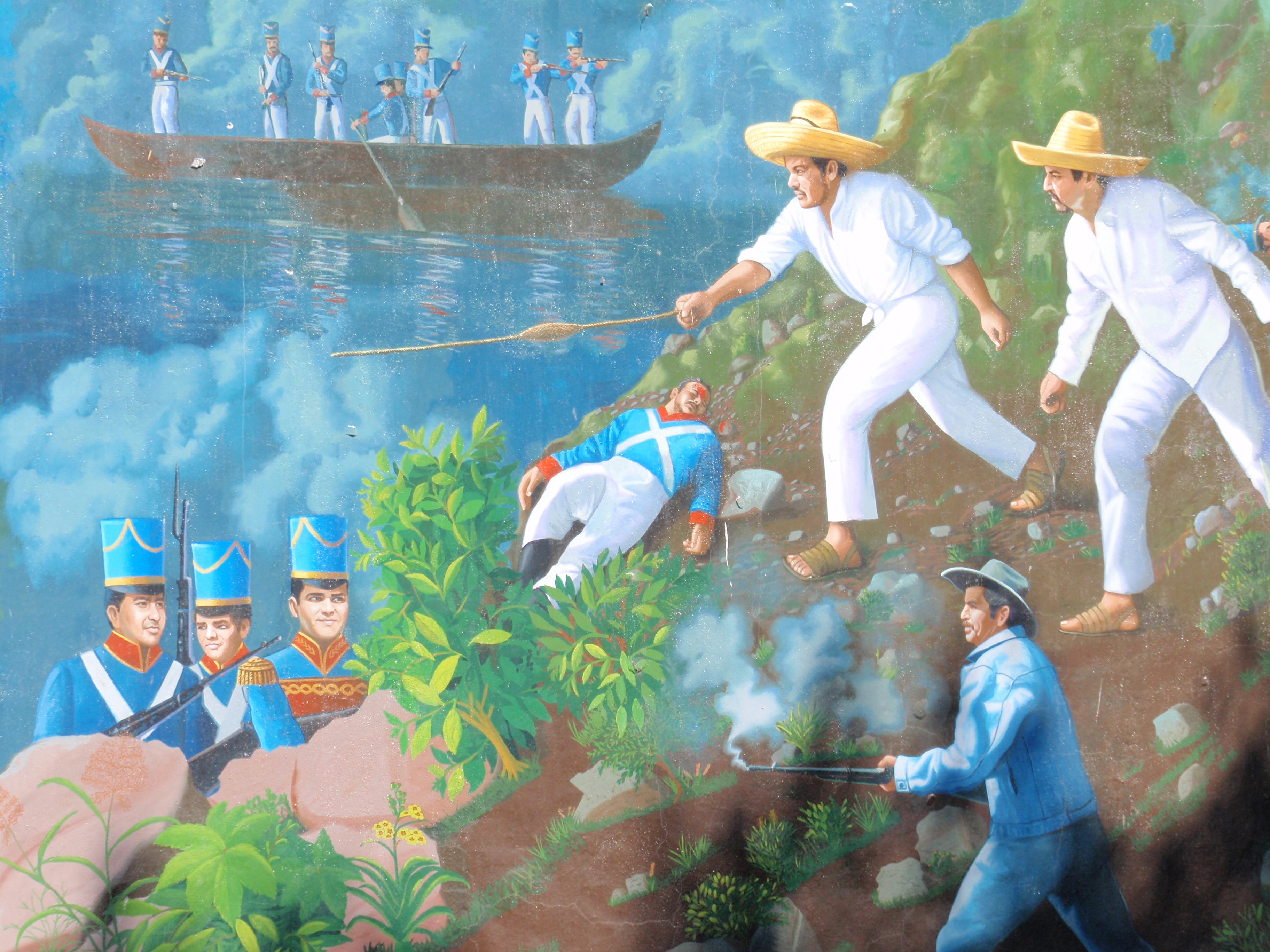
Chapala is the village just east of us, being the municipal seat of the Lake Chapala region and the largest village, I believe, around the lake. Chapala is more than 500 years old and was probably named for the last chief of the Nahuati-speaking indigenous people of the region – Chapalac. Murals leading into the village provide a visual depiction of various events that defined its colorful history.
Like many villages and cities in Mexico, a main plaza with gazebo, church and marketplace are the focal points, and Chapala is no exception.
Gazebo in the Chapala Plaza
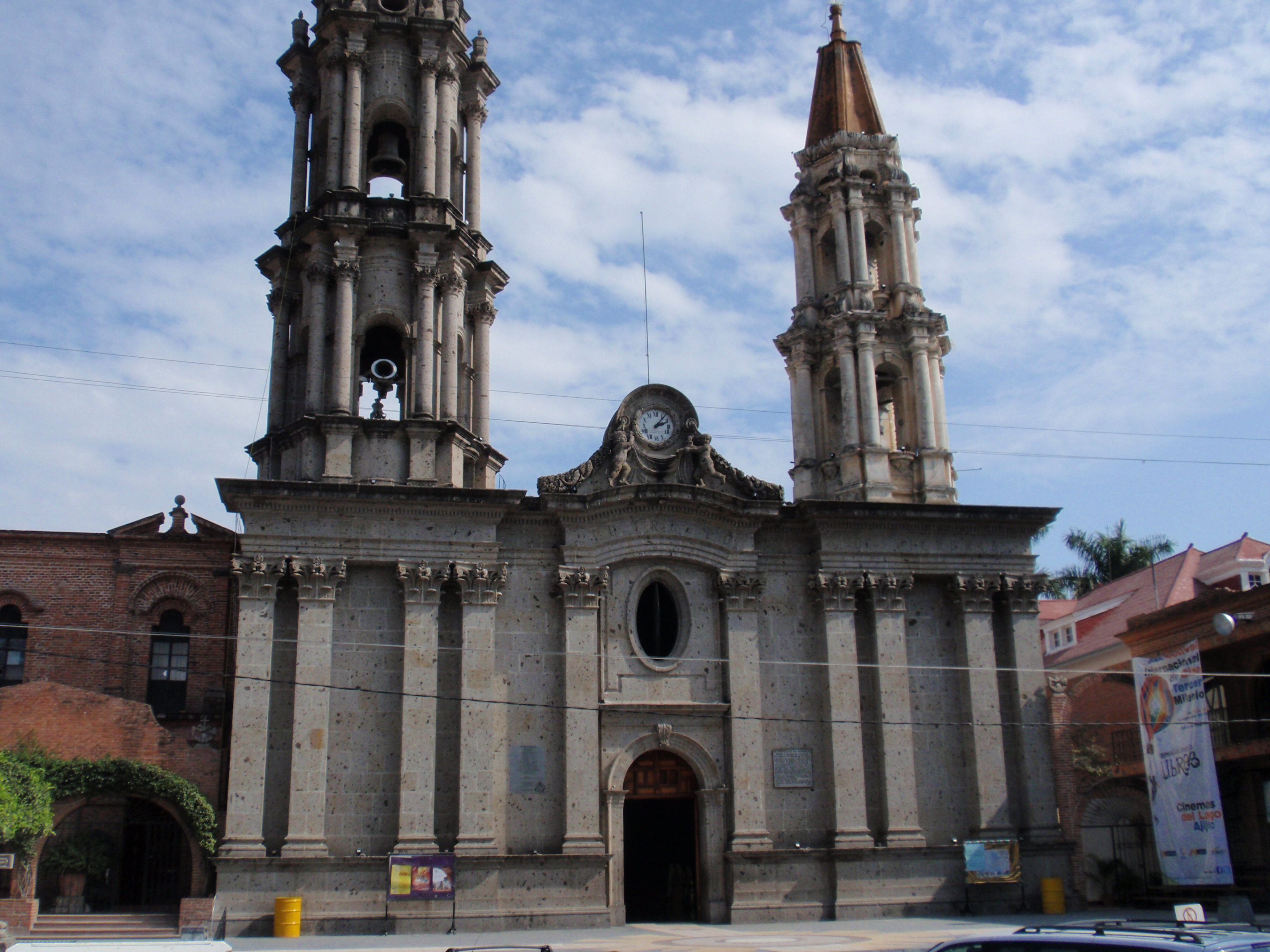
The church between the plaza and the malecon is not as grand as some that we have seen, but is a beautiful tribute to Saint Francis of Assisi.
Templo de San Francisco de AssisiChurch Interior
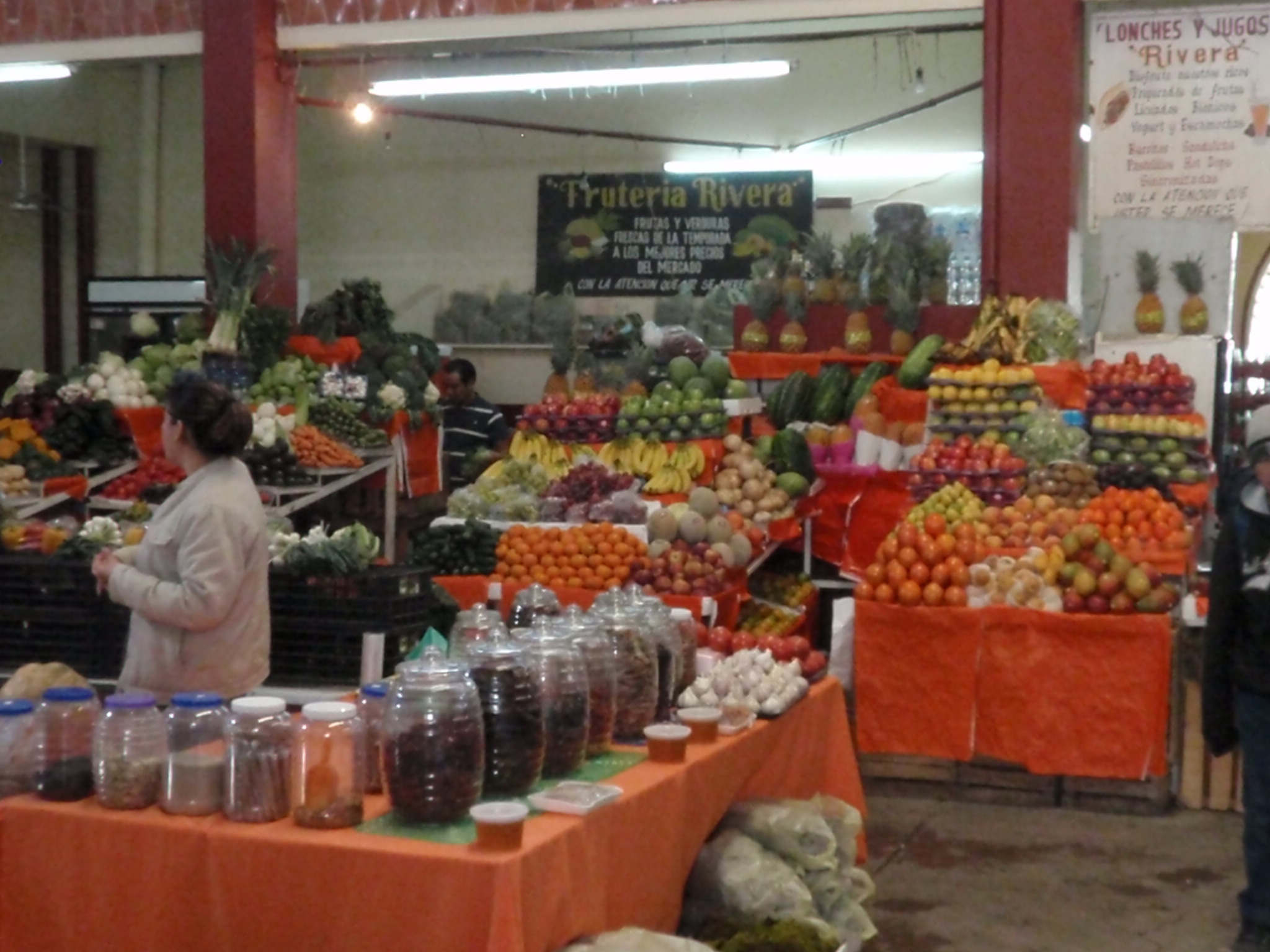
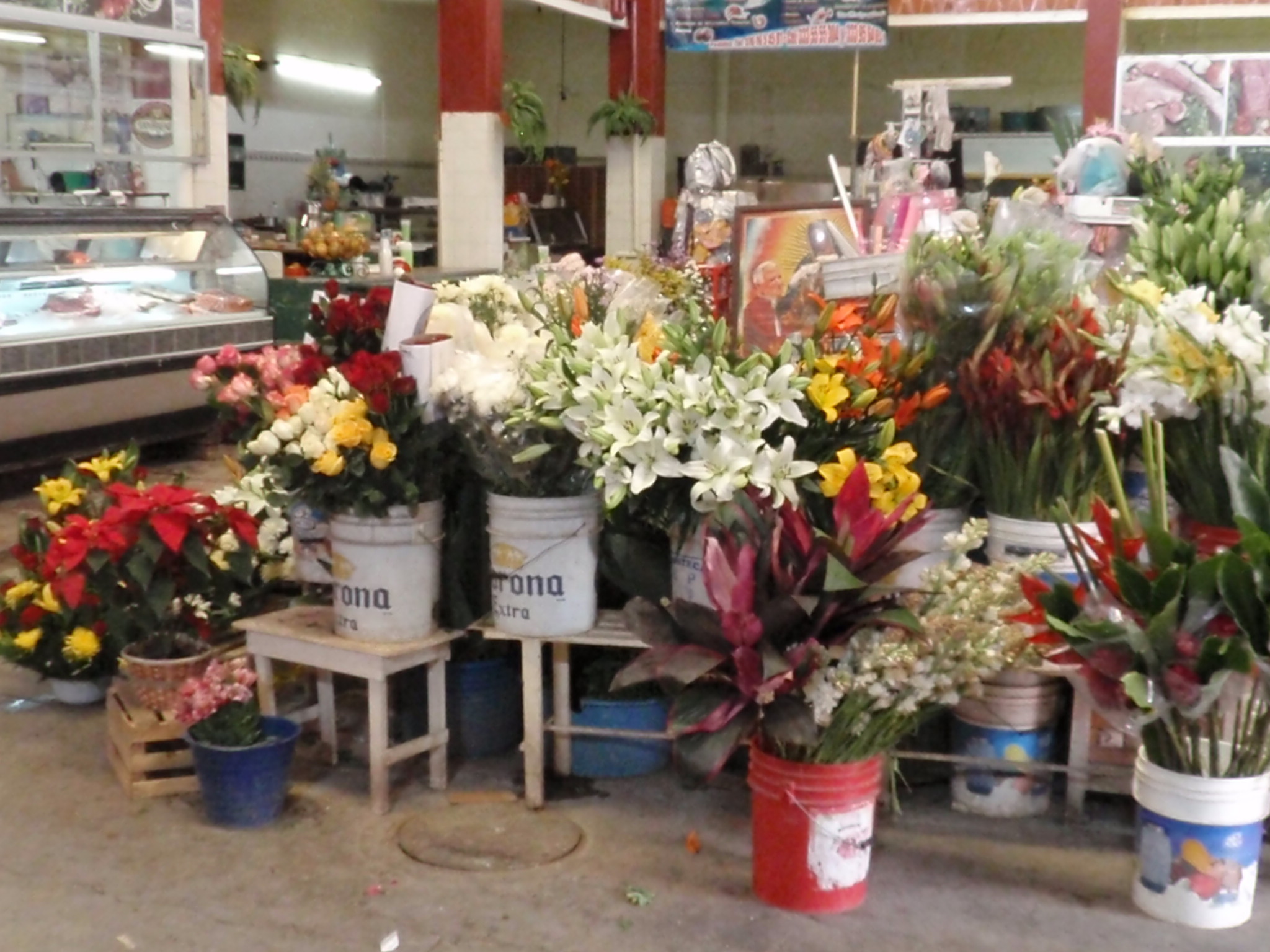
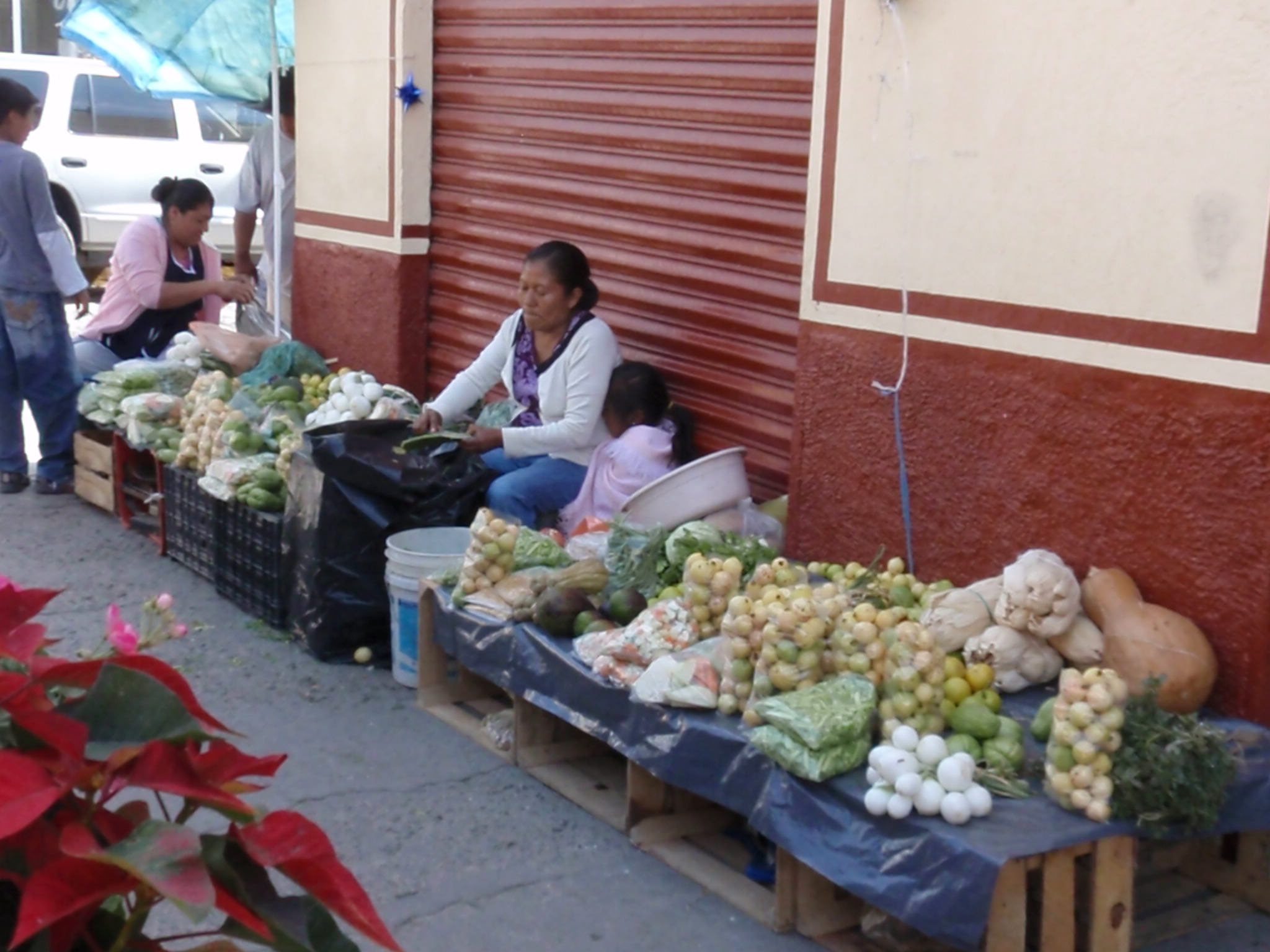
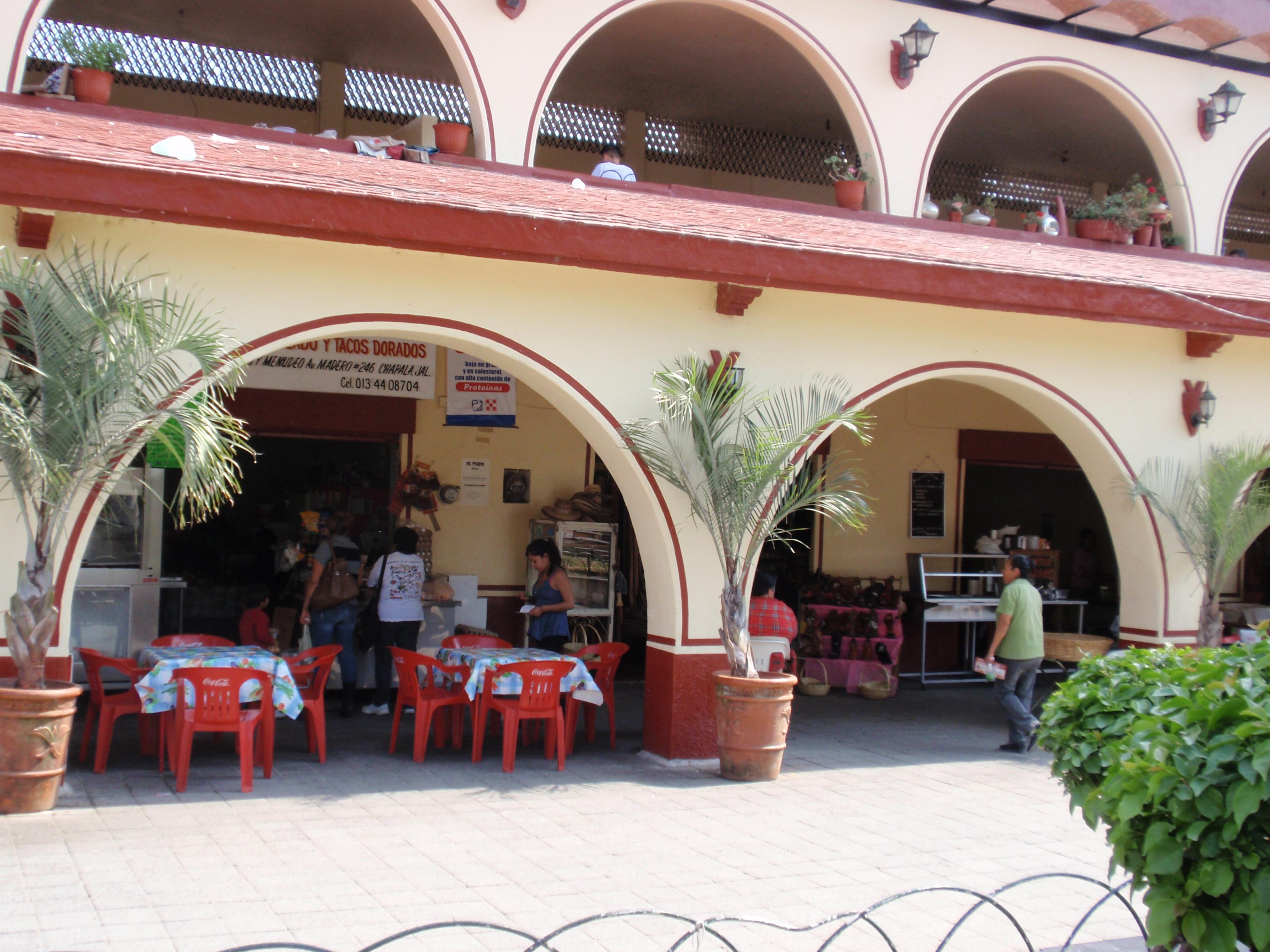
The Chapala marketplace is a colorful, bustling daily affair, which offers fresh fruit, vegetables, meats, cheeses, and flowers, just to name a few.
Native Preparing Nopales from the Prickly Pear CactusA Favored Restaurant for Tacos - Muy Delicioso!
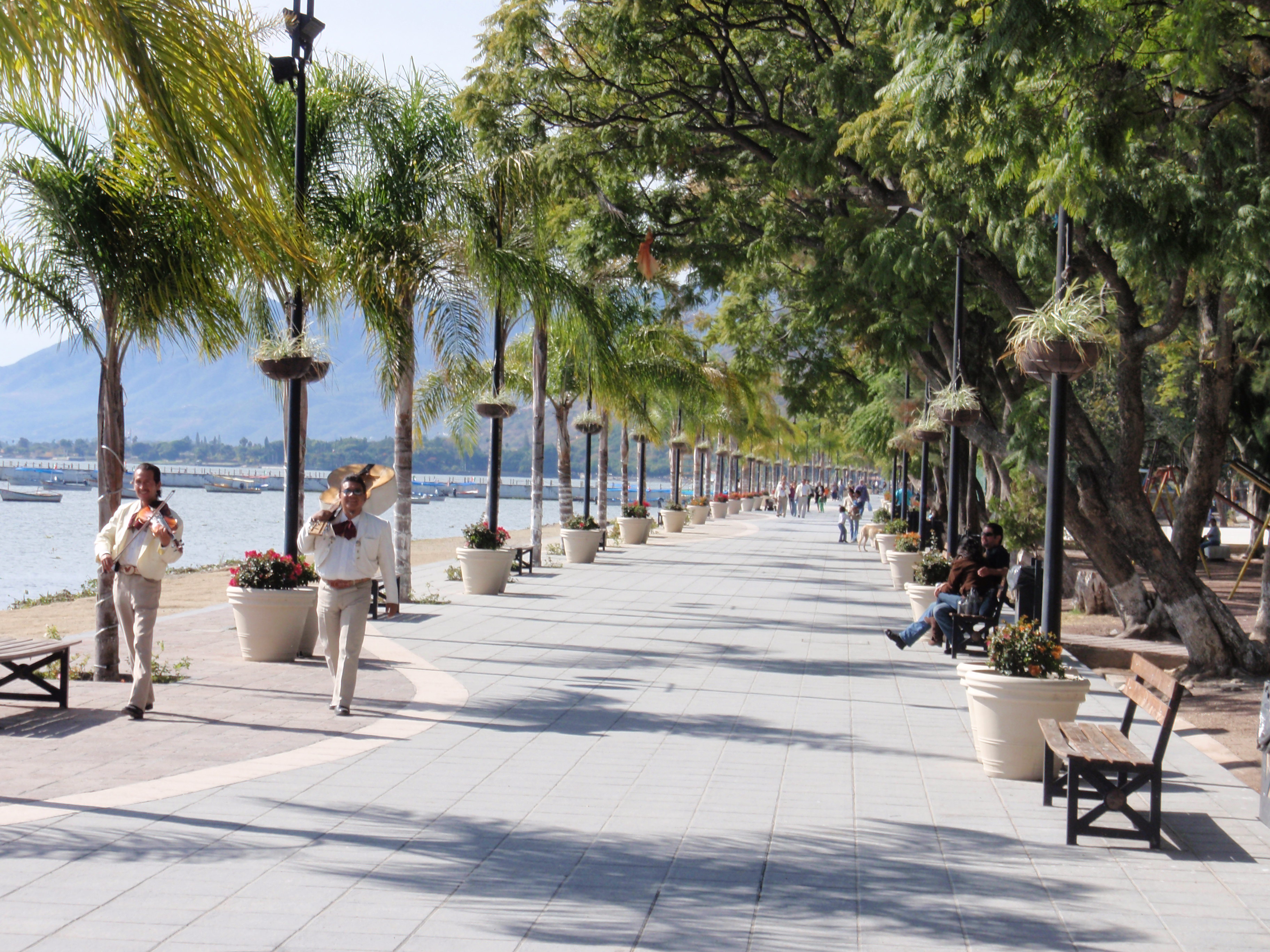
One of the most prodigious features of Chapala has to be the malecon (waterfront), where folks can be seen wandering at any time of the day. The villages that we have seen thus far around Lake Chapala all have their version of a malecon, but none as grand as that of Chapala.
Mariachis Walking the MaleconTribute to the Chapala FishermenSoutheastern View of the Malecon, with Scorpion Island in the Distance
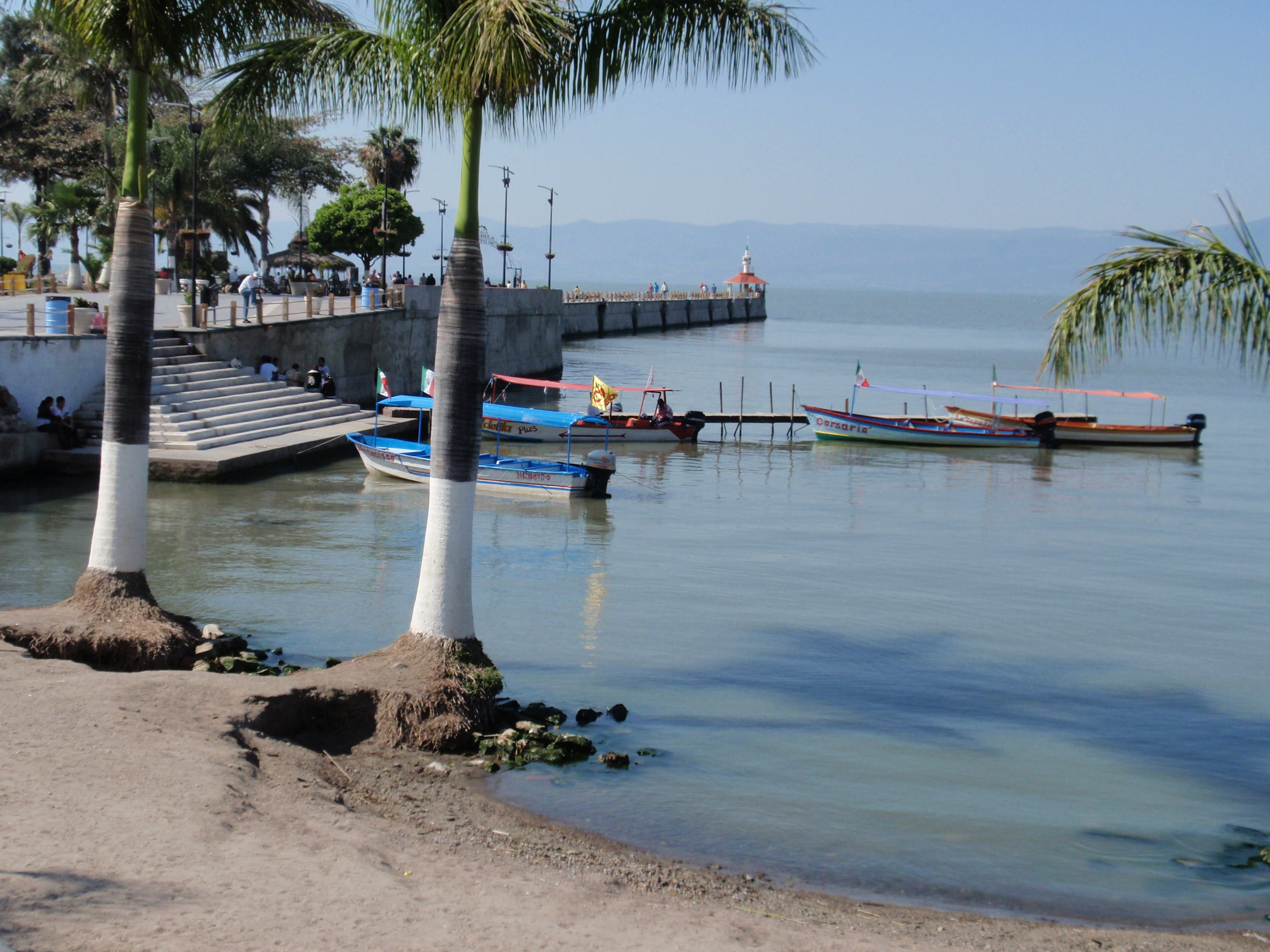
Scorpion Island (Isla de los Alacranes) is a small island that can reached by way of tour boats anchored on the Chapala shore. Due to its name, it does not sound like a desirable place to visit, but we are told that its name arose from the shape of the island and is not based on the number of critters residing there.
Tour Boats
Lake Chapala is the largest natural lake in Mexico and the third largest in Latin America, with a length of approximately 48 miles and a width of 22 miles.
One day soon we hope to take a week-long tour around the lake, exploring many of the other villages. There is so much to see and do in this country. It is a wonder that I have time to blog!
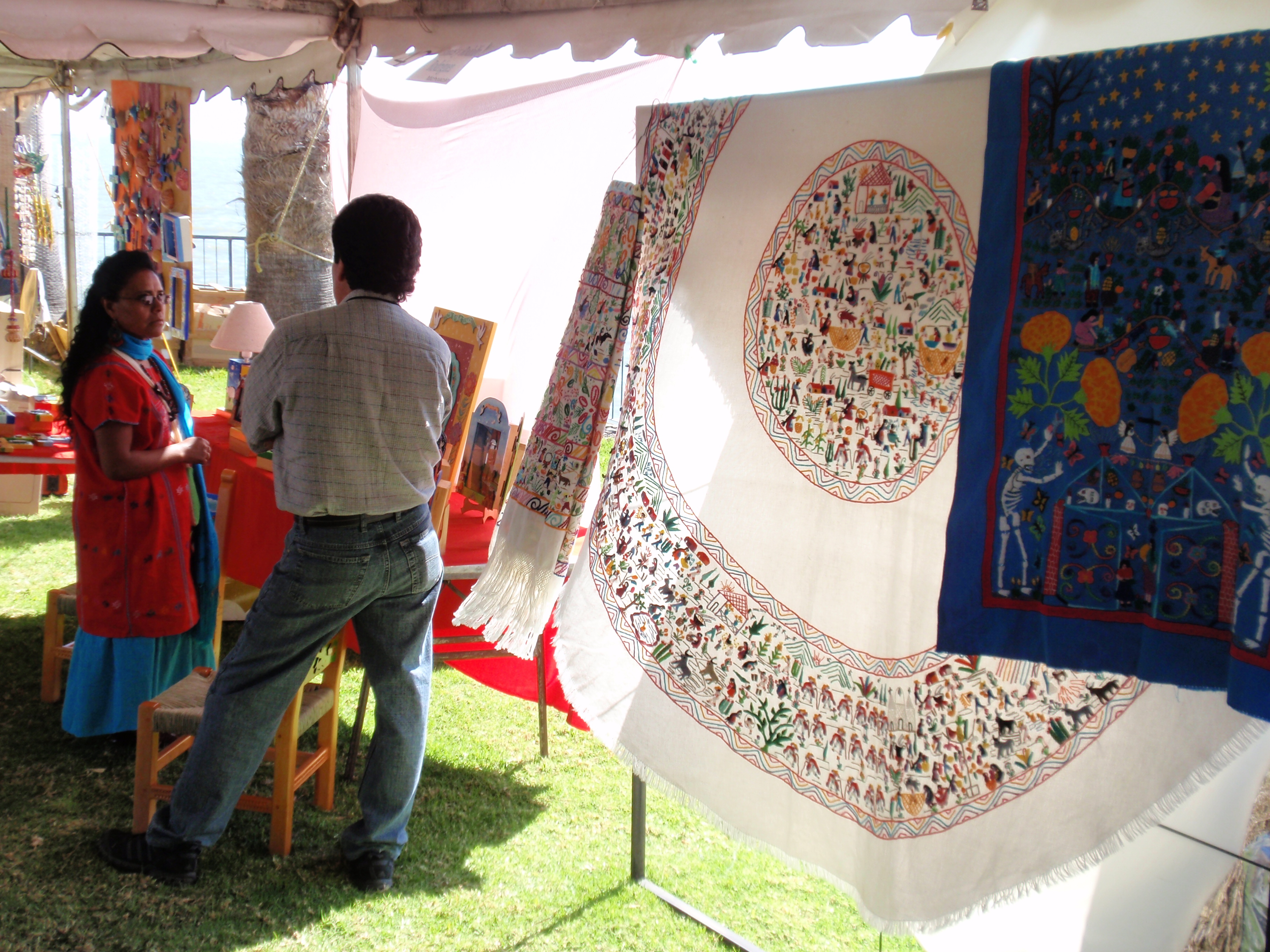
We attended the Feria Maestros del Arte festival this weekend at the Club De Yates De Chapala (Chapala Yacht Club). This is the ninth year for this event and was the inspiration of Marianne Carlson, a local Lakeside resident. She originally decided upon this forum after she had visited 17 artisan villages in Mexico several years ago. Many of the indigenous artists did their craft in their homes so it soon became apparent to Marianne that the average person would never be able to witness the beauty of this folk art. As Marianne has expressed on her website, the feria “offers a vehicle to promote the indigenous and folk art of Mexico, while at the same time educating the public that such art is on the brink of becoming endangered and disappearing forever”.
The Feria is a non-profit and the true beauty of this organization is that it provides an avenue where the artists are provided transportation to this event; are housed with local Lakeside residents for the three days that the show occurs; and they take home 100% of their sales. Although many items were clearly out of our price range, for collectors and with those who have deeper pockets than ours, one-of-a-kind pieces can be obtained for a fraction of the price one would pay for them in a gallery. Many art pieces are well within the average consumer’s budget and when you see the detail and the countless hours that have gone into the creation of their beautiful, expressive artwork, you would never begrudge them one centavo.
Marianne hand-picks the artists, traveling to their homes to gain a better understanding of the familial history of their craft. Because of the painstaking efforts by her and a number of volunteers that coordinate this event, as expressed on her website, the feria “is a “heart” show – not just another “art” show”.
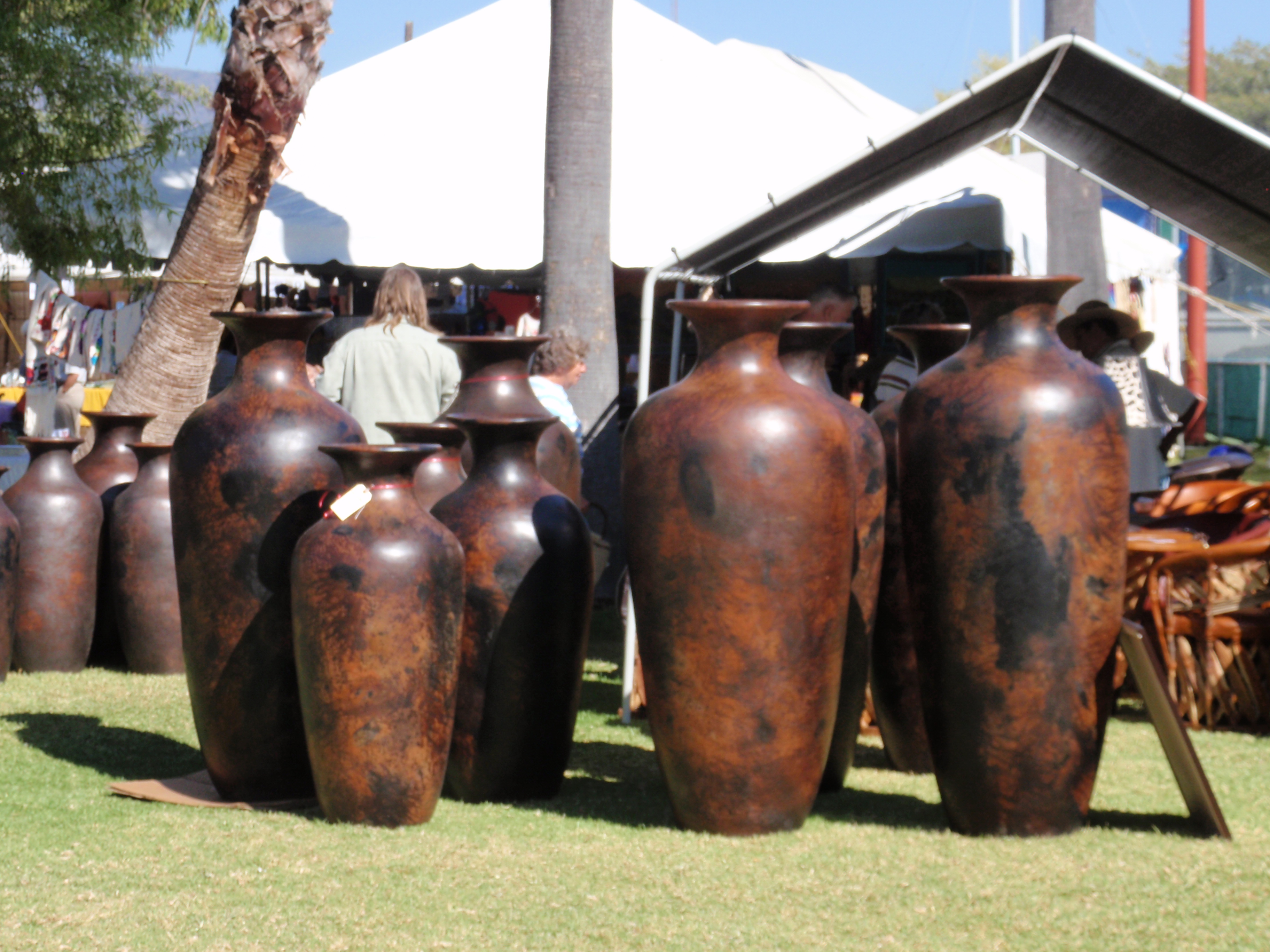
Artwork displayed by the Castilla Orta family from Puebla, Mexico stood out as some of the most spectacular at the show. For the past 40 years, this family of clay potters has created stunning and whimsical pieces. In 2009, Alfonso, the patriarch of this family, passed away but his entire family still carries on his tradition.
Below is just a sample of their amazing artwork.
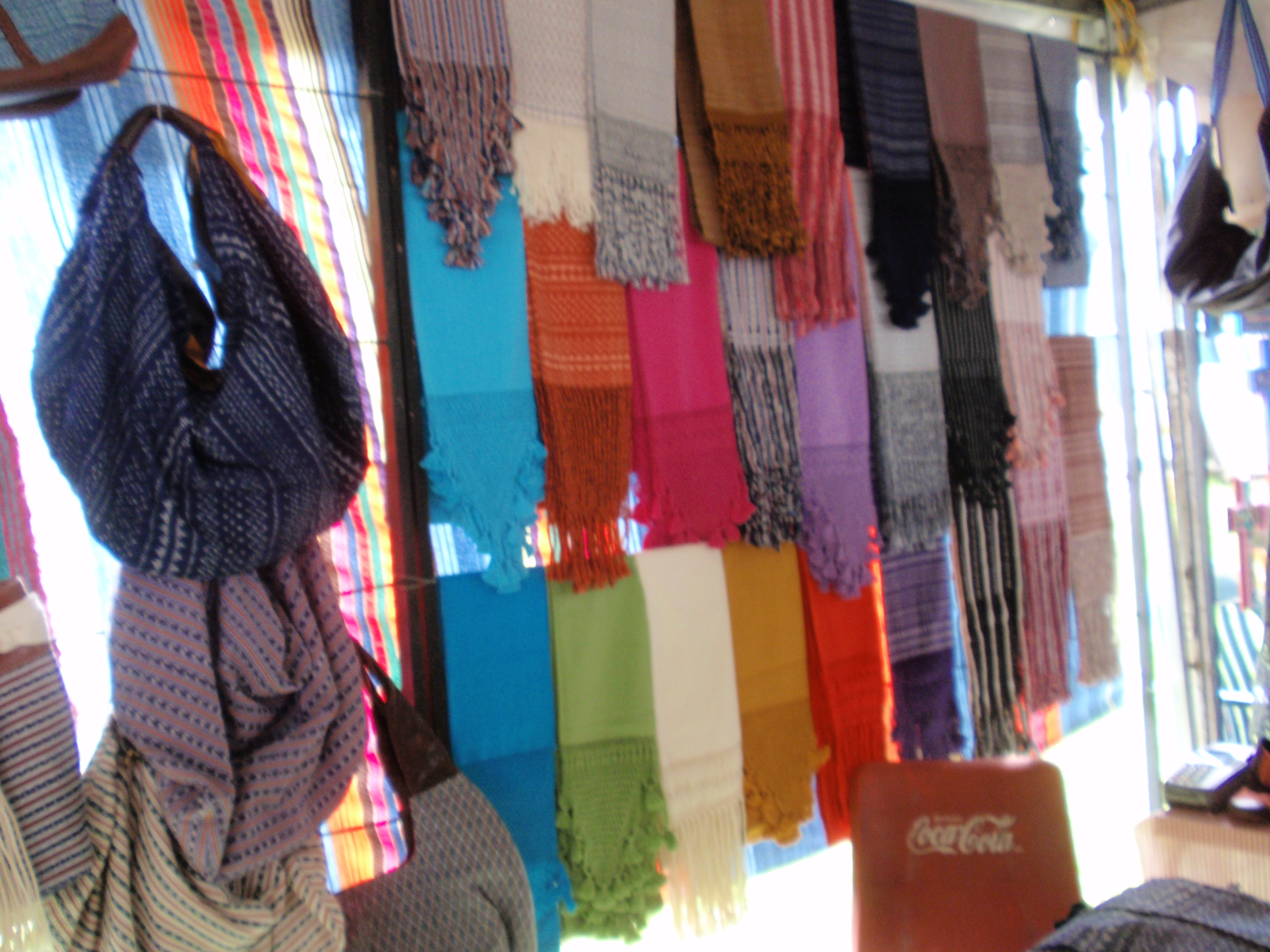
There were some amazing rebozos (shawls) on display at the show and a special presentation for women on the many ways to wear this artwork. Don Isaac Ramos Padilla was another artisan who passed away this past year and was a true maestro of Mexican weaving, having struggled to hone his trade since the early age of 10. This patriarch of Mexican weaving worked 12 hour days, 7 days per week to produce an average of 2 rebozos per week. He received numerous awards for his work, the most noted being the Grand Prize at the National Arte Popular Judged Art Show in 2008. Few weavers in Mexico have achieved this type of tribute.
His family endeavors to continue his unique form of weaving, in which he did all the processes himself: mixing the dyes, dyeing the cotton, setting up the loom with the thousands of strands, painting on the pattern, and finally the weaving. The level of detail and the heart and soul put into each rebozo are reflected in the price tag but well worth every peso when you watch this family at work on the loom.
So many talented artisans stood out at this festival, to include those gifted in obsidian artwork, hand-woven rugs, pottery, fused glass, hand painted gourds and huipiles (hand-woven women’s blouses), to name a few.
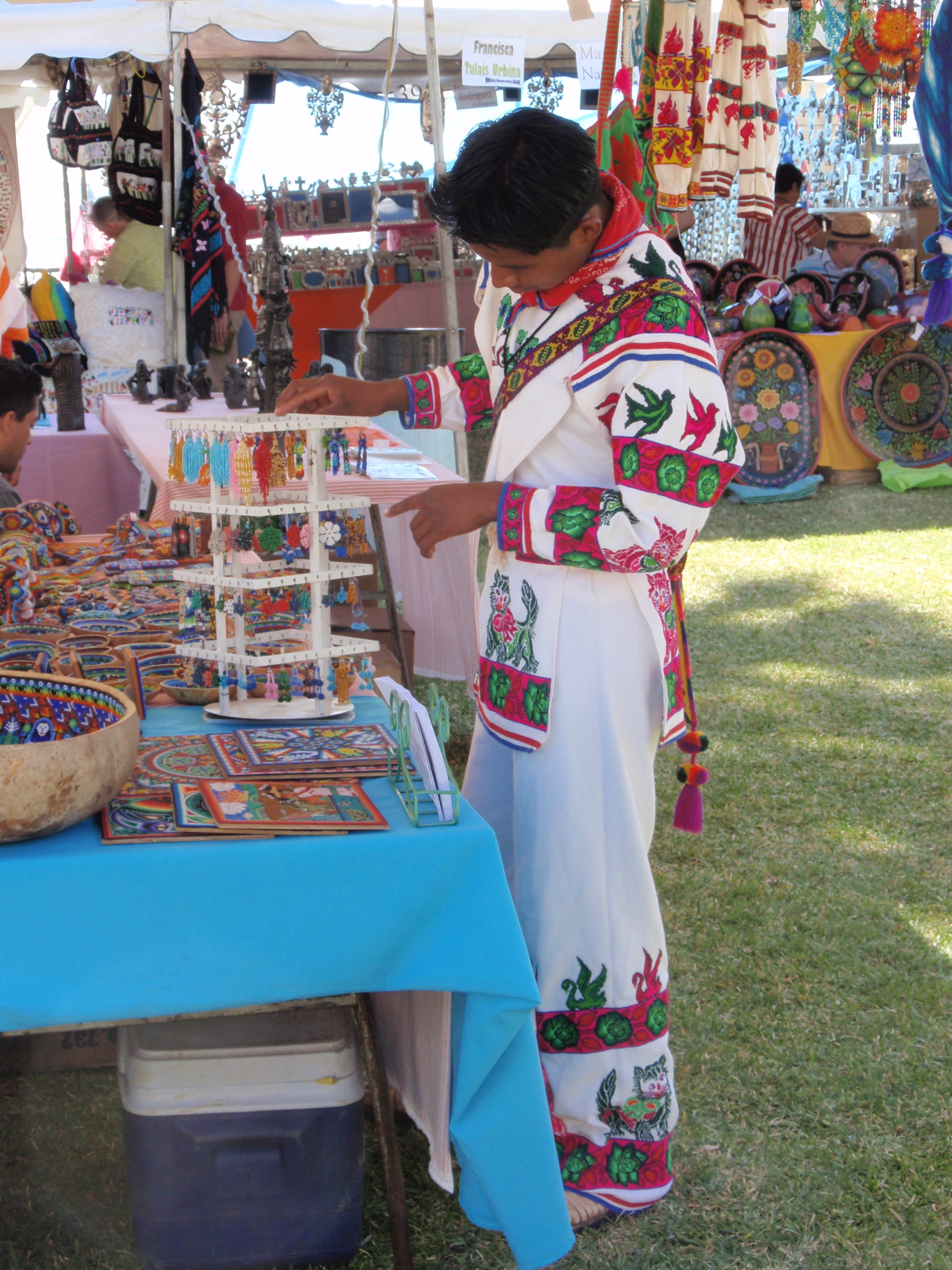
Pottery from Cocucho, Michoacan$500 Pesos, not Dollars - Quite a Bargain!Mexico's Famous Pineapple Pottery from MichoacanIntricate EmbroideryHuichol Indian Artisan in Native Costume
Isabel Mendoza of Guadalajara is carrying on the tradition of straw art begun by her grandfather. We felt that it was some of the most magnificent artwork on display at the feria. This is just one example of what she is able to do with dyed, very small pieces of straw collected in the mountains by the locals, attached to a beeswax background.
Mexican Straw Art
Last but not least is the infamous Mexican catrina, beautiful and intriguing.
La CatrinaLife Size Catrina Overlooking Lake Chapala
Had it not been 10:00 in the morning, we may have ventured over to the Tequila Tasting Bar but opted instead to view the Ballet de Chapala performing some regional Mexican dance steps. The colorful costumes and enthusiastic smiles were a joy to watch!
For anyone wanting to learn more about Mexican indigenous art, there is a landmark book entitled “Great Masters of Mexican Folk Art”, published by Fomento Cultural Banamex, that you may enjoy.
It was difficult to pull ourselves away from Guanajuato, but there are so many other interesting cities to see, so on we go to San Miguel, known as el corazon de Mexico (the heart of Mexico)!
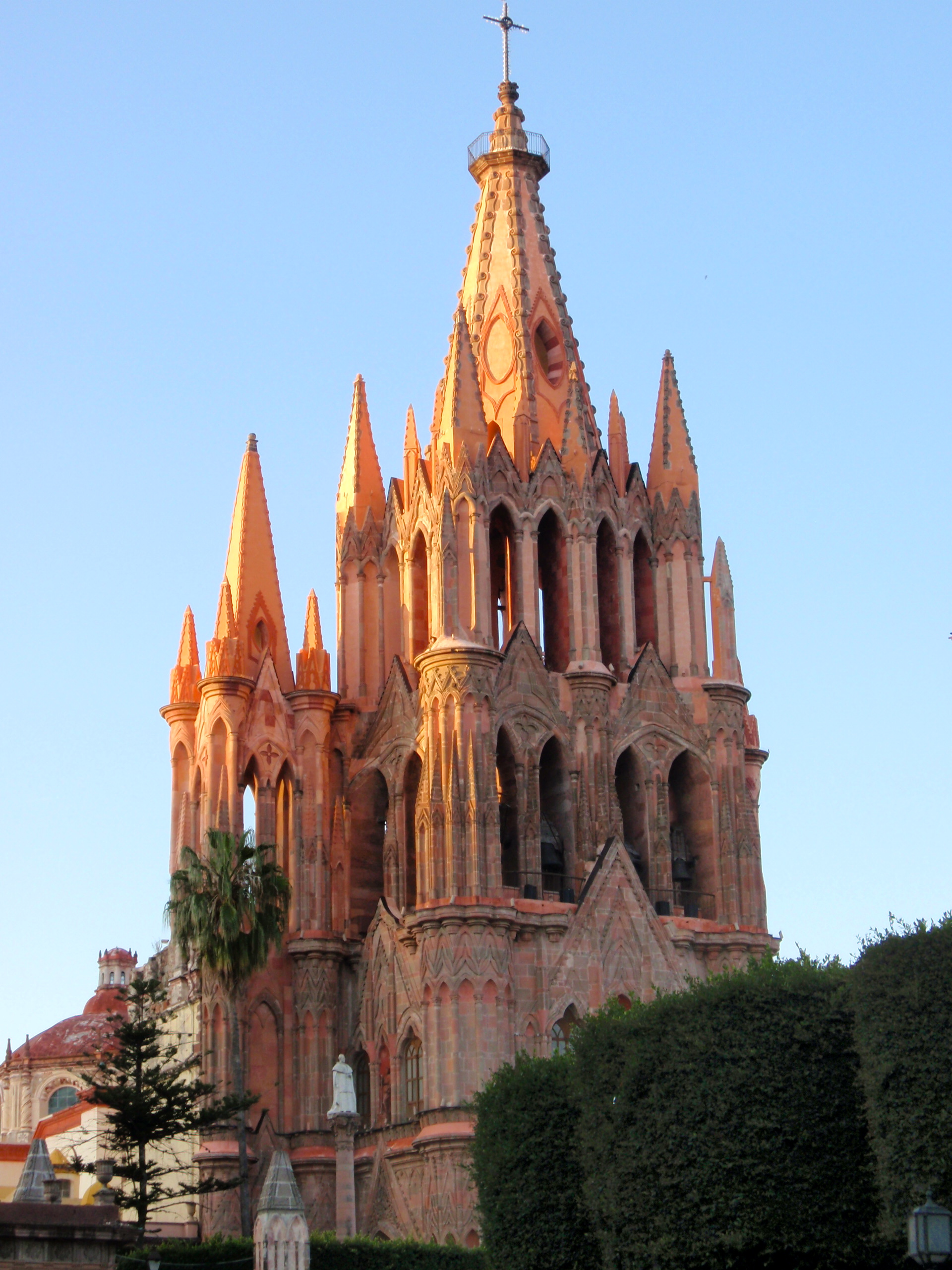
The city of San Miguel de Allende was founded by a Franciscan monk in 1542 and was an important stop-over point on the silver route to Zacatecas. As most other cities in Mexico, San Miguel has a central plaza and a church that anchors this community. But this is not just any church; this is the La Parroquia, the parish church that may be the nation’s most beloved. It was rumored that in 1880 an unschooled local Indian by the name of Seferino Gutierrez added the faux-Gothic spires to the church. The stone was locally quarried pink stone and the design was borrowed from postcards of European Gothic cathedrals. These spires supposedly were constructed by a workforce guided only by the use of sketches drawn in the dirt.
La Parroquia Ceiling Mural
La Parroquia is considered among the great architectural wonders of the world and we were fortunate enough to experience a music and light show at this very location the first night we arrived.
The colored lights, when projected onto La Parroquia, changed the look dramatically, almost giving the appearance of a haunted house.
Cohetes (extremely loud fireworks) are synonymous throughout Mexico with fiestas and fortunately, these were not part of the show. What we experienced instead were fireworks that brought us back to our childhood, as we stood in awe looking up at the brightly lit sky.
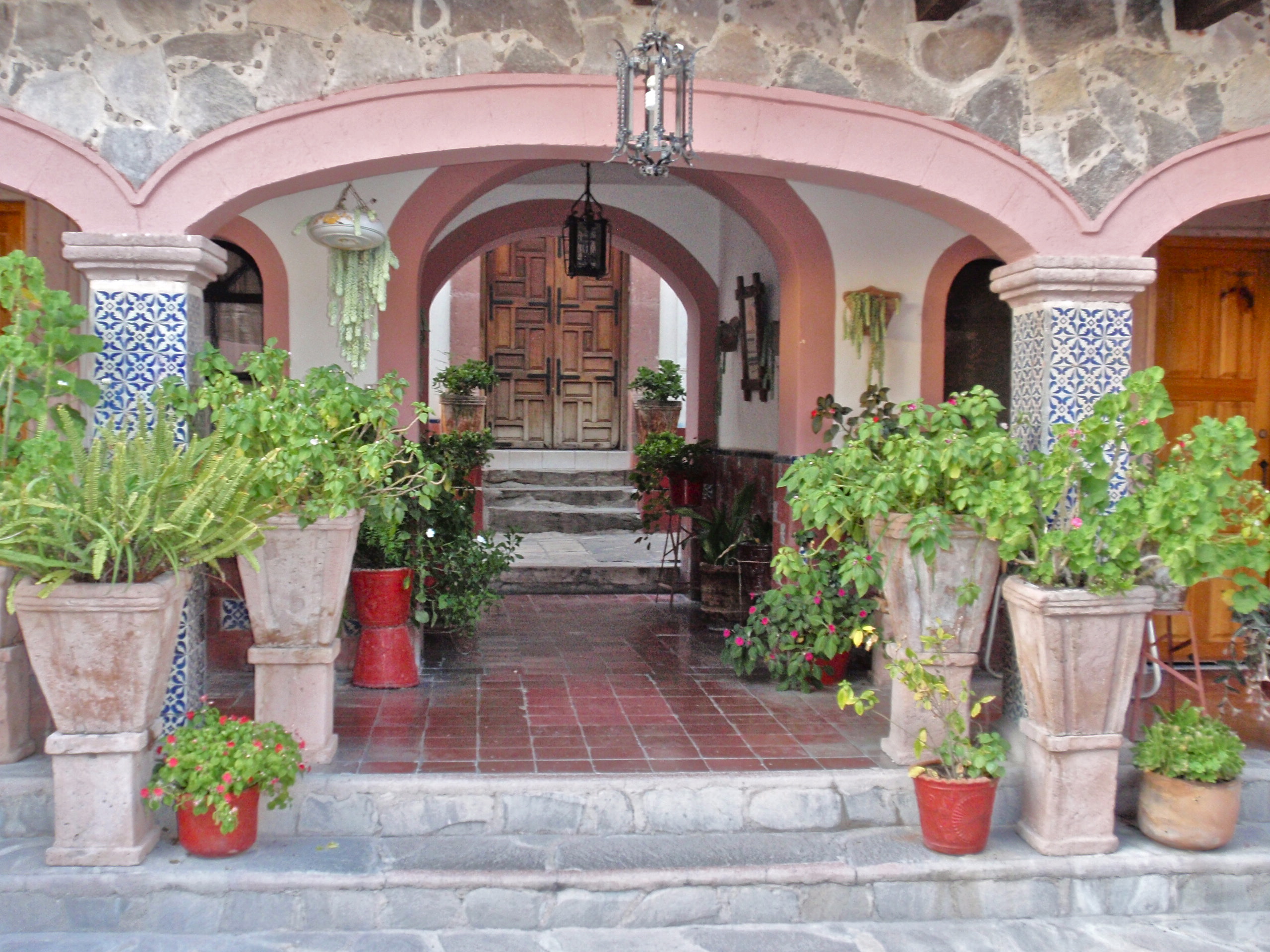
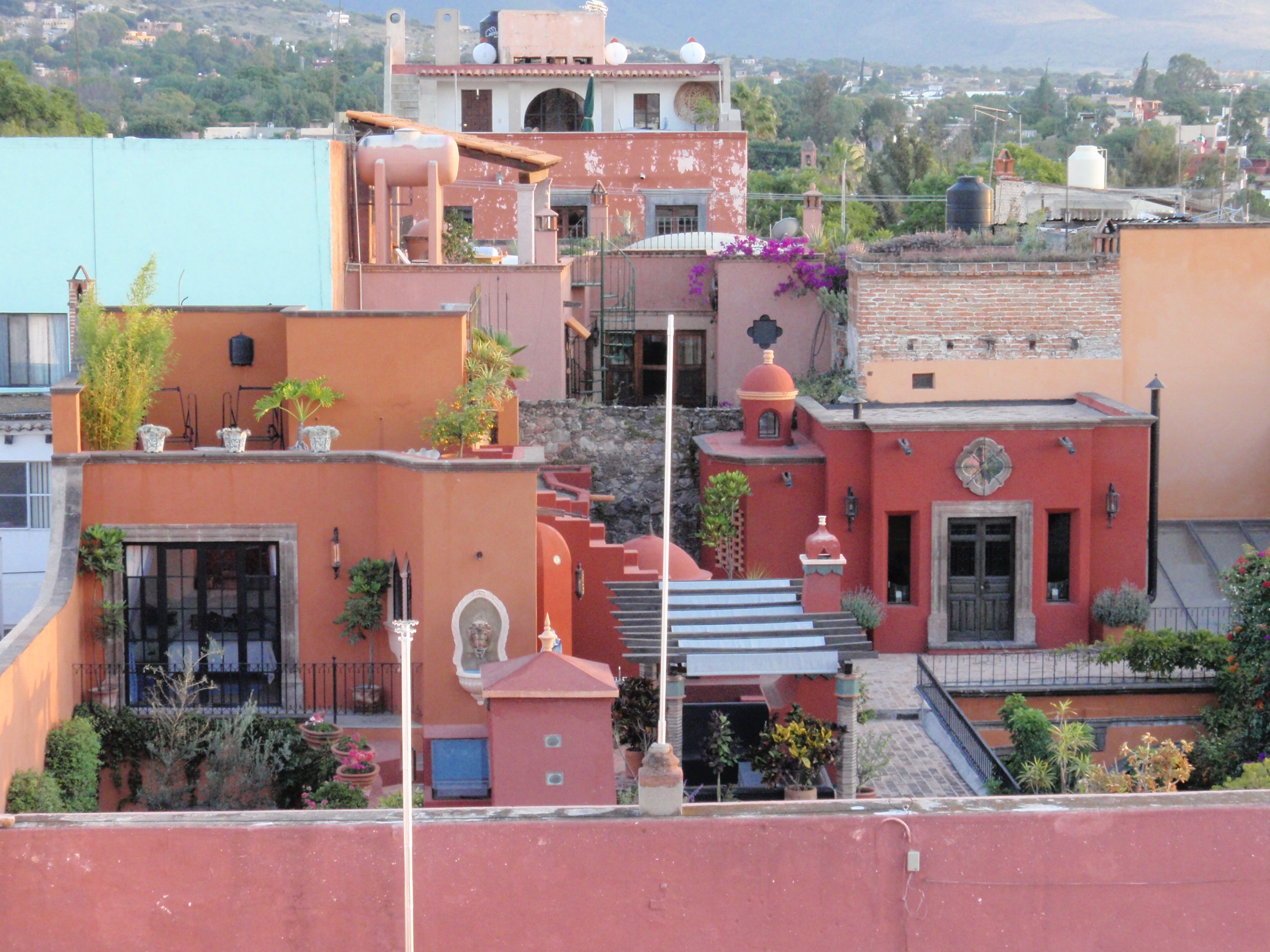
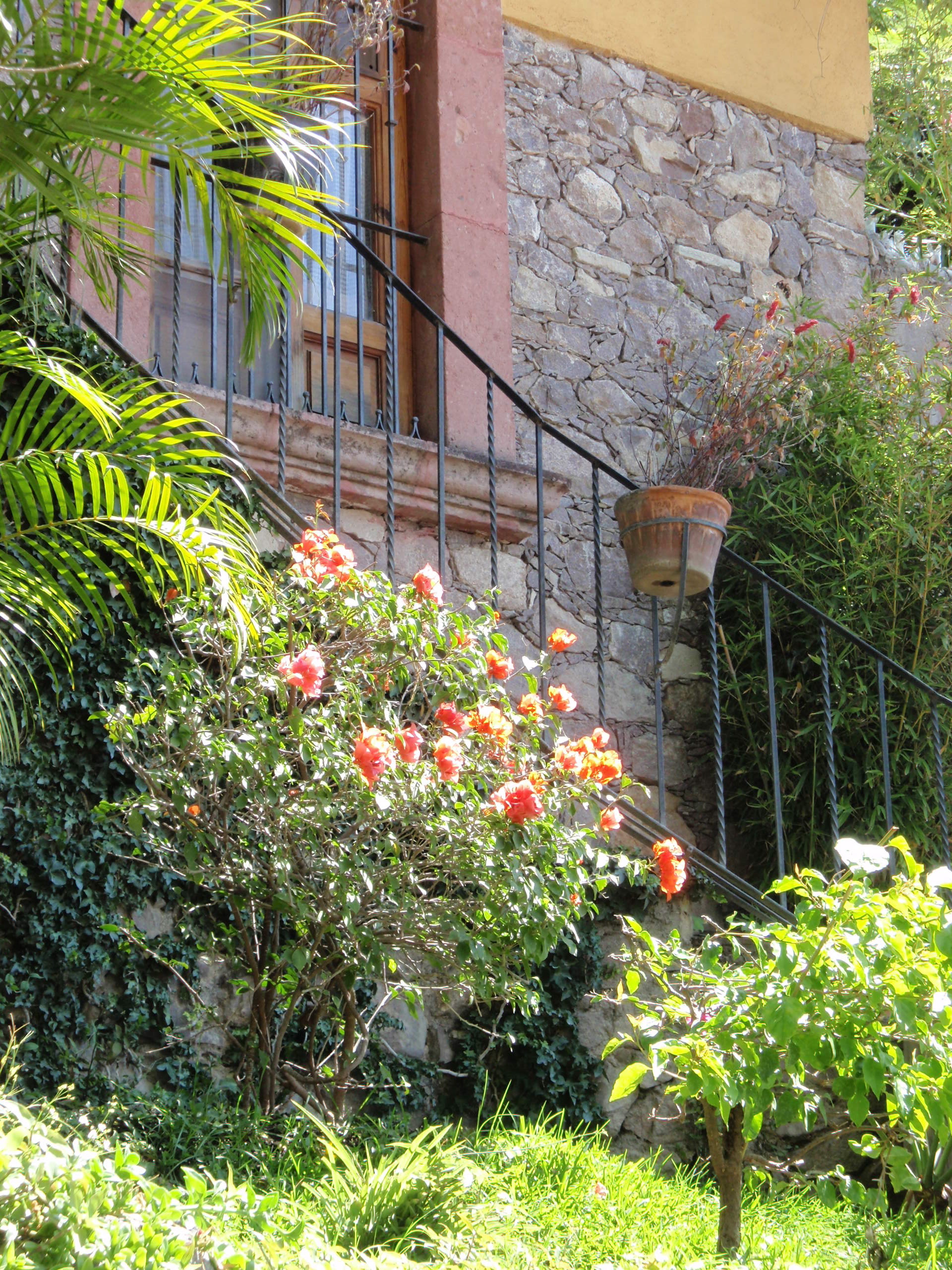
We stayed at a delightful former hacienda, Posada de las Monjas. There were flowerpots covering every stairway railing and more miradors (rooftop terraces) than we have seen in any one building in Mexico.
Entryway to our Habitacion
View from Mirador at Posada de las Monjas
La Biblioteca, a non-profit organization in San Miguel, is the epicenter for the 10,000+ ex-patriate community, with available classes, theater presentations, an English/Spanish library, gift shop, and eateries. This is a great reference point for those visiting the area.
Not unlike Guanajuato, San Miguel is a city of winding streets that will give you a great exercise workout at every turn, thankfully, as we taste tested several flavors of hand-turned ice cream at the many sidewalk carts calling out to us.
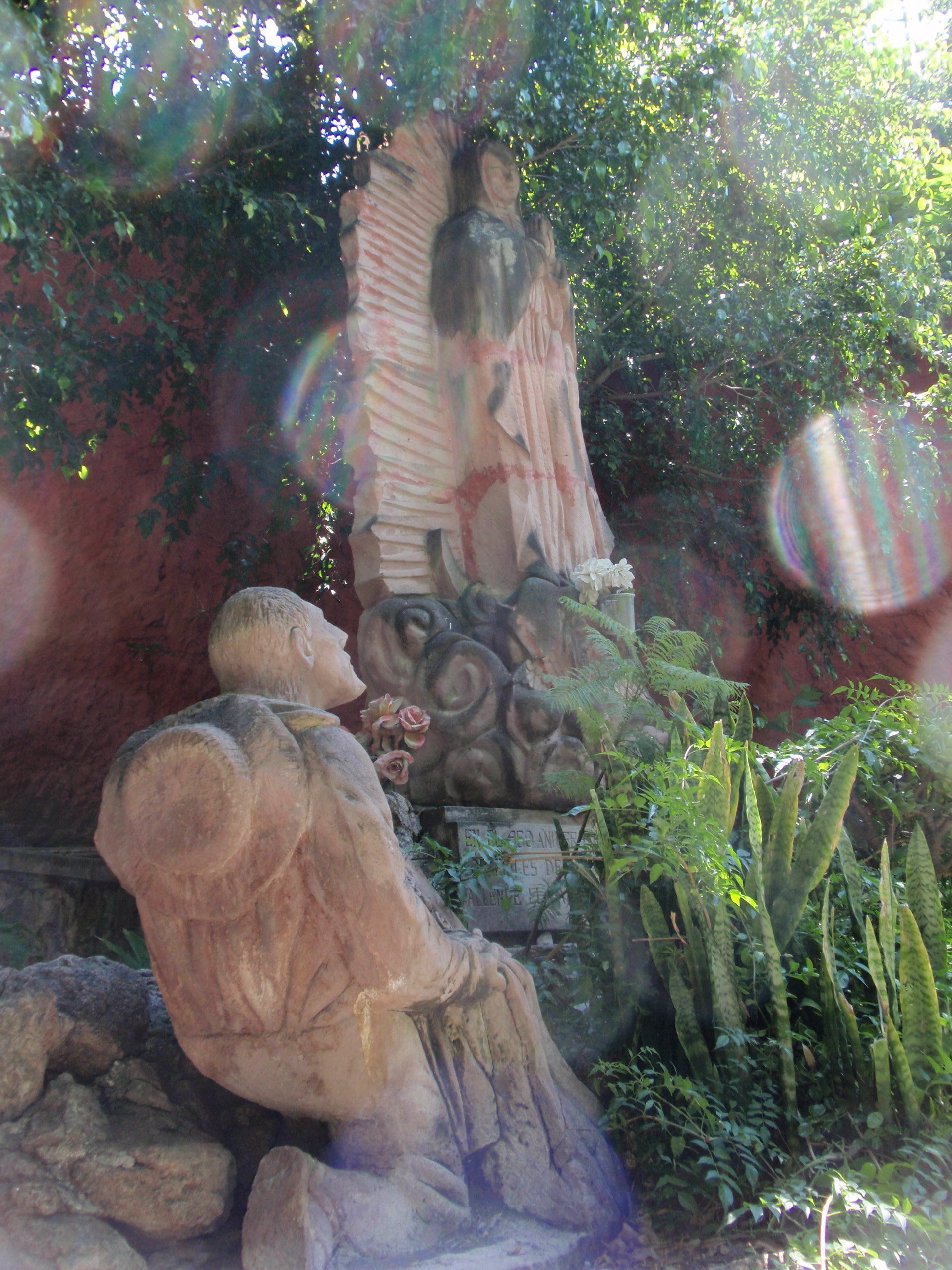
We ventured over to Parque Benito Juarez, a large, relatively unused peaceful park, with wandering paths through trees, ancient fountains, and stone bridges. Just outside of this park, there is a long winding road and staircase leading to Paseo Del Chorro, a smaller park with lovely gardens.
Notice the orbs in the photo. What could they be?
We were told by some friends that we were not to miss the hot chocolate and churros at San Agustin. Thank goodness for exercise opportunities as I don’t even want to know how many calories we consumed during this little escapade, but, oh were they heavenly!
We inquired about the very attractive lady whose picture was pasted over many of the walls of the restaurant and learned that she is the owner, Margarita Gralia, a renowned television and stage performer, as well as a Playboy playmate approximately 3 years ago.
The plaza is a great place to people watch and, one morning, while wandering through the gardens, we happened upon three little girls and a nun on their way to school. As we passed them, in unison all three sang “good morning senorita” to me, which was a wonderful way to start my day but was one of the great photo opportunities we missed.
On our last full day in San Miguel, we grabbed a taxi and headed out to El Charco del Ingenio, the botanical gardens, 167 acres of nature reserve that was declared a World Heritage Site in 2008. In the middle of these gardens, literally translated as “the pool of talent”, runs a spring-fed pool in an impressive canyon. Efforts arefocused on environmental education and the development of traditional cultures. In 2004, El Charco del Ingenio was sanctified as a Peace Zone by the Dalai Lama during his visit to Mexico.
I wonder how old this agave is?
I found this good looking guy wandering around the gardens.A lovely red bird for my anam cara Barbara.
When we had finished our tour of the gardens, we enjoyed a cold glass of maguey juice, made from the agave plant.
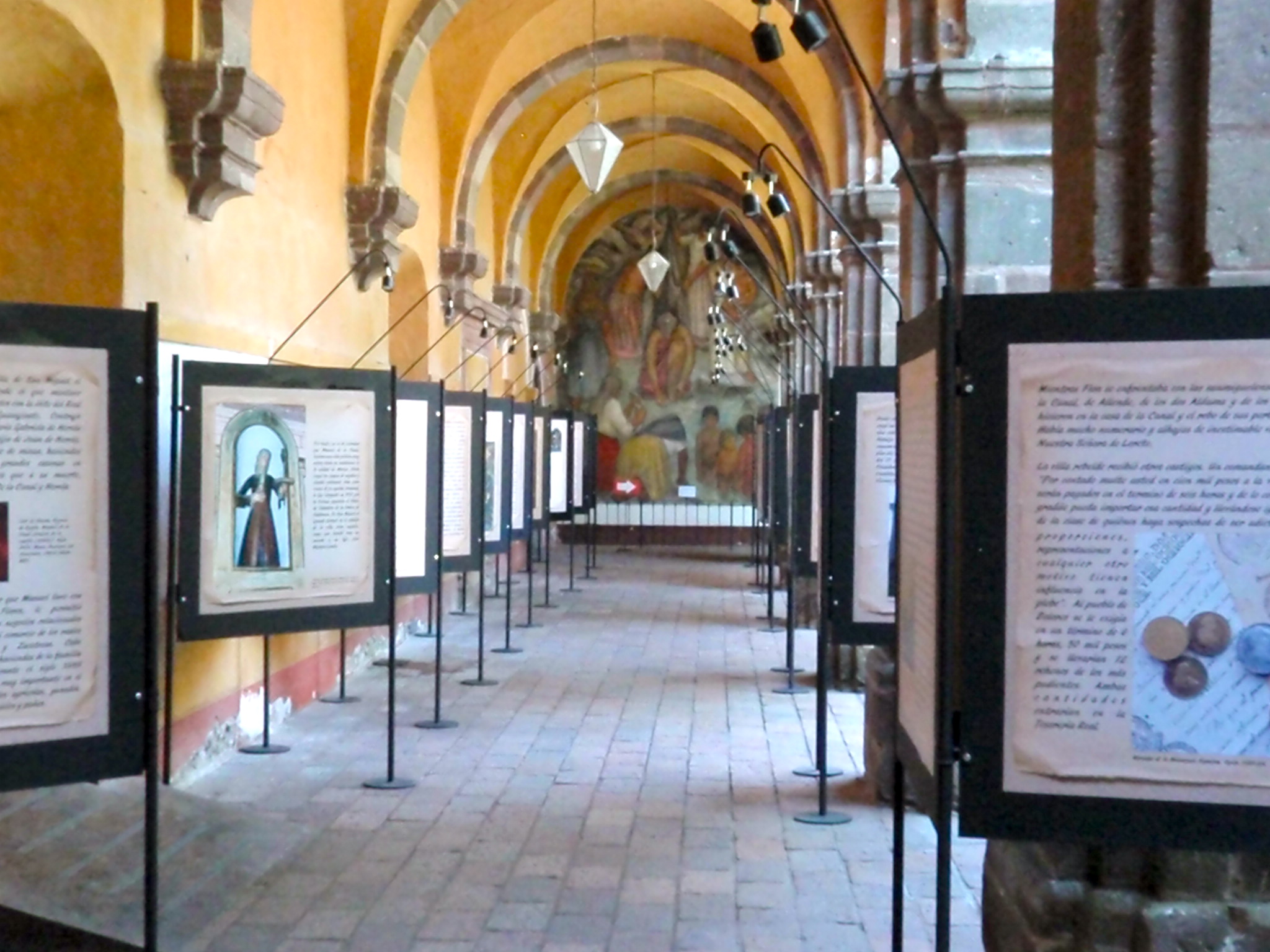
Back to the city, with plenty of time remaining for window shopping and a few more sights. Our next stop was Centro Cultural Ignacio Ramizez “El Nigromante”, the cultural center, once part of a Catholic church, that honors San Miguel writer Ignacio Ramirez, referred to as the “Voltaire of Mexico”, due to his satirical wit. He nicknamed himself El Nigromante, the Sorcerer, as nearly everything he wrote could have caused him punishment during the 1800’s.
Several placards in the cultural center tell the story of the religious and political turmoil when Mexico struggled to find the right balance between church and state. This has been left behind in favor of the arts.
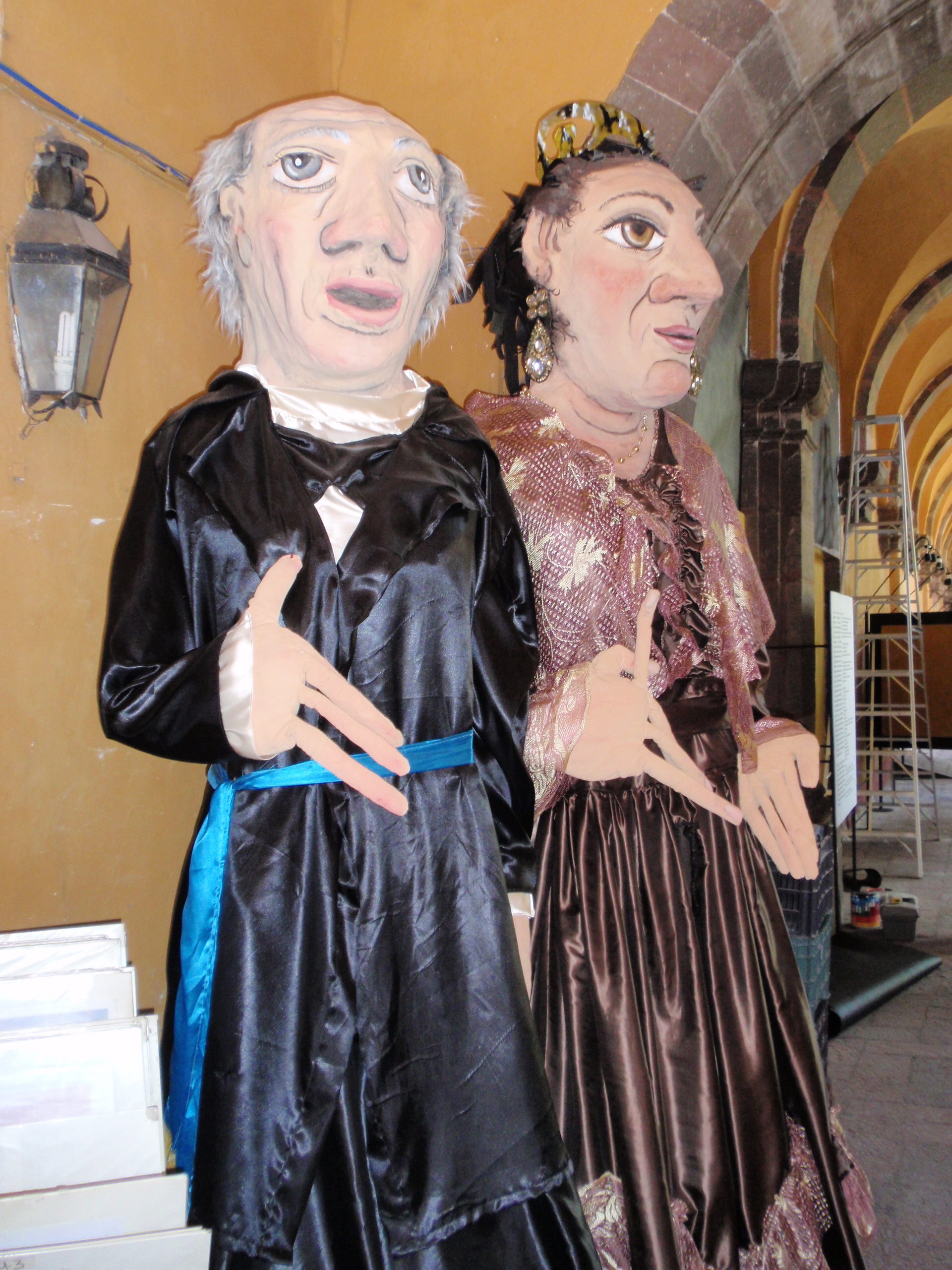
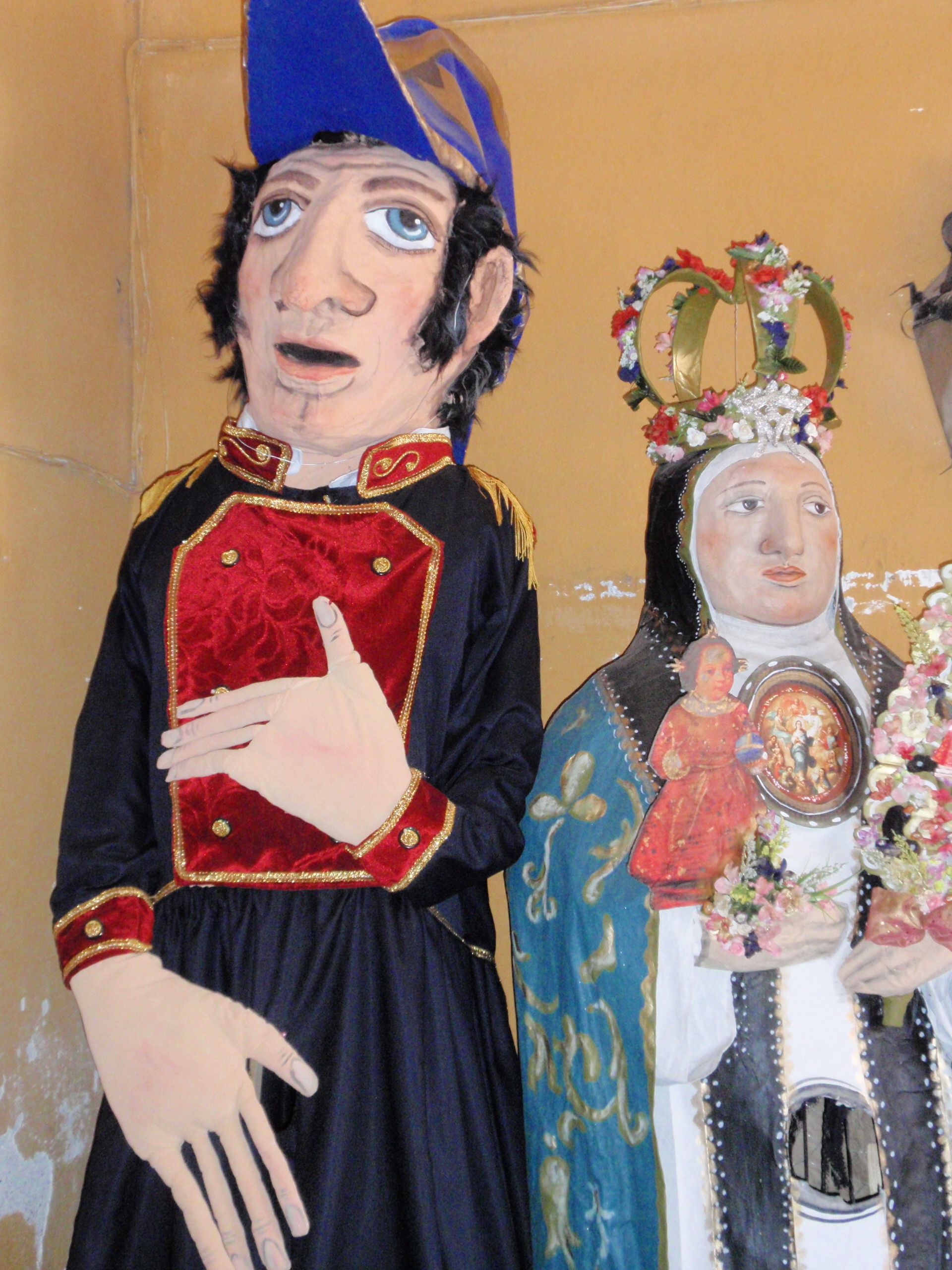
Four very prominent figures in Mexico’s war for independence, depicted as larger than life paper mache figures, are the greeters as you enter the cultural center.
Miguel Hidalgo, father of Mexico and the leader of the Mexican War of Independence, has standing next to him the figure of Josefa Ortiz de Dominguez, a conspirator and supporter of the Mexicans’ fight for their independence. Josefa was the key to Hidalgo escaping capture as the Spanish colonial authorities had learned of the rebel’s activities. She was able to get a message to him, which allowed him to escape the small town he was in and he and his followers proceeded to declare war against the Spanish authorities.
General Ignacio Allende, Hidalgo’s chief lieutenant in Mexico’s fight for her independence, stands alongside Sor Josefina de la Canal, who, after much searching, remains a mystery to me. I would be most interested in learning more about this Christian woman, if anyone knows her background.
The remaining photos of San Miguel are those of street scenes and distinctive doorways, which have become something of a fascination for me.
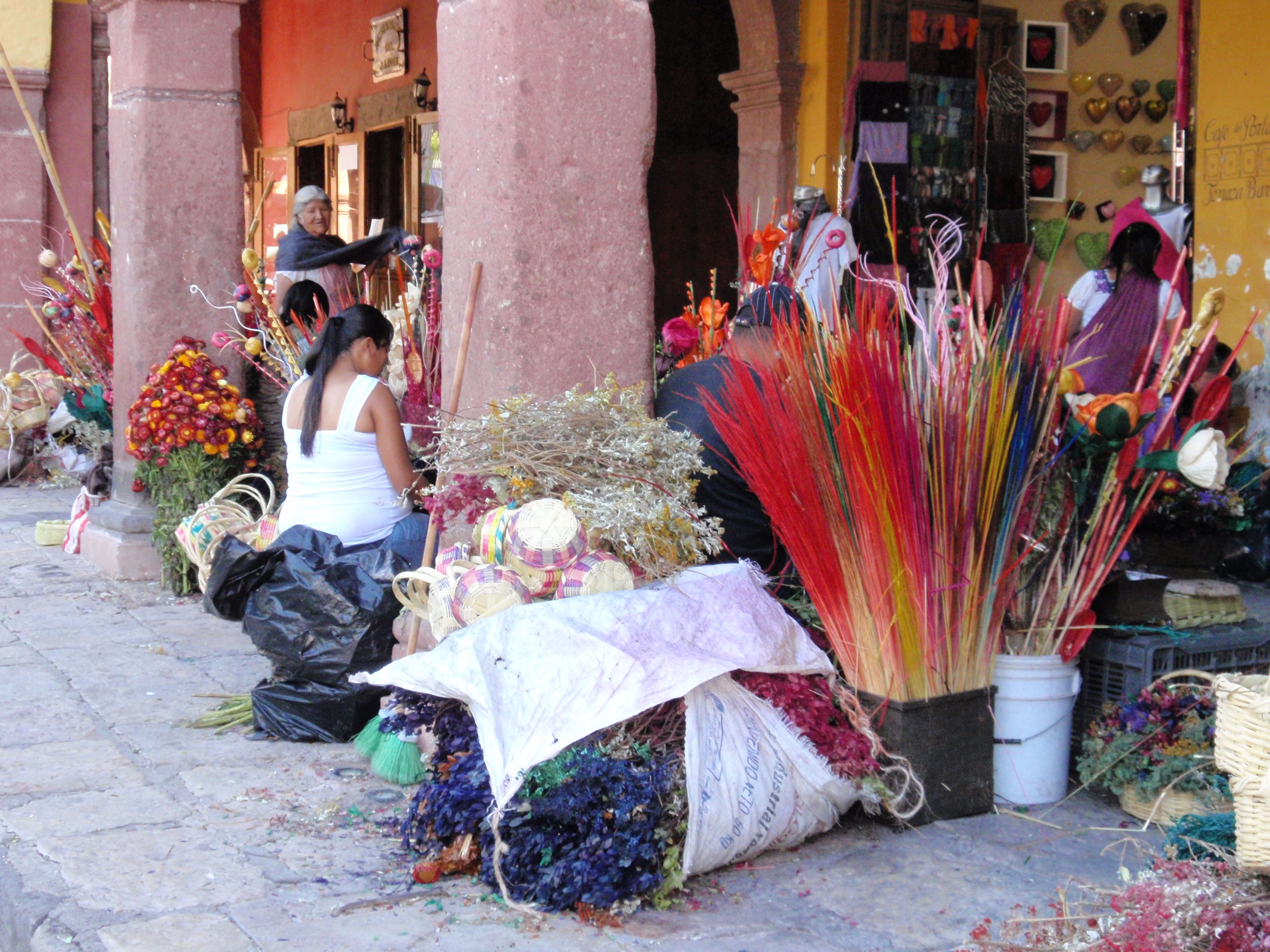
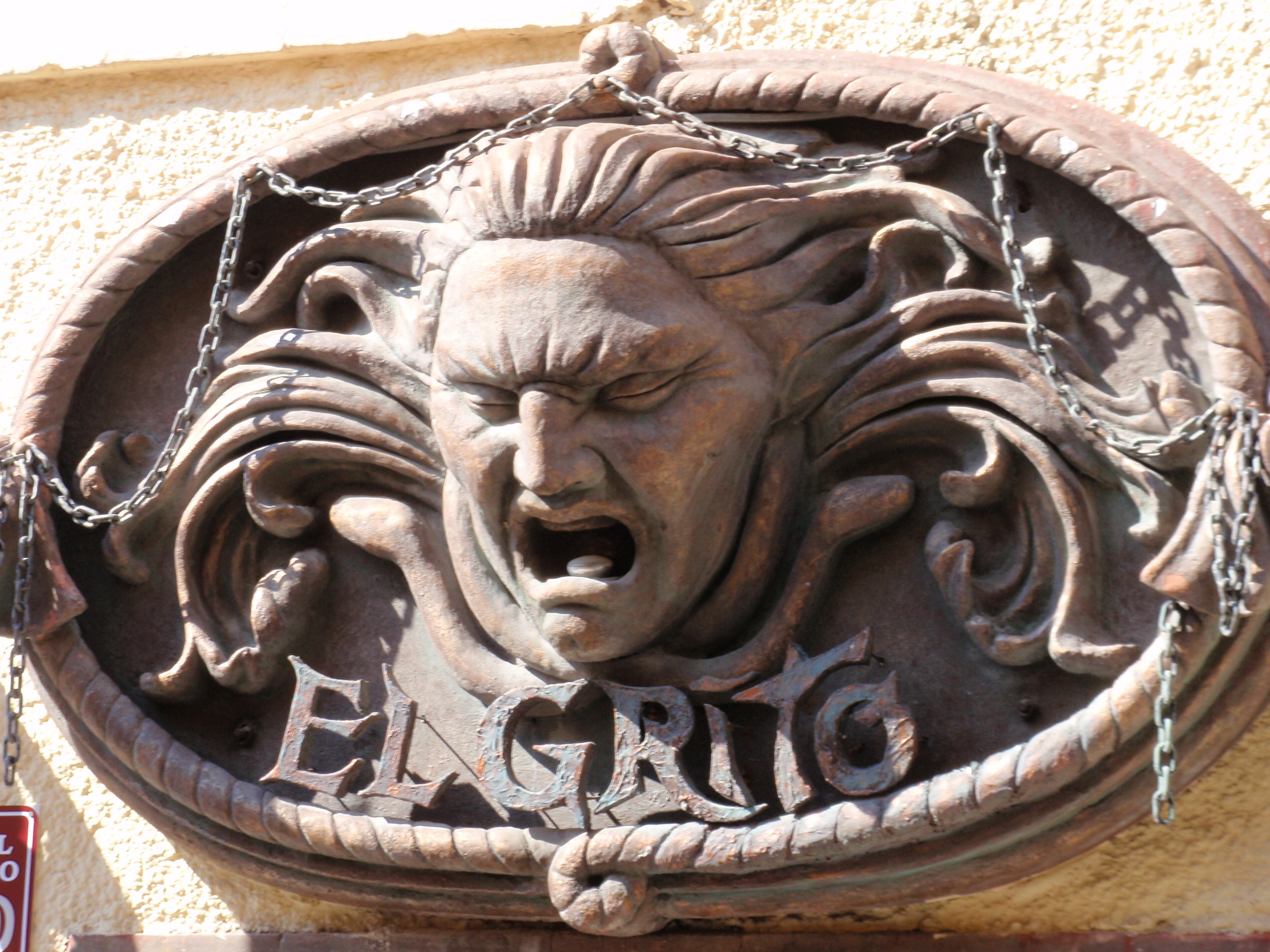
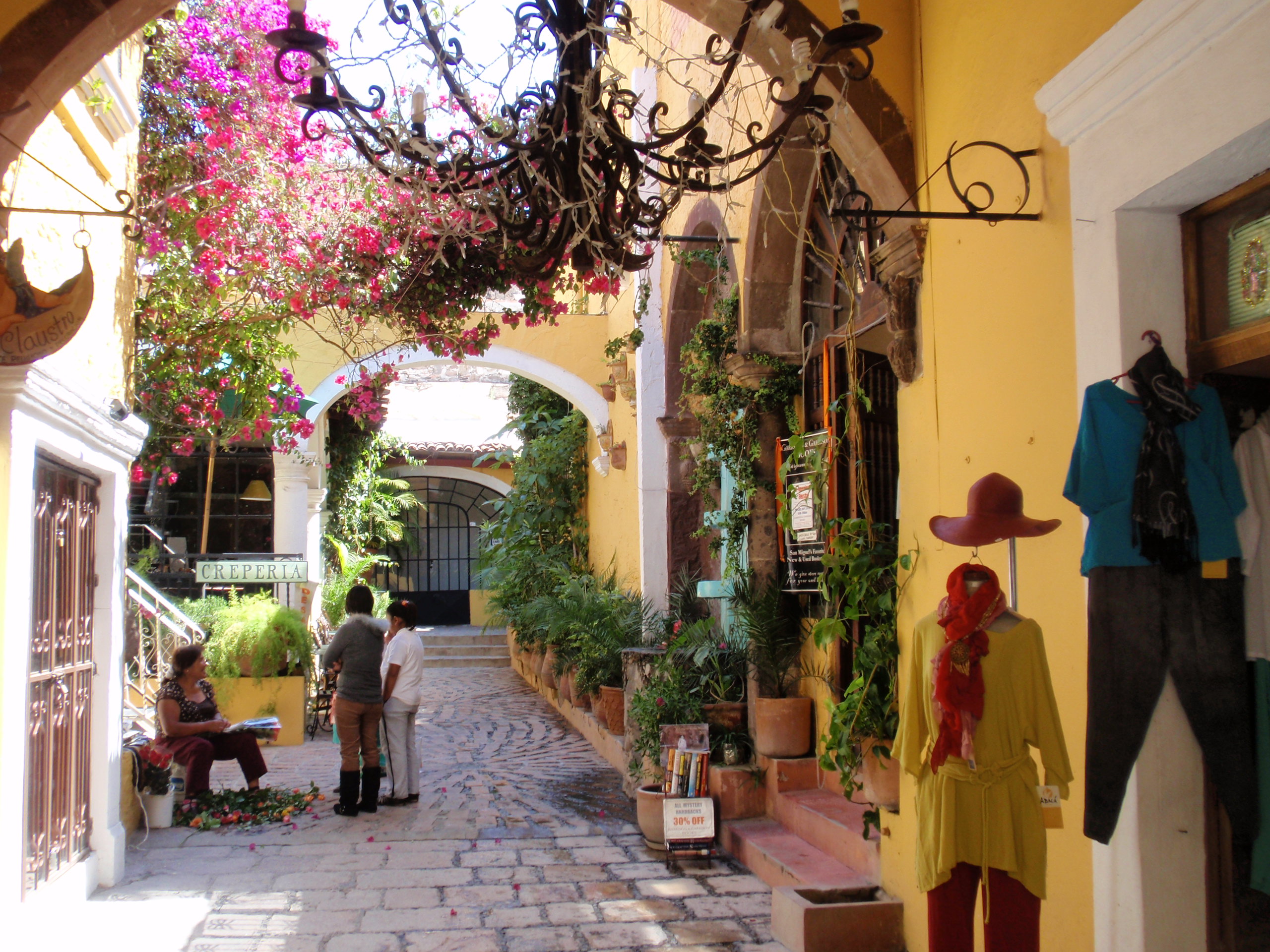
Locals creating dried flower arrangements in the plaza.Mi Cielo AzulEl GritoOne of many lovely courtyards in San Miguel.
One final note, a visit to San Miguel de Allende would not be complete without a sojourn to Johfrej, a third-generation family of chocolatiers ~ too decadent for words!
The remainder of our stay in Guanajuato was spent seeking out interesting restaurants and exploring places on our own.
We decided to check out the Mercado Hidalgo, a bustling marketplace opened in 1910, where the locals rent stalls to display their crafts and sell fruits and vegetables.
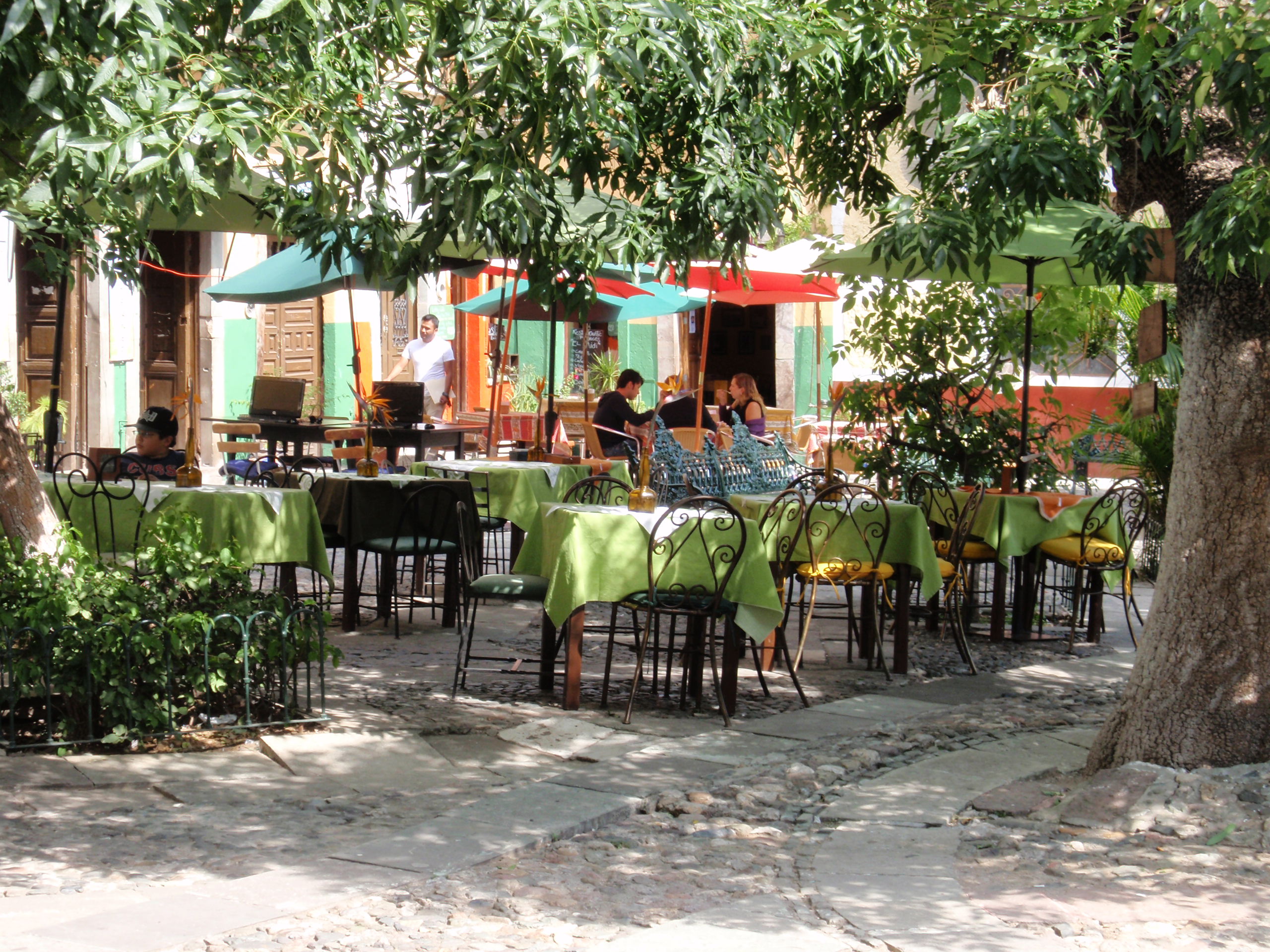
We were tipped off about El Midi, a nice little Mediterranean style restaurant for comida (lunch). It is tucked away in a quaint little plaza, called Plazuela de San Fernando, where balconies overlooking the shops are filled with Talavera pots laden with fragrant plants.
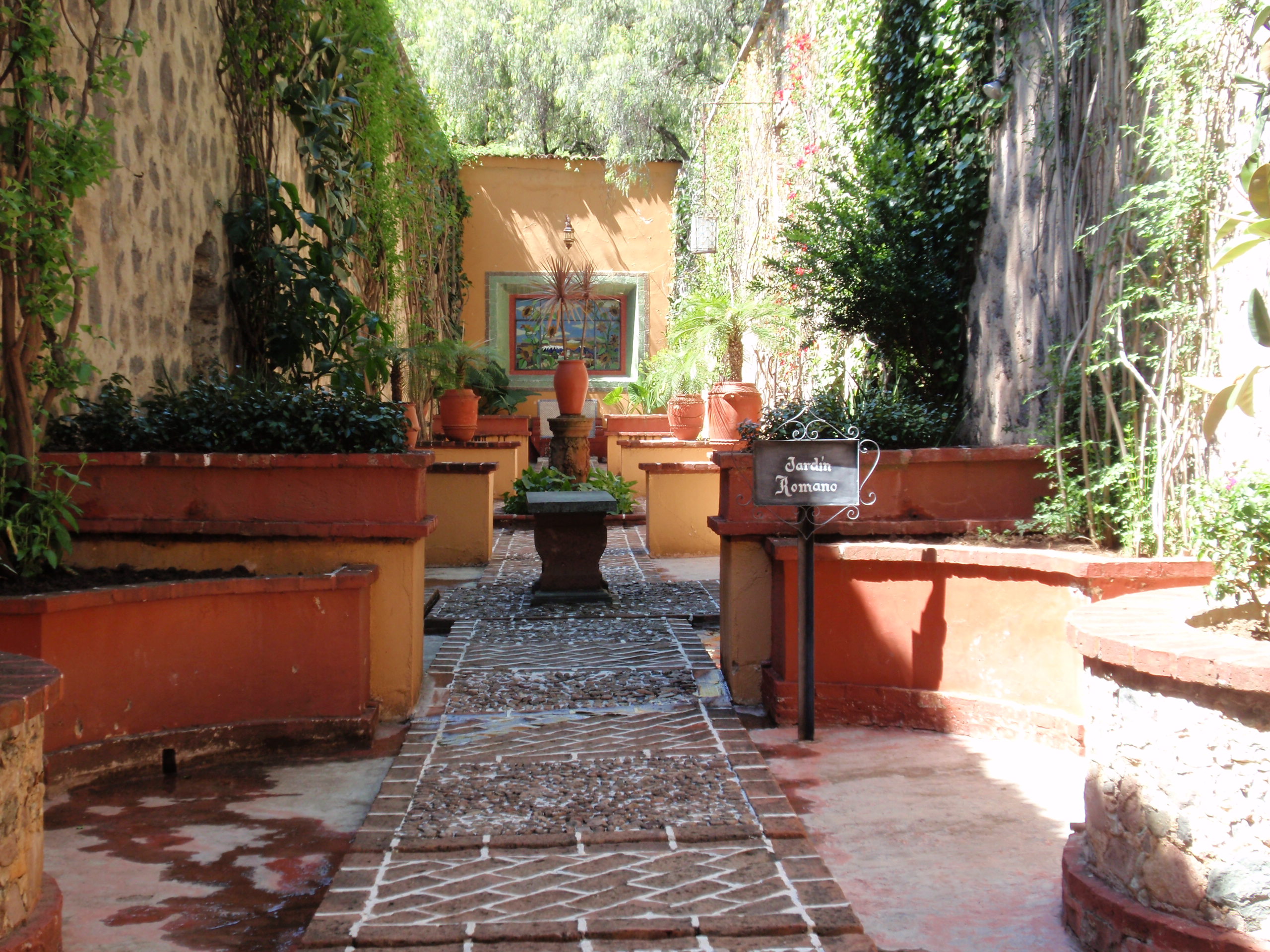
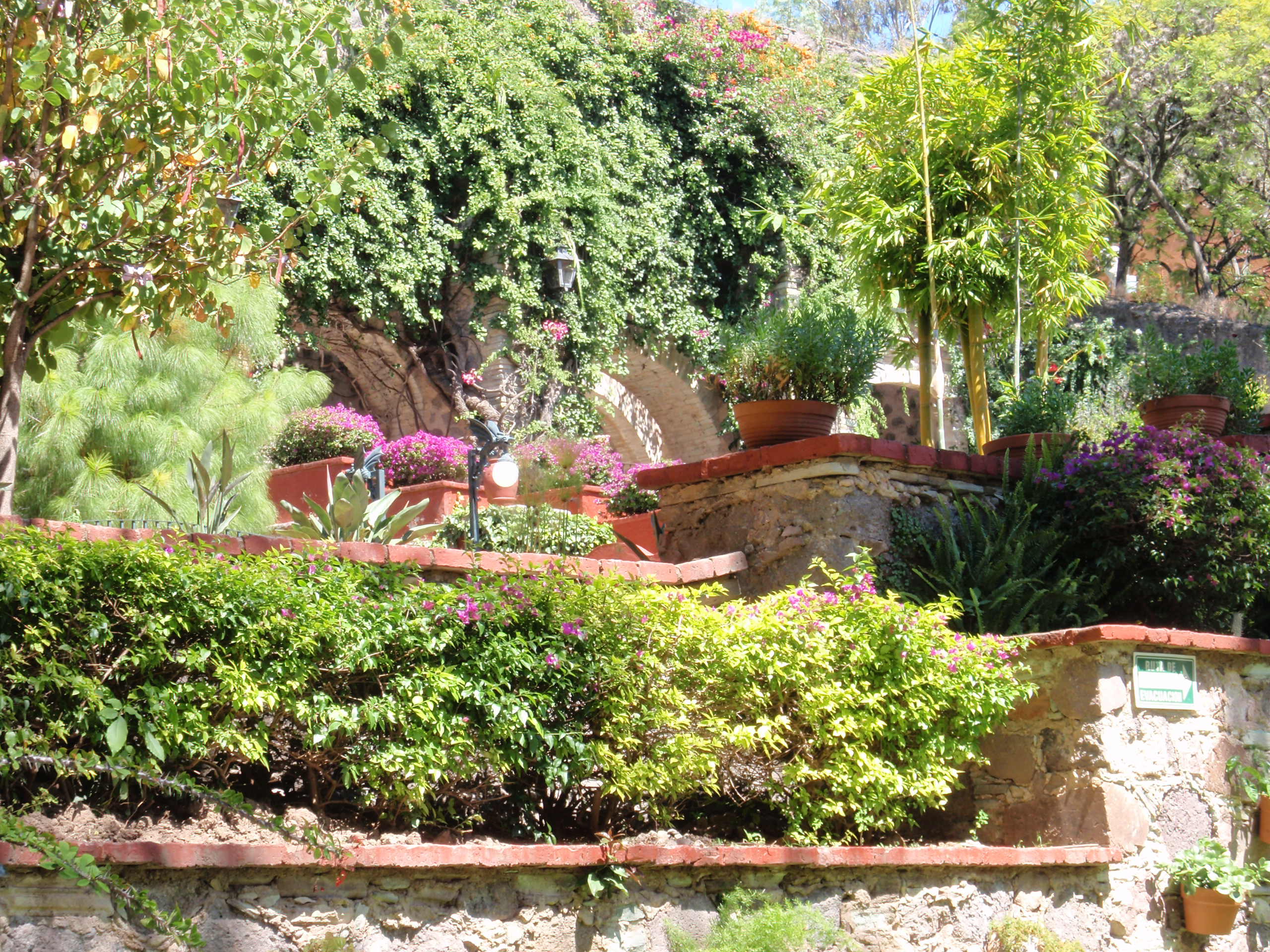
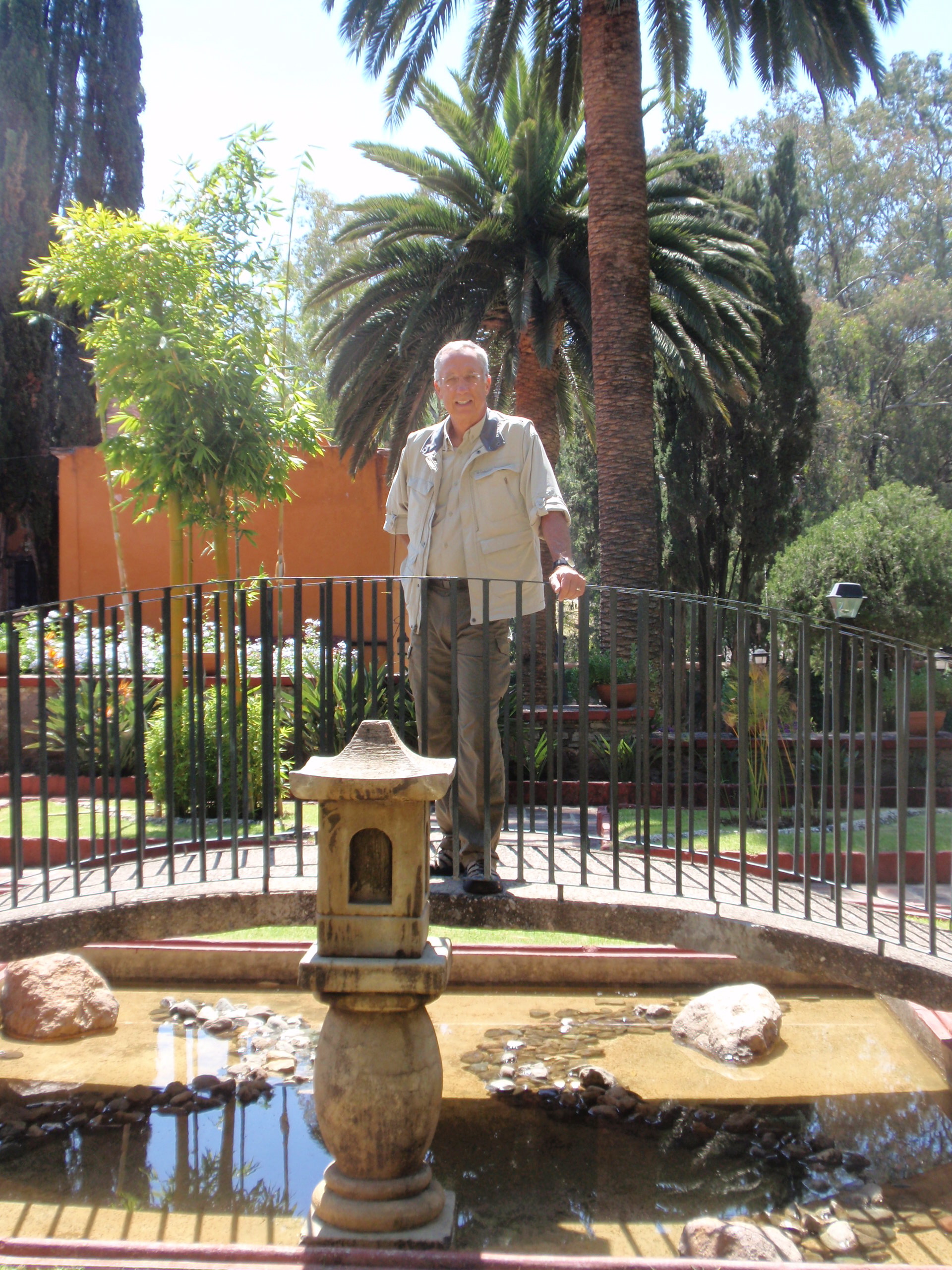
From here we jumped into a taxi and headed to Ex-Hacienda San Gabriel de Barrera, a 16th-century former hacienda, with 3 acres of gardens representing several countries, Japan, Mexico, Italy, etc. This is a tranquil setting, away from the hustle and bustle of the city and much of the original furniture continues to be displayed within the walls of the hacienda.
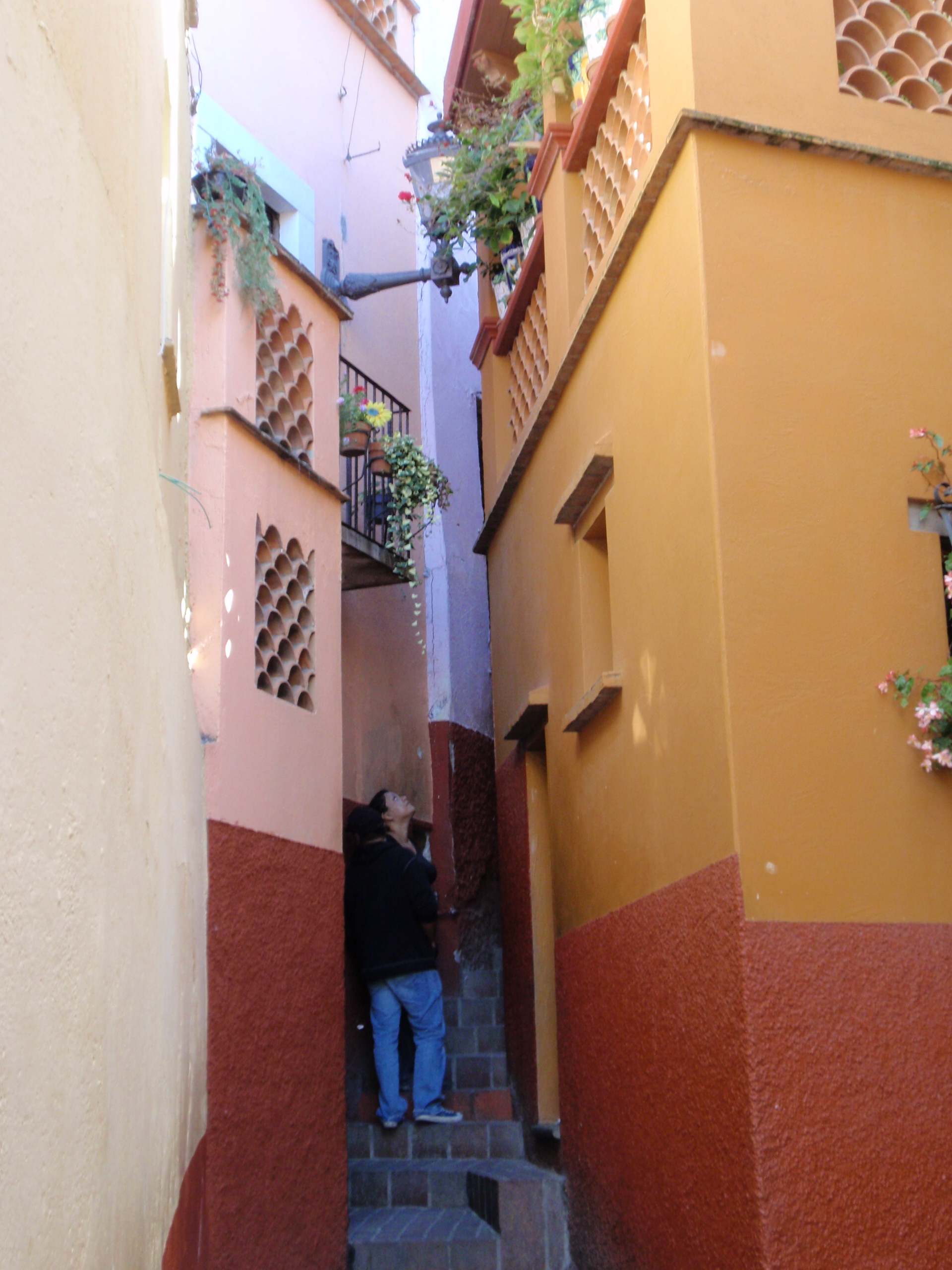
There is a famous alleyway not to be missed when in Guanajuato, that of the Callejon del Beso (the Kiss Alley). Legend has it that two young lovers, one a wealthy Spanish girl, Ana, and the other a poor miner, Carlo, would sneak kisses from their balconies across from one another. One night Ana’s father witnessed this and murdered his daughter. Carlos was so distraught over his loss that he killed himself in one of the local mines.
A much photographed sculpture of Don Quixote de la Mancha and his sidekick Sancho Panza can be seen in the Plaza Allende, where the Teatro Cervantes is also located.
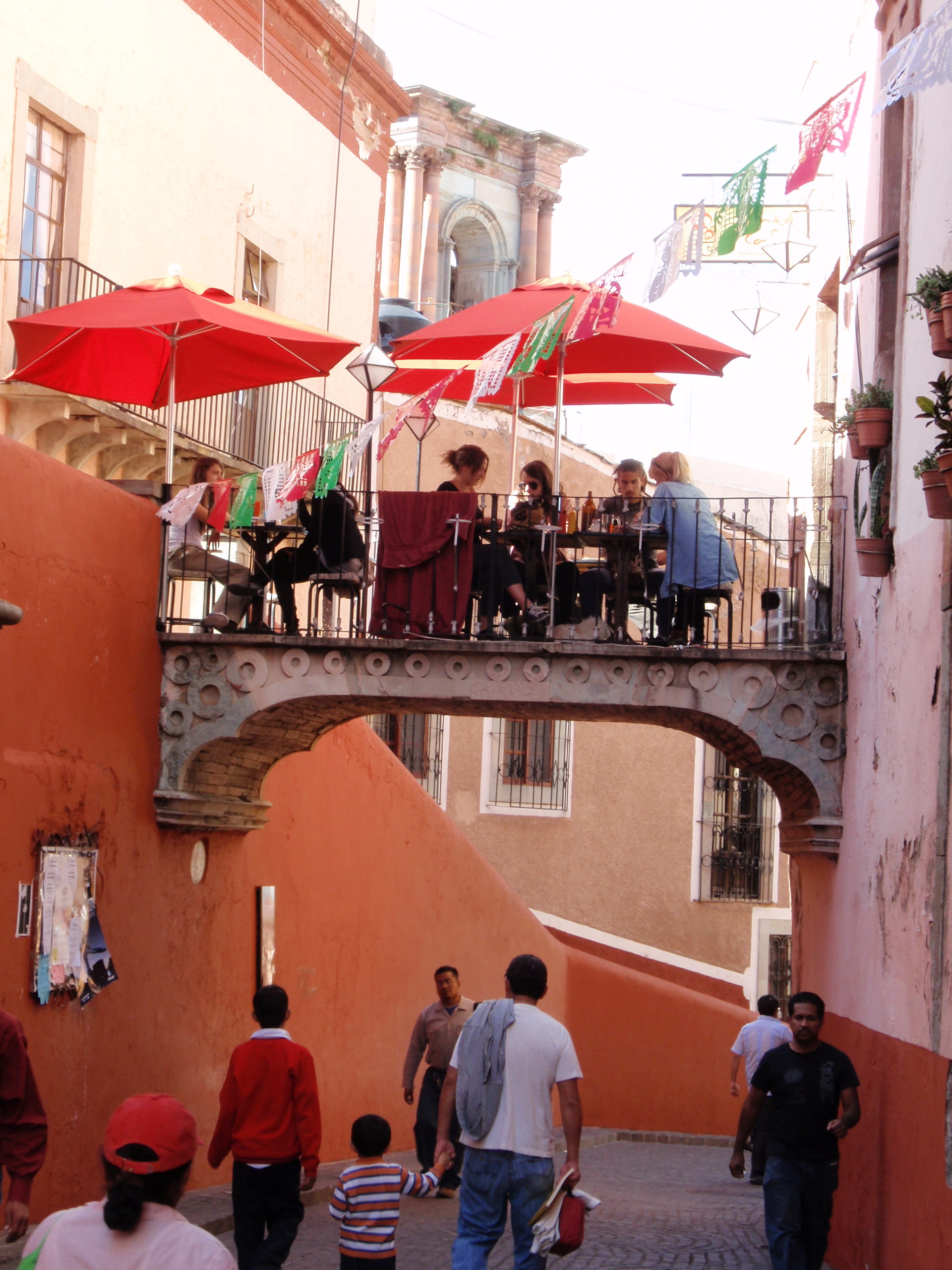
Just a few steps away is Campanero (Bellman) Street. Looking skyward, you will see an 18th-century bridge, one of the few remaining in Guanajuato, with a lovely cafe spanning it.
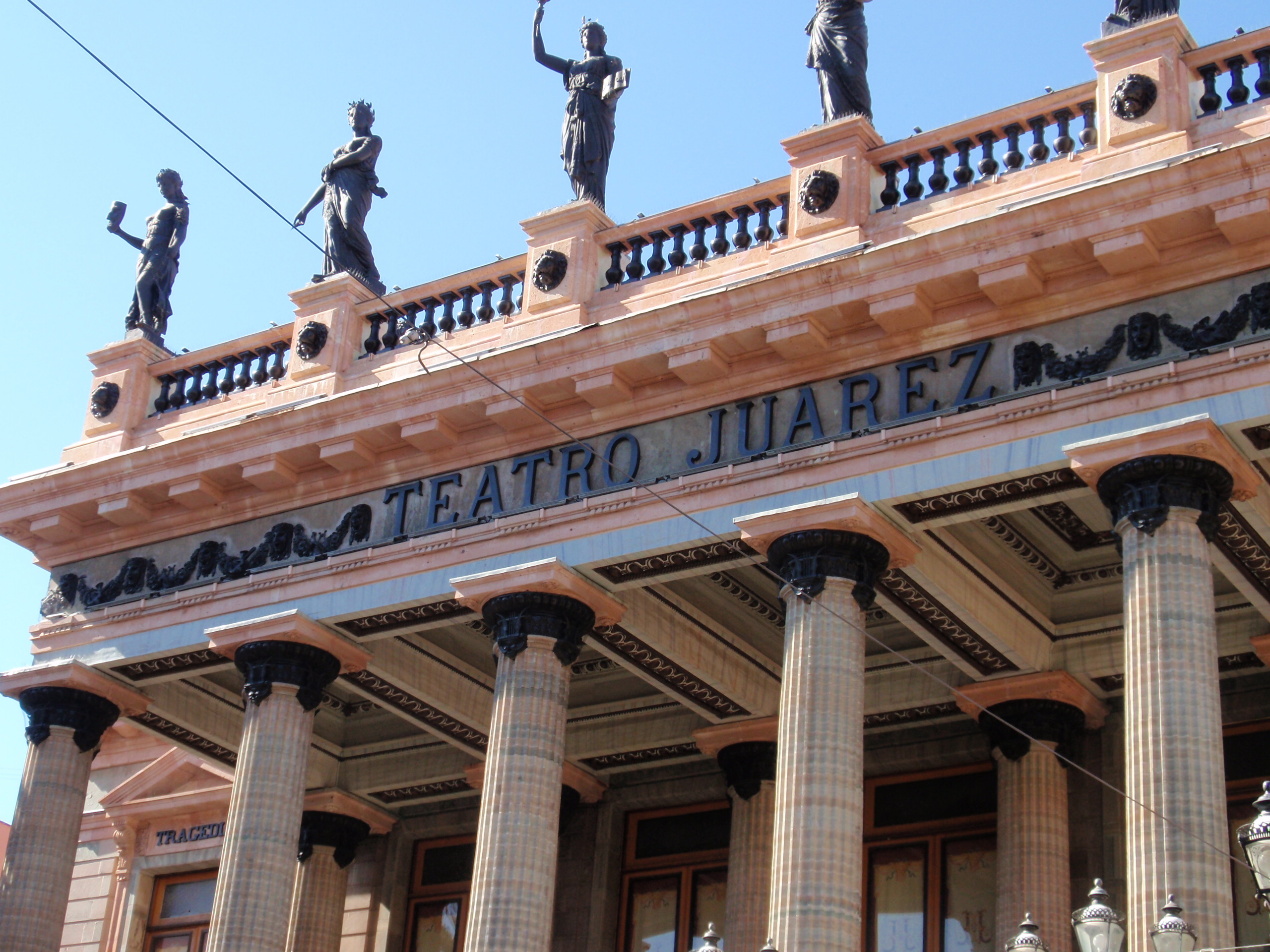
One of the most beautiful theaters in all of Mexico resides in the heart of Guanajuato, across from the Jardin de la Union, the Teatro Juarez. The bronze sculptures of the Greek muses are proudly displayed on pedestals atop the theater and are breathtaking, both during the day and at night. The inauguration of this theater occurred in October 1903 and can accommodate 1100 spectators. It is the main stage for the annual International Cervantino Festival, as well as the focal point for theater, ballet, musical presentations, and painting and photography exhibitions. On nights when there are no performances being held, impromptu mime acts and other student productions are taking place outside, with the stairs leading up to the theater packed with students and other observers.
Our last evening meal in Guanajuato was spent at a lovely sidewalk cafe, La Cappelina, sharing a pizza and people watching. It was very heartwarming to see the number of smiling children, walking arm-in-arm with mothers and grandmothers, no matter what their age, not too embarrassed to be seen displaying this type of public affection.
This is a city of great vibrancy, perhaps because of the university influence, and one which appears to be adhering to their Spanish roots, despite the oppression of the past. We look forward to revisiting this area again and again.

























 Paint Your Landscape