Tuscany was our next destination, and like others who have read the book Under the Tuscan Sun, I too had romanticized a visit to the land of manicured vineyards, cypress-lined drives, rustic farms, and hill towns studded with towers and medieval castles.
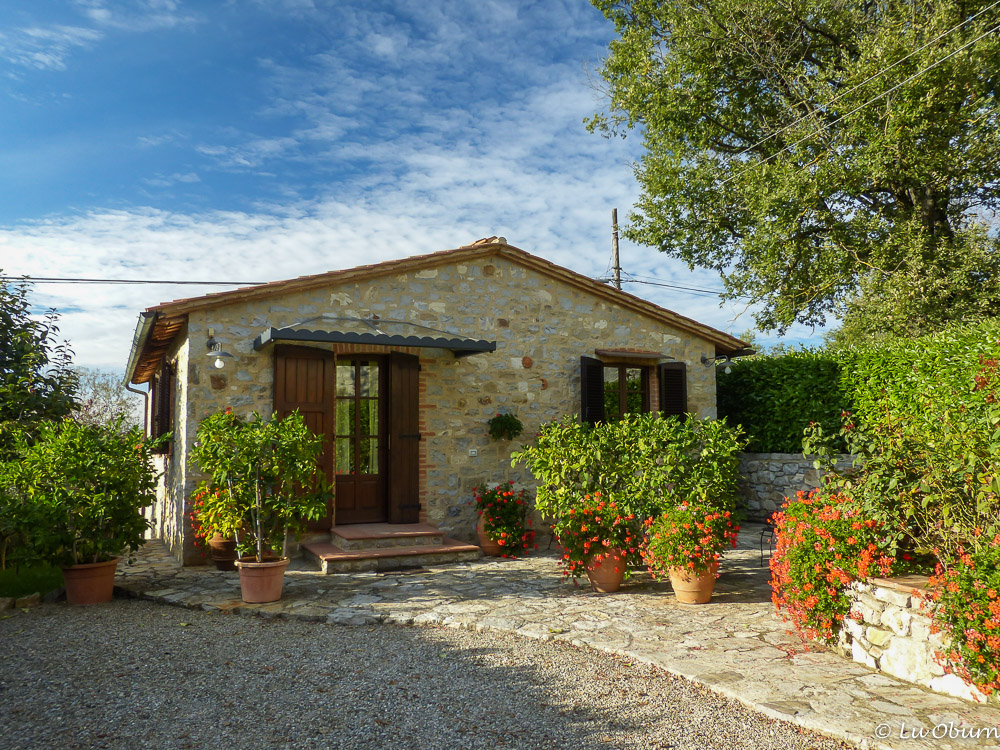
I was determined to stay in an agriturismo and found one in the Chianti region, just outside the village of Castellina in Chianti, where Mama Daniele warmly greeted us. Although she spoke little English she was still able to communicate how all things functioned in this charming little farmhouse. I think all four of us were looking forward to a slower pace while here, and that’s exactly what we got, some more than others, as Margee succumbed to a cold, which grabbed Terry a few days later, and then Frank to a lesser degree. It’s a wonder I avoided it while living in a sick ward so I became chief cook and bottle washer while they got their rest.
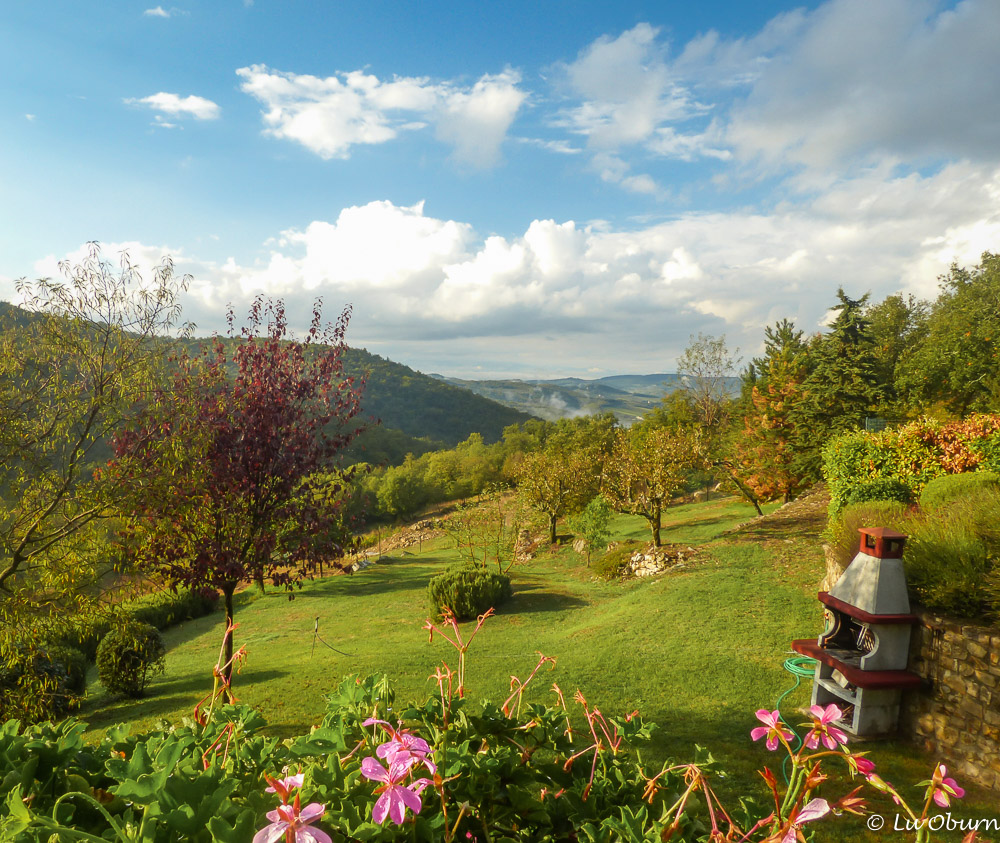
The weather gods had certainly blessed us up to this point in our travels so we knew our days were numbered before lower temps and cloudy days moved in, and they did while here. It seemed to be apt for those a bit “under the weather”. Other than one day of rain and a couple of others with drizzles, it wasn’t a wash-out. And when the infirm felt up to it, we took to the road for some exploring.
With such profuse landscape changes, from pastoral in the Crete Senesi, to the rocky Chianti region, to vineyards clinging to hillsides and winding, narrow country roads, Tuscany is a feast for the senses, and her wines and local fare are a threat to waistlines. I hear the gym calling my name. 😦

With countless hill towns to choose from, each with their own unique beauty and rich history, it was difficult to choose. Since many can trace their lineage to Etruscan times, long before ancient Rome, we knew we would be experiencing quaint villages with medieval charm, no matter which we visited. Here is what we managed to cross off of our very long list:
1) Volterra


We visited Volterra twice, with our first stop being a “wash-out”. Its name means “land that floats” and in the winter she is blanketed by heavy clouds. We saw a bit of this during our first visit, yet we were drawn back and it became one of our favorite hill towns. It has managed to escape the rush of tourists, given its out-of-the-way location, and we were drawn to its sense of purity and otherworldly charm. Twilight fans will remember that this is where the powerful Volturi vampire clan resided.


Volterra is more than 2,000 years old and is one of the most important Etruscan cities. Impressive walls encircle the town, topped with an imposing fortress. The Etruscan Arch, built of massive stone in the 4th century B.C., welcomed her 20,000 residents.
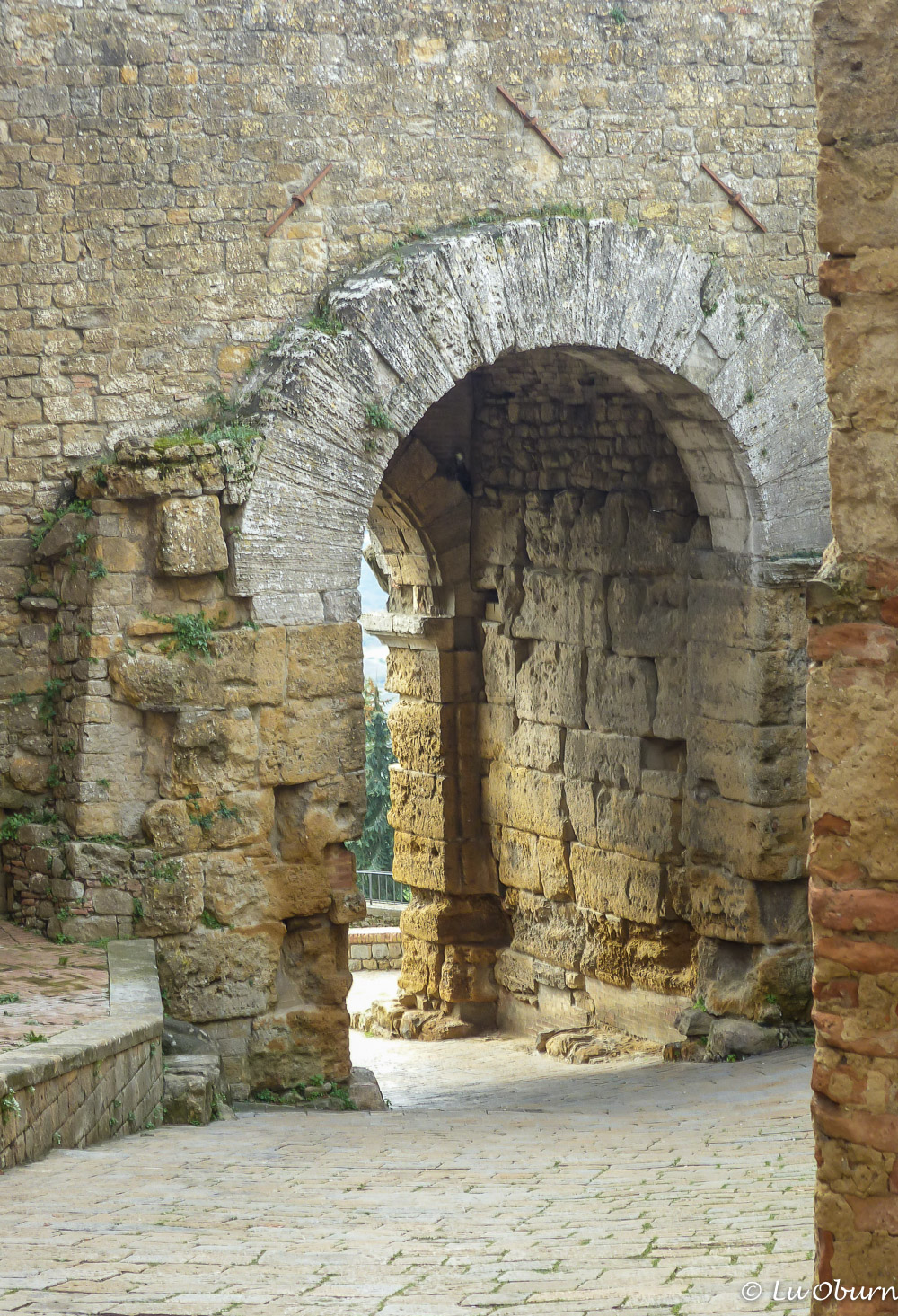
I read a story that on June 30, 1944, Nazi forces were planning to blow up the Arch to slow the Allied forces. Locals pulled down the stones, secured the gate, and managed to convince the Nazis to leave the Arch alone. The blocks were put back into place and today you can walk through the oldest standing gate.
2) Pienza


A tidy village with Renaissance-planned streets, it is where Pope Pius II was born. This little village is great to explore with a camera, then stop for wine tastings and pecorino cheese sampling.
3) Siena


This town that sits atop three hills, with her cozy squares and grand cathedral, once rivaled medieval Florence. In the 13th century Siena had a population of about 50,000 and was a major banking and trade center. Then Black Death hit, the bubonic plague, wiping out a third of her people, and Siena has never recovered.
Siena is where the famous Palio horse races are held twice each summer. Ten horse and riders, riding bareback and dressed in specific colors, represent 10 of the 17 city wards. The first race is run early in summer to honor the Madonna of Provenzano and the second in August in honor of the Assumption of Mary.


A thick layer of dirt is laid over the bricks in the Il Campo Square and the race is run three times around the piazza, lasting no more than 90 seconds. Often unmounted horses finish the race without their riders. A medieval pageant paves the way, attracting spectators from around the globe.
Siena’s 13th-century Gothic cathedral and it’s 6-story striped bell tower, unlike others, was built and paid for by the people and the republic of Siena as a tribute to the Virgin Mary.
4) San Gimignano


Some say this is Tuscany’s glamour girl, a town adorned by her remaining 14 medieval towers, of which there were once 72. San Gimignano today is best known for cinghiale (cheen-GAH-lay), wild boar and saffron, and boasts of having won the award for gelato world champion. Of course we had to taste for ourselves. It was pretty yummy, even at 10:00 in the morning. 🙂


Next Up: An Abbey and Day Trippin’ to Florence
 Paint Your Landscape