
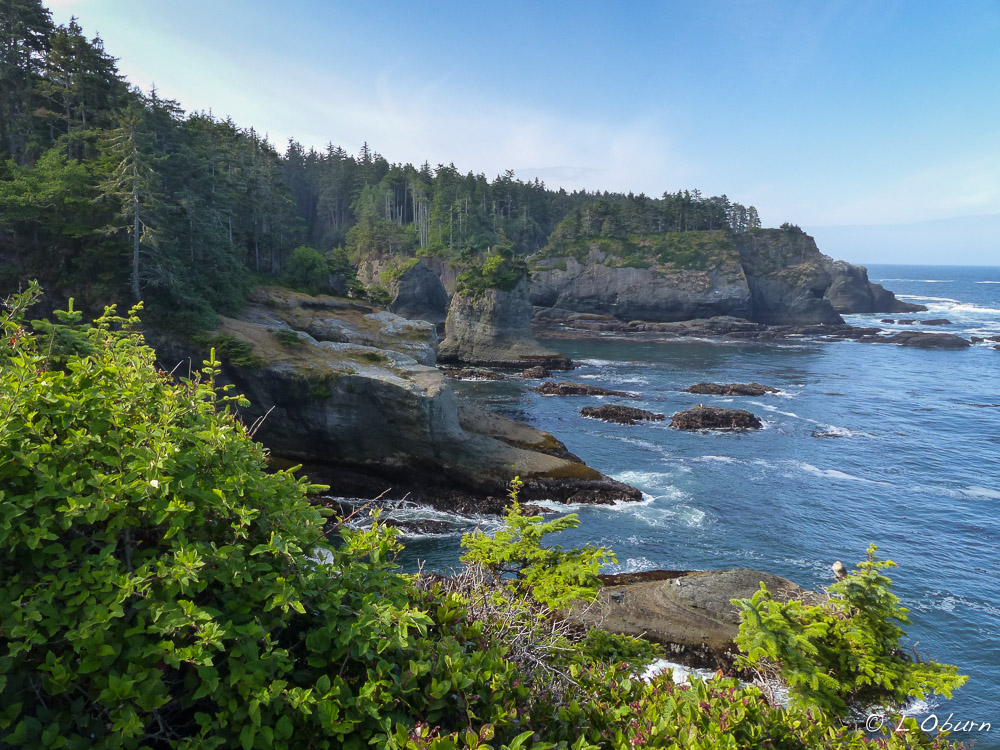
 Olympic National Park, encompassing 1441 square miles of the Olympic Peninsula, is known as “a gift from the sea” by its native residents. It has three distinctly different ecosystems – jagged, glacier-capped mountains, more than 70 miles of rugged Pacific coastline, and majestic stands of old-growth trees and temperate rain forest.
Although we had carved out a month to visit the Olympic Peninsula, time became elusive. The Pacific Northwest weather can be a fickle gal so staying put awaiting a clear day can quickly find you rushing to catch up to your fleeting schedule.
Leaving South Beach on a clear, cloudless day, we hoped for a clear view of one of the more scenic beaches, Ruby Beach. Beaches on this craggy coastline have as many moods as do we, sometimes bright and clear but other times dark and brooding, laden with fog. Our initial visit to Ruby Beach was the latter, but I so love all the many moods of these coastal beaches. Misty, foggy days, a freshness to the wind as if it had been infused with ozone…oh my! The light mist seemed to heighten smells, enhancing the richness of the sea air.


Mora Campground, just north of La Push was our next stop in Olympic NP. Like many other national park campgrounds, unless you are packing a tent or pulling a small RV, you may want to seek camping outside the park. We had scoped out this campground to visit Rialto Beach and hike to the sea-carved arch, Hole-in-the Wall, at low tide. Two trips to Rialto were needed as our first attempt brought us to an invisible beach of dense fog. Later that evening she was still a brooding beach but with enough visibility to make our way up to Hole-in-the Wall. Low tide revealed little interesting sea life but made for a nice three-mile out-and-back walk near sunset.
Bleached driftwood strewn along the beach reminded me of prehistoric bones picked clean by the sea, enhancing the eerie feeling.


Then it was on to the mystical land of vampires and werewolves, thanks to Stephanie Meyer’s successful “Twilight” series.
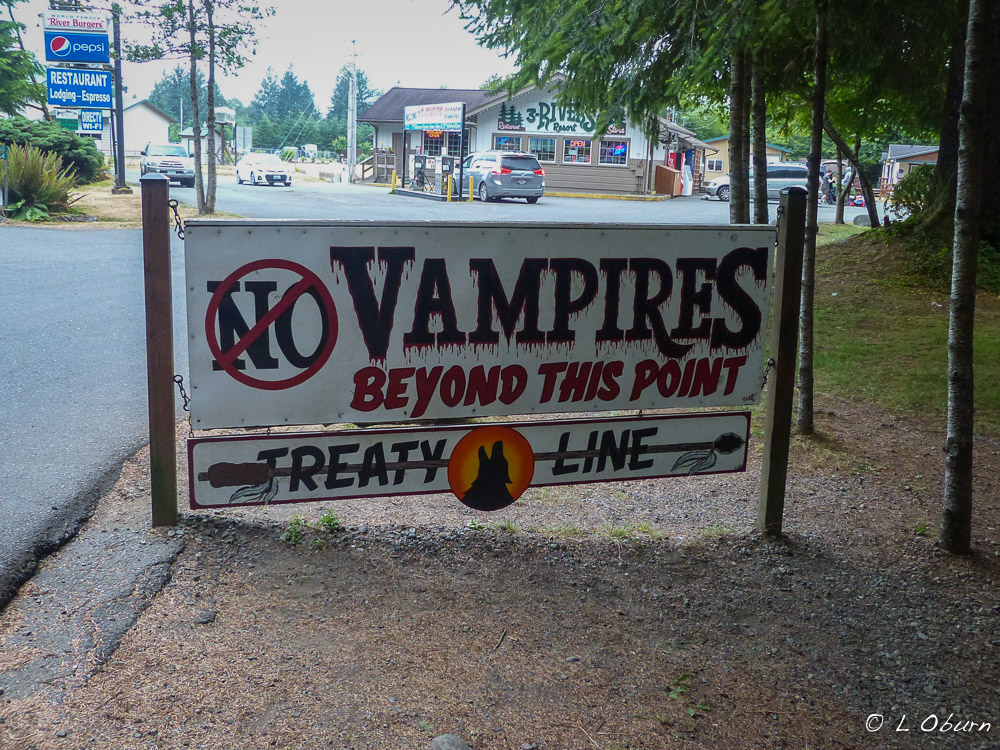
Many travel to the north Olympic Peninsula to retrace the footsteps of some of their favorite “Twilight” characters, the epicenter being Forks and La Push. Although none of the movies were filmed in either of these small towns, tourists still flock to the area to visit sites such as the Forks High School, where Bella and Edward met, and La Push, where Bella visited her werewolf friend, Jacob. Click here to see where the movies were filmed.
Forks is one of the region’s logging capitals and Washington’s wettest town, charting 100+ inches of rain per year.
We had read that Second and Third Beaches were both great for tide pooling. As our time was short we chose one, Second Beach, and hit the jackpot at low tide. The area was bursting with ochre sea stars, green sea anemones, and aggregating anemones.


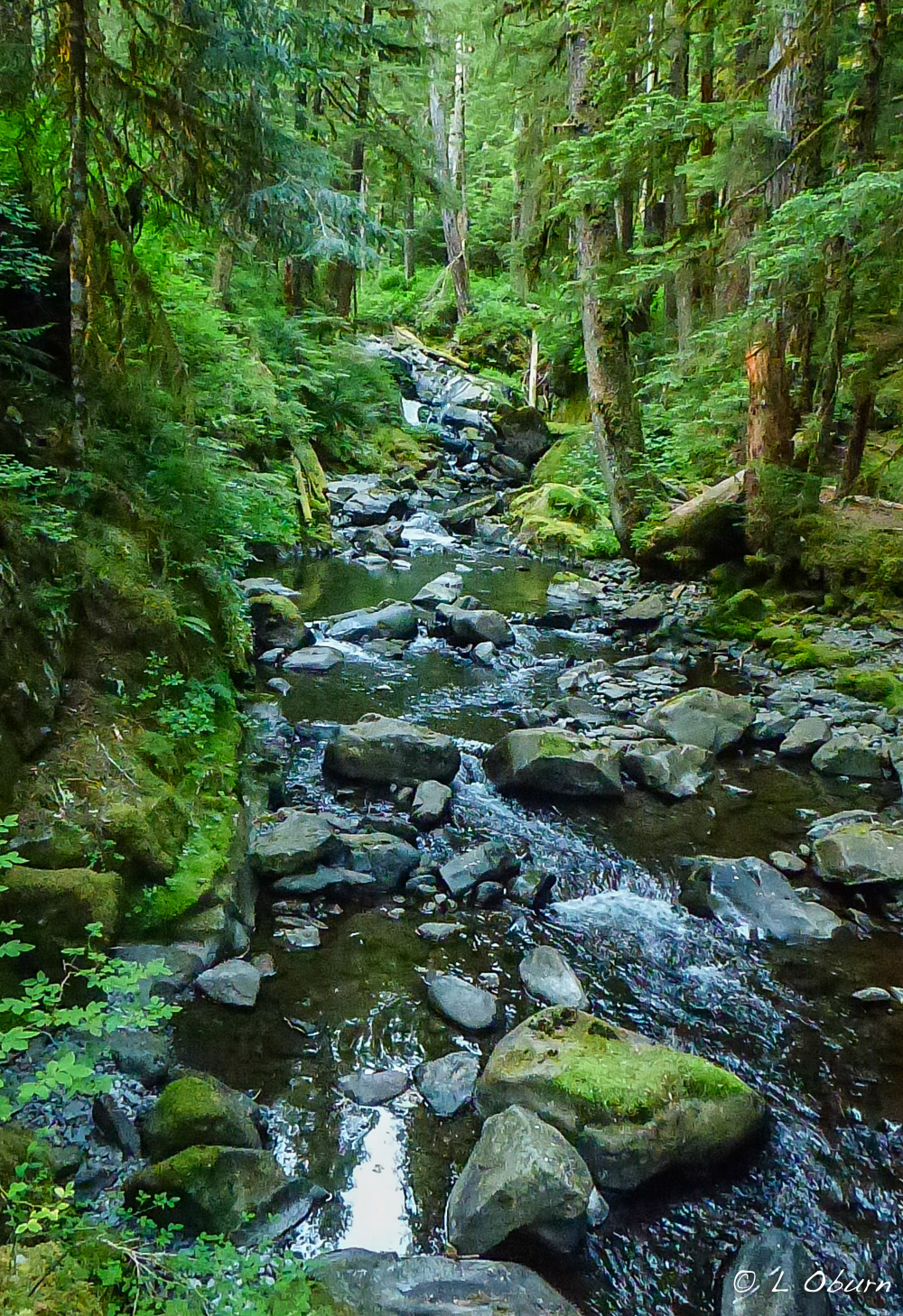
Stepping away from the coast for a few days, we moved east to Sol Duc Hot Springs Campground, where we hiked the six-mile Sol Duc Falls/Lovers’ Lane Loop. The Sol Duc Falls is a segmented waterfall, quite the stunner, and the old-growth forest we hiked was lush. The Sol Duc River that meanders through the forest serves as a key waterway for coho and chinook salmon. It is one of the few places where salmon run in every season. This area is also home to the Sol Duc Hot Springs, which has an interesting Native American legend tied to it. You can read all about it here.


This forest, like others, had a smell reminiscent of cotton candy, transporting me back to my childhood. Images of sticky smiles, colored pink and blue, danced before me as I dodged tree roots in the path, while the smell of spun sugar teased my memory.

After one night in Sol Duc Valley we were on the move again, stopping at Fairholme Campground on Lake Crescent. This lovely lake is known for its brilliant teal-colored waters and extraordinary clarity, due to a lack of nitrogen in the lake that inhibits algae growth. Instruments have recorded depths in excess of 1000′, although many records reflect a maximum depth of 625′ in this glacially carved lake.
Kayaking was on the agenda but two fires nearby caused smoke to settle over the lake. Biking the Spruce Railroad Trail made the list instead for a nice 15-mile bike ride.
We then took to the forest and hiked 2 miles to little Marymere Falls, where a side trail ended at Historic Lake Crescent Lodge. We both agreed this would be a great place to come back and stay.


This rounded out week two of our enchanting time in Olympic National Park. It was time to get back to civilization.


 Paint Your Landscape