
Merida

Days 7 & 8

We pulled into the inspiring capital city of Yucatan, Mérida, on day 7 of our Caravan tour, excited with the prospect of a 2-night stay.  Mérida is the largest city in the state of Yucatan and the cultural and financial capital of the Yucatan Peninsula.  It was founded in 1542 by Spanish Conquistadors and has a current day population of approximately 1.5 million people.  The first rulers here, beyond the ancient Maya, were influenced by Spain, which is reflected in its rich colonial flavor.

Mérida was built on the former Mayan center, T’Hó, which for centuries was a cultural and activity center of the Maya world.  Because of this, many historians consider Mérida to be the oldest continually occupied city in the Americas.

Around the turn of the 20th century, Mérida had become quite prosperous with the production of henequen, an agave used to make rope and twine.  At this time it was said to house more millionaires than any other city in the world.  This wealth can still be seen today in many of the elaborate homes along the main avenue, Paseo de Montejo, where stunning sculptures are also on display.  Many of these homes have been restored and now house banks, insurance companies and other commercial space.

A majestic monument, standing as a tribute to the Mexican people, is on display upon entering the city.

Detailed carvings along some of the monument’s panels provided a representation of the rich Mayan history of the area.

Our 2-night stay was at a hotel that is one of the few original art deco houses remaining in Mérida, Casa Del Balam, house of the jaguar.  It was once occupied by the distinguished family of Fernando Barbachano Peon and is located in the heart of El Centro.

A courtyard in the center of the hotel lobby held bistro tables surrounding stone fountains and plants where one could enjoy a quiet meal.  The pool area was equally charming, particularly at night.

Our room was lovely and had a Moorish feel to it.

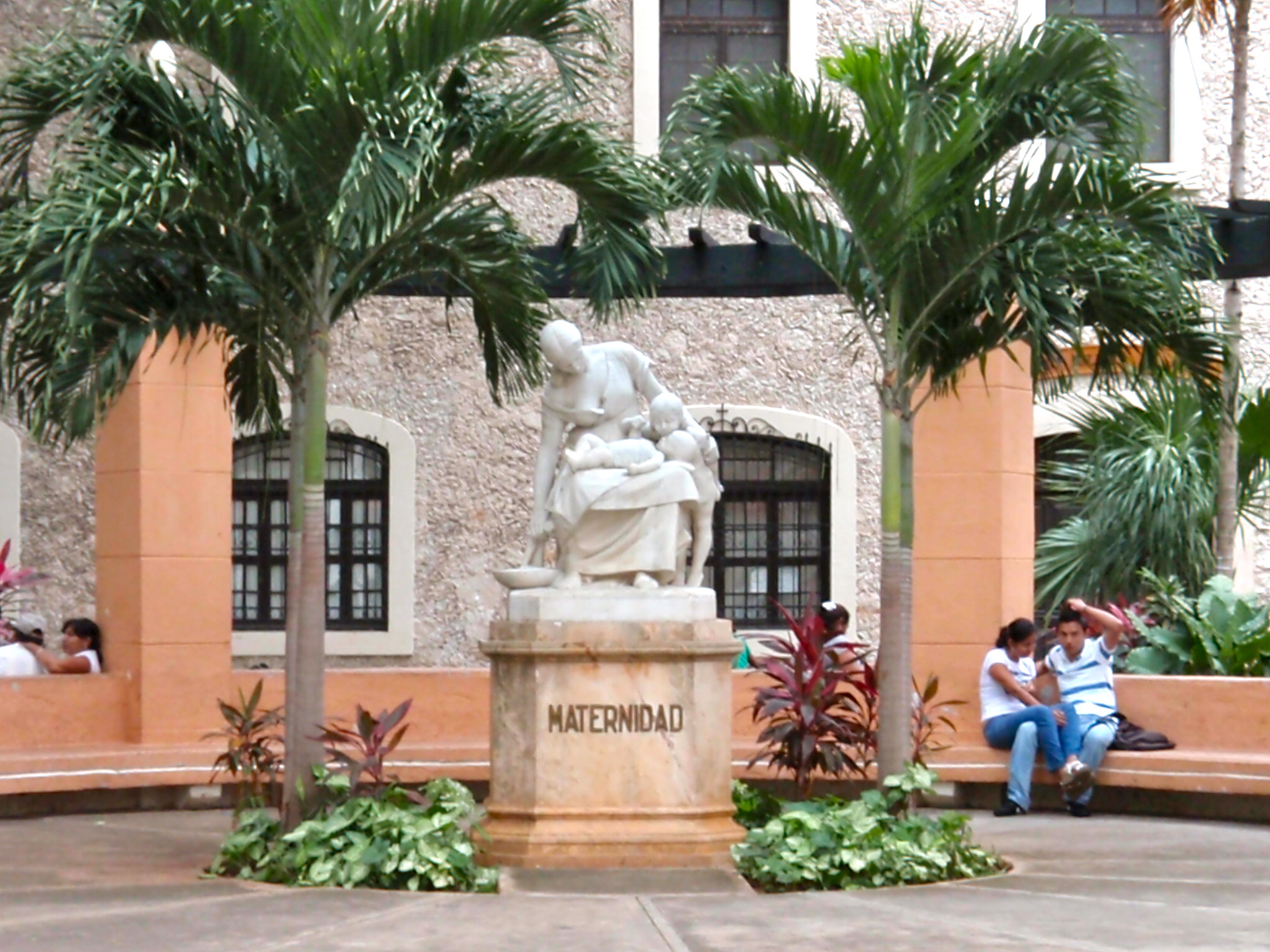
While heading out to view the city, we came across a small plaza with a monument paying homage to Maternidad (motherhood).  It is apparent, when looking at statues such as this or people watching, family is of utmost importance to all in this country.
The Plaza Grande is one of the anchors for the city, with the cathedral and municipal buildings bordering it.
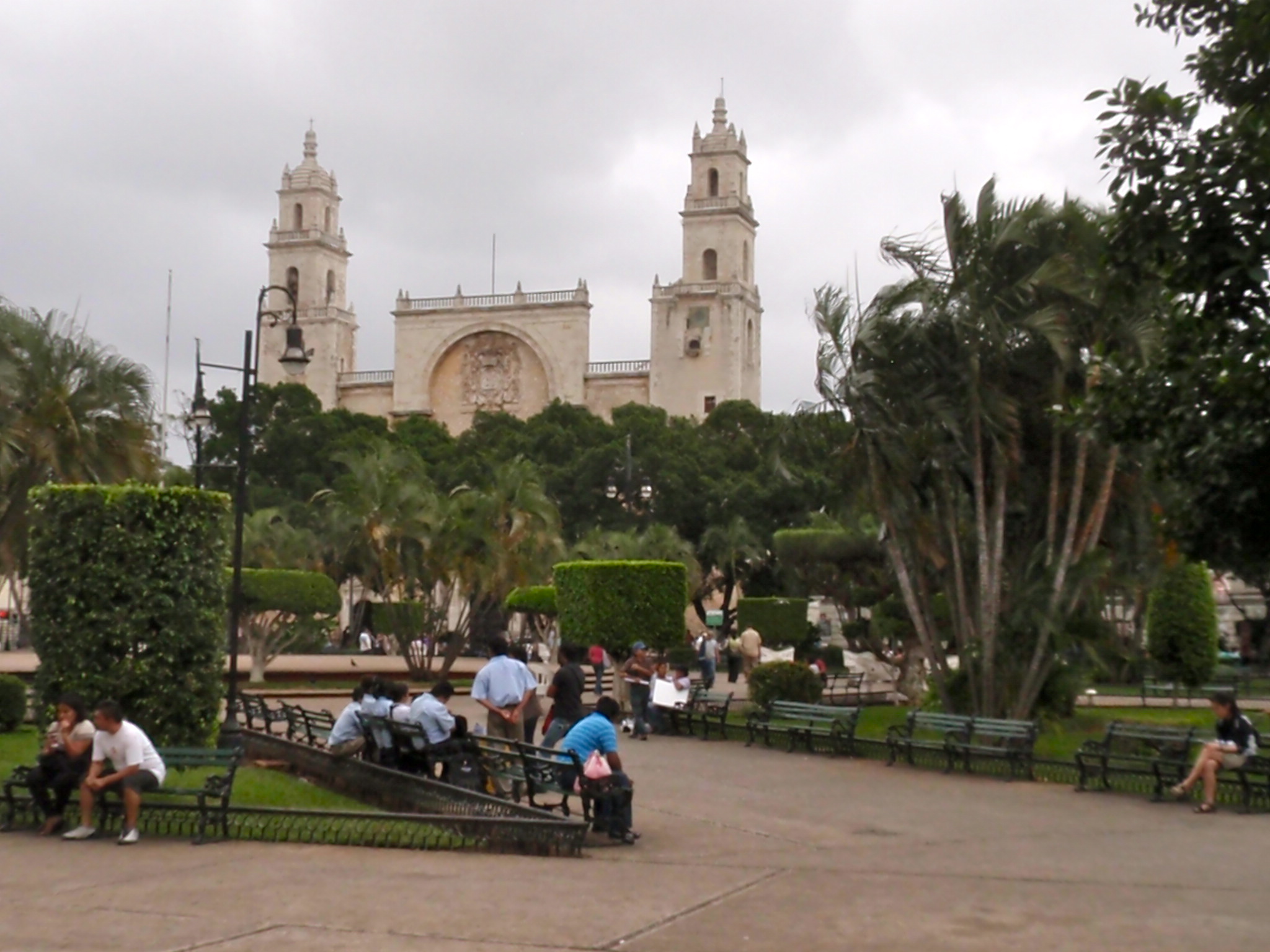
Plaza Grande with Cathedral in Background

The Catedral de San Ildefonso was built between 1561 – 1598, making it one of the oldest in the Americas.  Carved  stone from ancient T’Hó can be seen in the walls of the main cathedral.

Cathedral Night View

Although the interior of this cathedral was not as ornate as some we had seen earlier on this tour, we found the marble archways and columns to be magnificent.

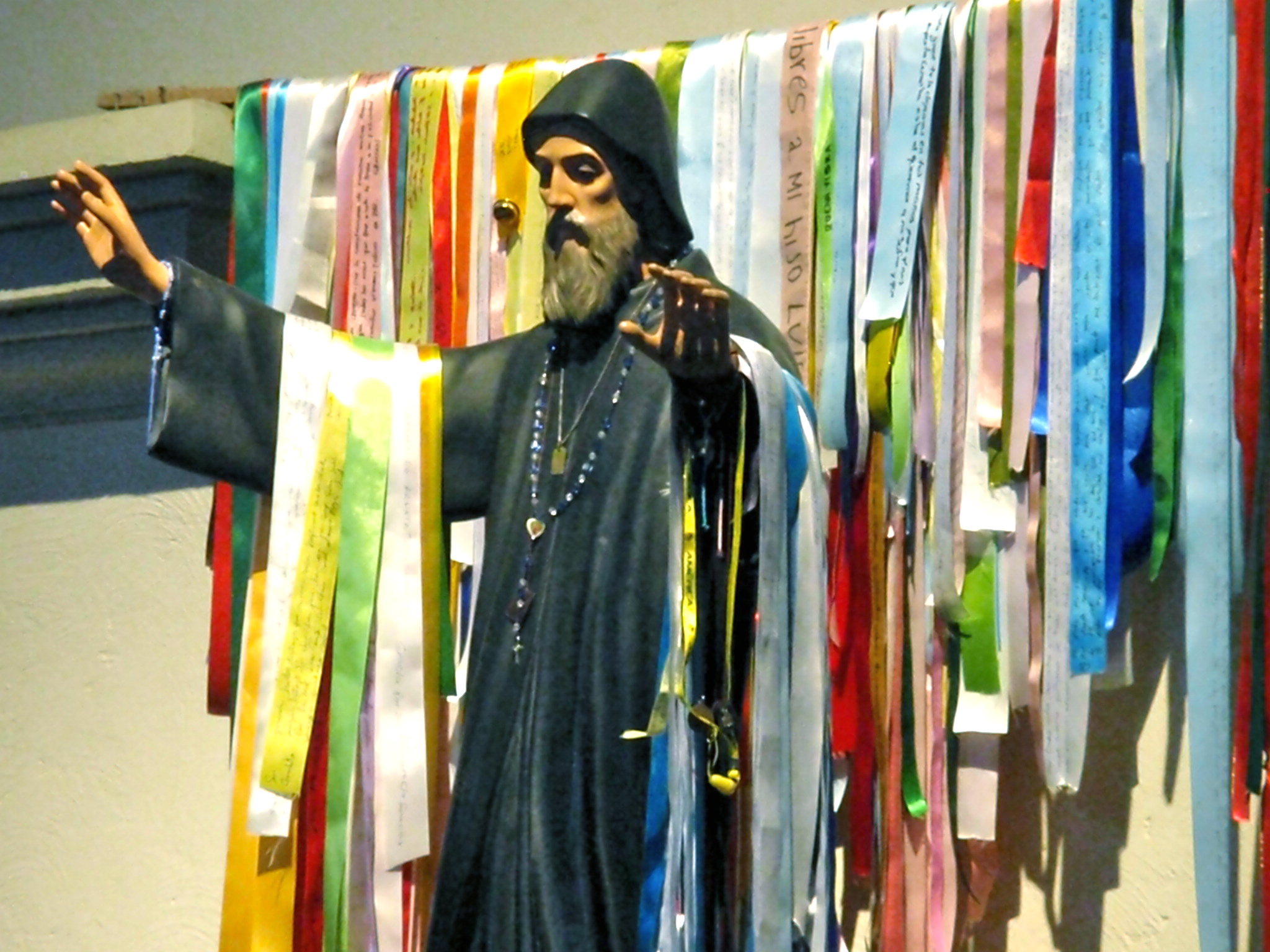
A statue of St. Charbel is represented in the cathedral, with a multitude of colorful prayer flags hanging behind him and across his outstretched arms.  His reputation for holiness prompted people to seek him in life to receive a blessing and to be remembered in his prayers.  This tradition continues long after his death.
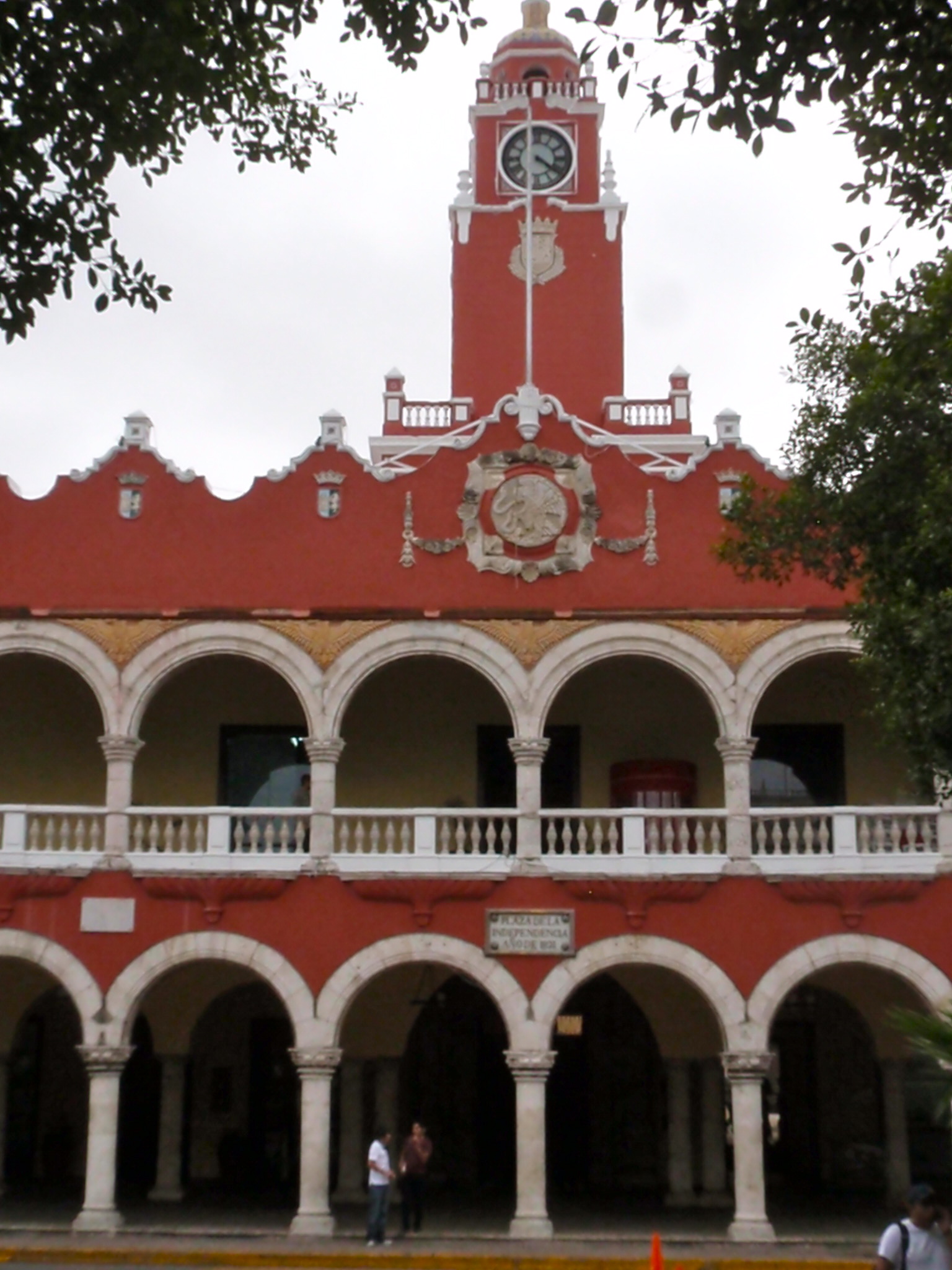
The Plaza de la Independencia, built between 1734 – 1736, houses the Palacio Municipal, and lines one side of the main plaza.  Its striking red color, with white portales (arches and columns) and grand clock tower make it an impressive contrast to other buildings in the area.
The Palace of Don Francisco de Montejo, now a museum and art gallery, was occupied by the family until the 1980’s.  This very ornate structure was completed by the son of the Spanish conquistador who attempted to conquer the Maya in the 1540’s.  Although difficult to see from the picture below, each of the large figures depicting conquistadors to the left and right of the balcony are standing on two heads crying out in terror.  Many speculate that these victims represent the Maya who Montejo sought to conquer with fierce brutality.
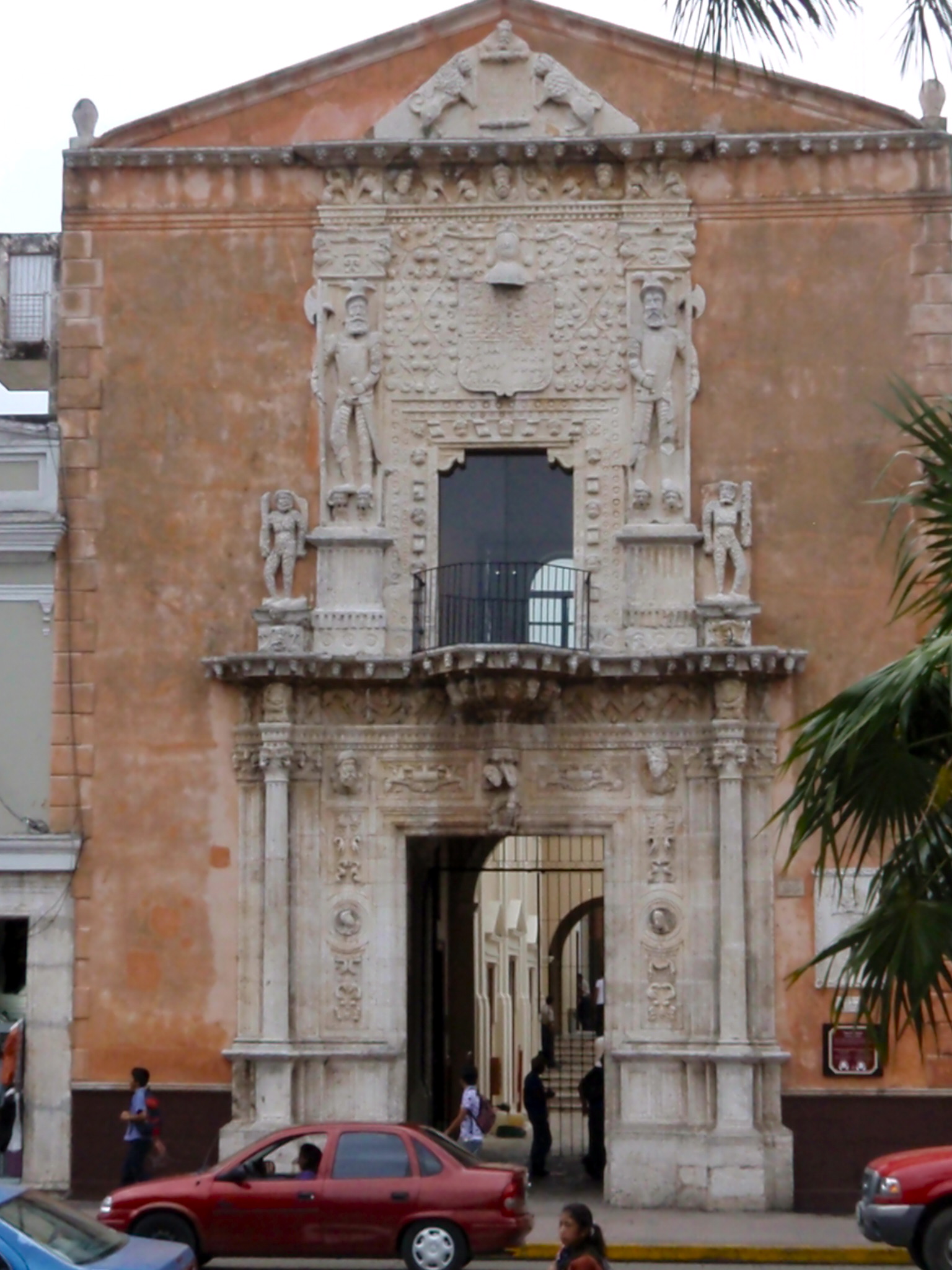
This palace was constructed in the “plateresque” style, which is a blend of Gothic, Moorish, and late Renaissance.  Many architectural historians believe that it is the finest work of the plateresque styling in all of Mexico.  Note the detailing in the window framing below.

We discovered that there is frequently free entertainment at night at parks scattered throughout the city.  The first night of our visit we spent some time at a wonderful concert at the Santa Lucia Parque just up the street from our hotel.

Entertainment at Santa Lucia Parque

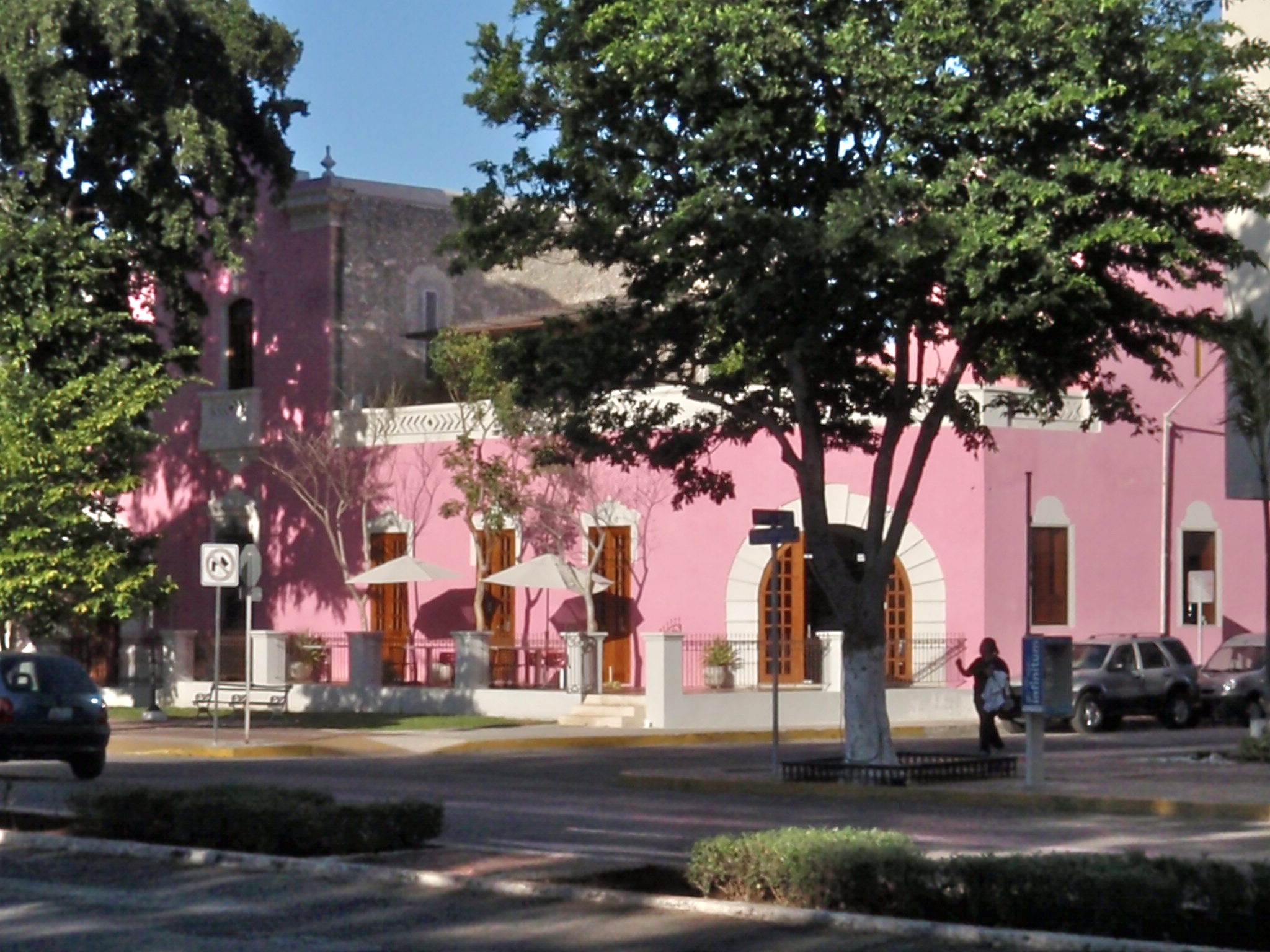
After our tour of Chichén Itzá the following day, we had time prior to dinner to walk the Paseo de Montejo, a beautiful tree-lined avenue with brick walkways, featuring many mansions with ornate facades and interesting looking museums.  I have included a few photos below to provide a flavor for the breathtaking architecture in this city.

Anthropology Museum
Pretty Pink Restaurant
Another Stunning Mansion

And last, but not least…

Turquoise Tempter

This business would capture anyone’s attention!

What a great introduction to a fascinating city.  Terry and I both decided that this is on our list for future visits as a 2-day stay has just whetted our appetites.
Uxmal

Day 7

Early morning on day 7 we hopped on our bus  and traveled through the Puuc Hills to visit the ancient Mayan site of Uxmal (pronounced Oosh-Mahl), in the state of Yucatan, dating back to 600 AD.  Many believe that its name means “thrice built city” as there is evidence that the Maya built temples over existing structures. Uxmal has some of the most authentic examples of regional Puuc-style architecture, matched only by that of Palenque in elegance and beauty.

Estimates are that 25,000 Mayans inhabited the area between 600 – 900 AD, when it was abandoned for unknown reasons.
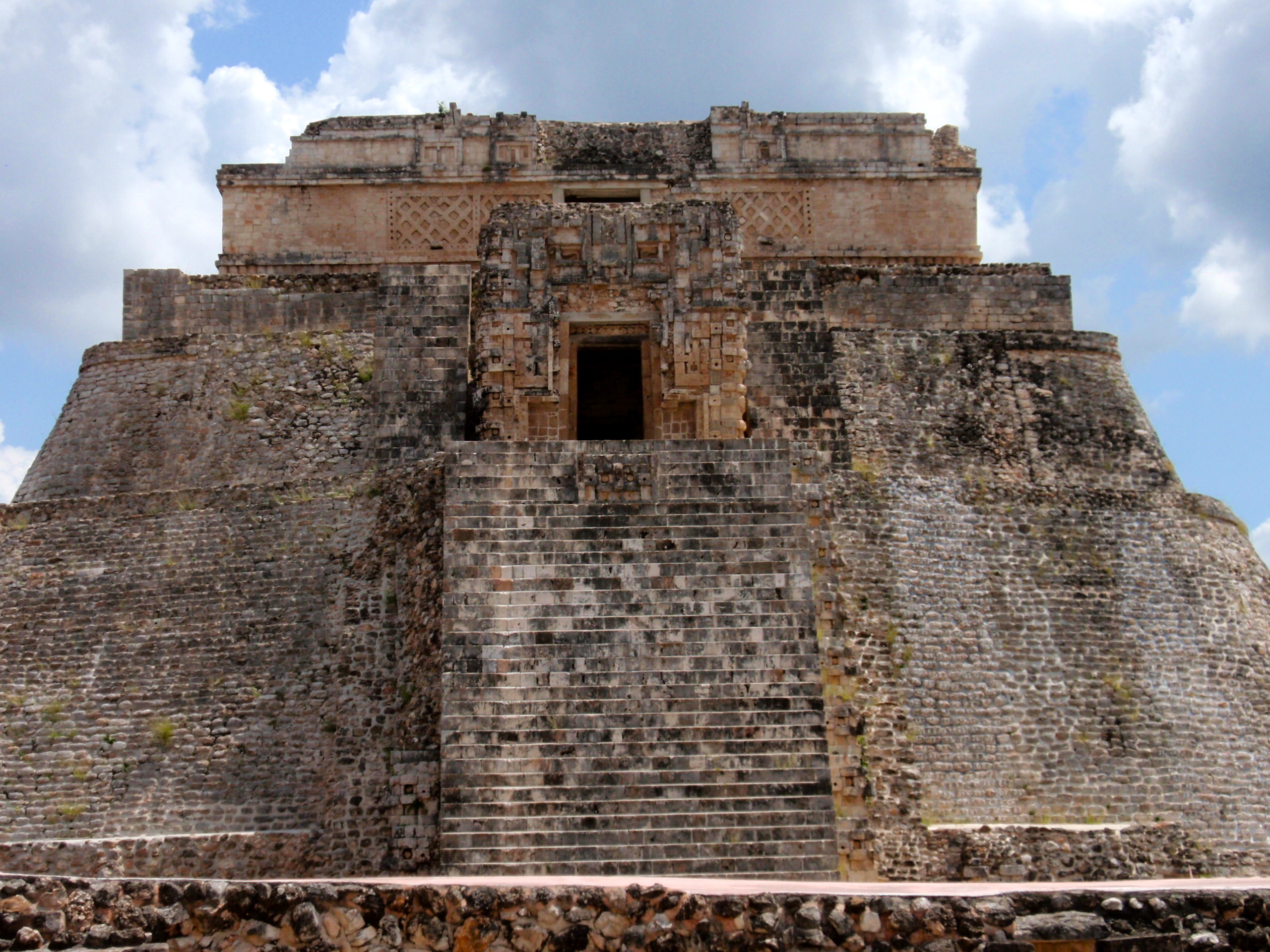
The Sorceror’s Pyramid (or Magician’s Pyramid) is an elliptical structure, unlike most others that are rectangular in shape.  What one sees is the last of five pyramids, built on top of each other, each larger than the last.  It stands 117 feet tall, which gives it a commanding presence at Uxmal.  Mayan legend has it that this pyramid was built overnight by a dwarf, hatched from an egg and raised by a witch, so many refer to this building as the Pyramid of the Dwarf also.
This pyramid has 92 steps on one side and 120 steps on another.  Legend has it that human sacrifices occurred at the highest portion of the temple.  With the victim still alive, the priest would carve the heart out of his chest and throw the body down the steep steps.

Puuc architecture has many notable features, typically a plain lower section with a highly adorned top section.  Carvings found on the top of the structure most often include latticework, serpents, and masks of the god Chac, the god of rain.  A giant Chac mask marks the entrance to the Sorceror’s Pyramid , with the door being his mouth.

Chac was greatly revered by the Uxmal Mayans due to lack of natural water supplies in the city.  Quite often the Maya used cenotes (sinkholes) to access underground water, as the Yucatan has few surface rivers.  Uxmal had no cenotes so it was necessary to collect water in cisterns, built into the ground.

The Nunnery Quadrangle is a set of four buildings around a central courtyard.  It was named Casa de las Monjas (The Nunnery) by the Spanish as the 74 small rooms within this complex reminded them of a Spanish convent.  Ceremonies were most likely held in this large open area.

The Nunnery

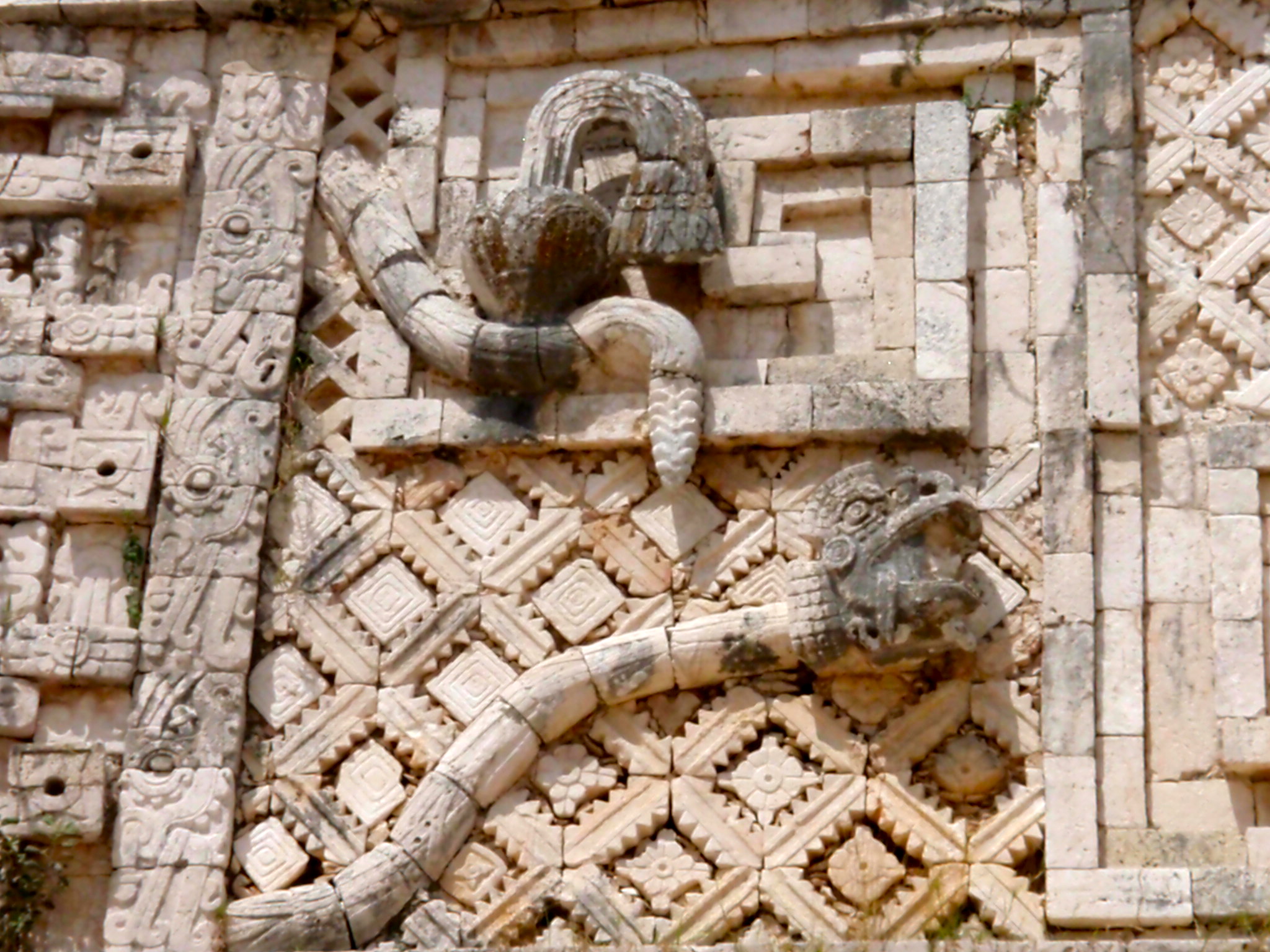
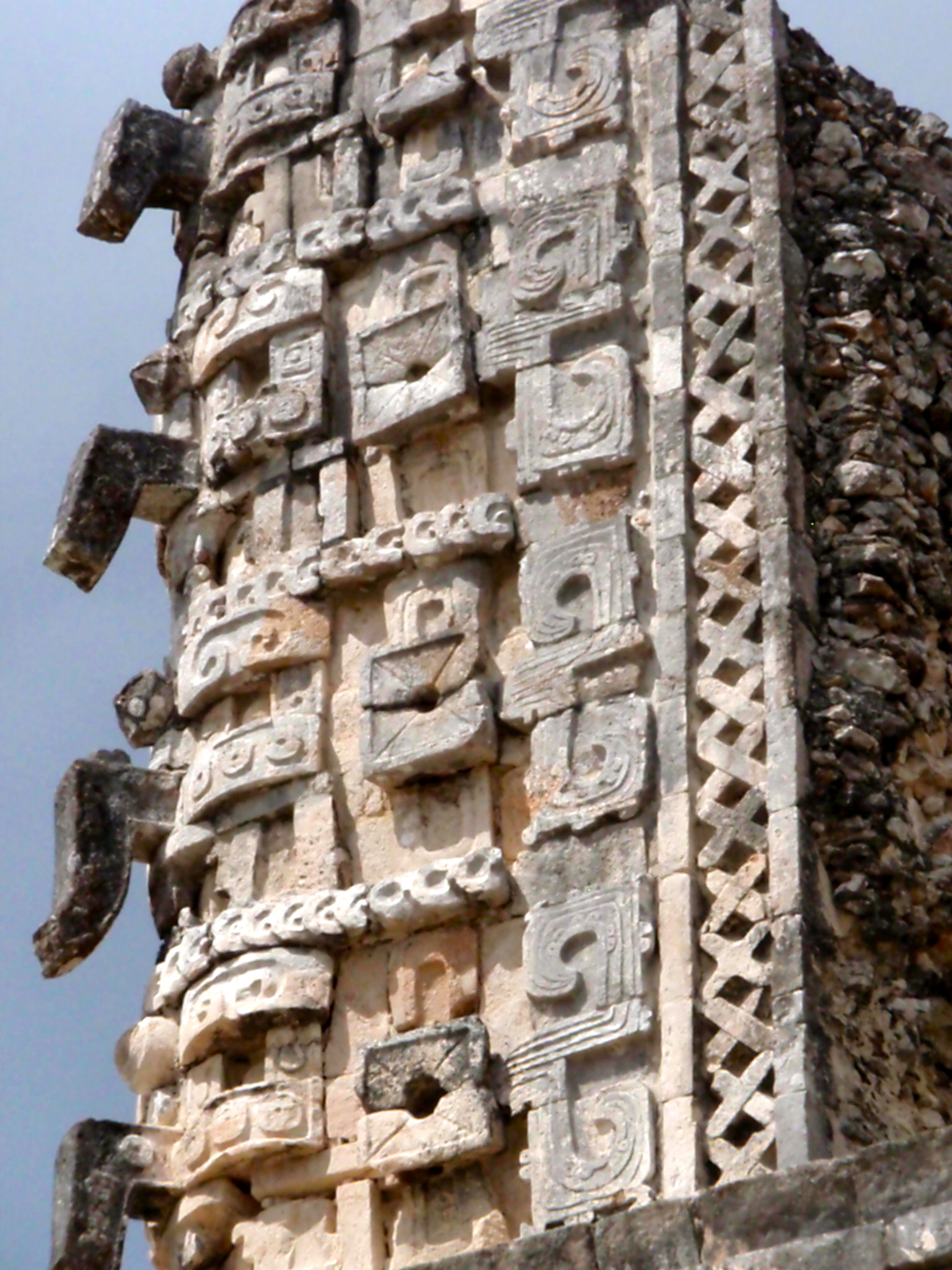
One of the buildings within this quadrangle depicted a plumed serpent on the top section, with feathers on his tail and his body woven around the latticework.  A corner of another building was adorned with stacked faces of the rain god Chac.

Plumed Serpent
Stacked Chac Faces

The Palace of the Governor is regarded by many as one of the best examples of Puuc architecture in existence today.  It was the final building constructed at Uxmal and was probably the administrative center within the city.  It actually is comprised of three buildings, connected together.  Its grand staircase consists of 52 steps, which is a significant number in Maya mythology.  This structure was very difficult to build due to the platform on which it sits.

Palace of the Governor

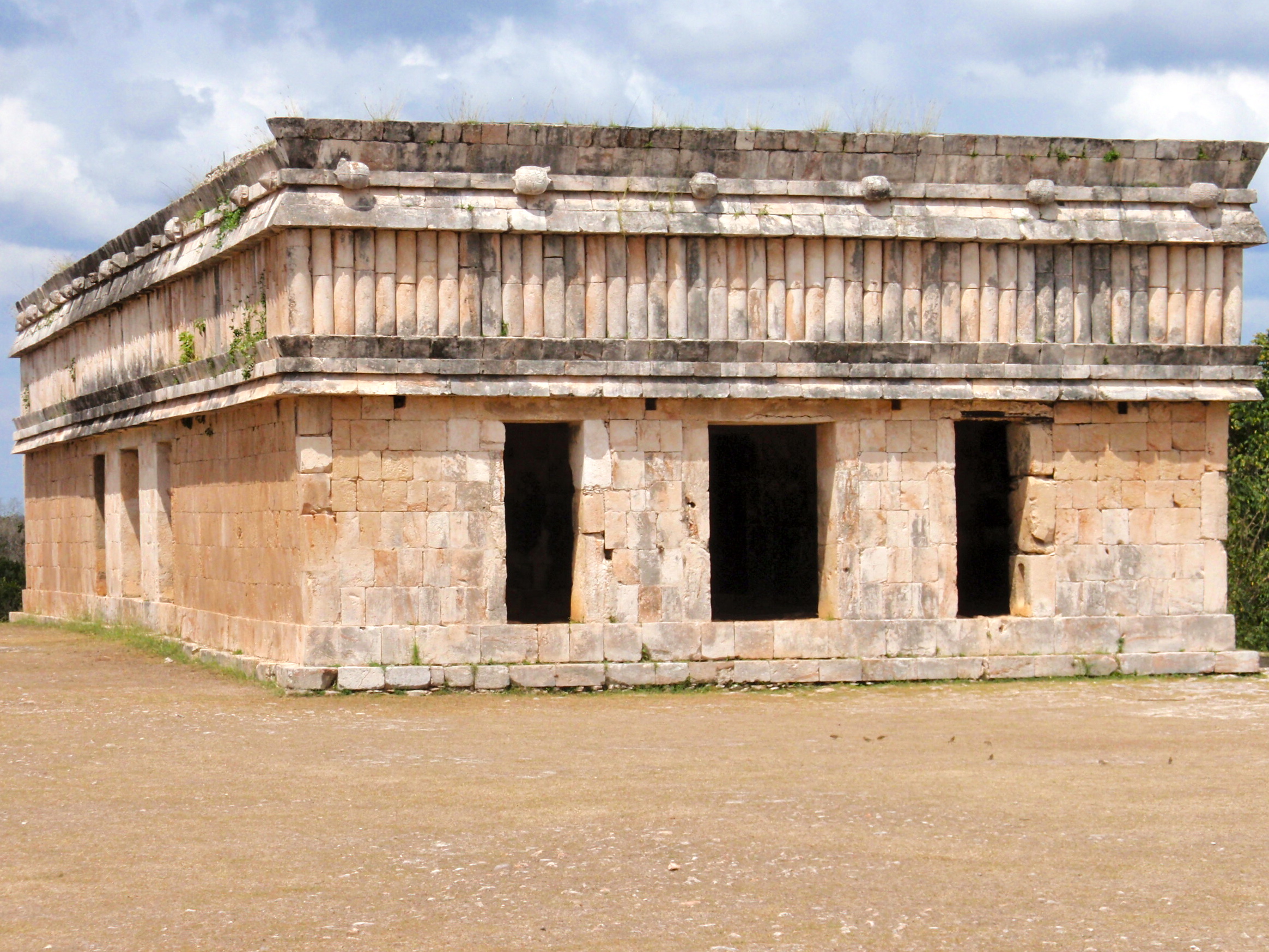
The House of the Turtles, next to the Palace of the Governor, was named for the molding of turtles carved around its cornice.  The turtle was closely associated with water, which was sacred to the Maya.

House of the Turtles

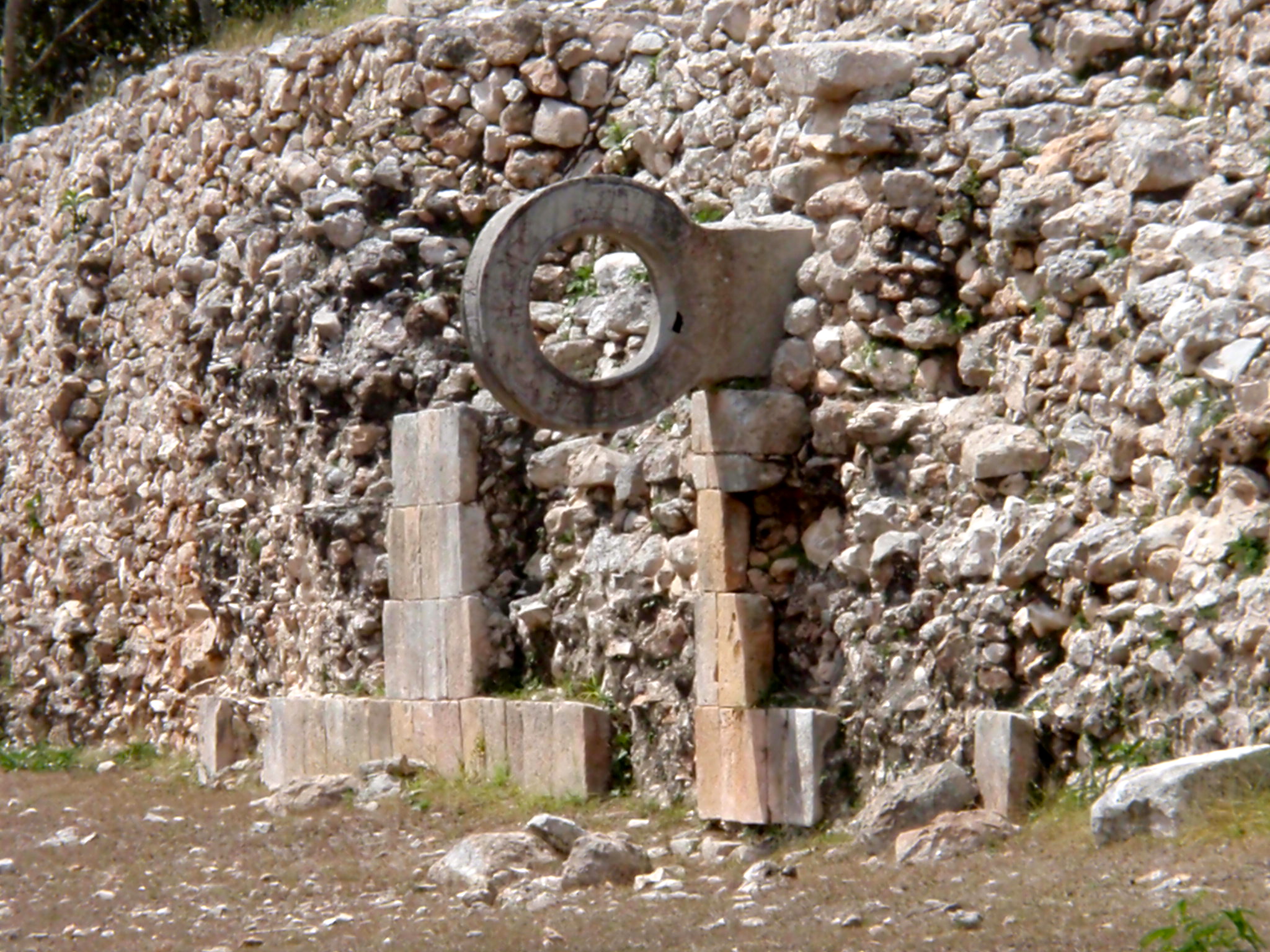
Virtually all Mayan cities contained a ball court and Uxmal is no exception.  Two vertical walls within the ball court, opposite to one another, each reflected a large stone ring in the middle of the wall.  The object of the game was to propel a hard, very heavy, rubber ball through the ring.  This game was played somewhat like soccer, in that one could not use their hands.  The ball could not be kicked either, but must be moved by way of the forearms, waist, or legs.  The game held deep religious significance for the Maya and was played with seven priests on each side.  When the ball was projected through the hoop, the priest responsible for this was offered up to the rain god Chac.

Ball Court
Stone Ring within the Ball Court

Although we thoroughly enjoyed our time at Uxmal, it was a warm, humid day, so we were pleased to move on to a leisurely lunch on the grounds.

From here we headed to the beautiful city of Merida.

Campeche

Day 6

Day 6 of our Caravan tour took us on a bus ride from Palenque to the Yucatan peninsula, stopping for a shrimp lunch overlooking the Gulf of Mexico.  The waters here were a light jade in color and the weather was balmy.

When we arrived in the city of Campeche it was late afternoon, so we all rushed out for some photo opportunities while the light was still with us.

Campeche is the capital of the state of Campeche and is a Spanish colonial city of 275,000 inhabitants, founded in 1540.  In 1999 it was named a UNESCO World Heritage Site due to the architecture of the downtown buildings and forts.  Forts and seawalls were constructed from 1685 – 17904,  fortifying the city against others attempting to take advantage of their economic development.

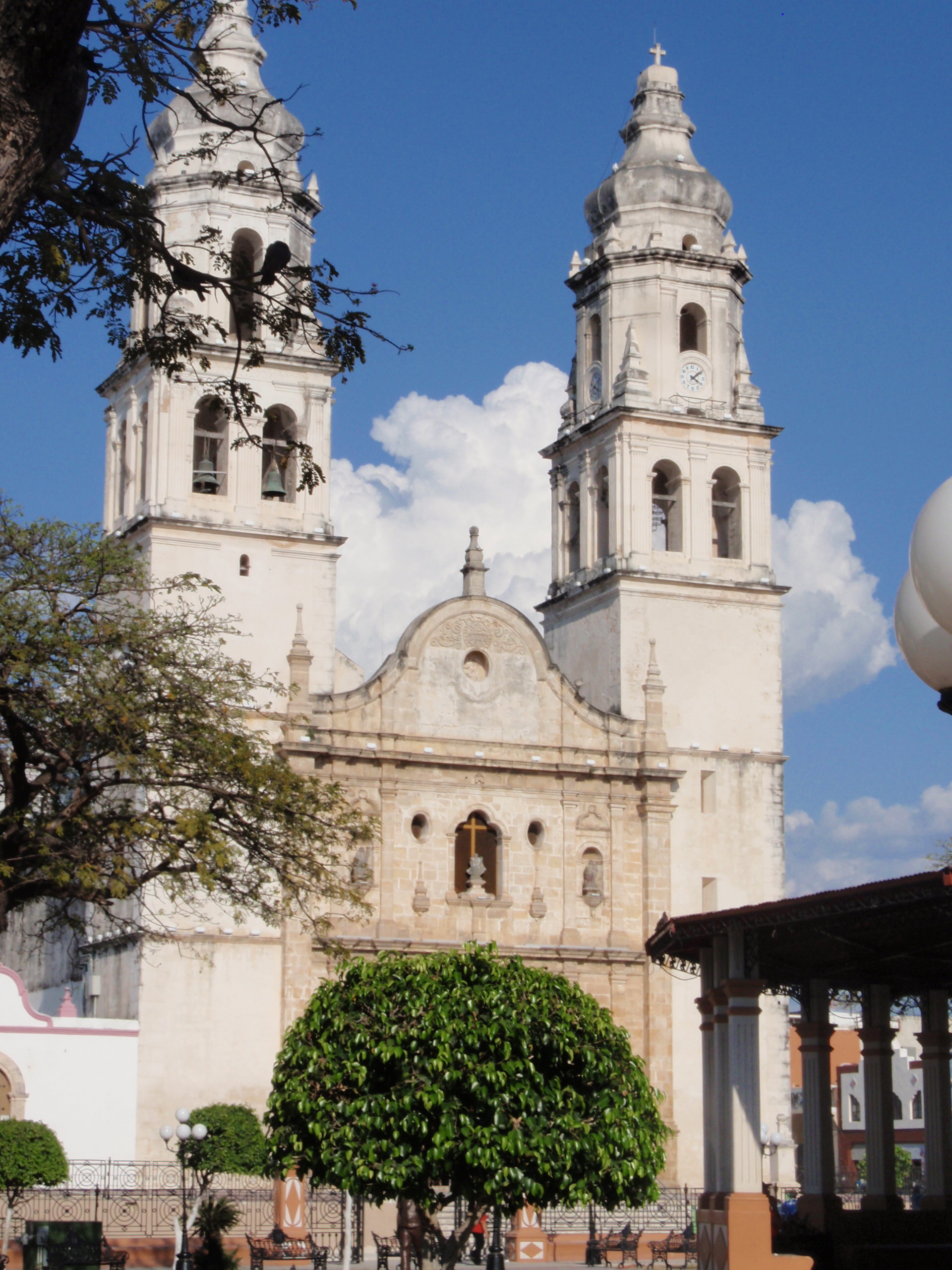
As has been true of the other cities we have visited in Mexico, the main square is surrounded by lovely shops and anchored by the cathedral.

Zocalo
Campeche Cathedral with Twin Steeples

The stunning architecture that earned the city the World Heritage Site designation housed many interesting shops, along with the Paleontology Museum in this building that resembled an old church.

Paleontology Museum

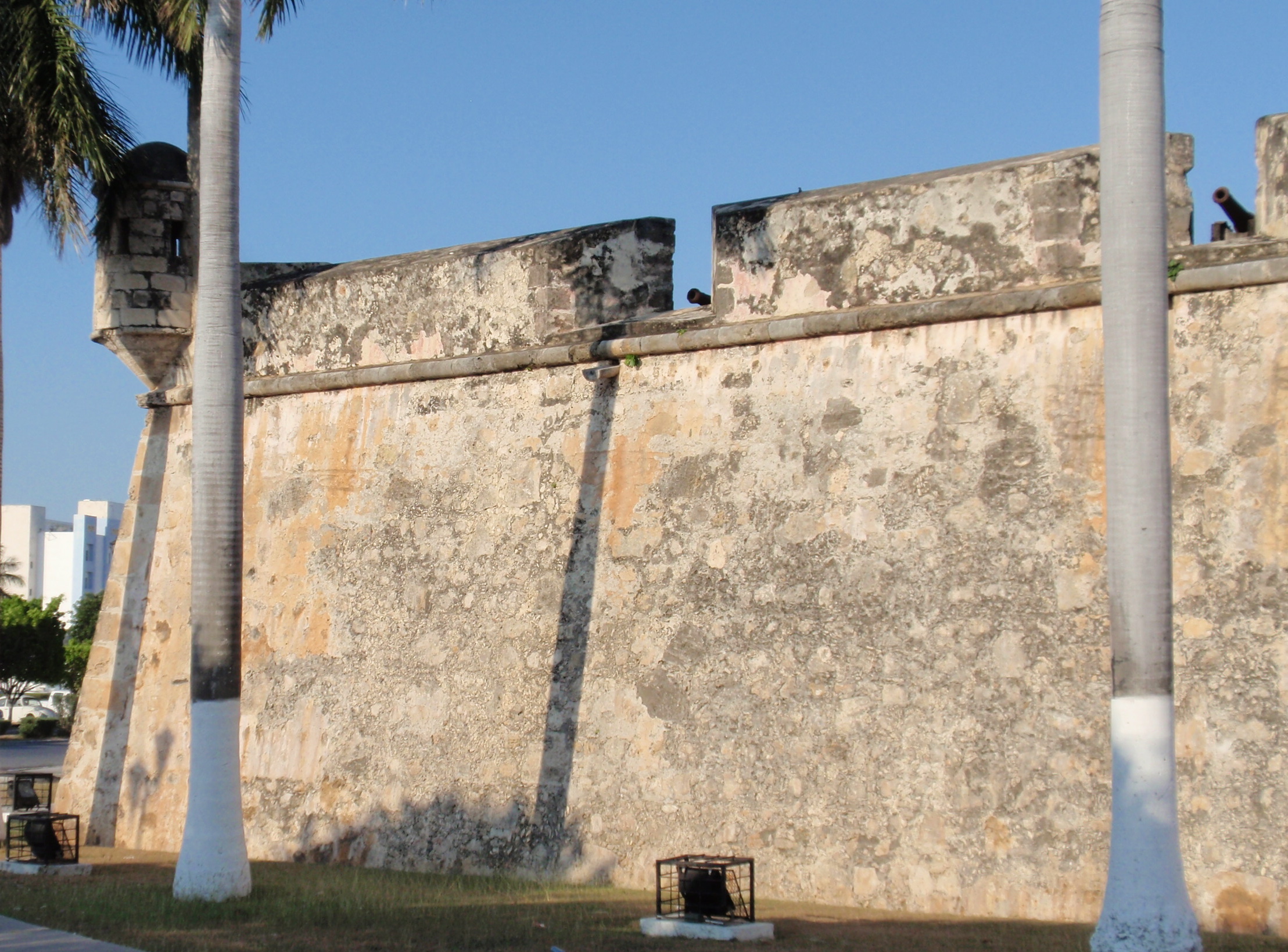
Remnants of the bastions and sea walls surrounded the downtown area.  Note the cannon placement in the top of the wall in the photo below.

Baluarte de San Carlos

One of the most interesting buildings that we saw in the short time spent in Campeche was that of the Palacio de Gobierno (Governor’s Palace) with its tiled mural front.

Palacio de Gobierno

The Puerta del Mar is one of the four sea gates to the city and was used to receive and dismiss travelers and their products.  It now stands as a great doorway to the picturesque downtown area.

Puerta del Mar

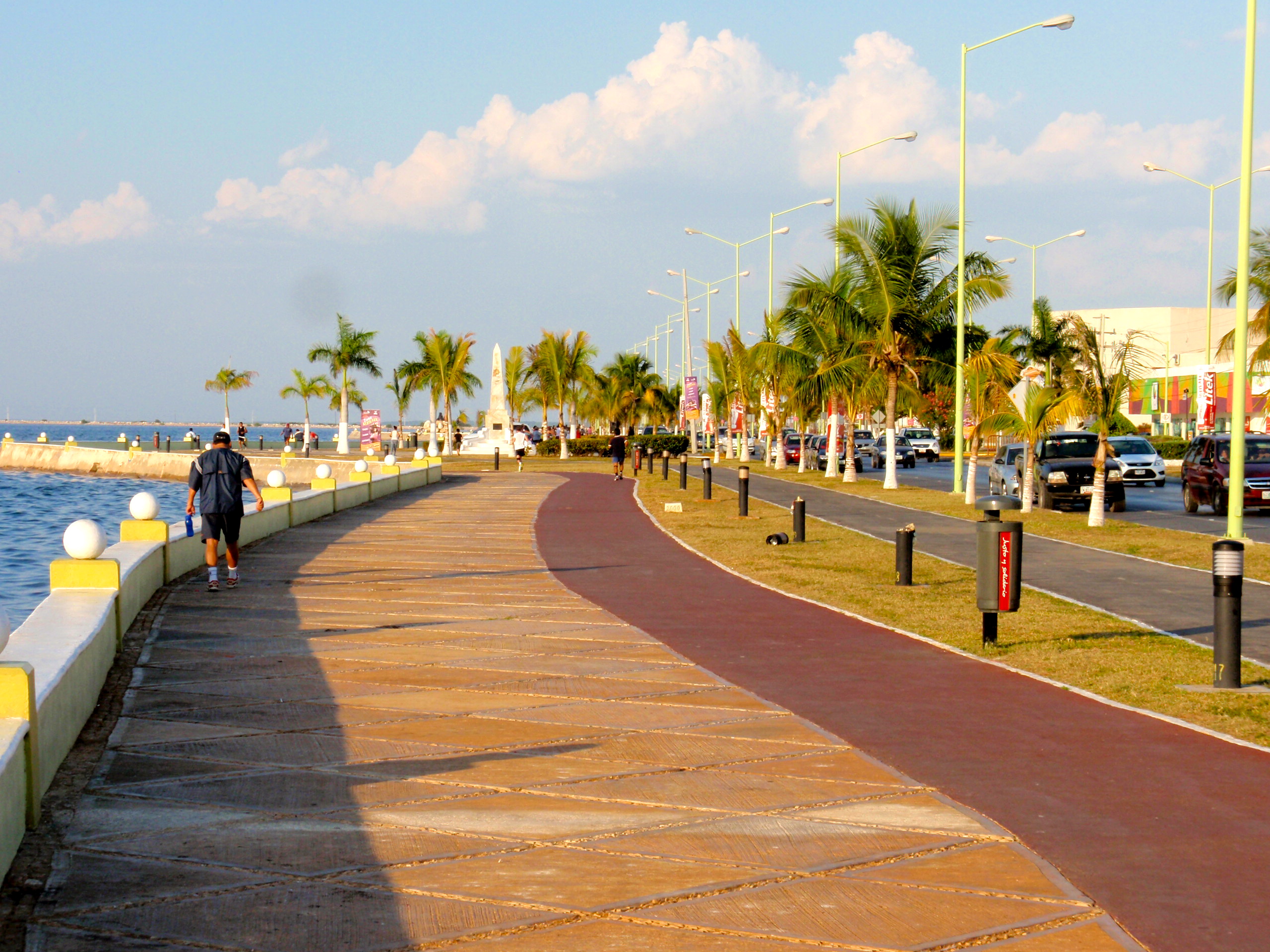
We had time for a quick stroll along the waterfront before heading back for dinner.  Then it was “early to bed and early to rise” as we were headed to the mysterious Uxmal ruins the next morning.

Palenque

Days 4 & 5

Palenque is a city in the state of Chiapas, which is an area rich in natural resources.  The Mayan archaeological site of the same name sits approximately one mile outside of the city.

We settled into our room at Mision Palenque, where we all enjoyed a typical Mexican dinner.  Bordering the jungle, the grounds were lush and we were pleased to hear the deep-throated sounds of a howler monkey in the tree right next to the hotel.  The next morning, an iguana decided to join our group poolside.  It was enchanting but we had little time to marvel at this creature, as we were headed to the Mayan site of Palenque.

Francisco, a very knowledgeable young man in Mayan history, was our guide for the day.

Palenque is one of the most important archaeological sites in Mesoamerica, housing some of the finest architecture, sculptures and bas-relief carvings that the Maya produced.  It was also influential because Palenque was where royalty lived.  As expansive and fascinating as this site is, archaeologists believe that only about 5% of the total city has been excavated, with 95% still buried under the jungle floor!  It was one of the largest Mayan cities during its time (100 BC – 800 AD), with a population of 25,000 – 30,000.  It is estimated that there were 1453 buildings constructed, so approximately 1400 still remain underground.

The first European to visit the site was Priest Pedro Lorenzo de la Nada in 1567.  Due to the strong construction of the buildings that he encountered, he named the site Palenque, meaning “fortification”.

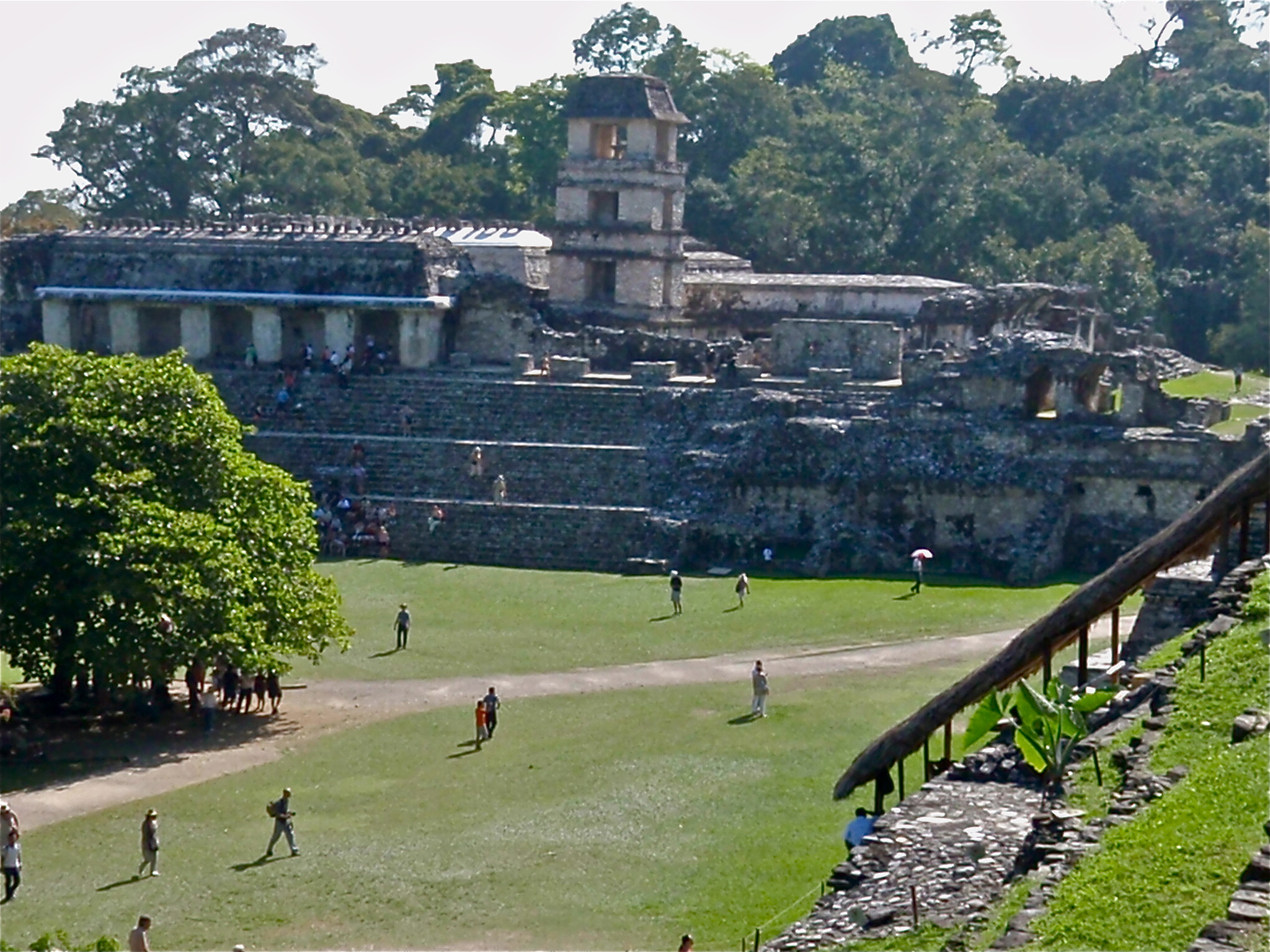
The Great Palace was one of the first structures that we saw upon entering the grounds. It is actually a complex of several connected buildings and courtyards, housing many fine sculptures and bas-relief carvings, in addition to the unique 4-story observation tower.

Great Palace

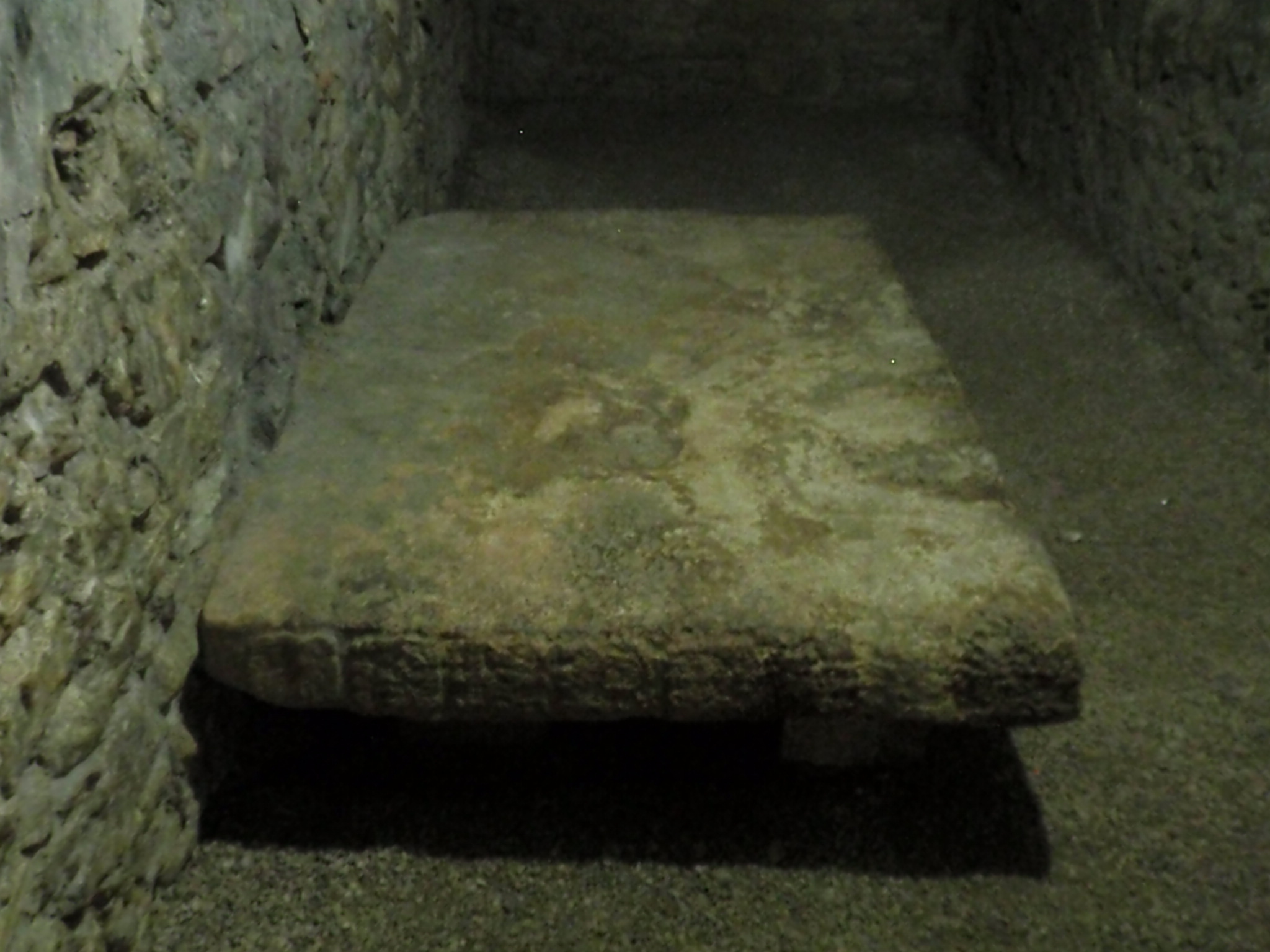
A typical bed seen inside the Palace would not have rated high on our comfort scale!

Palace Bed

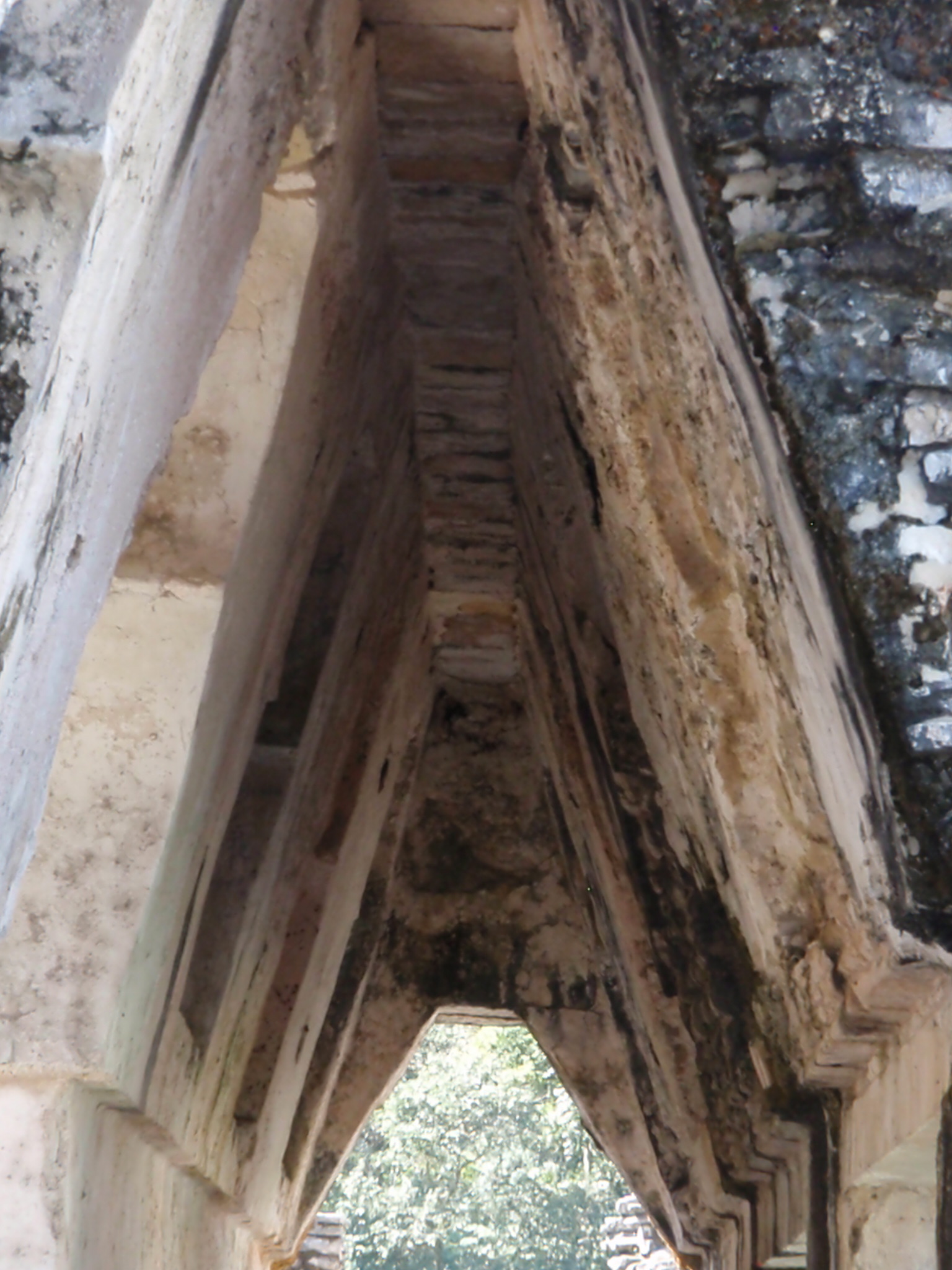
The archway in this structure, with a capstone, was built in such a way that should one wall fall, the remaining structure would remain intact.  Can we say the same for our modern architecture?  This construction style was much more advanced than that of Rome.

Palace Archway

The Palace was also the building where Pakal the Great’s coronation took place at age 12, overseen by his mother.

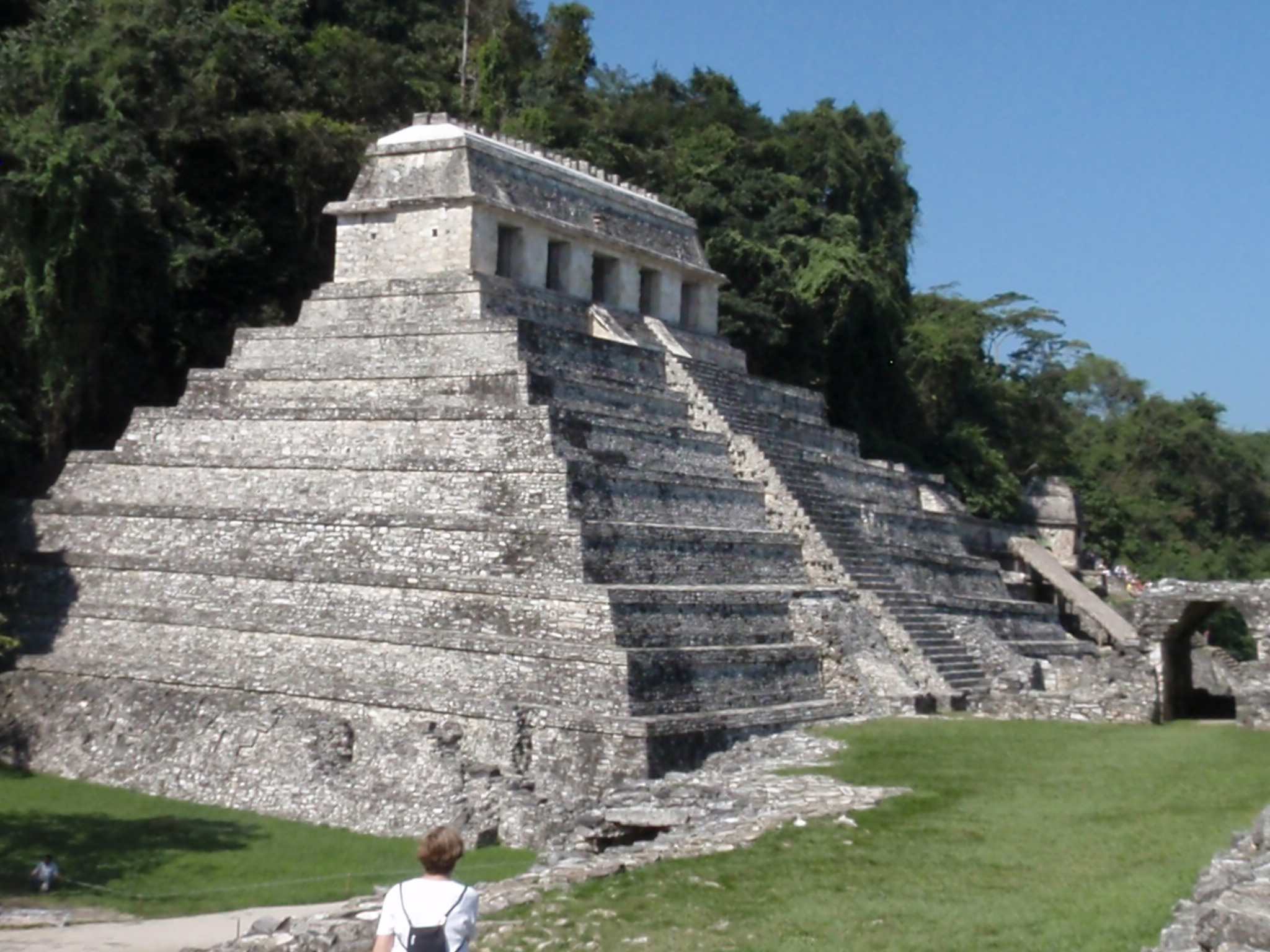
The Temple of the Inscriptions may be the most significant of all the structures unearthed to date as it houses the sarcophagus and funerary effects of Pakal the Great, the king who reigned during 600 AD for approximately 70 years.  This tomb, which no longer can be viewed by the public, weighs 18 tons and was forged from limestone.  The construction of this stately temple, with its 69 steps leading up to his tomb, commenced the last decade of Pakal’s life.  He did not live long enough to see its completion; however, his son and successor to the throne, Cham-Balum, fulfilled his dream.

Temple of the Inscriptions

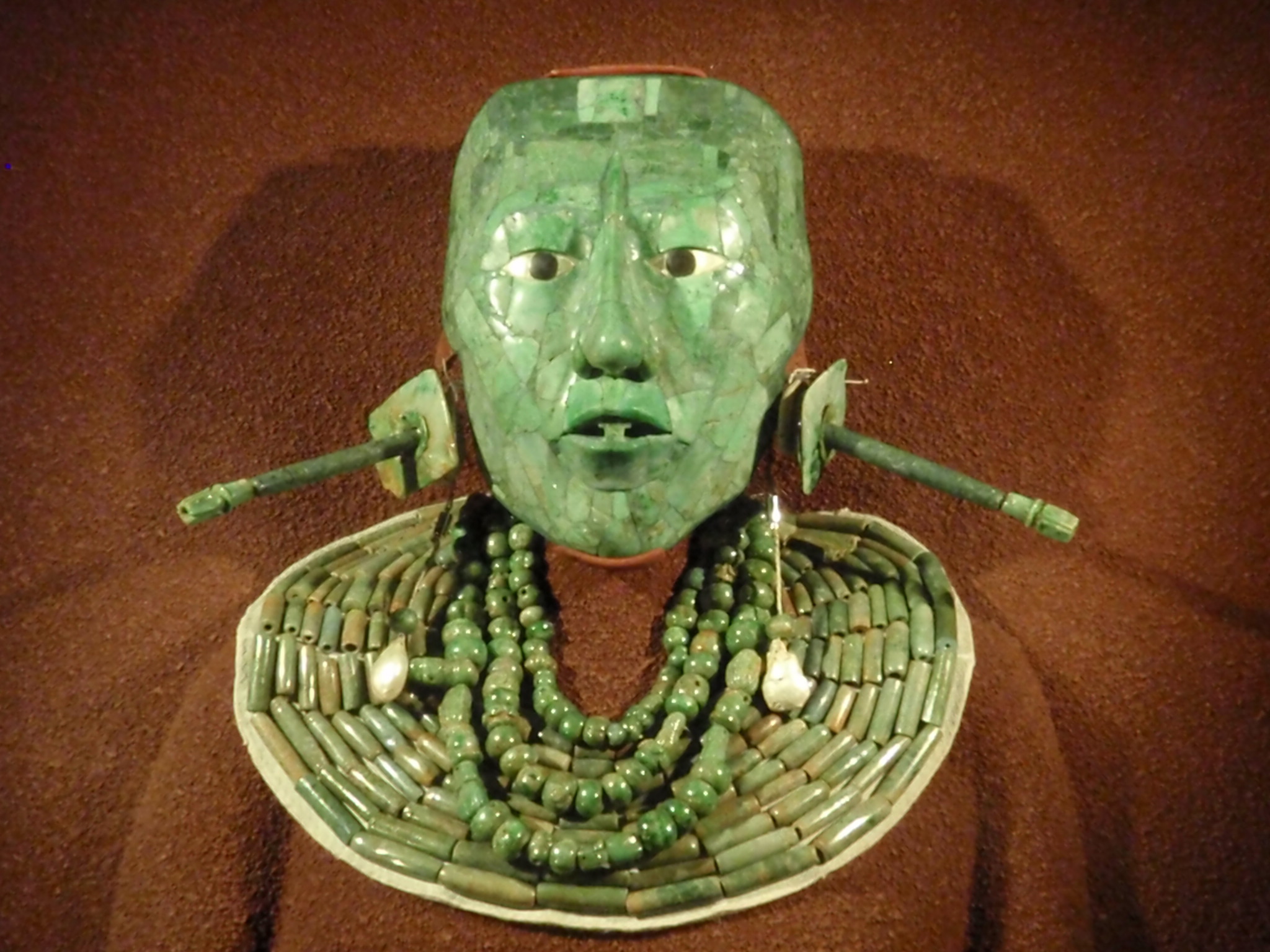
Pakal the Great’s sarcophagus was discovered in 1949 and it took until 1952 to fully unearth it.  It holds the richest collection of jade seen in a Mayan tomb.  Jade was very important to the Maya, as it represented Mother Earth, so Pakal was buried with many jade objects.  His mortuary mask was encrusted with more than 200 tiny carved and polished jade stones, perfectly assembled and was purported to represent the Sun God.

Pakal the Great Jade Funerary Mask

Inside the Temple of the Inscriptions is the Temple of the Red Queen, which was not located until 1994.  Archaeologists speculate that she may have been a relative to Pakal the Great to garner such a burial tomb.

Another temple that provided us some exercise was the Templo de la Calavera, (Temple of the Skull), perhaps named for a skull-shaped relief that can be seen on one of the porticos.  Historians believe that this temple likely operated as a sanctuary.

Templo de la Calavera

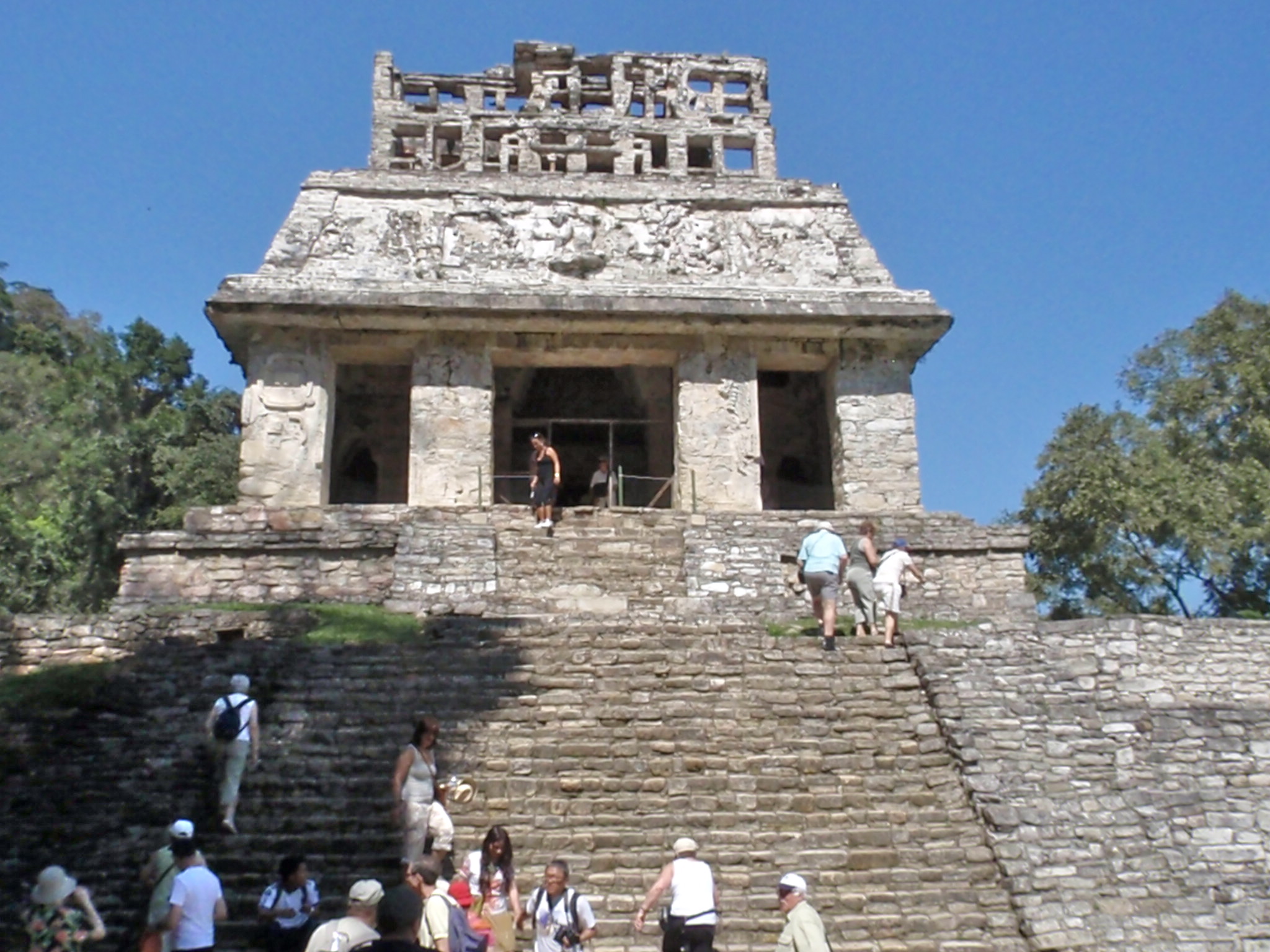
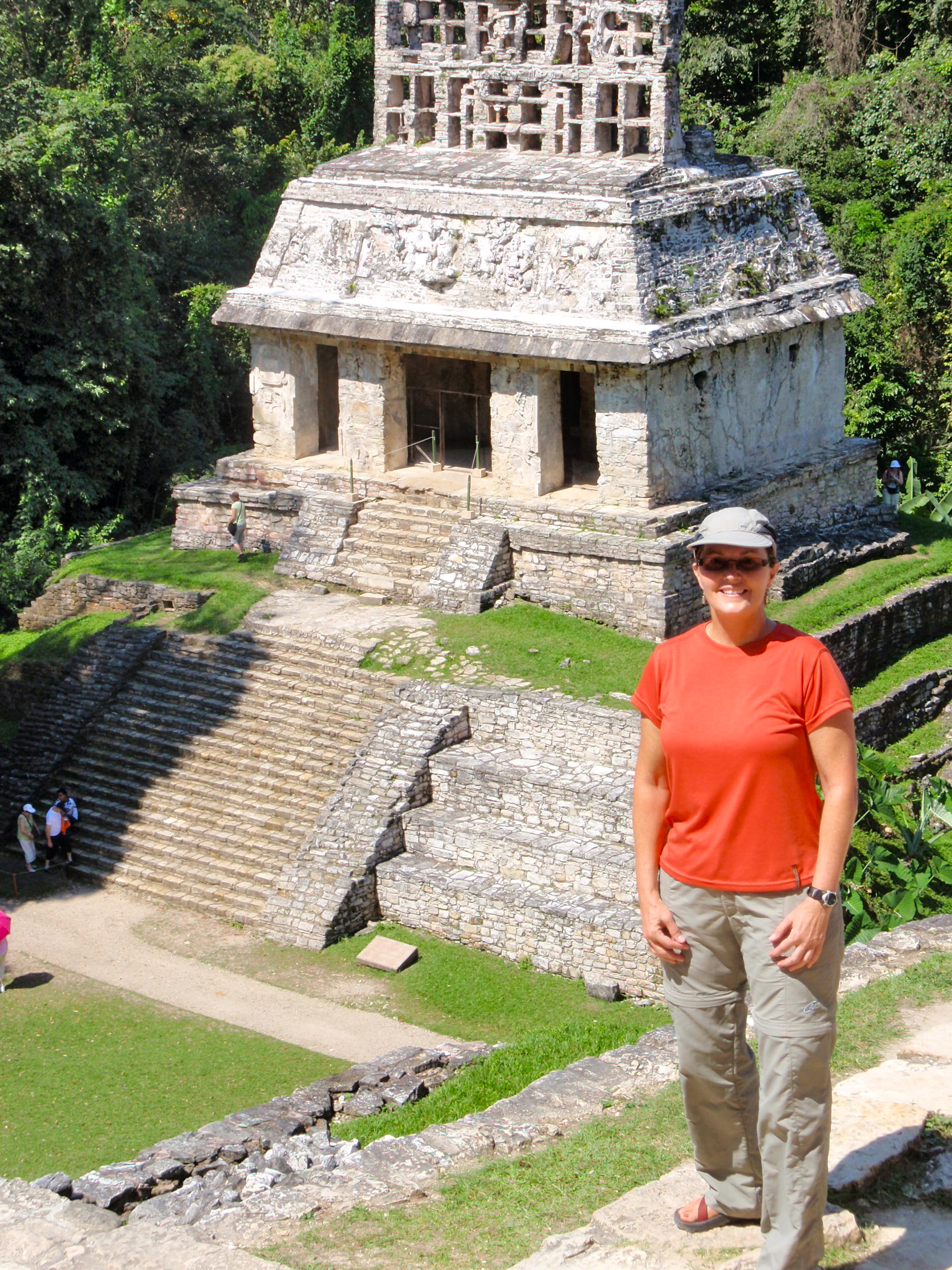
Templo del Sol (Temple of the Sun) is a 3-tier pyramidal structure depicting a sun panel, which commemorates the birth and ascension of Cham-Balum to the king’s throne.

Templo del Sol

Another temple that paid homage to Pakal’s son, Cham-Balum, was that of the Templo de la Cruz (Temple of the Cross), which is the loftiest structure at Palenque.

Templo de la Cruz

Temple of the Cross afforded many of us some exercise that day.

Terry Atop Templo de la Cruz
Me Atop Templo de la Cruz with Templo del Sol in the Background

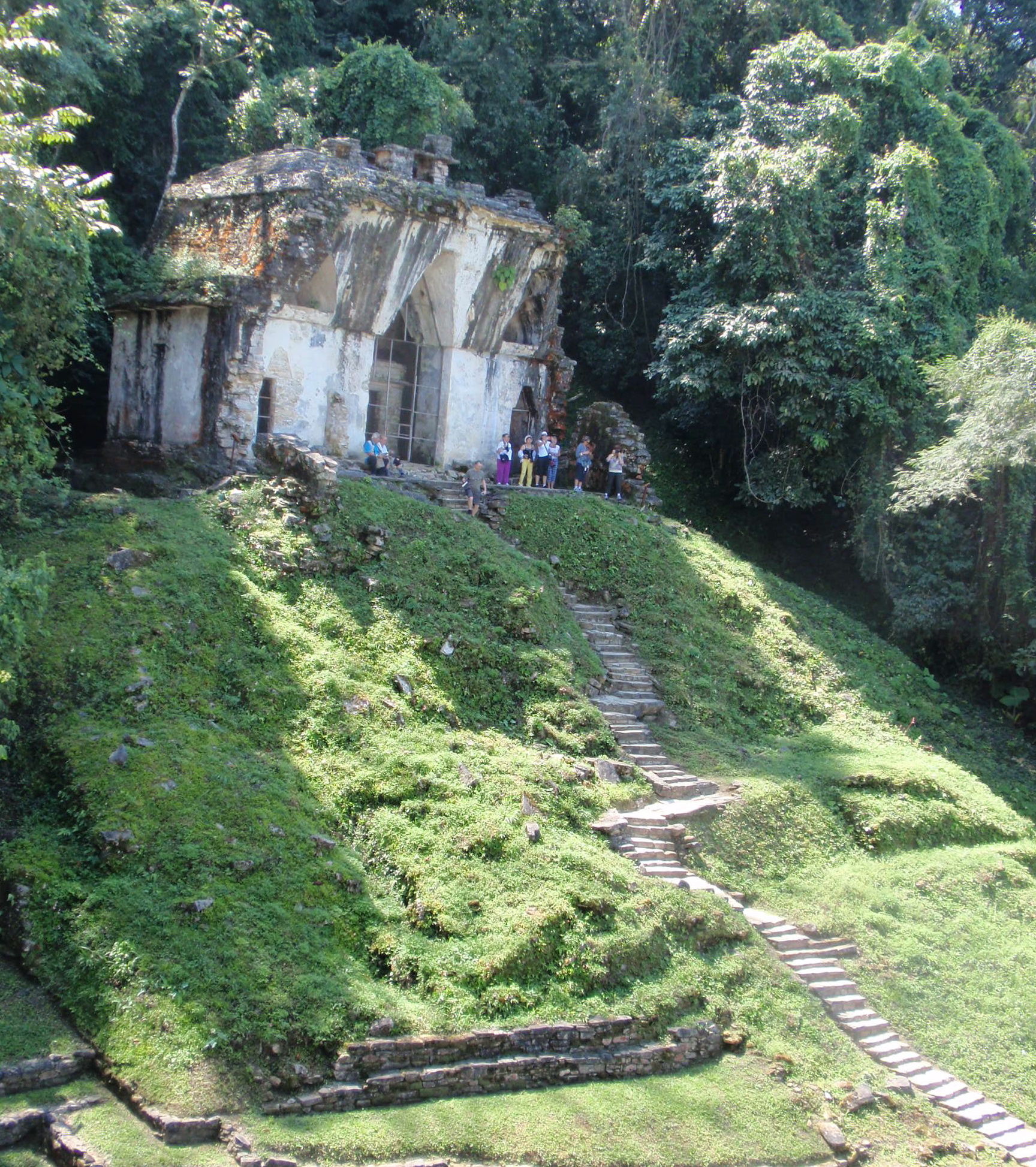
The last of the three pyramids we climbed that day that honored the gods was the Templo de la Cruz Foliada (Temple of the Foliated Cross).

Templo de la Cruz Foliada

Palenque is truly a mystical place, an amazing archaeological site that we are thankful we were able to experience.  From here we head to the Yucatan Peninsula, on to Campeche.

Villahermosa

Day 4

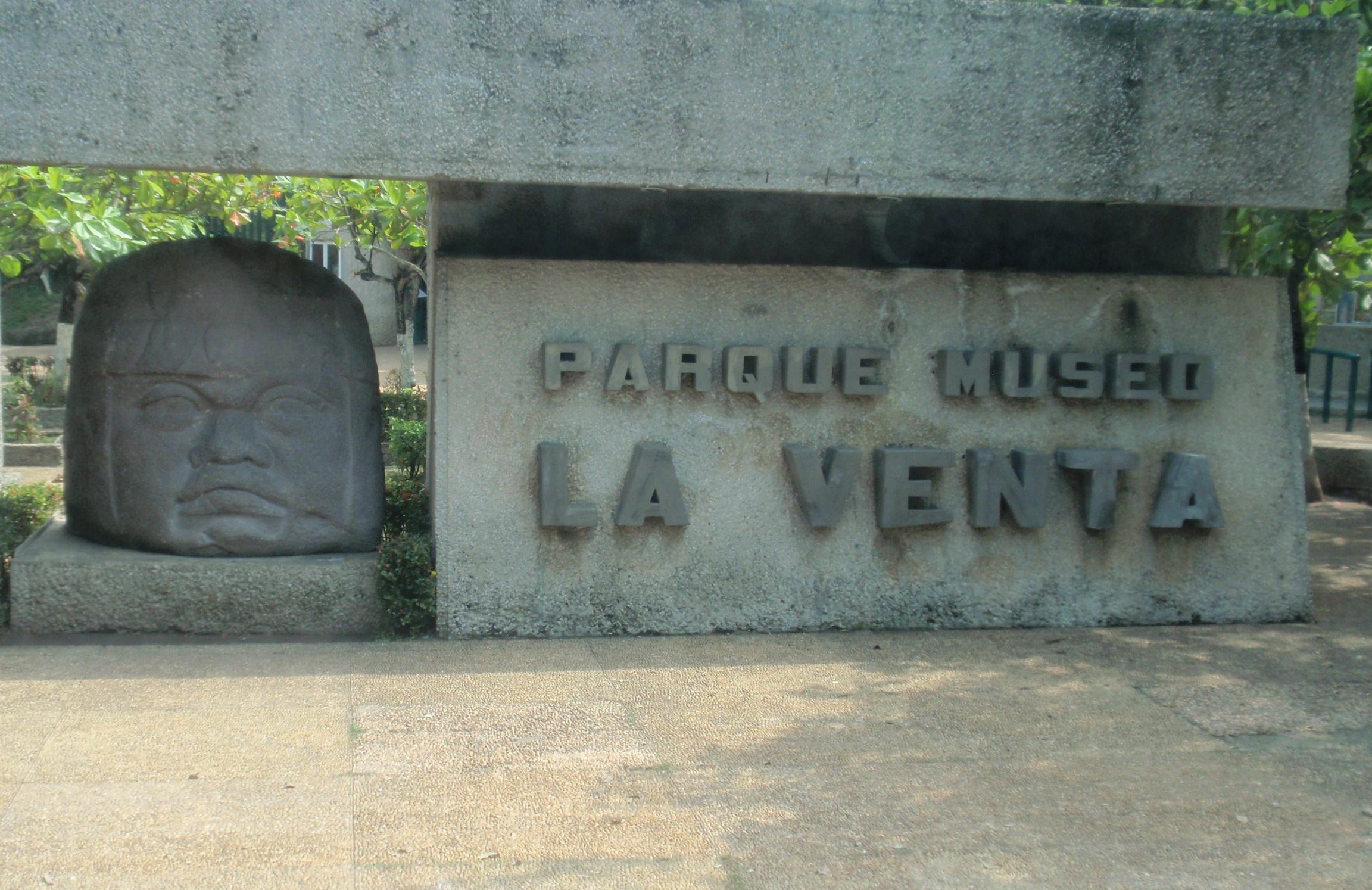
Day 4 of our Caravan tour took us to the capital city and financial center of Tabasco, Villahermosa, which was founded in 1596.   It is a bustling city of 750,000 and is home to Parque Museo La Venta, the Olmec Archaeological Park.

The Olmec were the ancient ancestors to the Maya and this is the place where the 12 foot tall Olmec head statues were found.  There are 28 Olmec carvings at this outdoor museum, along with an interesting zoo, lake and indoor museum.   The carvings are a stunning example of the sophisticated artistry employed by the ancient Olmec.

Olmec Head

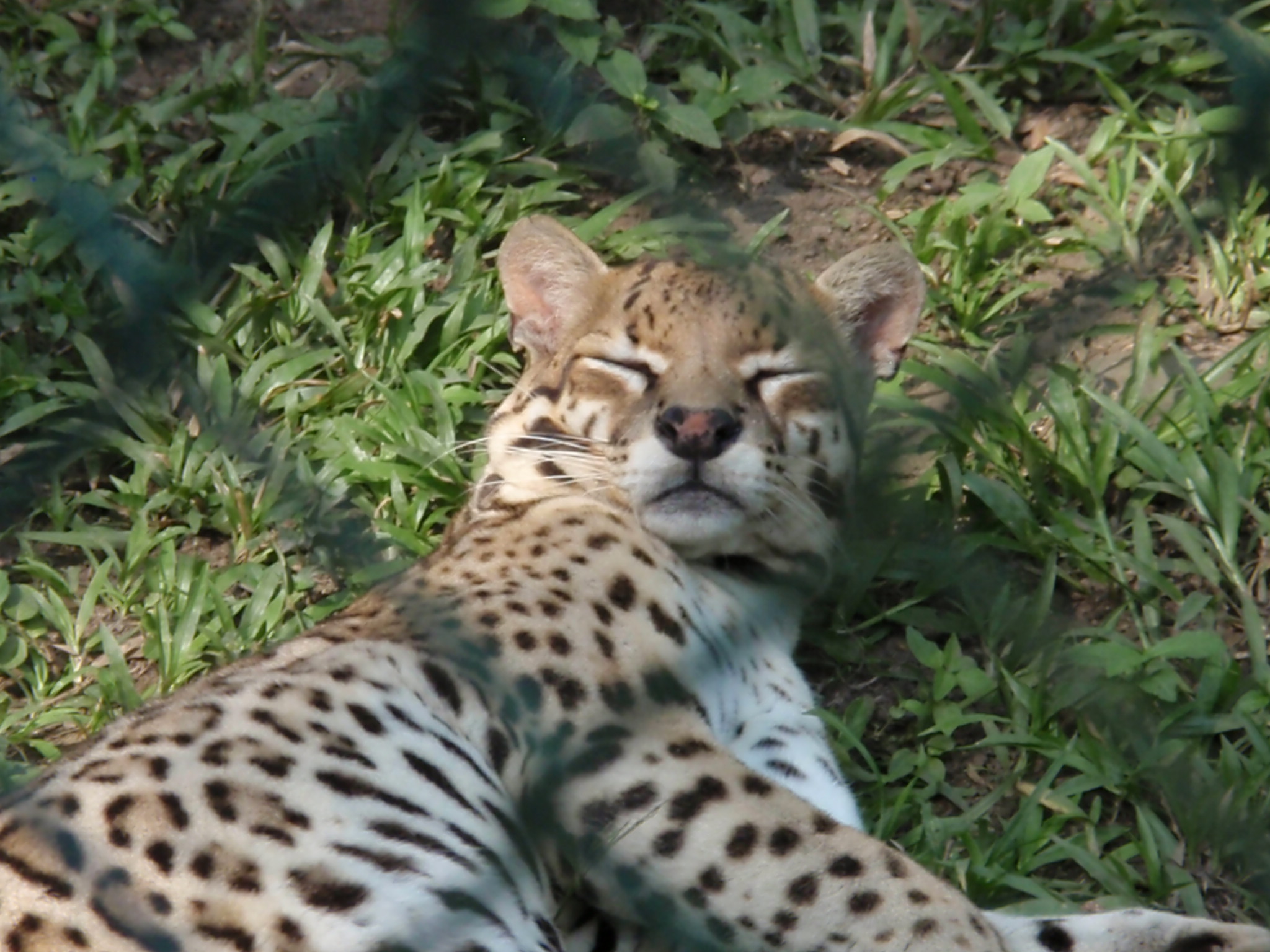
There is evidence that the Olmec were on the North American continent more than 10,000 years ago.  The first documentation of shamanistic practices occurred during the period of the Olmec, when the shaman was purported to be transformed into the shape of the jaguar.  Many believe that the Olmec were the cradle civilization for the gene pool of Mesoamerica and were referred to as the “mother culture of Mesoamerica”.

Shaman Transformation ~ The Magnificent Jaguar

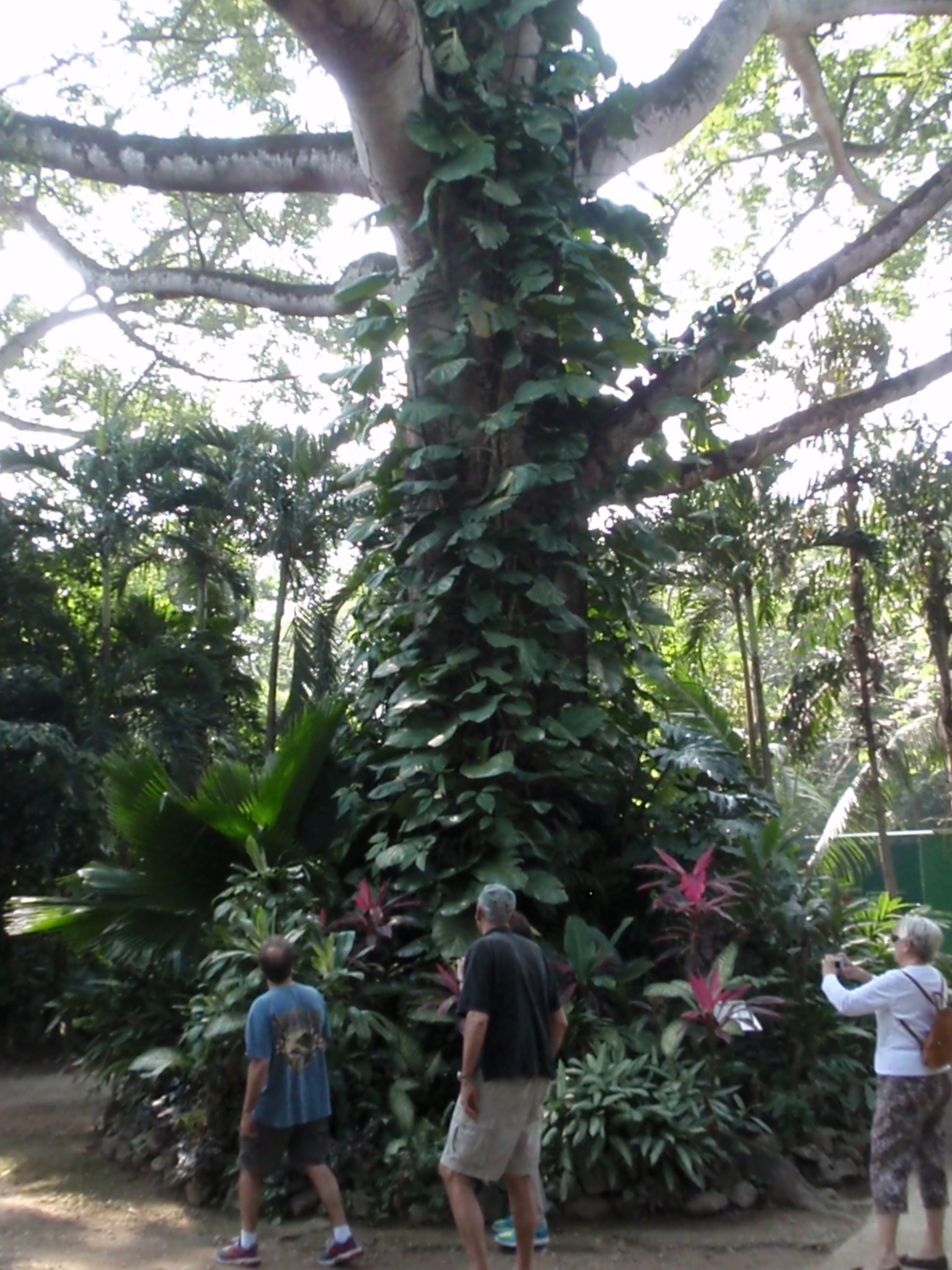
Beyond the zoo and at the entrance to the outdoor museum is the stately ceiba tree, which is the holy tree of the Maya, a very important source that allowed them access between their nine worlds.

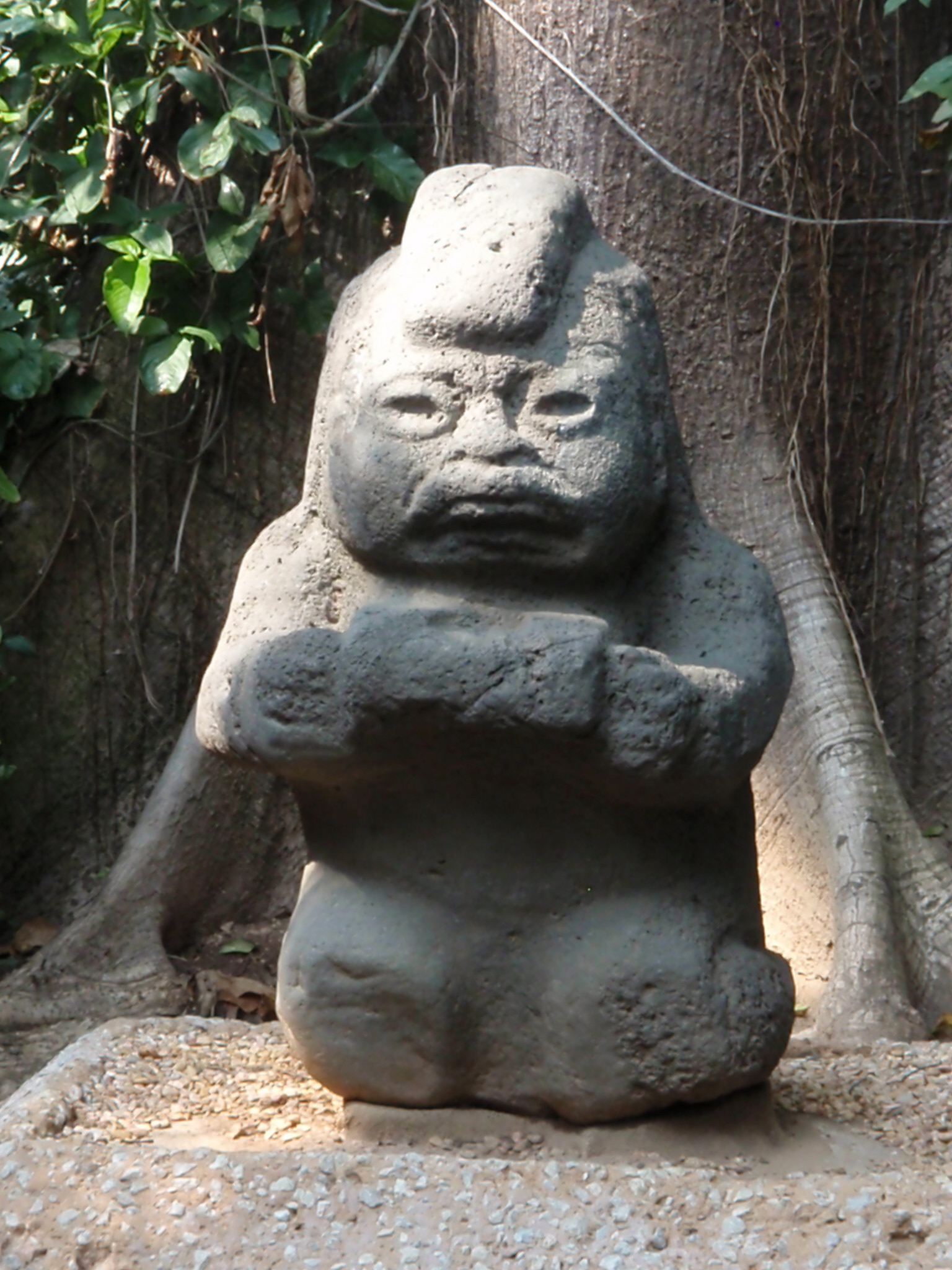
Many fascinating carvings are found throughout the park, the first of which was La Abuela, the Grandmother.  She is kneeling and holding a plate as an offering.  She corresponds to the period from 700 – 400 BC.

La Abuela

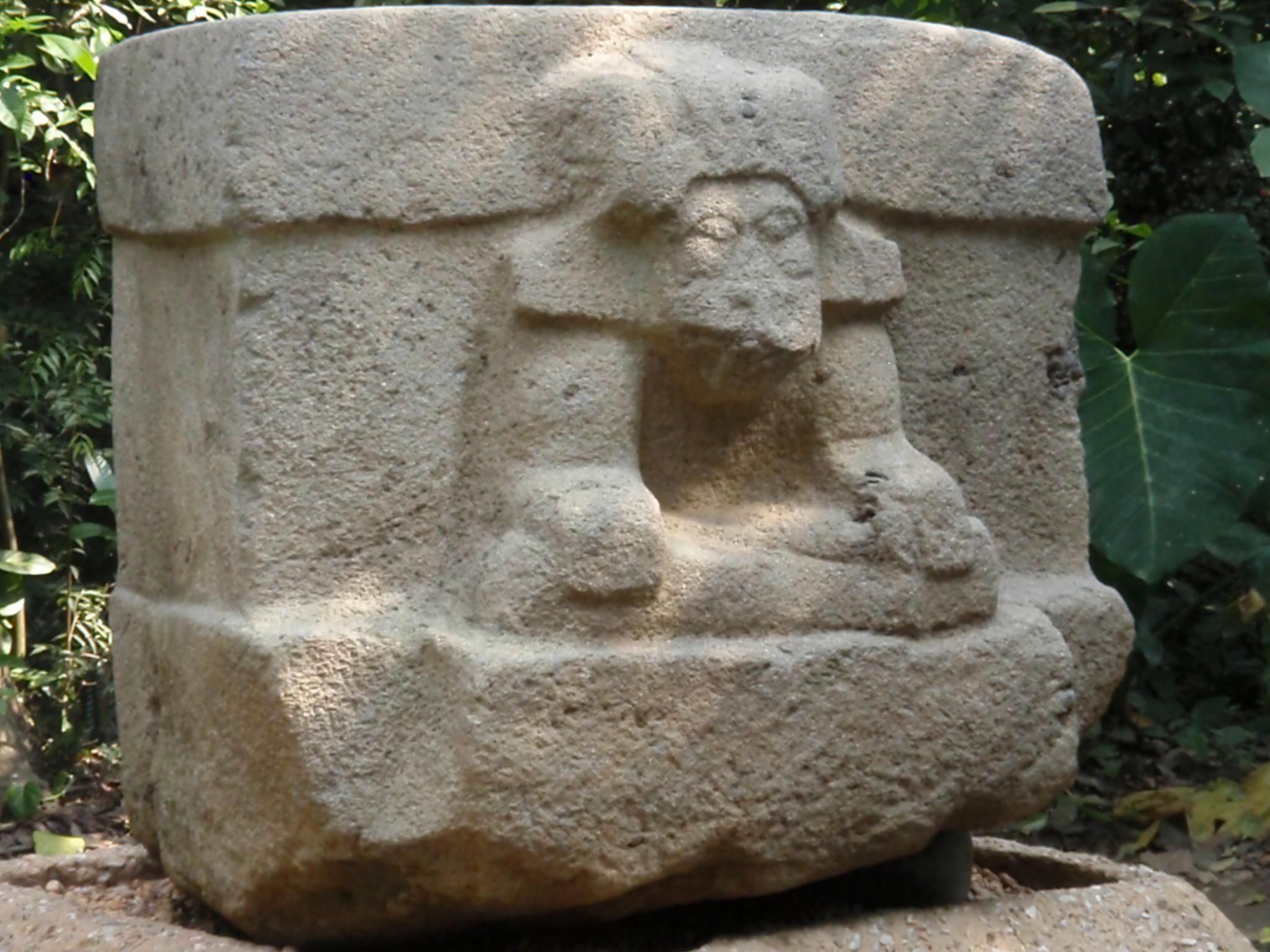
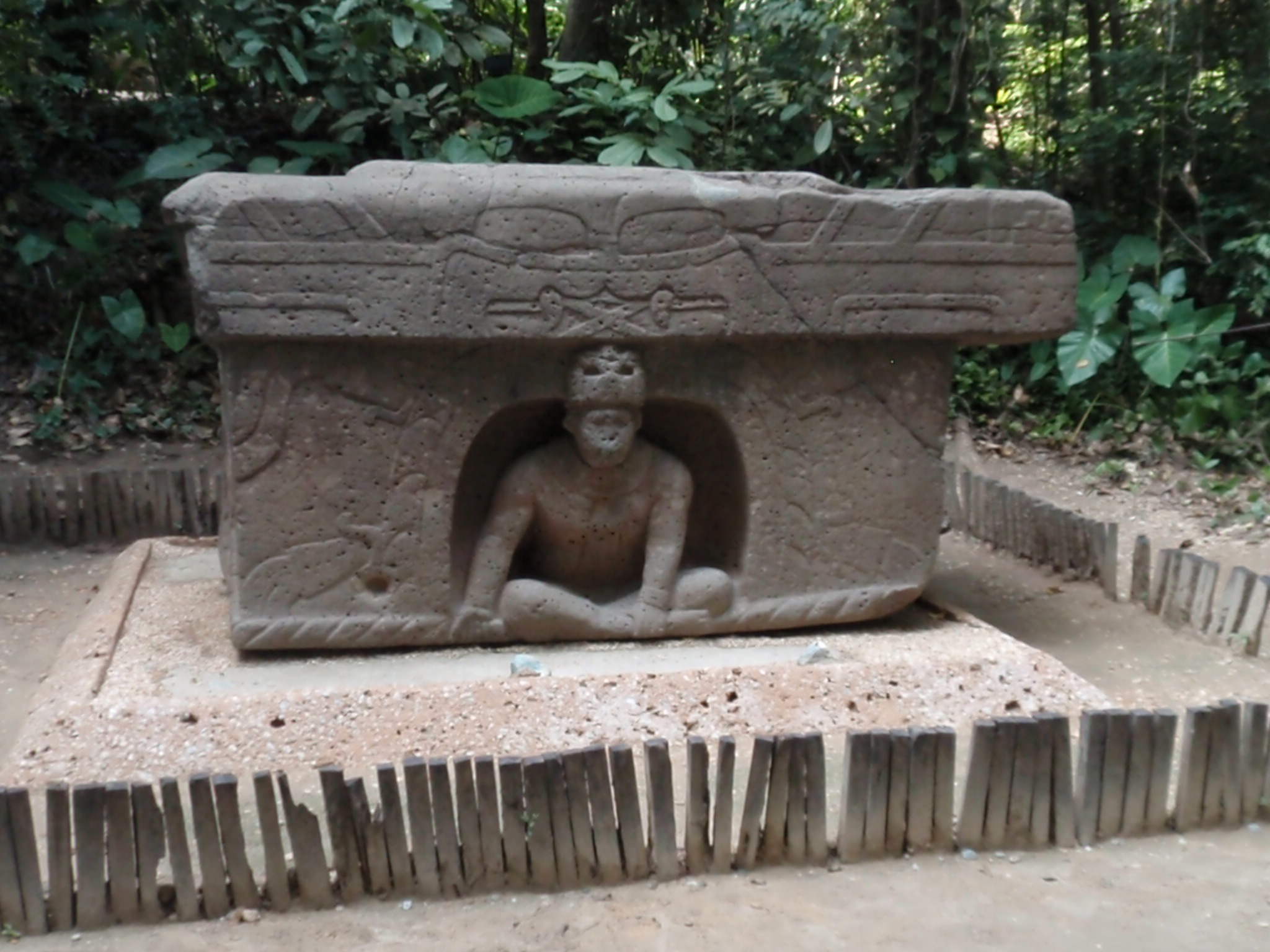
The Quadrangular Altar is probably one of the first stylistic expressions of an Olmec altar in which a character emerging from a cave is seen.  The idea of life emerging from a cave and its function as a connection between the exterior world and the interior of the earth is central to the believe of the Olmec culture.

Quadrangular Altar

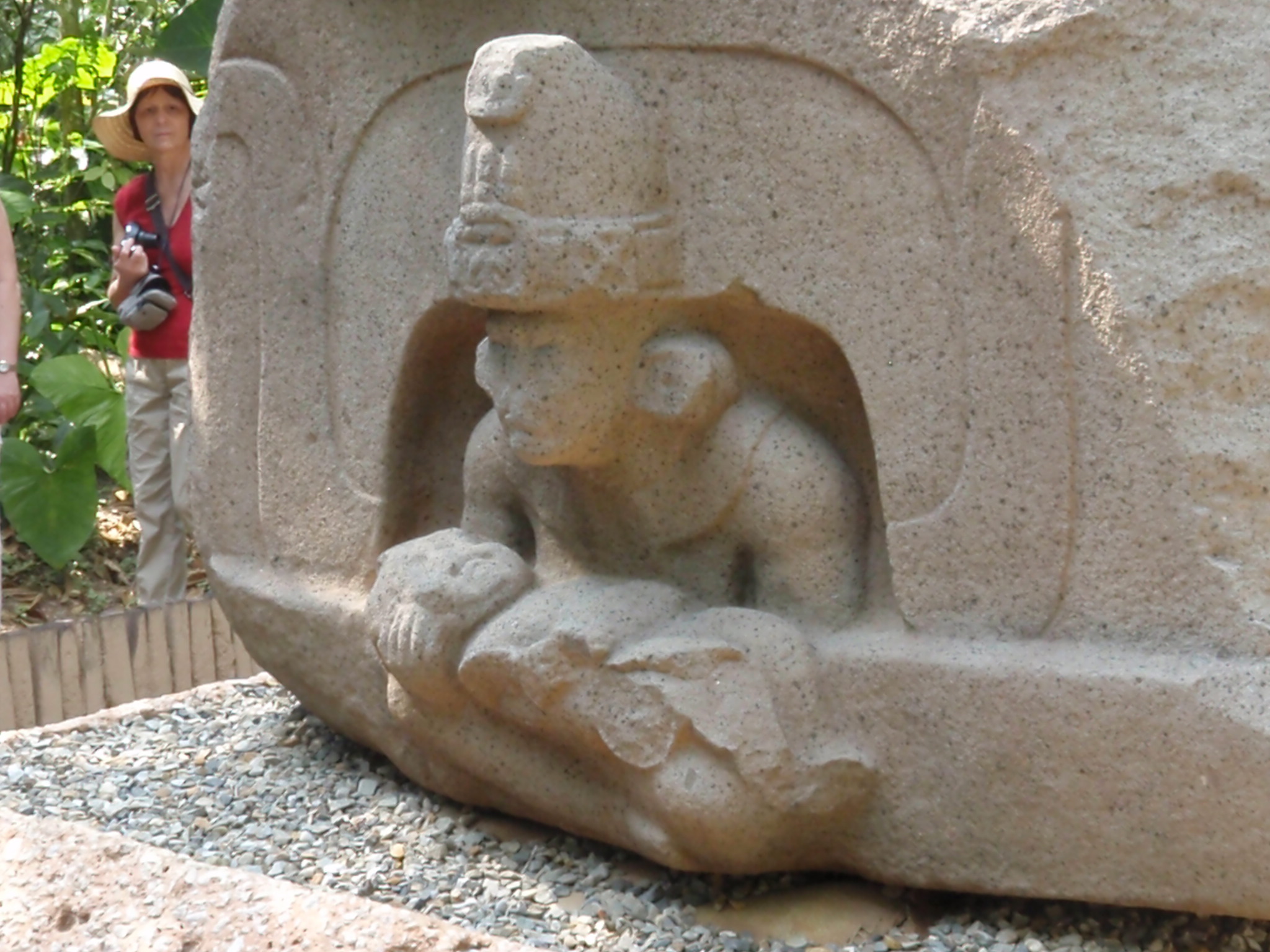
The Altar of the Children was an interesting structure that shows a central figure in headdress, once again emerging from a cave or the entrance to the underworld, carrying a child, possibly dead, in his arms.  On the sides of the monument are carvings of four men in unusual headdresses, each carrying a child with a deformed head.

Altar of the Children

Probably one of the more unusual monuments was entitled Monkey Looking at the Sky, but is actually thought to be a depiction of a woman giving birth.

Monkey Looking at the Sky

One of the most preserved altars and having the most illustrative meaning is that of the Triumphal Altar.  In the central part of the cornice of this monument is a figure with a human face and jaguar paws, a symbol of power.  From the niche, a full-body figure emerges from a cave, richly clothed, with a headdress representing the head of an eagle. He is seated cross-legged, leaning slightly forward and holding onto a rope, which is also being held by another figure depicted on the right side of the altar.

Triumphal Altar

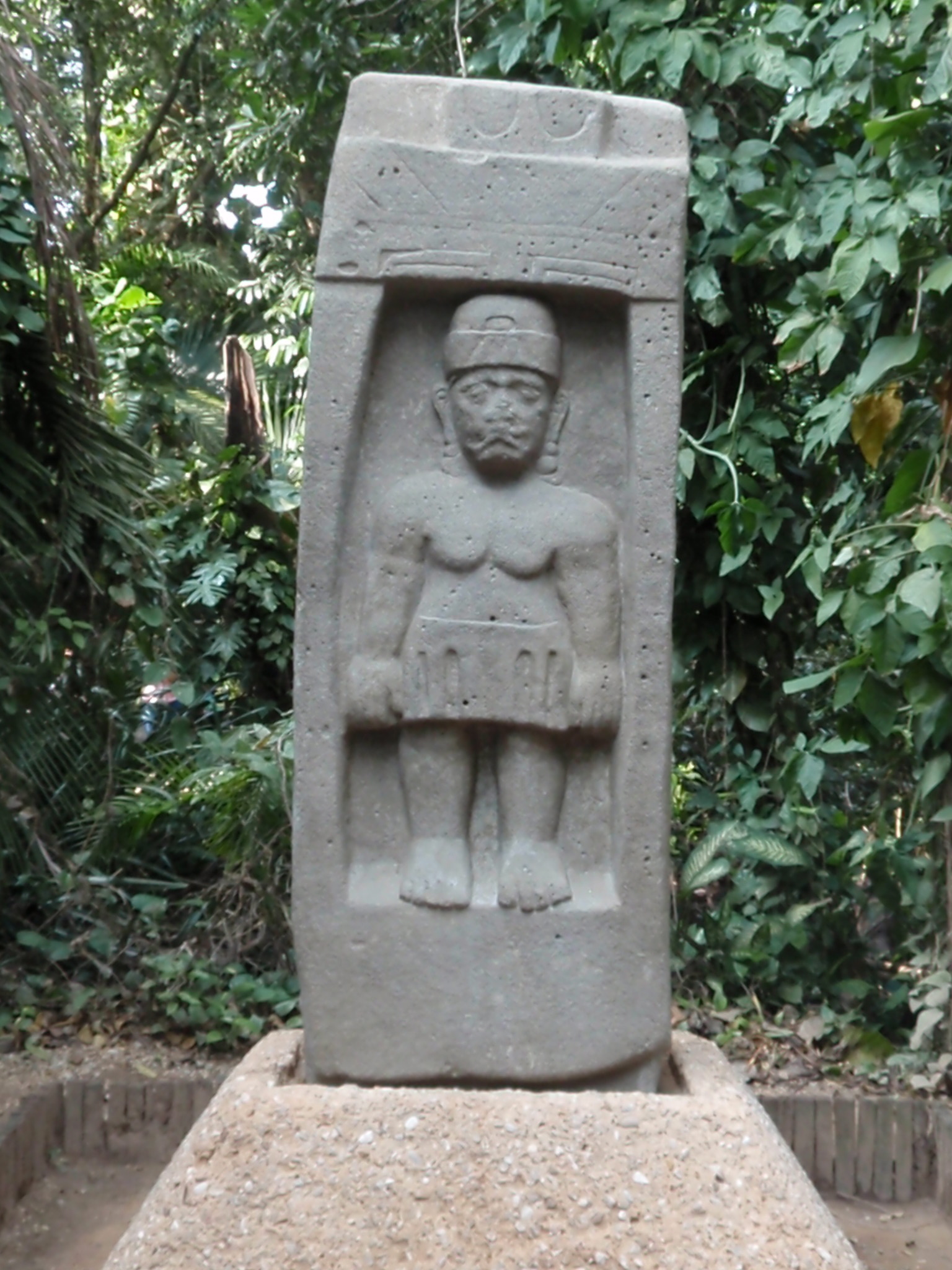
The next monument, entitled Young Goddess, depicts a woman wearing a short skirt and helmet, with medallion and earflaps.  She has passed on to the next world and is probably displayed in her coffin.

Young Goddess

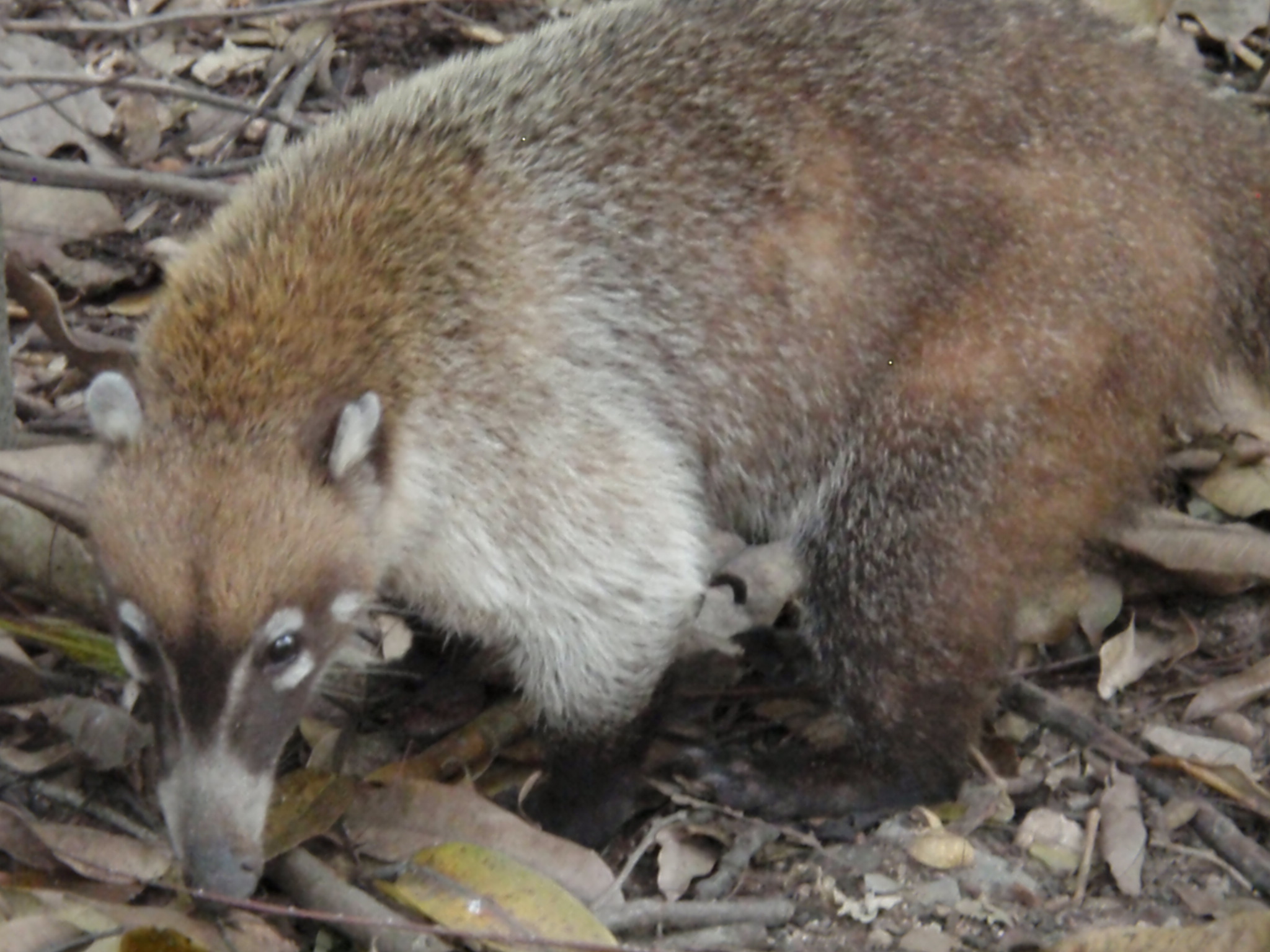
An inquisitive little mammal, seen throughout the park, was the white-nosed coatimundi. He seemed to be very accustomed to visitors.

From here, we traveled on to magical Palenque.