We were fortunate to be able to spend three days at the Pacific coast beach village of Melaque (pronounced May-la-kay). Located approximately 4 hours southwest of Guadalajara, this little village of 4000 inhabitants, residing just north of the resort city of Manzanillo, has a lovely 3-mile beach. The temperatures were in the mid to upper 70’s and the water temp was just about perfect, very refreshing. This was a very clean beach, with small hotels and restaurants dotting the landscape. We were grateful to be able to find a room right on the beach.
Fortified with banana pancakes and eggs Mexicana, compliments of El Patio Restaurante, we headed to the beach for a day of sun and surf. A few cervezas on the beach rounded out the day beautifully!
At the northern end of the Melaque beach lies the sleepy little fishing village of Barra de Navidad, which we visited on our way out of town. A very colorful mural was being created by a local artist as we passed by.
We are excited about the prospects of returning to this area in May for a yoga retreat.
Our next adventure away from Lakeside took us through the colonial city of Colima and town of Comala, on our way to the beach. We knew that there was much more to experience in this area than we had time to see, so a second trip will definitely be in order. We spent just a short overnight stay in Colima, so we felt as if we had just scratched the surface of this colonial city of roughly 130,000 people.
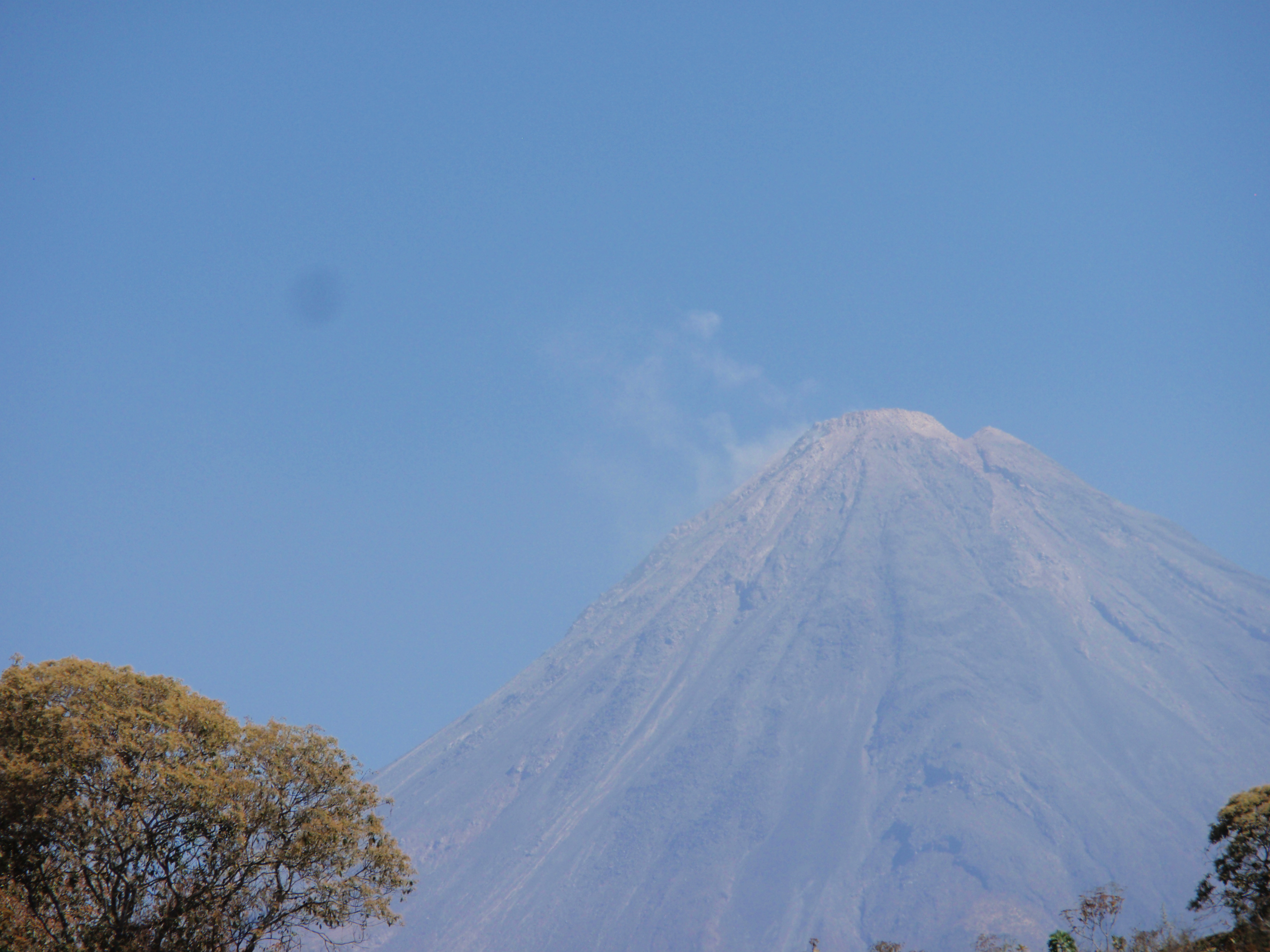
Approximately 45 minutes outside of Colima are two volcanos, one inactive, that stands at 14,200 feet and the most active volcano in Mexico, El Volcan de Fuego, hovers at 13,488 feet. Explosive activity occurs on a regular basis and we attempted to drive as close as we could in hopes of seeing some of this activity. Not much was happening during our visit.
El Volcan de Fuego
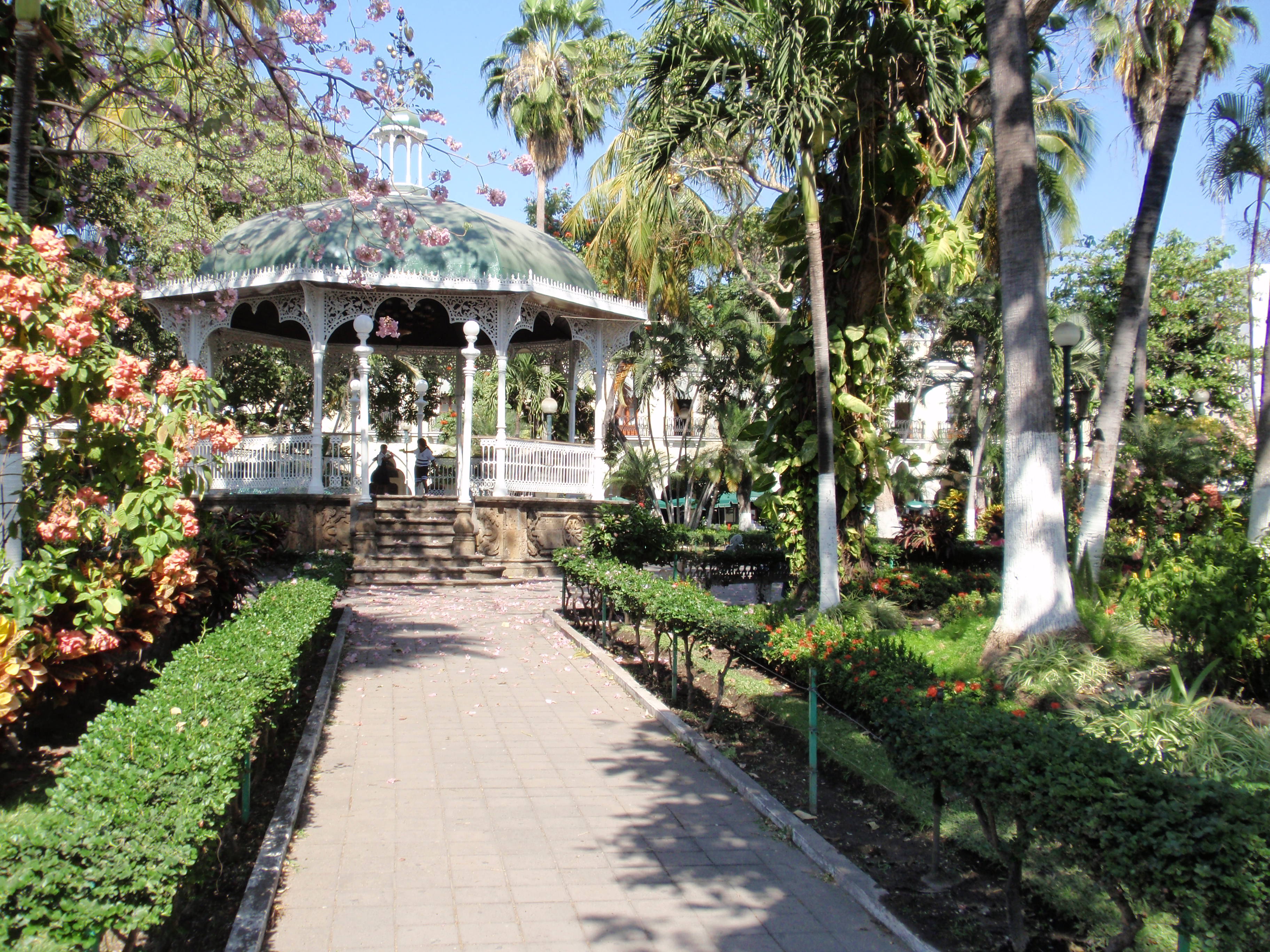
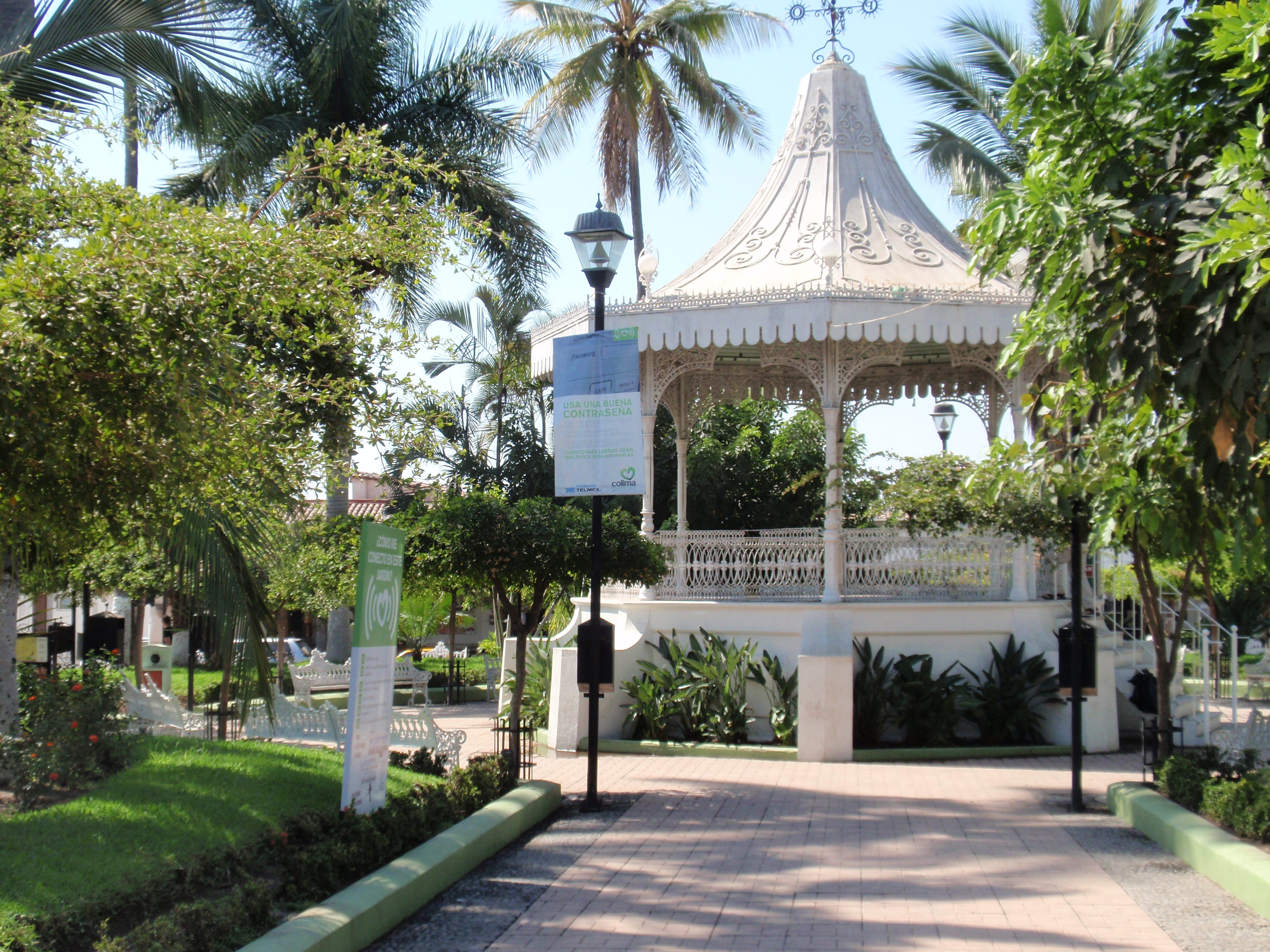
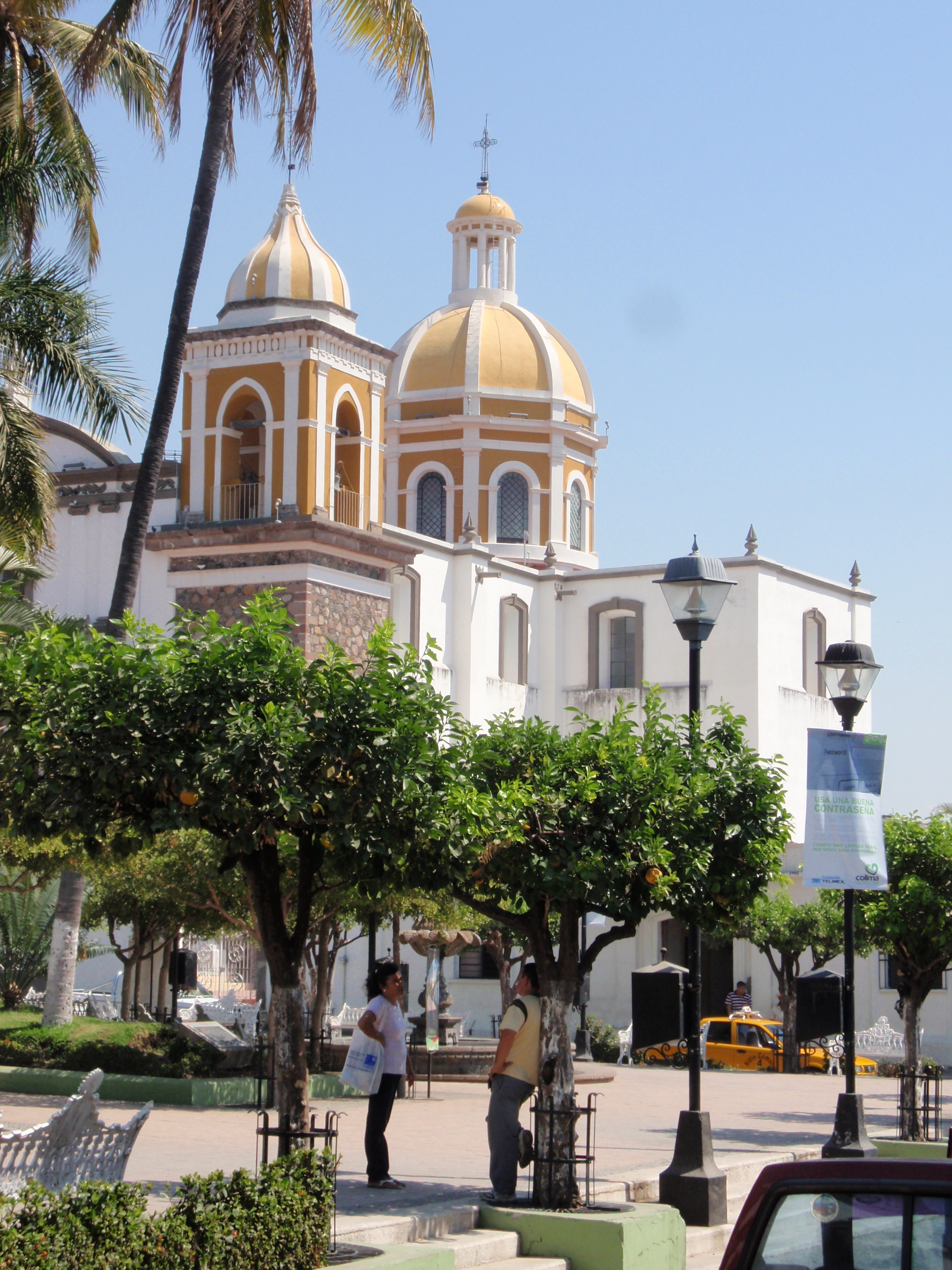
One of the beautiful plazas in the city that we visited was that of Jardin Libertad, the plaza that was bordered by the Colima Cathedral and Palacio Gobierno, as well as the Hotel Ceballos (a Best Western hotel) and the Museo Regional, the regional museum that we found to be quite fascinating.
Jardin Libertad, with her Lush Gardens and Bronze StatuesColima Cathedral and Palacio Gobierno
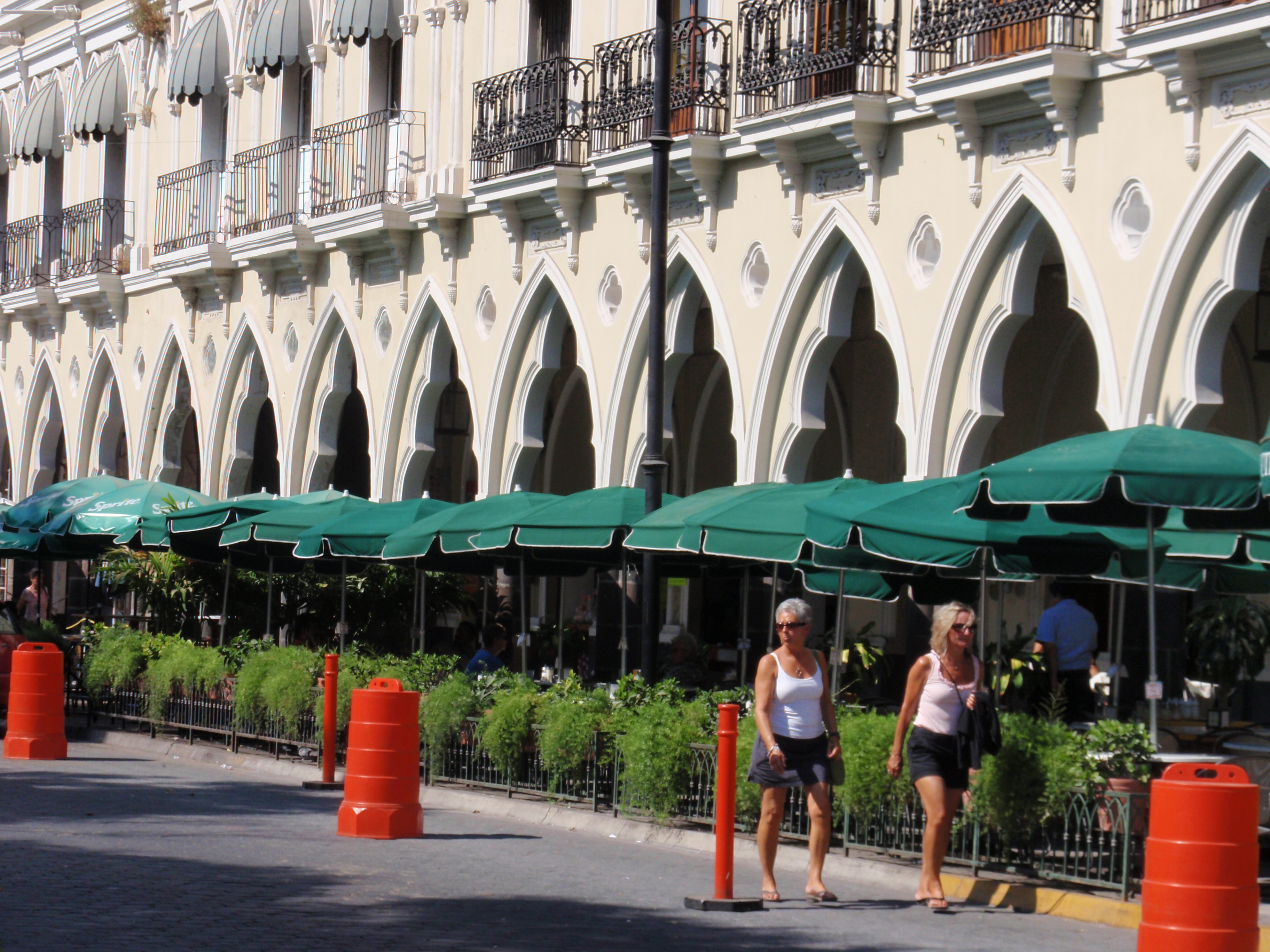
We decided to enjoy a leisurely lunch at a sidewalk cafe outside the Hotel Ceballos before venturing across the plaza to explore the Museo Regional.
Sidewalk Cafe with Hotel Ceballos in the BackgroundJim & RosieTerry & Me
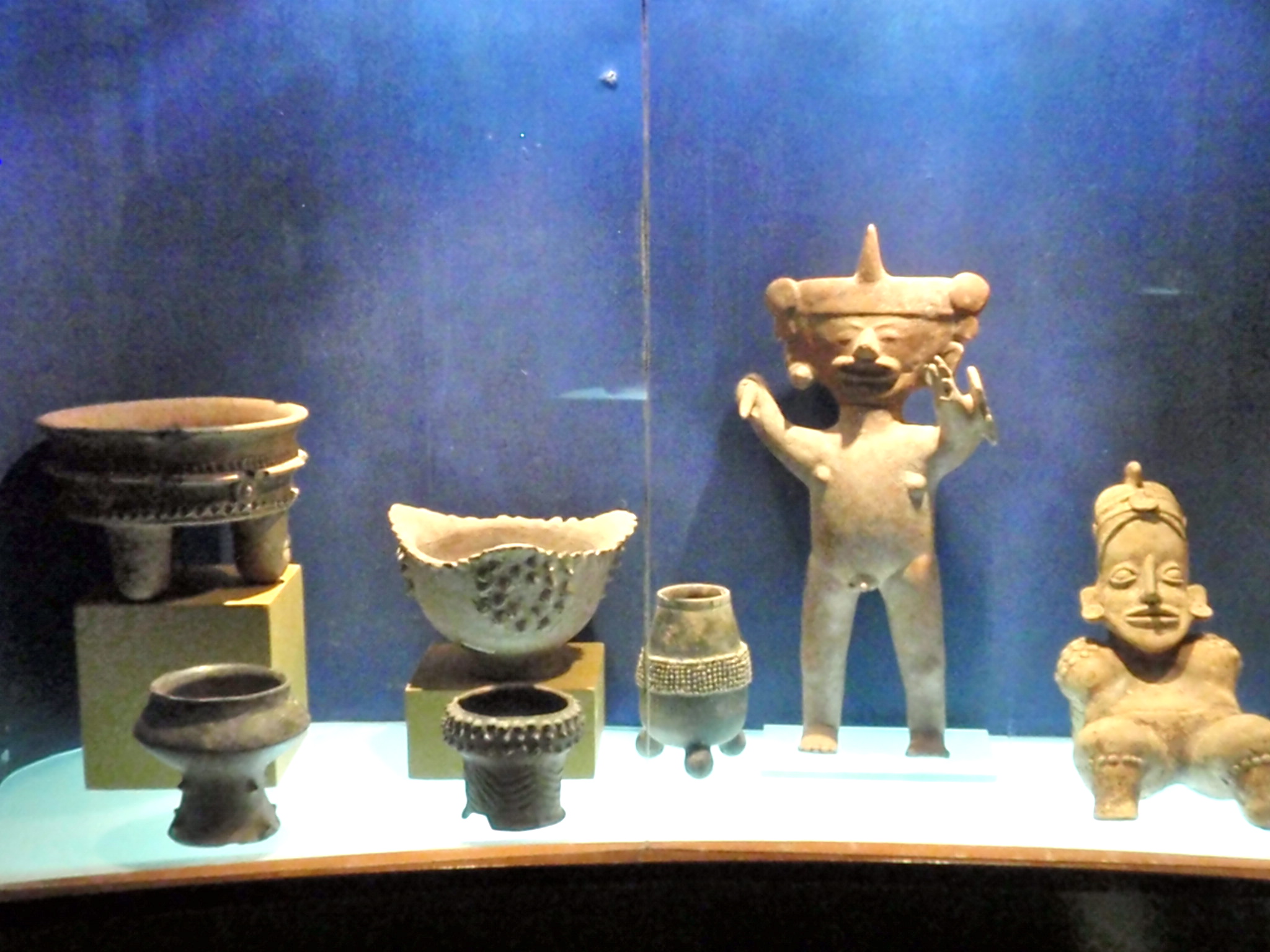
The region around Colima is famous for the clay dog figurines sculpted by the Nahuatl who settled in this area. Perros cebados (round dogs) ceramic artifacts have been discovered in abundance throughout the city and many were on display in the Museo Regional, which bordered the south side of Jardin Libertad.
Perros Cebados in the Museo Libertad
In the majority of Mesoamerican cultures, the dog was revered and thought to hold mystic powers. They had utilitarian uses as well. Fat, hairless, short-legged dogs were often used for food, while more slender, longer-legged creatures were used to ensure that those who died could be reborn in the afterlife. Dogs of this type were placed in the tombs of the recently deceased to guide the departed soul safely to the next world. Ceramic dogs were often used for this purpose. Dogs were also believed to safeguard homes from evil spirits and intruders.
This well-known Dancing Dogs statue, Perritos Bailarines, can be seen in a glorieta (traffic circle) on the outskirts of town, giving tribute to the importance of the dog throughout the centuries.
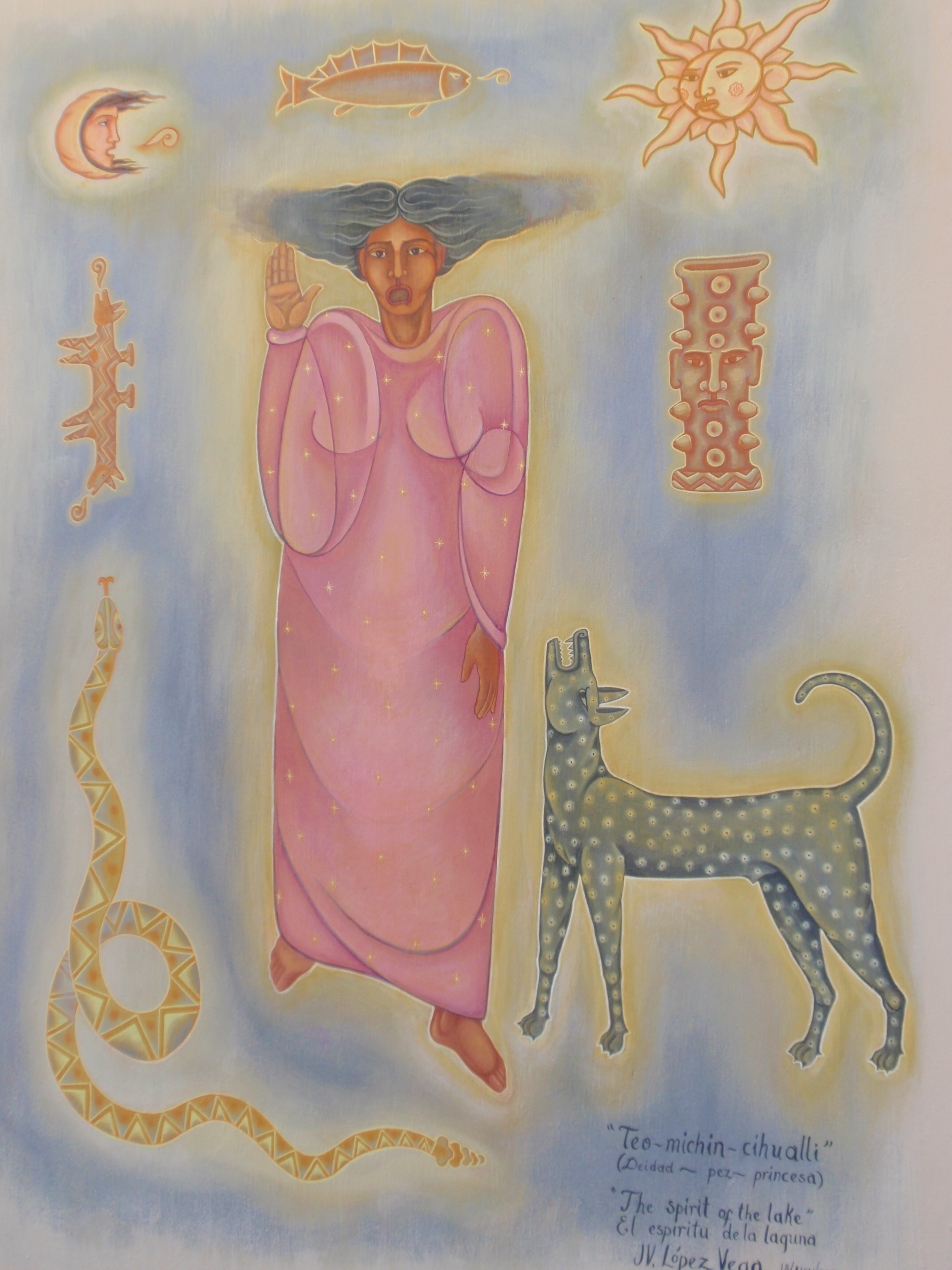
There were many other interesting artifacts and sculptures in the museum, depicting various time periods, along with a beautiful mural:
The focal point of the mural is that of the god of El Volcan de Fuego, demonstrating his power, while the female god of the dormant volcano sleeps under her snow-capped peak. Gods of the sun and the moon are also reflected in this piece.
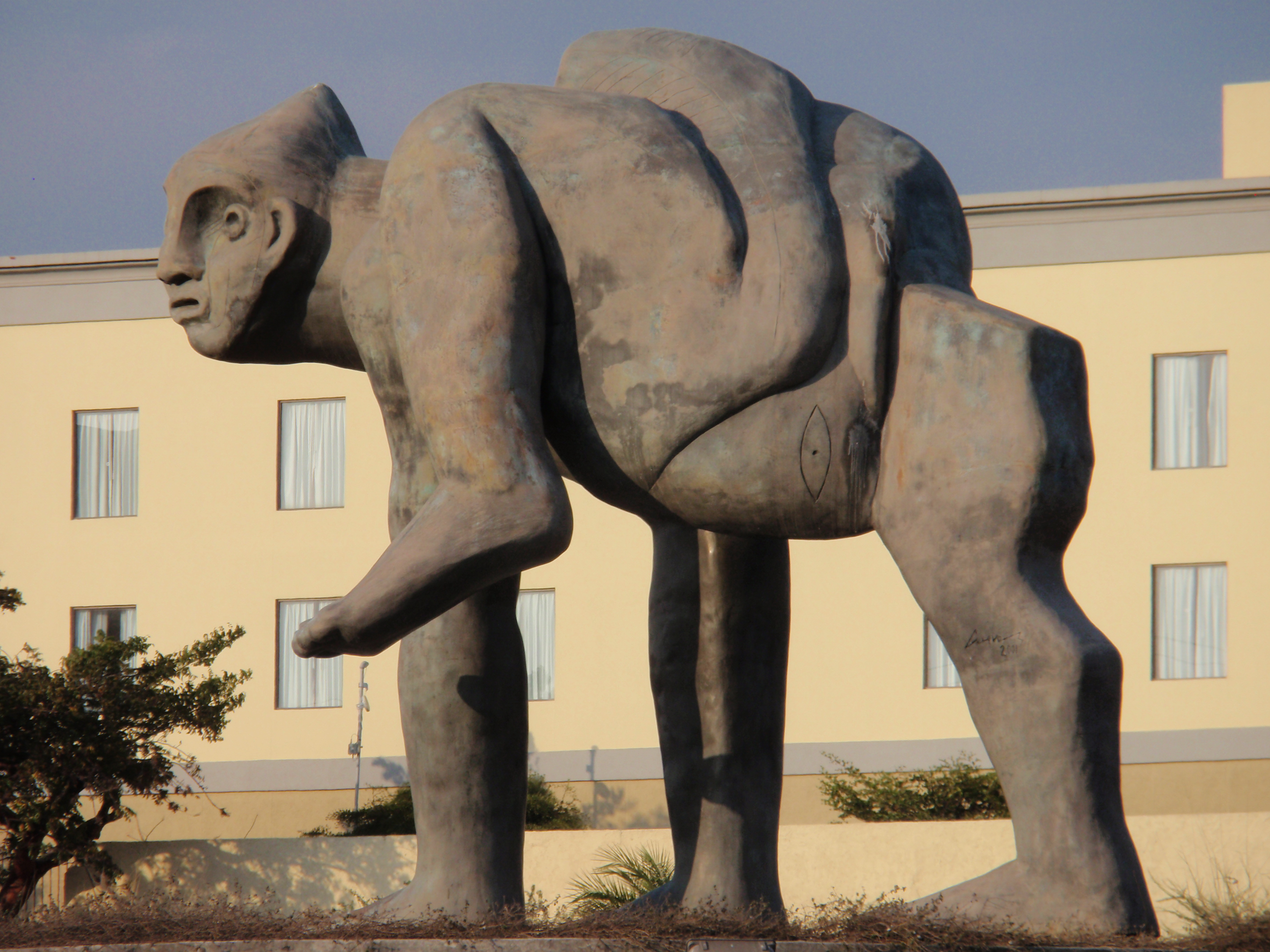
Not unlike other colonial cities, beautiful and sometimes unusual sculptures dot the landscape.
This statue, welcoming tourists to the city, is aptly named Figura Obscena, and is the work of Mexican sculptor Jose Luis Cuevas. It represents a man on his hands and knees, with one leg lifted in the gesture of marking his territory. I wonder what message this artist is attempting to send? As one might imagine, it is a controversial piece amongst the local population.
Another interesting and much more conservative sculpture can be seen outside one of the municipal buildings on the periphery of the city.
Mourning Dove on the Grounds of a Municipal Building
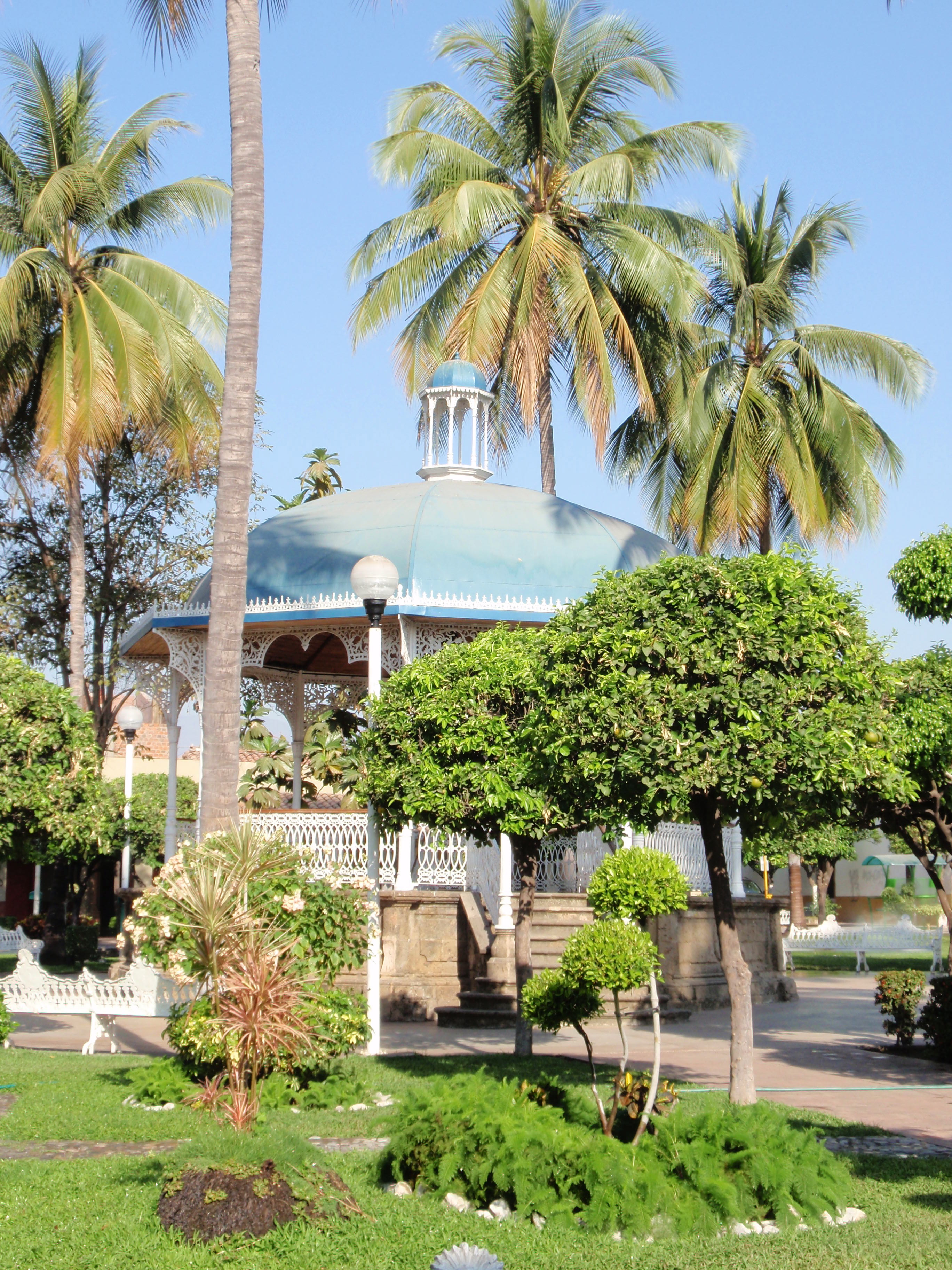
Prior to heading to Comala, we stopped at another beautiful plaza across the city, where gardens displayed a profusion of colors and textures.
Jardin de la Independencia
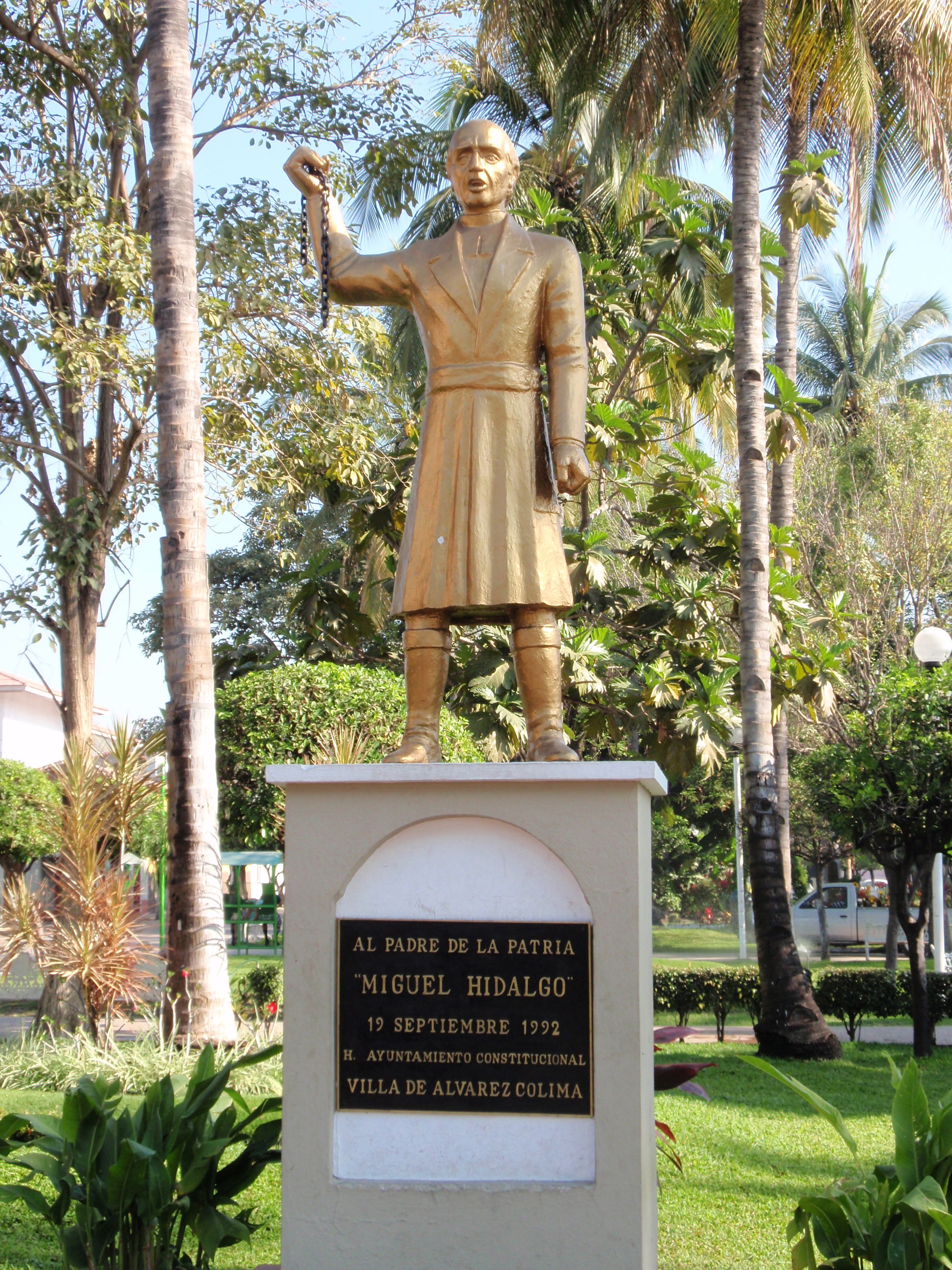
A very well-known figure in Mexico’s independence from Spain, priest Miguel Hidalgo shown with the symbolic “breaking of the chains of oppression”.
A funeral was being held in the church directly across from the plaza. Once this service ended, the procession to the cemetery commenced on foot, with family and friends walking behind the hearse.
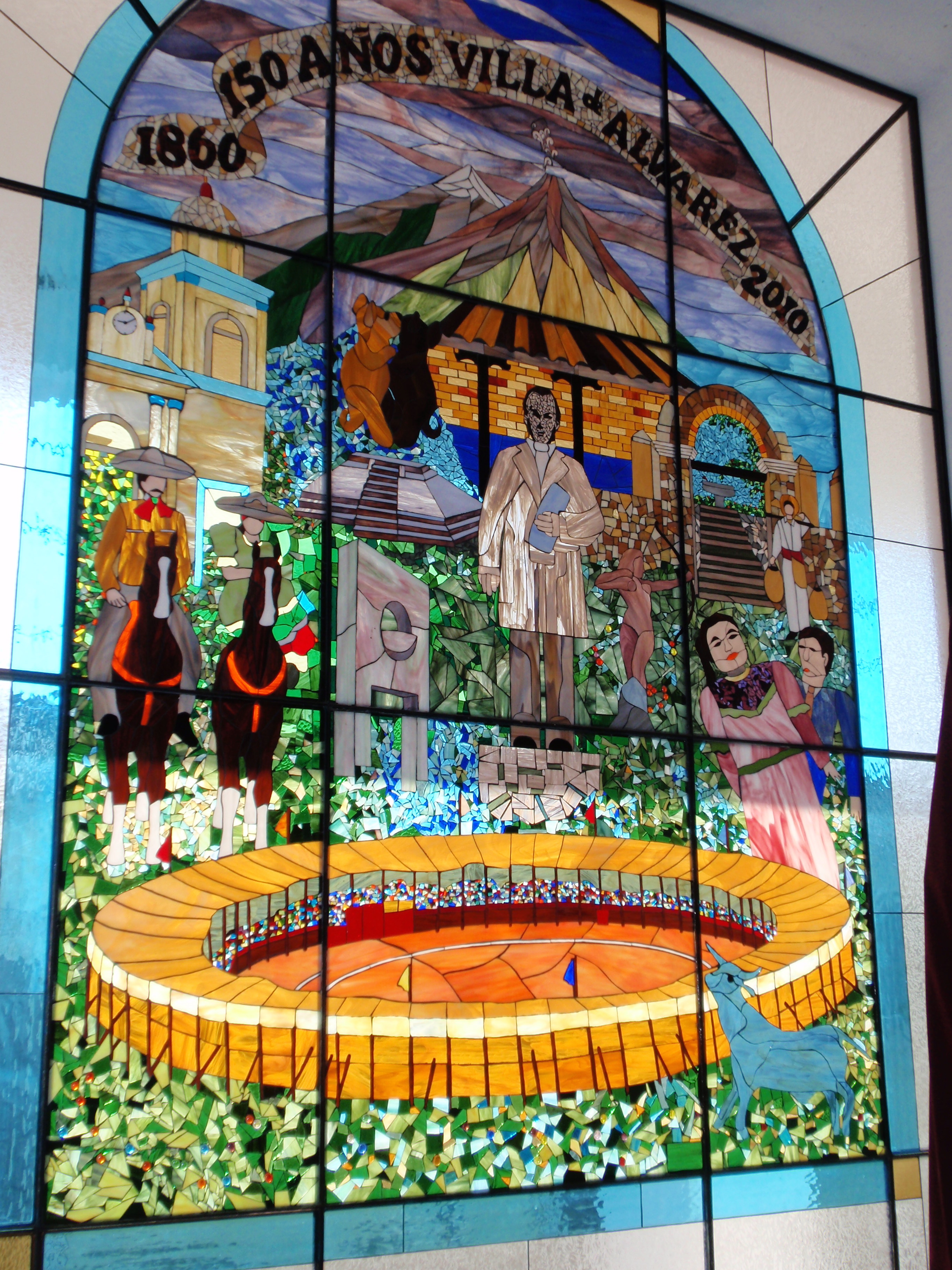
A beautiful stained-glass window adorned the entrance to the Gobierno Principalia, the licensing building across from the plaza.
We are now ready to head to Comala, but first Rosie and I decide that one last look at the map is prudent, given the lack of street signs in the city. You could easily drive around in circles without a map, particularly if I were your directionally challenged navigator!
Comala is a charming little town located a couple of kilometers outside the city of Colima. The one difference we identified immediately upon entering the town limits was that the buildings in and around the plaza were white, unless the brightly colored buildings in so many other cities. This did not detract at all from its beauty or charm.
Restaurants line the plaza, offering free botanos (snacks) with just a drink order. We dined at Los Portales, where the appetizers were tasty and abundant.
And yet, another lovely little plaza with a church bordering the gardens.
Having been nourished by our botanos at Los Portales, it is time to head to the beach, but not before we investigate Zona Magica, which we had read about but could not fathom. There is a section of road just outside Comala, where if you stop at the bottom of what “appears” to be an incline and place your vehicle into neutral, a “force” will pull you up the incline. We tested this several times and, sure enough, we were pulled up the hill. Is this a scientific fact or is this just an illusion? We will never know!
The warmth of a friend’s presence brings joy to our hearts, sunlight to our souls, and pleasure to all of life. ~ Anonymous
We have been blessed with the company of two very special friends, Rosie and Jim, for the past two weeks. We looked forward to their visit for several weeks and, in a flash, two weeks went by and today we returned them to the airport to make their way back NOB (north of the border). We are now left with some beautiful memories and some lovely pictures, thanks to my husband the photographer.
We have been on foot or taking advantage of the public transportation system since our arrival in Mexico. Since we had places to see and much to do within a span of two weeks, we decided to rent a car for the duration of our friends’ visit. I knew from the start that I would be leaving the driving to Terry, not without a bit of trepidation on his part as well, given what we have seen of some of the local driving flair and the challenging street signage (or lack thereof).
Our first venture out beyond our little village was to a town across the lake from us called Mazamitla, whose name means “the place where arrows are made for hunting deer”. Many tourists refer to it as the “Switzerland of Mexico” and one can notice a resemblance in some of the architecture.
This village of 11,700 inhabitants was founded by the Aztec in 1165 and sits approximately 7200 feet above sea level. Many locals venture to this lovely little town when the temperatures begin to inch upwards during the summer months.
Our drive around the lake to arrive at our destination was interesting, to say the least. Suffice to say that Mexican drivers have nerves of steel or maybe very poor eyesight or love to play chicken with other traffic, or some combination of the above. I thought Terry was very courageous to accept the task of driving, as part of this drive consisted of a road with no shoulders, with large trucks attempting to pass under questionable conditions. Thank goodness when we got closer to Mazamitla the road conditions improved considerably and the landscape unfolded to pine, oak and mesquite trees, reminding us of states NOB.
We enjoyed a lovely lunch upon arrival and took a walk through the main part of town, with shop-lined streets that ended in a plaza and church, as do so many other towns. Many of the shops’ shelves were lined with canned fruits and sauces, along with a popular drink called rompope, a combination of milk, brandy, sugar and chocolate. Potted flowering plants were on sale in many shops as well.
Once we were fortified with a little food and enjoyed some window shopping, it was time to brave the roads once again. The area around Lake Chapala is highly agricultural, so we distracted ourselves with views of the greenhouses dotting the hillsides, with questions of what could be growing beneath them. Of course, our own “nerves of steel” driver kept eyes on the road as we ventured back around the lake!
After twelve years of therapy my psychiatrist said something that brought tears to my eyes. He said, “No hablo ingles.” ~ Anonymous
Hola Everyone! It has been awhile since I have blogged, as it seems that I have become one of those retirees (still don’t like that word!) who has begun to wonder how she had time to work, with all the activities in which we are involved.
Today was the day to experience the world of Mexican dentistry, which has been highly touted as professional and inexpensive. The particular dentist’s office that we visited was across town, and we would typically walk, as we do so most everywhere, but given other appointments earlier today (yoga and the Wednesday organic market), we thought it best to hop onto a city bus.
City buses lack some of the creature comforts of those taken for longer distances (like the ETN bus we took to San Miguel and Guanajuato), but are serviceable and cost 6-8 pesos (less than $1). Sitting by the window, on more than one occasion, I held my breath as the driver squeezed by other vehicles, missing side view mirrors by inches!
In the states, we are accustomed to being considerate of those around us and wear ear buds when listening to iPods or radios (except for some who use cell phones and wish everyone to hear their conversation) but in Mexico, anything goes. An older local gentleman stepped on the bus and proceeded to crank up his portable radio so we all could enjoy the Latin music. It phased no one around him and I realized that I am becoming accustomed to this type of behavior as well, because in the whole scheme of things, it is no big deal, right?!
We hopped off the bus at our stop and entered the dentist’s office, where we were told by an office staffer that Terry would be passed off to a nice-looking woman dentist and I would have a nice-looking male dentist to take care of my exam and cleaning. I must admit that this was not the type of comment I had ever heard before when entering a doctor’s office, but was all said in jest.
Both our dentists were professional and efficient and the equipment used was very modern (ultrasonic cleaning method). My exam seemed very thorough and, at one point, my dentist very kindly asked me if I was stressed, as he could see that I had a tendency to clench my teeth. Explaining to him that I was recently retired and enjoying the good life; yoga, meditation, beautiful weather, and long lunches with friends, I did not feel the least bit stressed. I bemused that perhaps watching the meanderings of the bus drivers down narrow streets could be a bit stressful but knew that my teeth clenching originated long before my departure from corporate life.
While still in the chair, I was fitted for a mouth guard, while Terry had a filling replaced after his cleaning, all done with much care. Surprisingly, this did not take several visits, and had I been willing to wait for one hour, I could have walked out of the office with my mouth guard, but opted to return the next day instead.
Now for the really exciting news, the costs for the services rendered:
Cleaning and exam: $12.00
Filling restoration: $28.00
Mouth guard: $50.00
Another side benefit was no insurance papers to file. Needless to say, we were impressed.
We decided to take the bus back as well and hopped on at the nearest bus stop. Local buses are commonly referred to as “chicken buses” because ostensibly, one could bring their live chicken on board if they were so inclined. Surprise, surprise, we had entertainment for the ride back in the form of two Mexican balladeers, who apparently used this venue as their side jobs. The younger of the two stood in the aisle with his back to me, strumming his guitar as he began to serenade the crowd. Given the swaying of the bus, I was braced to have him sitting in my lap before we arrived at our stop, but much to my relief, he had great balance and his singing was not half bad!
One never knows what they might encounter on a bus trip across the village. I am secretly hoping for the singing chicken act on our next bus adventure!
The week of Thanksgiving is a typical week when gringos and locals alike migrate to the beaches, before the kickoff of high season and higher rates. Who were we to argue with this, so away we went to Puerto Vallarta!
Before I provide a glimpse into yet another lovely Mexican city, I must first apologize to my friends in the colder climes up north, particularly in the Yellowstone National Park area, for the timing of this post. We happened to notice that the temps during the week of Thanksgiving plummeted into negative figures, with plenty of snow to boot. Suffice to say, we thought about all of you when we were basking in 80 degree temps during the day and 65 at night.
For those who have never been to Puerto Vallarta, it is on the Pacific Coast side of Mexico, on one of the largest bays in the world – Banderas Bay. North to south, this expanse of water extends 42 kilometers (roughly 26 miles).
Puerto Vallarta became an international destination with the filming of The Night of the Iguana in 1963, starring Elizabeth Taylor and Richard Burton. The home that they purchased during filming is still on one of the tour routes.
In 1973, the construction of the big hotels began and PV was labeled as a mecca for water sports, one of them being parasailing, and no, this is not me.
Many locals still make their living from the sea. Terry was able to get a photo of some men readying their nets in the hopes of capturing some of the ocean’s bounty, while a pelican alights in a tree nearby, anxious for a free lunch.
While Terry was snapping these pictures, I just happened to be looking out into the bay and saw two beautiful manta rays project themselves from the depths again and again, fly through the air, and dive back down into the bay. What a miraculous sight this was but unfortunately, I had no camera in hand!
The malecon here is probably unlike any other in Mexico, as it is lined with restaurants, nightclubs and fine shops, a tourist’s heaven. It does have the obligatory plaza with gazebo and church nearby.
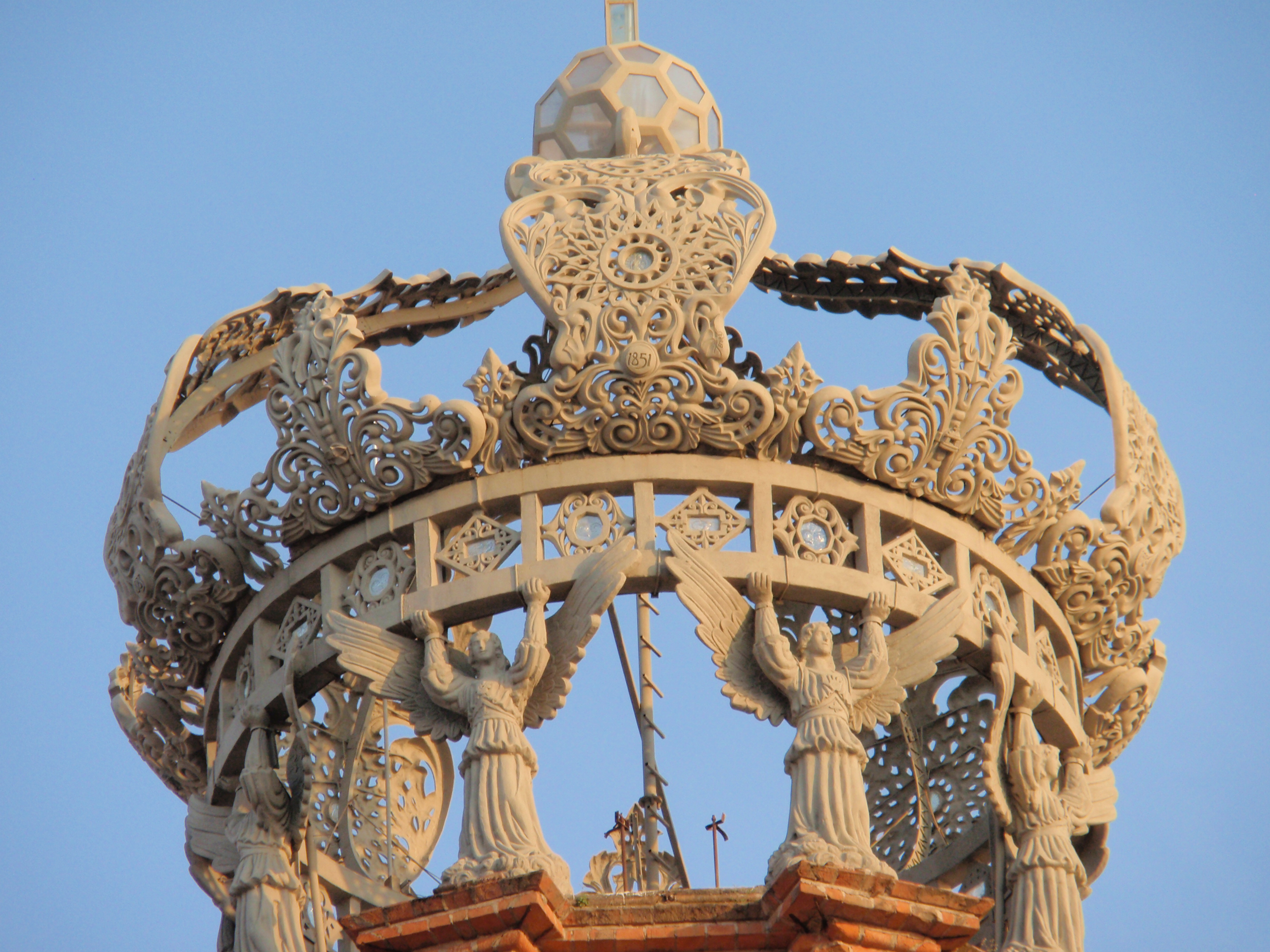
The Church of Guadalupe was constructed in 1951, right off the main plaza and has a magnificent crown balanced on top of her steeple, fashioned after the one worn by Mexico’s 18th century Empress Carlota.
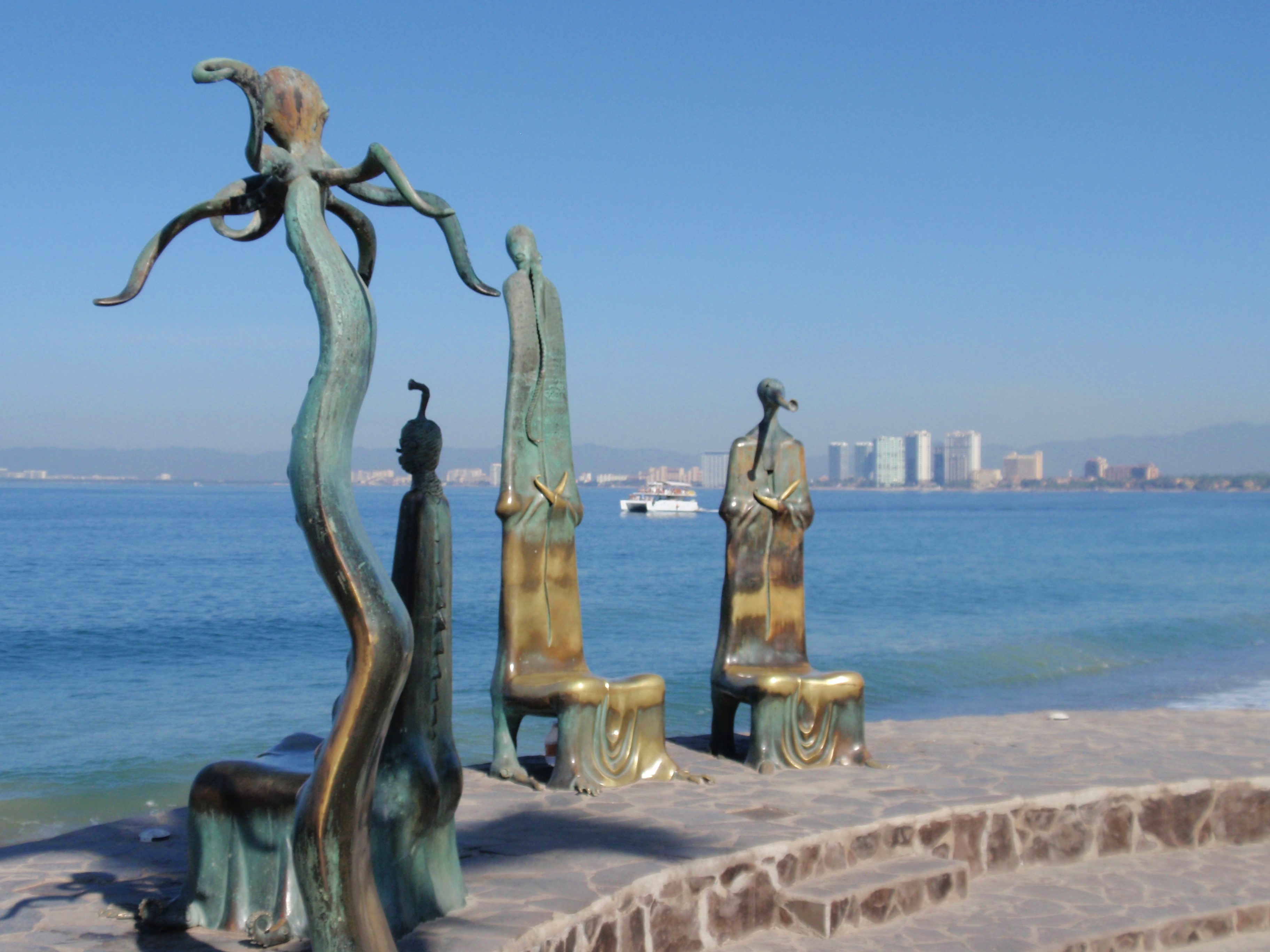
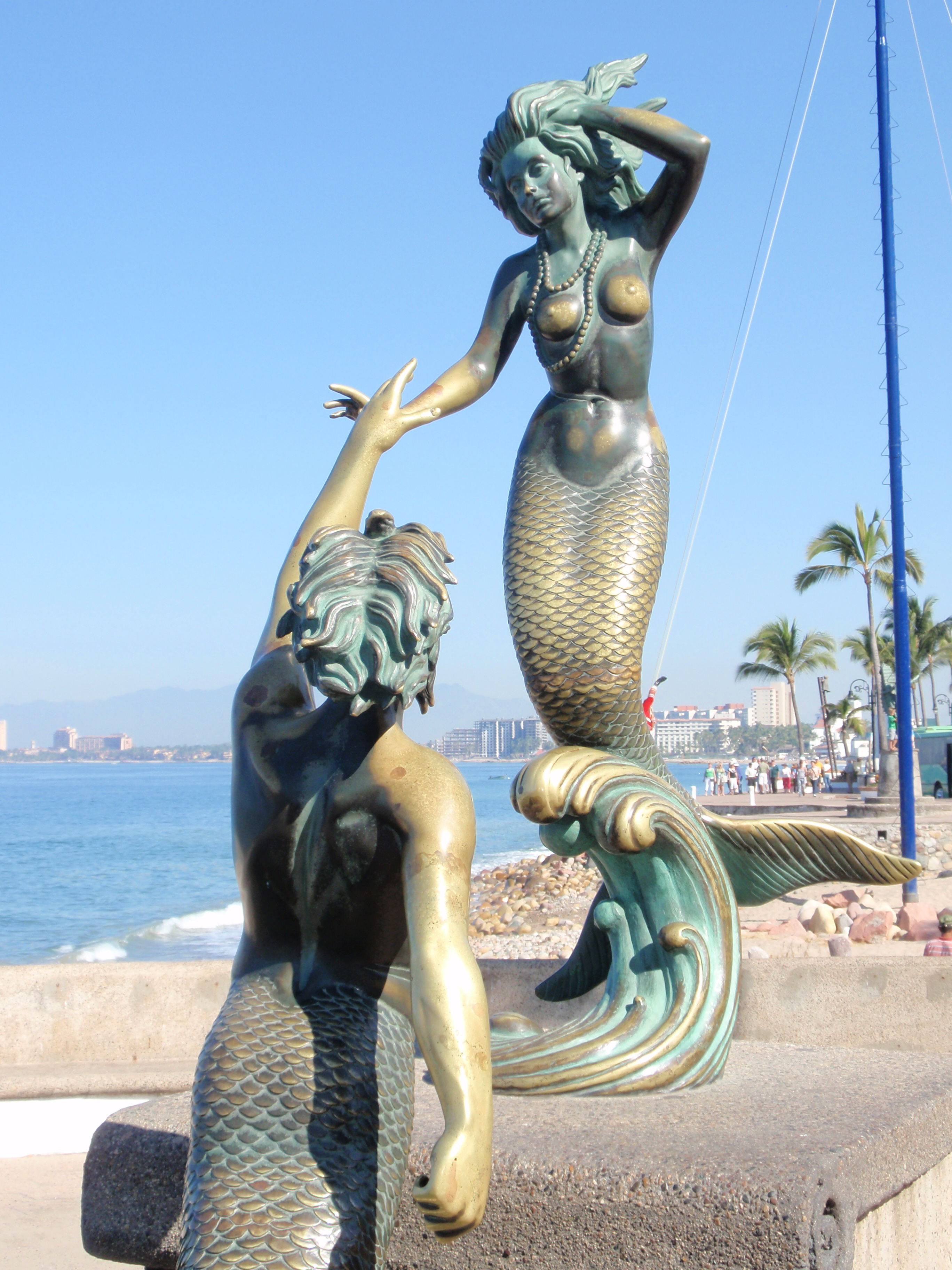
Intricate and unusual sculptures and statues lined the malecon, many of them displaying mermaid-like creatures.
Mermaid ViolinistMermaid SaxophonistSea Creature Chairs - Very Strange Indeed!
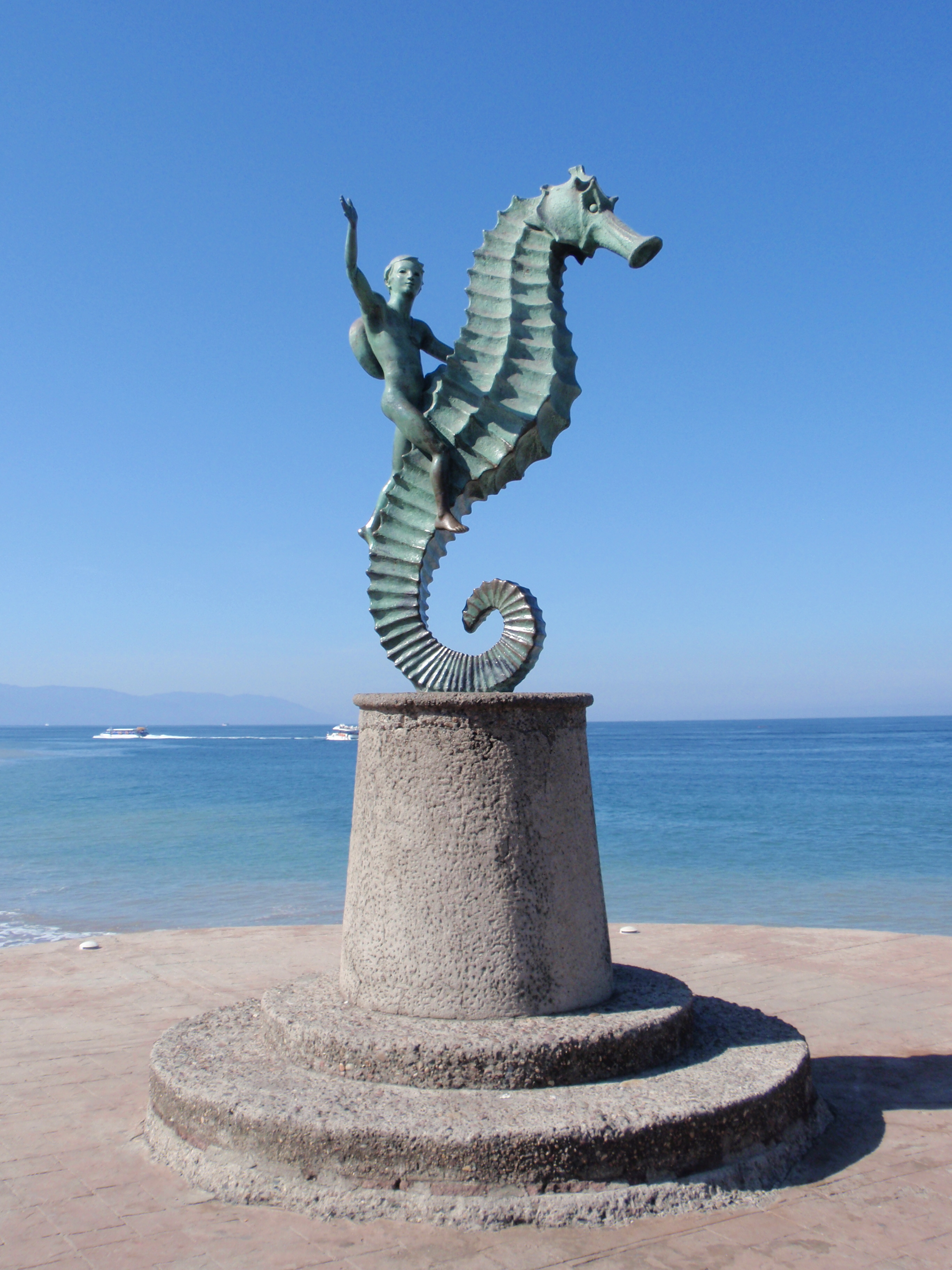
The malecon’s first statue was that of a little mer creature.
Caballito del Mar ~ Little Seahorse
The next sculpture is that of Angel de Esperanza (Angel of Hope), washed away by Hurricane Henna in 2002 and replaced in 2007.
Triton (son of sea-god Poseidon) and Nereid
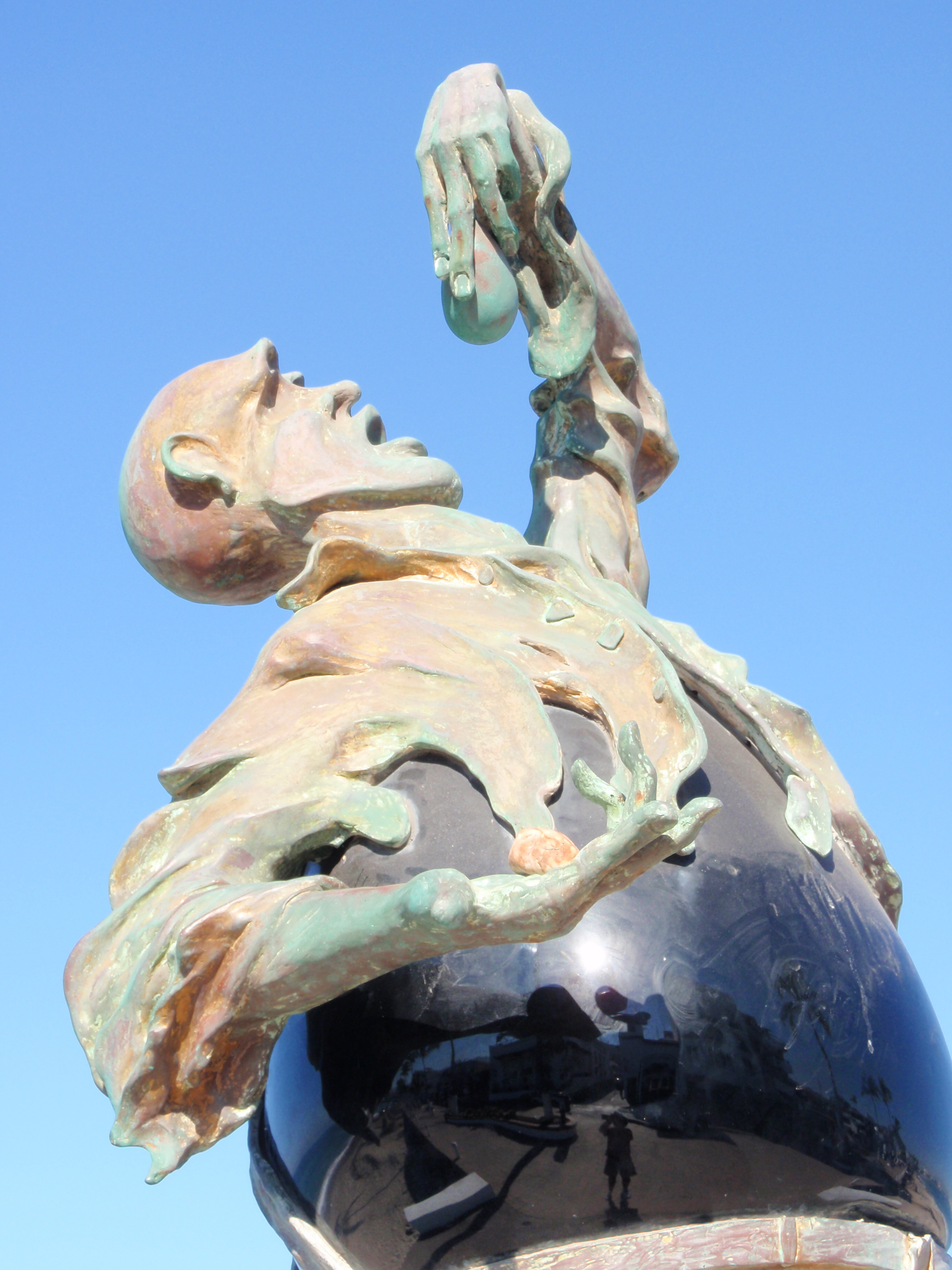
We stood and looked at the next statue for some time, trying to determine what in the world this man was going to eat! Looking down at the base of the statue were the words “Come Piedras”.
Come Piedras (He Eats Stones)!
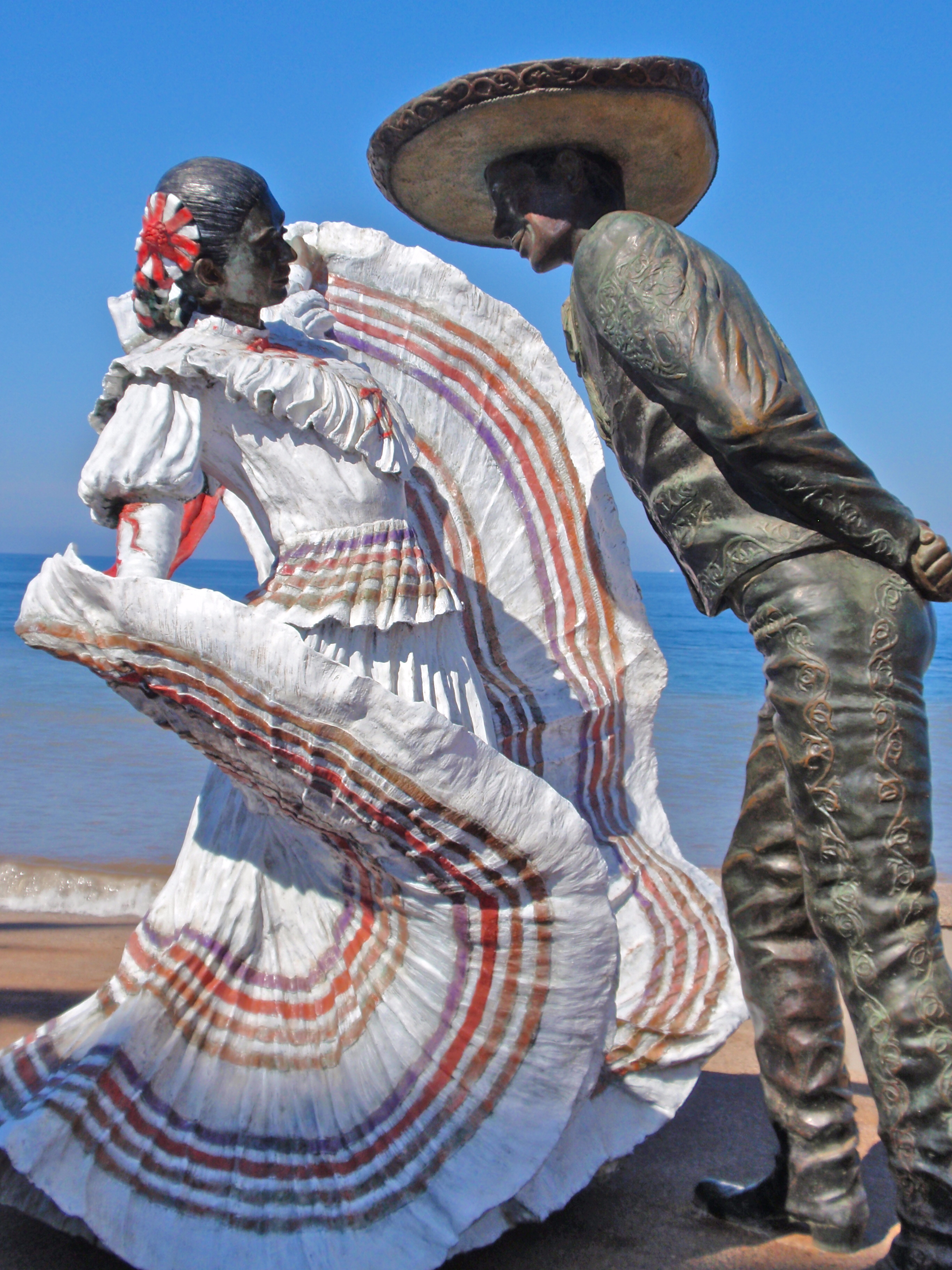
One of the more colorful sculptures depicted a celebration of the Xiutla Folkloric Ballet.
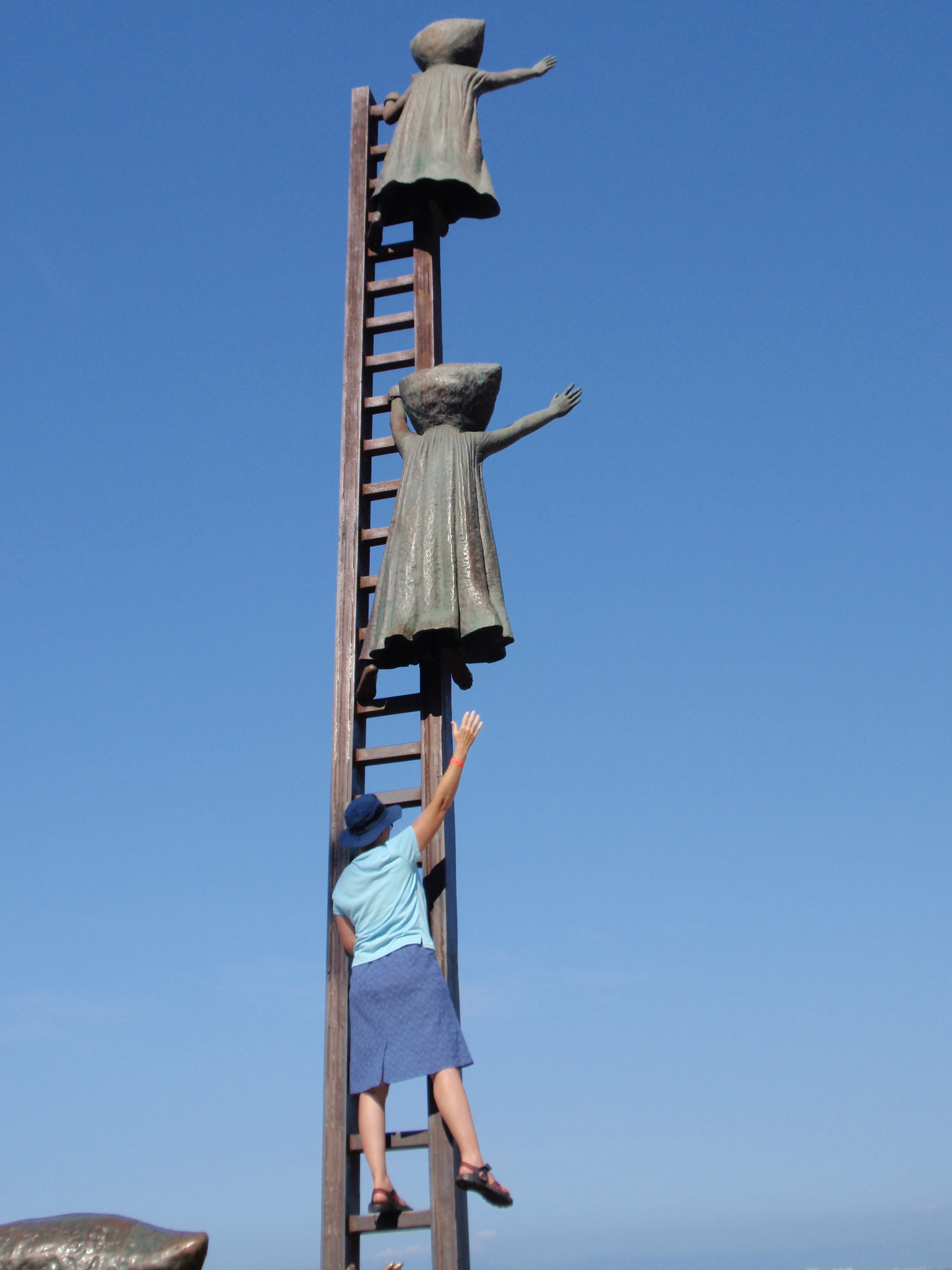
A sculptor by the name of Bustamante, whose trademark is to create statues of people with triangular heads, has a sculpture displayed by the name “In Search of Reason”, where it appears the mother is calling out to her children who have climbed high onto the ladder. Wanting to experience this thrill myself, I had to be the tourist and have my picture taken!
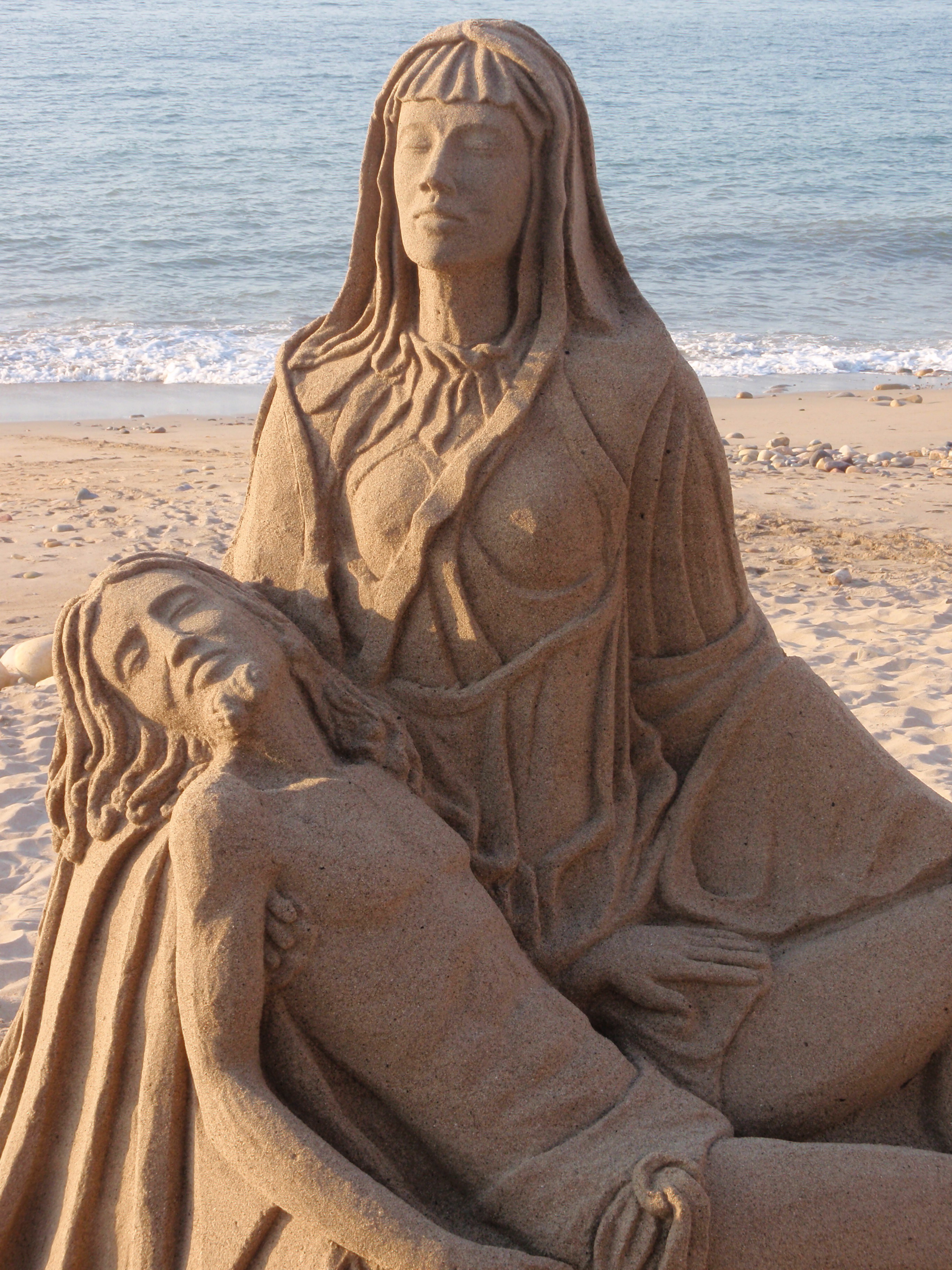
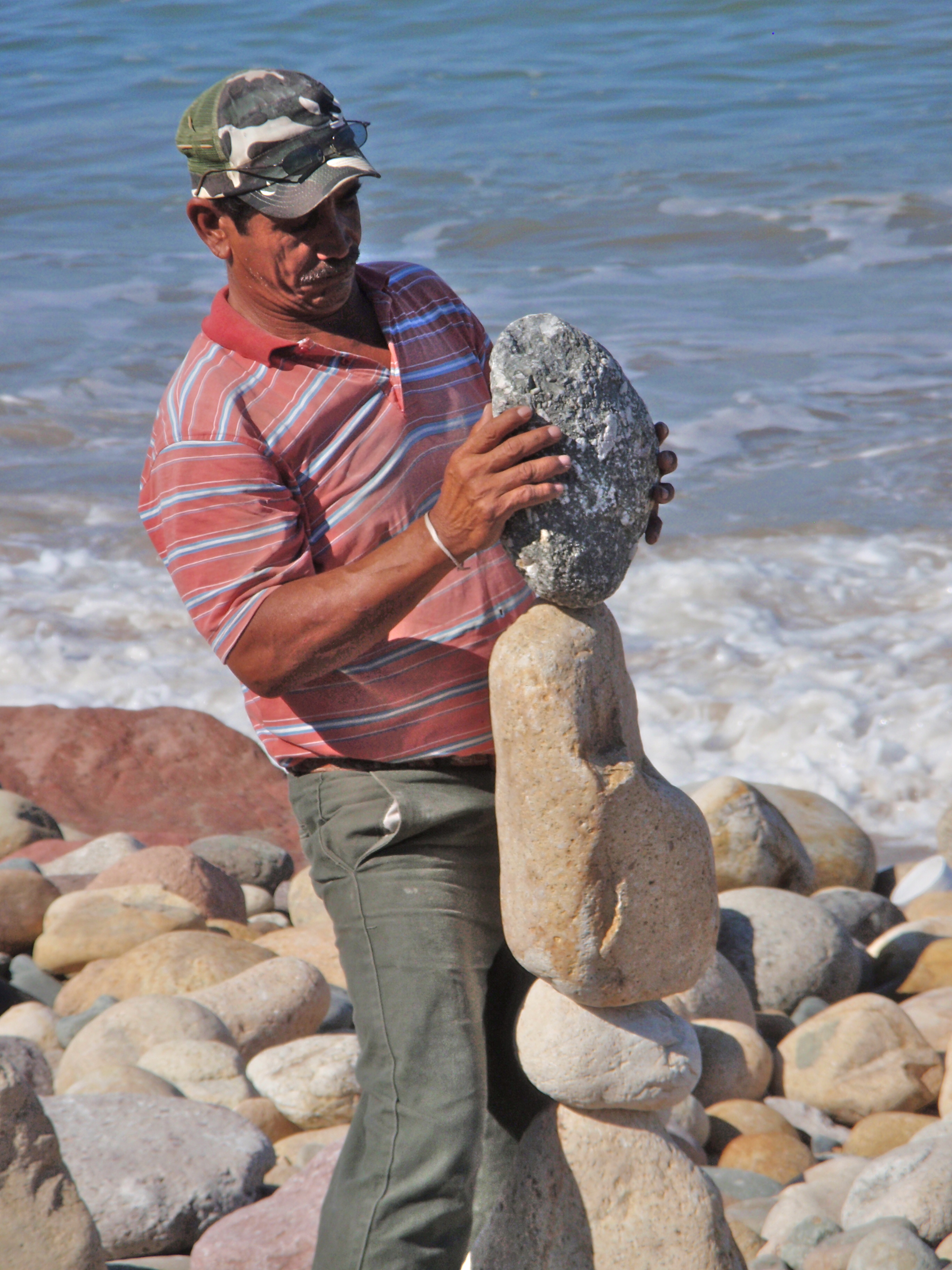
Along with the famous bronze sculptures were less permanent pieces of artwork being fashioned by locals, those created in sand or by rocks worn smooth by the movement of the tides.
These look like some very sophisticated cairns. Terry watched as this man stood sans movement for the longest time to balance the final rock.
Some Serious Concentration Needed for This Balancing Act
The final product…
Ta-Da!
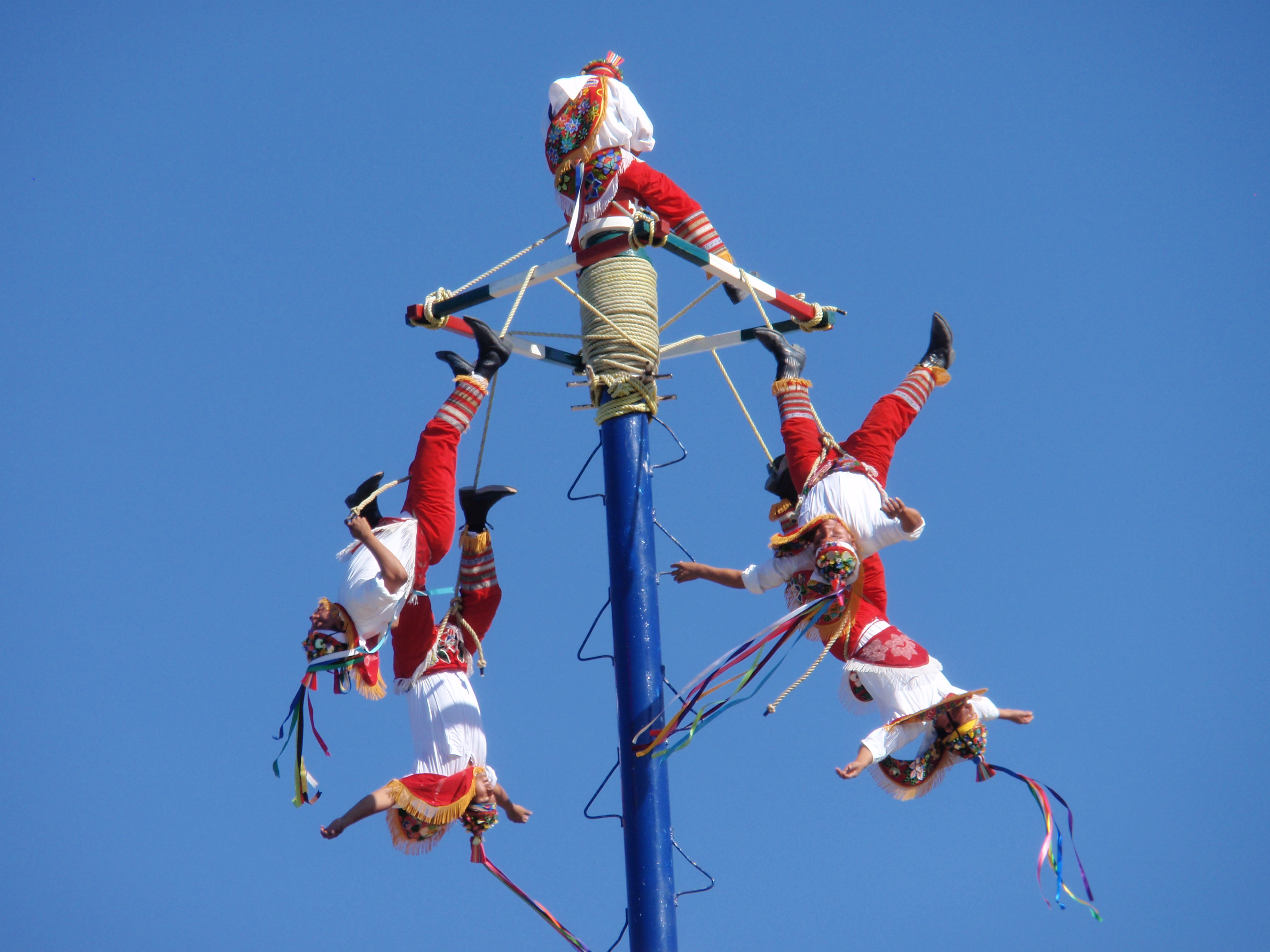
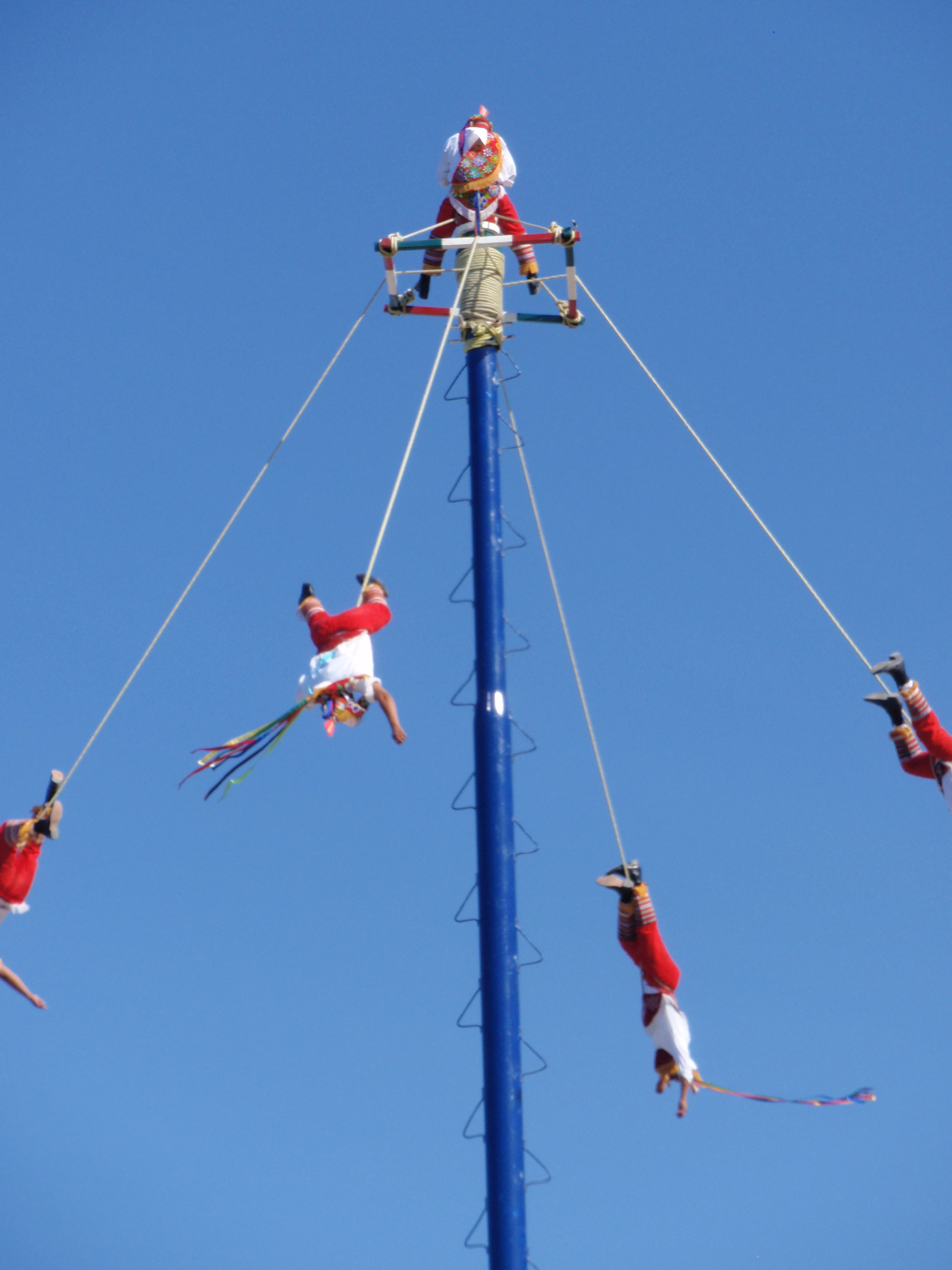
A very exciting performance that took place on the malecon was that of the Danza de los Voladores (Dance of the Flyers), a ritual that has its roots in the pre-Hispanic period, associated with the town of Papantla, Veracruz and was dramatized when asking the gods to end a severe drought. Five indigenous men scale a pole, via a ladder, 42 meters (138 feet) high. The piper, the first up the ladder, sits atop the pole on a small platform, playing a drum and flute, while the others encircle him, securing themselves with ropes. They launch themselves backwards off their tiny perches, as they spin upside down until they reach the ground. This would certainly not be for the faint of heart!
Puerto Vallarta is such a popular beach destination that many very large cruise ships enter her port on a regular basis. As we were waiting to hop onto a catamaran to take us to the more secluded beach of Las Caletas for some snorkeling, sea kayaking, and a sumptuous lunch, the Mariner of the Sea made her approach.
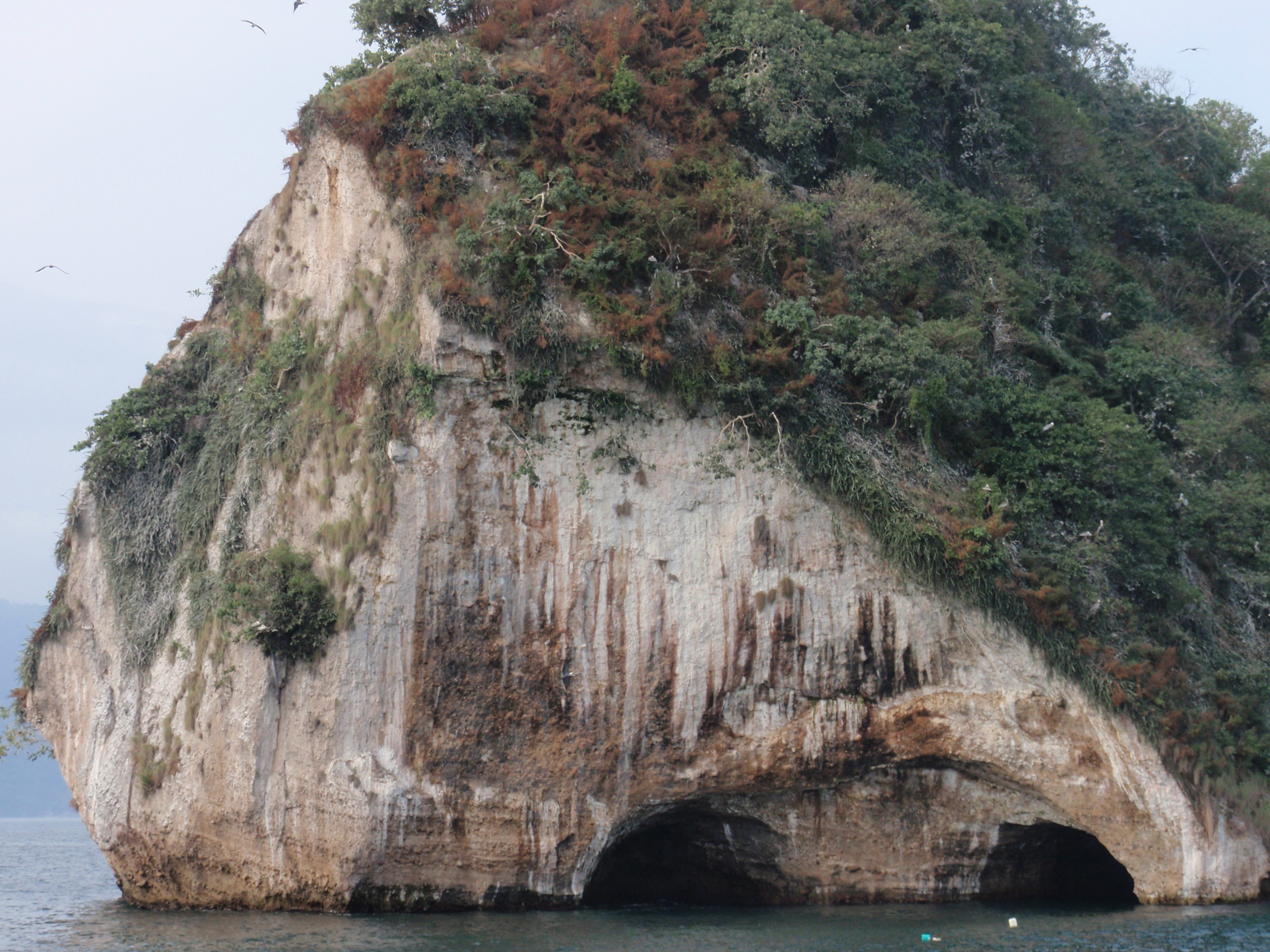
On our trip out to Las Caletas, we passed by two large rock formations jutting out of the bay that served as bird sanctuaries.
As our boat docked at Las Caletas, a beautiful macaw swooped in to welcome us. Her timing was impeccable!
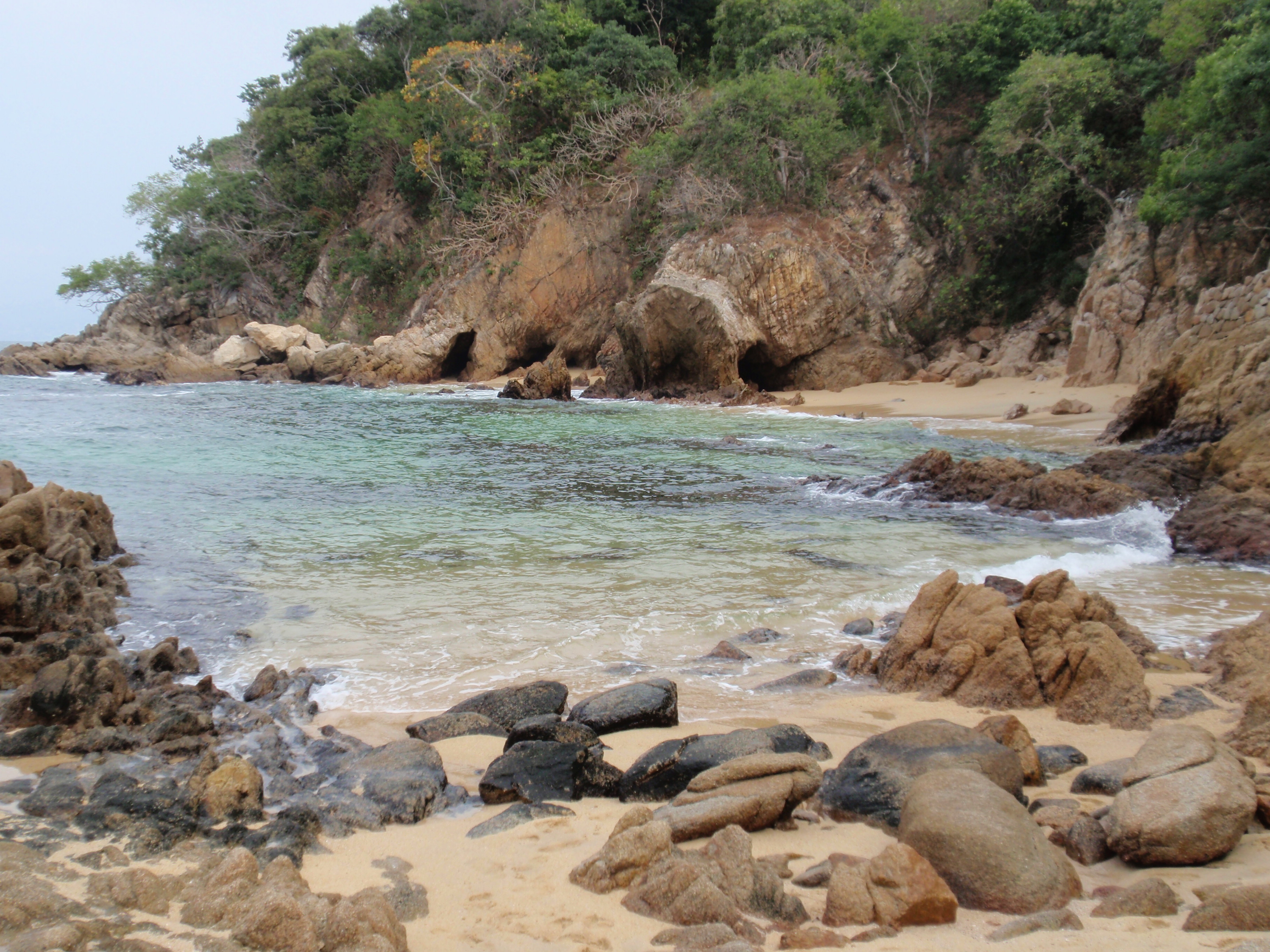
And the cove was beautiful!
Our week at the beach ended with a very comfortable bus ride back to the Lakeside area. We hope you all had a wonderful Thanksgiving. Stay warm and we will see some of you up north very soon!

















 Paint Your Landscape