San Miguel de Allende

It was difficult to pull ourselves away from Guanajuato, but there are so many other interesting cities to see, so on we go to San Miguel, known as el corazon de Mexico (the heart of Mexico)!

The city of San Miguel de Allende was founded by a Franciscan monk in 1542 and was an important stop-over point on the silver route to Zacatecas.  As most other cities in Mexico, San Miguel has a central plaza and a church that anchors this community.  But this is not just any church; this is the La Parroquia, the parish church that may be the nation’s most beloved.  It was rumored that in 1880 an unschooled local Indian by the name of Seferino Gutierrez added the faux-Gothic spires to the church.  The stone was locally quarried pink stone and the design was borrowed from postcards of European Gothic cathedrals.  These spires supposedly were constructed by a workforce guided only by the use of sketches drawn in the dirt.
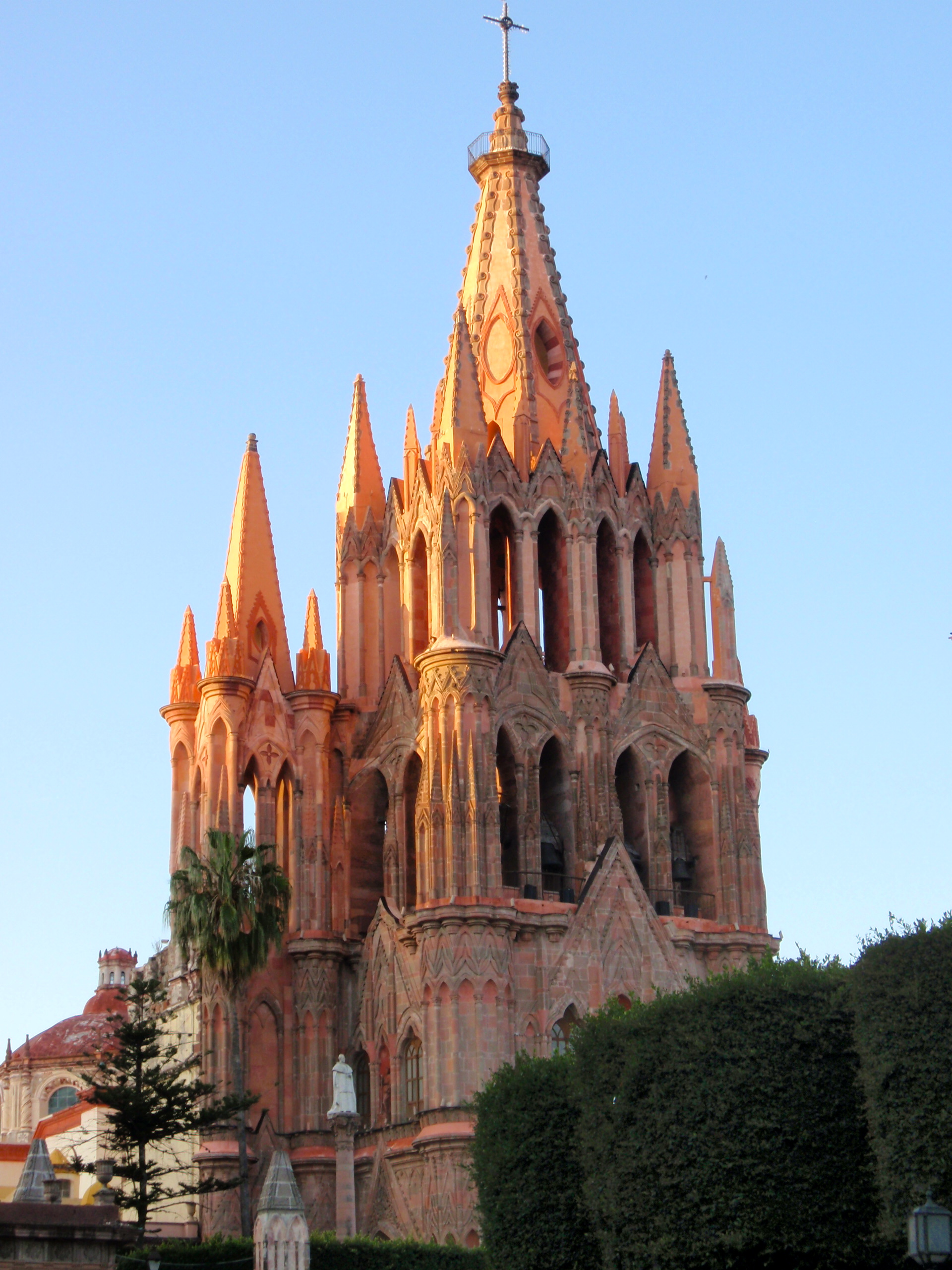
La Parroquia Ceiling Mural

La Parroquia is considered among the great architectural wonders of the world and we were fortunate enough to experience a music and light show at this very location the first night we arrived.

The colored lights, when projected onto La Parroquia, changed the look dramatically, almost giving the appearance of a haunted house.

Cohetes (extremely loud fireworks) are synonymous throughout Mexico with fiestas and fortunately, these were not part of the show.  What we experienced instead were fireworks that brought us back to our childhood, as we stood in awe looking up at the brightly lit sky.

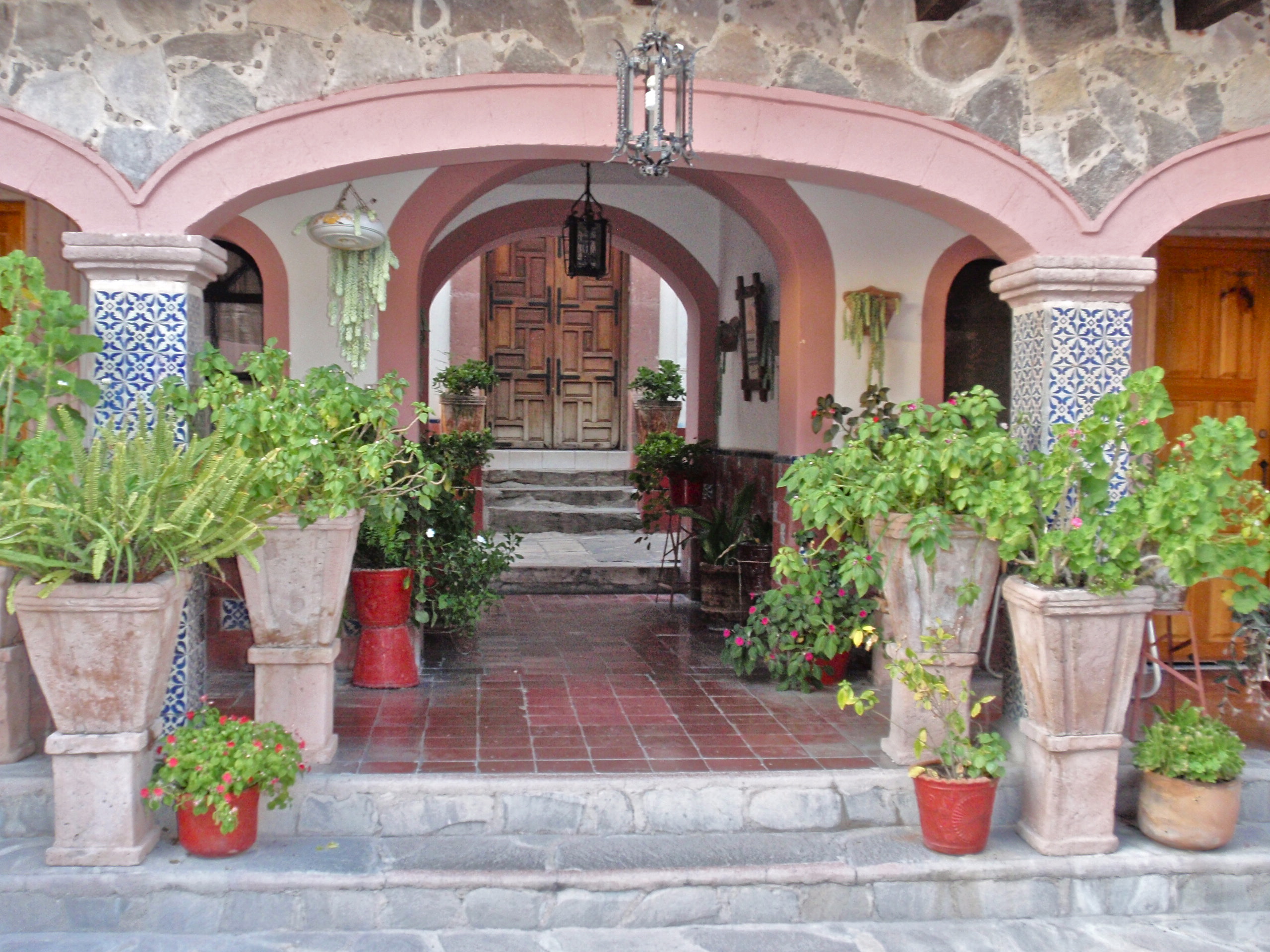
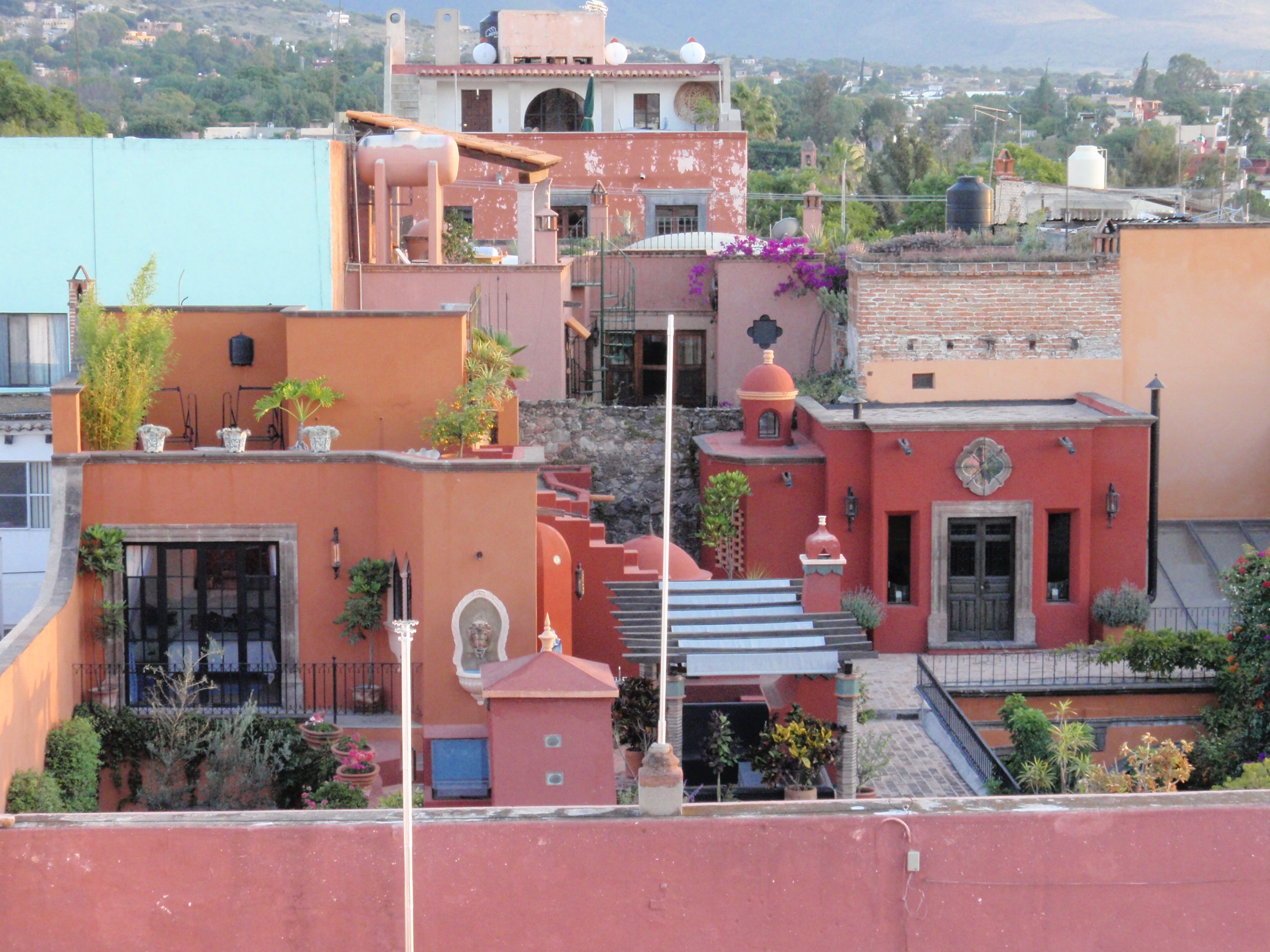
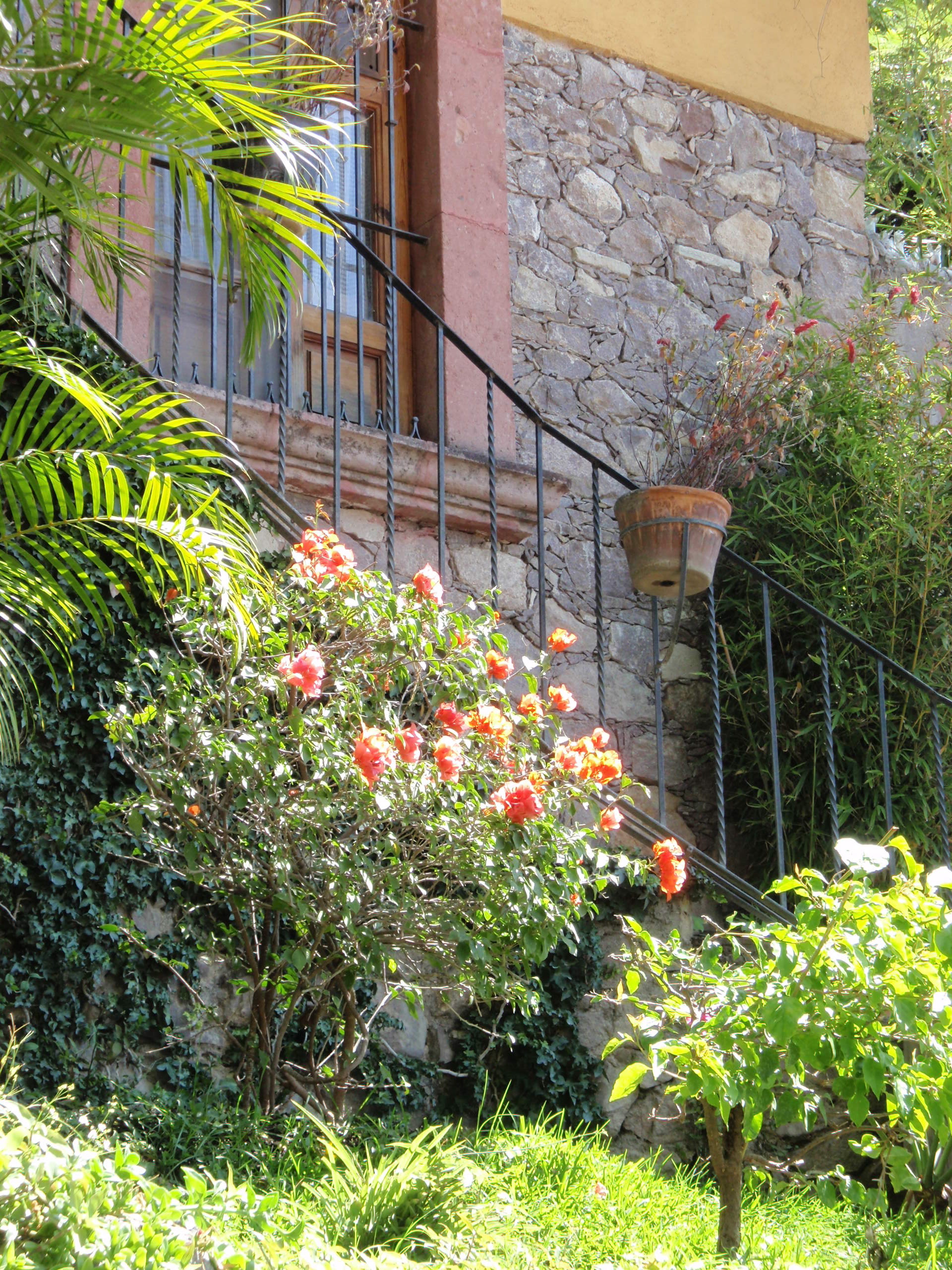
We stayed at a delightful former hacienda, Posada de las Monjas. There were flowerpots covering every stairway railing and more miradors (rooftop terraces) than we have seen in any one building in Mexico.

Entryway to our Habitacion

View from Mirador at Posada de las Monjas

La Biblioteca, a non-profit organization in San Miguel, is the epicenter for the 10,000+ ex-patriate community, with available classes, theater presentations, an English/Spanish library, gift shop, and eateries.  This is a great reference point for those visiting the area.

Not unlike Guanajuato, San Miguel is a city of winding streets that will give you a great exercise workout at every turn, thankfully, as we taste tested several flavors of hand-turned ice cream at the many sidewalk carts calling out to us.

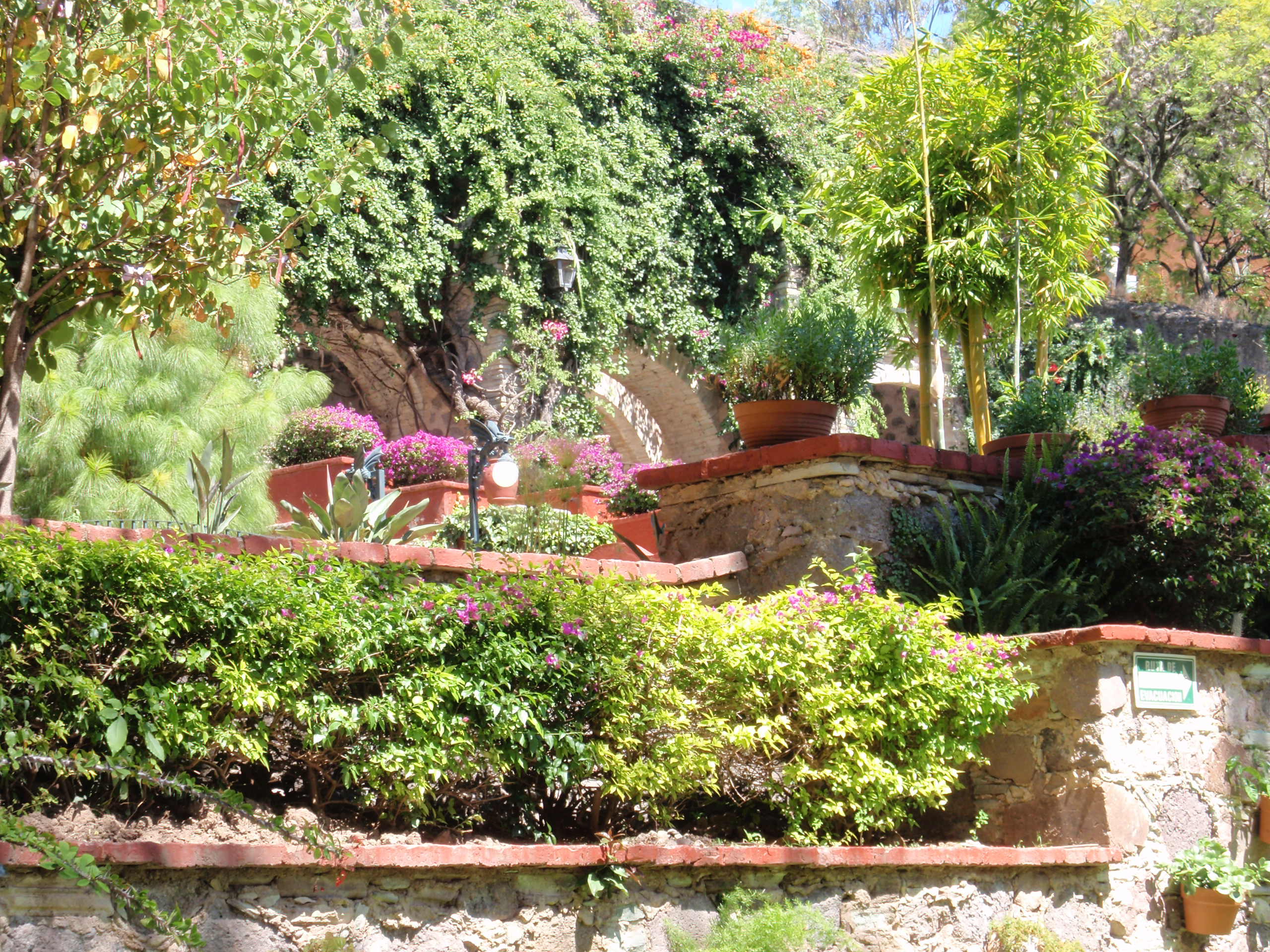
We ventured over to Parque Benito Juarez, a large, relatively unused peaceful park, with wandering paths through trees, ancient fountains, and stone bridges.  Just outside of this park, there is a long winding road and staircase leading to Paseo Del Chorro, a smaller park with lovely gardens.
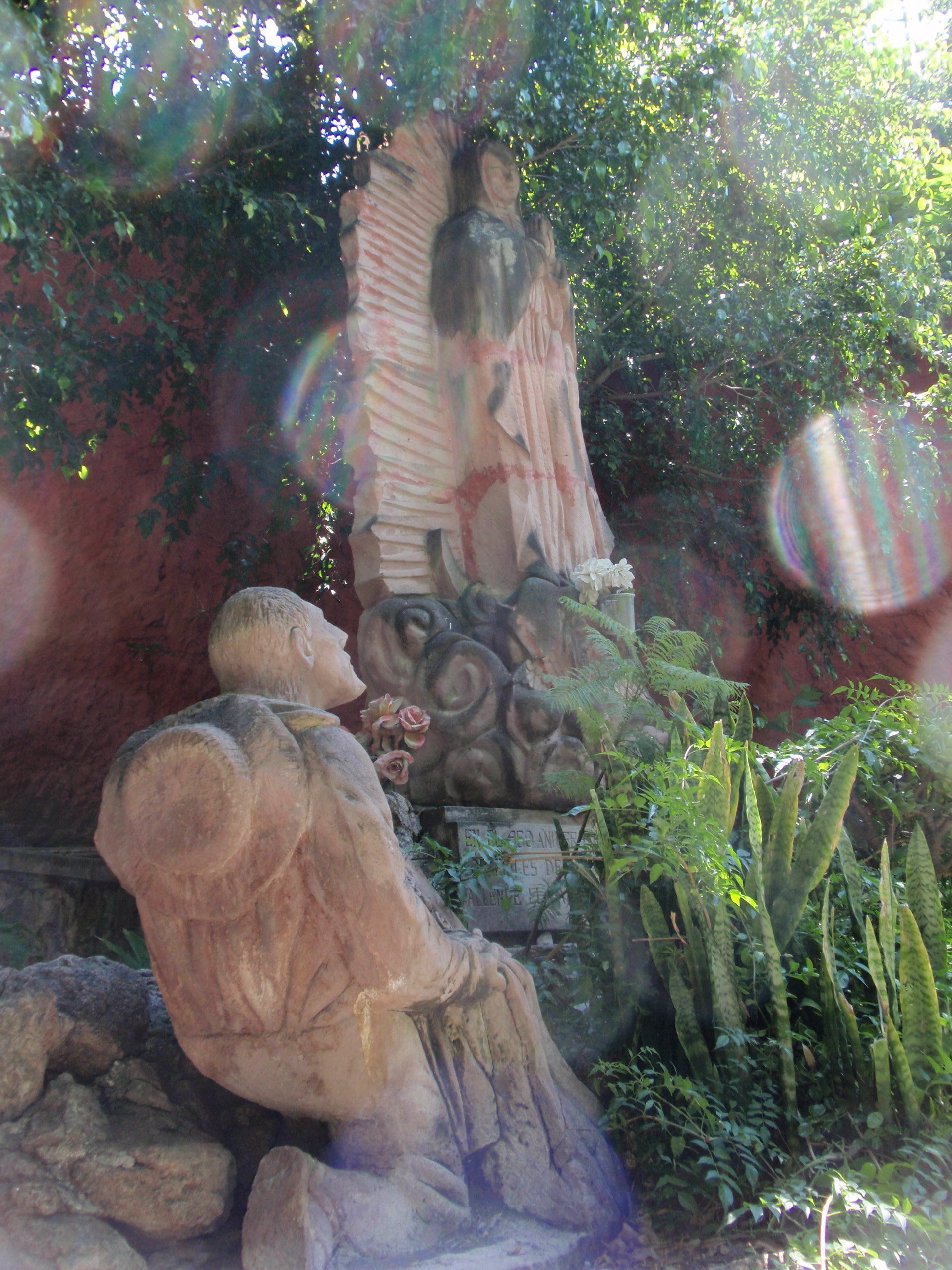
Notice the orbs in the photo. What could they be?

We were told by some friends that we were not to miss the hot chocolate and churros at San Agustin. Thank goodness for exercise opportunities as I don’t even want to know how many calories we consumed during this little escapade, but, oh were they heavenly!

We inquired about the very attractive lady whose picture was pasted over many of the walls of the restaurant and learned that she is the owner, Margarita Gralia, a renowned television and stage performer, as well as a Playboy playmate approximately 3 years ago.

The plaza is a great place to people watch and, one morning, while wandering through the gardens, we happened upon three little girls and a nun on their way to school.  As we passed them, in unison all three sang “good morning senorita” to me, which was a wonderful way to start my day but was one of the great photo opportunities we missed.

On our last full day in San Miguel, we grabbed a taxi and headed out to El Charco del Ingenio, the botanical gardens, 167 acres of nature reserve that was declared a World Heritage Site in 2008.  In the middle of these gardens, literally translated as “the pool of talent”, runs a spring-fed pool in an impressive canyon.  Efforts are focused on environmental education and the development of traditional cultures.  In 2004, El Charco del Ingenio was sanctified as a Peace Zone by the Dalai Lama during his visit to Mexico.

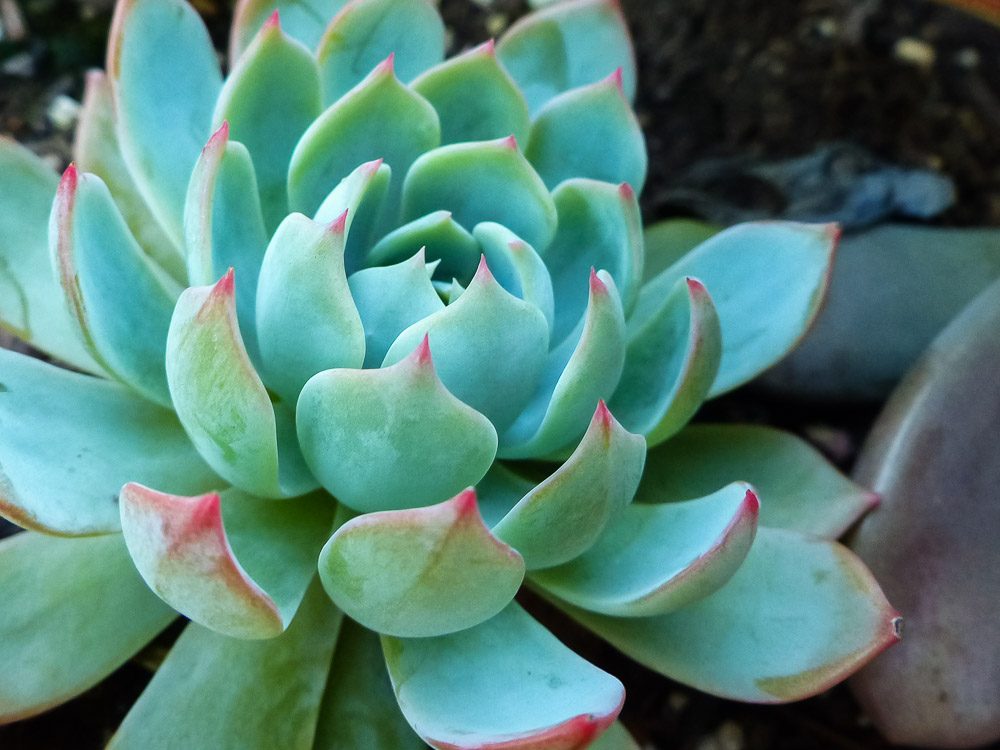
I wonder how old this agave is?

I found this good looking guy wandering around the gardens.
A lovely red bird for my anam cara Barbara.

When we had finished our tour of the gardens, we enjoyed a cold glass of maguey juice, made from the agave plant.

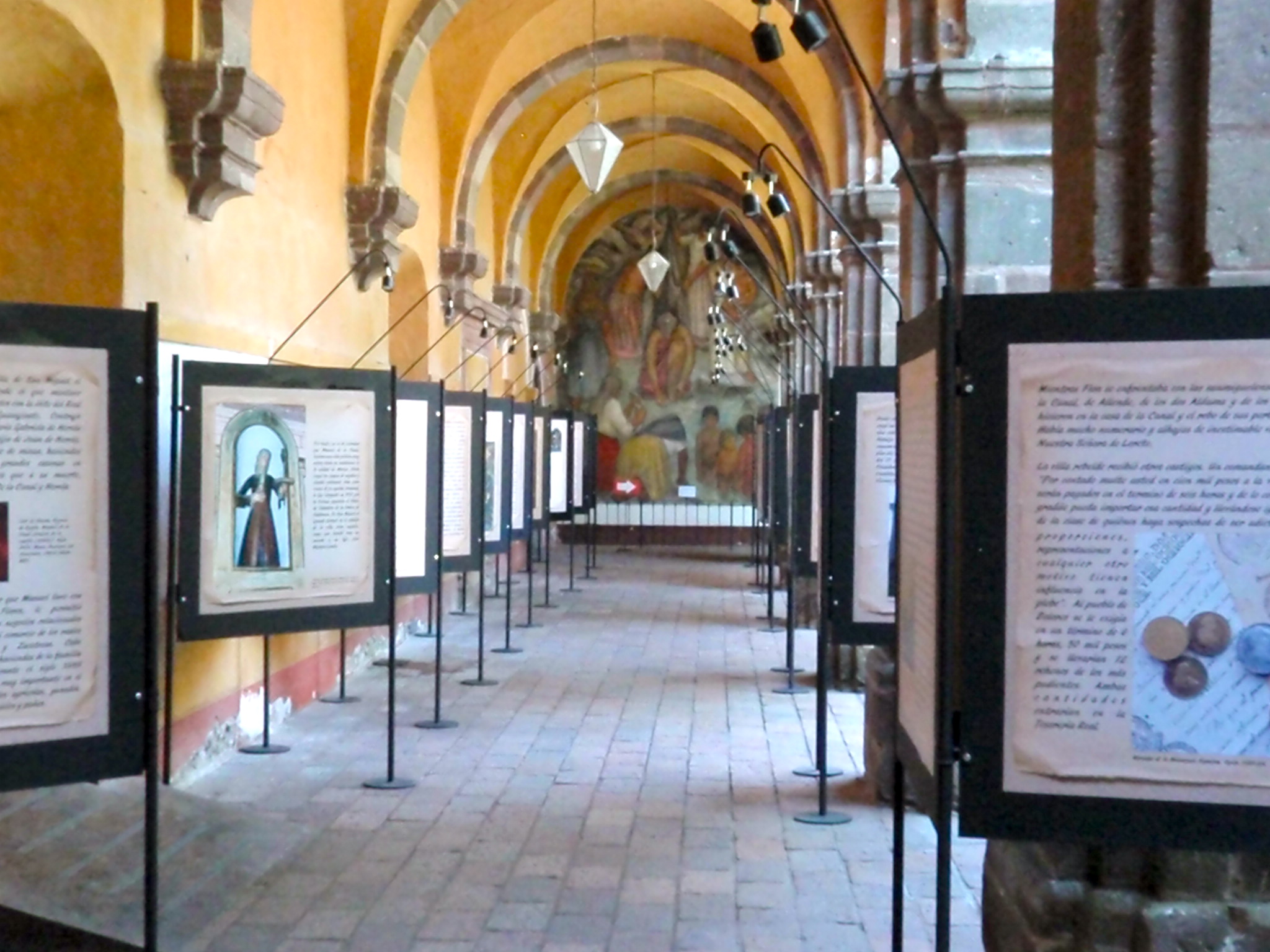
Back to the city, with plenty of time remaining for window shopping and a few more sights.  Our next stop was Centro Cultural Ignacio Ramizez “El Nigromante”, the cultural center, once part of a Catholic church, that honors San Miguel writer Ignacio Ramirez, referred to as the “Voltaire of Mexico”, due to his satirical wit.  He nicknamed himself El Nigromante, the Sorcerer, as nearly everything he wrote could have caused him punishment during the 1800’s.

Several placards in the cultural center tell the story of the religious and political turmoil when Mexico struggled to find the right balance between church and state.  This has been left behind in favor of the arts.
Four very prominent figures in Mexico’s war for independence, depicted as larger than life paper mache figures, are the greeters as you enter the cultural center.
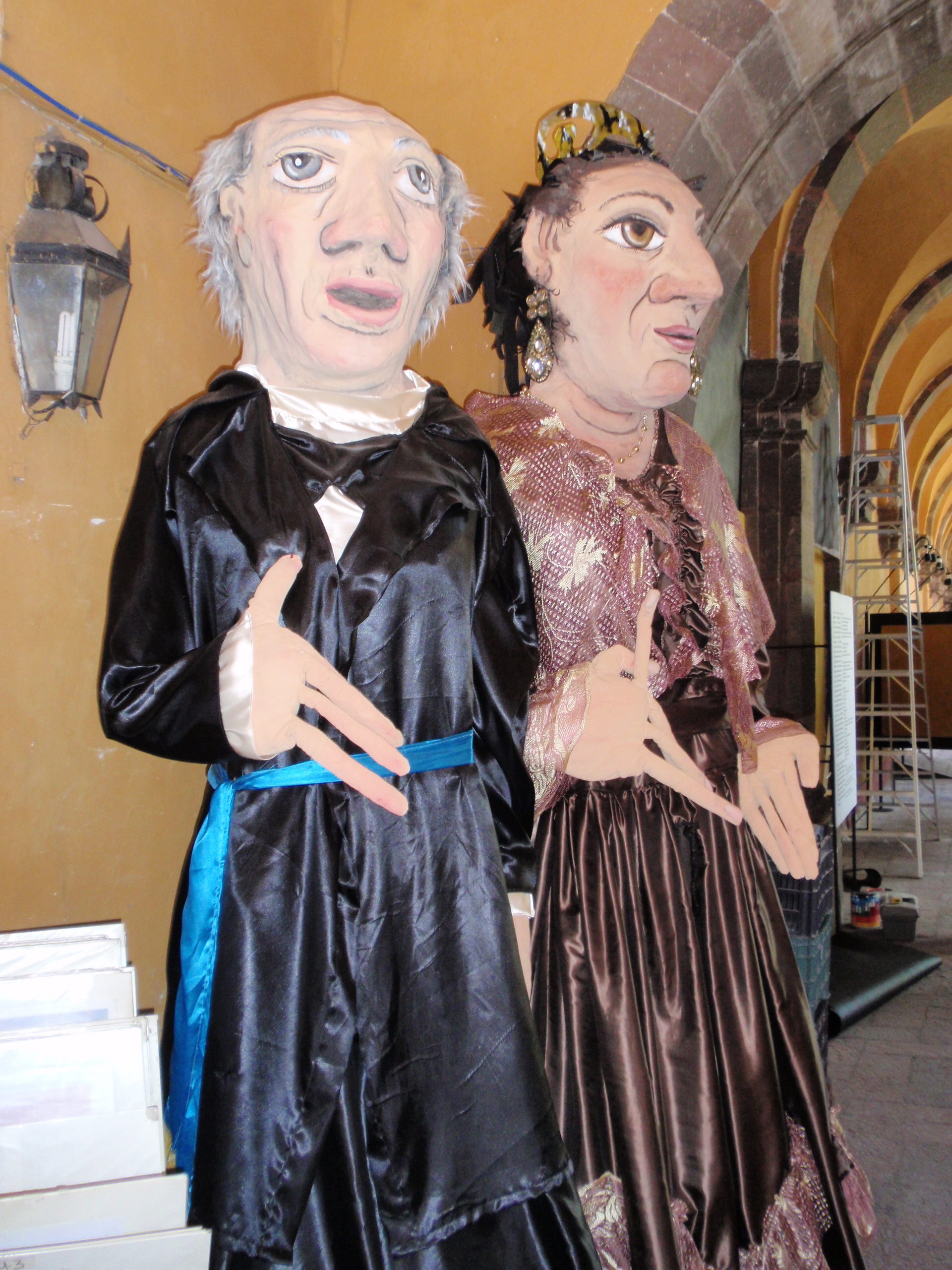
Miguel Hidalgo, father of Mexico and the leader of the Mexican War of Independence, has standing next to him the figure of Josefa Ortiz de Dominguez, a conspirator and supporter of the Mexicans’ fight for their independence.  Josefa was the key to Hidalgo escaping capture as the Spanish colonial authorities had learned of the rebel’s activities. She was able to get a message to him, which allowed him to escape the small town he was in and he and his followers proceeded to declare war against the Spanish authorities.
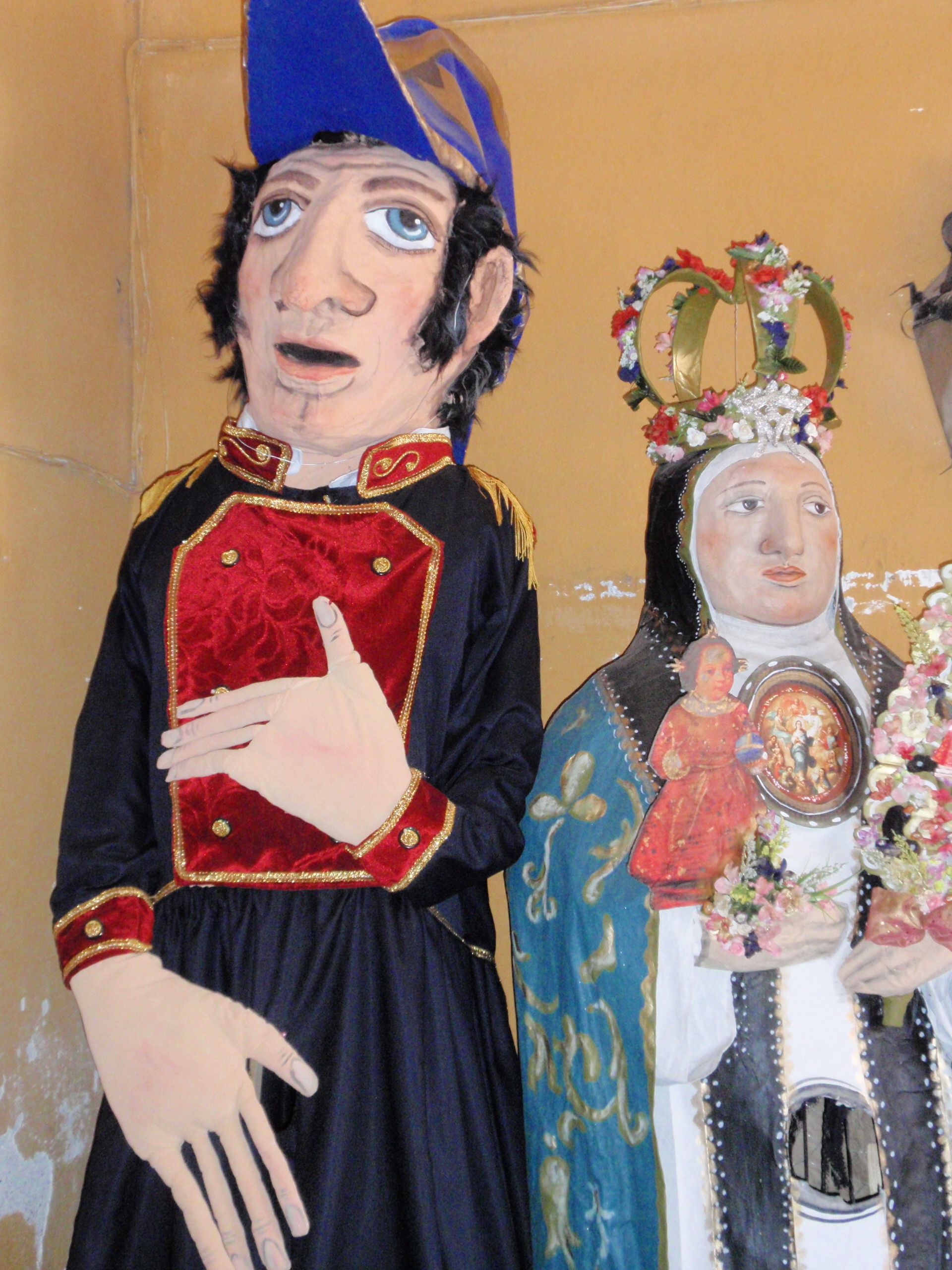
General Ignacio Allende, Hidalgo’s chief lieutenant in Mexico’s fight for her independence, stands alongside Sor Josefina de la Canal, who, after much searching, remains a mystery to me.  I would be most interested in learning more about this Christian woman, if anyone knows her background.

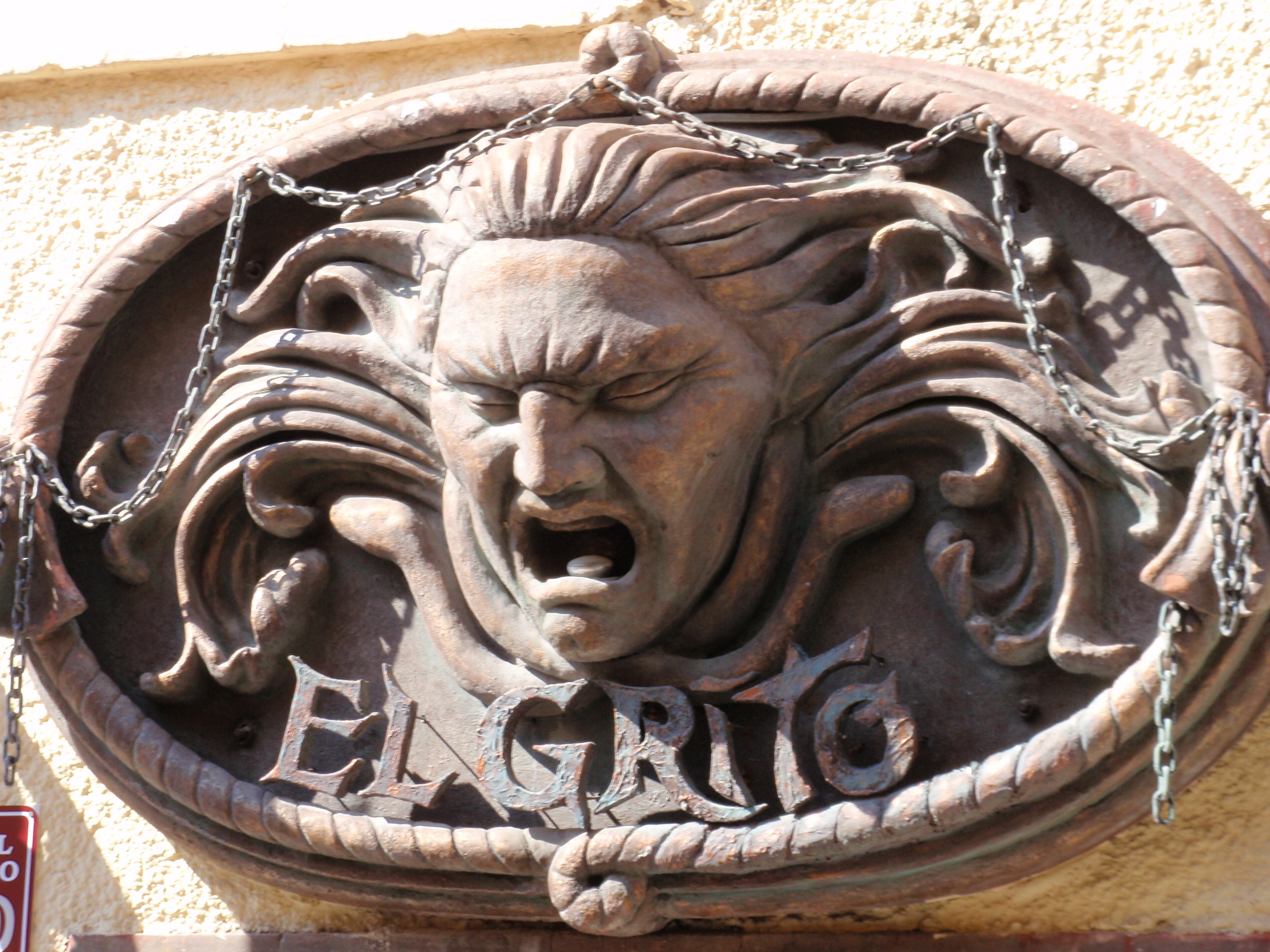
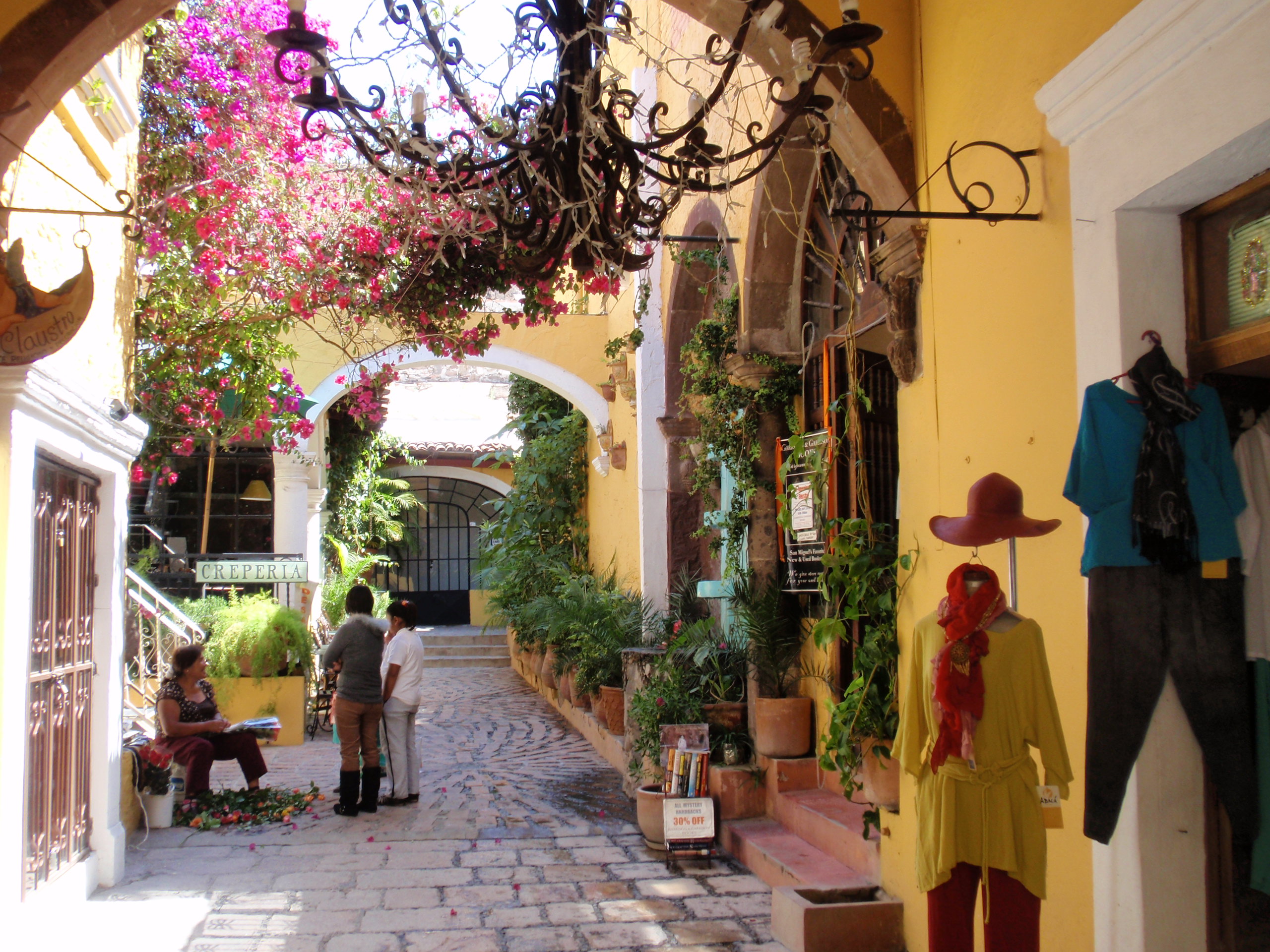
The remaining photos of San Miguel are those of street scenes and distinctive doorways, which have become something of a fascination for me.
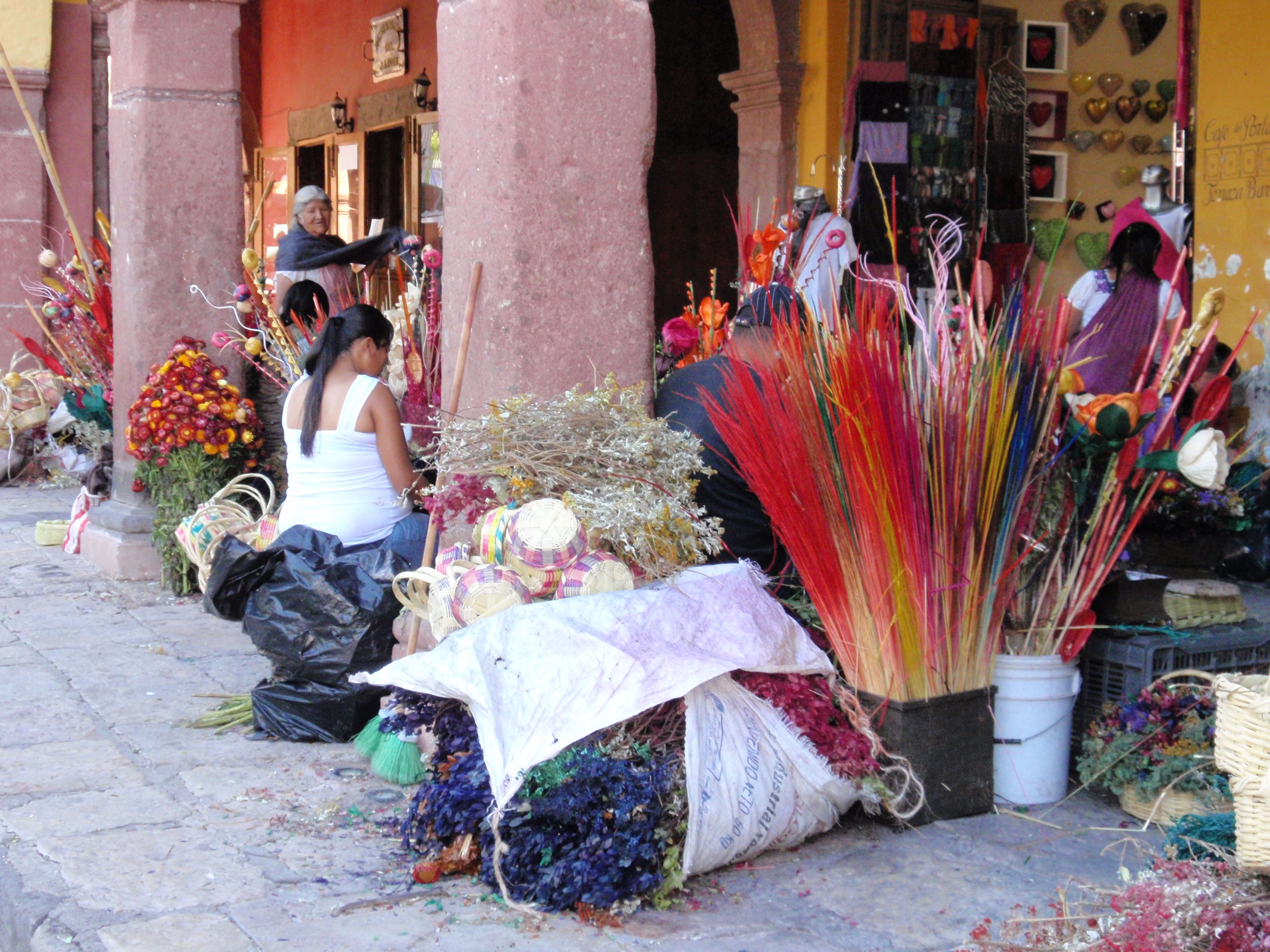
Locals creating dried flower arrangements in the plaza.
Mi Cielo Azul
El Grito
One of many lovely courtyards in San Miguel.

One final note, a visit to San Miguel de Allende would not be complete without a sojourn to Johfrej, a third-generation family of chocolatiers ~ too decadent for words!

Guanajuato ~ Part 3

The remainder of our stay in Guanajuato was spent seeking out interesting restaurants and exploring places on our own.

We decided to check out the Mercado Hidalgo, a bustling marketplace opened in 1910, where the locals rent stalls to display their crafts and sell fruits and vegetables.

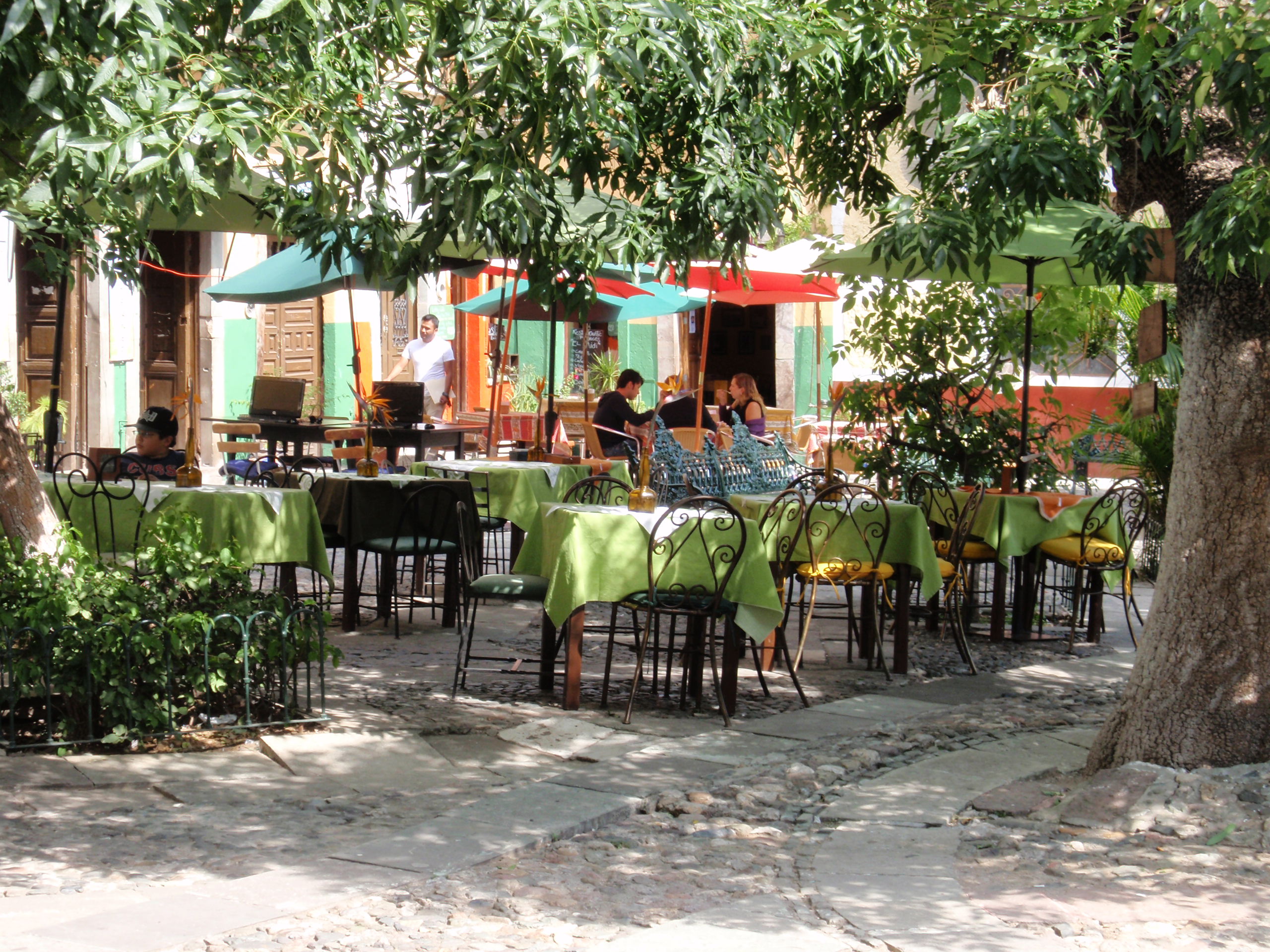
We were tipped off about El Midi, a nice little Mediterranean style restaurant for comida (lunch).  It is tucked away in a quaint little plaza, called Plazuela de San Fernando, where balconies overlooking the shops are filled with Talavera pots laden with fragrant plants.

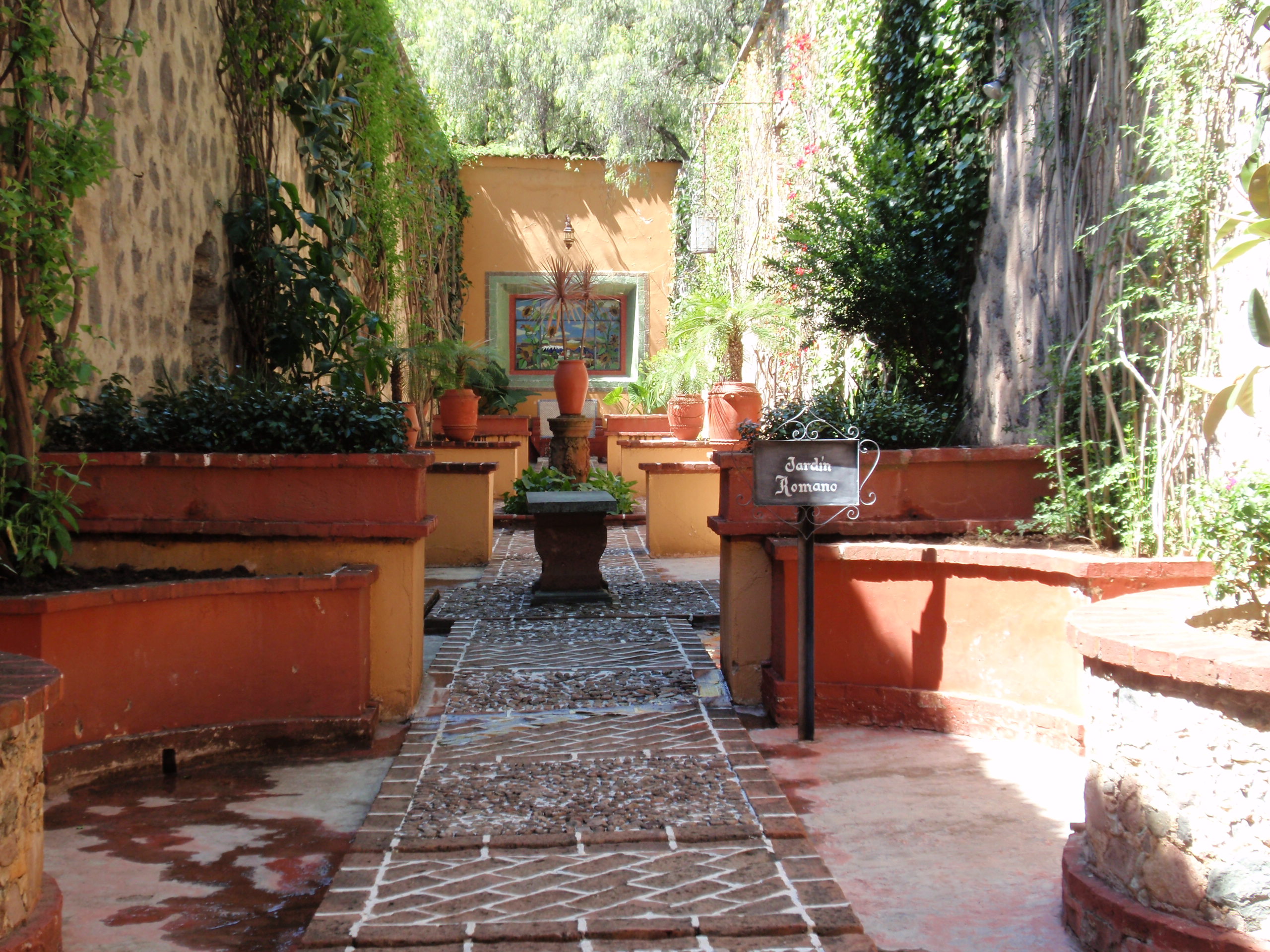
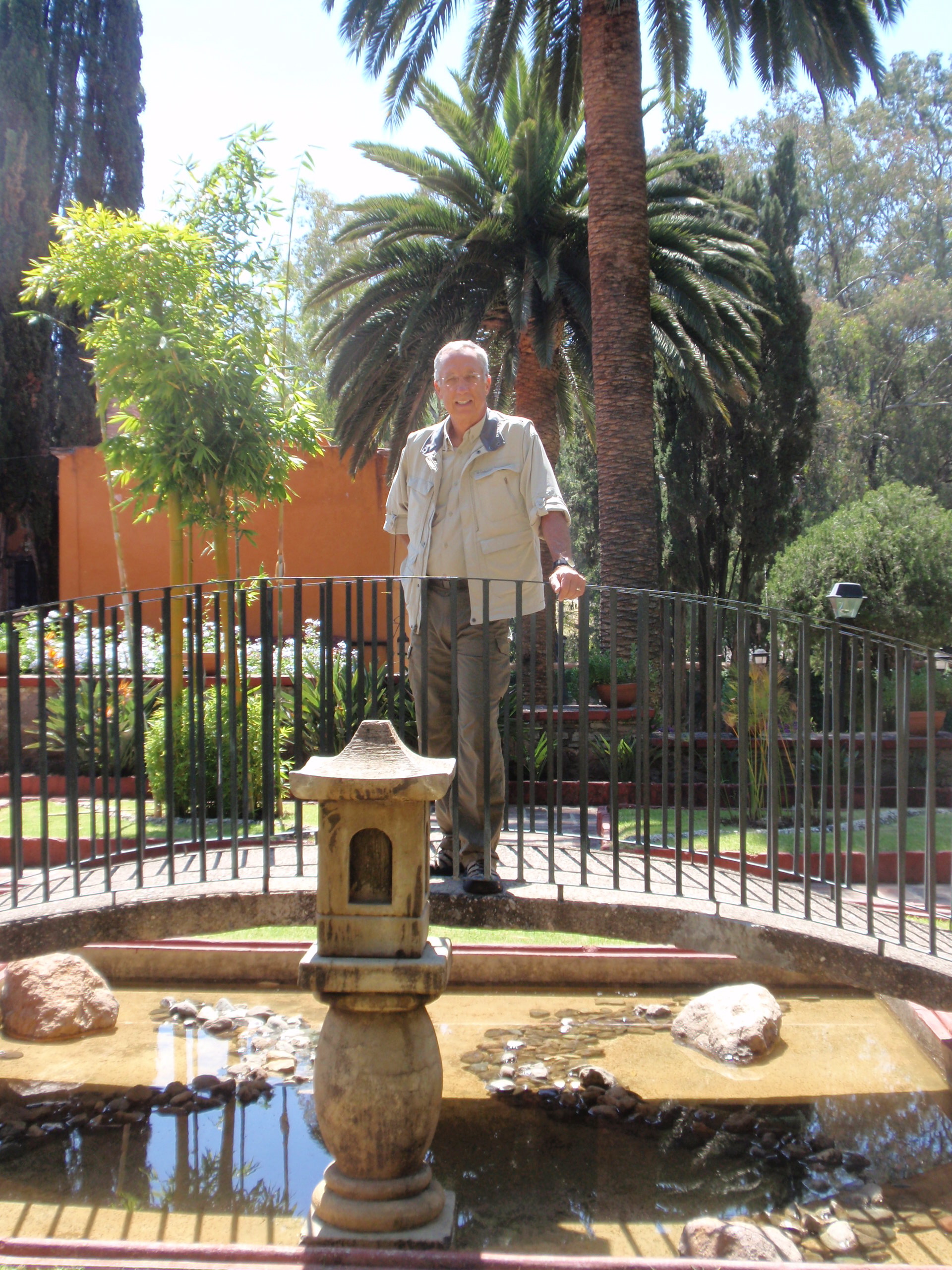
From here we jumped into a taxi and headed to Ex-Hacienda San Gabriel de Barrera, a 16th-century former hacienda, with 3 acres of gardens representing several countries, Japan, Mexico, Italy, etc.  This is a tranquil setting, away from the hustle and bustle of the city and much of the original furniture continues to be displayed within the walls of the hacienda.

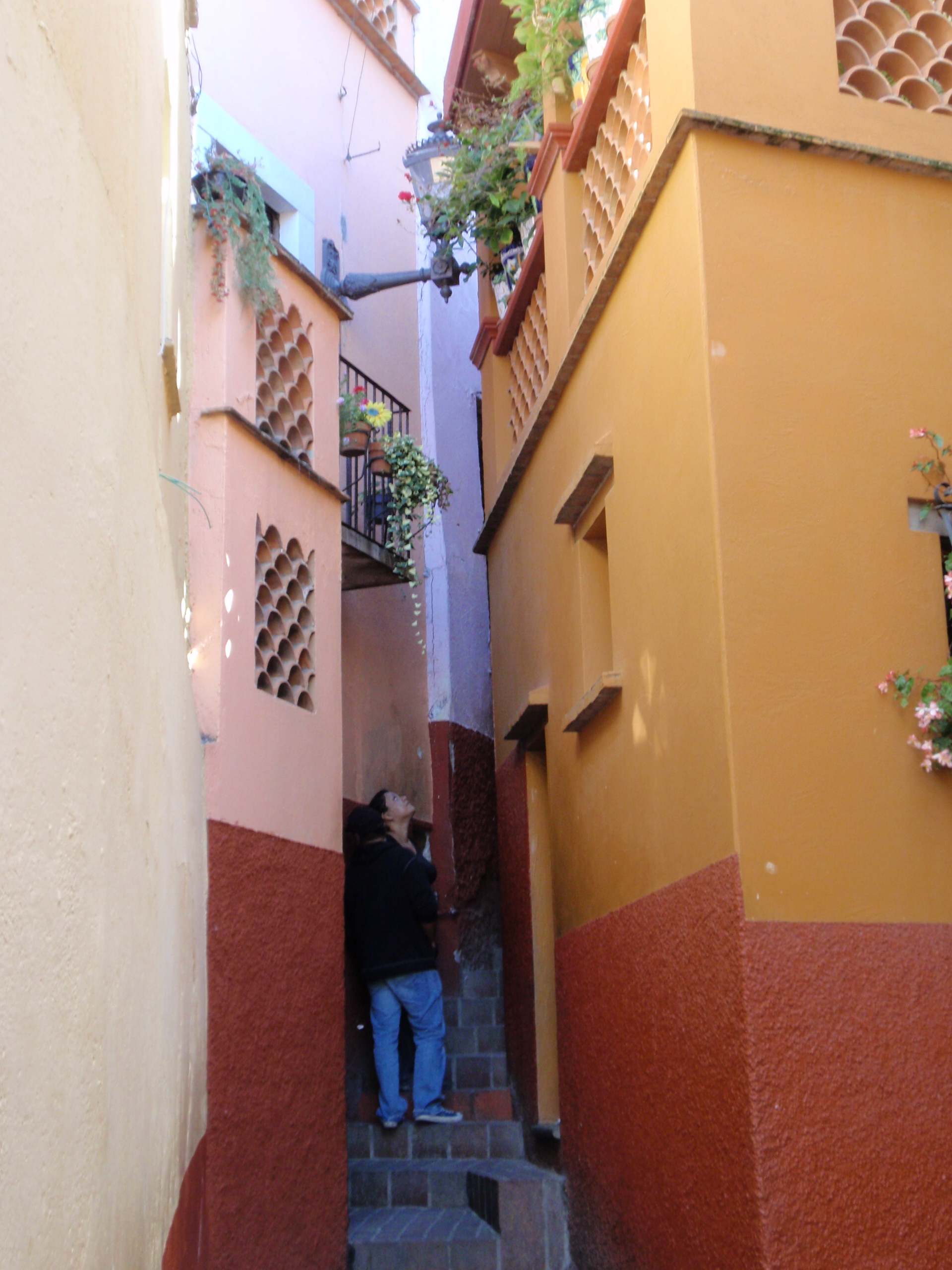
There is a famous alleyway not to be missed when in Guanajuato, that of the Callejon del Beso (the Kiss Alley).  Legend has it that two young lovers, one a wealthy Spanish girl, Ana, and the other a poor miner, Carlo, would sneak kisses from their balconies across from one another. One night Ana’s father witnessed this and murdered his daughter. Carlos was so distraught over his loss that he killed himself in one of the local mines.

A much photographed sculpture of Don Quixote de la Mancha and his sidekick Sancho Panza can be seen in the Plaza Allende, where the Teatro Cervantes is also located.

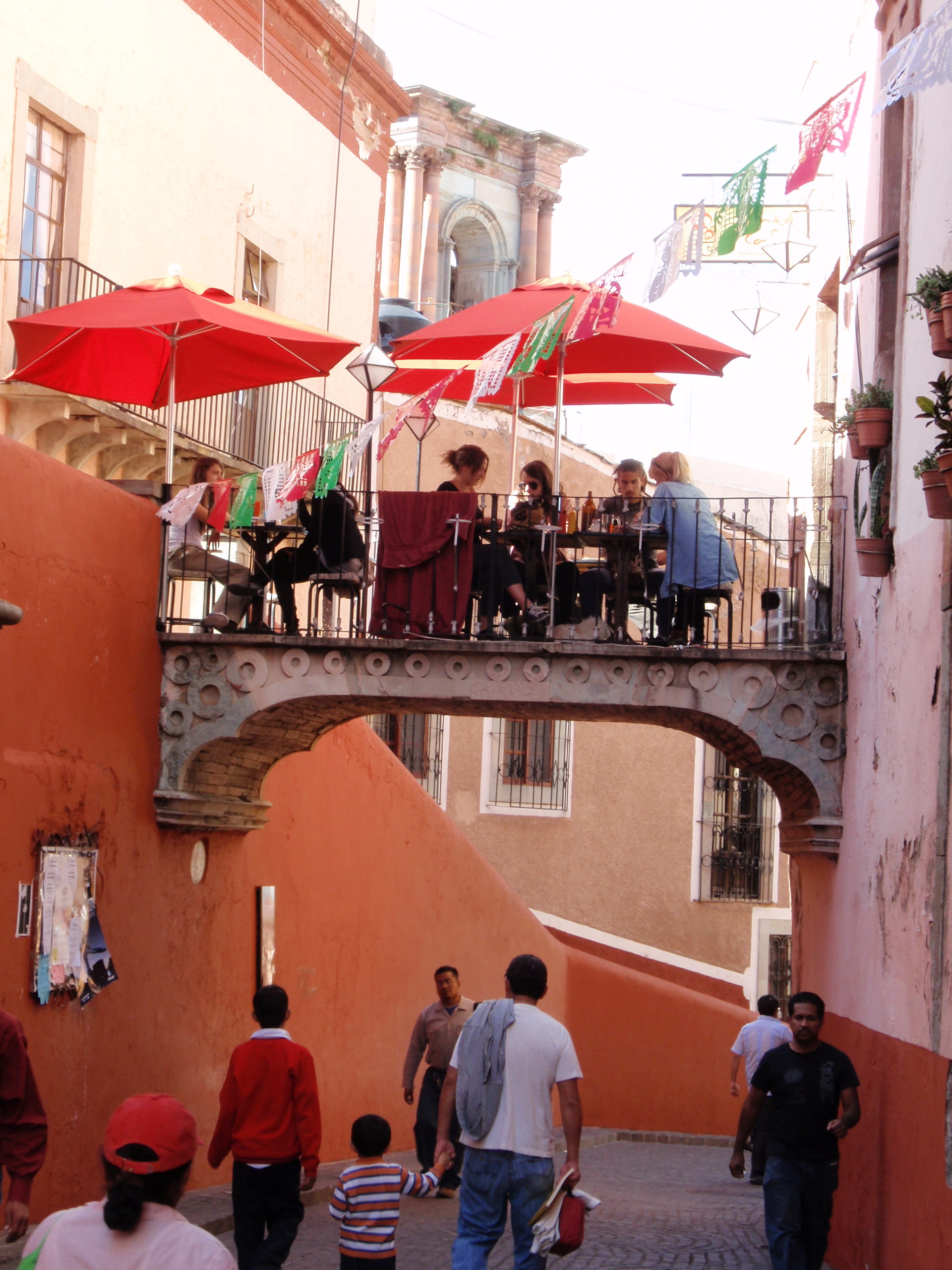
Just a few steps away is Campanero (Bellman) Street.  Looking skyward, you will see an 18th-century bridge, one of the few remaining in Guanajuato, with a lovely cafe spanning it.

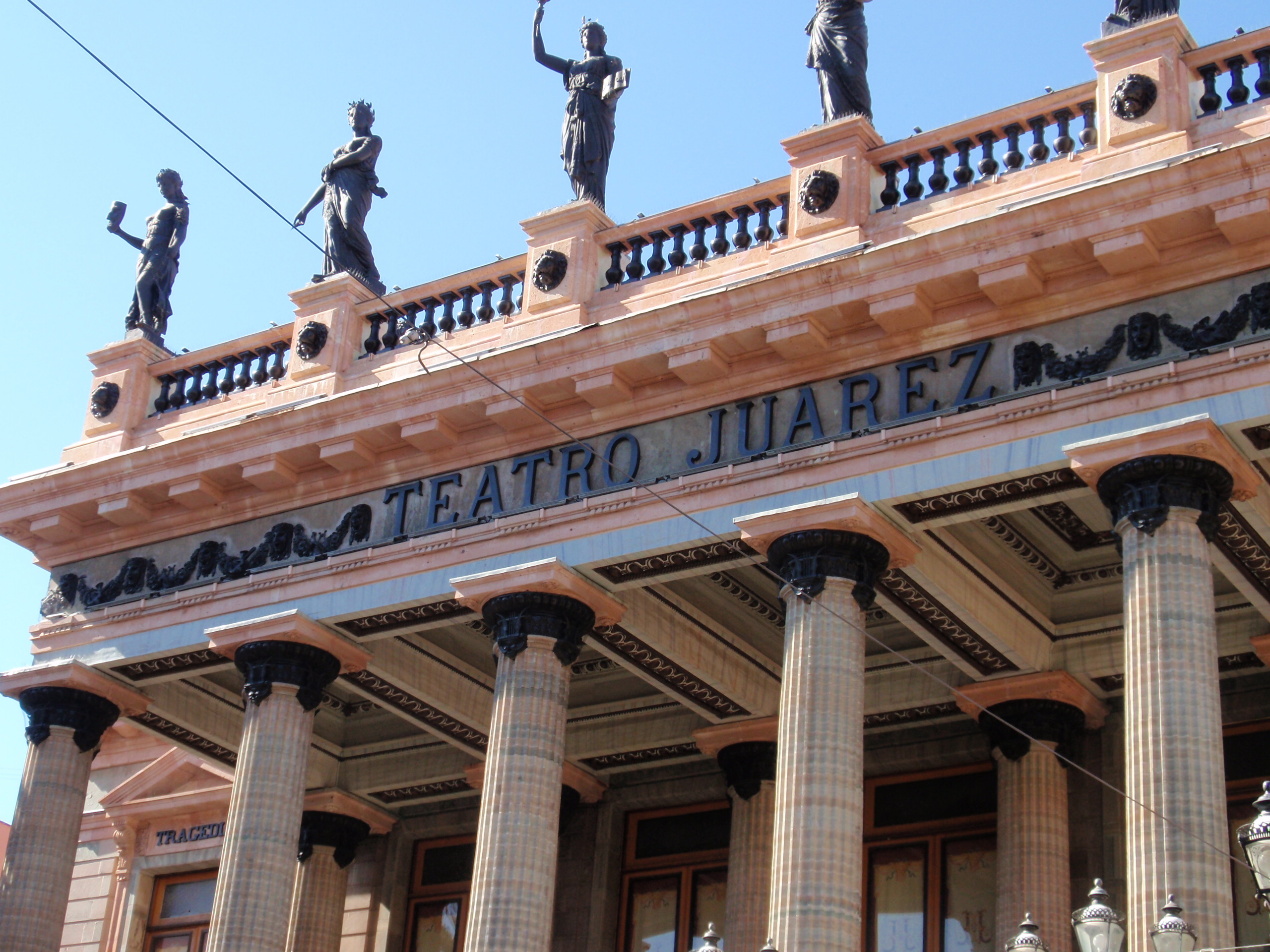
One of the most beautiful theaters in all of Mexico resides in the heart of Guanajuato, across from the Jardin de la Union, the Teatro Juarez. The bronze sculptures of the Greek muses are proudly displayed on pedestals atop the theater and are breathtaking, both during the day and at night.  The inauguration of this theater occurred in October 1903 and can accommodate 1100 spectators.  It is the main stage for the annual International Cervantino Festival, as well as the focal point for theater, ballet, musical presentations, and painting and photography exhibitions.  On nights when there are no performances being held, impromptu mime acts and other student productions are taking place outside, with the stairs leading up to the theater packed with students and other observers.

Our last evening meal in Guanajuato was spent at a lovely sidewalk cafe, La Cappelina, sharing a pizza and people watching.  It was very heartwarming to see the number of smiling children, walking arm-in-arm with mothers and grandmothers, no matter what their age, not too embarrassed to be seen displaying this type of public affection.

This is a city of great vibrancy, perhaps because of the university influence, and one which appears to be adhering to their Spanish roots, despite the oppression of the past.  We look forward to revisiting this area again and again.


Guanajuato ~ Part 2

Guanajuato means (in the Tarasco native language) “place surrounded by frog formed hills”.  While hiking in the hills, supposedly two locals found many large rock formations shaped like frogs, hence the name given to this city.  It is a colonial, silver mining city and, both culturally and historically, is one of the most important cities in all of Mexico. Built between the years 1548 and 1554, UNESCO declared it a “World Heritage Site” in 1988.

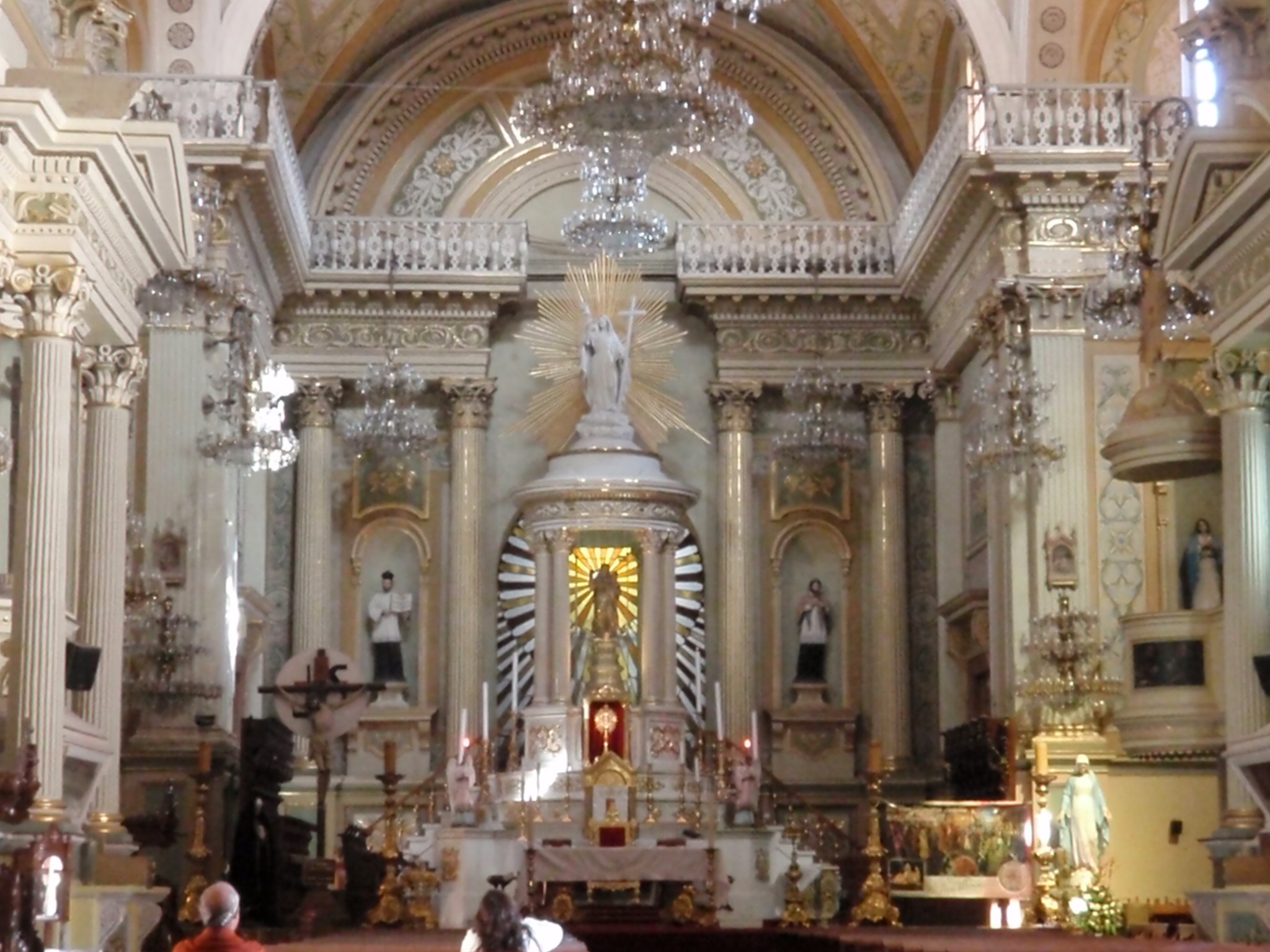
One focal point of the city is that of the Basilica of our Lady of Guanajuato, built between 1671 and 1696.  Beautiful marble floors and crystal chandeliers reflect the grandness of this church.  The altar is constructed of an impressive 40 kilograms of silver.

Basilica (1)
Basilica (2)
Basilica (3)

Being the typical tourists, we decided on Day 2 to take a tour of the city with one of the local guides, Agustin, to better understand the history of this vibrant city.  We met him at the city’s center, in the Jardin de la Union.

Jardin de la Union

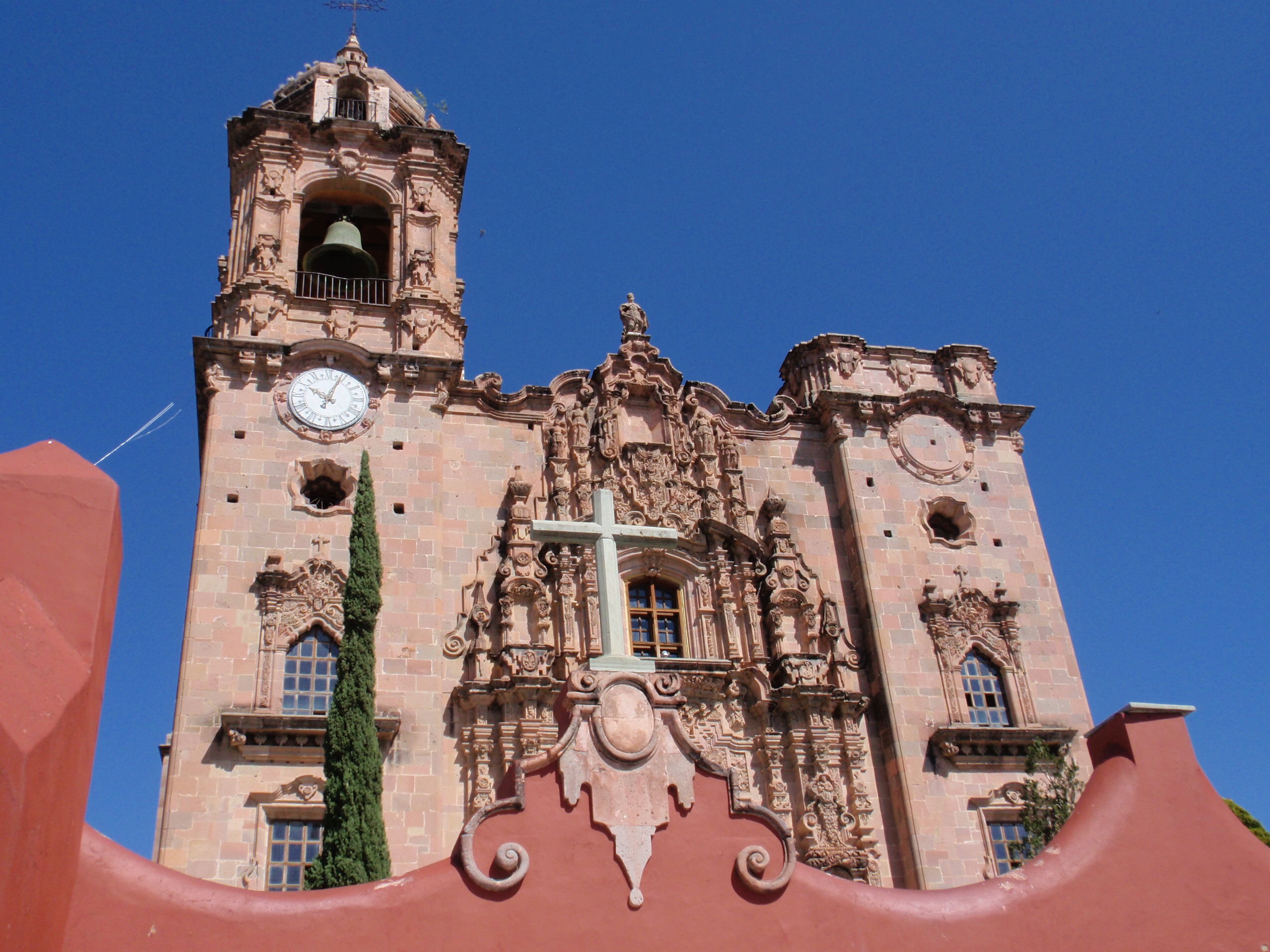
We donned hard hats and took a 20-minute tour of a former silver and quartz mine, Mina El Nopal, then headed off to explore the Templo de San Cayetano, one of the most impressive churches, both inside and out, which was built on behalf of the local miners. Construction was begun in 1765 and completed in 1788 and has 3 altars of carved wood, covered with plaster to protect against termites, and given a finish of gold leaf.  The organ is from Germany and the pulpit from China.

Templo de Cayetano de Valenciana
Templo de Cayetano de Valenciana (2)

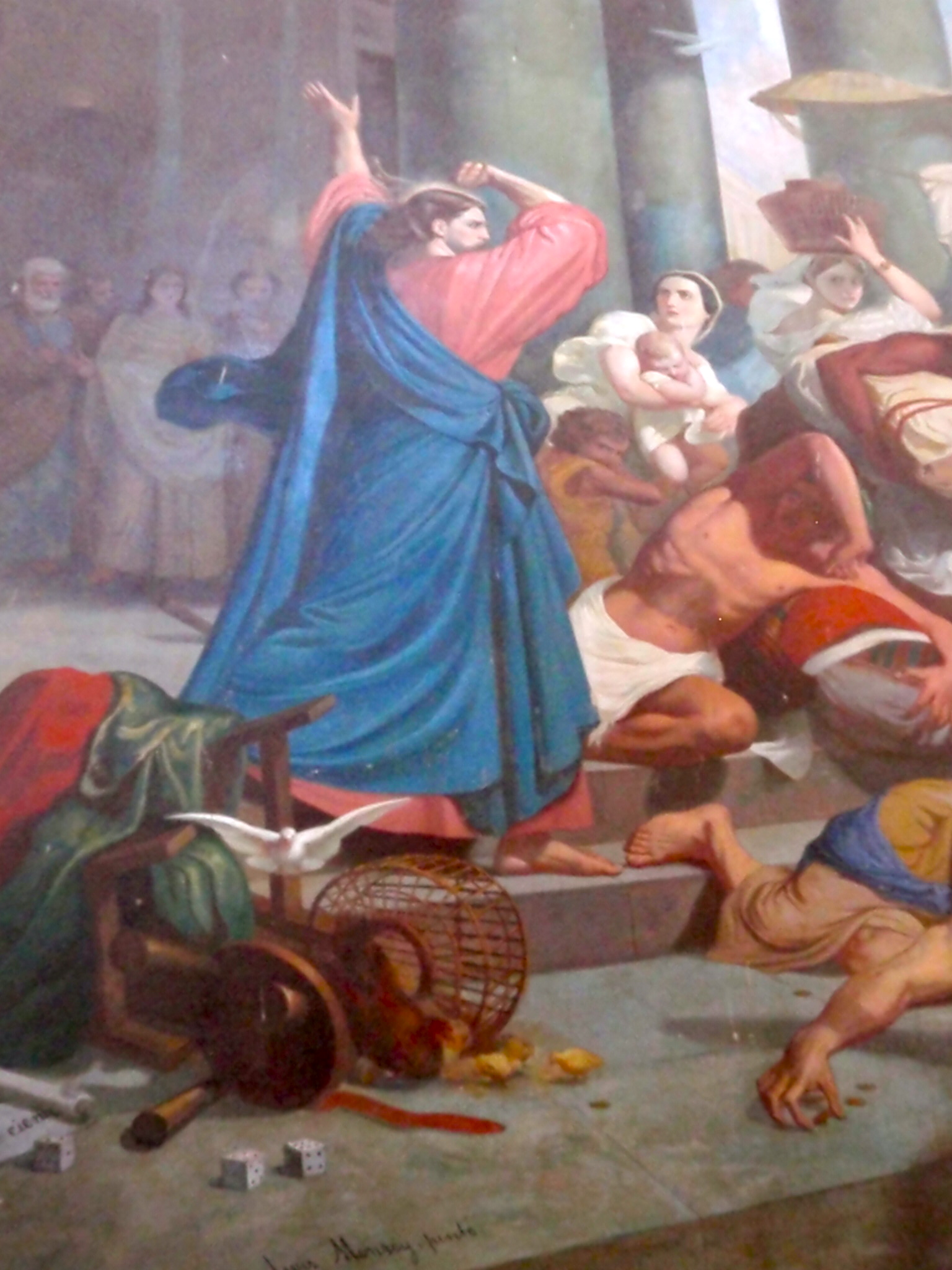
Two huge paintings adorn the walls of the church, created by a San Miguel de Allende artist, Luis Monroy, in 1885.  He had a unique ability to embed a figure in his paintings that seemed to present from the same angle, no matter where one stood.  The embedded figure in the painting below is that of the dove.

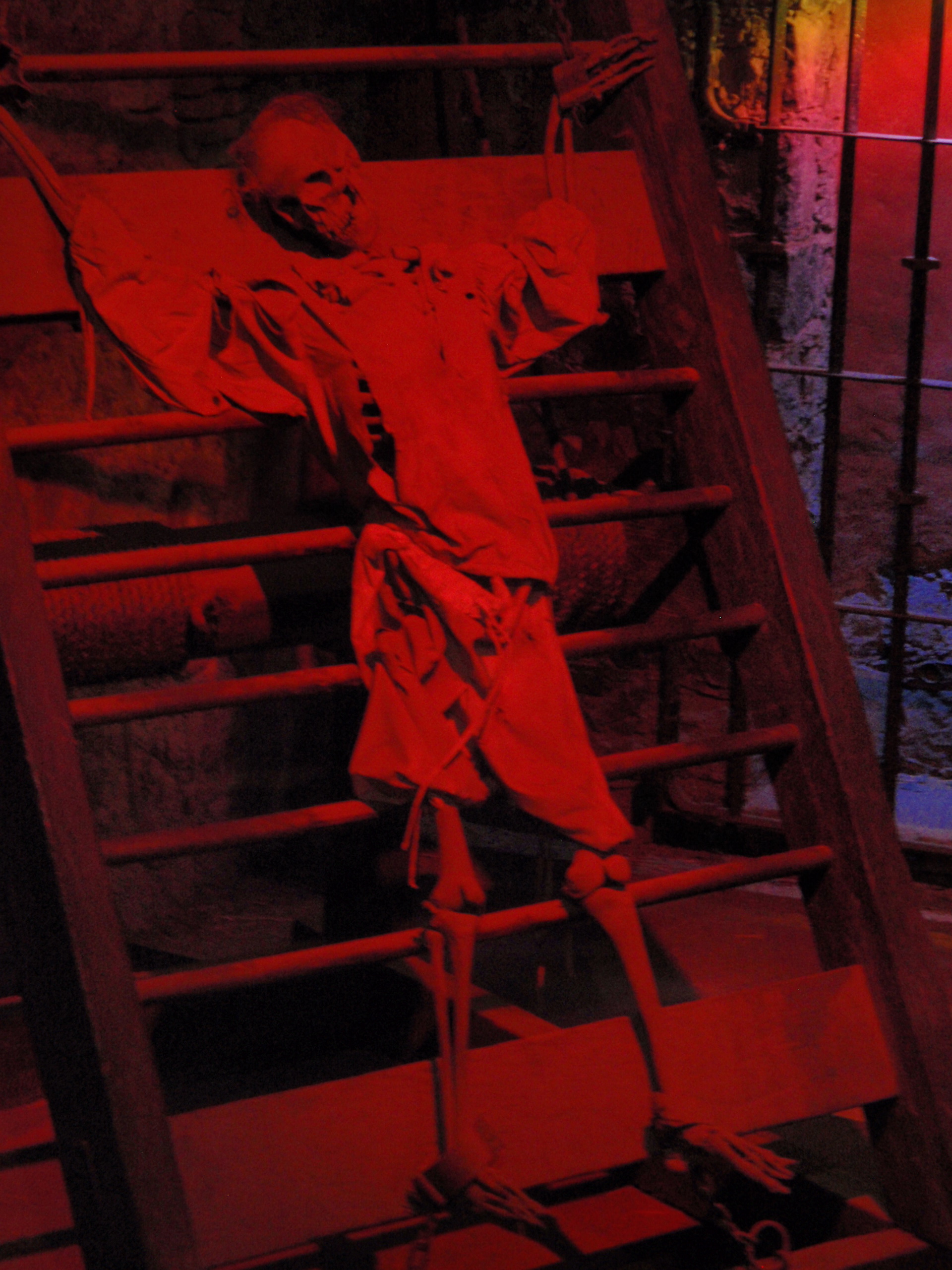
The next stop on our tour was most unusual, a museum entitled Hacienda Del Cochero, which featured instruments of torture.  The tour was given by a young tour guide dressed as a Franciscan monk, with the peaceful sounds of Gregorian chants in the background. Below are just a couple of the ghoulish sights housed within this museum.

The Rack
Is My Head Screwed on Straight?!

The gardens, however, were just lovely and gave no indication of the horrors that lay within its walls.

The statue of El Pipila was the next stop, where terrific views of the city can be had and where history abounds.

This monument is a memorial to Jose de los Reyes Martinez, whose heroic actions allowed the rebels to enter the Royal Forces fortress, which was housed in the Alhondiga, originally built as a granary for the city and where Mexico’s first battle for independence took place.  The Royal Forces used this building as a fortress due to its high vantage point overlooking the city.

El Pipila, a courageous miner, supposedly carried a lit torch, with a heavy stone slab balanced on his back to protect him from enemy fire, and set the entrance door to the Alhondiga on fire, allowing the rebels led by Miguel Hidalgo to defeat the enemy forces.

The four rebel commanders, Hidalgo, Aldama, Allende, and Jimenez, did not live to see Mexico win her independence from Spain.  When they were captured by enemy forces, they were decapitated and their heads were displayed on the four corners of the Alhondiga for the next 10 years as a reminder to the Mexican citizens not to think about uprising again.  Even this did not deter these courageous people in their fight for freedom.

Terry and I found ourselves going back to El Pipila later that same day; however, this time on foot up a very steep staircase.  There is no lack of exercise opportunities in this city, right outside very door.

Staircase to El Pipila
View from the Top
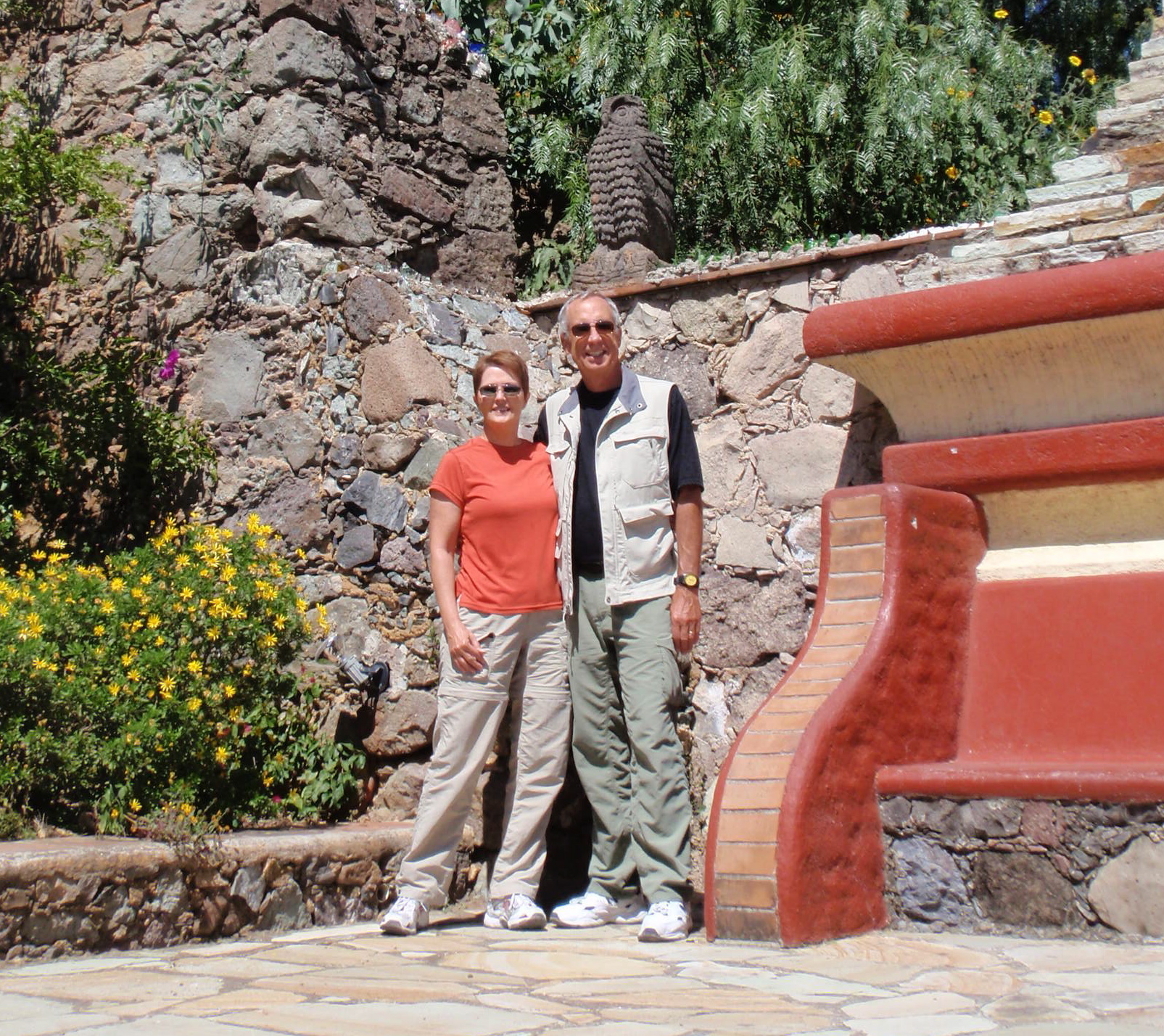
Me at El Pipila

Our tour concluded with a visit to the Museo de las Momias, Museum of the Mummies. Photos are no longer allowed in this museum and many of the mummies were currently on loan to museums in Mexico City, Michigan and Los Angeles.

Here are just a couple of photos of the tunnels used by vehicles and pedestrians that run underneath the entire city, which is built into the hillsides.

A fruitful second day in Guanajuato!


Guanajuato ~ Part 1

Wednesday, the 6th, we struck out for places unknown, where the locals speak little English.  Are we ready for this?  Why not!  A driver took us to Tonala, outside of Guadalajara, to the bus station, where we waited for our executive bus to transport us to Guanajuato.  It was  a 4-hour bus trip in very comfortable surroundings – large reclining seats, movies, lunch, with bathrooms and hot drinks on board.

ETN Bus

Once at the bus station in Guanajuato, we headed out to hail a taxi.  Many were already waiting for this type of transport, with none in sight, so we opted for a bus as we knew where we were going, sort of.  This was a much different bus from what we had spent the last several hours on, narrow seats not made for those towing luggage.  I sat down with a laptop bag at my feet, my daypack (stuffed) on my lap, and a large duffel bag hanging off the seat next to me.  Terry sat behind me and how he managed to not have any luggage with him I do not know!  Before we left the station, a very rotund woman came up to me and insisted that she was going to sit in the seat next to me and she was not taking no for an answer.  Thankfully I did not know the Spanish word for “seriously” or I would have been very tempted to use it.  I attempted to place our oversized duffel in my lap as well, and she decided to take up the rest of my lap, what there was of it.  Every time we veered to the left, my ability to breathe was compromised significantly.

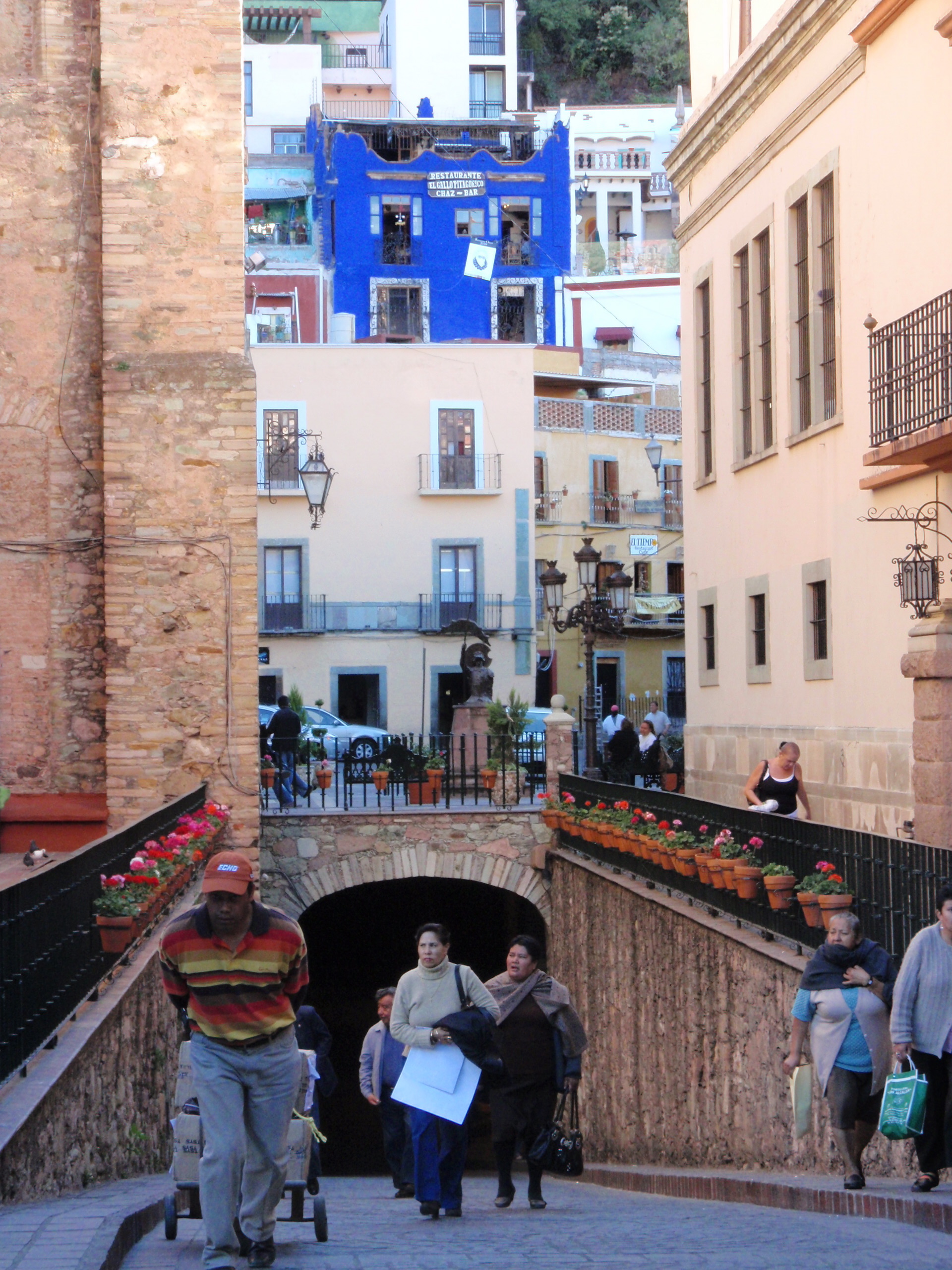
At one stop, in one of the 16 tunnels that snake through the city, used by both vehicles and pedestrians, most everyone began to exit, except for four of us, two gringos (Terry and I) and two Asians.  We all looked at one another, then quickly got up and hopped off the bus, as we assumed the locals knew something we did not.  As we emerged into the sunlight from the depths of the earth, we felt as if we had stepped into a European village. The scene was one of colorful houses climbing up the hillsides, competing with the local vegetation, balconies with flowerpots hanging off them, narrow winding streets, and shops and people everywhere.

Given that the annual International Cervantino Festival (the cultural event of Latin America) was commencing the following week, we felt the first order of business was to secure a room for the night.  After finding no availability in a couple of hotels, we found a room for one night only at a funky little B&B named Hospederia del Truco 7.  Thankfully, one of the patrons there assisted with English/Spanish translation.

Hospederia del Truco 7 (1)
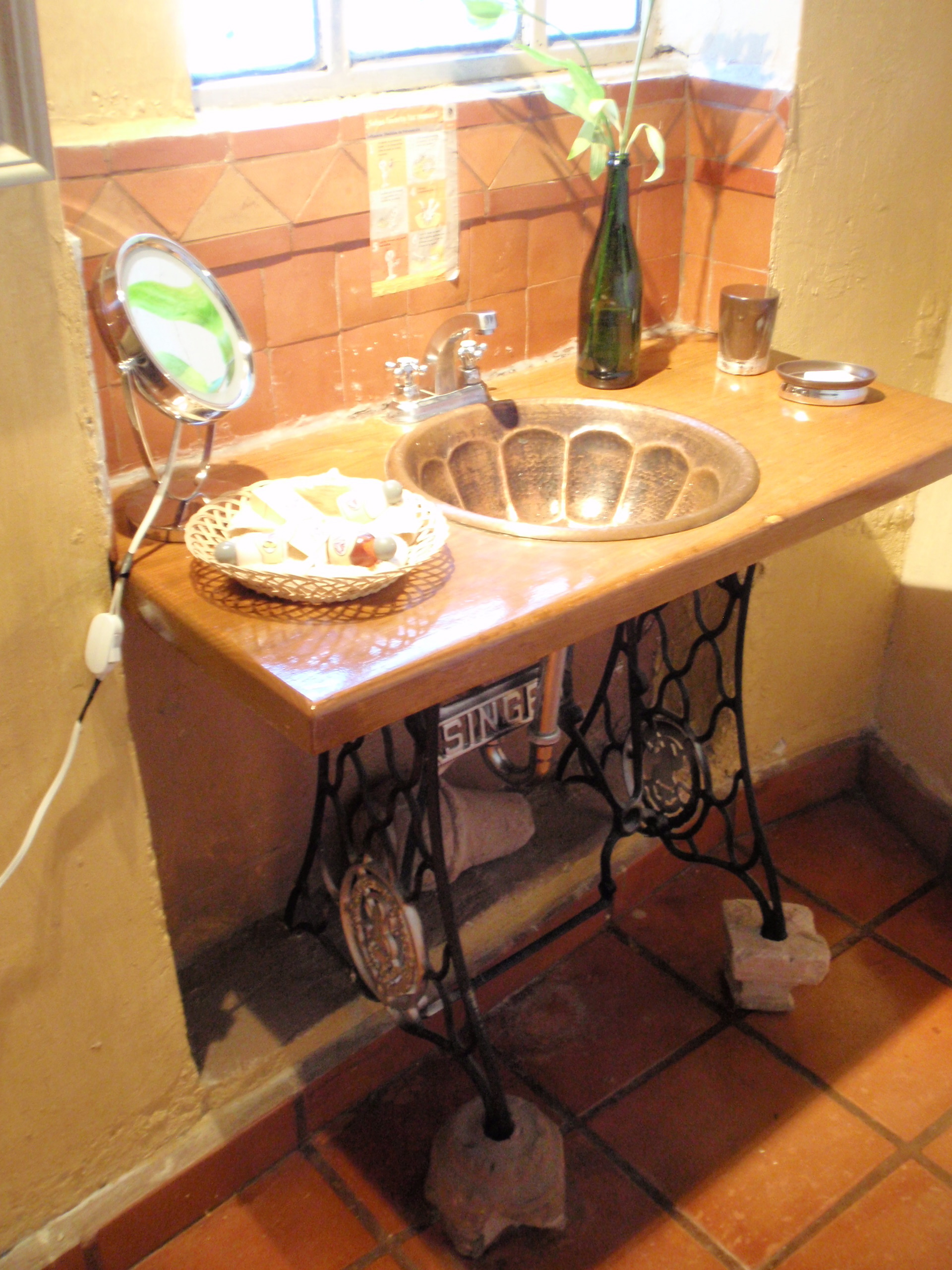
Note the Singer Sewing Machine Base Under the Sink

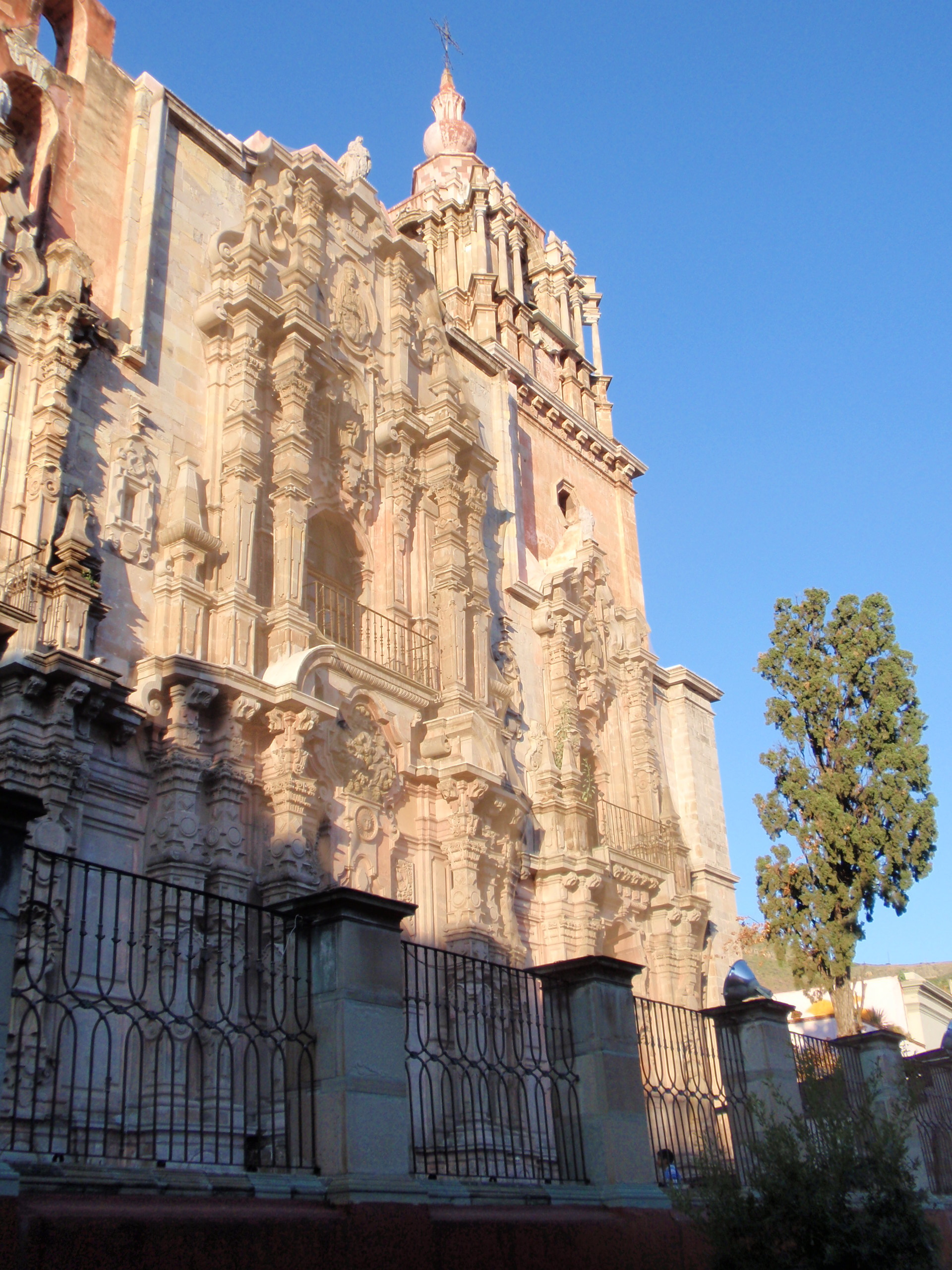
Once settled into our room, we set off to explore the city.  The first church that we happened upon (and there are many in this city) was the Templo de la Compania, built between the years 1747 and 1765.  It was designed in the Barroque style common to this area and depicted many Jesuit images in pink stone.  It was in the process of being restored and there was a service taking place at the time, so no inside photos for us!
Our next stop was the Universidad de Guanajuato, where 20,000 – 25,000 students enter through these doors to expand their education.  This building was erected in 1950 and has the longest staircase of any building in the city, 82 steps from top to bottom.  We were told that there is some local controversy over this building as it has a more modern design that the remainder of the city buildings.

Once you ascend to the top of the staircase, a nice view of the city is evidenced, of particular note the Statue of El Pipila (more to follow on the history of this statue) and the Fundicular (incline tram leading to the statue).

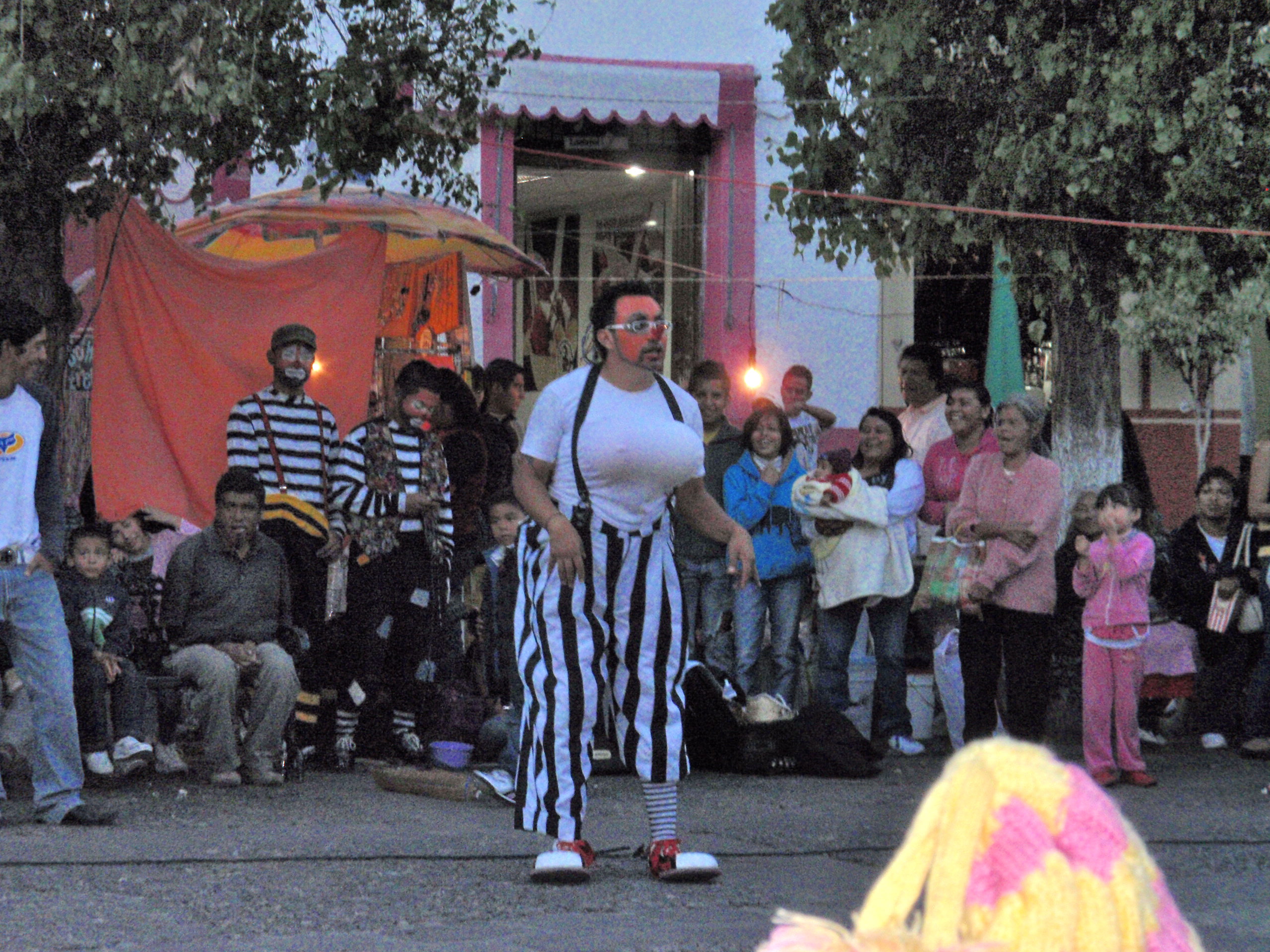
We continued to wander the streets of this colorful city and happened upon a rather bawdy production in the Plaza del Musico.  Although we did not understand most of what was being said, actions speak louder than words, and we got the gist of it!

We thought we would finish off our first evening with a stop at The Italian Coffee Company, for a nice cup of chamomile tea, which we did, but had no idea the surprise awaiting us on our walk back to the hotel.

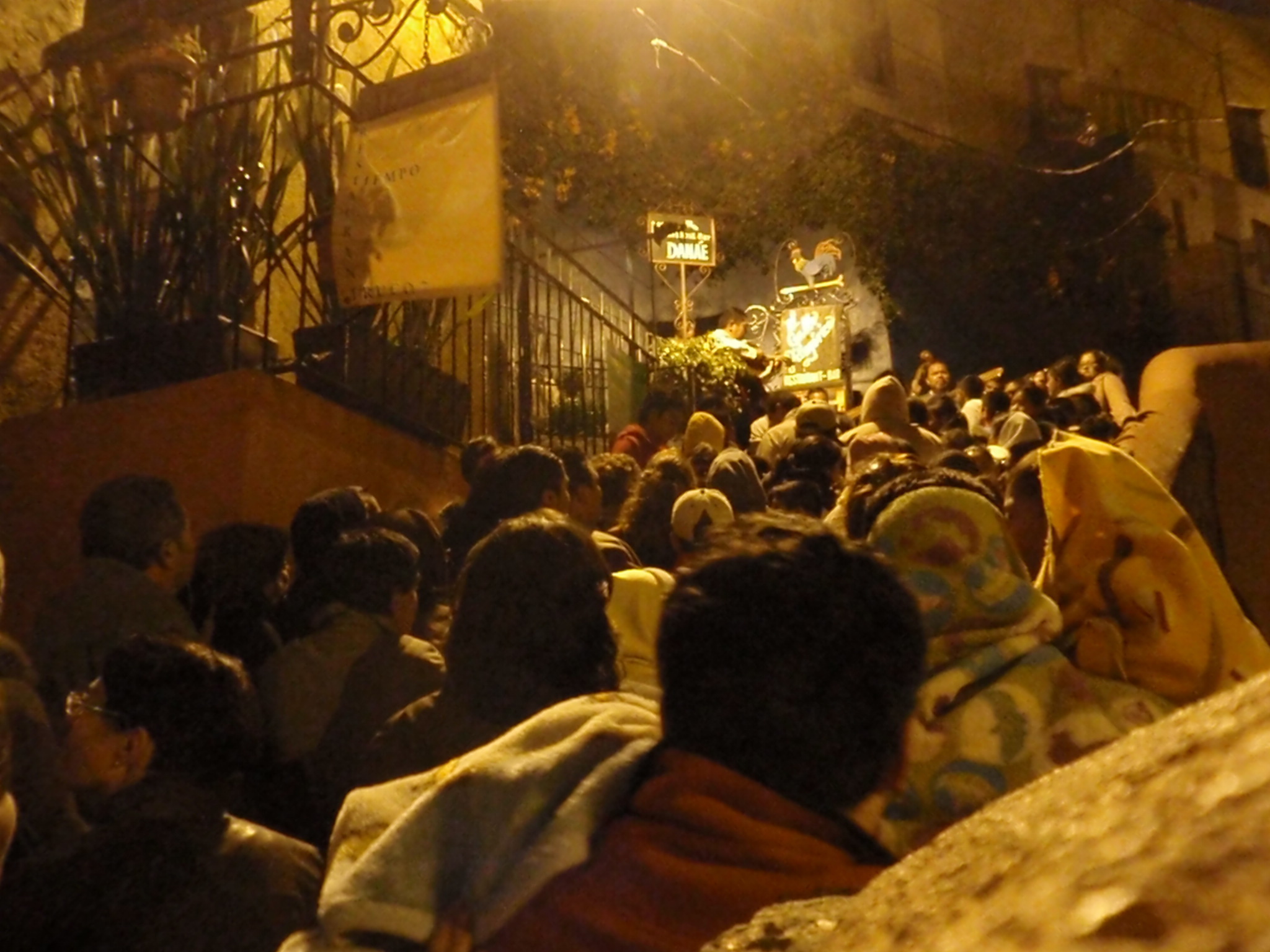
Mexico does not often embrace their Spanish heritage but one of the rare exceptions is that of the callejoneada, or roaming street party, which is just what we encountered as we headed for the winding staircase leading to our hotel.  At least three times per week, student and professional singers, musicians, and storytellers, dressed in 17th century costume, parade down Guanajuato’s colonial streets, gathering a crowd as they go, like pied pipers.  The entire mob winds through streets and alleyways, sharing wine and juice with the crowd from parrones (ceramic flasks with long spouts).  It is difficult not to get caught up in the excitement!

What a wonderful way to end Day 1 of our adventure!

Sunday Stroll Through Ajijic

People often say that ‘beauty is in the eye of the beholder’, and I say that the most liberating thing about beauty is realizing that you are the beholder.  This empowers us to find beauty in places where others have not dared to look, including inside ourselves.        ~ Salma Hayek ~

Yesterday we ventured out to get some exercise and experience another part of Ajijic that was beckoning to us.  This village is a feast for the eyes, no matter where one turns.  Given that the rainy season seems to be ending, I wanted Terry to take some photos of the brilliantly colored flowers before they disappeared for the season.  What began as an adventure to do just that became so much more, as can always be the case if we just open ourselves to the beauty around us.

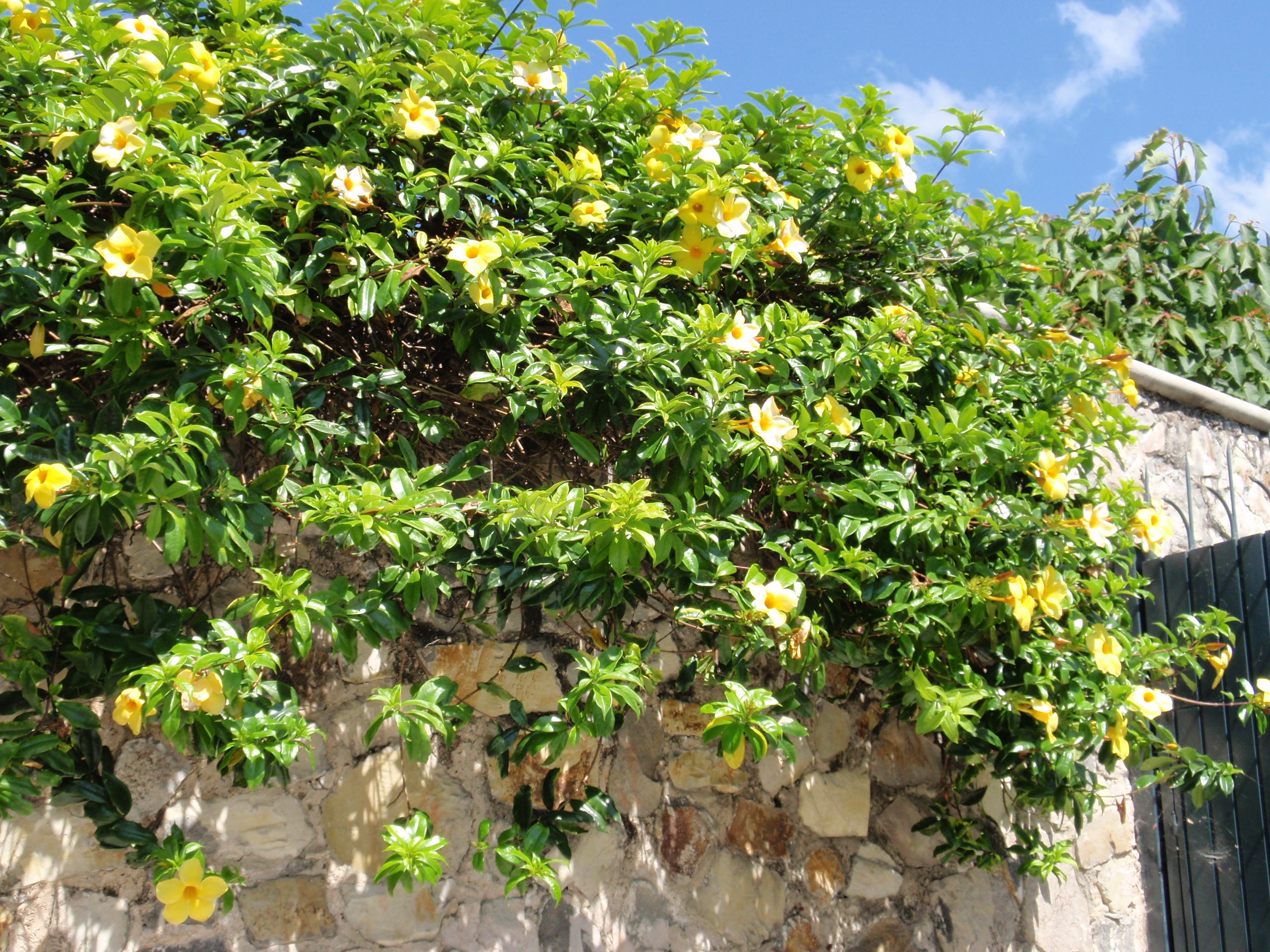
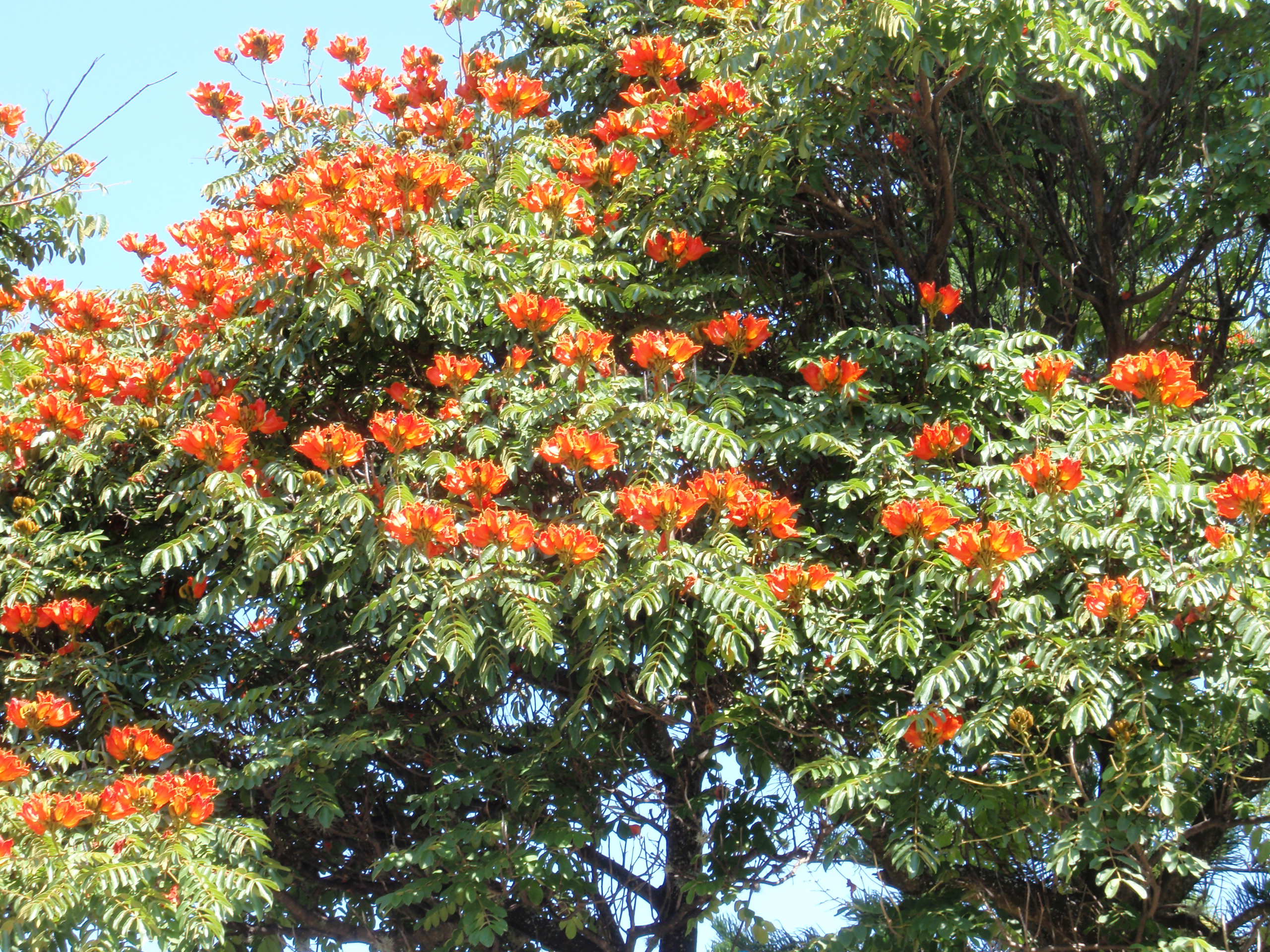
Flowers grow in such abundance here and many times several varieties become entwined, as if they have realized that they need each other’s company to thrive.

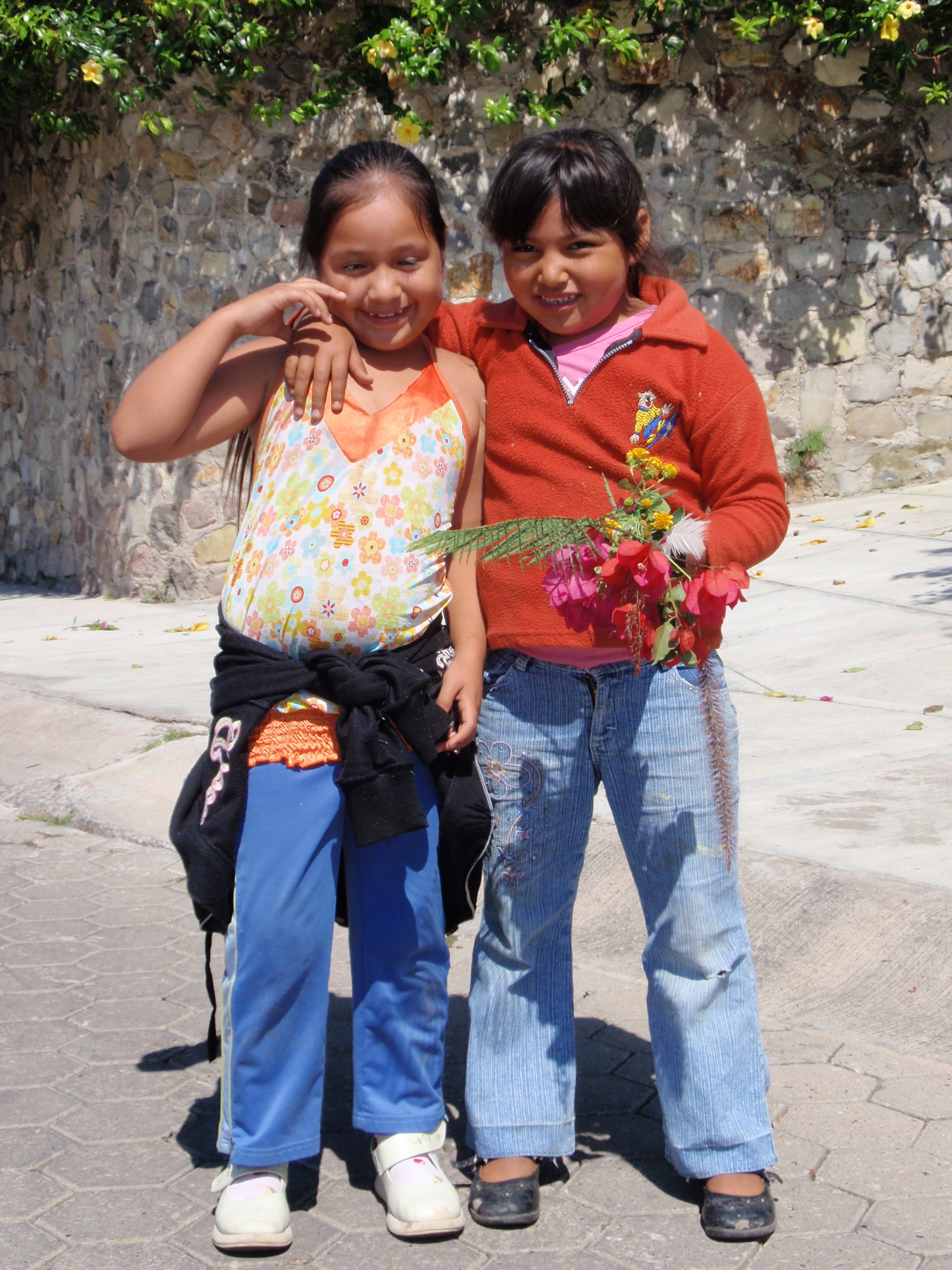
As we winded our way up and down streets in search of unusual plants and interesting doorways, of which there is a plethora, we came upon a couple of local girls, one carrying a small bouquet of flowers.  They looked like little cherubs, with their round smiling faces, and Terry tried to communicate with them that he would like to take their picture.  They happily agreed and struck a pose.

Primera Amigas

Faces beamed when they saw their photo and I gave them each a few pesos for allowing us the opportunity. As they turned to leave, I was presented with their floral bouquet, which consisted of a few flowers, leaves, and a white feather.

With pesos in hand, they immediately headed to the corner tienda for snacks.  I continued to carry the flowers with me until they began to fall apart, at which time I set them aside.  No sooner had I done this than we encountered the two amigas again, with their younger sisters in tow.  I felt bad that I no longer had the flowers with me and they immediately saw that this was the case so I was presented with a flor blanca (white geranium), which they asked Terry to pick for them, and a marble.  We all said adios and parted ways.  I secretly wondered if their generosity was due to the pesos presented earlier on, with the hope for more to come.  Nonetheless, it was a beautiful gesture on their part and kept me smiling for quite some time.

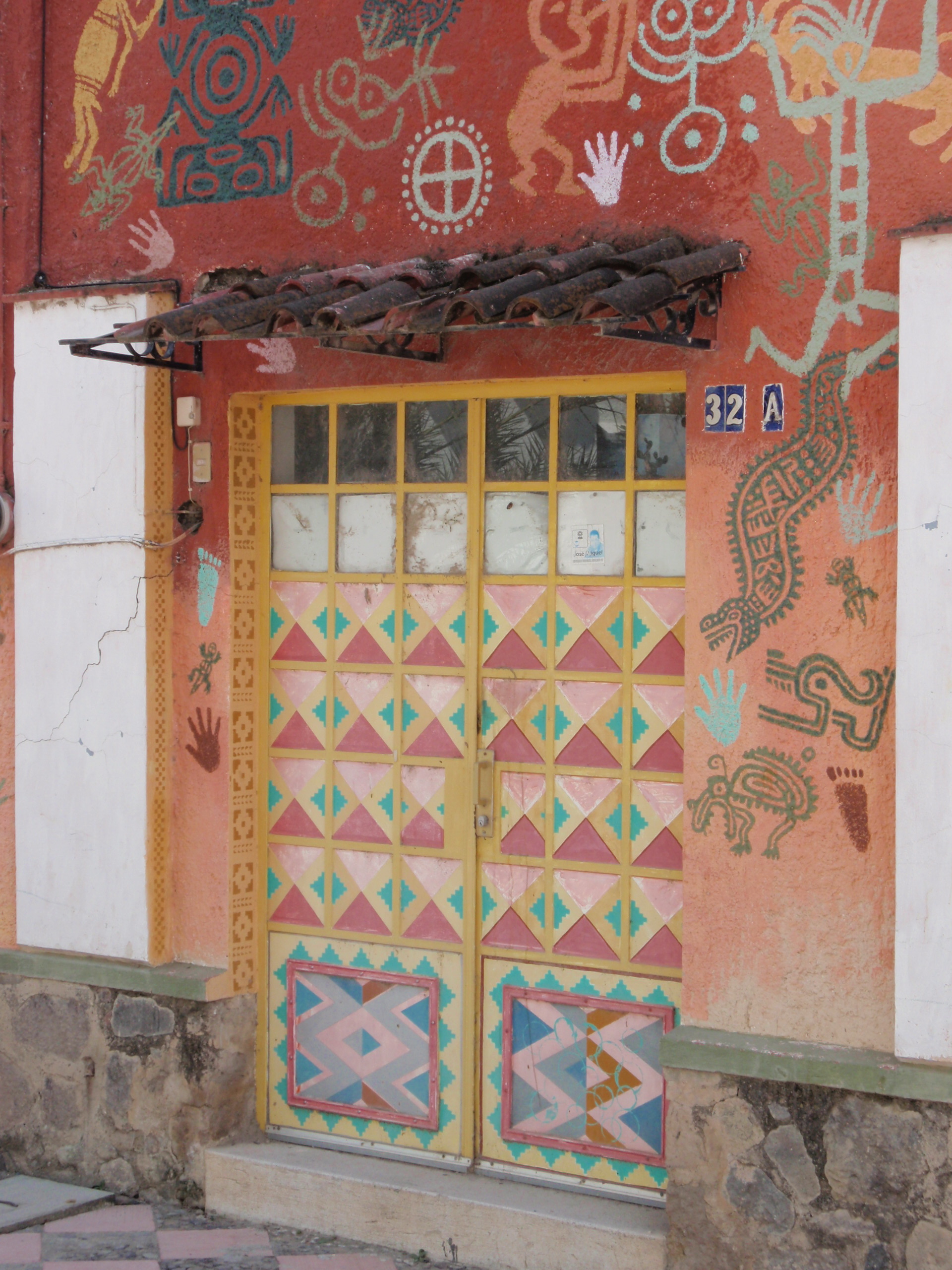
As we continued, we discovered some beautiful doorways, of which an entire book could and probably has been dedicated.  Here is just a taste of what one can see around every corner in this village.

Carpe Diem
Galeria Floreria

Interesting Petroglyphs
Flower Capped Doorway

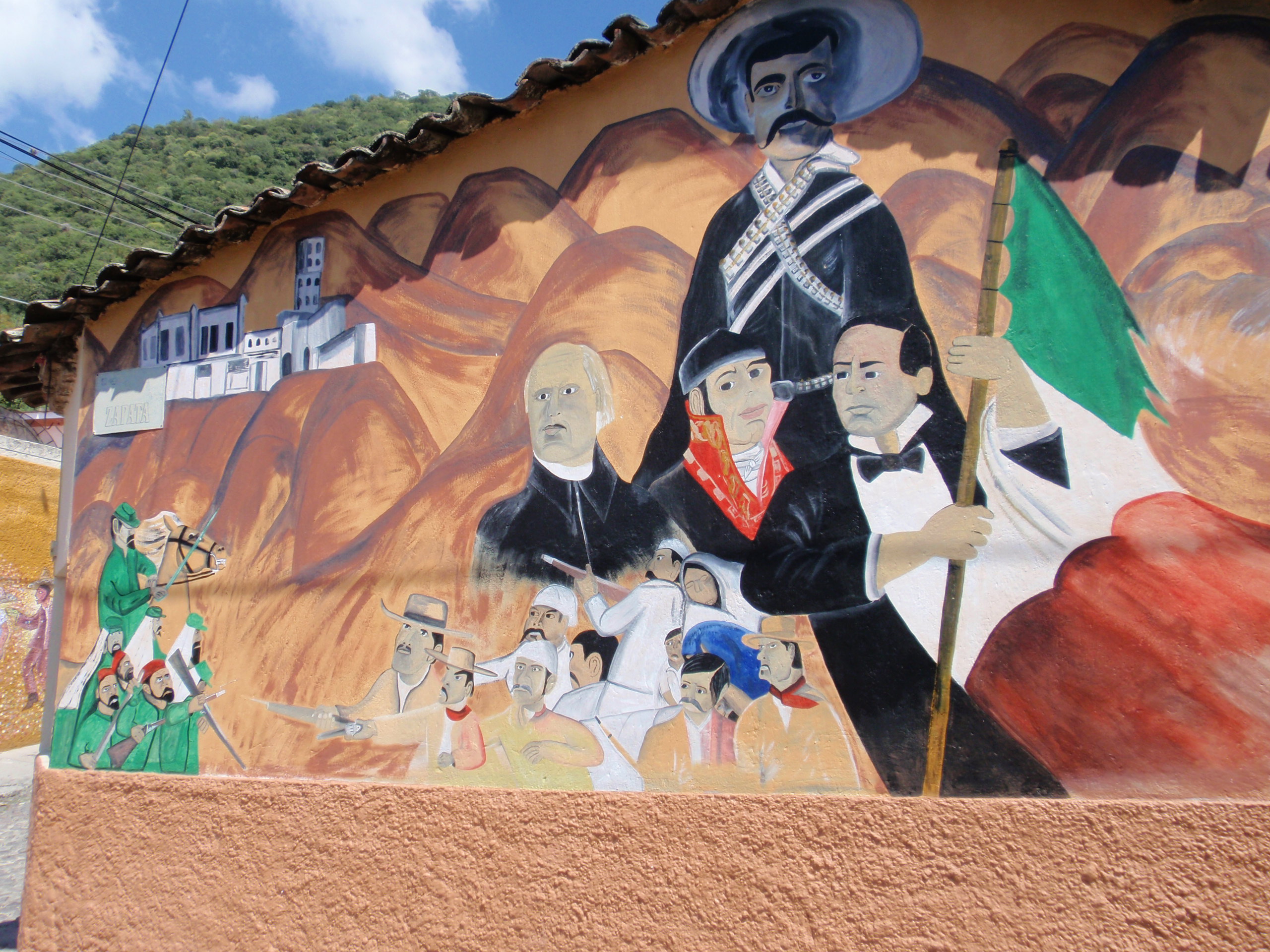
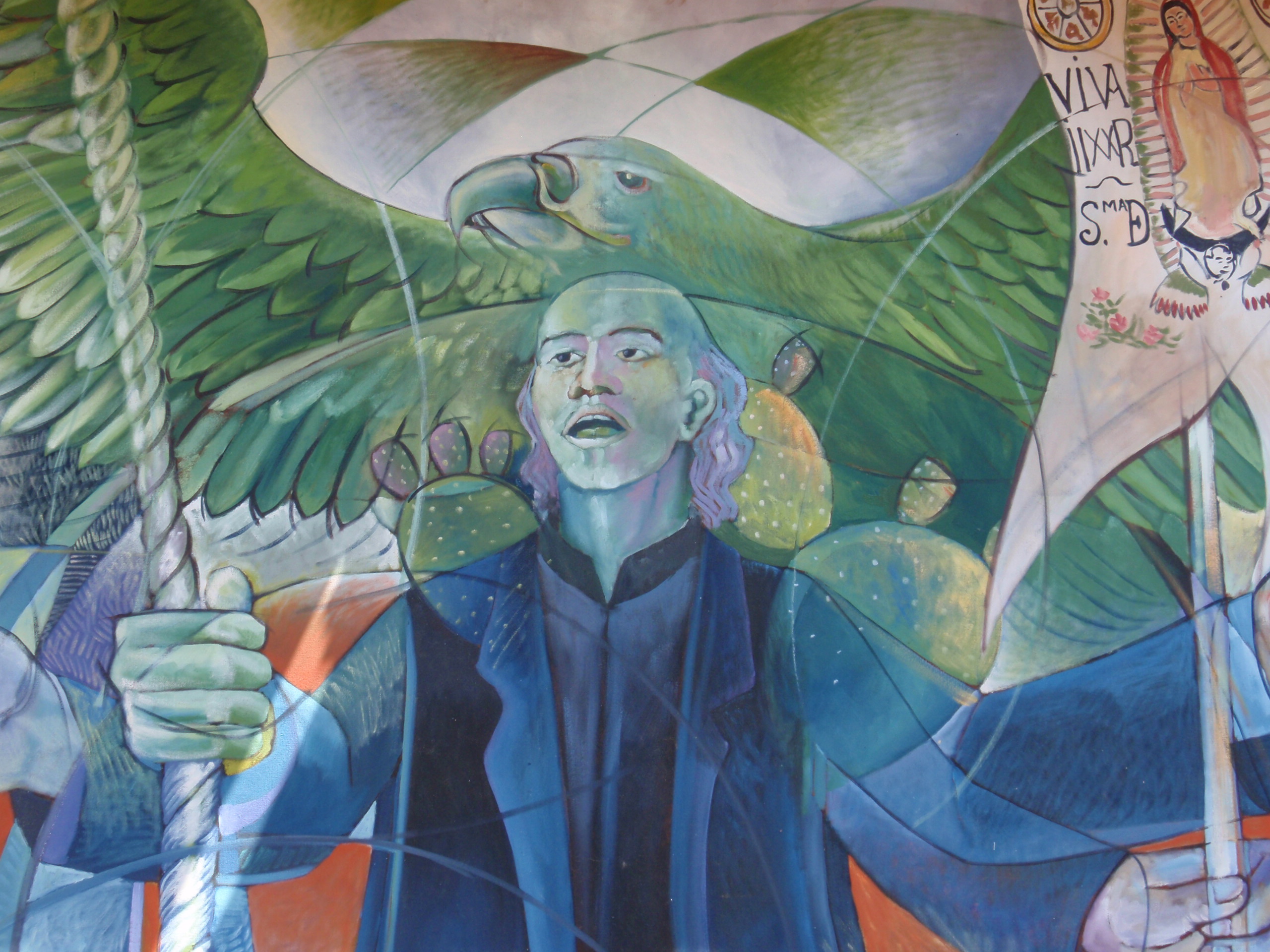
All walls in Ajijic seem to be available as canvases for budding artists and pop up as frequently as many of the lovely flores do with the mixture of sunshine and tropical temperatures.  They are varied and all tell a story, I am sure, although some not as obvious to newcomers such as us.  We discovered many of these murals coming to life with the approach of Mexico’s Independence Day and continue to see them as we explore neighborhoods throughout the village.

Central Figures in Mexico's Independencia from Spain
Upper Ajijic Mural
Mural by Efren Gonzalez ~ Local Artist and Gallery Owner

Who knows what awaits our next foray?  Until then, adios!