Guadalajara

Hola from tropical Mexico, where the temperatures are in the 70’s and rainy season is now upon us.  Flowers are in bloom everywhere and the mountains are bright green, with water flowing everywhere.  We have just been sitting back and enjoying the rain showers and not been doing any traveling, so I have shelved my blog for the past 45 days.

This past weekend we went to Guadalajara to visit the historic area, so I have a reason to blog and some interesting pictures to share, compliments of my husband the photographer.

Guadalajara is the second largest city in Mexico, with a population of 4.4 million in the metro area.  It is the capital of the state of Jalisco and was founded more than 460 years ago on Valentine’s Day.  This city is also known as the “City of Roses” and is the sister city to Portland, Oregon.

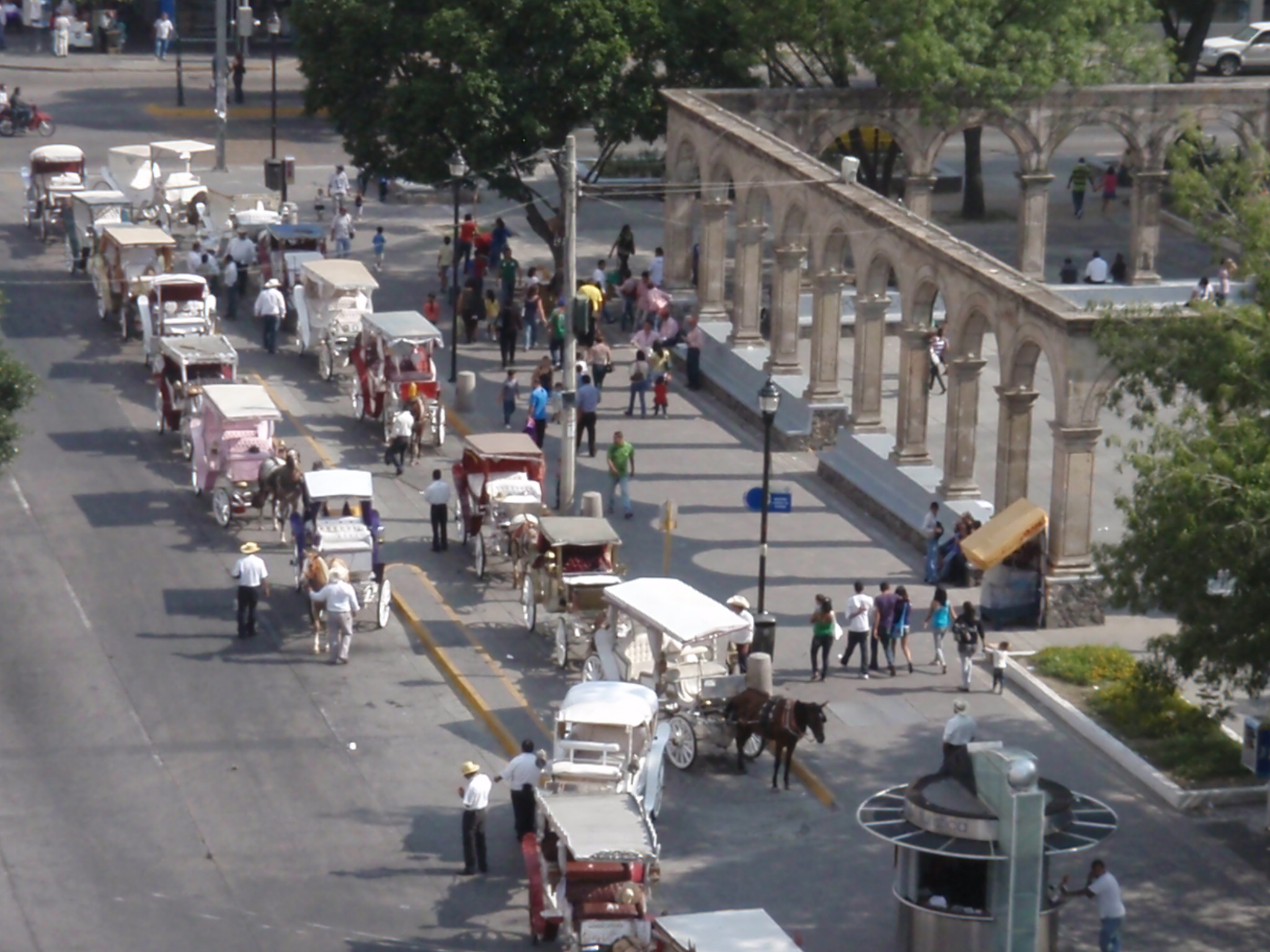
Guadalajara is yet another Mexican city rich with history and culture.  In the heart of the historic district is the famous Plaza Tapatia, a huge pedestrian walkway that stretches for several blocks and includes statues, fountains and many interesting shops and buildings.

Fountain in Plaza Tapatia (note the angel “mime” in the right corner of the fountain)
Statue of Escudo, Coat of Arms of Guadalajara 

We were given the name of a lovely hotel in the historic district by some friends of ours and it proved to be very nice and within walking distance of the entire historic section of Guad.  Hotel Morales was built in the 19th century and became known as the bullfighters’ hotel, as many celebrity bullfighters stayed here.
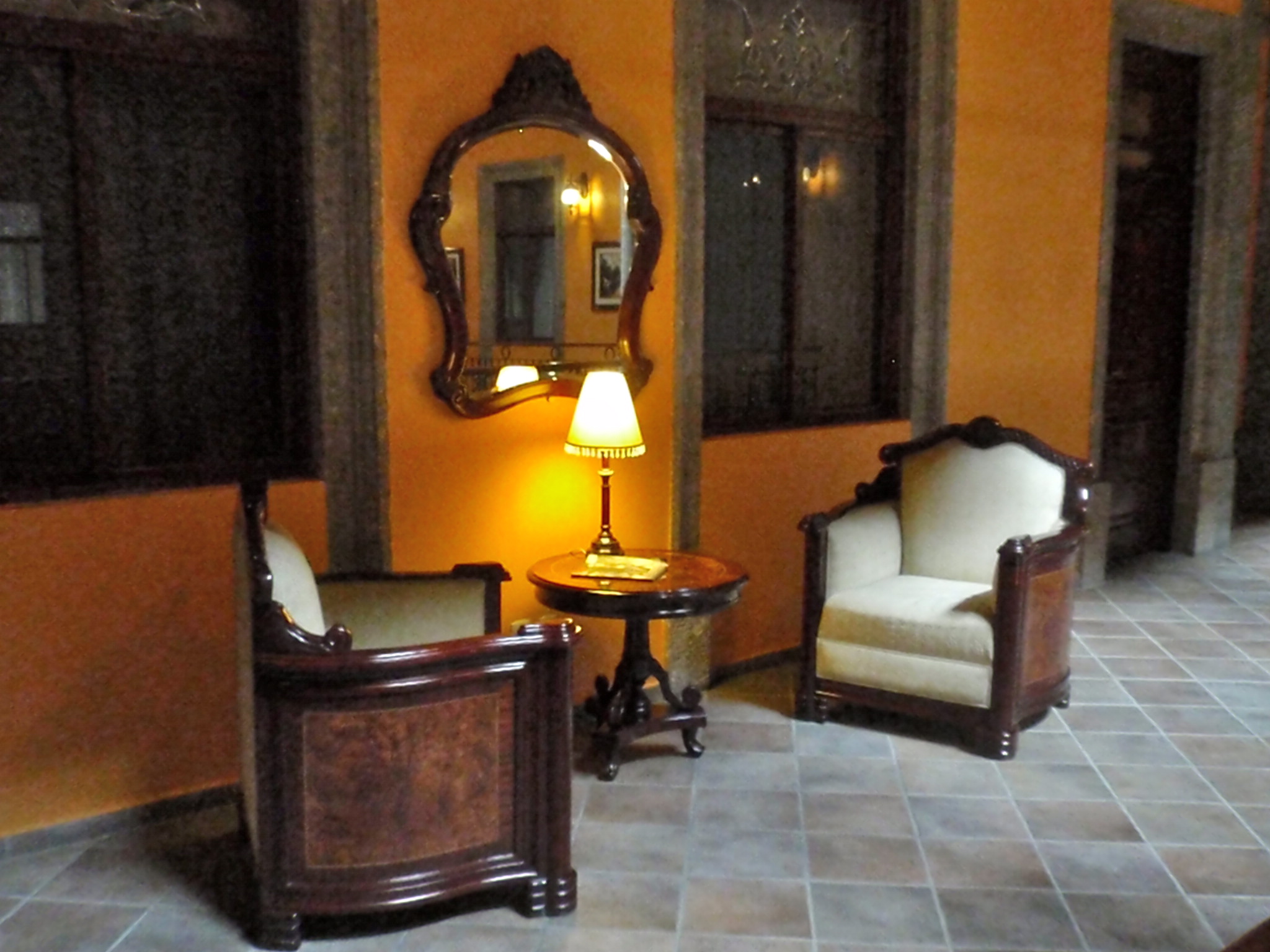
Sitting Area Outside our Hotel Room
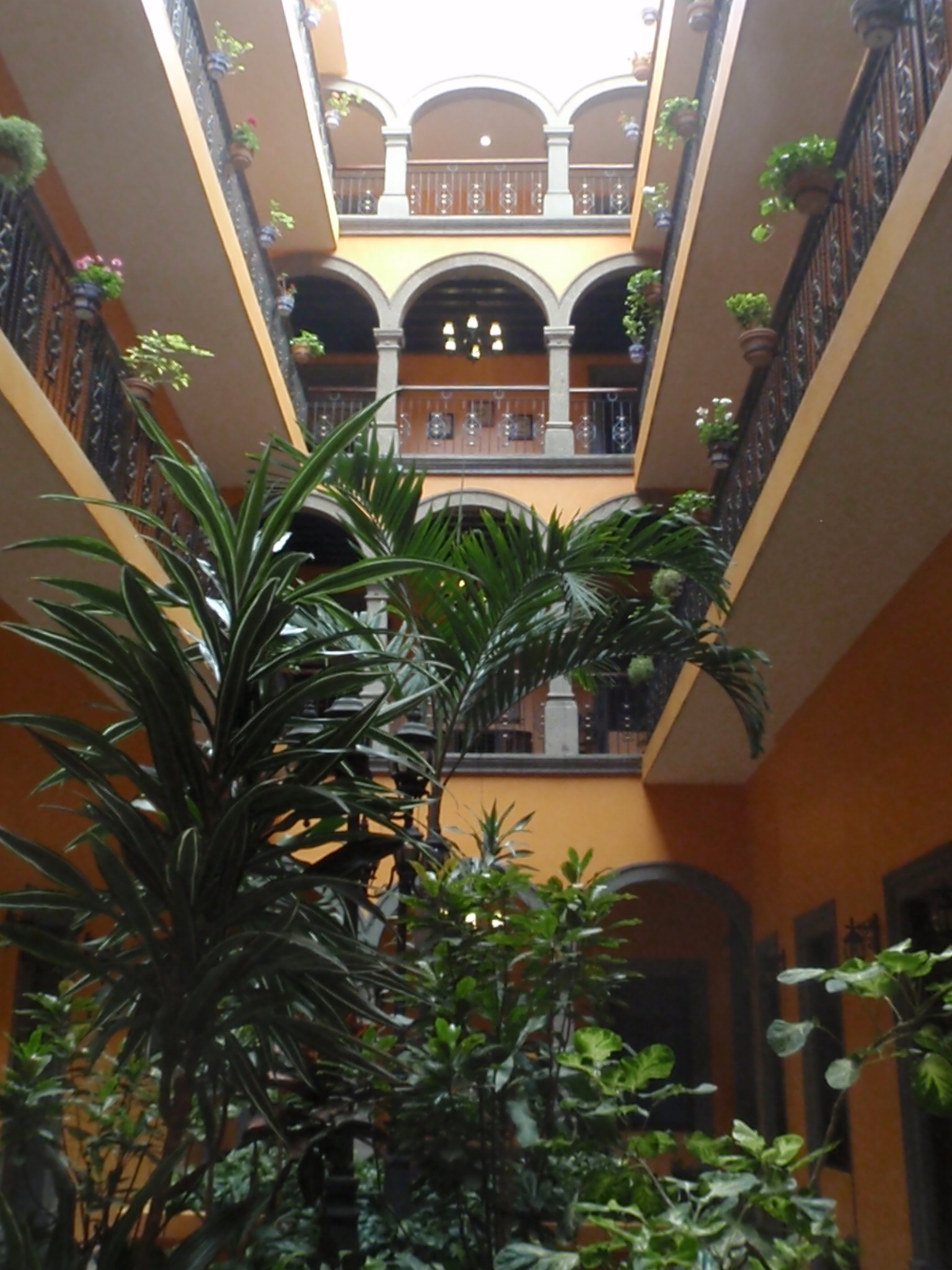
Lovely Foliage and Beautiful Archways
View from the Hotel Rooftop

Our first day we had a great lunch at La Chata, which served typical Mexican fare.  We enjoyed chicken mole, chili relleno and limonada mineral (limeade made with mineral water).  It is a very popular place with the locals, as there never seemed to be less than 25 people waiting in line at any given time of day.  After being fortified with a lovely comida, we headed out to see the sights.

Our first stop was to the Palacio de Gobierno, the Governor’s Palace.

Palacio de Gobierno

The Palacio de Gobierno was built in 1774, with striking colonial architecture and murals painted by José Clemente Orozco.

A huge mural of Hidalgo (a father of the Mexican Independence movement) is depicted on the ceiling immediately upon entering the building.

Hidalgo Ceiling Mural

Entering the stairway to the second floor, this multi-colored mural, also painted by José Clemente Orozco, reflects a violent scene dominated by Nazi symbolism.
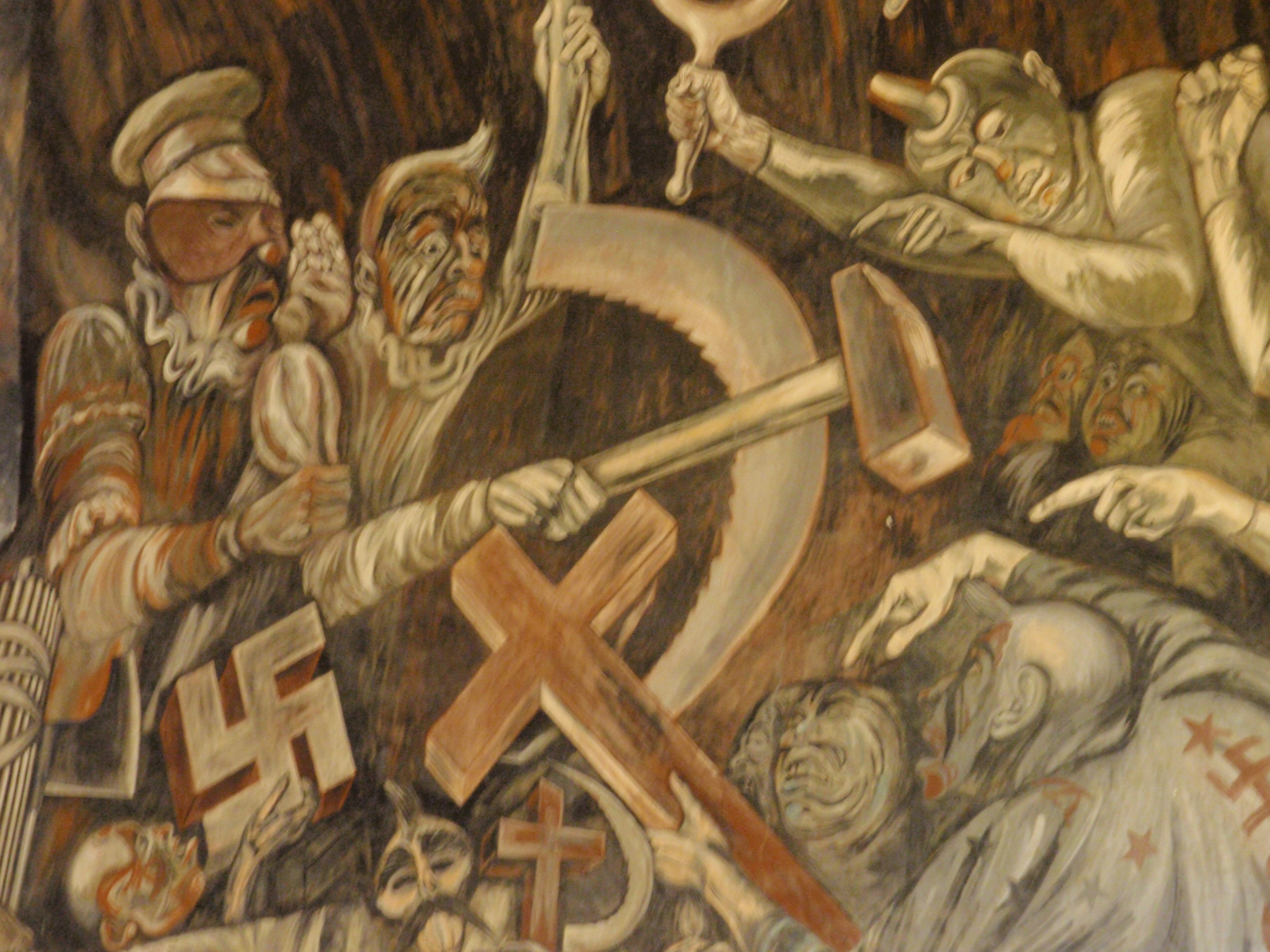
Stairwell Mural

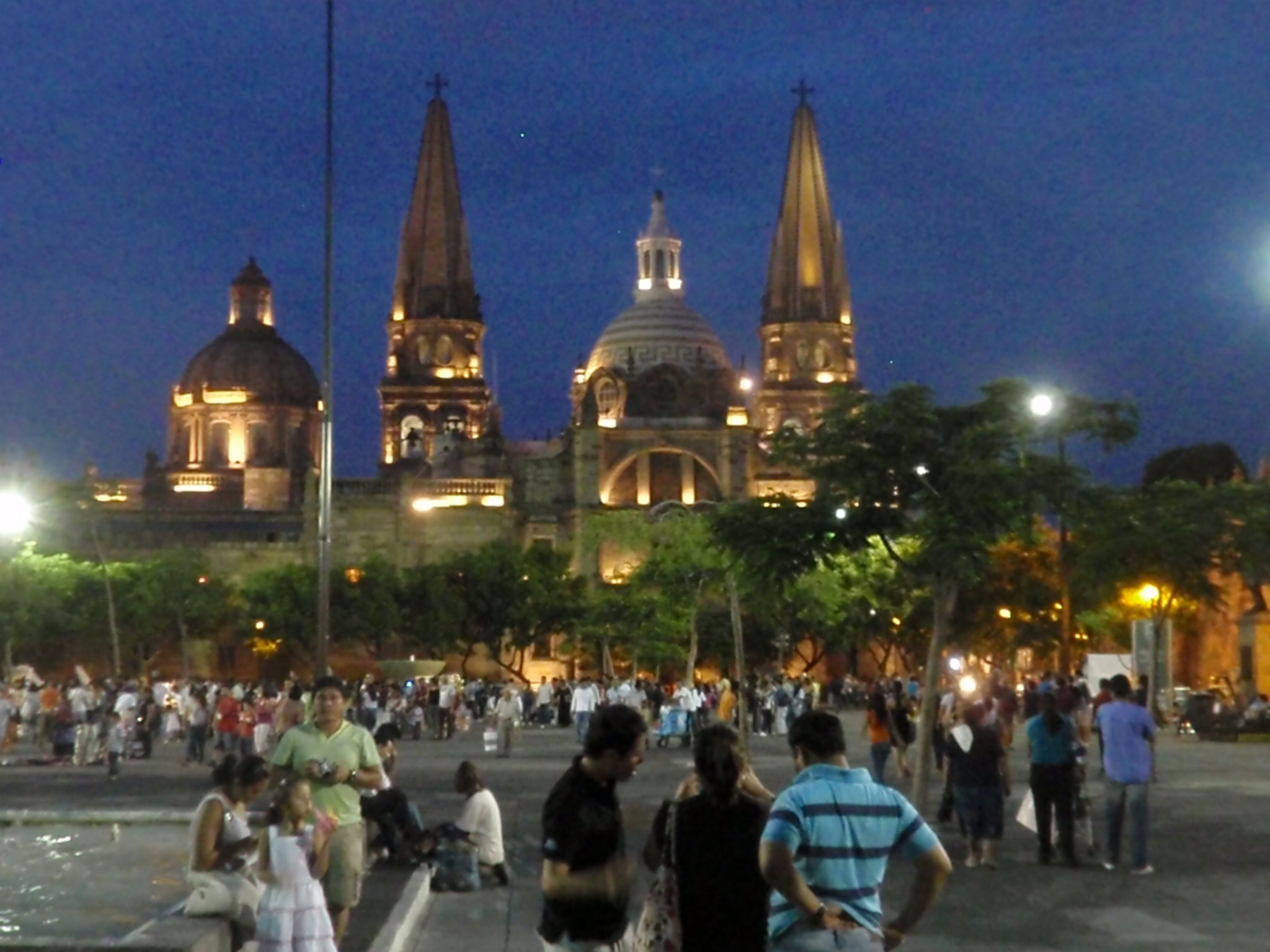
The Catedral Metropolitana, Guadalajara’s majestic cathedral, was first constructed in 1541.  It was very primitive, built with adobe and had a thatched roof.  A fire severely damaged the building in 1574 and the new cathedral was finally completed in 1618.  In 1818, an earthquake shook the city, bringing down the twin steeples and dome.  These were replaced but the new structures were destroyed by a subsequent earthquake in 1849. The steeples and dome were once again reconstructed and completed in 1854.  Since this time there have been several earthquakes that have caused additional damage to the cathedral.  The cathedral houses the remains of several cardinals and former bishops, as well as the heart of a former Mexican president.

Catedral Metropolitana with Stunning Yellow-Tiled Steeples
Cathedral Interior
Cathedral Evening View

Near the Guadalajara Cathedral stands the Rotonda de Los Jaliscienses Ilustres, The Rotunda of Illustrious Jalisco men and women.  Underneath this elegant structure lie 98 urns of some of the more illustrious men and women of Guadalajara, one of which is José Clemente Orozco.  The categories of those honored here include architects, educators, humanitarians, composers, painters and writers.  This structure was erected in 1952 and is lined with 17 columns.

Rotunda
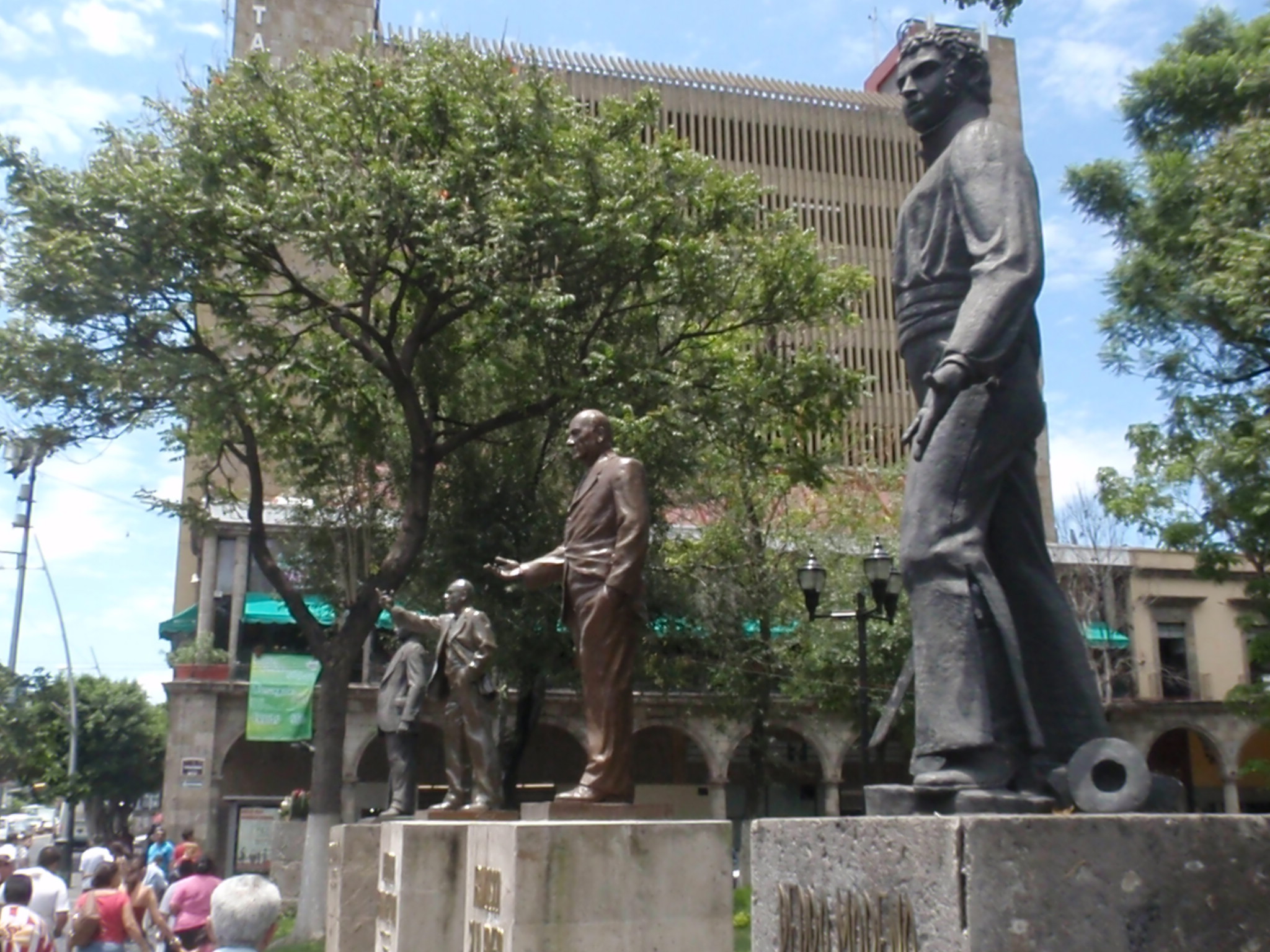
Statues of Dignitaries Bordering the Rotunda

The construction of Teatro Degollado, located at the far end of La Plaza de Dos Copas (Two Cups Plaza), named for the two fountains found here, began in 1856 and opened in 1866 with a performance of the opera Lucia di Lammermoor.  In 1966, famed tenor Placido Domingo performed the same opera here.  This structure seats 1015 people.

Teatro Degollado
Interior of Theatre
Ceiling Mural in Theatre

Within the Two Cups Plaza is another notable statue of Hidalgo, breaking the chains of slavery.  Everywhere you look, in almost all towns and cities in Mexico, there is some reference to this revered man, whether it be a statue, a mural, or the naming of a street.

One of the oldest churches in Guadalajara, Templo de San Augustin, simply built in the Barroque style, was dedicated in 1573 and was once part of a convent.  It has been rebuilt several times but the sacristy remains the original.  The Guadalajara School of Music now houses part of this structure.  Unfortunately, this building was not open to the public.
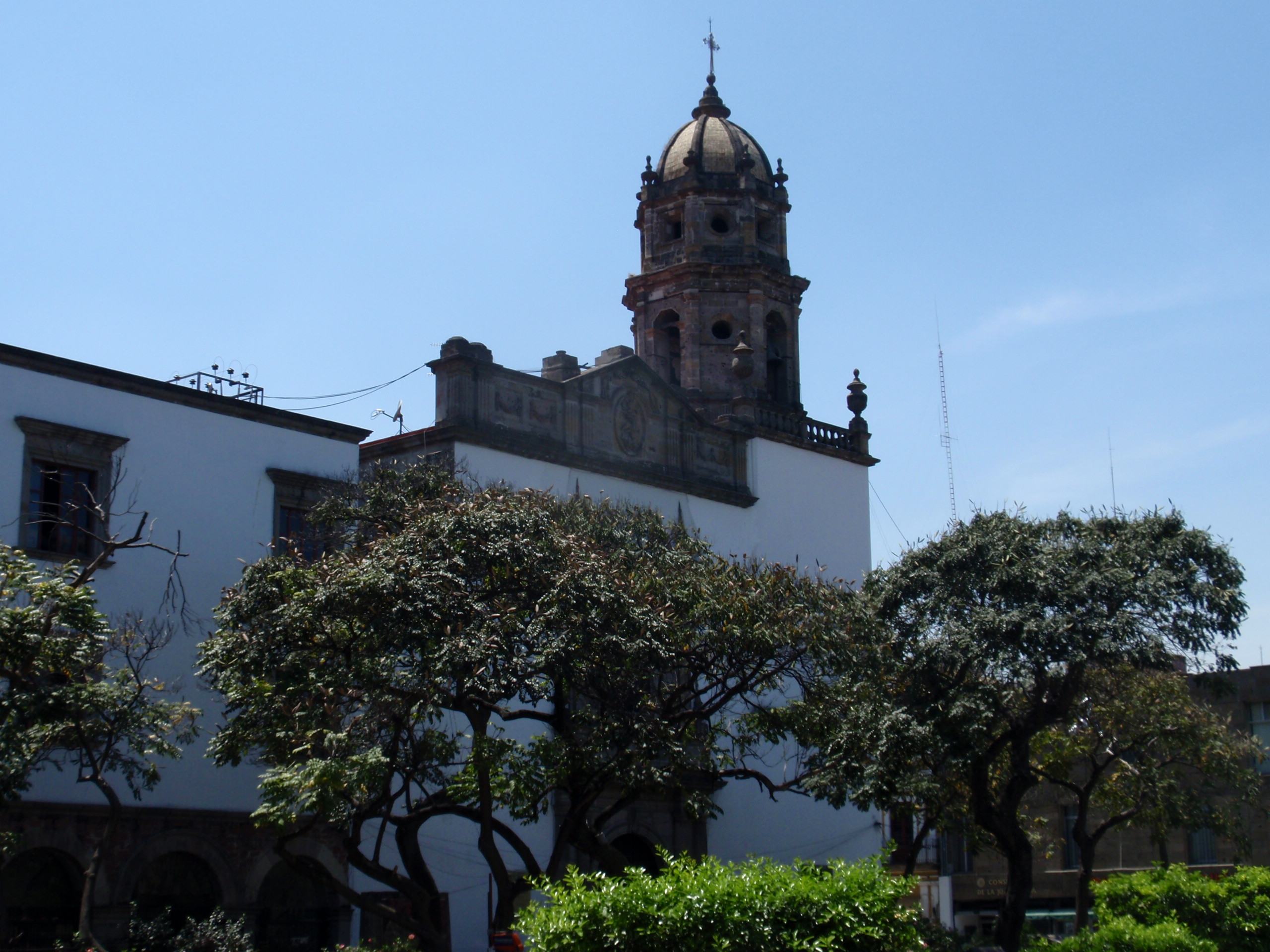
Templo de San Augustin

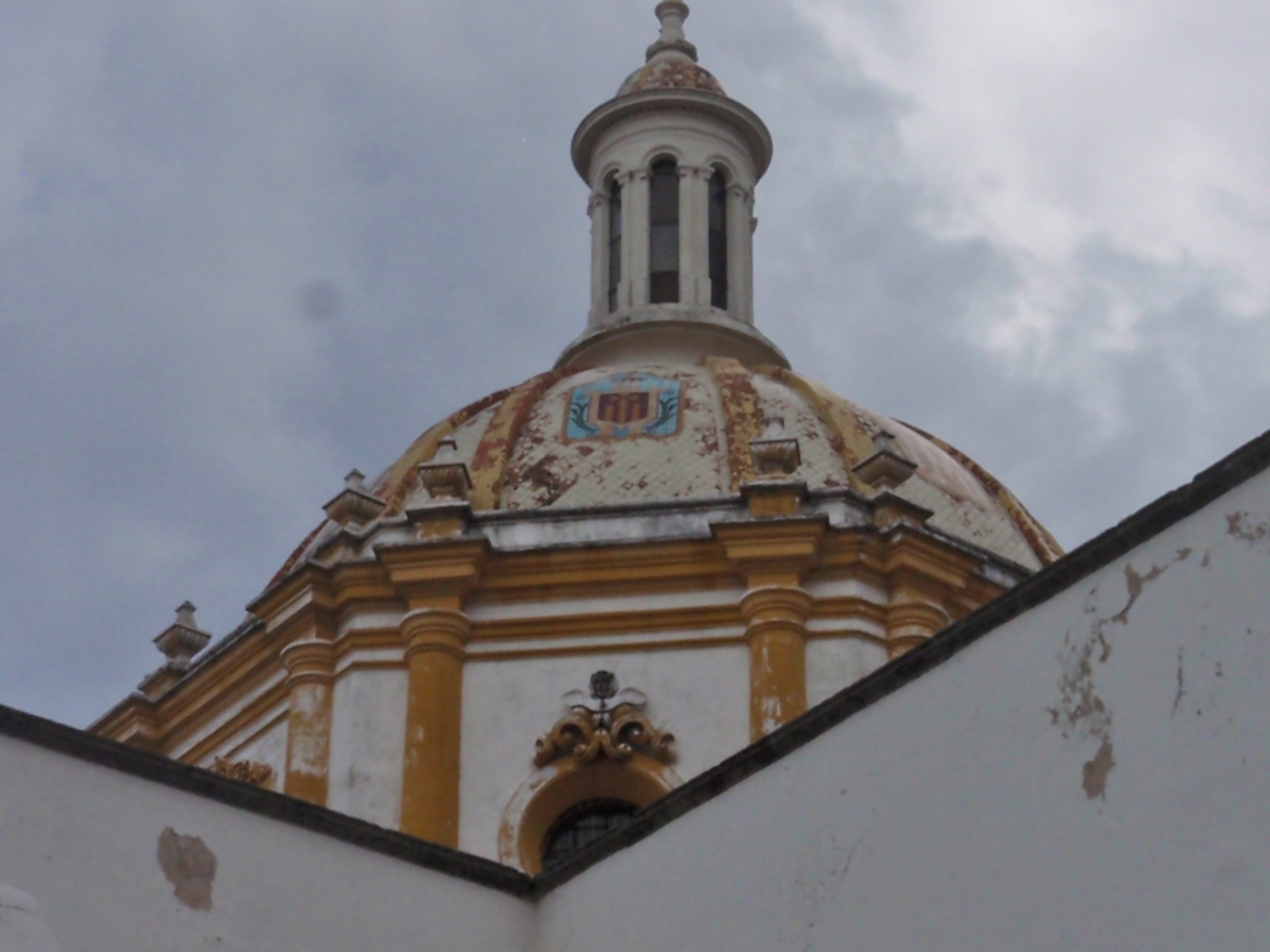
In the center of the city, on Hidalgo Avenue, sits the Templo de La Merced, another Baroque-style church with a beautiful door arch and lovely tiled dome.  The construction of this temple began in 1650 and was not completed until 1721.  The main altar is home to sculptures of the Madonna and child.  There was a wedding taking place the night we stopped by this structure.
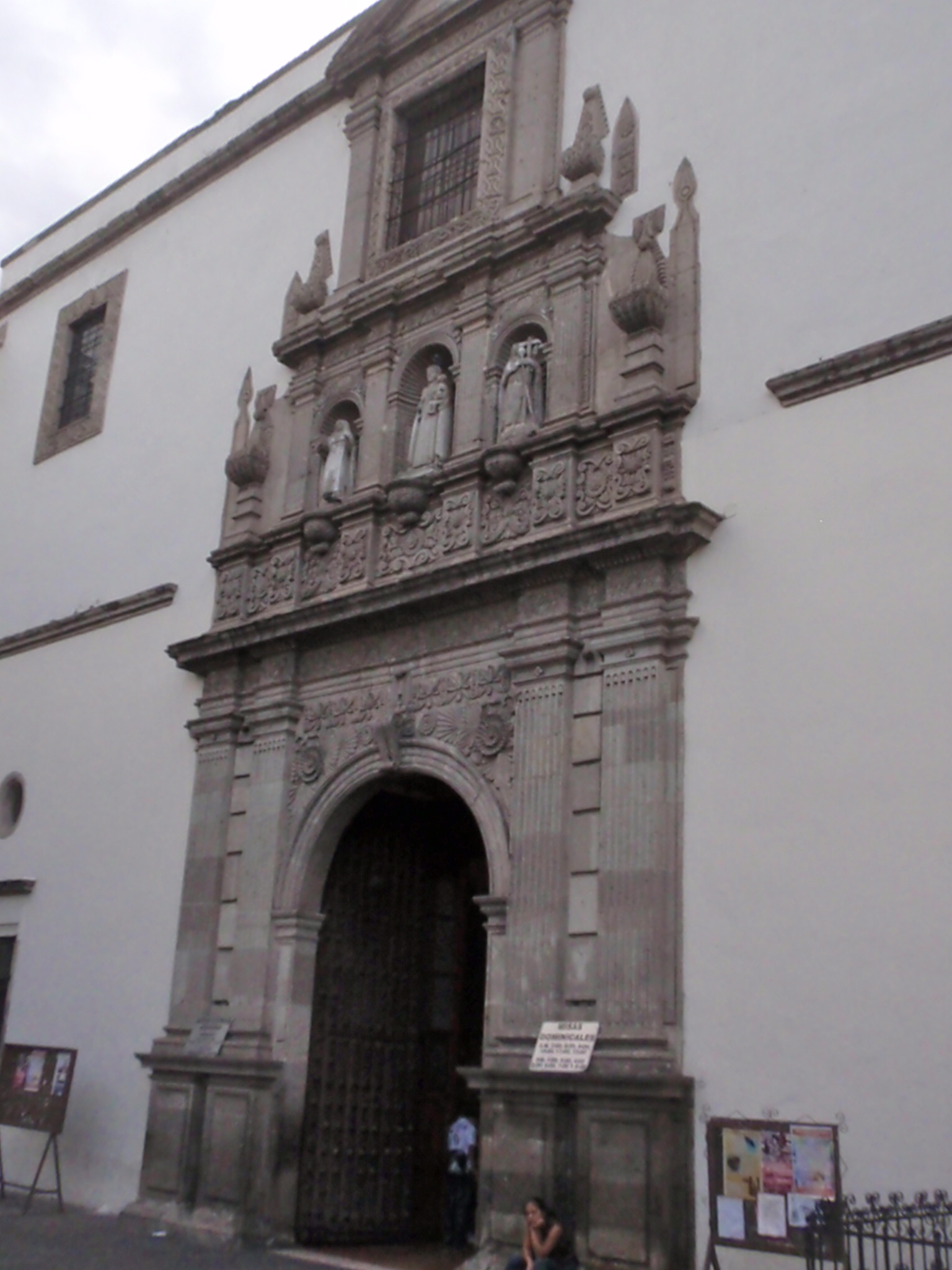
Templo de La Merced
Interior of Templo de La Merced
Dome of Templo de La Merced

The morning of our second day in Guad, we ventured out in search of breakfast and came across Chai, which featured great omelets and coffee, in a very relaxed setting.  We liked this restaurant so much that we visited it the next morning as well.

Since Terry and I had lived in Sedona and always admired the architecture of a well-known upscale shopping area named Tlaquepaque, we decided to visit this suburb of Guadalajara featuring the same name.  We were told this is the place to go for interesting shopping, plus there are always a few beautiful churches to visit as well.

Tlaquepaque is a suburb of 560,000 people and is the largest pottery village in Mexico. The name is that of Nahuatl, meaning “place above clay land”.  It is reknown for its pottery and blown glass.  The creative spirit of the people who reside here has earned the city the title of “A Town of Magic”.

Two noteworthy churches surround El Jardin Hidalgo, the main plaza in town.  The first is Santuario de Nuestra Senora de La Soledad (Our Lady of Solitude Sanctuary).  This church was built in 1878, in the Neoclassic Byzantine style and has a stunning dome featuring 16 windows.

Our Lady of Solitude Sanctuary Dome in Background
Interior of Our Lady of Solitude Sanctuary

The second church, Parroquia de San Pedro Apóstol, also borders the main plaza.  It was founded by Franciscan monks during the Spanish conquest and its Baroque styling has undergone many changes over the years.  Construction began in 1670 and was finally completed in 1813.  The altars of Our Lady of Guadalupe and the Sacred Heart of Jesus are carved in silver and gold.

Parroquia de San Pedro Apostol
Interior of Parroquia

The place to visit for upscale shopping in Tlaquepaque is El Parián, a large plaza flanked by restaurants, statues, and alluring shops.

El Parian Street Scene

One of the more prominent statues of Hidalgo, in my opinion, was in the center of El Parián, depicting him leading the locals in their fight for independence.

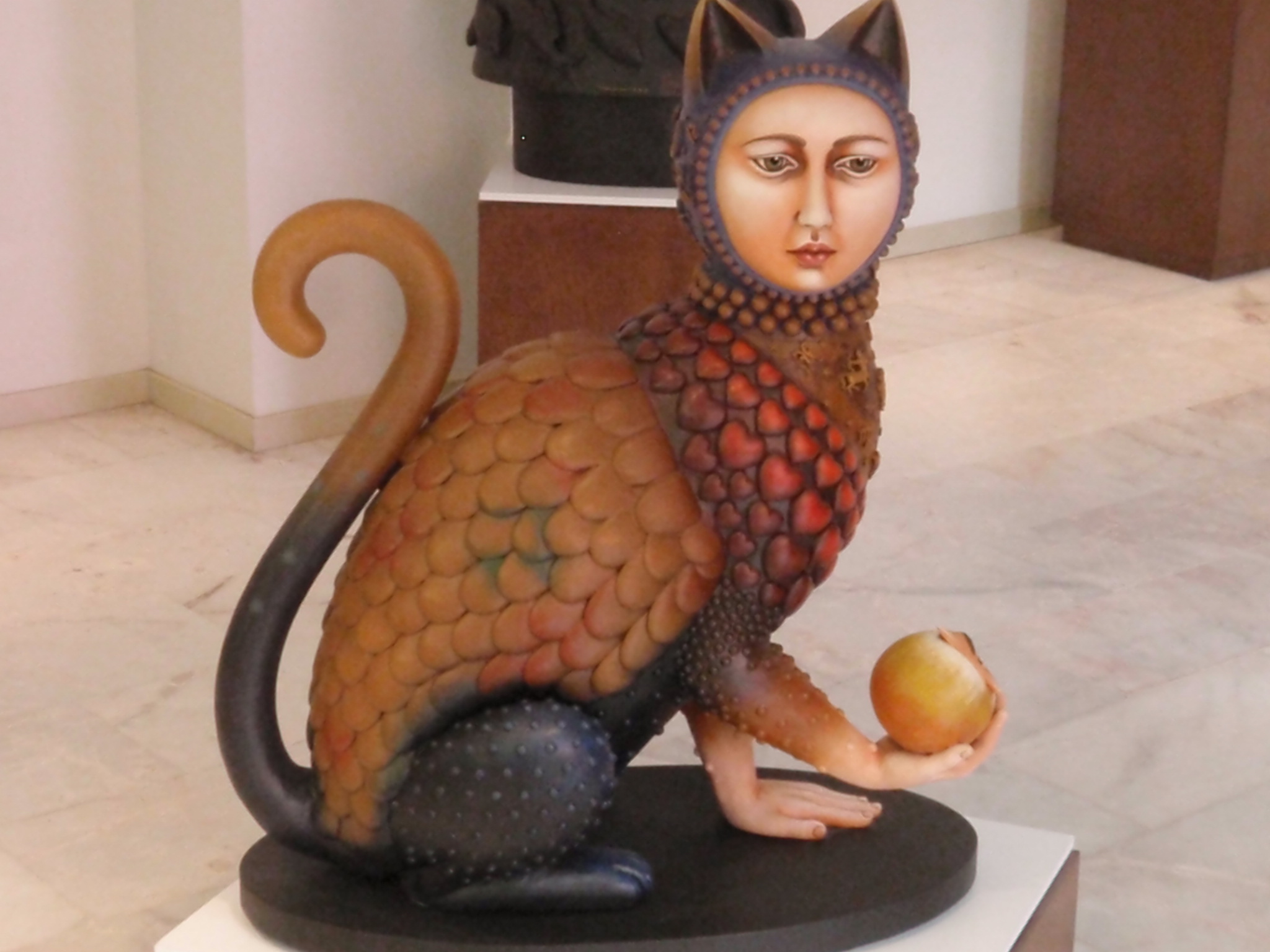
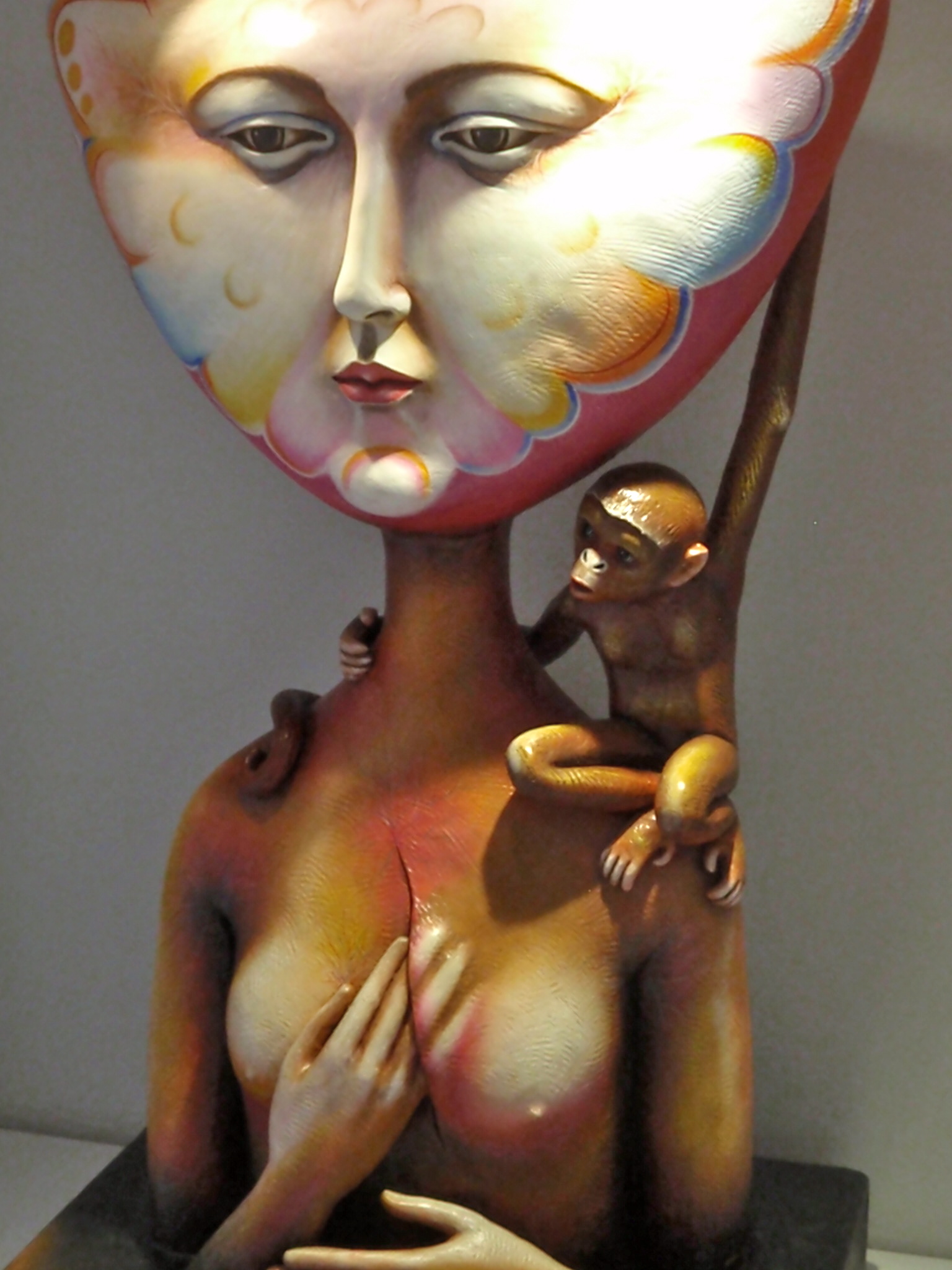
One of my all-time favorite artists in my short time in Mexico has been Sergio Bustamante, who I was first introduced to on the malecon in Puerto Vallarta.  I cannot say why I am so drawn to his work, perhaps because of the unusual nature of it.
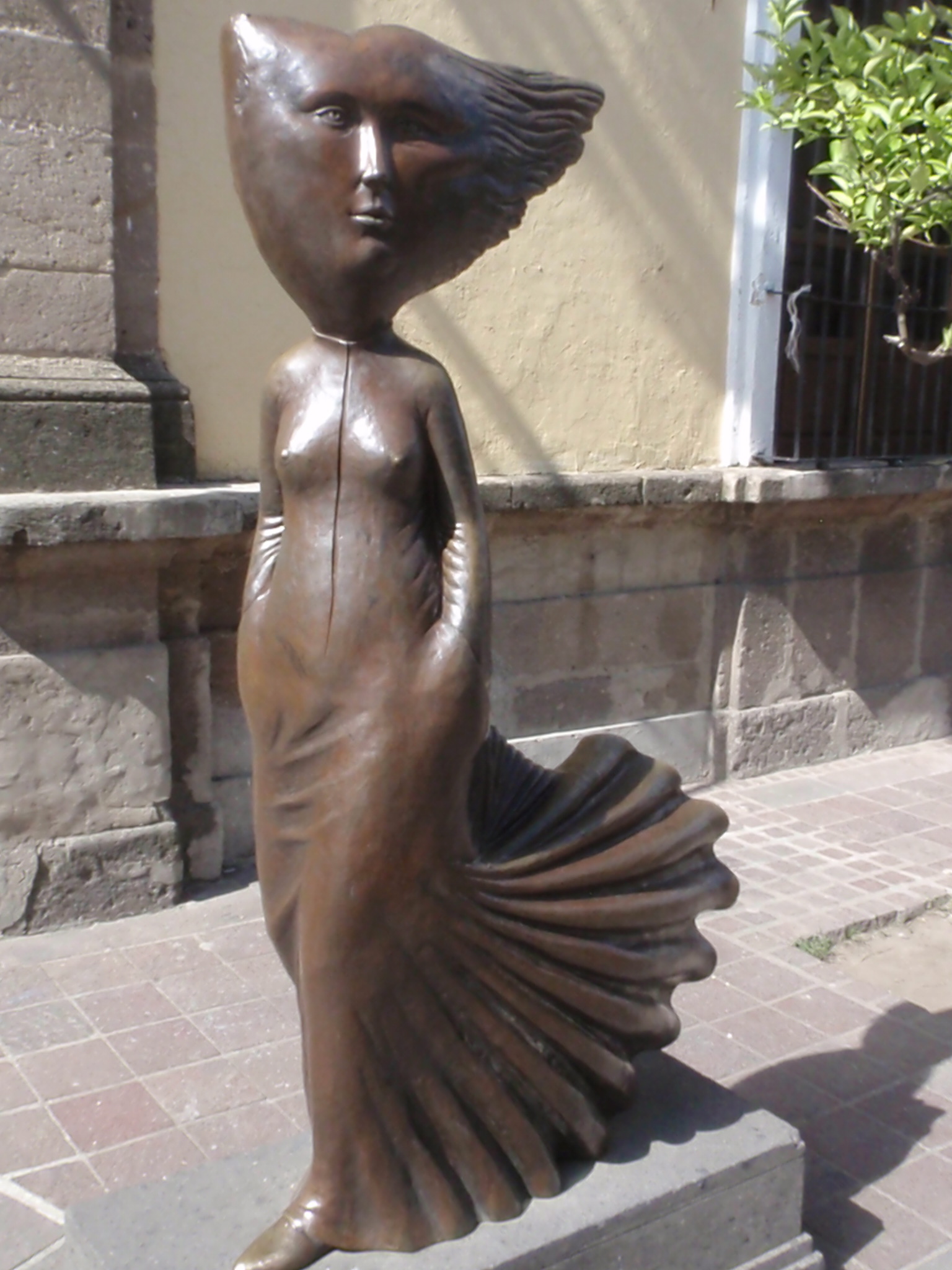
Sergio Bustamante Bronze #1
Sergio Bustamante Bronze #2

Much to my delight, a Sergio Bustamante gallery beckoned me!  Displays of the most exotic silver jewelry and stunning handbags were showcased.  For some reason I could not justify the $550 price tag on the handbags and Terry thought he “dodged a bullet” by getting me out of the gallery without shelling out money for jewelry.  I reminded him, however, that I can easily go online and purchase his jewelry, so I don’t have to be in Tlaquepaque to do so.  I think I might have made him a tad bit nervous!

Below are some of the unusual pieces of art displayed in this amazing gallery.

After Terry was able to pull me out of the gallery, we decided to have lunch at a lovely little cafe/shop called Adobe, where we were able to sit outside and people watch.
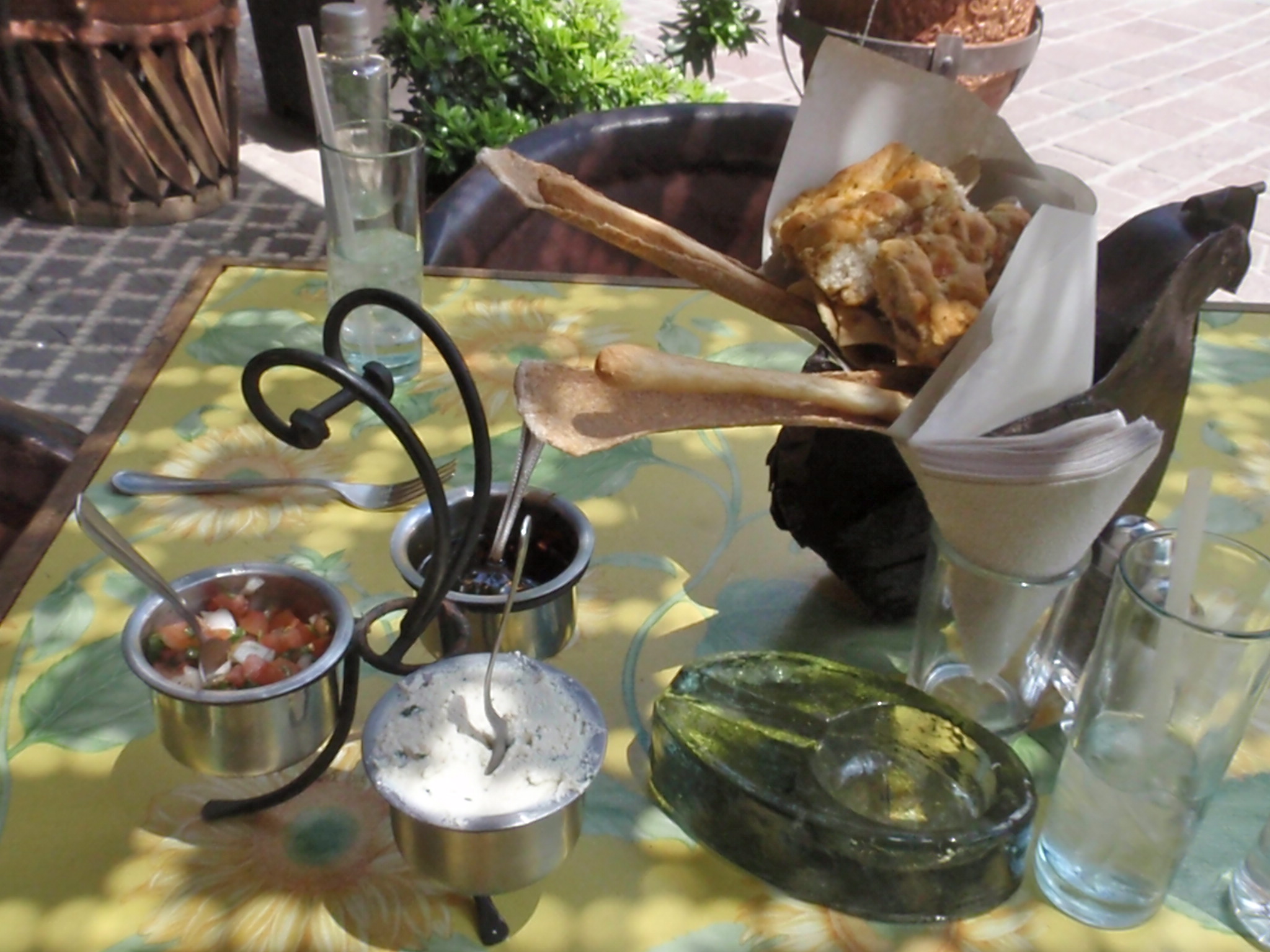
Scrumptious Homemade Breads Preceding our Lunch at Adobe

After lunch we stopped in a glass shop.  Here is just one example of a stunning blown glass chandelier.
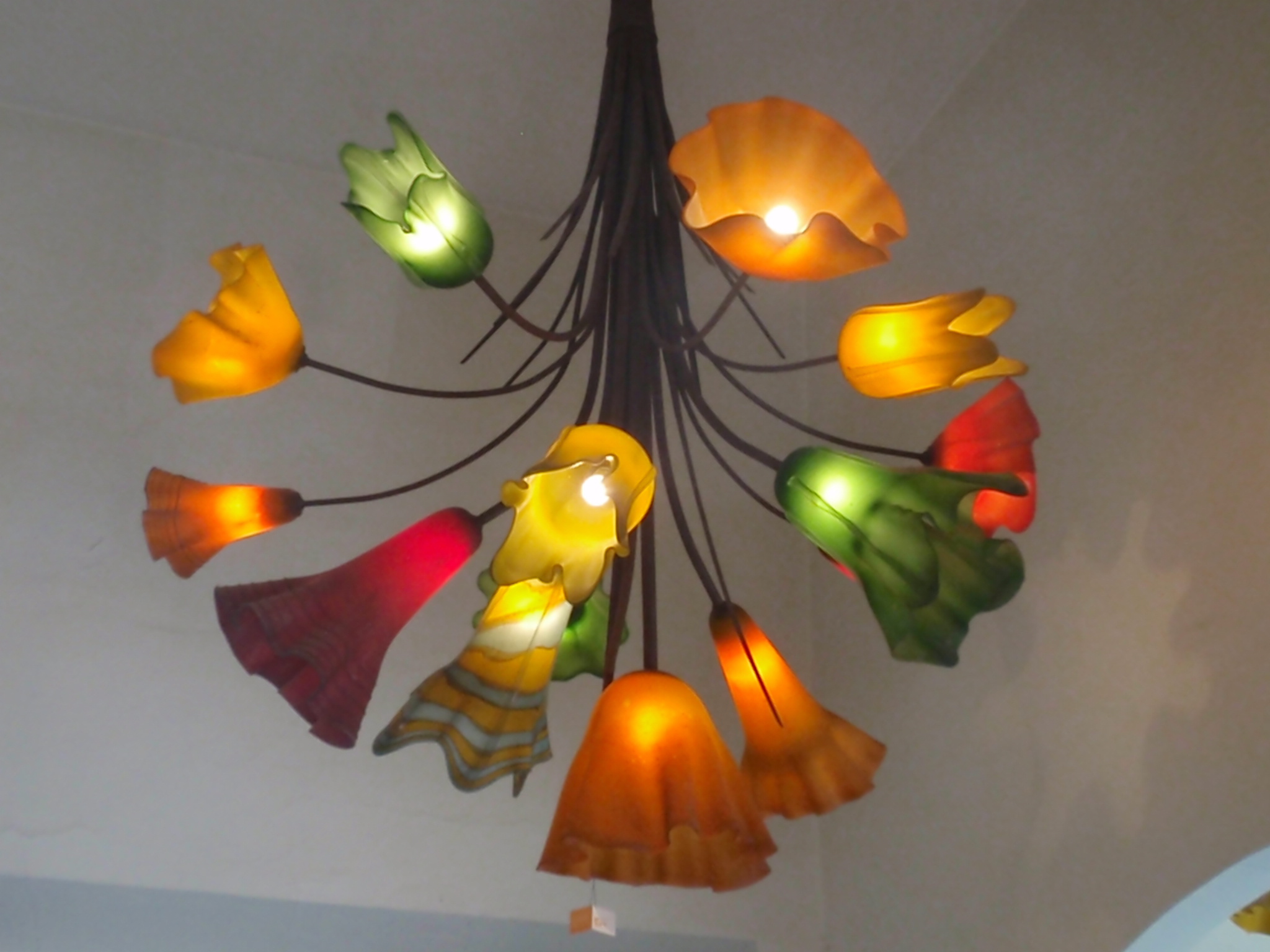
From here we headed back to Guadalajara to wrap up our trip.

Even if you don’t like to shop, a stop at Mercado Libertad (Liberty Market), Latin America’s largest indoor market, is worth your time.  With over 1000 vendors spanning three floors, one can be kept occupied for a good long time.  Anything you can imagine is sold here, from clothing, jewelry, leather goods, fruits, vegetables, and meats, as well as internal organs and heads and feet of various animals in the butcher aisle (not my favorite section of the market, I must say).

Countless food stalls assault the senses as we passed by but we had recently eaten so we opted for a jugo verde (green juice) instead, made from fresh parsley, celery, nopal, pineapple and grapefruit juice.  Yum!

View of Food Stalls at Mercado Libertad
The Juice Lady

If you are planning a trip to Guadalajara, the historic section of this vibrant city is a must see!

Visit with Family

Hola from balmy Mexico!

I guess you could say that I took a hiatus from blogging.  I am not one to do a posting just to fill space – not going to bore you with how I rearranged my kitchen cabinets (which is a posting I actually came across recently).

We, like many others, have been patiently awaiting the rainy season as it has been a long dry spell.  Many of those who have migrated south of the border (and locals perhaps) take a little break from this area during the month of May, which is our hottest month. Having said that, it still is rather pleasant here even at 90º, as we do not have the accompanying humidity during the dry season.  We did decide, however, to follow the crowds and take a trip north of the border to see family.

Our first stop was Indianapolis to visit Terry’s sister and husband and to pick up a vehicle we have stowed there.  Once the rains subsided (which had been plentiful this year in the midwest), we assisted in planting a garden, which I thoroughly enjoyed.  Terry got the task of roto-tilling the ground before we planted so I am not sure that he has as fond memories as I do!

I was reminded by my sister-in-law that when I posted some pictures of family back over the Christmas holidays, I neglected to include everyone in the family, that being the four-legged variety of relative.  My apologies to Frank and Pearl!

Frank Posing for the Camera
Pearl Napping after a Tough Day!

Pearl is very camera-shy (actually barks when you point a camera at her, as does Terry’s sister when a camera is pointed in her direction!) so taking a picture of her had to be a sneak attack.

From there we headed to Illinois to see my brother and family and to attend my godson’s graduation.  We also had the honor of seeing said godson (Seth) decked out for his 8th grade dance, which was quite an event.  It looked more like the prom to me.  My, how times have changed!

Seth and Friend Dressed for the Dance
Paige, Seth, and Blake

A rare shot of niece and nephews in the same photo:  Paige, always the photogenic one; Seth, still no smile to speak of; and Blake, hamming it up for the camera!

Next on the agenda was getting ready for a very important graduation.  I saw friends that I had not seen in 20+ years!  It was a very good time.

Proud Parents and Siblings Awaiting the Graduate
Grandma and Happy Graduate

And that is about as close as we could get to capturing a smile on Seth’s face!
A grade school talent show was on the list of activities that we took time to see, where our niece Paige did a song and dance routine with several of her friends.

Paige - the "Justice" Girl

After a few days of enjoying family in Illinois, we ventured to Ohio to spend time with Terry’s parents, assisting with as many projects as they would allow.  The weather was very nice, as was our visit.  We were both grateful to be able to offer a helping hand where needed.

From Ohio, back to the Indianapolis area to spend a night with niece Sara and her significant other, Nick.  I am including photos of two more of our four-legged relatives, one who was overlooked in my last family posting (Bailie) and the newest addition to the family, Marge.

Bailie, a Very Calm, Lovable Girl
Marge, with Mom Sara

Out of control, boisterous Marge thought she was a cat in this next shot, attempting to climb as far into Terry’s lap as she could

We had a wonderful visit and the time flew by, as it seems to when you are on vacation.  Is it proper to call it a vacation when you are retired?

We are now back in Mexico, returning to the rainy season and some amazing storms.  It is a bit more humid than before the rains came and the temps are hovering around 80º. Not a bad gig if you can get it!
Chichen Itza

Day 8

On the final full day of our Caravan tour, we headed out to another UNESCO World Heritage Site and the second most visited archaeological site in Mexico, Chichén Itzá.  On July 7, 2007 (7/7/07) this site was named one of the 7 man-made wonders of the world.   Since 1923 restoration has been taking place at this great ceremonial site and is far from complete.

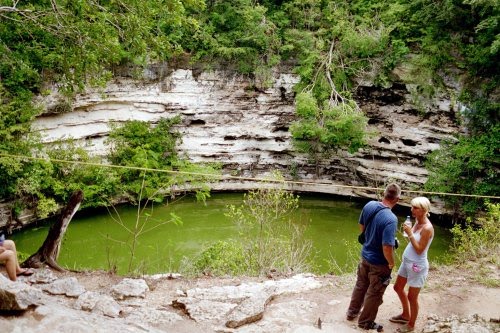
Chichén Itzá, whose name means “mouth of the well of the Itza (native people)”, was inhabited, it is believed, from 800 – 1200AD.  As there were no above-ground rivers in this area, the Mayans relied on the underground lakes and rivers for their survival. Cenotes (sinkholes) within the city, created by the collapsing of the limestone roofs of some of these underground waters, took on great import for the Mayans and historians believe became sacrificial sites as a form of worship to the rain god Chac.  The most significant of the cenotes in this area, Cenote Segrado, meaning “Sacred Well” or “Well of Sacrifice”, was dredged by Edward Herbert Thompson from 1904 – 1910. Artifacts of jade, pottery, gold, and human remains were discovered.  Studies of the human remains found wounds that were consistent with that of human sacrifice.

Cenote Segrado (photo courtesy of Wikipedia)

The pyramid of El Castillo, also known as the Pyramid of Kukulcan, a Maya snake deity, is the centerpiece of this archaeological site.  Standing 98 feet tall and 181 feet across, it was originally discovered in 1523 and was built in 9 platforms, corresponding with the Mayan belief of a 9-stage underworld.  91 steps on each of the four staircases and one additional step to the temple makes for a total of 365 steps, the number of days in a year. This was no accident, as the Maya were astronomers, mathematicians and architects.

El Castillo

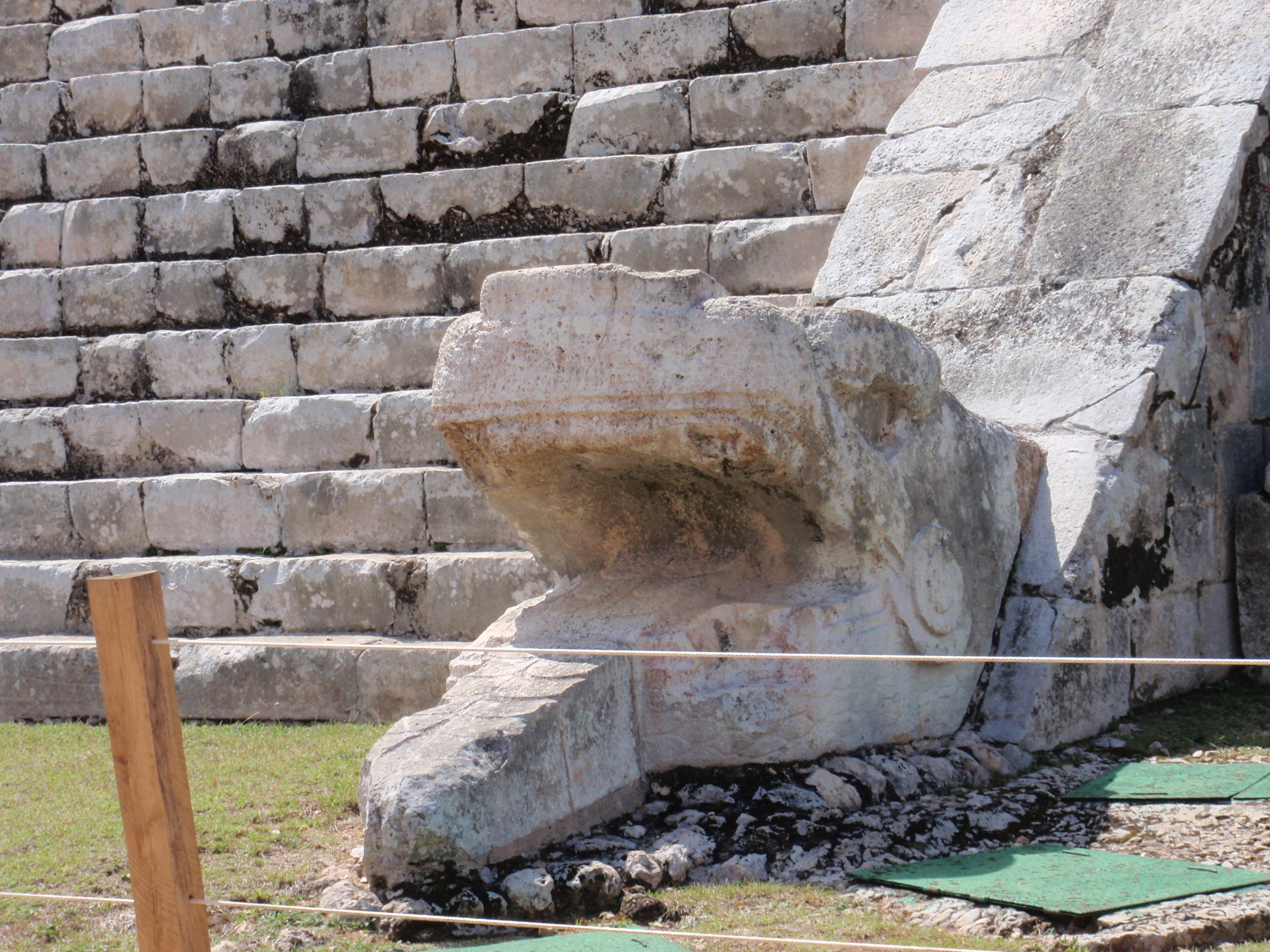
The serpent Kukulcan frames each of the staircases.

Kukulcan

Each March 20th (Spring Equinox), as the sun strikes the stepped corners of the 9 platforms, a shadow is cast on the sides of the staircases that slope at a 45° angle, from the temple down to the heads of Kukulcan at the bottom.  The serpent’s shadow appears to slither its way down the side of the pyramid.

Archaeologists are currently digging around the base of this grand pyramid.  The grass surface on which the pyramid sits actually covers another platform that extends from the base of El Castillo.

Ongoing Excavation of El Castillo

Archaeologists, digging from the top, found another temple buried below the current one. Inside was a Chac Mool statue and a throne in the shape of a jaguar, with inlaid jade and painted red.  No one knows the significance of this statue.  It now resides in the National Museum of Anthropology in Mexico City.

Another structure of great importance at Chichén Itzá is El Juego de Pelota, the Ball Court.  The ball court here is purported to be the largest in Mesoamerica, measuring 120 feet across and 480 feet wide.  Historians believe that priests played in these “high stakes” games.  The object of the game was to propel a hard, very heavy, rubber ball through a stone ring, located on each of the opposite walls.  This game was played somewhat like soccer, in that one could not use their hands.  The ball could not be kicked either, but must be moved by way of the forearms, waist, or legs.  When the ball was projected through the hoop, it is believed that the priest responsible for this was offered up to the rain god Chac, which was alleged to be quite an honor.

Wall Depicting Stone Ring at the Ball Court

There are many carvings of priests and human offerings on the walls surrounding the ball court.  The elite were allowed to view these games and entered the court through the rear of the Temple of the Jaguar.

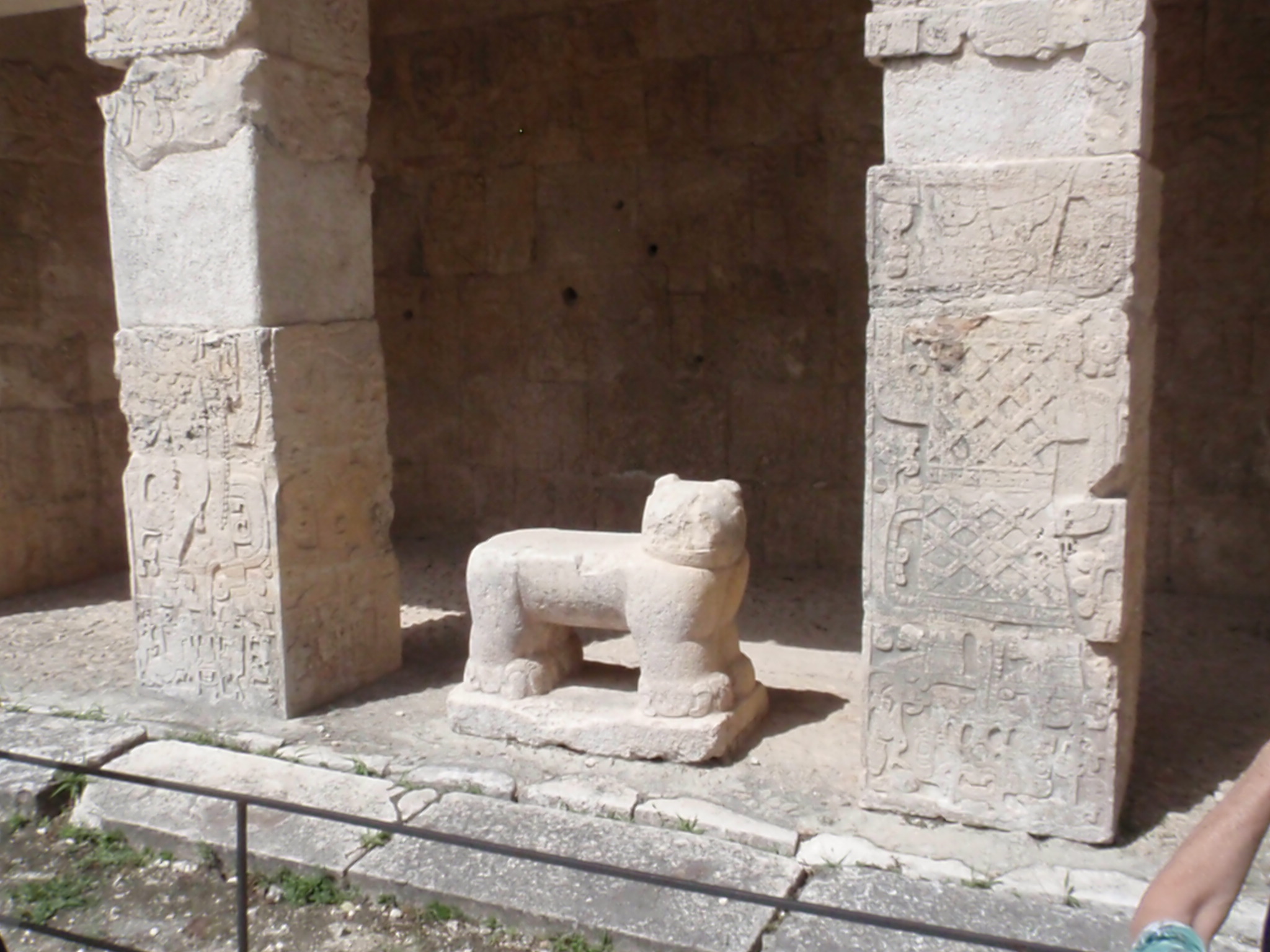
High Priest's Throne

This is believed to be the throne used by a high priest when viewing games taking place in the Ball Court.  It sits in the entryway to the Temple of the Jaguar.

Another chilling platform is that of the Tzompantli (The Wall of Skulls).  It is an Aztec name and a Toltec structure where the heads of sacrificial victims were placed.  Some believe that those sacrificed at the Ball Court, winners or losers, however one chooses to look at it, found their skulls among those displayed here.  This platform was used exclusively for this purpose.

The platform walls illustrate the skull rack, as well as scenes of human sacrifice.

Skull Rack at Tzompantli

The Platform of the Eagles and Jaguars is a powerful platform that was believed to be used for military purposes by the combination of Maya and Toltec who ruled Chichén Itzá collectively.  There was not one single ruler in this city, as there were in many other cities of this time period.  Carvings on the platform walls depict jaguars (Maya) and eagles (Toltec) consuming human hearts.

Serpent Heads

A pair of serpent heads adorn the staircases on each end of this platform, another symbol of the power associated with this structure.

The Templo de Los Guerreros (Temple of the Warriors) is a complex consisting of a large stepped platform and bordered by rows of columns with illustrations of warriors.

Templo de Los Guerreros

This large complex, like many other structures within Chichén Itzá, glorify warriors and were involved in human sacrifice.

Kukulcan Atop the Temple of the Warriors

At the top of a grand staircase sits a pair of serpents baring their fangs, portraying Kukulcan, also known as Quezalcoatl, the Feathered Serpent.  On top of the serpent heads stand Toltec warriors.

On the south end of the Temple of the Warriors is the Court of a Thousand Columns, which was believed to be where the market area once stood.  Although there are not a thousand columns, this area does contain several hundred, which made for a substantial market area.  Historians believe that merchants from as far away as Tikal in Guatemala came here to sell their wares.  The roof system has long ago collapsed.

Court of a Thousand Columns

Columns of both round and square construction are displayed here.  Those that are round are believed to be Mayan and those that are square of Toltec design.

Toltec Warrior Carving

Note the Toltec warrior carving in full headdress on this column outside the Temple of the Warriors.

While heading to the south end of the city, we discovered the Ossuary (High Priest’s Grave).

Although not near as grand as El Castillo, it too has 9 levels that correspond to the 9 levels of the Maya underworld.  The temple that once resided on the top no longer exists.

This is a photo of the High Priest’s Grave prior to its restoration.

The next structure that we came upon was El Caracol, nicknamed “The Snail” because of its stone spiral staircase inside.  Built in 906 AD, historians believe this building was a Mayan observatory, built to study celestial bodies.

El Caracol

Many of the openings in the upper cylindrical portion of this observatory align with the sun, Venus, and other celestial objects.  Mayans were great astronomers and studied the stars for both practical purposes (when to plant crops) and mystical reasons.

In the oldest part of the city sits Las Monjas (The Nunnery Complex), named this by the Spaniards as it reminded them of the convents that existed in Spain.  The architecture style of this complex is Puuc, signified by the latticework upper section, very popular with the Puuc-style.  This complex has undergone 7 construction cycles since its inception.

La Iglesia

This structure that is part of the Nunnery Complex was named La Iglesia, the Church.  No one knows for certain why the Spaniards named it this, as it was actually a governmental palace.  Note the rain god Chac carvings on the upper section cornices, with the trunk-like nose.

This is just a small portion of the structures that have been excavated at Chichén Itzá. We could have spent an entire day or two studying all the structures that were available to us.

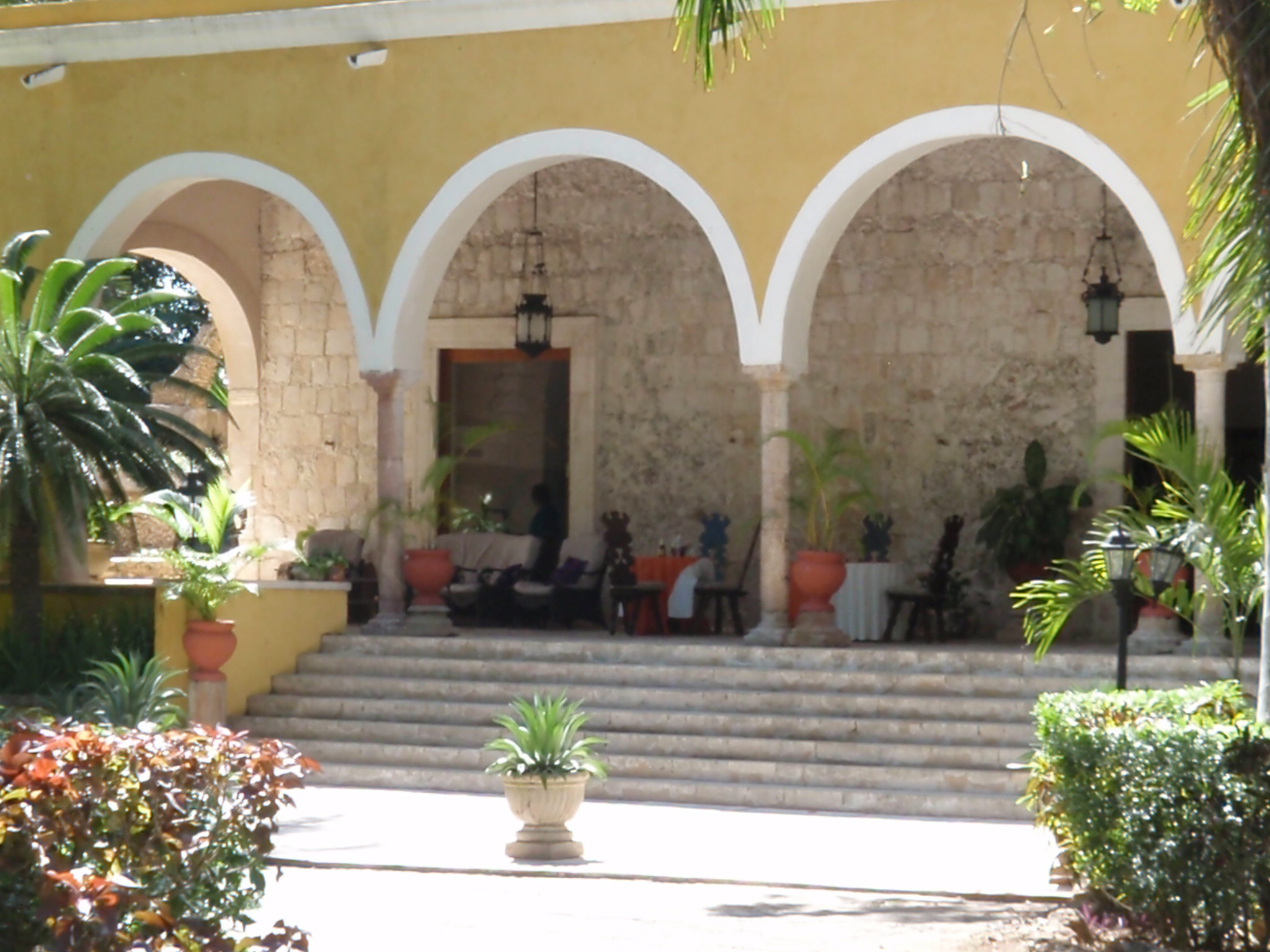
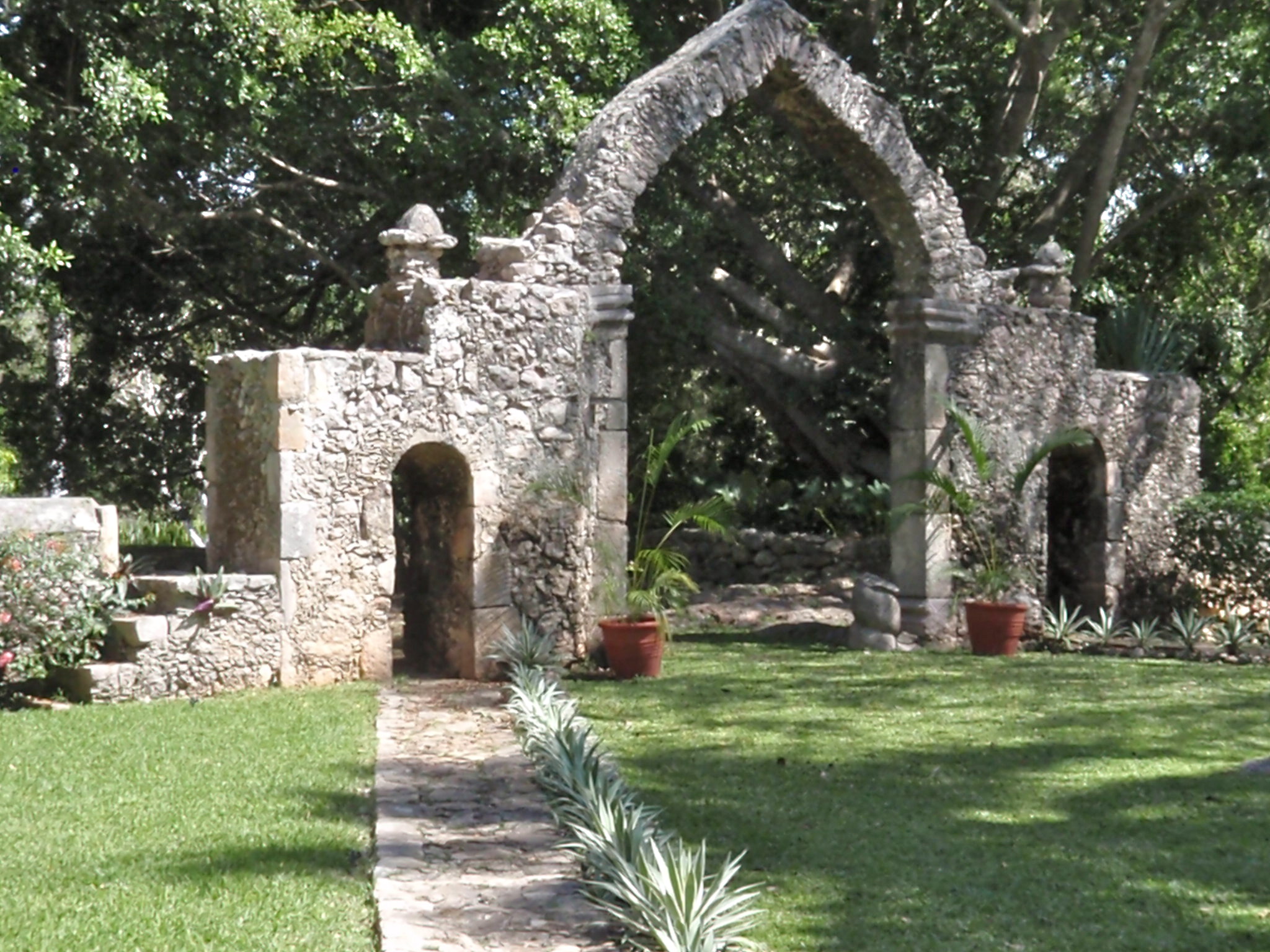
After leaving Chichén Itzá we stopped to have lunch at Hacienda Chichen, a stunning old hacienda with beautiful grounds, archways and chapel.  Some of the structures were constructed with stone taken from Chichén Itzá.

Hacienda Chichen
Beautiful Stone Archway in the Gardens of Hacienda Chichen
Chapel on Grounds of Hacienda Chichen

Many in our group felt that the best part of Hacienda Chichen was the dessert that was served after lunch, homemade coconut ice cream – yum!

This concluded our trip with Caravan Tours.  The next day we headed to Cancun to drop some off at hotels and some at the airport.  We had an amazing 8 days, visiting 10 of the 31 states in Mexico, traveling 1400 miles, and meeting some very interesting people.  We would recommend this tour to anyone wanting to learn more about ancient and present-day Mexico.

Merida

Days 7 & 8

We pulled into the inspiring capital city of Yucatan, Mérida, on day 7 of our Caravan tour, excited with the prospect of a 2-night stay.  Mérida is the largest city in the state of Yucatan and the cultural and financial capital of the Yucatan Peninsula.  It was founded in 1542 by Spanish Conquistadors and has a current day population of approximately 1.5 million people.  The first rulers here, beyond the ancient Maya, were influenced by Spain, which is reflected in its rich colonial flavor.

Mérida was built on the former Mayan center, T’Hó, which for centuries was a cultural and activity center of the Maya world.  Because of this, many historians consider Mérida to be the oldest continually occupied city in the Americas.

Around the turn of the 20th century, Mérida had become quite prosperous with the production of henequen, an agave used to make rope and twine.  At this time it was said to house more millionaires than any other city in the world.  This wealth can still be seen today in many of the elaborate homes along the main avenue, Paseo de Montejo, where stunning sculptures are also on display.  Many of these homes have been restored and now house banks, insurance companies and other commercial space.

A majestic monument, standing as a tribute to the Mexican people, is on display upon entering the city.

Detailed carvings along some of the monument’s panels provided a representation of the rich Mayan history of the area.

Our 2-night stay was at a hotel that is one of the few original art deco houses remaining in Mérida, Casa Del Balam, house of the jaguar.  It was once occupied by the distinguished family of Fernando Barbachano Peon and is located in the heart of El Centro.

A courtyard in the center of the hotel lobby held bistro tables surrounding stone fountains and plants where one could enjoy a quiet meal.  The pool area was equally charming, particularly at night.

Our room was lovely and had a Moorish feel to it.

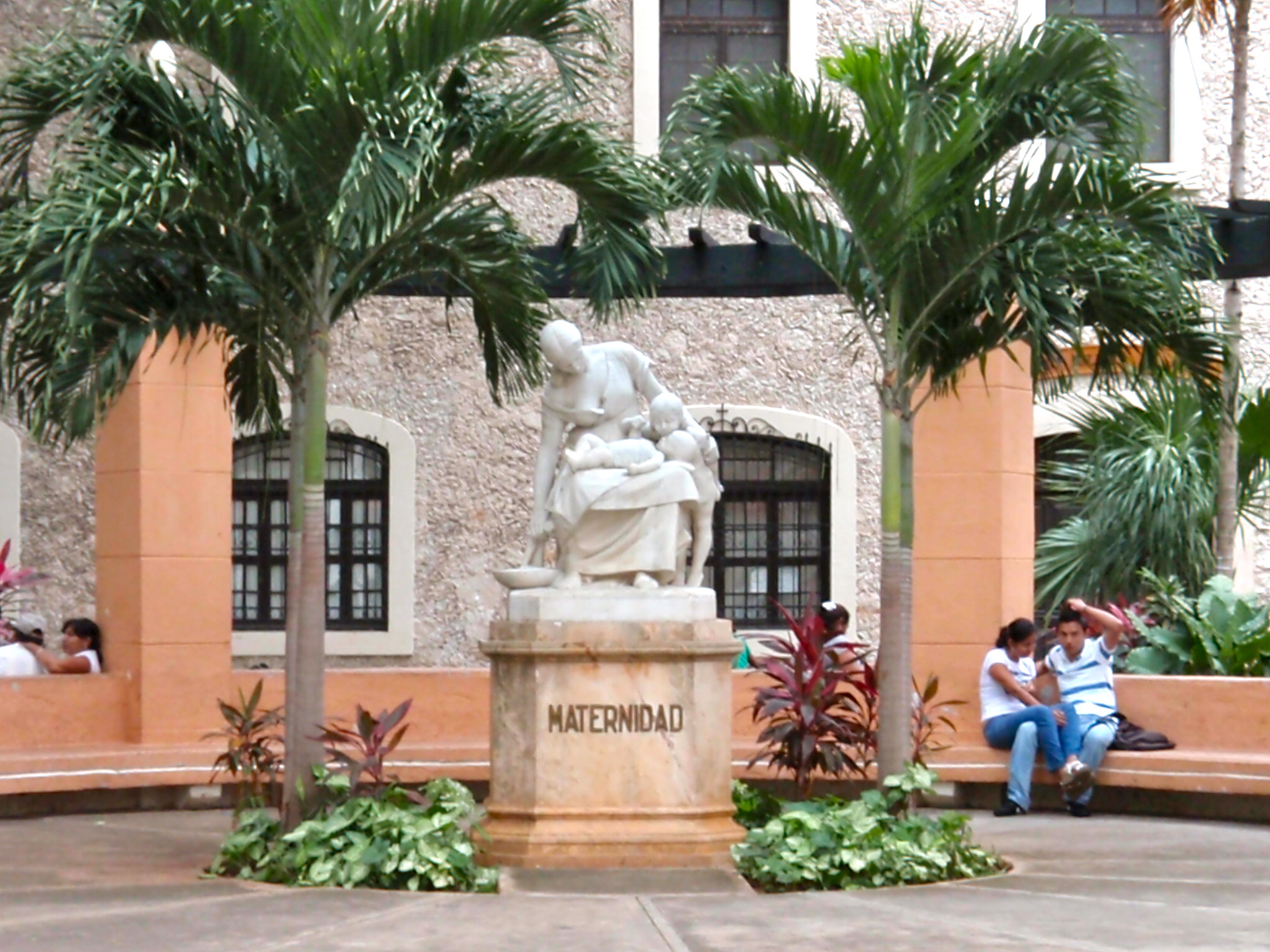
While heading out to view the city, we came across a small plaza with a monument paying homage to Maternidad (motherhood).  It is apparent, when looking at statues such as this or people watching, family is of utmost importance to all in this country.

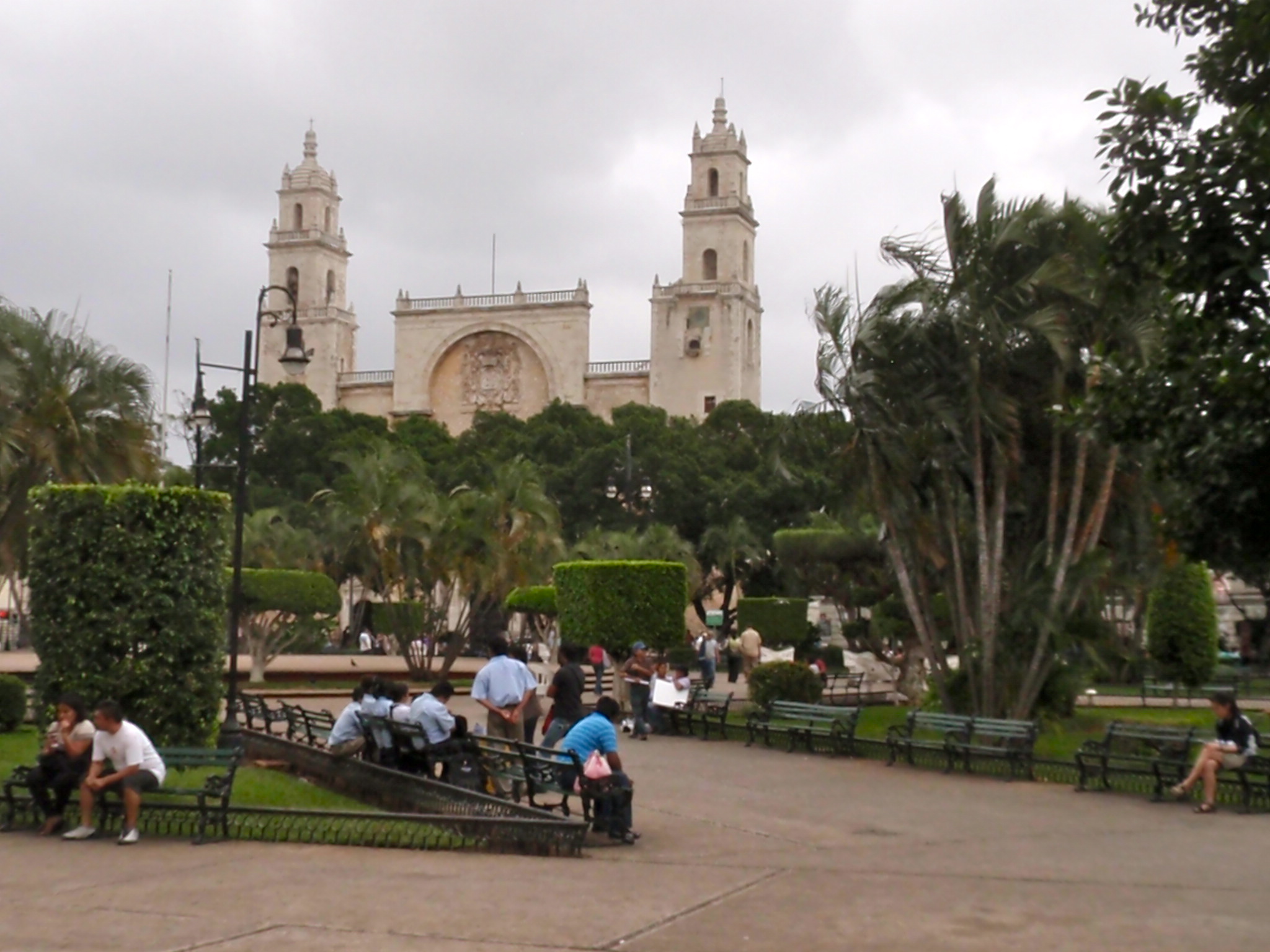
The Plaza Grande is one of the anchors for the city, with the cathedral and municipal buildings bordering it.

Plaza Grande with Cathedral in Background

The Catedral de San Ildefonso was built between 1561 – 1598, making it one of the oldest in the Americas.  Carved  stone from ancient T’Hó can be seen in the walls of the main cathedral.

Cathedral Night View

Although the interior of this cathedral was not as ornate as some we had seen earlier on this tour, we found the marble archways and columns to be magnificent.

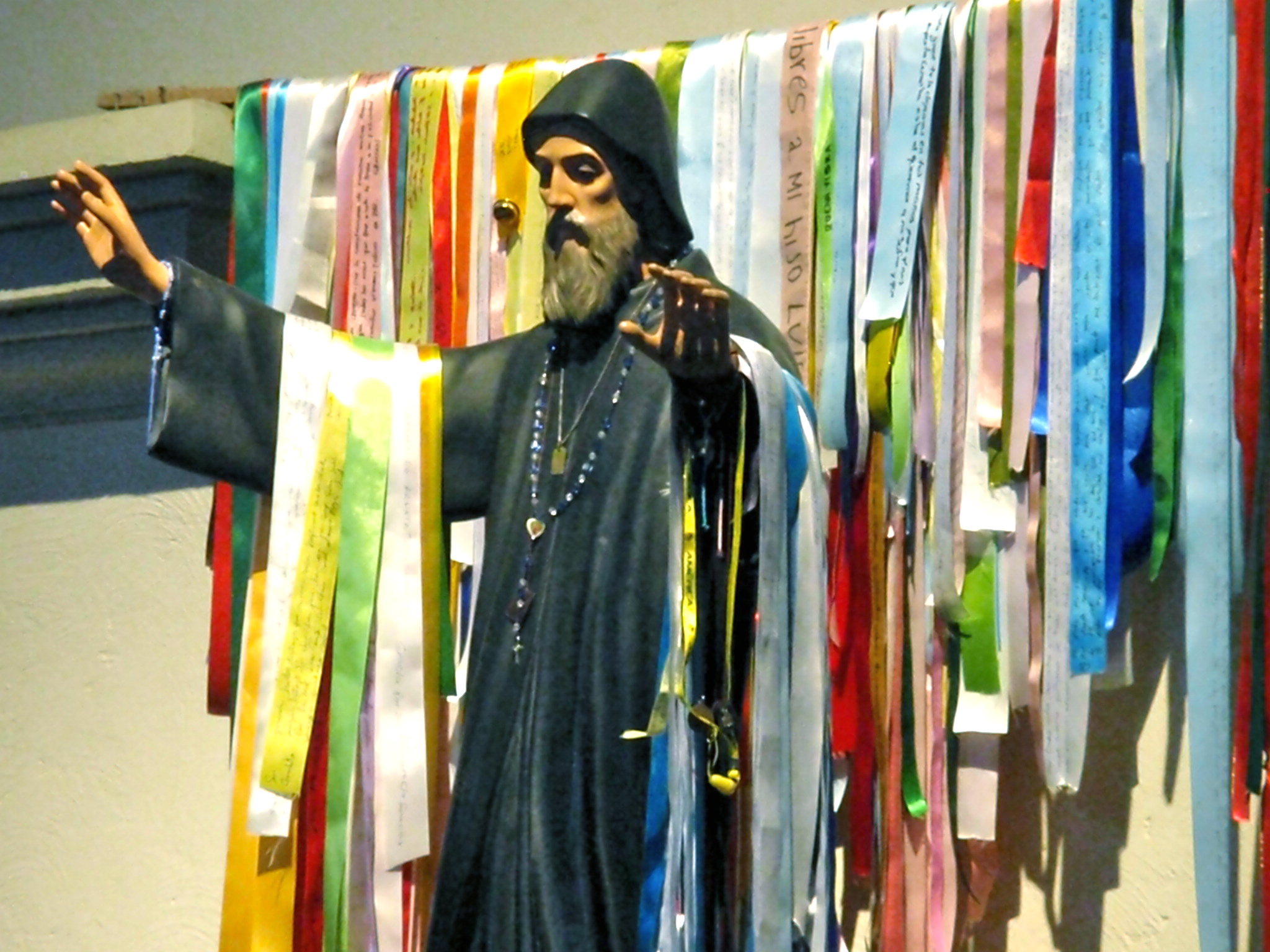
A statue of St. Charbel is represented in the cathedral, with a multitude of colorful prayer flags hanging behind him and across his outstretched arms.  His reputation for holiness prompted people to seek him in life to receive a blessing and to be remembered in his prayers.  This tradition continues long after his death.

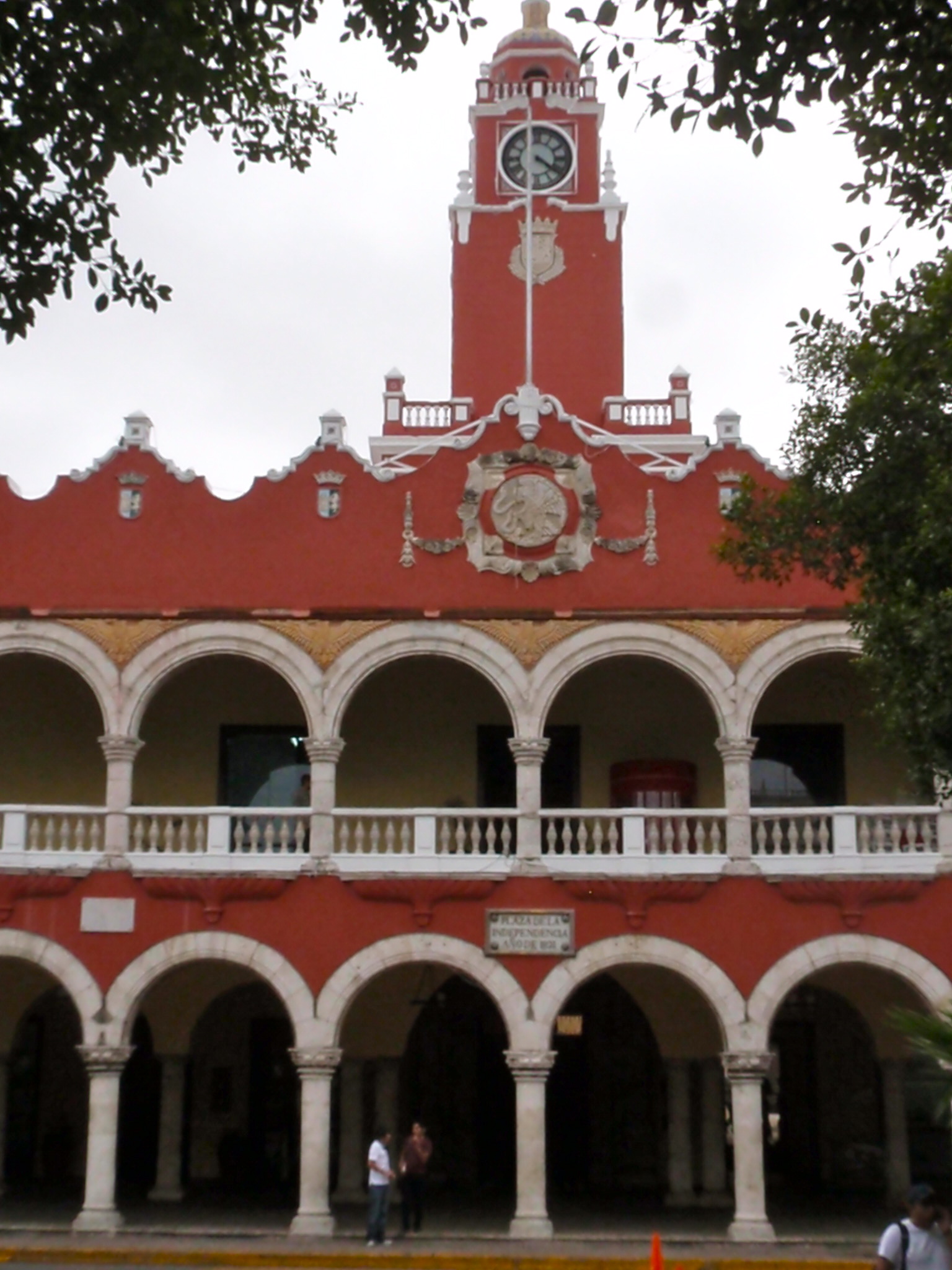
The Plaza de la Independencia, built between 1734 – 1736, houses the Palacio Municipal, and lines one side of the main plaza.  Its striking red color, with white portales (arches and columns) and grand clock tower make it an impressive contrast to other buildings in the area.

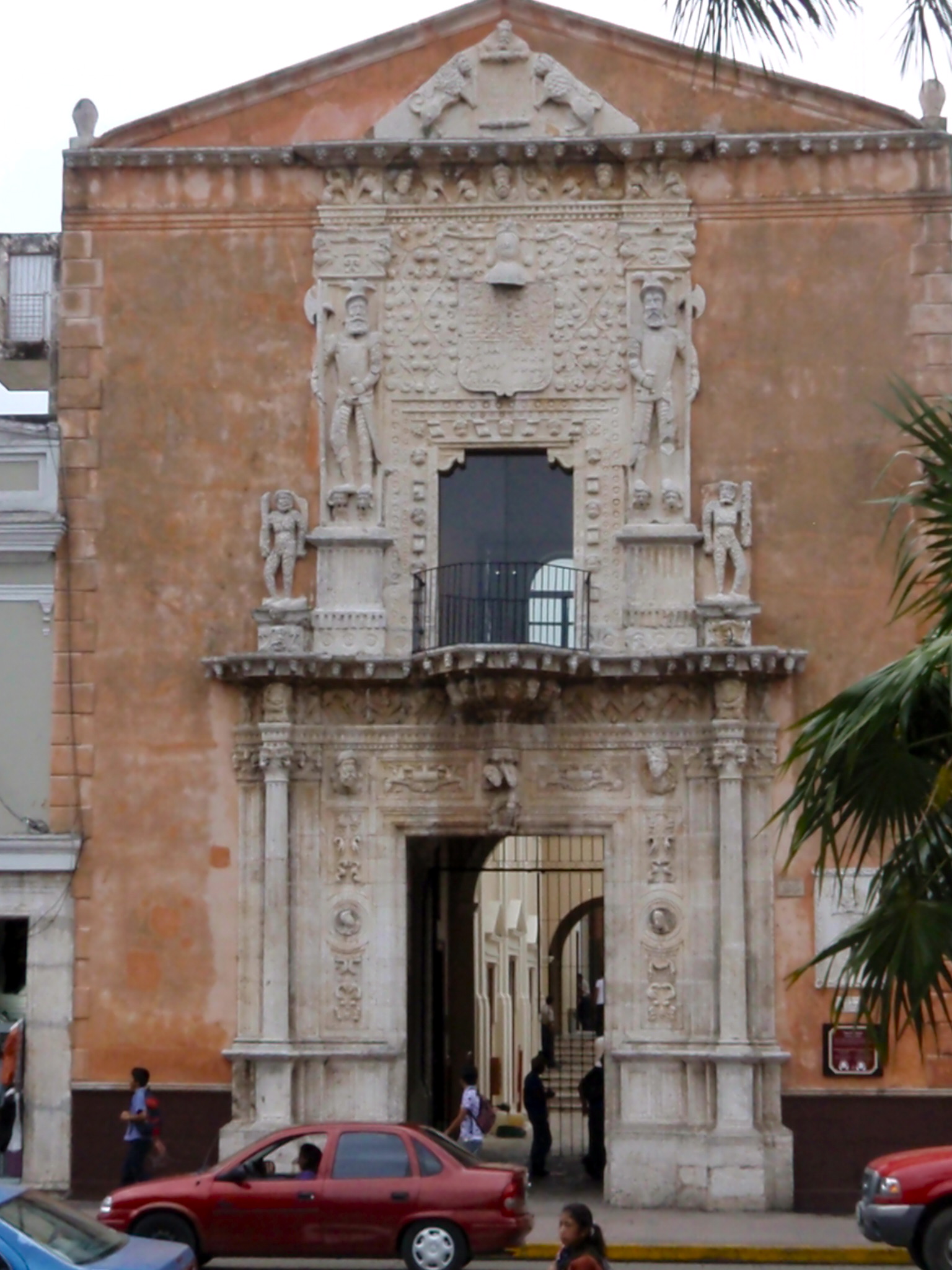
The Palace of Don Francisco de Montejo, now a museum and art gallery, was occupied by the family until the 1980’s.  This very ornate structure was completed by the son of the Spanish conquistador who attempted to conquer the Maya in the 1540’s.  Although difficult to see from the picture below, each of the large figures depicting conquistadors to the left and right of the balcony are standing on two heads crying out in terror.  Many speculate that these victims represent the Maya who Montejo sought to conquer with fierce brutality.

This palace was constructed in the “plateresque” style, which is a blend of Gothic, Moorish, and late Renaissance.  Many architectural historians believe that it is the finest work of the plateresque styling in all of Mexico.  Note the detailing in the window framing below.

We discovered that there is frequently free entertainment at night at parks scattered throughout the city.  The first night of our visit we spent some time at a wonderful concert at the Santa Lucia Parque just up the street from our hotel.

Entertainment at Santa Lucia Parque

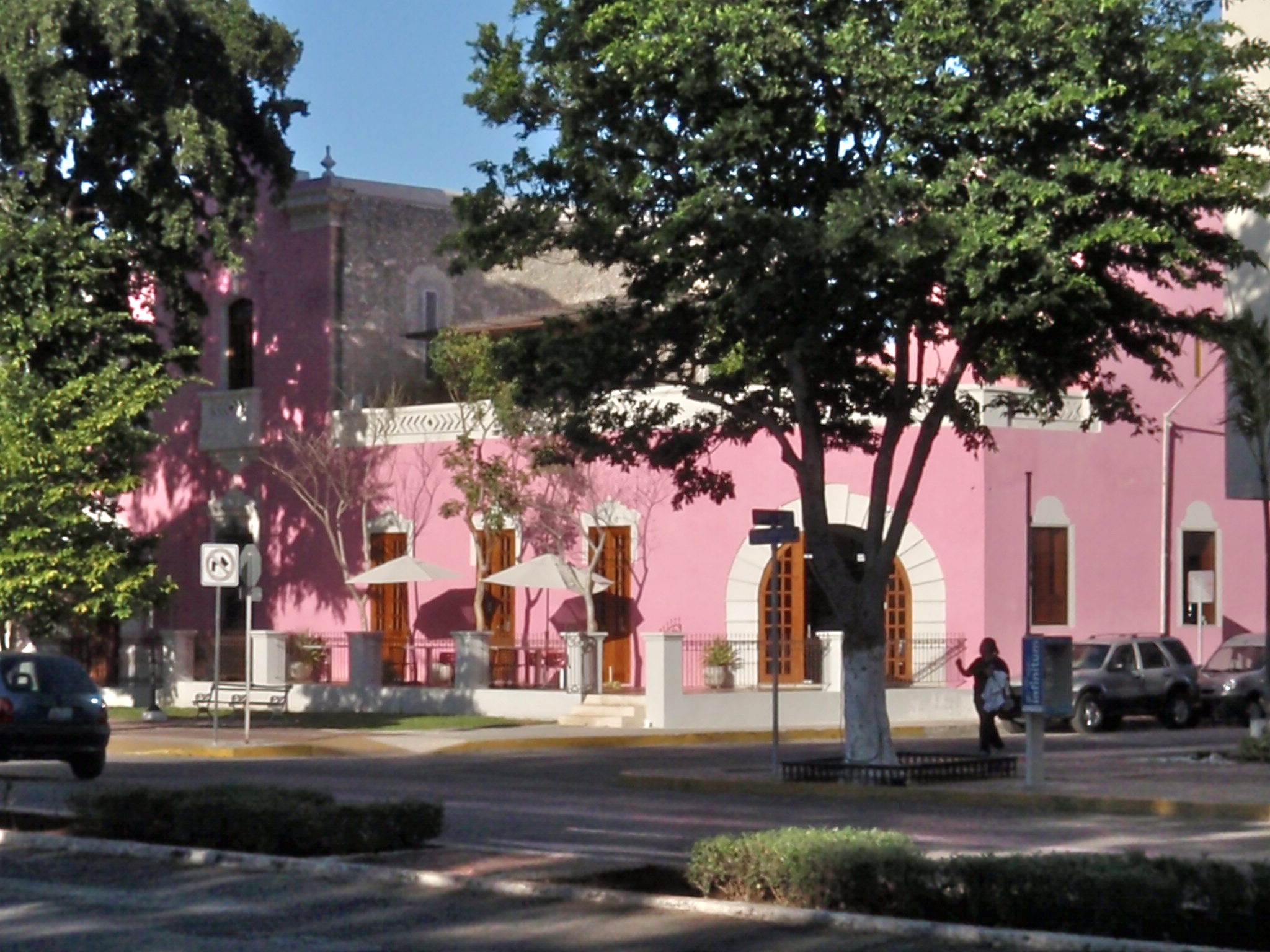
After our tour of Chichén Itzá the following day, we had time prior to dinner to walk the Paseo de Montejo, a beautiful tree-lined avenue with brick walkways, featuring many mansions with ornate facades and interesting looking museums.  I have included a few photos below to provide a flavor for the breathtaking architecture in this city.

Anthropology Museum
Pretty Pink Restaurant
Another Stunning Mansion

And last, but not least…

Turquoise Tempter

This business would capture anyone’s attention!

What a great introduction to a fascinating city.  Terry and I both decided that this is on our list for future visits as a 2-day stay has just whetted our appetites.

Uxmal

Day 7

Early morning on day 7 we hopped on our bus  and traveled through the Puuc Hills to visit the ancient Mayan site of Uxmal (pronounced Oosh-Mahl), in the state of Yucatan, dating back to 600 AD.  Many believe that its name means “thrice built city” as there is evidence that the Maya built temples over existing structures. Uxmal has some of the most authentic examples of regional Puuc-style architecture, matched only by that of Palenque in elegance and beauty.

Estimates are that 25,000 Mayans inhabited the area between 600 – 900 AD, when it was abandoned for unknown reasons.

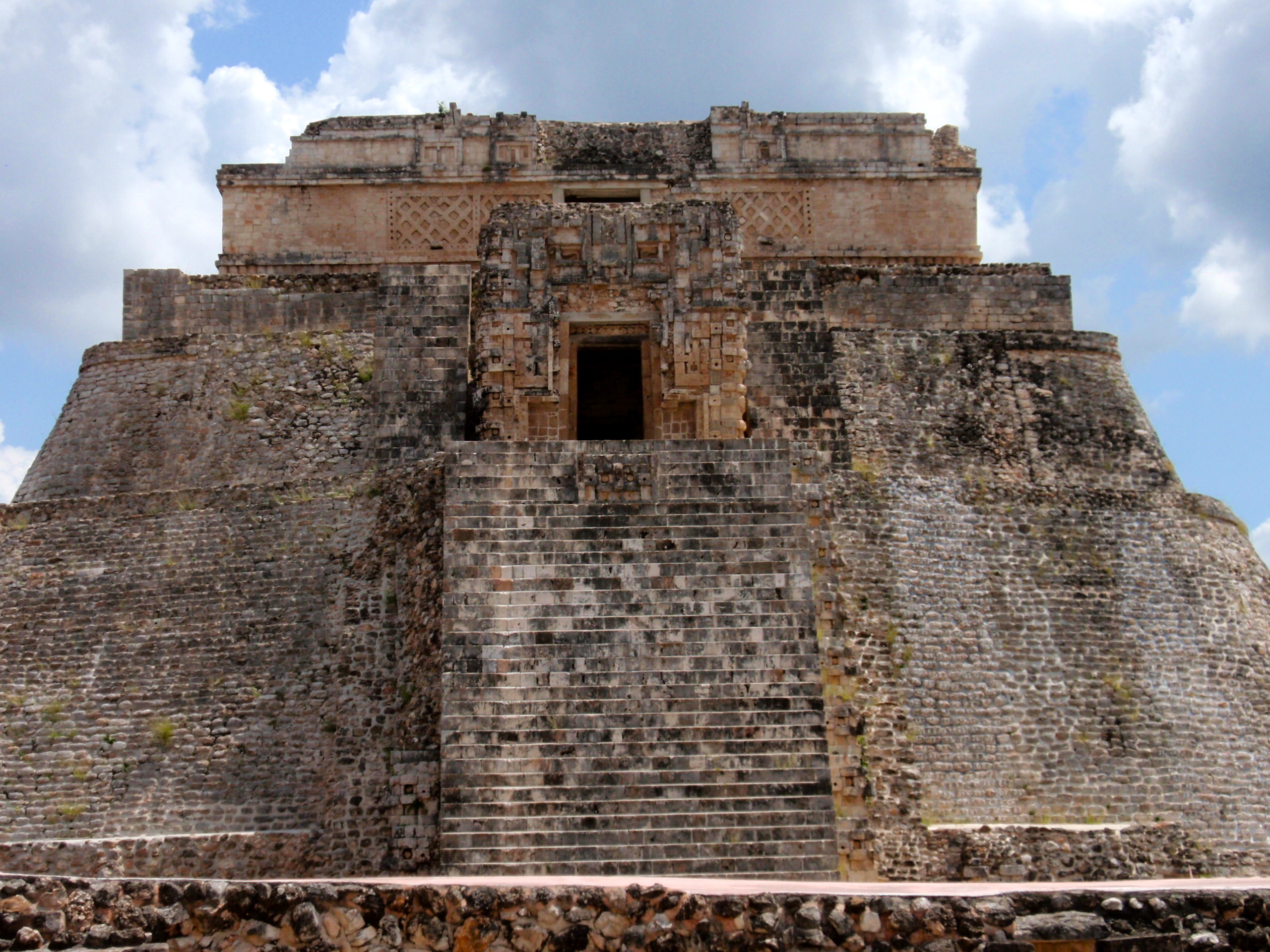
The Sorceror’s Pyramid (or Magician’s Pyramid) is an elliptical structure, unlike most others that are rectangular in shape.  What one sees is the last of five pyramids, built on top of each other, each larger than the last.  It stands 117 feet tall, which gives it a commanding presence at Uxmal.  Mayan legend has it that this pyramid was built overnight by a dwarf, hatched from an egg and raised by a witch, so many refer to this building as the Pyramid of the Dwarf also.

This pyramid has 92 steps on one side and 120 steps on another.  Legend has it that human sacrifices occurred at the highest portion of the temple.  With the victim still alive, the priest would carve the heart out of his chest and throw the body down the steep steps.

Puuc architecture has many notable features, typically a plain lower section with a highly adorned top section.  Carvings found on the top of the structure most often include latticework, serpents, and masks of the god Chac, the god of rain.  A giant Chac mask marks the entrance to the Sorceror’s Pyramid , with the door being his mouth.

Chac was greatly revered by the Uxmal Mayans due to lack of natural water supplies in the city.  Quite often the Maya used cenotes (sinkholes) to access underground water, as the Yucatan has few surface rivers.  Uxmal had no cenotes so it was necessary to collect water in cisterns, built into the ground.

The Nunnery Quadrangle is a set of four buildings around a central courtyard.  It was named Casa de las Monjas (The Nunnery) by the Spanish as the 74 small rooms within this complex reminded them of a Spanish convent.  Ceremonies were most likely held in this large open area.

The Nunnery

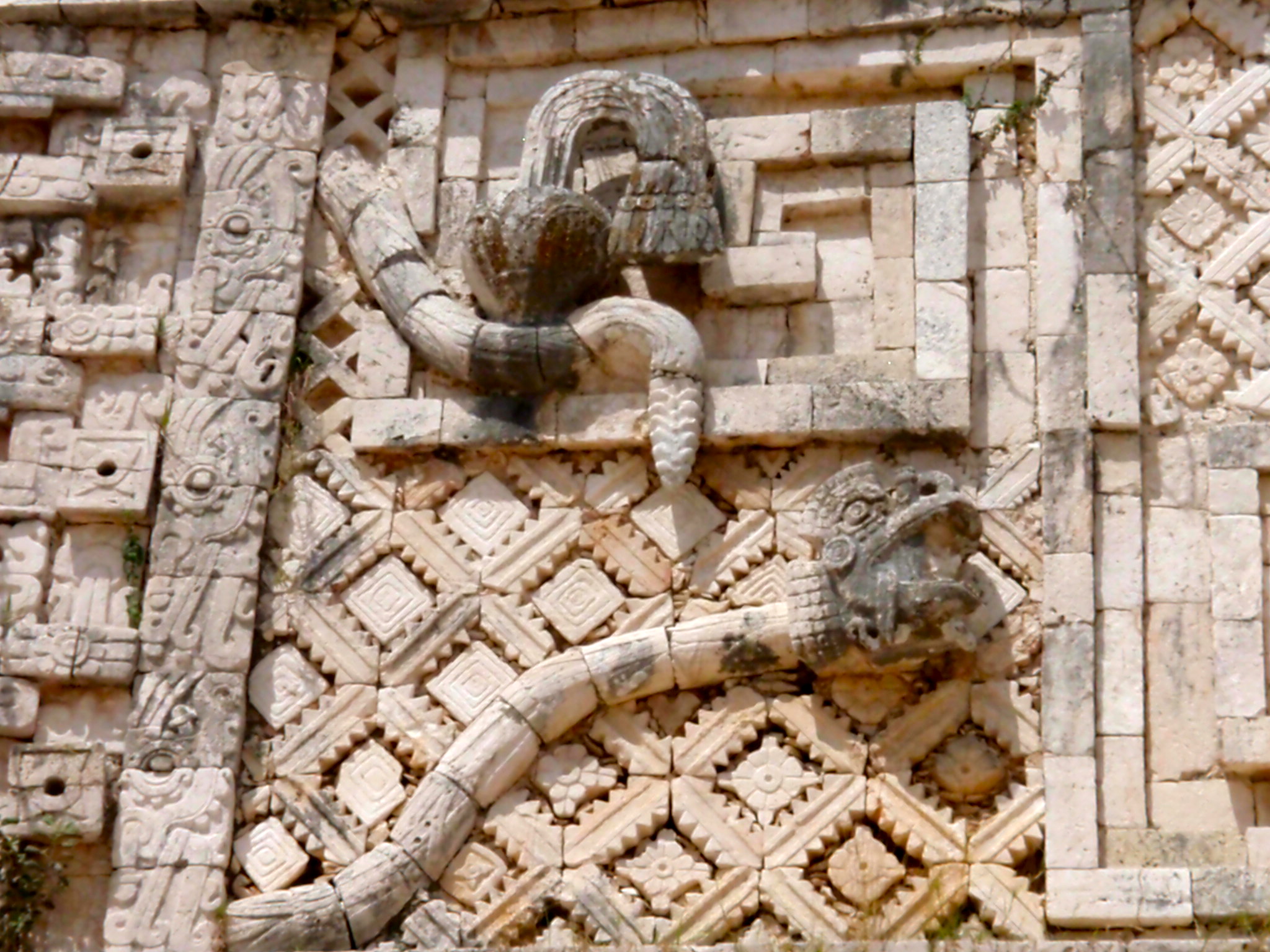
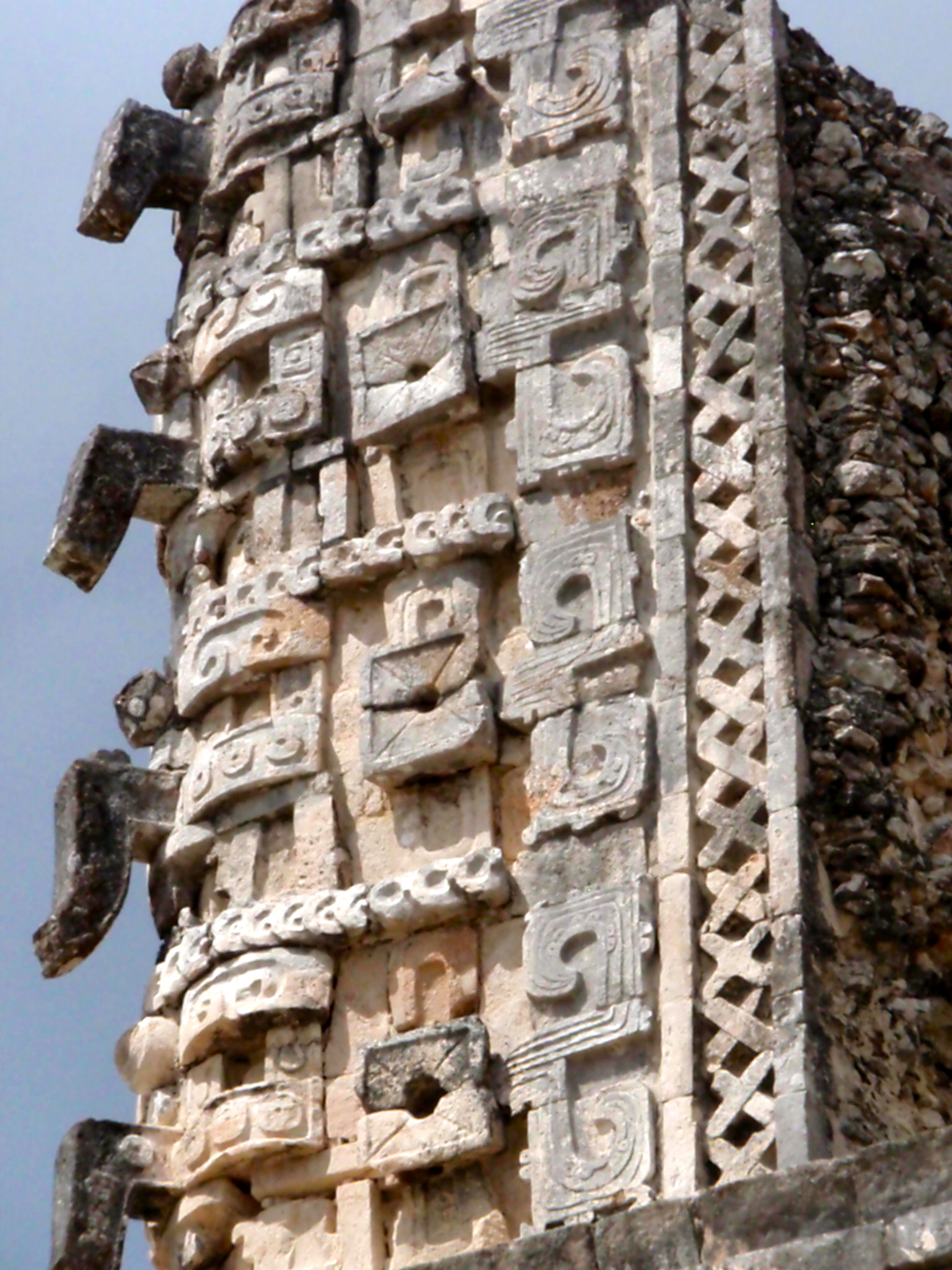
One of the buildings within this quadrangle depicted a plumed serpent on the top section, with feathers on his tail and his body woven around the latticework.  A corner of another building was adorned with stacked faces of the rain god Chac.

Plumed Serpent
Stacked Chac Faces

The Palace of the Governor is regarded by many as one of the best examples of Puuc architecture in existence today.  It was the final building constructed at Uxmal and was probably the administrative center within the city.  It actually is comprised of three buildings, connected together.  Its grand staircase consists of 52 steps, which is a significant number in Maya mythology.  This structure was very difficult to build due to the platform on which it sits.

Palace of the Governor

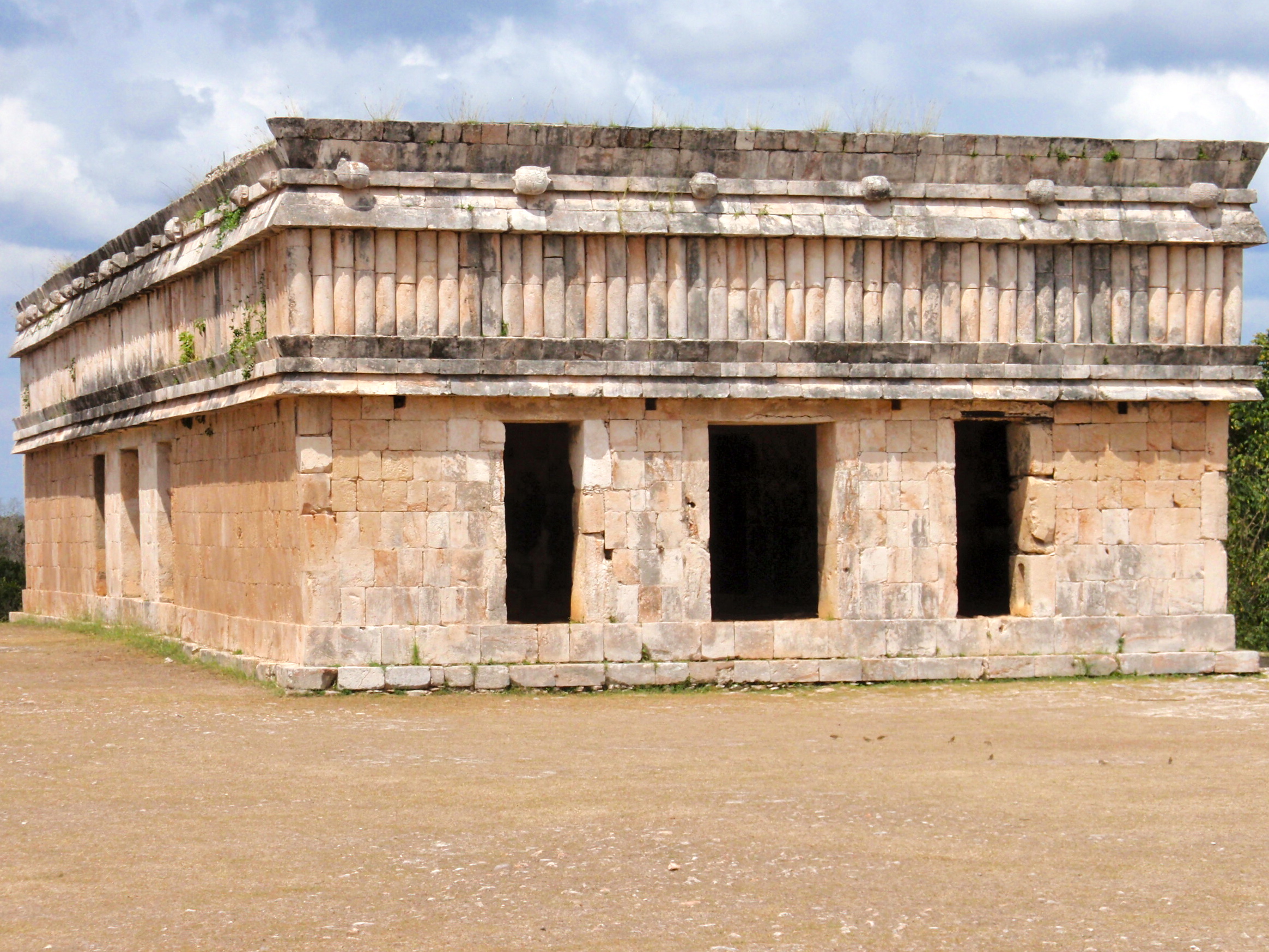
The House of the Turtles, next to the Palace of the Governor, was named for the molding of turtles carved around its cornice.  The turtle was closely associated with water, which was sacred to the Maya.

House of the Turtles

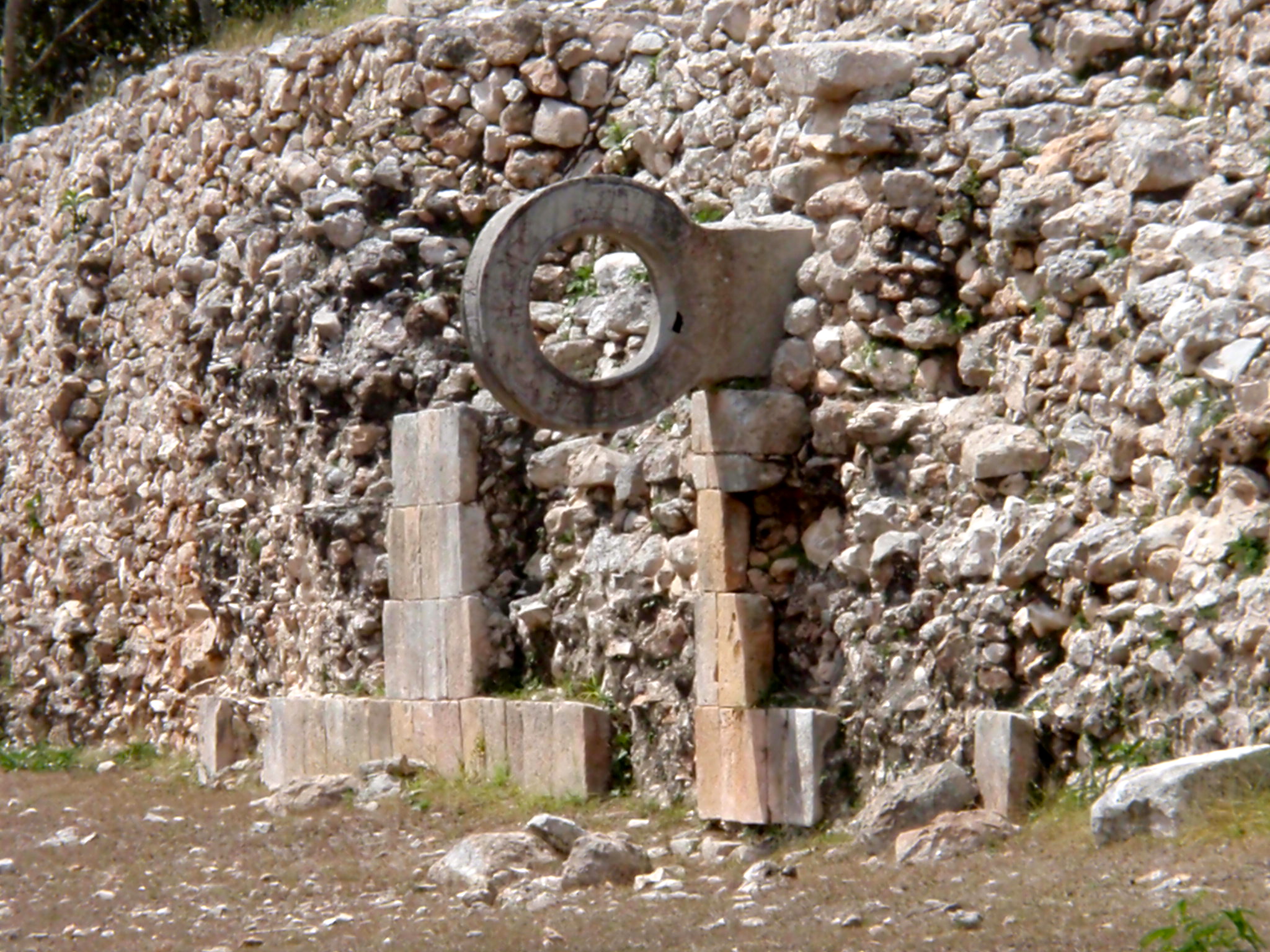
Virtually all Mayan cities contained a ball court and Uxmal is no exception.  Two vertical walls within the ball court, opposite to one another, each reflected a large stone ring in the middle of the wall.  The object of the game was to propel a hard, very heavy, rubber ball through the ring.  This game was played somewhat like soccer, in that one could not use their hands.  The ball could not be kicked either, but must be moved by way of the forearms, waist, or legs.  The game held deep religious significance for the Maya and was played with seven priests on each side.  When the ball was projected through the hoop, the priest responsible for this was offered up to the rain god Chac.

Ball Court
Stone Ring within the Ball Court

Although we thoroughly enjoyed our time at Uxmal, it was a warm, humid day, so we were pleased to move on to a leisurely lunch on the grounds.

From here we headed to the beautiful city of Merida.